
How Long Chicken Thighs in Oven: Complete Guide to Juicy Results
Bake boneless, skinless chicken thighs at 400°F for about 20–30 minutes. Bake bone-in, skin-on thighs at 375°F for 35–45 minutes. Use an instant-read thermometer and remove the meat at 165°F for juicy, safe results.
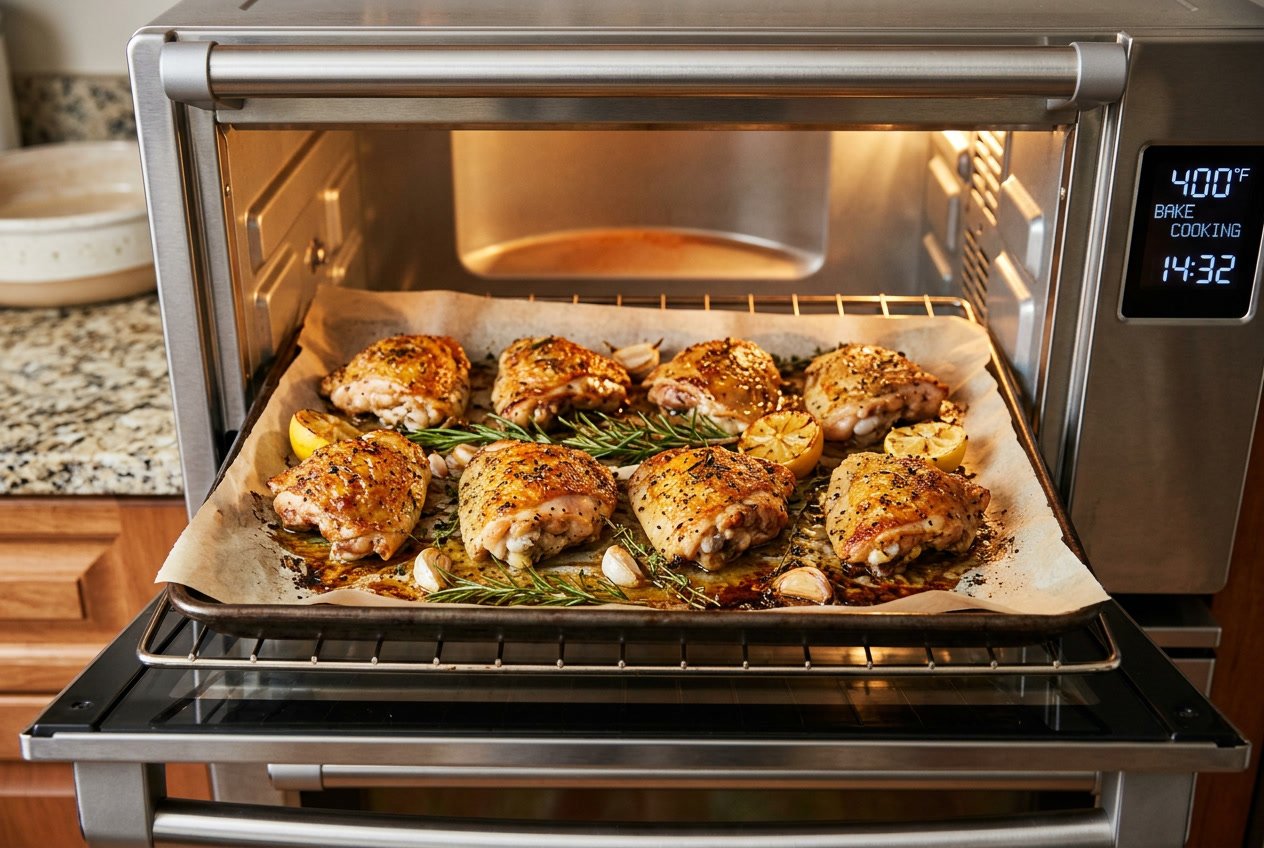
This guide explains timing differences, the best oven temperatures, and simple steps for crispy skin or tender meat depending on the cut.
Find tips for searing, broiling, spacing, and testing doneness. Get quick notes on serving, storing, and reheating to ensure great results every time.
Baking Times for Chicken Thighs in the Oven
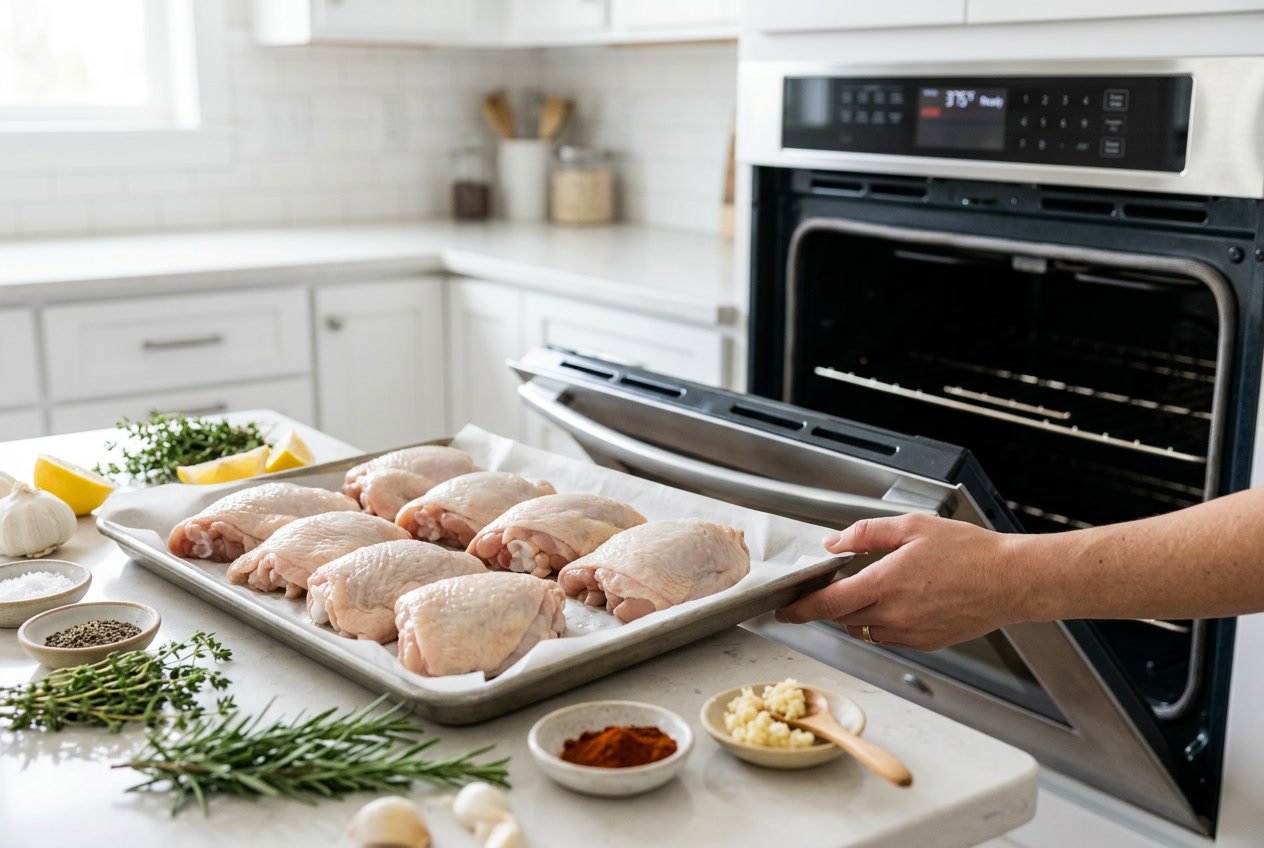
Check oven temperatures, expected minutes, and how to test doneness. The presence of bones and the thickness of the thighs change the timing.
Standard Baking Times by Oven Temperature
Baking temperature affects cook time and skin texture. At 350°F, bake bone-in thighs for 40–50 minutes and boneless thighs for 30–35 minutes.
At 400°F, bone-in thighs finish in 35–45 minutes and boneless in 25–30 minutes. At 425–450°F, boneless thighs reach 165°F in 20–30 minutes, while bone-in thighs need 30–40 minutes.
Use an instant-read thermometer to check for 165°F in the thickest part. For crisp skin, bake at 425–450°F and check early.
How Long to Bake Bone-In Chicken Thighs
Bone-in, skin-on thighs need more time because the bone and extra mass slow heat penetration. Bake average 4–8 oz thighs at 375°F for 40–45 minutes or at 400°F for 35–45 minutes.
Thicker pieces near 8 oz may need the upper end of those ranges. Insert the thermometer away from the bone for an accurate reading.
Check for juices that run clear, opaque meat, and golden-brown skin. If the skin isn’t crisp, broil for 2–3 minutes, watching closely.
How Long to Bake Boneless Chicken Thighs
Boneless thighs cook faster due to their even thickness. Roast 3–5 oz boneless thighs at 425°F for 20–25 minutes or at 400°F for 25–30 minutes.
Larger boneless pieces may need an extra 5–8 minutes. Check doneness with a thermometer reading 165°F in the center.
Slice one thigh to confirm clear juices if you don’t have a thermometer. Remove from the oven at 160–162°F and rest 3–5 minutes to reach 165°F.
How Size and Thickness Affect Cooking Time
Thickness affects cooking time more than weight. Thin thighs finish faster than plump ones of the same weight.
Pound thicker pieces to even levels or place them where they get more heat. Every extra 1/4–1/2 inch of thickness can add 4–8 minutes at 400°F.
Cold thighs from the fridge add about 3–6 minutes compared to room-temperature pieces. Always check with a thermometer and adjust times for your oven’s accuracy.
Best Oven Temperature for Chicken Thighs
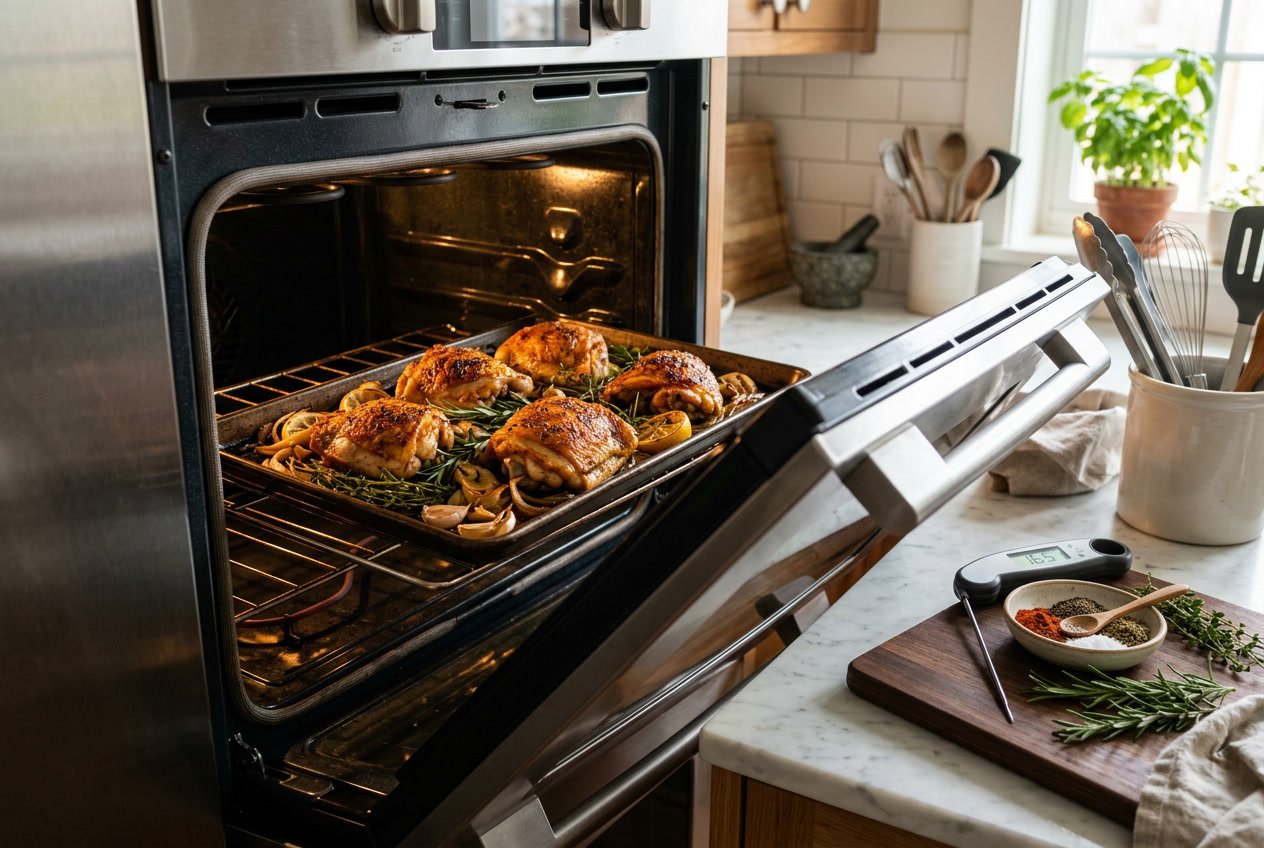
Choose your oven temperature based on whether you want crispy skin, quick cooking, or juicy meat. Higher heat crisps skin and shortens bake time. Lower heat works best for larger bone-in pieces.
Baking at 350°F, 375°F, 400°F, and 425°F
At 350°F, bake bone-in, skin-on thighs for 50–55 minutes or use for recipes with sauce. The slower cook makes meat tender. Cover loosely with foil for extra moisture.
At 375°F, boneless thighs finish in 22–30 minutes and bone-in in 40–50 minutes. Bake skin-side up on a rack for even crisping.
At 400°F, boneless thighs take 20–25 minutes and bone-in 35–45 minutes. Use a thermometer and remove at 165°F. For extra tenderness, bone-in thighs can reach 175°F.
At 425°F, boneless thighs roast in 18–25 minutes and bone-in in 30–40 minutes. Watch closely near the end and broil briefly for more browning if needed.
Benefits of High-Temperature Roasting
Roasting at 400–425°F creates crisp, flavorful skin without long cooking times. The quick browning helps render fat from skin and prevents sogginess.
High heat shortens cook time and reduces moisture loss, especially for boneless, skinless thighs. Use an oven-safe skillet or wire rack so hot air reaches all sides and crisps the skin.
If you use sugary marinades, add them near the end to avoid burning. Always check the internal temperature, as a crisp exterior doesn’t guarantee doneness.
When to Use Lower Temperatures
Use 350–375°F for bone-in thighs, larger batches, or dishes with vegetables or braising liquid. Lower heat gives consistent doneness and gently breaks down connective tissue.
Choose 350°F if you want very juicy meat for shredding or plan to cook covered. For mixed-size thighs, lower temperature prevents smaller pieces from overcooking.
Lower heat helps when you want a glaze or sauce absorbed rather than caramelized. Rest the thighs 5–10 minutes after baking to let juices redistribute before serving.
How to Bake Chicken Thighs for Perfect Results
Control seasoning, oven temperature, pan choice, and resting time for juicy, well-browned thighs. Follow clear steps for prep, oven setup, and resting.
Prepping and Seasoning Chicken Thighs
Pat thighs dry with paper towels to promote browning. Trim excess fat and check for bone fragments.
Salt 20–30 minutes before cooking or overnight for deeper flavor. Use ½ to 1 teaspoon kosher salt per pound as a guide.
Add black pepper and a dry rub or a blend like garlic powder, smoked paprika, and a bit of brown sugar for color. For crispy skin, coat with oil and rub seasoning into crevices.
Marinate boneless, skinless thighs for 30 minutes to 2 hours with acid, oil, and aromatics. Bring refrigerated thighs to room temperature for 15–20 minutes before roasting.
Oven Setup and Pan Selection
Preheat the oven to 400–425°F for a balance of juicy interior and crisp skin. Lower temps work for gentle cooking but take longer.
Use a rimmed baking sheet with a wire rack for air circulation and crisp bottoms. For bone-in, skin-on thighs, preheat a cast-iron skillet for 5–10 minutes to help render fat and crisp skin.
Line pans with foil for easy cleanup but keep rack or skillet contact for best results. Arrange thighs skin-side up, spaced at least 1 inch apart.
Insert an instant-read thermometer into the thickest part (avoid bone) and target 165°F. Remove from the oven at 160–162°F if you want carryover cooking to finish.
Resting After Baking
Let thighs rest 5–10 minutes after baking. Resting redistributes juices and raises internal temperature to 165°F if you removed them slightly early.
Tent with foil to retain warmth without trapping steam. Use this time to finish sauces or slice thighs against the grain.
Cool completely before refrigerating in an airtight container within two hours. Eat within four days for best quality.
Bone-In vs. Boneless and Skin-On vs. Skinless Thighs
Bone-in thighs hold heat and flavor, and skin creates a crispy layer. Bone-in, skin-on pieces need longer oven times. Boneless, skinless thighs cook faster and more evenly.
Bone-In, Skin-On Chicken Thighs
Bone-in, skin-on chicken thighs need more time in the oven because the bone slows heat transfer. Roast them at 375°F for 35–45 minutes until the thickest part reads 165°F, checking near the bone but not touching it with the probe.
The skin helps retain juices and crisps when you start skin-side down or finish with high heat. Use a rimmed baking sheet or roasting pan and elevate the thighs on a rack for extra crispness.
Benefits include deeper flavor from bone contact, better moisture retention, and browned skin. Drawbacks are longer cook time, slightly higher cost per edible ounce, and more cleanup from rendered fat.
Boneless, Skinless Chicken Thighs
Boneless, skinless chicken thighs cook faster and more uniformly. Bake them at 375°F for 25–30 minutes, or sear for 6–8 minutes per side and finish in the oven until they reach 165°F.
They absorb marinades quickly, making them ideal for saucy dishes or quick dinners. Use them in curries, stir-fries, and sheet-pan meals.
Benefits include faster cook time, easier slicing, and lower cost per pound of edible meat. Drawbacks are less flavor and juiciness if overcooked, and no skin for texture contrast.
Choosing the Right Cut for Your Recipe
Match the cut to your cooking method and goal. Choose bone-in, skin-on thighs for deep flavor, crispy exterior, or roasting when you have extra time.
Use a rack or parchment-lined pan to catch rendered fat and enhance browning. Select boneless, skinless thighs for fast, saucy, or sliced dishes where even cooking matters.
If you want a compromise, remove the skin from bone-in thighs after cooking or sear boneless thighs first to build a crust before baking.
Tips for Crispy and Flavorful Baked Chicken Thighs
Control moisture, use direct high heat at key moments, and season under the skin and on the surface for best results.
How to Achieve Crispy Skin
Pat skin thoroughly dry with paper towels to prevent steam. Let thighs sit at room temperature for 20–30 minutes before cooking.
Use a wire rack over a baking sheet so hot air circulates under the thighs. Roast skin-side up at 425°F for 20–30 minutes, then lower to 375°F if needed until the internal temp hits 165°F.
For extra crispness, rub a thin coat of oil on the skin or dust with ½–1 teaspoon cornstarch per pound. Avoid crowding the pan and give each thigh at least 1 inch of space for even browning.
Best Seasonings and Marinades
Season under the skin and on top for deeper flavor. Sprinkle kosher salt (about ½ teaspoon per thigh) under the skin first; salt draws moisture out of the meat and helps the skin dry and brown.
Add garlic powder (about ¼–½ teaspoon per thigh) under the skin for savory depth without burning. On the surface, combine black pepper, smoked paprika, and a touch of onion powder.
If you want a wet marinade, mix olive oil, lemon zest, minced garlic, and herbs. Marinate for 30 minutes to 2 hours.
For longer marinades (over 2 hours), reduce acidic components to avoid mushy texture. Pat thighs dry again after marinating before roasting to preserve crispness.
If you use butter or oil toward the end, brush sparingly to enhance browning without sogginess.
Finishing Under the Broiler
Use the broiler only at the end to tighten and color the skin. When the thighs reach 160–163°F (71–73°C), move the pan 4–6 inches from the broiler element and broil 1–3 minutes, watching constantly to prevent burning.
Switch the oven to broil and leave the rack in place. If parts are browning faster, rotate the pan or briefly tent that area with foil.
After broiling, rest the thighs 5–8 minutes covered loosely with foil so juices redistribute and the skin stays crisp.
Testing for Doneness and Safety
Check internal temperature first and use visual or texture cues second. Use an instant-read thermometer for accuracy and rely on visual signs only to support the temperature reading.
Using an Instant-Read Thermometer
Insert the probe into the thickest part of the thigh, avoiding contact with bone to prevent a falsely high reading. Hold the probe steady for a few seconds until the display stabilizes.
Target 165°F (74°C) as the minimum safe temperature. For juicier thighs, remove them at 165°F and let carryover heat raise them a few degrees.
Some cooks prefer 170–180°F for very tender dark meat, but 165°F meets USDA safety standards. Check multiple pieces on a tray since thighs vary in size and heat exposure.
Clean the probe with hot, soapy water between uses to avoid cross-contamination. Calibrate or test the thermometer periodically using the ice-water method or manufacturer instructions to ensure accurate readings.
Visual and Texture Cues for Doneness
Cut into the thickest part of a thigh only if you don’t have a thermometer. The meat should look opaque and the juices should run clear, not pink or red.
Small streaks of pink near the bone can occur and don’t always indicate undercooking, so confirm with temperature when possible. Press the meat with a fingertip or tongs; properly cooked thighs feel springy and slightly firm, not mushy or rock-hard.
The skin should be golden-brown and crisp if skin-on. Use these cues to verify doneness, but always treat them as secondary to a correct thermometer reading.
Serving, Storing, and Reheating Baked Chicken Thighs
Serve warm chicken thighs with simple sides. Store leftovers safely in airtight containers.
Reheat using low, moist methods to preserve texture and flavor. Pay attention to internal temperature, labeling dates, and add a little liquid or fat when reheating.
Meal Ideas and Chicken Thigh Recipes
Use bone-in, skin-on thighs for crisp skin and richer flavor. Boneless thighs work well for quick weeknight meals.
Try a sheet-pan meal: toss thighs with quartered potatoes, carrots, and rosemary. Roast at 425°F until skin is crisp and internal temp is 165°F.
For saucy options, finish baked thighs with BBQ, honey-garlic, or lemon-caper sauce and serve over rice or pasta. Shred cooled thighs into salads, tacos, or grain bowls for meal prep.
Scale flavors by using a Moroccan spice rub (cumin, paprika, coriander) or a simple garlic-herb mix (olive oil, thyme, lemon zest). Rest thighs 5–10 minutes after baking to redistribute juices before plating or shredding.
How to Store and Freeze Baked Chicken Thighs
Cool cooked thighs to room temperature for no more than 2 hours. Transfer to airtight containers or heavy-duty zip bags.
Store in the refrigerator at 40°F (4°C) or below for 3–4 days. Label with the cook date to track freshness.
For longer storage, freeze in portions: wrap individual thighs in plastic wrap, place in a freezer bag, remove air, and freeze up to 4 months. If freezing shredded meat, pack in meal-size portions with a little broth to prevent dryness.
Thaw safely in the refrigerator overnight or in cold water (in a sealed bag) for faster use. Never thaw at room temperature.
How to Reheat Chicken Thighs Without Drying
For oven reheating (best for skin-on), preheat to 300–325°F. Place thighs in an ovenproof dish, add 1–2 tablespoons of chicken broth or water per cup of chicken, cover tightly with foil, and heat 15–25 minutes until internal temp reaches 165°F.
For skillet reheating, warm a tablespoon of oil over medium-low heat, add thighs skin-side down, cover, and finish uncovered for 1–2 minutes to re-crisp skin after internal temp reaches 165°F.
For microwave reheating, place thighs in a microwave-safe dish, sprinkle with a tablespoon of broth, cover with a damp paper towel, and heat in 30–45 second bursts, checking temperature. Use a thermometer to confirm 165°F throughout and avoid reheating more than once.
Alternative Cooking Methods for Chicken Thighs
You can get crispy skin and juicy meat without using only the oven. Two reliable approaches are high-heat air frying and a stovetop sear finished in the oven.
Air Fryer Chicken Thighs
Air fry at 400°F (200°C) for 18–22 minutes for bone-in, skin-on thighs. Check internal temperature for 165°F (74°C).
Arrange thighs skin-side up in a single layer so hot air circulates. Flip once if your basket crowding prevents even browning.
Pat thighs dry and rub with a little oil and salt to help skin crisp. For boneless skinless thighs, reduce time to about 12–16 minutes and lower the temperature to 375°F (190°C) if they are small.
Use an instant-read thermometer in the thickest part, avoiding bone contact for bone-in pieces. For extra-crisp skin, finish with a 2–3 minute blast at the highest air-fryer setting.
Rest for 5 minutes before serving so juices redistribute.
Stovetop-to-Oven Techniques
Preheat the oven to 400–425°F (205–220°C).
Heat an oven-safe skillet over medium-high heat. Add oil and sear the chicken skin-side down until deeply golden, about 6–8 minutes for bone-in thighs. Keep the thighs still during searing to maximize crisping.
Transfer the skillet to the oven and roast until the internal temperature reaches 165°F (74°C). This usually takes 20–30 minutes for bone-in and 15–20 minutes for boneless thighs.
Insert a probe or instant-read thermometer into the thickest part, avoiding the bone, to check doneness.
For even cooking, let the thighs come to room temperature for 10–15 minutes before searing. Space them out in the pan so air can circulate.


