
How Long Chicken Thighs at 425: Complete Baking Time & Tips Guide
Want perfectly cooked chicken thighs fast? At 425°F, bone-in, skin-on thighs usually take about 30–40 minutes.
Boneless, skinless thighs usually finish in roughly 20–25 minutes. Use an instant-read thermometer to confirm they reach 165°F.
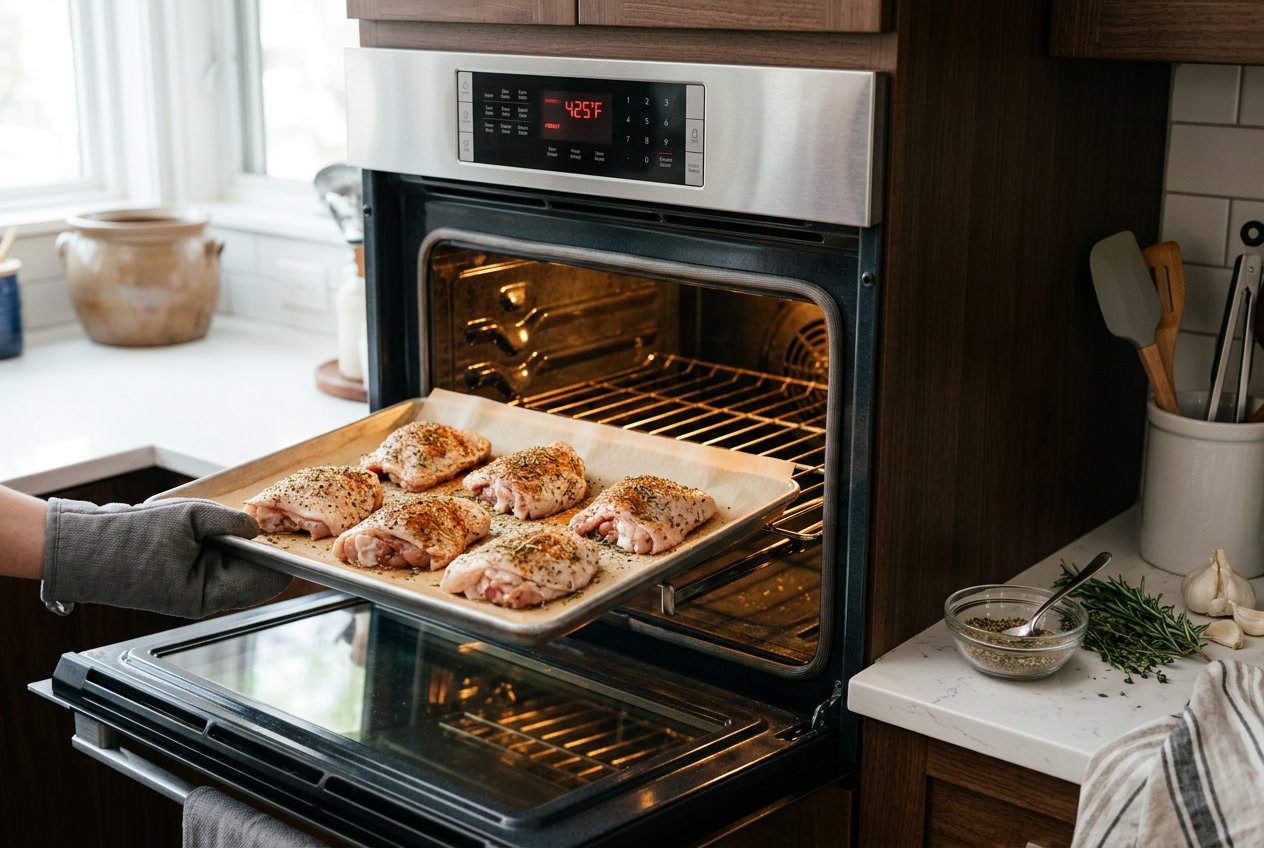
This guide covers exact bake times, how to check doneness, a step-by-step method, and tips for crisp skin and juicy meat.
You’ll also find advice on avoiding common mistakes and storing leftovers.
Exact Bake Times for Chicken Thighs at 425°F
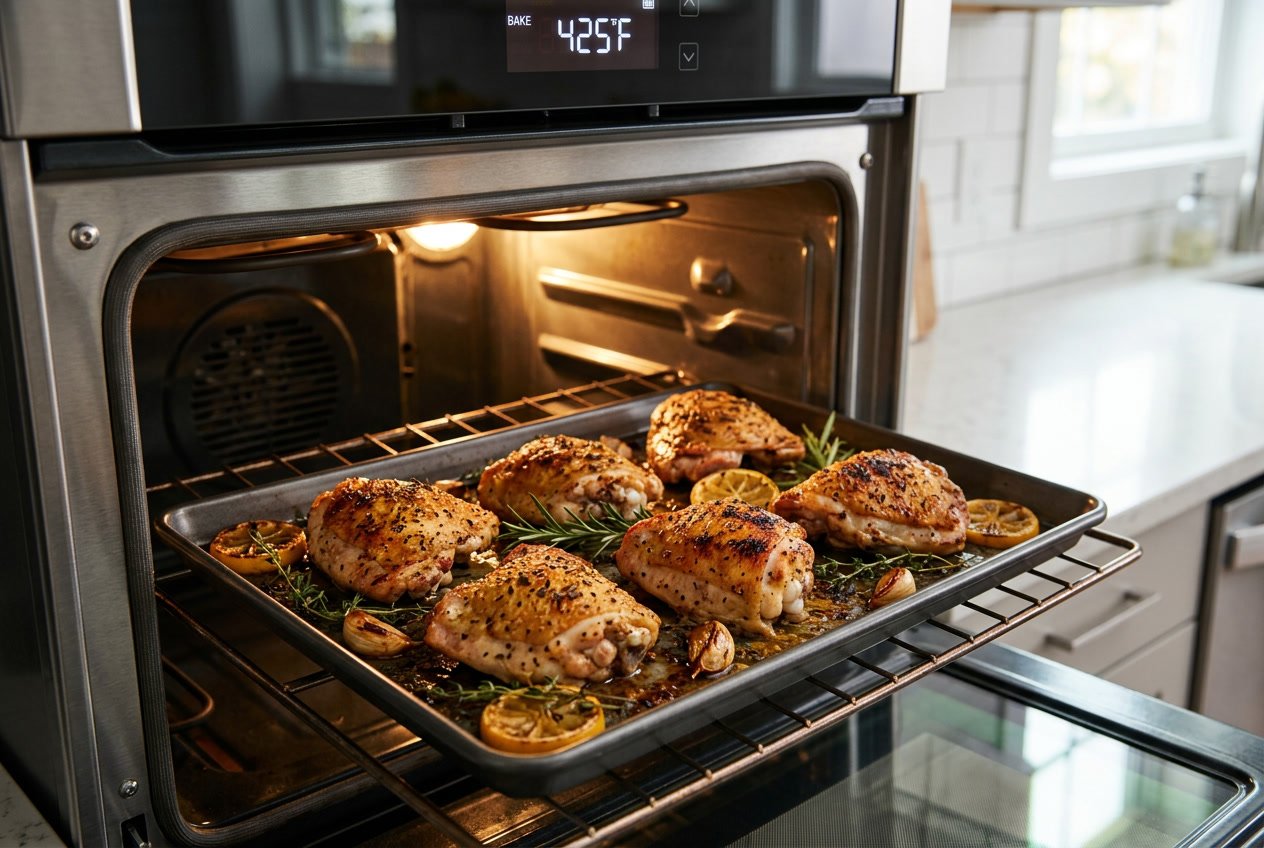
At 425°F, cook times depend on bone, skin, and piece size.
Use a thermometer and expect 20–45 minutes depending on type and thickness.
Bone-In vs Boneless Cook Time
Bone-in chicken thighs take more time because the bone slows heat penetration. Plan for about 35–45 minutes and check with a probe in the thickest meat near the bone.
Aim for 175°F for tender, fully rendered dark meat if you prefer more breakdown of connective tissue.
Boneless thighs cook faster since heat reaches the center directly. Expect 20–30 minutes at 425°F and pull them at 165°F to keep juices intact.
Insert the thermometer without touching bone and let meat rest 5 minutes to equalize temperature.
Skin-On vs Skinless Differences
Skin-on thighs crisp at 425°F as the high heat renders fat and browns the skin. For bone-in, skin-on expect 35–45 minutes, and for boneless, skin-on expect 20–30 minutes.
Pat skin dry and season before baking for the best crisp.
Skinless thighs will dry faster. Reduce cook time slightly and watch internal temp closely.
For boneless skinless, check around 18–25 minutes depending on size. Use a light oil or sauce to add moisture if cooking skinless pieces at this temperature.
Thickness and Weight Adjustments
Thicker thighs require longer cooking even within the bone-in or boneless ranges.
Use these guidelines:
- Small boneless (3–4 oz): 18–22 minutes.
- Large boneless (5–7 oz): 22–30 minutes.
- Small bone-in (6–8 oz): 30–35 minutes.
- Large bone-in (8–10+ oz): 40–45 minutes.
Group similar pieces on the same pan or remove smaller pieces early if sizes vary. Use an instant-read thermometer for accuracy.
Rest the thighs 5 minutes after baking to let juices redistribute and final temperature rise by a few degrees.
How to Tell Chicken Thighs Are Done
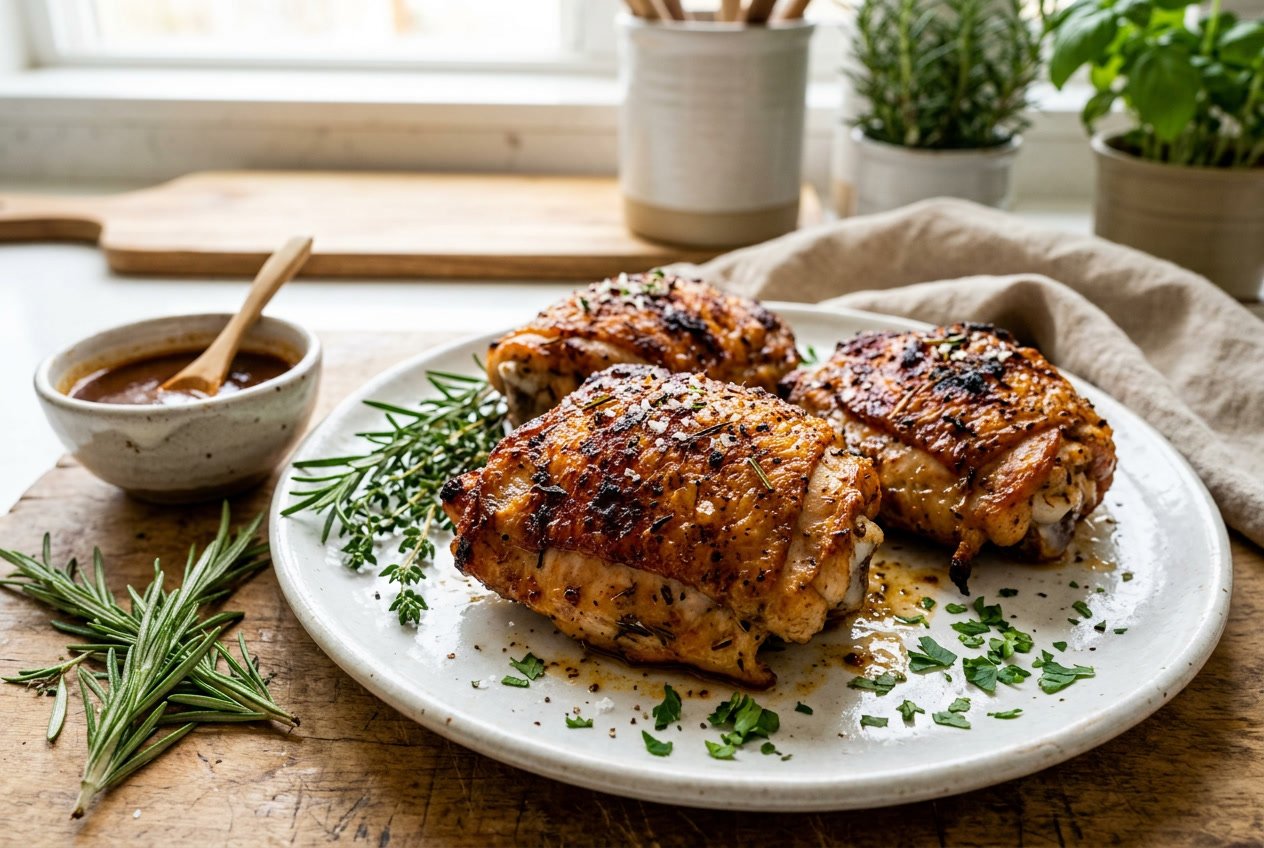
When baking chicken thighs at 425°F, focus on internal temperature first. Confirm with visual and texture cues.
Checking Internal Temperature
Use an instant-read meat thermometer and insert it into the thickest part without touching bone.
USDA minimum is 165°F, but you’ll often aim for 175–185°F to break down connective tissue and get more tender meat.
Check temperature at the end of the lower end of the time range, then every 5 minutes. If cooking from frozen, add 10–15 minutes and rely on the thermometer.
Let thighs rest 5–10 minutes after removing from the oven. Internal temp can rise 3–5°F during rest and juices redistribute.
Visual and Texture Indicators
Look for clear juices and no pink at the bone. Cut into the thickest part; meat should be opaque and the fibers should separate easily.
Skin should be crisp if you baked skin-on at 425°F. For boneless thighs, press the center—properly cooked meat feels firm but still springy.
Use a fork to test tenderness. If the fork slides in and the meat flakes, it’s done.
Step-by-Step Method for Baking Chicken Thighs at 425°F
This method focuses on prepping skin-on thighs for maximum crispness and placing them to promote even roasting.
Let them rest so juices redistribute.
Preparation and Seasoning Tips
Pat each thigh completely dry with paper towels. Removing surface moisture is the single most important step for crisp roasted chicken thighs.
Season generously with kosher salt—about 3/4 to 1 teaspoon per pound. Add black pepper and your preferred dry spices.
Rub a thin coat of oil (1 tsp per thigh) onto the skin to promote even browning and help spices adhere.
If you have time, salt the thighs and refrigerate uncovered on a rack for 1–4 hours to further dry the skin. Bring refrigerated thighs to room temperature for 15–20 minutes before baking.
For marinades or wet brines, blot the skin dry and reserve thicker marinades for under the skin or use them as a finishing sauce.
Arranging on the Pan for Even Cooking
Use a rimmed sheet pan with a wire rack when possible. The rack allows hot air to circulate and prevents the underside from becoming soggy.
If you don’t have a rack, line the pan with foil and create a shallow bed of halved onions or potato slices to lift the thighs.
Arrange thighs skin-side up with at least 1 inch of space between pieces. Crowding traps steam and lengthens cooking time while reducing crispness.
Place the pan in the center of a preheated oven at 425°F. Start checking doneness at 25 minutes for room-temperature, average-sized bone-in thighs and at 35 minutes if chilled.
Use an instant-read thermometer inserted into the thickest part without touching bone. Aim for 185–195°F for especially tender meat, or a safe minimum of 165°F.
For extra-crispy skin, broil for 1–3 minutes at the end while watching closely to avoid burning.
Resting After Baking
Remove thighs from the oven when the target internal temperature is reached. Transfer them to a clean plate or cutting board.
Rest for 5–10 minutes so juices redistribute and the meat is easier to carve.
Tent loosely with foil only if you need to keep them warm for a short period. Avoid wrapping tightly, which will trap steam and soften the skin.
After resting, finish with a squeeze of lemon or a sprinkle of fresh herbs to brighten flavor.
If you need to hold the thighs longer, keep them at 140–150°F in a low oven (or on a warming drawer) no more than 30–40 minutes.
Tips for Extra Crispy and Juicy Results
Dry the skin well and manage high heat carefully to get crisp skin and retain moisture.
Use a quick finish under intense heat for extra crackle. Pick marinades that add flavor without drawing out juices.
Broiling for Crispier Skin
Broil for the last 2–4 minutes to finish skin-on chicken thighs at 425°F. Move the oven rack so the thighs sit 6–8 inches from the broiler element.
Watch closely; broiling can burn the skin in under a minute.
Start baking skin-side up on a rimmed baking sheet or oven-safe skillet to let fat render. If you seared in a hot skillet first, transfer that same pan to the oven then broil at the end for improved texture.
Use a thermometer and stop broiling once the thickest part reads 165°F. Carryover heat can raise it a few degrees while resting.
Marinades and Flavor Boosters
Marinate skin-on chicken thighs for 30 minutes to 4 hours. Avoid overnight if your marinade has a lot of acid to prevent mushy texture.
Use oil, salt, and aromatics to season without pulling moisture out of the meat.
For quick flavor, dry-brine with ½–1 teaspoon kosher salt per thigh and refrigerate uncovered for at least 1 hour. Pat dry before baking at 425°F to maximize crispness.
If you want a glaze, apply it in the last 5–10 minutes of baking or after broiling to keep the skin from becoming soggy.
Common Mistakes and How to Avoid Them
Two main pitfalls can cause problems when you bake chicken thighs at 425°F: crowding the pan and using an oven that runs hot or cold.
Overcrowding the Pan
When you place thighs too close together they trap steam, which prevents browning and slows cooking.
Leave at least 1 inch of space between pieces on a rimmed baking sheet so hot air circulates and skin crisps.
Use a single layer only. If you have more than six thighs, use two sheets and rotate them between racks halfway through baking.
If skin gets soggy, transfer finished pieces to a rack to rest so steam escapes. For boneless thighs, give slightly more room because they release more moisture than bone-in pieces.
Oven Temperature Accuracy
Set your oven to 425°F but verify with an oven thermometer placed on the center rack.
A 25–50°F difference changes bake time by several minutes and affects skin crispness and internal temperature.
If your oven runs hot, reduce the set temperature by 10–20°F or pull the chicken 3–5 minutes earlier and check internal temperature with a probe thermometer.
If it runs cool, increase by 10–15°F or add 5–10 minutes to the cooking time while monitoring doneness.
Always check doneness with a meat thermometer inserted into the thickest part of the thigh (not touching bone). Target 165°F for safety; remove from the oven at 160–162°F if you want carryover to reach 165°F while resting.
Storing and Using Leftover Baked Chicken Thighs
Store leftovers promptly and keep them cold to preserve flavor and safety.
Reheat gently to retain moisture and avoid overcooking the meat.
Proper Storage Guidelines
Place cooled chicken thighs into airtight containers or heavy-duty zip-top bags within two hours of baking.
Remove excess air, label with the date, and refrigerate at 40°F or below.
Use refrigerated leftovers within 3–4 days for safety and best quality.
For longer storage, freeze in single layers on a baking sheet first, then transfer to freezer bags. Frozen cooked thighs keep well for about 2–3 months.
Thaw frozen thighs overnight in the refrigerator, not at room temperature.
If you plan to reuse juices or sauce, store them separately from the chicken. Discard any chicken with a sour smell, slimy texture, or off color.
Reheating Without Drying Out
Reheat gently until the internal temperature reaches 165°F (74°C). Measure with a probe thermometer.
Use low, even heat methods. Set the oven to 300–325°F (150–160°C) for 10–20 minutes and cover with foil to trap steam.
You can use an air fryer at 325°F for 5–8 minutes. Flip once during reheating.
For microwave reheating, slice thighs and add 1–2 tablespoons of broth or sauce. Cover with a microwave-safe lid or damp paper towel.
Heat on medium power in 30–45 second bursts until hot. Let the meat rest briefly after reheating so juices redistribute.
Reheat only the portion you will eat to avoid drying out the rest. If you want crisp skin, finish under a broiler or in a hot skillet for 1–2 minutes.


