
How Long Chicken Thighs at 400: Complete Cook Time and Guide
You want juicy, safe-to-eat chicken thighs with crisp skin and predictable timing. For bone-in, skin-on thighs, bake at 400°F for about 30–40 minutes. For boneless thighs, expect roughly 20–28 minutes and always confirm doneness with an internal temperature of 165°F (74°C).
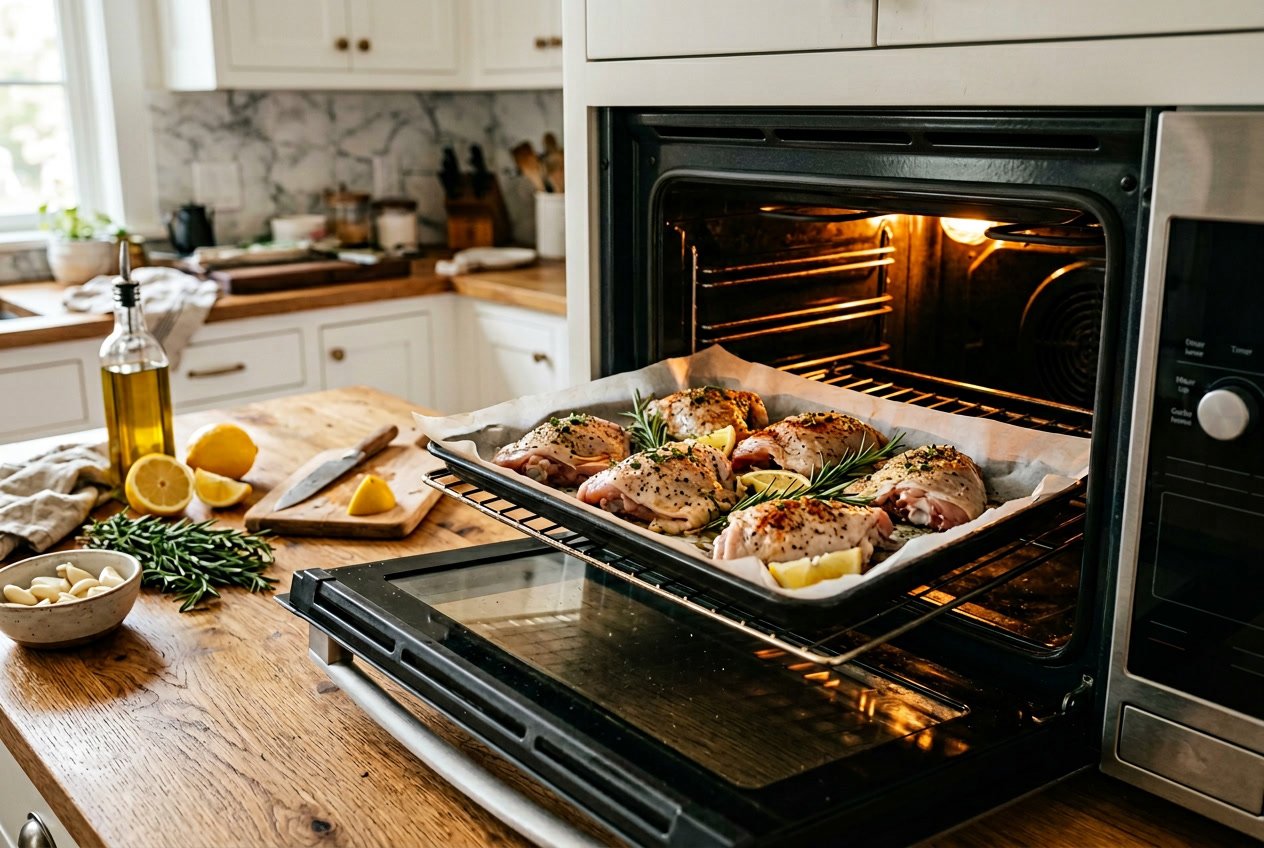
This post breaks down exact cook times, how bone, skin, size, and oven accuracy change the clock, and simple prep steps that boost crispness and moisture. Follow practical tips for baking from fresh or frozen and avoid common mistakes for consistent results.
Key Cook Times for Chicken Thighs at 400°F
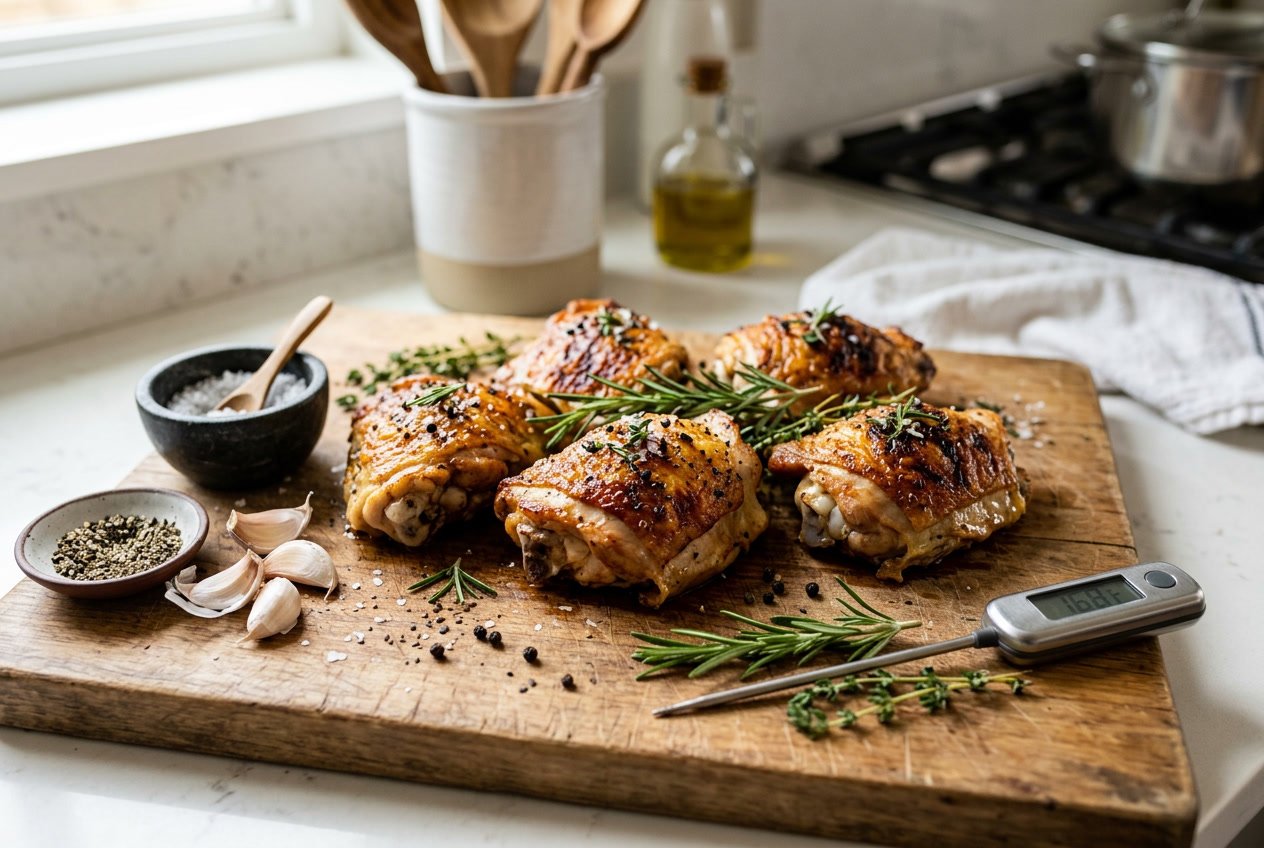
Most thighs finish between 20 and 45 minutes depending on bone and skin. Use an instant‑read thermometer and aim for at least 165°F.
Higher final temps (around 180–200°F) will yield more fall-apart texture for bone-in pieces.
Bone-In, Skin-On Chicken Thighs
Bone-in, skin-on thighs typically take 35–45 minutes at 400°F.
Arrange them skin side up on a rimmed sheet so air circulates and the skin crisps.
Pat the skin dry and season well; a light brush of oil helps browning.
Check the thickest part with an instant‑read thermometer.
Stop when the probe reads 165°F for safety, though 180–190°F develops more tender connective tissue.
If skin isn’t crisp enough, finish under the broiler 1–3 minutes while watching closely.
Boneless, Skinless Chicken Thighs
Boneless, skinless thighs cook faster—plan for 20–30 minutes at 400°F.
Lay them in a single layer so they cook evenly and don’t steam.
Because they lack skin and bone, they dry out sooner, so avoid overcooking.
Target 165°F internal temperature, then rest 3–5 minutes to let juices redistribute.
If pieces are thin, check earlier (around 15 minutes) to prevent dryness.
Marinades or brief searing before baking can improve flavor and moisture retention.
Bone-In, Skinless Chicken Thighs
Bone-in, skinless thighs take about 30–40 minutes at 400°F.
The bone slows heat penetration, so they cook longer than boneless thighs but shorter than skin-on equivalents.
Season and place on a baking sheet or shallow dish; cover loosely if you want less surface browning.
Check temperature in the thickest area away from bone; 165°F is the safe minimum.
For more tender meat, allow the internal temperature to reach toward 180°F.
Rest 5 minutes before serving to keep juices from escaping.
Boneless, Skin-On Chicken Thighs
Boneless, skin-on thighs usually need 25–35 minutes at 400°F.
Skin adds flavor and fat, helping the exterior brown while the meat cooks more quickly than bone-in cuts.
Start with patted-dry skin and a light oil to promote crisping.
Monitor internal temp and remove at 165°F for safety; a short rest will finish carryover cooking.
If skin gets too dark before the center is done, move the pan to a lower rack or tent loosely with foil for a few minutes.
Sear in a skillet first for extra crispness, then finish in the oven if you want the crispiest result.
Crucial Factors That Affect Cooking Time
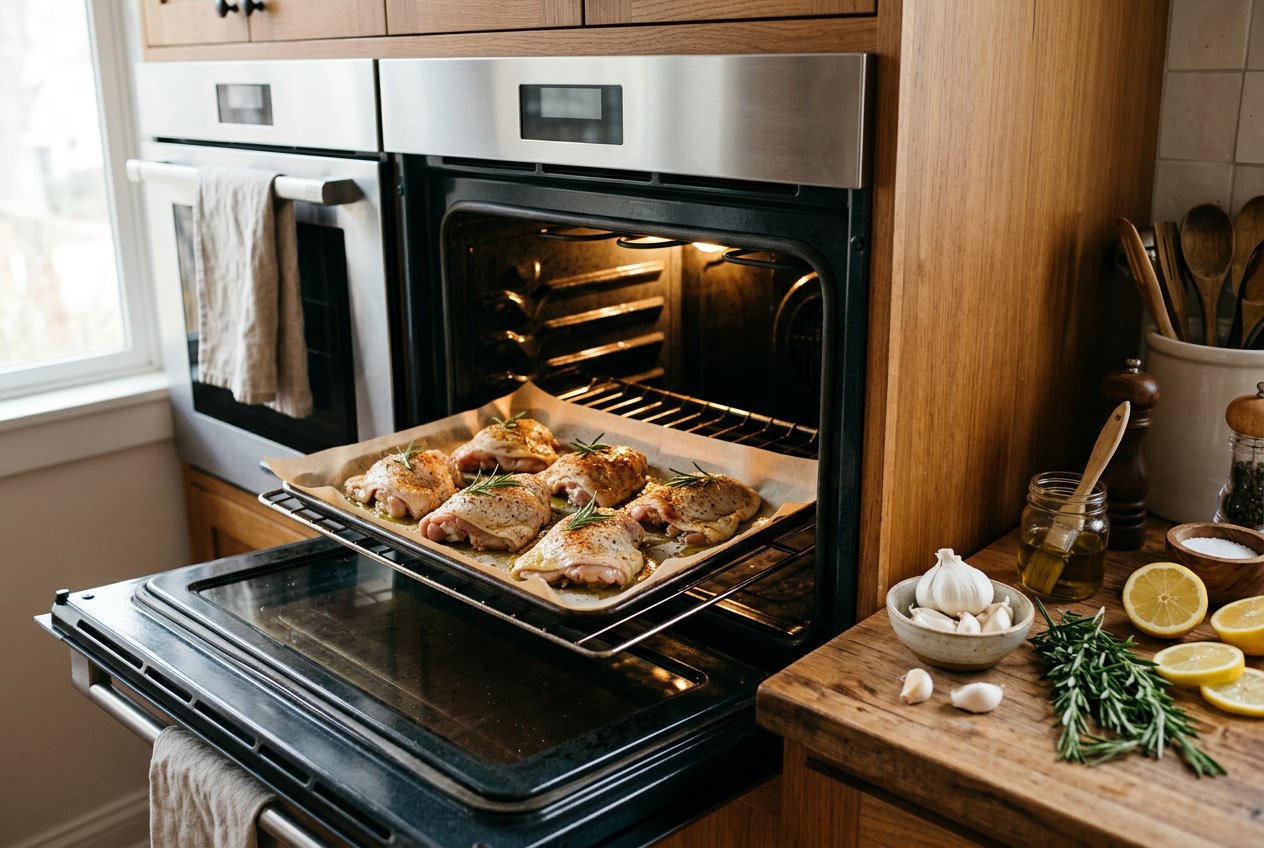
Size, oven behavior, and how you arrange the thighs determine whether chicken thighs reach 165°F in the recommended window and whether the skin crisps or stays soggy. Pay attention to these details for predictable results.
Chicken Thigh Thickness and Size
Thickness and weight directly change bake time for chicken thighs at 400°F. Bone-in, skin-on thighs typically weigh 5–7 ounces each and need about 35–45 minutes. Boneless, skinless thighs often weigh 3–4 ounces and finish in roughly 20–30 minutes.
Measure the thickest part with a ruler or estimate by feel. A 1-inch thick thigh will cook significantly faster than a 1.5–2 inch piece.
Use a meat thermometer to confirm doneness rather than relying on time alone. Insert it into the thickest part without touching bone and target 165°F (74°C).
If you start with cold-from-fridge meat, add 3–6 minutes. Larger or extra-thick thighs may need tenting with foil during the last 5–10 minutes to avoid over-browning while reaching internal temperature.
Oven Accuracy and Calibration
Home ovens can be off by 10–25°F, which changes how long chicken thighs at 400°F take to cook. Place an oven thermometer at rack level before baking to verify actual temperature and adjust the set point if needed.
If your oven runs hot, lower the dial 10–15°F; if it runs cool, increase it similarly.
Allow the oven to fully preheat and wait 10 minutes after it reaches the target to stabilize heat.
Use the middle rack for even browning.
If you use convection, reduce the temperature by about 25°F or trim 5–10 minutes from the bake time and monitor the internal temperature closely.
Pan Crowding and Air Circulation
Crowding the pan extends cooking time and prevents crisping of skin. When thighs touch or are packed tightly, steam builds and the exterior stays soft.
Arrange thighs with at least 1 inch of space between pieces; use two pans if needed.
Elevate thighs on a wire rack set over a rimmed baking sheet for best air circulation and even browning.
If you must use a single crowded sheet, flip thighs halfway and expect longer cook times by 5–10 minutes.
Avoid covering thighs with foil during most of the bake; only tent at the end to prevent excessive browning while still reaching safe internal temperature.
How to Prepare and Bake Chicken Thighs at 400°F
Pat thighs dry, season thoroughly, and preheat the oven to a steady 400°F.
Arrange pieces so hot air circulates and use a thermometer to confirm the internal temperature reaches 165°F before resting.
Preparation and Seasoning Steps
Pat each thigh dry with paper towels to remove surface moisture; dry skin crisps much better.
Trim excess fat and loose skin for even browning.
Season simply but deliberately: 1–2 teaspoons kosher salt per pound, ½–1 teaspoon freshly ground black pepper, and 1–2 tablespoons oil to help spices adhere.
Add garlic powder, smoked paprika, or dried herbs for flavor.
If you marinate, limit acidic marinades to 30–60 minutes to avoid mushy texture.
If using frozen chicken thighs, thaw in the refrigerator 24 hours or use the defrost setting on your microwave before seasoning.
Baking from frozen increases cook time by about 50% and produces less even browning, so thaw when possible.
Allow seasoned thighs to sit at room temperature for 15–20 minutes while the oven preheats.
This reduces temperature shock and promotes even cooking.
Arranging Chicken for Even Cooking
Use a rimmed baking sheet or shallow roasting pan.
Line it with foil for easier cleanup and place a wire rack in the pan if you want crisper skin on all sides.
Space thighs 1–2 inches apart so hot air can circulate; overcrowding traps steam and softens skin.
Place bone-in thighs skin-side up.
For boneless skinless thighs, put them on a lightly oiled sheet to prevent sticking and flip once halfway through for uniform color.
If you use a thermometer probe, insert it into the thickest part without touching bone.
For frozen thighs baked without thawing, expect longer times and monitor internal temp rather than relying on minutes alone.
Essential Resting Period
Remove thighs from the oven when the thickest part reads 165°F (74°C).
If you cook to slightly higher temps for personal preference, pull them at 165–170°F to maintain juiciness.
Tent loosely with foil and rest for 5–10 minutes; this lets juices redistribute and finish any carryover cooking.
Cutting immediately causes juices to run out, leaving meat drier.
During resting, you can spoon pan juices over the thighs or brush with sauce for gloss and flavor.
Serve within 20 minutes for best texture and temperature.
Cooking Chicken Thighs from Frozen
You can cook frozen chicken thighs safely in the oven at 400°F, but you must allow extra time and verify doneness with a thermometer.
Proper placement, minimal crowding, and occasional glazing or basting help keep the meat juicy while encouraging crisp skin.
Safe Methods for Cooking Frozen Thighs
Bake frozen chicken thighs directly on a rimmed baking sheet or in a shallow roasting pan.
Arrange thighs in a single layer with at least 1 inch between pieces to promote even air circulation and browning.
Use a wire rack set over the pan if you want crisper skin and to let fat drip away.
Start the oven fully preheated to 400°F.
Place the baking pan on the middle rack.
If the thighs are stuck together, separate them as they begin to thaw in the oven to ensure even cooking.
Insert an instant-read meat thermometer into the thickest part of the thigh, avoiding bone; target 165°F for safety.
If you worry about dryness, cover loosely with foil for the first 20–30 minutes, then remove foil to finish and brown the skin.
You can brush on sauce or melted butter during the last 10–15 minutes to increase flavor and surface color.
Adjusting Cook Time for Frozen Chicken
Bone-in, skin-on frozen thighs typically take about 50–60 minutes at 400°F.
Boneless, skinless pieces usually take 30–45 minutes.
Exact time depends on thigh size, oven accuracy, and whether you covered the pan.
Use the thermometer rather than elapsed time as your primary guide.
If pieces vary in thickness, start checking the thickest ones at the lower end of the range.
Add 5–10 minutes if internal temperature lags or if thighs were tightly frozen together.
For crowding or heavy layering, increase total bake time and check multiple pieces in different pan locations.
Use these timing checkpoints:
- Boneless, skinless: check at 30 min, expect 30–45 min.
- Bone-in, skin-on: check at 45 min, expect 50–60 min.
Always confirm 165°F before serving.
Tips for Juicy and Crispy Chicken Thighs
Pat thighs dry, season well, and give the skin space to crisp while the meat stays moist.
Use a wire rack, control oven temperature, and check internal temperature to avoid overcooking.
Achieving Crispy Skin
Dry the skin thoroughly with paper towels; moisture prevents browning.
For skin-on chicken thighs, score the skin lightly in a crosshatch or pat with a salt-rub to draw out surface moisture.
Place thighs on a wire rack set over a rimmed baking sheet so air circulates under and around each piece.
Bake at 400°F for bone-in thighs for roughly 35–45 minutes; boneless skin-on will be toward the lower end of that range.
For extra crisp, finish 2–3 minutes under the broiler, watching closely.
You can also use a light dusting of baking powder (mixed 1:3 with salt) to speed browning.
Avoid overcrowding the pan—leave at least 1 inch between thighs.
Brining and Marinade Techniques
Brine boneless or bone-in thighs in a simple solution of 1/4 cup kosher salt per quart of water for 2–4 hours to improve juiciness and seasoning penetration.
Rinse and pat dry before applying oil and spices.
Use acid-based marinades (yogurt, lemon, or vinegar) for up to 6 hours on boneless thighs; too long can over-tenderize and change texture.
For skin-on roasting, apply dry rub or oil-based marinades right before baking to keep skin from getting soggy.
If you prefer overnight flavor, salt the thighs and refrigerate uncovered for 2–4 hours (air-dry) to further dry the skin for better crisping.
Always bring meat close to room temperature (20–30 minutes) before roasting for more even cooking.
Using a Meat Thermometer
Insert an instant-read thermometer into the thickest part of the thigh, avoiding bone contact.
For safety, 165°F is the USDA minimum, but aim for 175°F for bone-in thighs to break down connective tissue and maximize tenderness.
Check temperature toward the lower end of the time range: for bone-in at 400°F check at 35 minutes, for boneless check at 20 minutes.
Let thighs rest 5–10 minutes after removing from oven; carryover heat will rise a few degrees and juices will redistribute.
Record times and temps for your oven and thigh sizes.
A consistent thermometer helps prevent overcooking and ensures both juicy meat and a crisp exterior.
Common Mistakes and Best Practices
Avoid undercooking or overcooking by preheating the oven, spacing thighs for even cooking, and always checking with a thermometer.
These steps keep your chicken thighs juicy, safe, and evenly cooked.
Overcooking and Undercooking Pitfalls
Overcooking dries meat quickly, especially if you exceed 25 minutes for boneless thighs at 400°F. Watch thicker pieces closely; they may need the full 25 minutes while thin or small thighs finish around 18–20 minutes.
Insert a digital meat thermometer into the thickest part and remove the thighs at 165°F (74°C). Let them rest for 5 minutes so carryover heat evens the temperature without drying the meat.
Undercooking poses a food-safety risk and causes a rubbery texture. If juices run pink, place the thighs back in the oven and check again after 3–5 minutes.
Check doneness with a thermometer instead of cutting into the thickest piece to avoid losing moisture. Space thighs so hot air circulates and flip once halfway through for even browning.
The Importance of Preheating
Preheat your oven to a true 400°F before adding the thighs. Putting cold chicken into a heating oven extends cooking time and promotes uneven doneness.
A fully preheated oven helps Maillard browning, giving you better color and flavor in 20–25 minutes for boneless thighs. If you use a convection setting, lower the time by 2–5 minutes or reduce temperature by 25°F since circulated hot air cooks faster.
Let boneless thighs sit 15–20 minutes at room temperature before baking to reduce internal temperature shock and improve even cooking. Pat thighs dry and lightly oil the surface to encourage browning.
Use a wire rack over a baking sheet if you want crisper edges. Direct contact with a hot pan can also help but may increase sticking without oil.
Food Safety Guidelines
Aim for an internal temperature of 165°F (74°C) measured at the thickest point. The USDA sets this as the minimum for safe poultry.
Calibrate your thermometer regularly. Cheap probes can read low or high by several degrees.
After baking, let the thighs rest for 5 minutes to allow juices to redistribute. This helps prevent undercooked pockets when you slice.
Store leftovers within two hours of cooking in airtight containers. Refrigerate at 40°F (4°C) or below for up to 3–4 days.
If you cook from frozen, add 10–15 minutes to the cooking time. Verify that the internal temperature reaches 165°F before serving.
When reheating, bring the internal temperature back to 165°F to ensure safety.


