
How Long Can Chicken Thighs Marinate? Safe Times, Flavors & Tips
You want flavorful, tender chicken thighs without risking a mushy texture or food-safety problems.
Marinate chicken thighs for as little as 30 minutes for surface flavor. Aim for 1–12 hours for best taste and tenderizing effects, and avoid going past 24 hours to prevent texture breakdown.
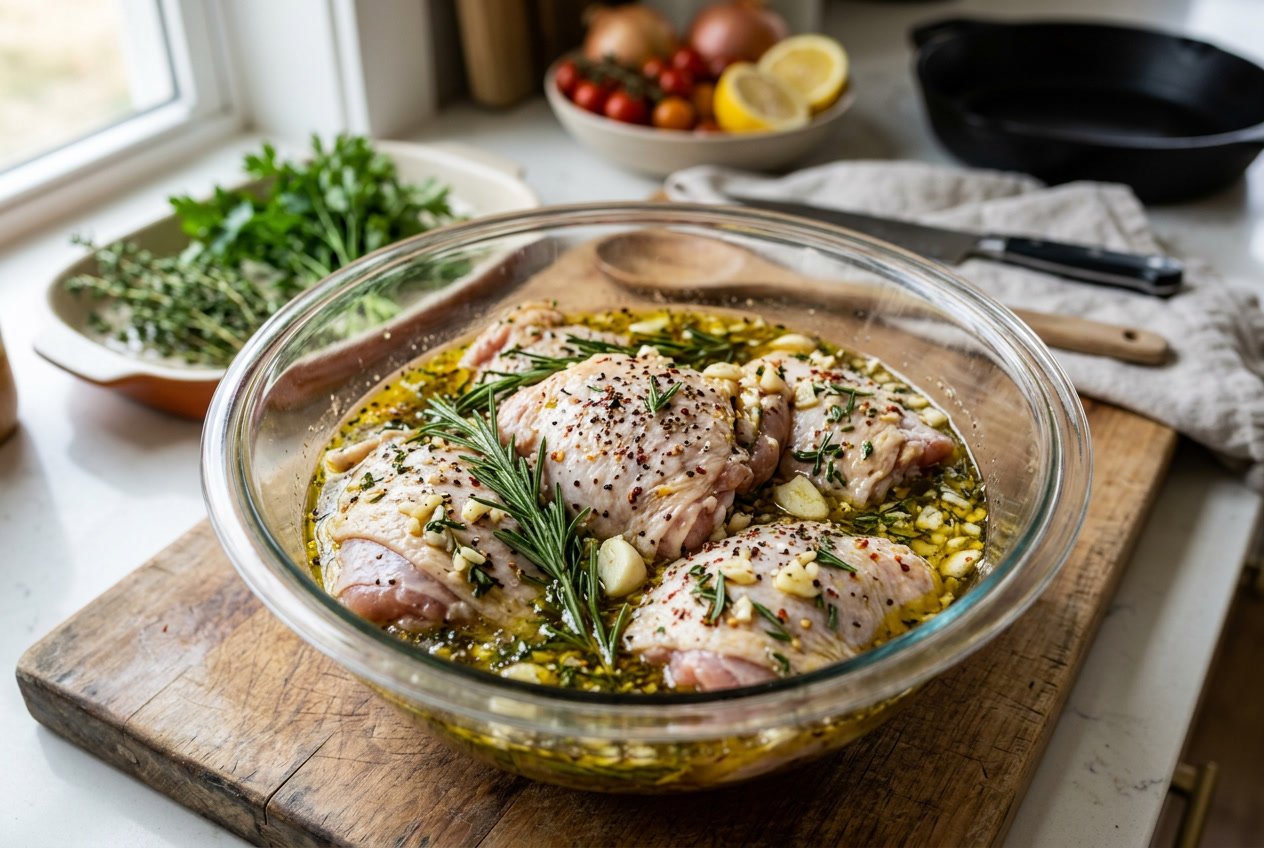
You can choose ideal times for bone-in and boneless thighs based on marinade acidity, desired flavor depth, and food-safety limits.
This guide provides clear guidelines and practical tips so you can pick the right marinating window and get consistent, delicious results every time.
Ideal Marinating Times for Chicken Thighs

Short soaks add surface flavor. Longer soaks let seasonings penetrate but increase risk of texture changes with acidic blends.
Minimum Marinating Time
Marinate bone-in or boneless chicken thighs at least 30 minutes in the refrigerator for a noticeable flavor boost.
Oils, salt, herbs, and low-acid elements need only this short window to season the surface and slightly tenderize the meat.
If you use a high-salt or enzyme-based component like soy sauce or pineapple, 20–30 minutes still yields flavor without damaging texture.
When time is very limited, apply the marinade at room temperature for 10–15 minutes just before cooking. Keep total exposure under 2 hours to stay safe.
Optimal Marinating Duration
Aim for 2–6 hours refrigerated for the best balance of flavor penetration and texture for most marinades.
This range allows acids, oils, and aromatics to move deeper into the thigh meat without causing noticeable breakdown.
For yogurt- or buttermilk-based marinades, 4–8 hours often gives superior tenderness and flavor.
If you want to marinate chicken thighs overnight, prioritize low-acid or dairy-based mixes and avoid highly acidic formulas for longer than 12 hours.
Maximum Safe Marinating Time
Marinate chicken thighs no longer than 24 hours in the refrigerator when using typical home marinades.
Beyond 24 hours, many acidic or enzymatic ingredients begin to break down proteins excessively and produce a mushy texture.
If your marinade is mostly oil and dry spices with low acidity, you can marinate up to 24 hours safely. Always refrigerate at 40°F (4°C) or below.
Discard any marinade that touched raw chicken unless you boil it before using as a sauce to eliminate bacteria.
Risks of Over-Marinating
Over-marinating in citrus, vinegar, or high-acid marinades breaks down the meat structure and makes thighs mealy or mushy.
Enzymatic marinades like fresh pineapple or papaya can quickly dissolve proteins. Even an hour can be too long at room temperature.
Extended marination raises food-safety concerns if the chicken sits above 40°F (4°C).
Cross-contamination risk increases if you reuse marinade. Always cook or boil leftover marinade before using it as a sauce.
Factors That Impact Marinating Duration
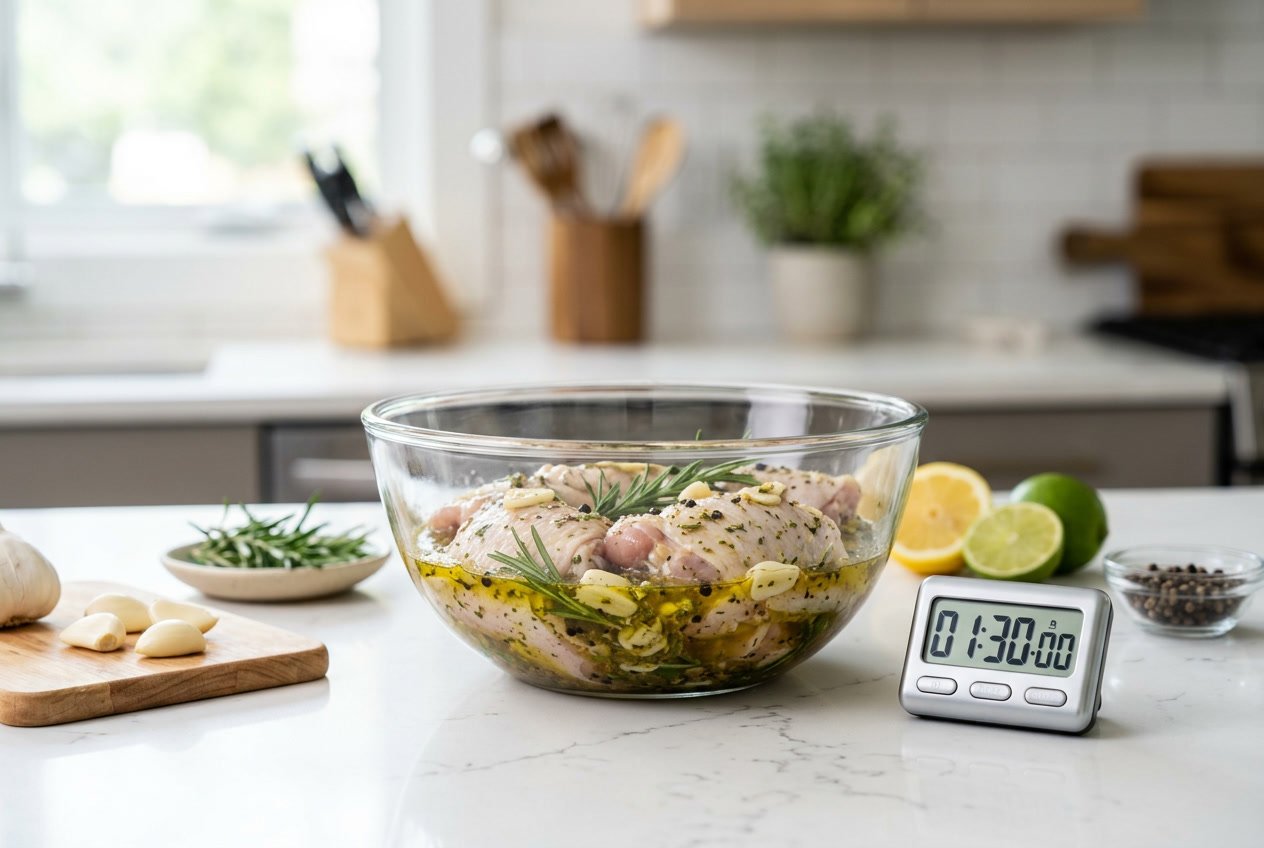
Marinade composition, the thigh’s size and whether it’s bone-in, and refrigeration temperature determine how long you should marinate.
Pay attention to acid levels, piece thickness, and cold storage to balance flavor absorption with texture and safety.
The Role of Marinade Acidity
Acidic marinades like lemon juice, vinegar, or yogurt break down proteins and speed tenderizing.
If you use a high-acid mix, limit marinating time. Boneless thighs often need no more than 6–12 hours, while bone-in can tolerate up to 12–24 hours depending on acid strength.
Acid can also change texture. Overexposure makes meat mushy because acids denature surface proteins.
Use lower acid concentration or shorter time when you want a firm bite rather than a soft texture.
For deep flavor without texture damage, combine oil and herbs with a modest acid dose or add acid later in the process.
Enzymatic ingredients like pineapple, papaya, or raw ginger act faster than vinegar and require even shorter times—often under 2 hours for boneless thighs.
Size and Cut of Chicken Thighs
Boneless, skinless thighs absorb marinade faster because there’s no bone barrier.
Expect measurable flavor in 30 minutes to 2 hours and balanced penetration around 4–6 hours.
Avoid very long acidic soaks for these cuts.
Bone-in or thicker thighs need more time for the marinade to reach interior tissues.
Plan 6–12 hours for good penetration and up to 24 hours for deep flavor with low-acid, oil-based mixes.
Bones slow heat transfer and flavor absorption, so add time accordingly.
If pieces are uneven, butterfly or score thicker parts to improve penetration.
Smaller cubes or strips will marinate in under an hour, useful when you need faster prep.
Temperature and Safety Considerations
Always marinate chicken at 40°F (4°C) or below to prevent bacterial growth.
Keep thighs in a sealed non-reactive container—glass, ceramic, or food-grade plastic—to avoid metal-acid reactions that can off-flavor the meat.
Do not marinate at room temperature.
If you start with frozen thighs, fully thaw in the refrigerator before marinating for even flavor uptake.
Discard used marinade that held raw chicken, or boil it for at least one minute before using as a sauce to kill pathogens.
Label marinated chicken with the start time if you’re storing it more than a few hours.
For safety and quality, treat 24 hours as a practical upper limit for most marinades unless the recipe specifies otherwise.
Choosing and Using Marinade Ingredients
Pick ingredients that build salt, acid, fat, and aromatics into a balanced mix so your chicken thighs gain flavor and tenderness without collapsing in texture.
Measure stronger components and adjust timing based on what you include.
Common Components for Flavorful Marinades
Start with these core components and scale by weight of chicken (per 1 lb/450 g): 1–2 tsp salt, 2 tbsp acid, 2–3 tbsp oil, plus aromatics and seasonings.
-
Salt — Use kosher salt or soy sauce to season and help proteins retain moisture. If marinating longer than 2 hours, reduce added salt to avoid over-salting.
-
Acid — Vinegar, lemon or lime juice, or yogurt tenderize; use sparingly with long marins. Strong acids act faster and can make meat mushy if left too long.
-
Oil — Olive or canola oil carries fat-soluble flavors and helps prevent sticking during cooking.
-
Aromatics — Garlic, ginger, onion, scallions, and shallots provide immediate surface flavor.
-
Umami boosters — Soy sauce, fish sauce, or miso deepen savory notes without extra salt if you balance them.
Store marinade and chicken in a sealed bag or nonreactive container in the refrigerator to keep flavor even and safe.
Balancing Acids and Oils
Balance determines both flavor penetration and texture.
Use a moderate acid-to-oil ratio for best results.
A typical starting ratio is 1 part acid to 1–2 parts oil.
For example, 2 tablespoons lemon juice with 2–4 tablespoons olive oil per pound of chicken thighs gives tang without over-softening.
If you’ll marinate longer than 4–6 hours, drop the acid amount or switch to gentler acids like yogurt or buttermilk.
Their enzymes tenderize more slowly and preserve texture.
Avoid metal bowls with acidic marinades; choose glass, ceramic, or food-grade plastic.
Whisk or shake the marinade to emulsify so herbs and spices cling to the meat.
Pat thighs dry before cooking to improve browning.
Sweeteners, Spices, and Herbs
Sweeteners, spices, and herbs control caramelization, aroma, and regional character.
-
Sweeteners: Honey, brown sugar, or maple syrup add balance and help form a glaze. Use 1–2 tablespoons per pound and reduce if grilling at very high heat to avoid excessive charring.
-
Spices: Ground spices like paprika, cumin, or coriander provide backbone; add them to the marinade so oils carry their flavors into the meat. Toast whole seeds briefly to intensify flavor before crushing.
-
Herbs: Fresh herbs like thyme, rosemary, or cilantro deliver bright notes when added later in the marinating window. Dried herbs can be added earlier for deeper infusion.
-
Salt timing: If using a heavily acidic or long marinate, delay adding salt until nearer cooking time or use low-sodium soy to control final salinity.
Combine these deliberately. Match sweeteners and acid for balance, pair spices with oil for better extraction, and stagger fresh herbs to preserve brightness.
Best Practices for Marinating Chicken Thighs
Keep refrigerated while the flavors develop.
Use a non-reactive container or sealed bag for even coating.
Remove excess marinade and moisture before cooking to promote browning and crisp skin.
How to Marinate for Even Flavor
Trim excess fat and, if pieces are uneven, pound thicker parts to an even thickness so the marinade penetrates consistently.
Score the skin a few times if using skin-on thighs; this helps oil-based marinades and aromatics reach the meat beneath without tearing the skin.
Use a ratio: 1 part acid (lemon, vinegar, yogurt) to 3–4 parts oil, plus salt, aromatics, and a sweetener if desired.
Salt the marinade lightly if marinating under 2 hours; omit or reduce added salt for longer marination to avoid drawing out moisture.
Turn or massage the thighs in the marinade every 30–60 minutes to redistribute flavors.
Plan time based on ingredients: 30–60 minutes for quick flavor uptake, 1–12 hours for deeper flavor, and avoid acidic marinades beyond 12–24 hours to prevent mushy texture.
Containers and Storage
Choose a resealable plastic bag or glass container with a tight-fitting lid.
These prevent leaks, expose all surfaces to the marinade, and avoid reacting with acidic ingredients.
If using a bowl, cover it tightly with plastic wrap.
Always marinate in the refrigerator at 40°F (4°C) or below.
Label the container with start time and expected marinate end time when prepping ahead.
Discard any marinade that contacted raw chicken unless you boil it for at least 2–3 minutes before using as a sauce.
For freezer prep, place thighs and marinade in a freezer-safe bag, remove air, and freeze.
Thaw in the refrigerator overnight; the thawing process continues to infuse flavor.
Pat Dry Before Cooking
Remove thighs from the marinade and let excess drip off for a minute.
Then use paper towels to pat the surface dry, especially skin, so you get immediate browning and crisping when the meat hits the hot pan or grill.
If you plan to baste with reserved, boiled marinade, do so late in cooking to avoid steaming the surface.
Allow marinated thighs to sit at room temperature 10–15 minutes before cooking for even internal temperature, but do not leave them out longer than that.
Cooking Marinated Chicken Thighs
Marinated chicken thighs need heat long enough to reach a safe internal temperature while preserving moisture and any crisp skin.
Use a thermometer, control flare-ups, and let rested thighs retain juices before serving.
How to Cook Marinated Chicken Thighs
Pat the thighs lightly with paper towel if the marinade is very wet; excess surface liquid prevents browning.
Preheat your pan, grill, or oven so the chicken hits a hot surface and begins to sear immediately.
For stovetop, heat a heavy skillet over medium-high, add a little oil, and sear skin-side down 4–6 minutes until crisp.
Flip and reduce heat to medium; cook another 6–10 minutes until temperature is correct.
For skillet sauces, remove excess marinade and reserve a small portion you’ve boiled for basting or finishing.
Transfer bone-in thighs to a preheated oven if using a two-step method. Sear first, then roast at 375–400°F (190–200°C) to finish.
Rest cooked thighs 5–10 minutes to let juices redistribute before slicing.
Recommended Internal Temperatures
Cook poultry to a safe and precise temperature rather than by time alone.
Insert an instant-read thermometer into the thickest part, avoiding bone.
-
Safe minimum: 165°F (74°C) for immediate safety.
-
For juicier thighs, aim for 175–185°F (79–85°C) for bone-in cuts; collagen breaks down and meat becomes more tender.
Check temperature in several pieces when cooking multiple thighs.
If you reach 165°F but the meat feels tight, a few more minutes to 175°F can improve tenderness without drying when you manage heat correctly.
Grilling, Baking, and Other Methods
Grilling creates the best char and smoky flavor for juicy chicken. Watch for flare-ups from sugary marinades.
Set up two heat zones. Use direct high heat to sear for 2–4 minutes per side. Move the chicken to indirect medium heat to finish for 8–15 minutes, flipping occasionally.
Baking cooks chicken evenly and requires less hands-on time. Bake at 375–400°F (190–200°C) on a rack or sheet for 25–40 minutes, depending on size and whether the chicken has bones.
If the chicken browns too quickly, tent it with foil.
For sous vide, cook at 145–150°F (63–66°C) for 1.5–4 hours for consistent doneness. Sear briefly afterward for color.
Air fryers crisp skin quickly. Preheat to 380°F (193°C) and cook for 15–20 minutes, flipping once.
Marination Tips and Flavor Enhancements
Marinate chicken thighs for up to 24 hours to maximize flavor without damaging texture. Use airtight containers or freezer bags and keep the chicken refrigerated.
Marinating Overnight and Meal Prep
Marinate chicken thighs overnight or up to 24 hours with oil-based or dairy-based marinades like yogurt or buttermilk. These marinades tenderize the meat without making it mushy.
If your marinade is highly acidic, such as those with lots of lemon, vinegar, or wine, limit marinating to 12 hours to avoid a mealy texture.
For meal prep, portion thighs into single-use, labeled freezer bags with marinade. Remove excess air and freeze. Thighs marinate as they thaw in the fridge, so plan for 24–48 hours if starting from frozen.
Always refrigerate marinating chicken. Discard any used marinade unless you boil it before using as a sauce.
Tips for Extra Juiciness
Pat thighs dry before cooking to improve browning and crisp the skin. Lightly salt the chicken up to 30 minutes before cooking to draw moisture back into the meat and boost juiciness.
Avoid heavy salting for the full marinating time or the meat may become too salty.
Add 1–2 tablespoons of oil per pound to your marinade to help distribute flavors and retain moisture during grilling.
For grilled chicken, start cooking skin-side down and finish over indirect heat to render fat without drying the meat.
Aim for an internal temperature of 165°F (74°C). Rest the thighs for 5–10 minutes before serving to let juices redistribute.
Serving Suggestions for Marinated Thighs
Serve juicy grilled chicken thighs over a simple bed of rice or mixed greens. This highlights the marinade flavors.
Pair citrus-herb marinades with grilled vegetables. Add a squeeze of fresh lemon to brighten the dish.
For richer marinades like yogurt, soy-honey, or barbecue, offer tangy pickles or a crisp cabbage slaw. These sides help cut through the fat.
Boil leftover marinade for a sauce. Brush it on during the last 2 to 3 minutes of cooking or serve it on the side to avoid bacterial risk.


