
How Long Can Chicken Thighs Be Frozen: Storage & Safety Tips
You want to know how long chicken thighs keep in the freezer and whether they’ll still taste good when you cook them. If you store raw chicken thighs properly at 0°F (-18°C) or lower, they keep their best quality for about nine months, though they remain technically safe beyond that.
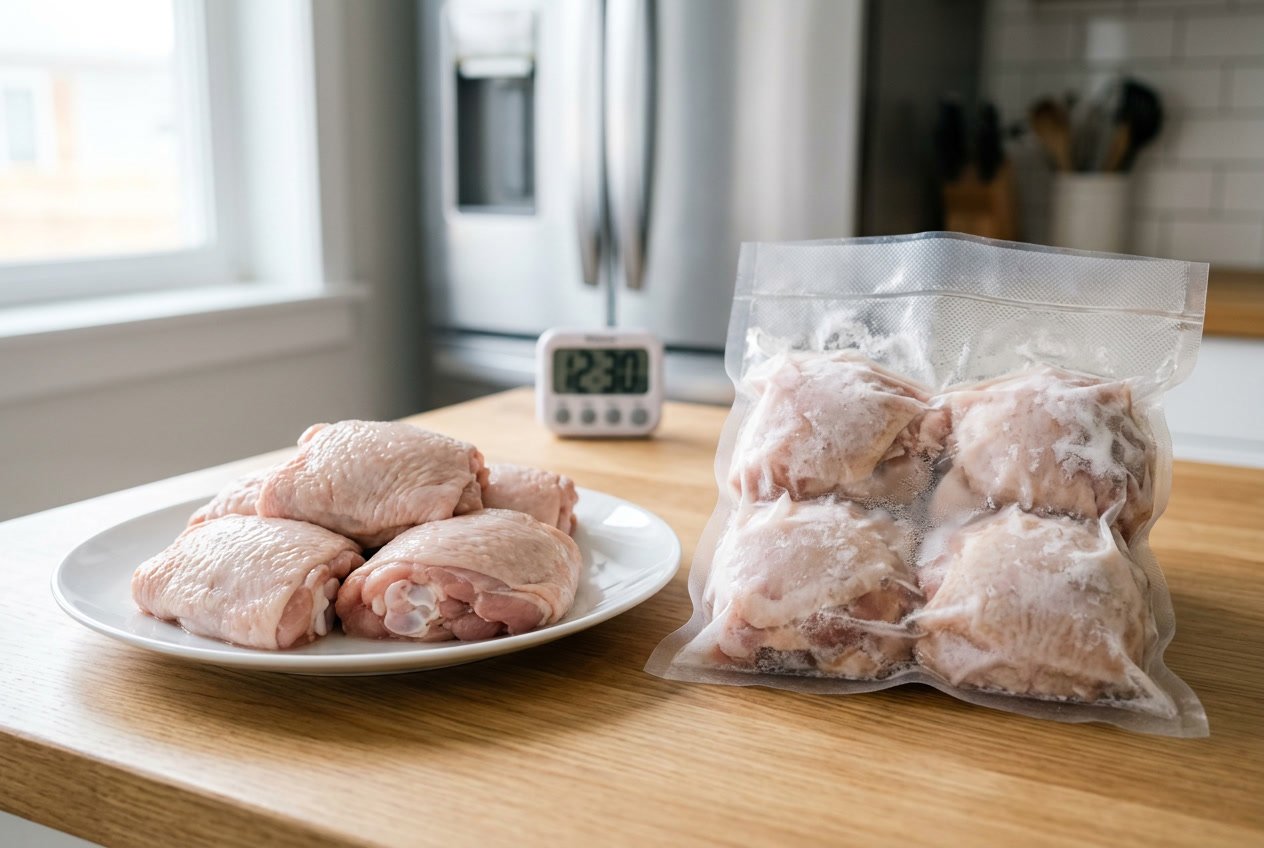
Several factors affect how long chicken thighs stay good in the freezer. How you freeze them, signs of freezer spoilage, and thawing or refreezing practices all matter for meal planning and avoiding waste.
How Long Can Chicken Thighs Be Frozen?
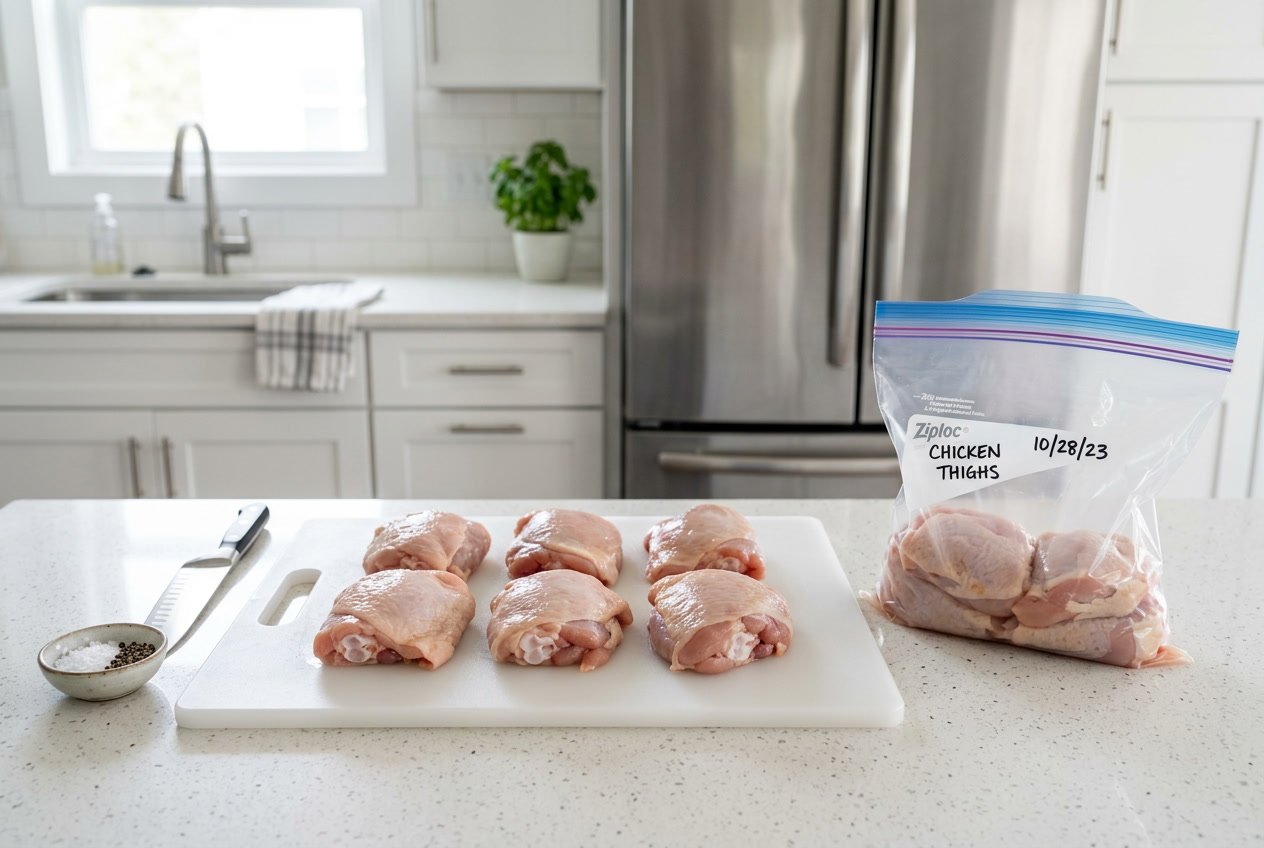
Raw and cooked chicken thighs stay safe for a long time at 0°F (-18°C) or below, but quality goes down over time. Good packaging and a stable freezer temperature help flavor and texture last.
Optimal Freezer Shelf Life for Raw Chicken Thighs
Raw chicken thighs keep best quality for about 6 to 9 months when frozen. If you vacuum seal or wrap each thigh tightly in plastic wrap and place them in a heavy-duty freezer bag, you remove air and reduce freezer burn.
If you freeze thighs soon after purchase, you get better taste and juiciness within that 6–9 month window. You can keep raw thighs indefinitely at 0°F for safety, but texture and flavor will decline after nine months.
Label each package with the freeze date. Store them on a steady-temperature shelf instead of the door to avoid temperature swings.
How Long to Freeze Cooked Chicken Thighs
Cooked chicken thighs keep good quality for about 2 to 6 months in the freezer. Use airtight containers or tightly wrap pieces in foil and place in freezer bags to reduce freezer burn and preserve moisture.
Freeze cooked thighs only when fully cooled. Use thawed cooked thighs within 3–4 days in the refrigerator and do not refreeze unless you cook them again.
Dishes with sauces or gravies may freeze better than dry-roasted pieces because the liquid helps protect texture.
Quality Versus Safety Timeline
At 0°F, chicken thighs stay safe indefinitely, but quality drops over time. Use the recommended windows—6–9 months for raw and 2–6 months for cooked—for good taste and texture.
Poor packaging, freezer temperature changes, and freezing meat near its sell-by date shorten quality lifespan. Inspect thawed chicken for off smells, odd color, or slimy texture; discard if you notice these signs.
Factors Affecting Freezer Storage Duration
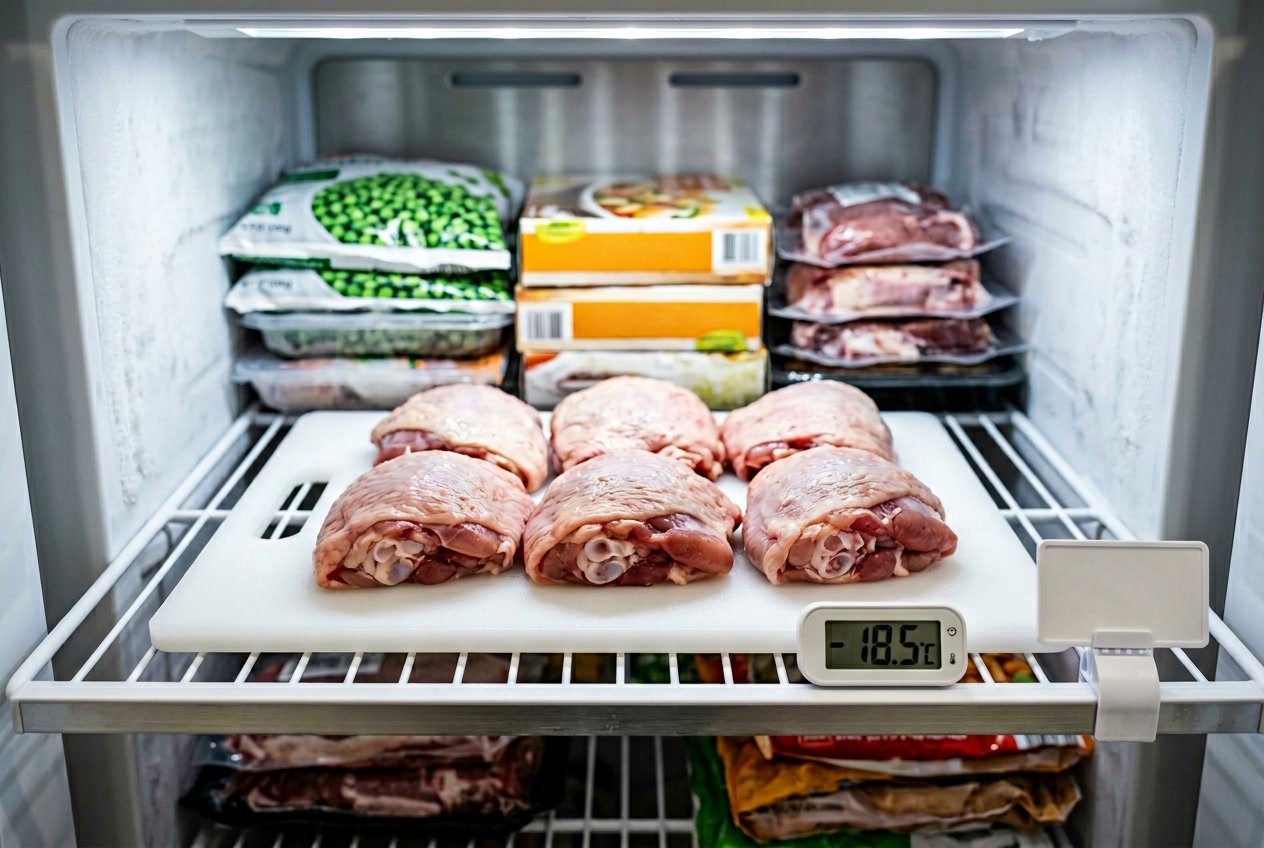
Freezer temperature and stability, packaging, and the chicken’s freshness before freezing all affect how long thighs stay usable. Each factor directly impacts quality and safety.
Freezer Temperature and Type
Set your freezer to 0°F (-18°C) or lower to stop microbial growth and preserve quality. Higher temperatures speed up texture and flavor loss and shorten storage time.
Chest and upright deep freezers keep steadier temperatures during outages and heavy use. Refrigerator/freezer combos and frost-free models cycle more, causing temperature swings and increasing freezer burn risk.
Check your freezer’s temperature with a thermometer. Place it in the coldest section and check after loading food. For long storage, avoid the door, which has more temperature changes.
Packaging and Preparation Before Freezing
Good packaging prevents freezer burn and off-flavors. Vacuum seal or press air out of heavy-duty freezer bags. Double-wrap with plastic wrap or freezer paper before sealing in a bag for extra protection.
Label each package with date and content. Portion thighs into meal-sized packs to avoid repeated thawing. If you marinate before freezing, use airtight containers or bags and keep sauces minimal.
Freeze thighs quickly in a single layer until firm, then group them together. Quick freezing reduces large ice crystals that damage muscle fibers. Avoid ordinary plastic wrap alone; use it with freezer bags or freezer paper.
Initial Quality Before Freezing
Start with the freshest chicken possible. Freshness affects texture and flavor after thawing. If thighs feel slimy, smell sour, or look discolored, do not freeze them.
Freeze raw thighs within 1–2 days of purchase. For cooked thighs, cool to refrigerator temperature within two hours, then freeze. If you must freeze previously thawed meat, only do so if it thawed in the refrigerator and stayed cold.
Trim excess fat and remove packaging juices before freezing. Too much surface moisture creates ice crystals and freezer burn. Use freezer-grade labels and rotate older batches to the front for best results.
Best Methods to Freeze Chicken Thighs
Freeze chicken thighs to keep flavor, avoid freezer burn, and thaw in portions you’ll use. Use clean, dry meat, tight packaging, and label the date and portion size.
Preparing Chicken Thighs for Freezing
Start with fresh or properly refrigerated thighs. Pat each piece dry with paper towels to remove moisture.
Trim excess fat and remove giblets or bone fragments. If you want skinless thighs, remove the skin now. For cooked chicken thighs, cool them to room temperature no longer than two hours before packaging.
If you marinate before freezing, use a freezer-safe container or bag and leave space for liquid expansion. For raw thighs you want separated, flash-freeze on a baking sheet until firm before bagging.
Choosing Appropriate Packaging
Use packaging that blocks air and moisture. Vacuum-sealing works best; if you use a zipper bag, press out air or use a straw.
If you don’t have a vacuum sealer, double-wrap each thigh: first in plastic wrap or freezer paper, then in aluminum foil or a labeled zip-top freezer bag. Squeeze out air and flatten bags to save space.
For storage beyond four months, use vacuum-sealed or freezer-grade materials. Avoid thin grocery bags or non-freezer containers.
Portioning and Labeling for Storage
Portion thighs into meal-sized groups before freezing so you thaw only what you need. Typical portions are 1–4 thighs per bag, depending on your needs.
Label each package with the date and quantity. Note whether thighs are raw, skin-on, skinless, or cooked.
Arrange packages flat in the coldest part of the freezer and stack once frozen. Rotate older packages to the front to use them first.
Preventing Freezer Burn and Maintaining Quality
Use airtight packaging and remove as much air as possible to keep flavor and texture. Label and portion to speed thawing and reduce freeze-thaw cycles.
How to Avoid Freezer Burn
Wrap each portion tightly to keep out air. Use vacuum-sealed bags if possible; otherwise, use heavy-duty freezer bags and press out air before sealing.
Portion thighs into meal-sized amounts so you only thaw what you need. Freeze pieces flat on a tray until solid, then stack in labeled bags. Keep your freezer at 0°F (-18°C) or lower and avoid overcrowding.
Use raw thighs within about nine months for best quality. Only refreeze thighs that thawed in the refrigerator and stayed below 40°F (4°C).
Recognizing Signs of Freezer Burn
Look for dry, grayish-brown patches on the surface. Large ice crystals inside packaging signal air exposure or repeated thawing.
After cooking, freezer-burned chicken may taste bland and feel tough. Smell the meat when thawed; discard it if it smells stale or off. Freezer burn can degrade quality, but sour or rancid smells mean spoilage.
Check packaging for tears, punctures, or loose seals. If packaging shows heavy frost buildup or is swollen, assume quality loss and use or discard the contents.
Tips to Preserve Flavor and Texture
Marinate or brine thighs briefly before freezing to lock in moisture and add flavor. Pat them dry first, then apply the marinade and freeze in a single layer.
Label each package with contents and freeze date. Use rigid, freezer-safe containers for prepared dishes and heavy-duty bags for raw thighs. Remove air with a straw if you don’t have a vacuum sealer.
When cooking from frozen, add about 50% more cooking time and use a probe thermometer—target 165°F (74°C). Thaw in the refrigerator overnight when possible.
Safe Thawing and Refreezing Practices
Thawing chicken thighs properly reduces bacterial risk and preserves texture. Use safe methods that keep the meat below 40°F during thawing and refreeze only under safe conditions.
How to Thaw Frozen Chicken Thighs Safely
Thaw chicken thighs in the refrigerator when possible. Place sealed thighs on a tray or plate to catch drips and allow 24 hours per 1–2 pounds.
Keep thawed chicken in the fridge and cook within 1–2 days. If you need to keep it longer, cook the thighs, then refrigerate or freeze the cooked chicken. Never thaw at room temperature or in direct sunlight.
Label packages with the date you moved them to the fridge to track the 1–2 day window.
Thawing Methods: Refrigerator, Cold Water, Microwave
Refrigerator method: leave thighs in their packaging or a sealed bag, put them on a tray, and allow a full day to thaw.
Cold water method: keep chicken in a leakproof bag and submerge in cold water, changing water every 30 minutes. Cook immediately after thawing.
Microwave method: use your microwave’s defrost setting and stop when thawed but not warm. Cook the chicken right away.
Guidelines for Refreezing Thawed Chicken Thighs
You can refreeze chicken thighs only if they thawed in the refrigerator and stayed below 40°F. Refreeze within the 1–2 day fridge window, though texture and moisture loss may increase.
Do not refreeze chicken thawed by cold water or microwave unless you cook it first. Cooking destroys bacteria that may have grown during faster thawing.
When refreezing, package tightly to remove air and label with both the original freeze date and the refreeze date. Use refrozen raw thighs within the same recommended storage time for best quality.
Food Safety and Spoilage Warning Signs
Check smell, color, and texture right after thawing. Proper packaging and storage prevent most problems.
Indicators of Spoiled Frozen Chicken Thighs
If the chicken smells sour or like ammonia when thawed, discard it.
Check color. Healthy raw thighs are pinkish with white fat; gray, green, rainbow hues, or dark spots mean spoilage or mold.
Look for excessive ice crystals inside packaging, which may signal thaw-refreeze cycles and possible bacterial growth.
Feel the surface after thawing. Slimy, sticky, or tacky texture means bacterial activity and you should not eat it.
If bad smell or discoloration appears with texture changes, discard the chicken right away.
Safe Storage and Handling Tips
Set your freezer to 0°F (-18°C) or below. This preserves safety and slows quality loss.
Label packages with the freeze date. Use raw thighs within about 9 months for best texture, and cooked thighs within 2–6 months.
Wrap thighs tightly in freezer-safe wrap, vacuum-seal, or place them in heavy-duty airtight bags. Remove as much air as possible to prevent freezer burn and moisture loss.
Thaw chicken in the refrigerator on a plate or tray to catch drips. Plan for 24 hours to thaw a family pack.
If you use cold water, keep the chicken sealed and submerge it in cold water. Change the water every 30 minutes and cook immediately after cold-water or microwave thawing.
Preventing Cross-Contamination During Freezing
Package chicken in individual portions or sealed containers to avoid juices contacting other foods.
Store raw meat on the lowest shelf. Never place raw thighs above ready-to-eat items in the freezer or fridge.
Use separate cutting boards and utensils for raw chicken. Wash hands and surfaces with hot, soapy water after contact.
Freeze marinated chicken in a leak-proof container or bag to prevent marinade drips.
Keep thawed chicken on a clean plate. Cook chicken to 165°F (74°C) internal temperature measured at the thickest part.
Discard any packaging or trays that held raw juices. Sanitize surfaces to prevent cross-contamination.


