
How Does Chicken Thighs Look Like: Identification & Key Features
You can spot a chicken thigh by its roughly pear-shaped profile, pink-to-red meat, and visible marbling or fat. Bone-in pieces show or feel the femur, while boneless ones look flatter and more uniform.
You can quickly tell freshness and type at the store by color, texture, and whether you can see or feel a bone.
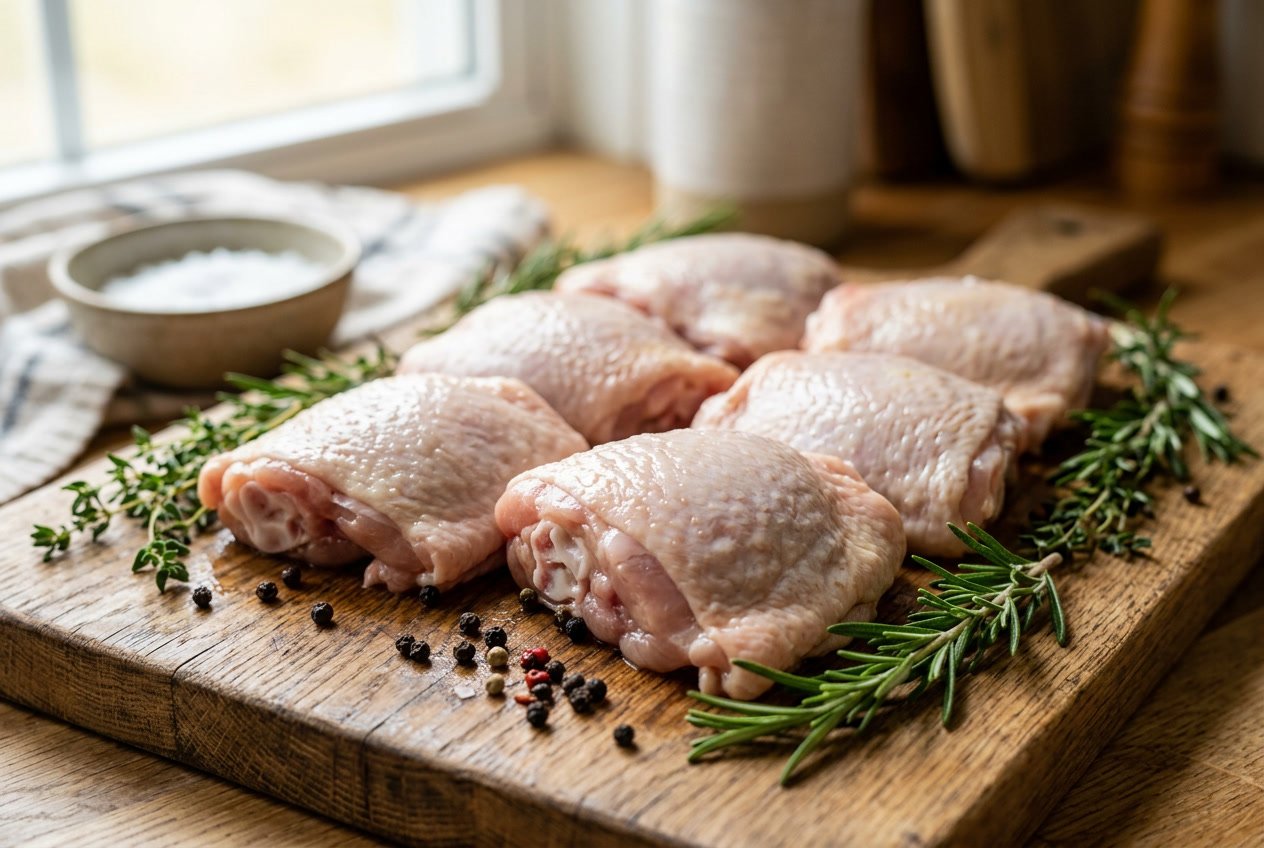
Raw thighs differ from cooked ones in color, texture, and appearance. Signs of quality or spoilage appear in changes to these features, and different cooking methods also alter them.
You can choose bone-in or boneless, compare thighs to drumsticks, and follow simple handling steps to keep your meat safe and tasty.
Fundamental Appearance of Chicken Thighs
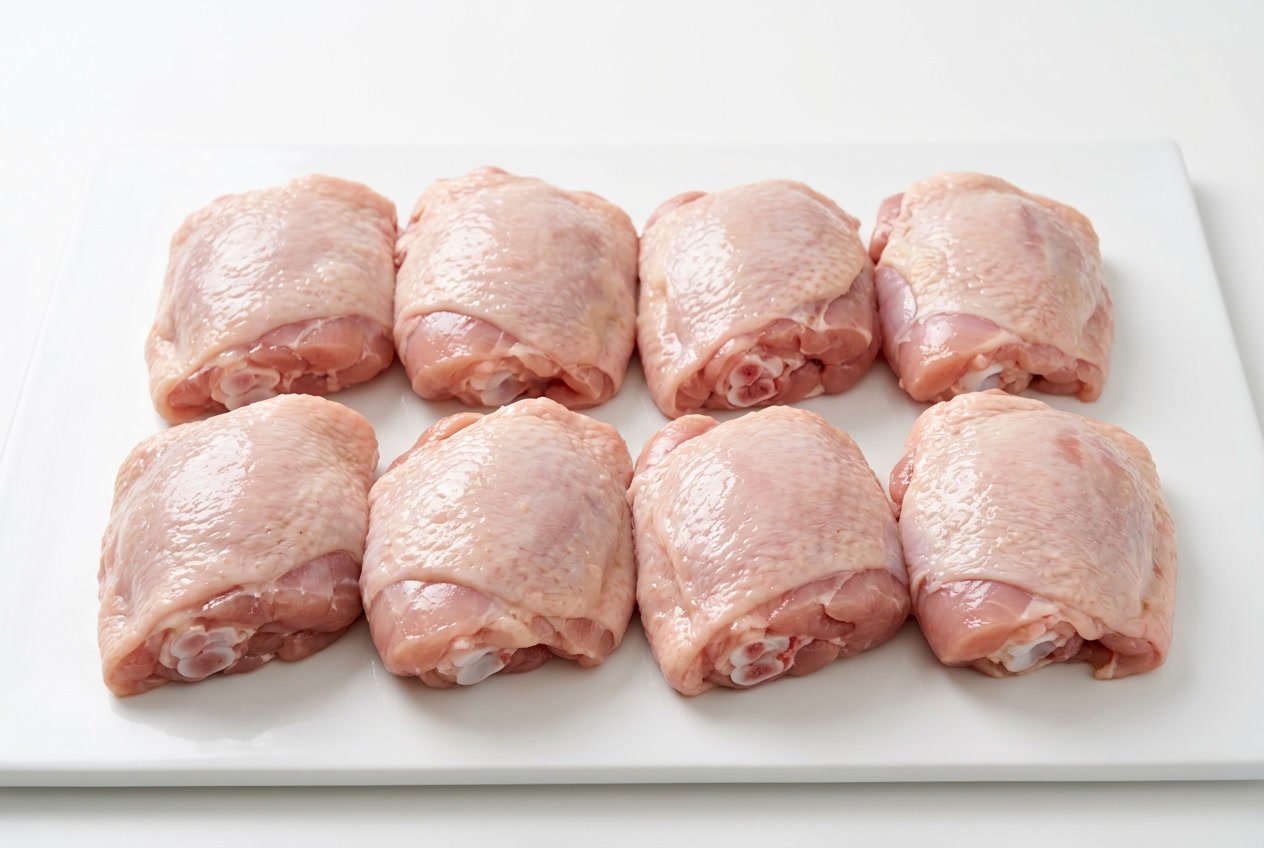
Consistent visual cues reveal the cut, freshness, and cooking behavior of chicken thighs. Pay attention to shape, color, fat distribution, and bone presence to identify and pick the right piece for your recipe.
Shape and Size Overview
A chicken thigh usually appears as a rounded, slightly pear-shaped piece of meat with one end broader where it attaches to the body and the other tapering toward the drumstick joint.
Bone-in thighs contain the femur; you’ll see or feel the rounded bone end and a thicker central mass of meat around it.
Boneless thighs are more uniform and flatter because the bone and some connective tissue have been removed.
Expect typical weights between 3–6 ounces (85–170 g) per thigh, though sizes vary by breed and retailer.
Look for plumpness and consistent thickness for even cooking. If you need quick-cooking pieces, choose smaller or boneless thighs.
For braises or slow roasts, select larger, bone-in, skin-on thighs for better flavor and moisture retention.
Color and Texture in Raw Form
Raw chicken thighs show a pink to red-pink hue that’s deeper than breast meat due to higher myoglobin.
Surface fat and marbling appear as white or pale yellow streaks and pockets; this fat melts during cooking and keeps the meat moist.
The skin, when present, ranges from pale to light yellow and may show fine feather follicles or a slight sheen from residual fat.
Texture feels soft and slightly springy; bone-in pieces will feel firmer near the bone.
Avoid thighs with slimy surfaces, grayish or green discoloration, or a sour smell—these indicate spoilage.
Fresh raw chicken thigh should smell neutral or mildly meaty and have a moist but not sticky surface.
Distinguishing Features of Dark Meat Chicken
Dark meat chicken includes the thigh and drumstick muscles that get more exercise and therefore contain more myoglobin and intramuscular fat.
This yields a richer color, deeper flavor, and a juicier mouthfeel compared with white meat.
You’ll see denser connective tissue and more visible fat marbling in the thigh. These features support long, slower cooking methods and tolerate higher-heat searing without drying out.
If the thigh still has skin, it crisps and browns during cooking, enhancing appearance and flavor.
When identifying dark meat raw chicken thigh, note the pronounced reddish tint near the bone and the slightly fattier edge where the skin meets meat.
Bone-In vs. Boneless Chicken Thighs
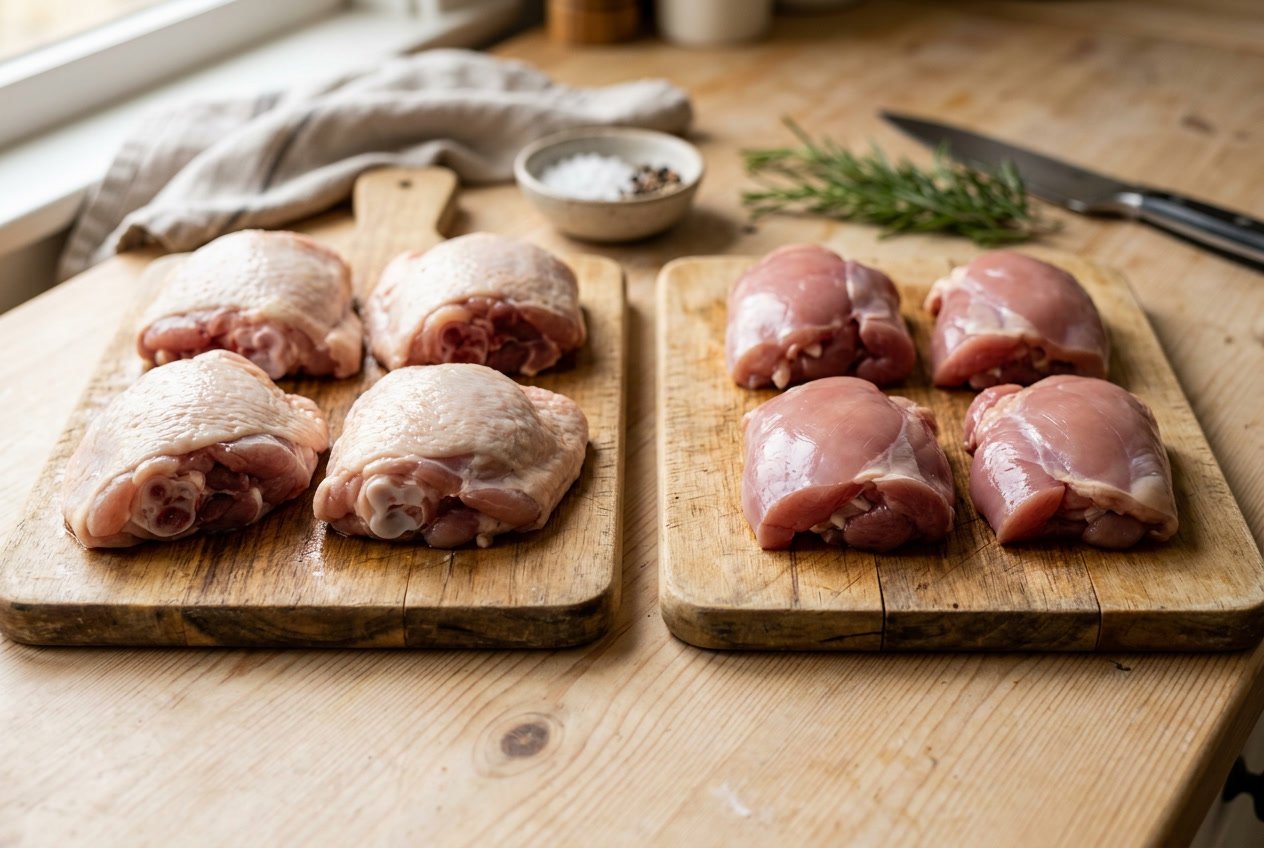
Bone-in thighs look bulkier and retain a natural shape around the femur, while boneless thighs appear flatter and more uniform.
Skin and trimming change color, texture, and how the pieces behave when cooked.
Visual Characteristics of Bone-In Chicken Thighs
Bone-in chicken thigh pieces show the presence of the femur as a rounded or tapered core you can see or feel through the meat.
Expect an irregular, bulky silhouette—wider at the top and tapering toward the joint—because the meat wraps around the bone.
Color ranges from pink to deep reddish-pink in raw form due to higher myoglobin.
You may see small pockets of visible fat and connective tissue near the bone; these appear as glossy streaks or pale bands.
When packaged, bone-in thighs often look thicker and occupy more space than boneless cuts.
The bone influences how the surface sears and browns. If skin-on, the area over the bone can sit higher and crisp differently than the thinner edges.
Bone-in types include whole thigh and attached leg (thigh and drumstick) varieties; each keeps the characteristic rounded core.
Visual Characteristics of Boneless Chicken Thighs
Boneless chicken thighs present a compact, flattened appearance because a butcher has removed the femur and sometimes trimmed connective tissue.
They usually measure more uniform in thickness, which makes them look more consistent from piece to piece.
Surface color remains in the pink-red range but may look slightly paler where trimming removed fat or connective tissue.
You’ll often see smoother edges and a cleaner shape—oval or oblong—without the bulge caused by bone.
Boneless thighs can also be pounded thin for even cooking, further changing the look to a thin, wide cut.
Because they lack the bone, boneless thighs tend to sit flat in pans or on baking sheets.
They’re commonly sold as single-muscle pieces or small clusters; price and packaging often reflect the additional processing.
Skin-On and Skinless Variations
Skin-on thighs show a thin layer of skin that ranges from pale yellow to off-white. It may cover the meat entirely or leave the bone end exposed.
The skin adds visible texture—wrinkled when raw and capable of turning golden-brown and blistered when cooked.
Skinless variations expose the muscle surface. Expect a more uniform pink-red hue and visible marbling of fat within the meat.
Skinless, bone-in thighs will still show the bone’s contour but without the skin’s outer layer.
When shopping, you’ll notice three common combinations: bone-in skin-on, bone-in skinless, and boneless skinless. Each variation affects appearance, cooking behavior, and how much trimming you must do before use.
Raw Chicken Thighs: Identifying Quality and Freshness
Fresh chicken thighs should look moist and firm, with a clear, mildly sweet smell and a consistent pink to red-pink color.
Pay attention to texture, packaging, and any off-odors or discoloration before you buy or cook.
Signs of Fresh Chicken Thigh
Look for a plump, evenly colored raw chicken thigh without dark spots or gray patches. The surface should be moist but not slimy; a slight sheen from natural juices is normal.
Feel the thigh through its packaging if allowed. It should spring back when pressed and hold shape, which indicates good muscle integrity and proper handling.
For bone-in thighs, the bone ends should not be dried out or discolored.
Smell matters. A fresh chicken thigh has a faint, neutral odor or a slight “raw meat” scent.
Strong, sour, or ammonia-like smells signal spoilage.
Check the sell-by date and storage temperature. Refrigerate at 40°F (4°C) or lower and use within 1–2 days, or freeze for longer storage.
Common Mistakes When Selecting Raw Thighs
Don’t rely on color alone. Some breeds or older birds show deeper red-pink tones that are still fresh, while pale-looking thighs can be fine but may have been overhandled.
Use texture and smell as tie-breakers.
Avoid thighs with sticky or slimy surfaces; that’s a sign of bacterial growth.
Don’t ignore packaging issues—bloated packages, excessive liquid, or tears can mean temperature abuse or contamination.
Check for inconsistent coloring like gray or green tints; those are clear rejection signs.
Don’t buy frozen-thawed thighs if you need top quality. Repeated thaw-freeze cycles harm texture and increase drip loss.
When in doubt, choose vacuum-sealed or air-chilled thighs from a reputable source and inspect them again at home before cooking.
Cooked Chicken Thighs: Visual and Textural Changes
Cooked chicken thighs develop clear visual and textural signs that tell you if they’re safe and properly done.
Look for opaque meat, clear juices, golden-brown skin when present, and a tender texture that yields easily from the bone or knife.
How Cooked Chicken Thighs Should Look
When properly cooked, the exterior of bone-in thighs often shows even browning—golden to deep brown depending on method—without burned spots.
Skin will crisp if roasted or pan-seared; if you cook with skin off, expect a lightly browned surface and no raw sheen.
Slice into the thickest part and observe the meat: it should be opaque and moist, not glossy or gelatinous.
Juices that run clear (not cloudy or bloody) are another visual cue.
For bone-in pieces, the flesh should pull away from the bone slightly, showing the meat has contracted and finished cooking.
What Color Should Cooked Chicken Thighs Be
The cooked chicken thigh’s interior color typically ranges from opaque white to pale tan, with a possible faint pink tint near the bone in dark meat—this can be normal if the internal temperature reached 165°F (74°C).
Avoid raw-looking translucent pink or red in the center and any bloody spots.
Exterior color depends on cooking method: grilled or pan-seared thighs show caramelized browning from Maillard reactions, while braised thighs appear uniformly tan and may be darker from sauce.
Use color as a guide, but confirm doneness with a thermometer when in doubt.
Texture and Tenderness of Properly Cooked Thighs
Chicken thighs are dark meat and stay more forgiving than breasts. Expect tender, slightly fibrous meat that flakes with gentle pressure.
For bone-in thighs, the meat should slide away from the bone easily and feel juicy, not dry or stringy.
Overcooked thighs become dry and tough despite being dark meat; undercooked thighs feel rubbery and resist cutting.
Aim for meat that yields under a fork but still holds together—this indicates collagen has broken down enough to be tender while retaining moisture.
How Cooking Methods Affect Appearance
Different methods change skin color, surface browning, and internal texture.
Pay attention to searing, oven time, and moisture to get the look and juiciness you want.
Impact of Baking, Roasting, and Grilling
Baking and roasting produce a uniform golden-brown skin when you dry the skin and start at a hot oven (400–425°F / 200–220°C).
Roast longer for deep caramelization; shorter, hotter roasting gives crisp skin without drying the meat.
Use a rimmed baking sheet or rack to let air circulate under the thigh so the bottom browns too.
Grilling gives strong charring and distinct grill marks from direct heat.
Sear first over high heat, then move to cooler zones to finish; this prevents the exterior from burning while the interior reaches 165°F (75°C).
Watch for flare-ups—they can blacken spots and cause uneven color.
Quick reference:
- Baking/Roasting: golden to deep amber skin, even browning with airflow.
- Grilling: smoky char, grill marks, possible uneven dark spots.
Changes from Braising and Slow Cooking
Braising and slow cooking keep the surface moist, so skin rarely crisps and the exterior looks paler or grayish compared with roasted thighs.
The meat becomes uniformly opaque and often shreds easily when fork-tender if you cook to higher temperatures (around 185°F / 85°C) for collagen breakdown.
If you want a browned appearance after braising, remove thighs and finish under a broiler or in a hot skillet for 3–5 minutes per side to re-crisp the surface.
In a slow cooker, use a short high-heat blast at the end to encourage color.
Otherwise expect softer, uniformly colored meat with concentrated juices and gloss from the braising liquid.
Related Cuts: Chicken Thighs vs. Drumsticks
Thighs and drumsticks both come from the leg and share dark meat, but they differ in shape, muscle distribution, and how you handle and cook them.
Expect thicker, flatter pieces for thighs and long, tapered pieces for drumsticks.
Key Differences in Appearance
A chicken thigh is a broad, oval section with a single short bone running through its center.
The meat sits relatively flat and thick, often with a layer of skin that lies wide and slightly loose.
When boneless, a thigh becomes a roughly rectangular, pliable piece that you can flatten or cut into strips.
A chicken drumstick is cylindrical and tapers toward the end, with a long single bone you can hold like a handle.
The meat clings more tightly to the bone and has a denser look than the thigh.
Skin on a drumstick wraps snugly, producing crisp edges when roasted or fried.
Visually, thighs read as chunkier and fuller; drumsticks read as compact and handheld.
Common Culinary Uses
Use thighs when you need sustained juiciness and flexible portioning.
Thighs tolerate long braises, high-heat grilling, and slicing for stir-fries or skewers.
Use bone-in thighs for richer stock and flavor; choose boneless for sautés, tacos, or quick pan-sears.
Reach for drumsticks when you want easy serving and a finger-food presentation.
Drumsticks roast, grill, and fry evenly, and the bone makes them practical for parties and packed lunches.
They brown well and stay intact during handling, so they’re ideal for casual meals, barbecue platters, and children’s portions.
Handling and Preparation Insights
Thaw chicken thighs in the refrigerator for 24 hours per 1–2 pounds. Individual thighs usually need 12–24 hours.
Place thighs on a plate or tray on the lowest fridge shelf to catch any drips. Keep them sealed in their packaging or a zip-top bag.
To thaw faster, submerge sealed thighs in cold water and change the water every 30 minutes. Small batches thaw in 1–2 hours.
Do not use warm water or leave thighs at room temperature, as that increases bacterial risk.
If you cook from frozen, increase oven or simmer time by about 50 percent. Check that the internal temperature reaches 165°F (74°C).
Only refreeze thighs after you have cooked them. Use trimmings and bones to add flavor to stock. Maintain temperature control, handle minimally, and keep timing clear to preserve texture and food safety.
Using Chicken Thighs for Stock or Broth
Gather bones, skin, and trimmings from bone-in thighs to make a flavorful chicken stock. Roast the bones at 400°F for 25–35 minutes to create deeper color and flavor.
Transfer the roasted bones to a stockpot and cover them with cold water to begin extraction. Simmer gently for 2–4 hours for stock or 1–2 hours for a lighter broth.
Add aromatics like onion, carrot, celery, and a bay leaf. Avoid adding too much salt since you will reduce the liquid.
Skim foam during the first 30 minutes to clarify the stock. Strain the liquid through a fine-mesh sieve.
Cool the stock quickly in shallow containers. Refrigerate for up to 4 days or freeze for 3–4 months.
Label containers with the date. Use the stock as a base for soups or braises.


