
How Does Chicken Thigh Look Cooked: Signs, Methods & Tips
You want to know exactly what cooked chicken thigh looks like so you can stop guessing and cook with confidence. Look for golden-brown, crisp skin and meat that appears opaque and pulls away easily from the bone; those are the simplest visual clues that the thigh is done and juicy rather than dry.
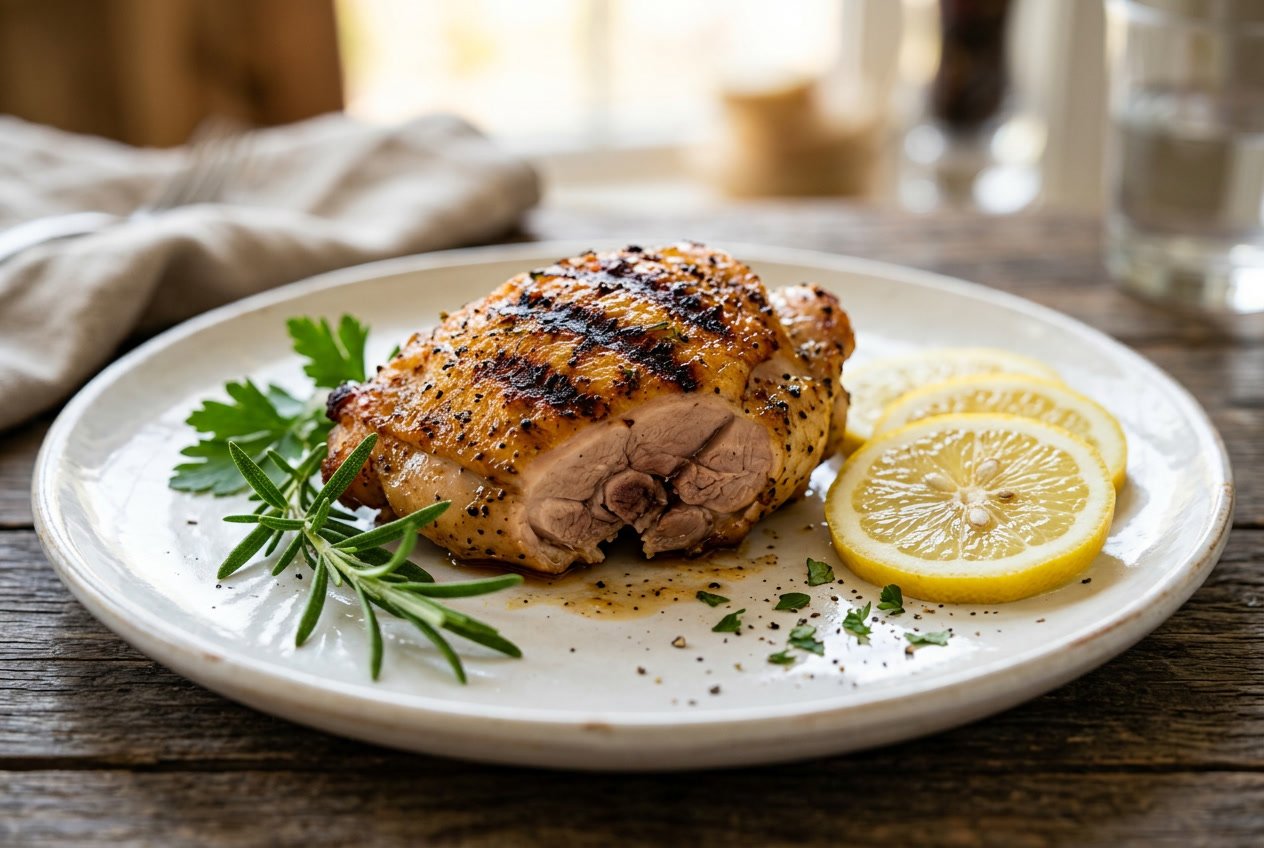
Check the internal temperature in the thickest part away from the bone. If it reaches 165°F (74°C), the meat is safe even if a faint pink tint remains near the bone.
Expect tender, slightly springy texture when pressed. Remember that cooking methods and whether the thigh is bone-in or boneless will change the color, crispness, and juiciness you see.
What Does Cooked Chicken Thigh Look Like?
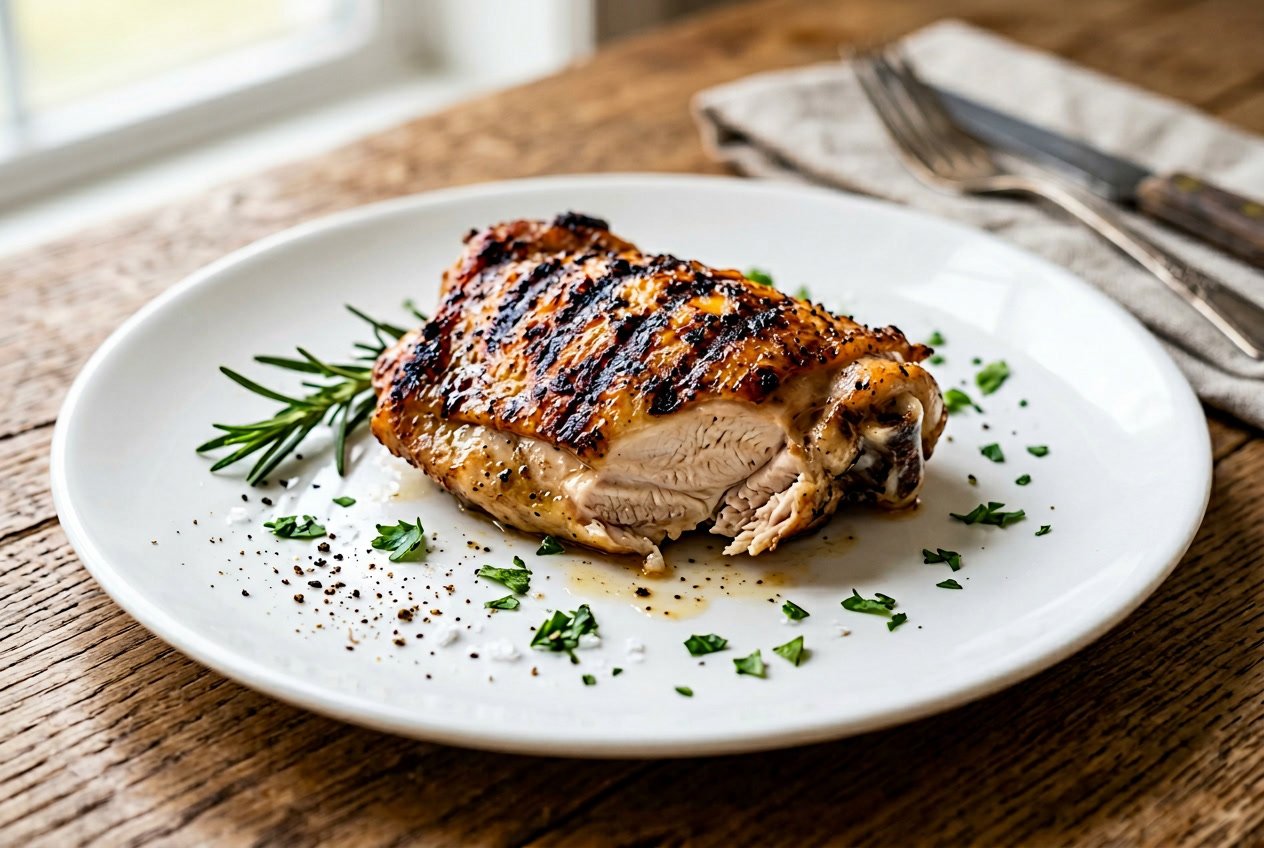
You should see crisp, evenly browned skin, opaque meat away from the bone, and clear juices when the thigh is done.
These visual and textural clues together show you whether your chicken thigh reached a safe temperature and retained moisture.
Exterior Appearance and Color
A well-cooked chicken thigh has golden-brown to deep amber skin that is slightly blistered where fat rendered. Even browning across the surface signals proper cooking.
Patchy pale areas mean the heat was too low, while blackened spots show overcooking. High-heat methods like pan-searing, roasting, or grilling create crisper texture and small browned bubbles in the skin.
Braised or slow-cooked thighs have softer skin but should still look uniformly cooked, not raw or pale. The skin should feel taut, not rubbery, when pressed lightly.
That tactile cue confirms the exterior reached enough heat to render fat and create flavor.
Interior Meat Color and Opacity
Fully cooked chicken thighs look opaque throughout, with meat that’s light beige to pale tan away from the bone. You may see a faint pink hue near the bone in some bone-in thighs; this can be normal due to myoglobin.
Avoid glossy, translucent, or glassy sections in the thickest part of the thigh, since those indicate undercooking. Use a thermometer for certainty; the thickest part should read 165°F (74°C).
Let thighs rest for a few minutes after cooking to help the meat firm slightly and become uniformly opaque. When done correctly, the meat pulls away from the bone easily and flakes with minimal resistance.
Juices and Moisture Indicators
When you pierce the thigh, the juices should run clear or pale, not pink or bloody. Clear juices signal that proteins have coagulated and the interior reached a safe temperature.
Juice color can vary with brining or marinades, so combine the juice check with texture and temperature checks. Moist, glossy meat that glistens slightly from rendered fat indicates a juicy, perfectly cooked chicken thigh.
If juices look watery and the meat feels dry or stringy, you likely overcooked it. Thick pink juices or a slimy feeling mean you need more time on the heat.
Texture and Tenderness of Cooked Chicken Thighs
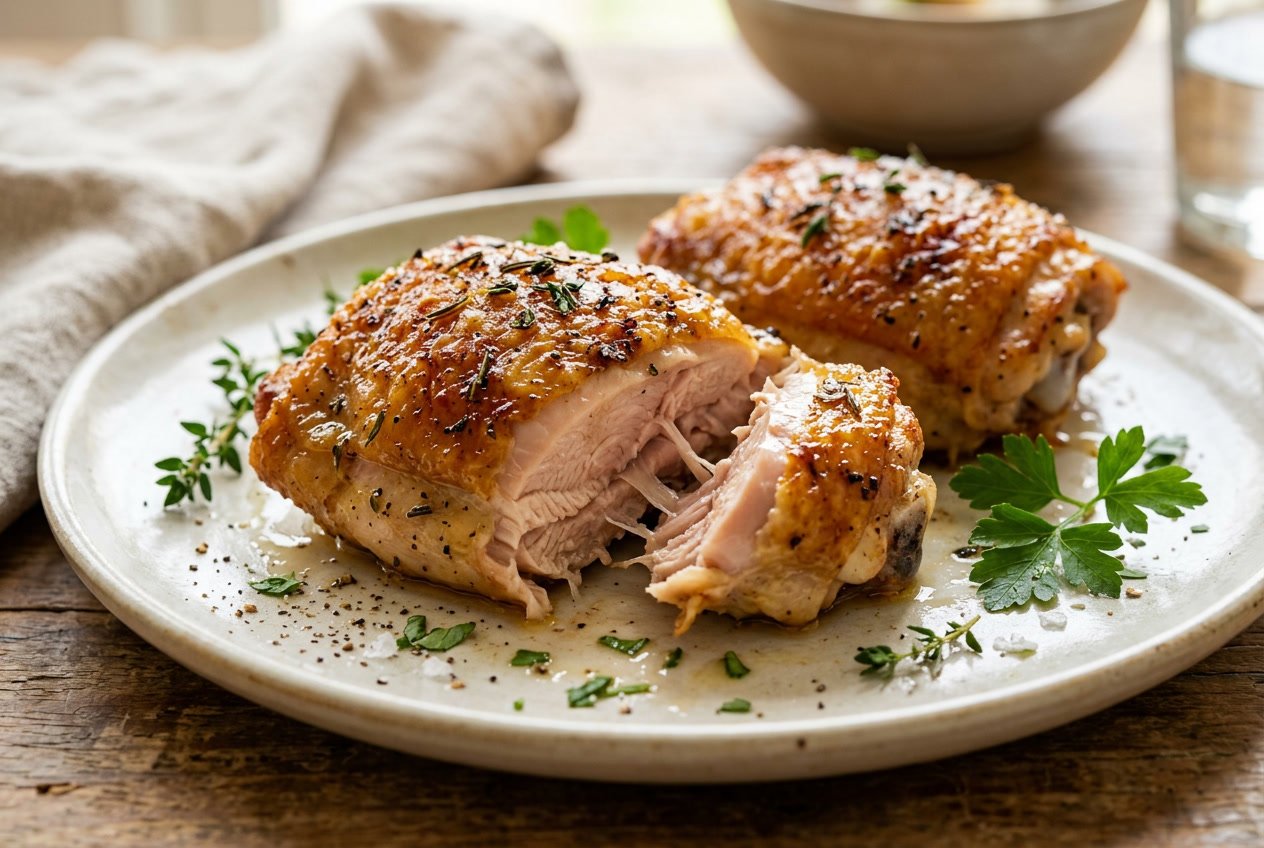
Cooked chicken thighs balance a slight spring under pressure with moist, pull-apart fibers. Pay attention to feel, juices, and how the meat separates from the bone to judge doneness and tenderness.
Firmness Versus Softness
When you press a perfectly cooked chicken thigh, it should feel firm but not hard. Use your fingertip or tongs; a gentle spring indicates the connective tissue has softened.
Bone-in thighs often feel slightly firmer near the bone and more tender toward the edges. Boneless thighs give a more uniform texture and cook faster, so watch for a quick change from soft to dry.
If the meat flakes easily and the bone moves slightly when twisted, the thigh is in the ideal tenderness range.
Juiciness and Shrinkage
Juiciness depends on cooking method and internal temperature. Aim for moist, glossy meat with clear juices; excessive clear dripping usually means proper doneness.
For dark meat like thighs, internal temperatures above 165°F that reach 175–195°F will break down collagen into gelatin, increasing juiciness and a silky mouthfeel.
Expect some shrinkage as moisture and fat render. Bone-in, skin-on thighs retain more volume and juice than boneless skinless pieces.
Rest the thighs 5–10 minutes after cooking to let juices redistribute. If you cut too soon, you’ll lose moisture onto the plate.
How to Check for Doneness in Chicken Thighs
Check for doneness by focusing on internal temperature and the appearance of juices and meat when you cut into the thickest part.
Using a Meat Thermometer
Use an instant-read meat thermometer for the most reliable result. Insert the probe into the thickest part of the thigh without touching bone.
Target temperature is 165°F (74°C). When the probe reads 165°F in the deepest muscle, the chicken thigh is safe to eat.
If you prefer very tender thighs, you can pull them to 175–185°F, especially for bone-in cuts. Check temperature in two places on larger thighs.
Clean the thermometer between uses to avoid cross-contamination. After removing from heat, rest the thigh 3–5 minutes so carryover heat raises internal temp and redistributes juices.
Clear Juices and Cutting Methods
Pierce the thickest section with a skewer or cut a small slit to inspect juices and color. Clear or pale beige juices indicate doneness; pink or reddish juices mean continue cooking.
Cut through the meat near the bone to check color. Cooked chicken thighs should show no raw, glossy pink in the center; the meat will be white to pale beige and slightly opaque.
Bone-in thighs can show a faint pink near the bone from marrow, so use temperature rather than color alone if you see this.
Use a gentle press test too. Cooked thighs feel firm but still springy.
Combine tactile checks with thermometer readings and juice inspection for consistent results.
Visual Differences: Bone-In vs. Boneless Chicken Thighs
You’ll notice differences in color, shape, and texture that affect plating and cooking cues. Pay attention to skin crispness, meat color near the bone, and how the piece holds juices when cut.
Appearance of Bone-In Chicken Thighs
Bone-in chicken thighs keep a rounded, three-dimensional shape because the femur stays inside. When cooked, the skin often crisps to a deep golden-brown while the meat near the bone remains slightly darker and more translucent than the outer flesh.
Cutting into a cooked bone-in thigh shows juices pooling around the bone and a gradient from moist, darker meat at the bone to firmer, paler meat toward the exterior.
If you roast or braise them, the bone end can show slight browning or caramelization. Use the bone area as a visual doneness cue; if the juices run clear and the meat near the bone is no longer pink, the thigh is done.
Appearance of Boneless Chicken Thighs
Boneless chicken thighs appear flatter and more uniform in shape than bone-in pieces. When cooked, they brown quickly across the surface and show an even tan-to-golden color without the darker ring that forms around a bone.
Slicing a cooked boneless thigh reveals consistently colored meat throughout, with a glossy sheen from rendered fat. Properly done boneless thighs stay uniformly moist and slightly pinkish-brown at center but never glossy raw pink.
Boneless pieces also take seasoning and sear marks more evenly, which helps with presentation.
Impact of Cooking Methods on Appearance
Different cooking methods change skin color, surface texture, and how the meat near the bone looks. Pay attention to browning, moisture retention, and any pink tint near bone when judging doneness visually.
Baking Chicken Thighs
Baking chicken thighs produces even browning and a crisp exterior when you preheat the oven and place thighs skin-side up on a rack. The skin should turn golden to deep amber.
If it stays pale, the oven temperature was likely too low or the skin was too wet. Inside, baked thighs become opaque and juicy if you remove them at 165°F (74°C) or pull them at 160°F (71°C) to rest.
Use an instant-read thermometer in the thickest part, avoiding the bone. Juices should run clear when pierced.
To maximize appearance, pat skin dry, brush with a little oil, and give space between pieces so hot air can circulate. For crisper skin, finish under the broiler for 1–3 minutes but watch closely to avoid charring.
Grilling Chicken Thighs
Grilled chicken thighs develop pronounced char marks and a deeper mahogany color from direct heat and the Maillard reaction. If you cook over medium-high heat, expect a crisp, slightly blistered skin with smoky caramelization.
To cook chicken thighs on the grill without overcooking the interior, sear skin-side down then move to indirect heat to finish. Check internal temperature at the thickest spot.
The meat should be opaque and pull easily from the bone. Clear juices indicate doneness; some residual pink near the bone can occur with bone-in cuts.
Prevent dry, stringy meat by avoiding constant high heat and by using a two-zone fire or lowering burner heat after searing. Brining or a light oil rub improves surface browning and helps the grilled chicken thighs retain moisture.
Storing and Using Cooked Chicken Thighs
Store cooled chicken promptly in airtight containers or heavy-duty zip-top bags to keep flavor and prevent contamination. Label containers with the date and use refrigerated chicken within 3–4 days.
Frozen cooked chicken stays best for up to 3 months.
How to Store Cooked Chicken
Cool chicken to room temperature for no more than 2 hours after cooking, then refrigerate immediately. Use shallow, airtight containers or wrap tightly in foil or plastic to minimize air exposure and moisture loss.
Place containers on a middle shelf where temperature stays steady. Keep the fridge at or below 40°F (4°C).
Reheat only the portion you’ll eat and avoid repeated reheating cycles, which dry the meat and increase safety risks. Watch for signs of spoilage: sour smell, slimy texture, or grayish discoloration.
If any of those appear, discard the chicken.
Best Practices to Freeze Cooked Chicken
Portion thighs before freezing to speed thawing and limit waste. Wrap each thigh in plastic wrap, then place in a labeled freezer bag and press out excess air.
Freeze at 0°F (-18°C) or colder. Use frozen cooked chicken within 3 months for best texture.
Thaw overnight in the refrigerator rather than at room temperature to keep temperatures consistent.
To reheat from frozen, thaw fully in the fridge and reheat to an internal temperature of 165°F (74°C). Use a low oven (300°F/150°C) covered, or gentle stovetop with a splash of broth to preserve moisture.
Serving Ideas
Slice cooled or thawed cooked thighs into bite-sized strips for quick stir-fries.
Heat a wok or large skillet until hot. Add 1–2 tablespoons of oil, then briefly sauté aromatics like garlic and ginger for 20–30 seconds.
Add vegetables that cook at similar rates, such as bell peppers, snap peas, and thin-sliced carrots. Toss for 2–4 minutes until crisp-tender.
Return the sliced chicken to the pan. Pour in a simple sauce made from 2 tablespoons soy sauce, 1 tablespoon rice vinegar, 1 teaspoon sesame oil, and 1 teaspoon sugar. Toss until everything heats through.
Serve over steamed rice or noodles. Garnish with sliced scallions and toasted sesame seeds.


