
How Do Chicken Thighs Taste: Flavor, Texture, and Cooking Insights
Chicken thighs taste rich and savory, and they are more forgiving than lean white meat. Their higher fat and connective tissue create a deeper, umami-forward flavor and a juicy texture that works well for grilling, roasting, braising, and slow-cooking.
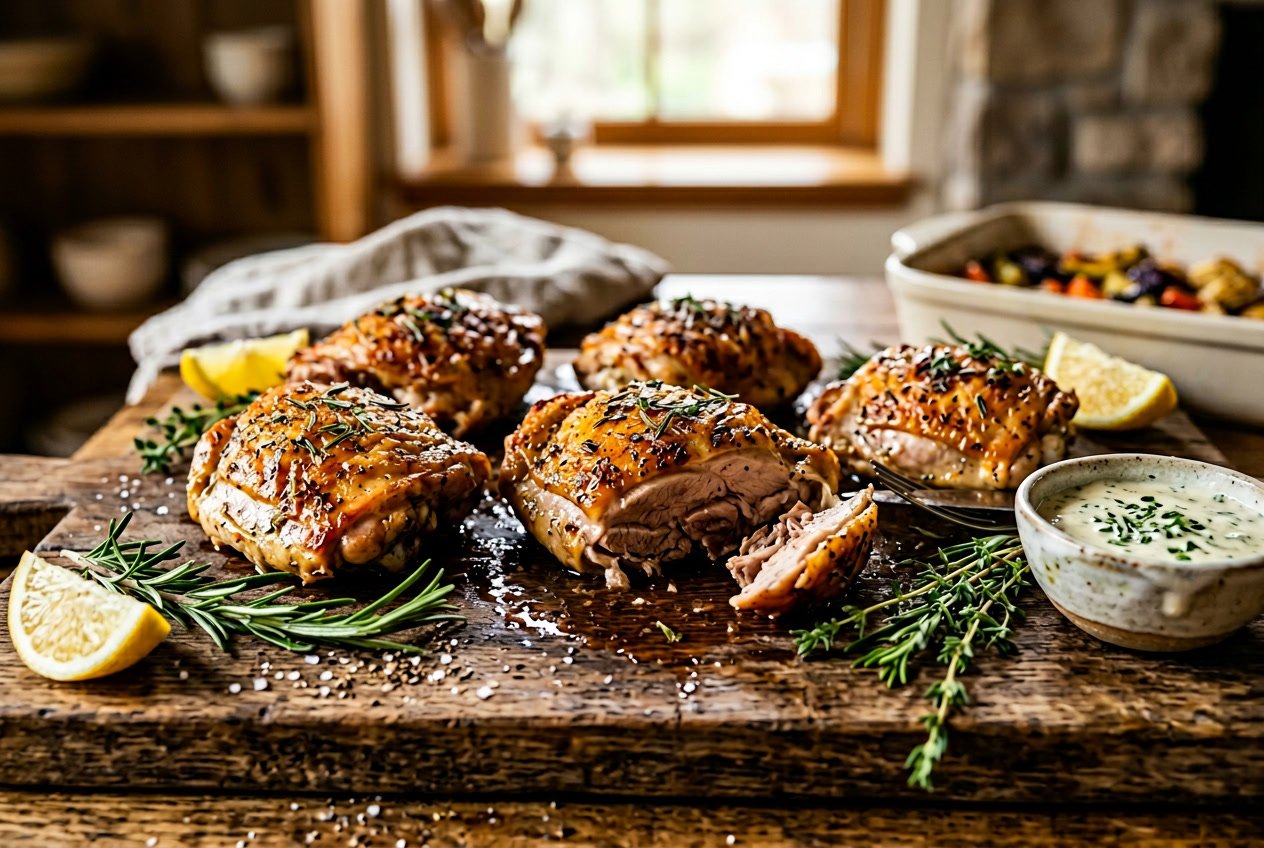
Choose bone-in, skin-on thighs for the most depth and juiciness. Dark meat tastes different from breast meat, and skin and bones change the flavor and texture.
You can use different techniques to amplify or soften the gamey, buttery notes in chicken thighs.
Fundamentals of Chicken Thigh Flavor
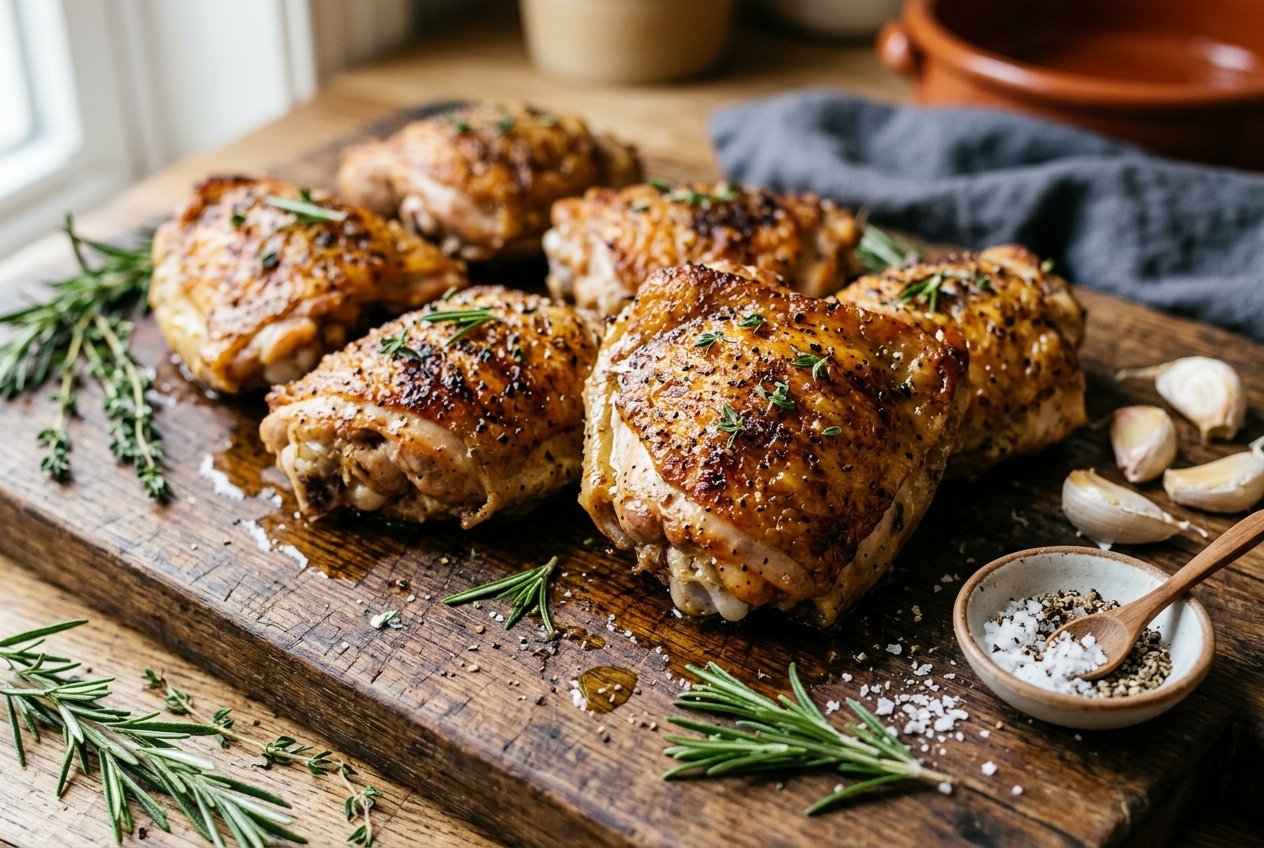
Chicken thighs deliver a richer, juicier taste and handle bold seasonings, slow cooking, and high-heat sears well. Dark meat behaves differently from white meat and registers strong umami notes.
What Makes Dark Meat Unique
Chicken thighs contain more intramuscular fat and connective tissue than white meat. The fat renders during cooking and bastes the meat from the inside, keeping the thighs moist even with longer cook times.
You’ll see a deeper color and denser texture because of higher myoglobin levels in the muscle. Collagen breaks down to gelatin during slow cooking, making the mouthfeel silkier and more satisfying.
The extra fat carries and amplifies spices and marinades, so thighs often taste more pronounced with acidic or oil-based marinades.
- Choose bone-in, skin-on thighs for the most flavor depth.
- Use slow braises or high-heat sears to take advantage of fat rendering and collagen conversion.
Comparing Chicken Thighs to Chicken Breasts
Chicken thighs taste richer than breasts due to higher fat and myoglobin. Breasts are lean and mild, requiring precise timing and lighter flavoring to avoid dryness.
Thighs tolerate longer cooking and bolder seasonings without losing juiciness. Texture is different: thighs are tender and slightly fibrous, while breasts are firm and smooth.
If you want a recipe that absorbs spices and withstands reheating, thighs work better. If you prefer neutral protein for delicate sauces, breasts are the better choice.
| Attribute | Thighs (dark meat) | Breasts (white meat) |
|---|---|---|
| Fat | Higher | Lower |
| Flavor intensity | Stronger | Milder |
| Cooking margin for error | Wide | Narrow |
| Best uses | Braises, grills, bold marinades | Quick sautés, light sauces |
Umami and Savory Characteristics
You’ll notice more umami in chicken thighs than in breasts. Myoglobin and rendered fat create savory, brothy flavor compounds during browning and slow cooking.
The Maillard reaction on skin or seared surfaces adds roasted, savory notes that build umami. Ingredients like soy, mushrooms, tomatoes, or aged cheeses multiply the umami impact when paired with thighs.
Acidic elements like lemon or vinegar cut richness and highlight savory depth. Herbs such as thyme and rosemary complement the flavor.
- Sear skin-on thighs to develop a deep crust.
- Simmer slowly in stock to extract gelatin and savory compounds.
- Add fermented or aged umami-rich ingredients sparingly to boost flavor.
Texture and Juiciness of Chicken Thighs
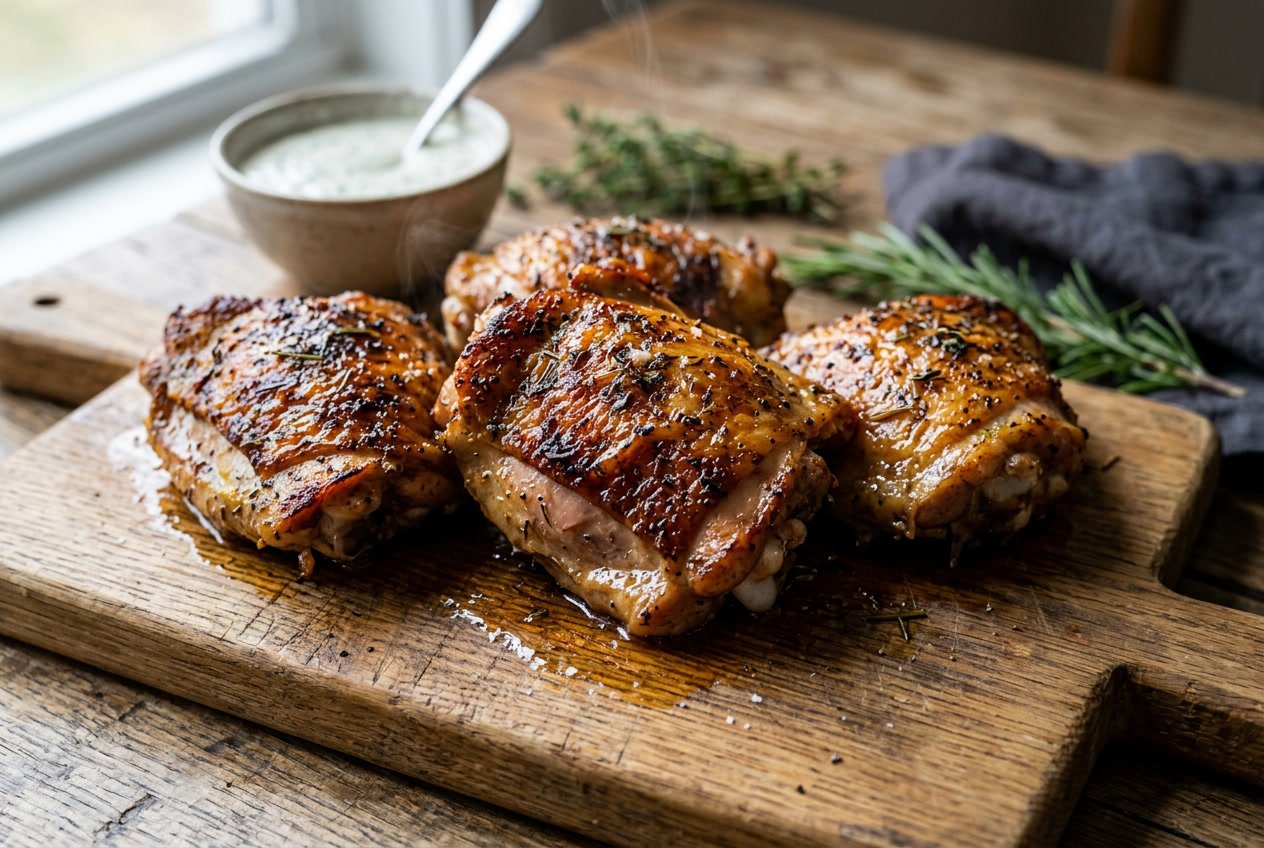
Chicken thighs offer a moist bite with a soft, slightly fibrous chew. More fat and connective tissue than breast meat directly affect how the meat feels and releases juices.
Juicy and Tender Consistency
Dark meat holds more intramuscular fat than white meat, which melts during cooking and moistens the fibers. A properly cooked thigh yields a tender, succulent mouthfeel.
Bone-in, skin-on thighs retain more moisture. The meat near the bone stays particularly tender, while slices closer to the surface are slightly firmer but still juicy.
Rest the thighs 5–10 minutes after cooking to let juices redistribute. Cutting too soon causes liquid to run onto the cutting board.
Role of Fat Content
Fat in chicken thighs acts as an internal basting agent. You’ll taste richer flavor and notice a silkier texture because rendered fat coats the meat fibers during cooking.
Crisped skin traps moisture underneath and concentrates flavor on the surface. If you remove skin or trim fat, expect a leaner texture and less richness.
Compensate with marinades, brines, or sauces to preserve succulence.
Impact of Cooking Times on Tenderness
Timing controls collagen breakdown in thighs. Slow roasting, braising, or longer low-heat cook times convert collagen to gelatin, giving a silky, yielding texture.
Short, high-heat cooking works for smaller, boneless thighs if you monitor internal temperature closely (165°F / 74°C). Overcooking tightens proteins and squeezes out moisture.
For bone-in thighs, cook 30–40 minutes in a hot oven or sear then finish in the oven to balance crisp skin and a tender interior.
Bone-In vs. Boneless Chicken Thighs
Bone-in thighs deliver more concentrated flavor and hold moisture longer. Boneless thighs cook faster and are easier to portion and shred.
Pay attention to cooking times and internal temperature for the texture you want.
Flavor Differences Between Bone-In and Boneless
Bone-in thighs taste richer because the bone and surrounding collagen release gelatin during cooking. This adds savory depth and a silkier mouthfeel, especially in slow-roasted, braised, or grilled preparations.
Boneless thighs still offer strong dark-meat flavor because of higher fat content. They provide an even, concentrated taste that works well with bold marinades and quick sears.
If you want maximum flavor from simple seasoning, bone-in gives a slight edge.
Convenience and Cooking Outcomes
Boneless chicken thighs save time. They reach safe temperatures sooner and cook evenly, making them good for sautés, stir-fries, and quick shredding.
Boneless thighs also make portioning and stuffing easier. Bone-in thighs require longer cook times and a slightly higher target temperature.
That extra time rewards you with juicier meat and a forgiving texture in long cooks. Choose boneless thighs for speed; choose bone-in for depth during slow cooking.
Skin-On vs. Skinless Chicken Thighs
Skin-on thighs deliver richer flavor and a juicier mouthfeel because the skin renders fat into the meat during cooking. Skinless thighs cut calories and saturated fat, and let marinades penetrate the flesh more directly.
How Skin Affects Taste and Texture
The skin adds concentrated fat that browns and crisps, creating a savory, slightly sweet crust. As the skin renders, it bastes the meat, so bone-in, skin-on thighs stay juicier during long roasts or high-heat sears.
Without skin, the meat tastes cleaner and spices or acidic marinades reach the muscle directly. Skinless thighs can dry faster, so control time and temperature.
Lower oven temps or quick high-heat sears work best for skinless thighs. If you want less fat but still want tenderness, choose bone-in skinless thighs and add a sauce or braise.
Tips for Crispy Chicken Thighs
For crispy chicken thighs, start with skin-on and pat the skin dry. Salt the skin and let it sit uncovered in the fridge for at least an hour to draw out moisture.
Use a hot cast-iron skillet or a 425–450°F (220–230°C) oven to render fat quickly. Flip once to finish and press the skin flat in the pan for even contact.
For extra crisp, brush a thin layer of oil and finish under a broiler for 1–2 minutes, watching closely. If you cook skinless thighs and want texture, coat them in a light cornstarch or breadcrumb dredge and pan-sear over medium-high heat.
You can also braise or slow-cook skinless thighs and finish under high heat to create browning without drying the interior.
Techniques to Make Chicken Thighs Taste Better
You can make chicken thighs flavorful and juicy by controlling moisture, seasoning depth, and finishing technique. Focus on brining, seasoning or marinades, and resting to let juices redistribute.
Importance of Brining
Brine chicken thighs in a solution of 4 cups water, 3 tablespoons kosher salt, and 2 tablespoons sugar for 30 minutes to 2 hours. Salt penetrates the meat, increases moisture retention, and seasons the interior.
Enhance the brine with aromatics like crushed garlic, peppercorns, bay leaf, or thyme for subtle background flavors. Rinse and pat dry after brining.
If short on time, use a quick dry-brine: sprinkle 1 teaspoon kosher salt per pound over thighs and refrigerate uncovered for at least 1 hour. Both wet and dry brines reduce cooking loss and produce juicier, more flavorful chicken thighs.
Effective Seasoning and Marinades
Start with kosher salt and freshly ground black pepper at least 15 minutes before cooking. For marinades, use an acid (lemon juice, vinegar, or yogurt), oil, and aromatics.
Acid tenderizes, and oil carries fat-soluble flavors. Add soy sauce or Worcestershire for umami if you want deeper savoriness.
Build a dry rub with paprika, garlic powder, onion powder, and a touch of cumin. Apply rub under the skin when possible to infuse meat directly.
If using a glaze or barbecue sauce, brush it on in the last 5–10 minutes of cooking to avoid burning and to preserve caramelized flavor.
Resting for Maximum Juiciness
After cooking, let thighs rest for 5–10 minutes on a warm plate. Resting allows juices to redistribute instead of running out when you cut the meat.
Tent loosely with foil to keep heat without steaming the skin. Use an instant-read thermometer to confirm doneness: pull at about 160–162°F and rest to reach 165°F.
Slice against the grain after resting to shorten muscle fibers and keep more juices in the meat.
Popular Cooking Methods and Recipes
Grilled, baked, braised, and pan-seared methods highlight the rich fat and connective tissue of thighs. Each method changes texture and flavor, so choose based on whether you want crispy skin, tenderness, or quick juicy pieces.
Grilled Chicken Thighs and Smoky Flavor
Grilling brings out a smoky char that pairs with the thigh’s fat. Sear skin-side down over direct high heat for 5–7 minutes to develop color, then move to indirect heat and finish covered until the thickest part reaches 175°F for bone-in or 165–170°F for boneless.
Use a two-zone fire for bone-in thighs to avoid flare-ups from rendered fat. Brush with a thin glaze, like soy-honey or citrus-chile, during the final minutes.
Rest 5 minutes before serving to let juices redistribute.
Classic and Global Chicken Thigh Recipes
Chicken thighs adapt to many classic and global recipes because they hold flavor and stay moist. Try oven-roasted thighs at 400–425°F on a wire rack for crispy skin.
Slow-cook thighs in braises like coq au vin or adobo until collagen turns to gelatin and meat shreds easily. For quick dinners, pan-sear thighs starting skin-side down in a cold skillet to render fat, then finish in the oven.
Use marinades like yogurt-turmeric, soy-ginger, or buttermilk-hot sauce for distinct profiles and tender meat. Avoid marinating longer than 8–12 hours to prevent mushy texture.
Versatility Across Cuisines
You can use thighs in grilled bowls, tacos, stews, and sheet-pan dinners with equal success.
Their higher fat content tolerates high heat and long braises. They perform well whether you need crisp skin for salads or shreddable meat for sandwiches.
For batch cooking, roast a tray of seasoned thighs and repurpose leftovers. Shred for tacos, slice for grain bowls, or cool and freeze individual portions.


