
How Do Chicken Thighs Look When Cooked: Visual Signs, Texture & Doneness
You want to know at a glance whether chicken thighs are done without cutting into them and ruining the presentation.
Look for golden-brown, slightly crispy skin, opaque meat that pulls easily from the bone, and clear juices. These visual and textural cues signal a safe, juicy thigh.
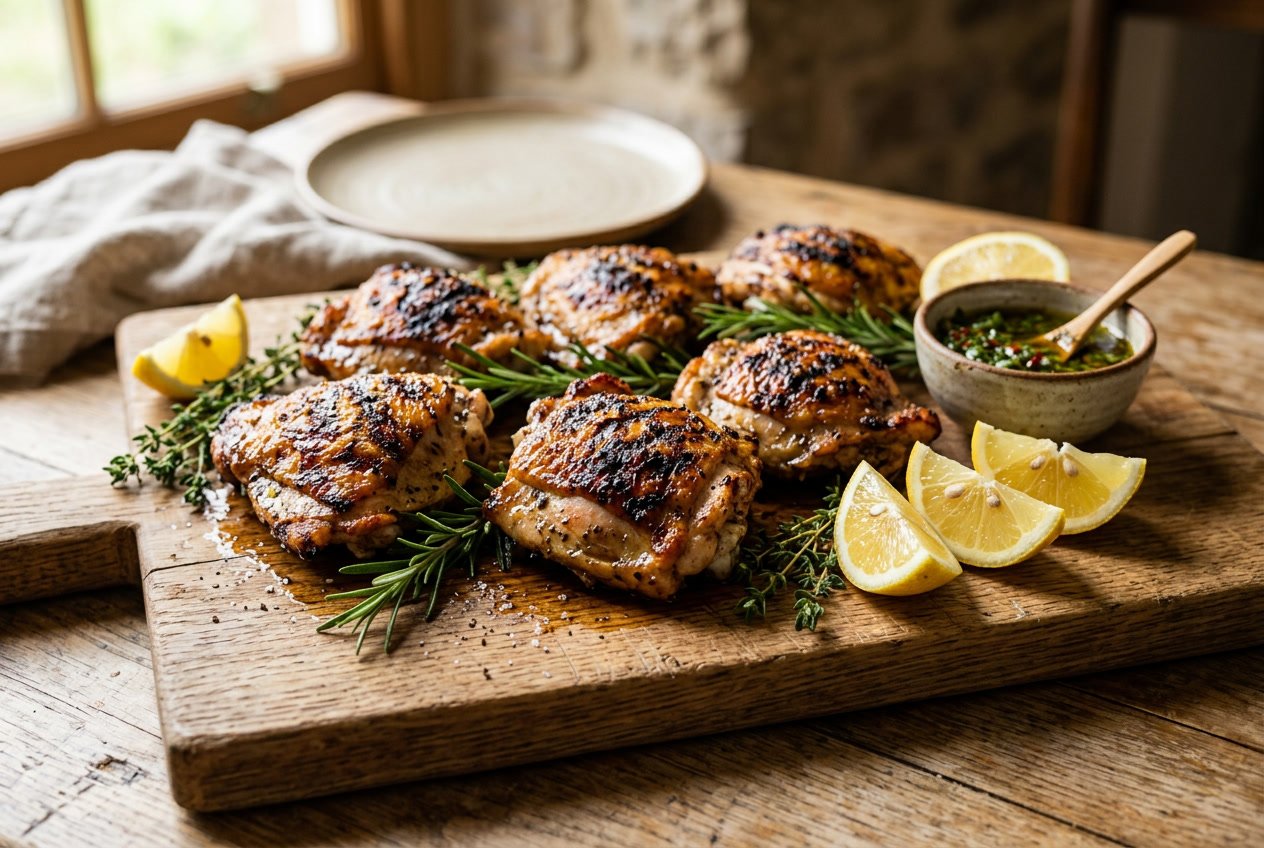
Use an instant-read thermometer to confirm doneness. The thickest part should reach 165°F (74°C), even if a faint pink tint remains near the bone.
Fundamental Traits of Cooked Chicken Thighs
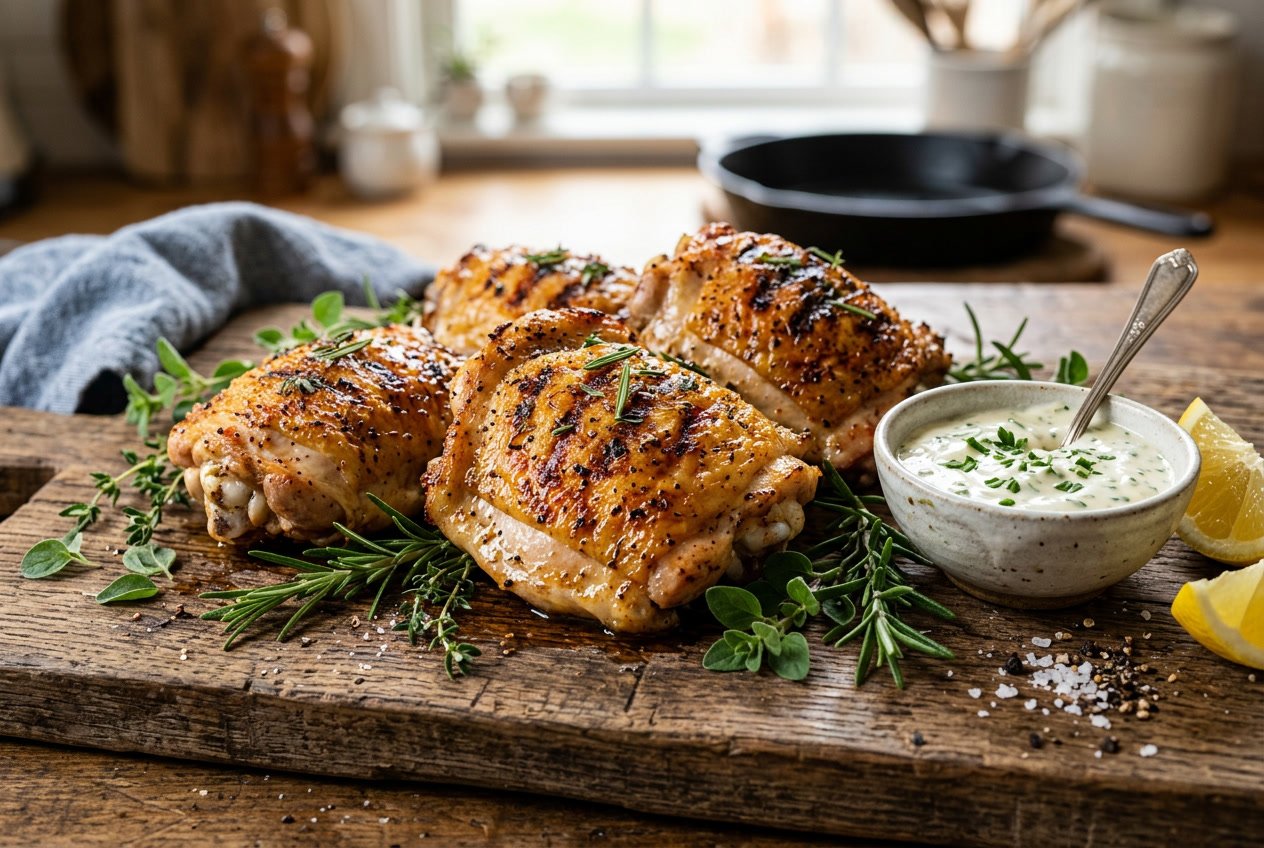
Expect opaque flesh, rendered fat, and clear juices when you check cooked chicken thighs.
Texture, color, and juiciness reveal whether the thighs reached a safe temperature and the right level of doneness.
General Appearance
Cooked chicken thigh meat looks opaque—no translucent or glossy areas remain. The color inside ranges from pale beige to light brown depending on seasoning and cooking method.
The surface often shows browning or mahogany color from Maillard reaction or caramelized marinades. If you roasted or seared the thighs, the skin will be crisp and golden.
When you cut into the thigh, juices should run clear, not pink. Use a meat thermometer inserted into the thickest part away from bone; 165°F (74°C) is the safety target.
Texture should be tender and slightly springy. Properly cooked thighs pull apart easily with a fork rather than resist or shred into dry strings.
Comparison to Raw Chicken Thighs
Raw chicken thighs look glossy, pink, and gelatinous around the joints and bone.
After cooking, that glossy sheen disappears and the connective tissue softens into moist, shreddable meat.
Raw appearance can mislead when marinades or smoke darken the exterior, so rely on internal cues. You should no longer see pink flesh near the surface.
Any remaining pink near the bone must be judged by internal temperature. Press the meat—undercooked thighs feel soft and jiggly, overcooked ones feel firm and dry.
Differences Between Bone-In and Boneless Thighs
Bone-in chicken thighs often retain more moisture and show a slightly darker color near the bone due to marrow pigments that can leach during cooking.
That pinkish tint at the bone doesn’t always mean undercooked. Confirm doneness with a thermometer at the thickest meat, not touching bone.
Boneless thighs cook faster and brown more evenly on the outside. They tend to have a uniform internal color when done.
They also lose moisture more quickly if overcooked, so watch texture closely. Choose bone-in for juiciness and a margin for error.
Choose boneless for quicker, consistent results and easier slicing.
Visual Cues for Doneness
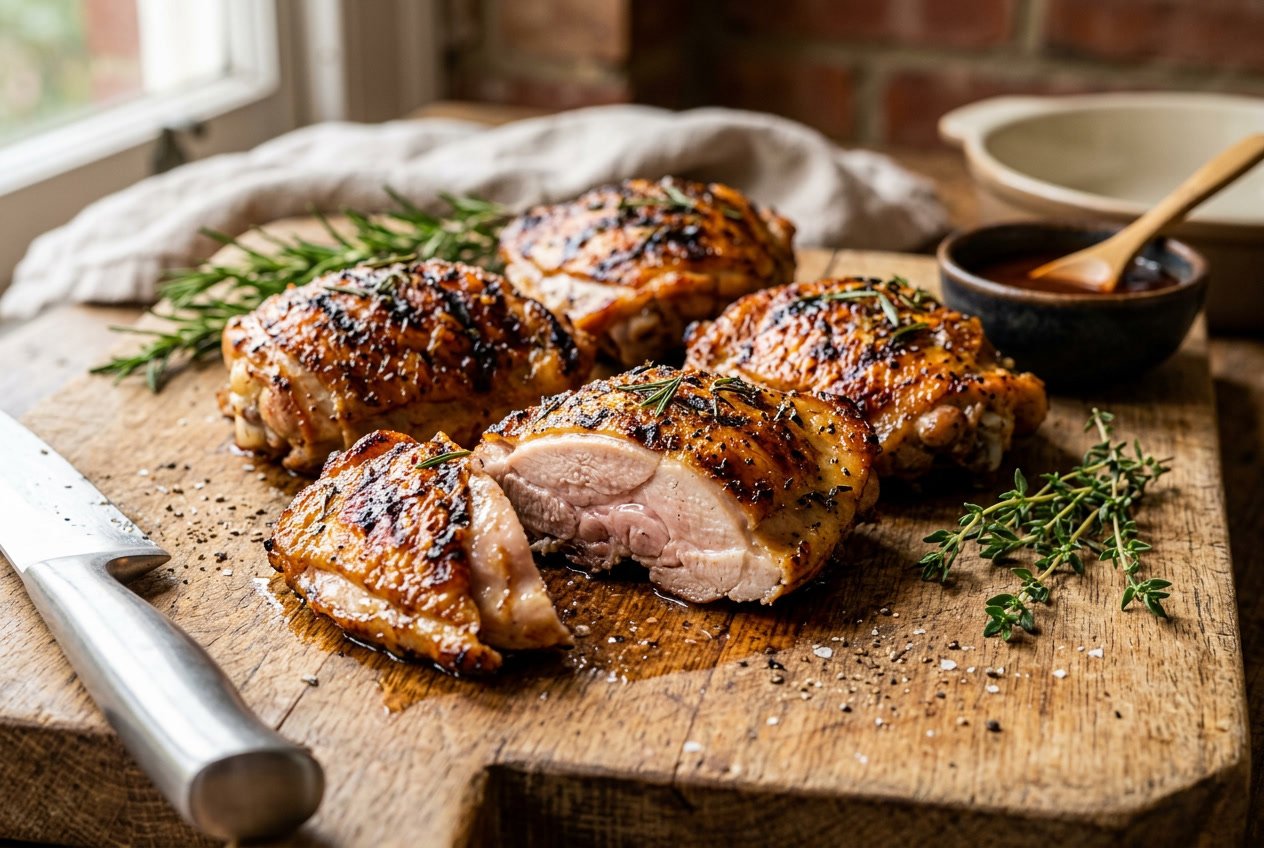
Watch how the skin, meat, and juices behave as you cook. Each element gives a practical signal you can use while you cook.
Skin Color and Crispiness
The skin should be golden-brown to deep amber when chicken thighs are done.
If you see even browning with small blistered bubbles, the Maillard reaction has occurred and the surface reached sufficient heat. Pale or rubbery skin means it needs more time.
Crispiness matters for both texture and moisture retention. Press the skin lightly with tongs; it should feel firm and snap slightly, not bend like rubber.
Charred black spots can indicate overcooking of the exterior while the interior may still be underdone.
If you brined or used sugar in a glaze, expect darker browning at a faster rate. Adjust heat or move thighs to a cooler rack to avoid burning while the meat finishes.
Meat Color and Opacity
Cut into the thickest part away from the bone to check meat color. Properly cooked chicken thighs appear opaque and light beige to pale brown in the muscle.
Translucence or glassy sections indicate undercooking. A faint pink tint near the bone can persist in dark meat and doesn’t always mean unsafe chicken thighs.
Use this visual cue only with other checks, because myoglobin and bone marrow can cause residual pink despite safe internal temperature.
Texture ties to color. Fully cooked thighs will pull apart easily and feel tender, not gummy.
Rely less on color alone and more on opacity plus texture for confident judgment.
Evaluation of Juices
Pierce the thickest part with a knife or skewer to observe the juices. Clear juices running out signal that proteins have coagulated and the chicken is likely done.
Pink or bloody juices mean continue cooking. Brining, marinades, or young birds can produce clearer-looking liquid even if the center is slightly underdone.
Treat the juice test as a quick indicator rather than definitive proof. When you rest the cooked chicken thighs for 5–10 minutes, juices redistribute and the liquid that seeps out should remain clear.
If unclear, return the thighs to heat and recheck.
Texture and Tenderness of Properly Cooked Chicken Thighs
You should expect thighs that give slightly under pressure, hold moisture, and separate easily from the grain without feeling mushy.
Pay attention to how the meat responds to touch and how juices behave when you cut or press the cooked chicken thigh.
Firmness and Springiness
When you press the thickest part of a cooked chicken thigh, it should feel firm but slightly springy, not hard or rubbery.
Use your finger or a fork; the meat should yield and then bounce back a little. If it resists or feels dense, the thigh likely needs more cooking.
If it crushes without rebound, it’s overcooked. For bone-in thighs, test away from the bone to avoid false readings.
A properly cooked chicken thigh will pull away from the bone slightly and the fibers will separate easily when you slice across the grain.
Juiciness and Moisture Retention
A properly cooked chicken thigh stays noticeably moist when sliced. Juices should cling to the meat rather than run out in a flood.
Slice into the thickest part and observe. You should see a glossy sheen and small beads of clear juice, not a stream of watery, colored liquid.
Techniques that preserve moisture, such as lower roasting temps, braising, or resting the cooked chicken thighs for 5–10 minutes, help retain those juices.
If the meat looks dry, stringy, or chalky, it lost too much moisture during cooking or resting. Use an instant-read thermometer and remove the thighs once the internal temperature reaches 165°F (74°C) to balance safety and juiciness.
Using Temperature to Confirm Doneness
Use a reliable temperature target and the correct thermometer technique to know when thighs are safe and juicy.
Focus on the internal temperature and where to place the probe for an accurate reading.
Internal Temperature Standards
Cook chicken thighs to an internal temperature of 165°F (74°C) measured in the thickest part of the meat.
This temperature kills common pathogens such as Salmonella and Campylobacter, making the meat safe to eat.
Dark meat can tolerate slightly higher temperatures for texture reasons. Many cooks prefer 170–175°F (77–79°C) for fall-apart tenderness when braising or slow-roasting.
If you aim for juicier but safe thighs, remove them from heat at 165°F and rest for 5–10 minutes to allow carryover cooking to equalize the temperature.
How to Use a Meat Thermometer
Use an instant-read digital thermometer for fast, accurate checks. Insert the probe into the thickest part of the thigh, avoiding bone and fat.
Bone conducts heat and gives a falsely high reading. Take readings in two places if thighs vary in size.
For bone-in thighs, probe alongside the bone toward the center of the meat. For boneless thighs, push the probe into the deepest center.
Wait until the display stabilizes before recording the temperature. Clean and calibrate your thermometer periodically.
Wipe the probe with hot, soapy water or a sanitizing wipe between uses. If the thermometer allows calibration, follow the manufacturer’s instructions to keep readings accurate.
How Cooking Methods Affect Appearance
Different methods change skin color, surface texture, and internal juiciness.
Temperature, direct versus indirect heat, and whether thighs are bone-in or frozen all alter how the finished piece looks and how you should check doneness.
Roasting and Baking
Roasting in a hot oven produces golden-brown, evenly crisp skin when you start at 400–425°F (200–220°C).
If you roast bone-in, skin-on thighs, expect deep caramelization around the fattier areas and some rendered fat pooled beneath the pieces.
To get uniform color, pat the skin dry, season, and space thighs so air circulates. Finish under the broiler for 1–3 minutes for extra browning, but watch for blackened spots that signal overcooking.
If you cook chicken thighs from frozen, roast at a lower temperature longer (about 50% more time) and cover with foil for the first part.
This prevents exterior over-browning while the interior reaches 165°F (75°C). Always check the thickest part, avoiding bone contact with the thermometer.
Grilling Chicken Thighs
On a hot grill, thighs develop pronounced grill marks and a smoky char. Searing at 450–550°F (230–290°C) gives a mahogany exterior while preserving interior moisture.
Bone-in, skin-on thighs resist overcooking better than boneless pieces, so expect a deeper browning before the center is done.
Use two-zone cooking: sear over direct heat, then move to indirect heat to finish. That method prevents burned skin with raw meat inside.
For frozen thighs, thaw first when possible. If you grill from frozen, gently pre-cook on indirect heat until mostly done, then sear briefly for color.
Visual cues: crisp skin, visible grill lines, and clear juices when pierced. If juices are still pink, return to indirect heat until internal temperature reads 165°F (75°C).
Pan-Frying and Sautéing
Pan-frying gives you quick, controllable browning. Sear skin-side down in a hot, oven-safe skillet until deep golden, then finish in a 375°F (190°C) oven for even cooking.
For boneless thighs, searing for 3–5 minutes per side usually creates an appealing crust without overcooking.
Use moderate oil and avoid overcrowding the pan to keep the crust dry and crisp. If you use frozen thighs, thaw fully and pat dry; otherwise the pan will steam them and prevent browning.
Look for an even crust, no translucent flesh, and juices that run clear. If the outside is browned but the inside still shows pink, reduce heat and cover briefly or finish in the oven until the thermometer reads 165°F (75°C).
Slow Cooking and Braising
Slow cooking and braising prioritize tenderness over surface color. Thighs cooked low and slow will be uniformly brown but won’t have crisp skin.
Expect soft, shreddable meat with a darker, stewed appearance when cooked in liquid for several hours. To combine texture and appearance, sear thighs first to build color, then braise.
This produces attractive browned surfaces and tender interiors. If you start from frozen in a slow cooker, partially thaw first.
Frozen pieces lengthen the safe cook time and may sit too long in the temperature danger zone.
Check doneness by texture and temperature. Braised thighs are safe at 165°F (75°C), but many cooks prefer 185°F (85°C) for fall-apart tenderness.
Juices should be opaque and sauce-incorporated rather than clear and dripping.
Mistakes and Tips for Achieving Ideal Results
You’ll learn which mistakes cause dry, undercooked, or rubbery thighs and which practical steps deliver juicy, safe, and flavorful results for cooking and storing.
Common Cooking Errors to Avoid
Overcrowding the pan or baking sheet prevents even browning and traps steam, which makes skin soggy and meat less flavorful.
Cook thighs in a single layer with space between pieces. Use two pans if needed.
Ignoring internal temperature is the biggest safety error. Insert a probe into the thickest part, avoiding bone; pull at 165°F (74°C).
If you must hold thighs longer, keep them at 140–150°F to avoid drying. Cutting into thighs too soon wastes juices.
Rest bone-in thighs 5–10 minutes after cooking; boneless need 3–5 minutes. Avoid cooking frozen thighs without proper thawing unless you increase cooking time and monitor temp.
Over-marinating acidic mixtures longer than 2 hours can mush surface proteins. Under-seasoning is equally common—season both before and after cooking when appropriate.
Key Tips for Perfect Texture and Flavor
Dry skin often means excess moisture. Pat thighs thoroughly with paper towels before seasoning to help them crisp.
For oven methods, start at 425°F (220°C) for 15 minutes. Lower the temperature afterward for even cooking.
Use a two-step technique for best texture. Sear skin-side down in a hot skillet until deeply browned, then finish in a 375°F (190°C) oven until the thermometer reads 165°F.
This method gives crisp skin and a tender interior.
After cooking chicken thighs, let them cool to room temperature within two hours. Refrigerate them in airtight containers for up to three days.
Reheat to 165°F before serving. Add a splash of broth when reheating to restore moisture.
Apply a light oil or butter and season under the skin for deeper flavor. For bone-in thighs, gently loosen the skin and tuck herbs or garlic between the skin and meat for concentrated flavor without burning.


