
How Do Chicken Thighs Look Like: Visual Guide, Types & Cooking Insights
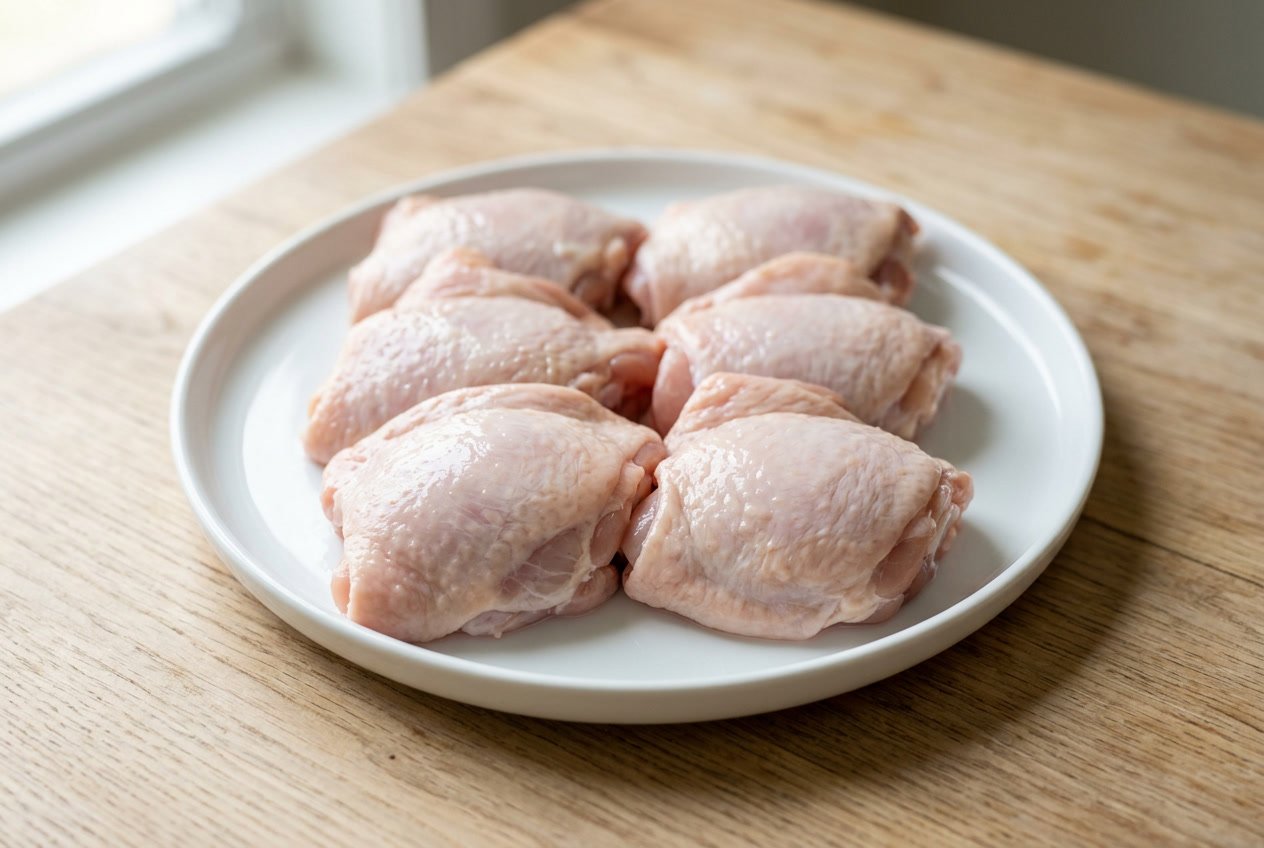
You often see chicken thighs at the grocery store and wonder what to look for in terms of shape, color, bone presence, and how they change when cooked. A raw chicken thigh has a pear shape, pink to red-pink color with visible fat marbling, and either a femur bone or a compact boneless form.
When cooked, the thigh turns paler and firmer, with golden or crispy skin.
This guide helps you tell bone-in from boneless, spot visual changes from raw to cooked, confirm doneness by sight and texture, and see which cooking methods change their appearance most. You’ll also find tips for selecting, storing, and preparing thighs, plus simple recipe ideas.
What Does a Raw Chicken Thigh Look Like
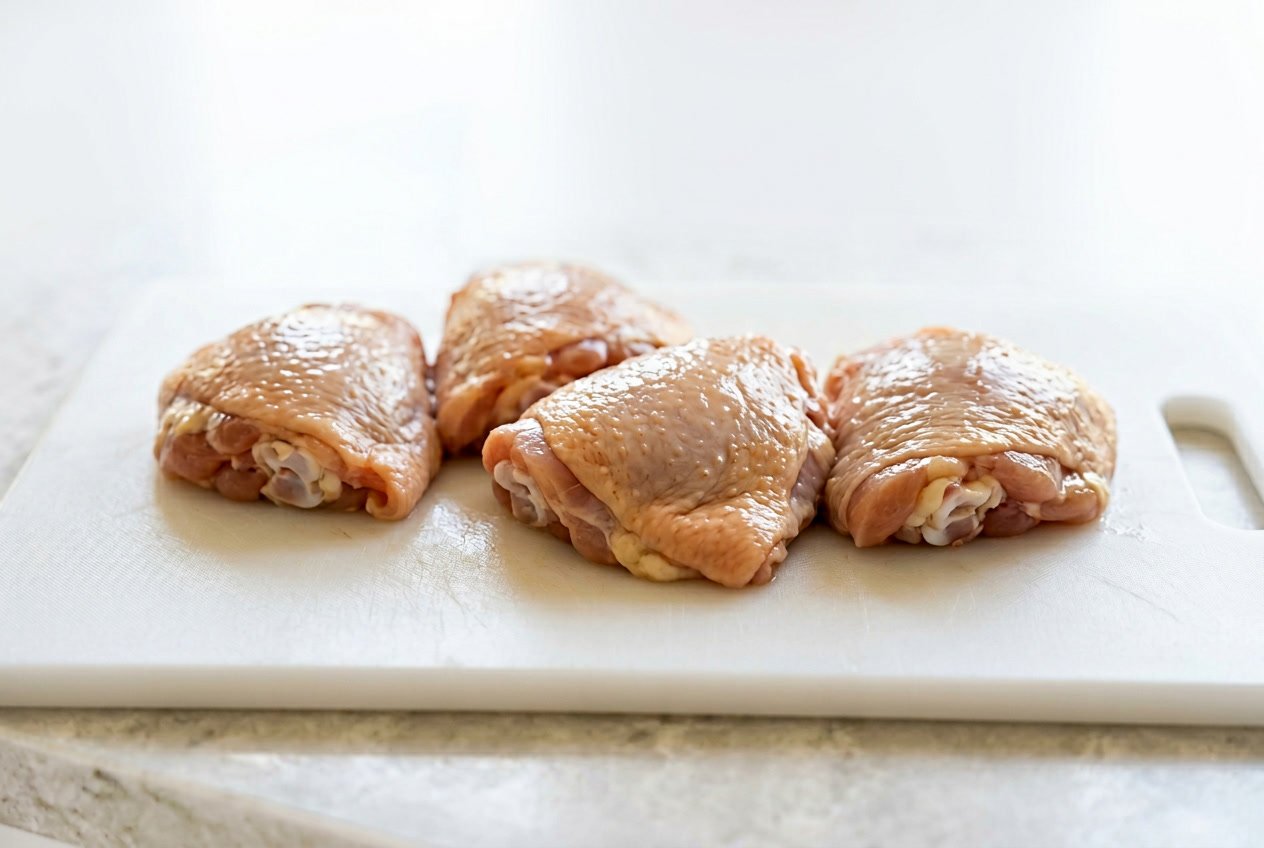
When you handle a raw chicken thigh, you notice distinct differences in shape, color, and fat. These cues help you judge freshness and choose the right cut.
Shape and Size Details
A raw chicken thigh usually looks pear- or teardrop-shaped, wider at the top and tapering toward the joint. Bone-in thighs include the femur and feel thicker and more rigid; boneless thighs look flatter and more uniform because the bone and some connective tissue are removed.
Individual pieces weigh about 3 to 6 ounces each, but size varies by breed and trimming. Larger thighs take longer to cook through.
When you press a fresh raw chicken thigh lightly, it should spring back. Excessively soft or flabby pieces may indicate poor handling or aging.
Color and Texture
Raw chicken thighs show a deeper pink to red-pink hue compared with chicken breast because they are dark meat with more myoglobin. The color ranges from pale pink to a richer pink-red depending on the bird’s age and diet.
Texture is smooth but slightly springy, and the surface feels moist rather than sticky. Avoid pieces with a dull, grayish cast or greenish spots.
Fresh raw thighs should not have a sour or strong odor. A faint neutral “raw poultry” smell is normal; any sharp, off-putting smell means you should not use them.
Fat and Skin Characteristics
Raw chicken thighs often have visible fat marbling within the muscle and a thin fat layer beneath the skin when skin-on. This fat keeps the meat moist during cooking and adds flavor.
Skin-on thighs have a pale yellowish or off-white skin layer that may be smooth or slightly bumpy. The skin usually covers most of the meat and can show small feather follicles.
Skinless thighs expose the meat and fat, making the surface look more uniform and slightly glossier. Look for even fat distribution rather than large greasy pockets; excessive loose fat around the edges can be trimmed.
Bone-In vs. Boneless Chicken Thighs
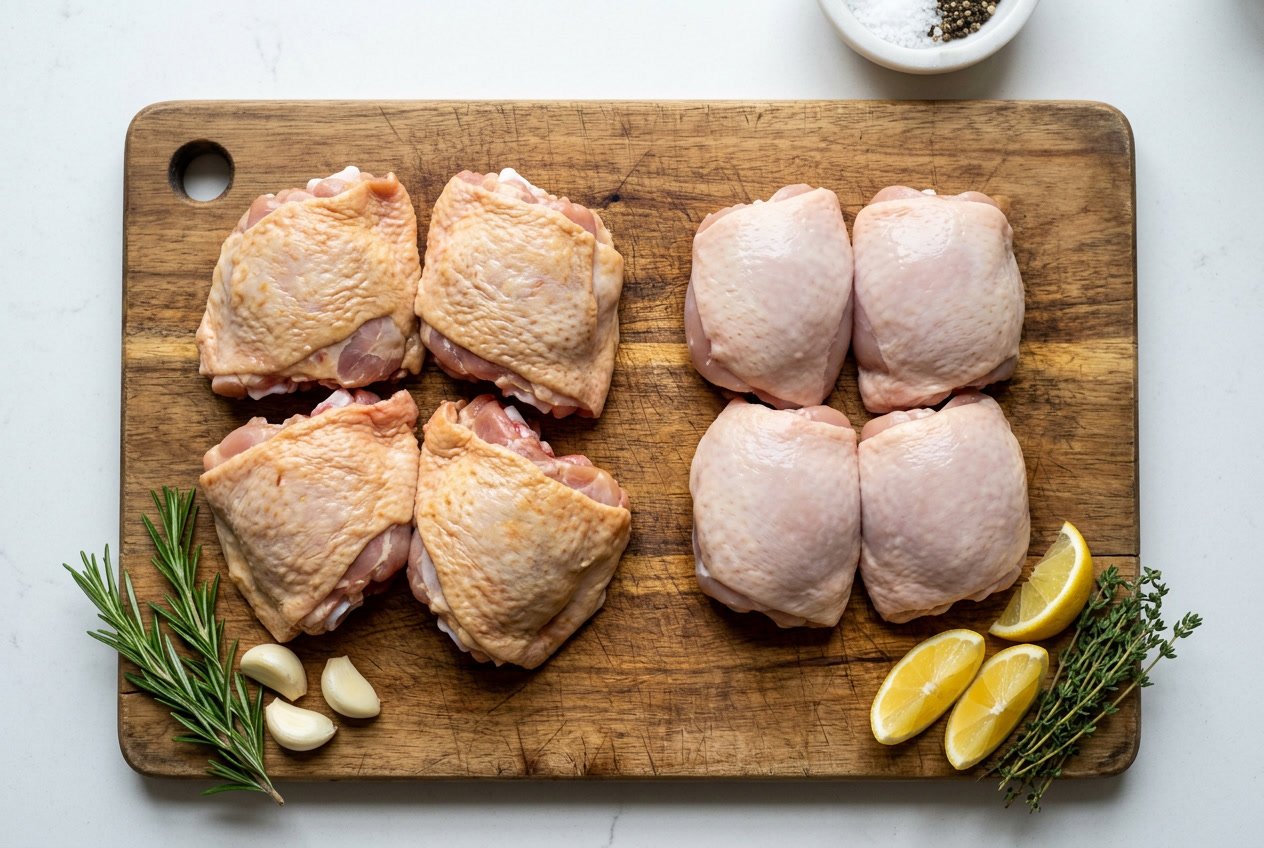
You choose between bone-in and boneless thighs based on handling, cooking time, and the look they add to a dish. Visual cues include the presence of a femur, overall shape, and how uniform the pieces appear.
Bone-In Chicken Thighs Visual Cues
Bone-in chicken thighs show the bone profile immediately. You can see or feel the rounded femur end tucked into the meat. The pieces look bulkier and more irregular in shape because the bone gives structure and thickness variations.
Color tends to be a deeper pink-red near the bone and slightly paler toward the outer flesh. If skin is present, it often sits unevenly over the bone, creating small folds or pockets.
When raw, these thighs look plumper and more three-dimensional. When cooked, the meat near the bone may appear slightly darker and pull back from the bone edge.
Boneless Chicken Thighs Appearance
A boneless chicken thigh looks compact and relatively flat. You see a more uniform thickness and smoother edges because the femur and any cartilage are removed.
Boneless thighs often come in single-layer packs and may be trimmed to similar sizes for easy portioning. The meat displays consistent marbling, which helps it brown evenly in a pan.
With no bone, doneness appears uniform across the piece, but the visual depth and heft from a bone-in cut are reduced.
Skin-On vs. Skinless Thighs
Skin-on thighs have a thin layer of skin ranging from pale yellow to cream that covers the meat and often has visible fat under it. The skin creates texture: when raw it looks smooth and slightly translucent; when cooked it crisps and browns, adding a golden appearance and contrast.
Skinless thighs look leaner and flatter, with muscle grain and fat marbling more apparent. You see a matte surface and clearer muscle striations.
Skinless boneless thighs are the most uniform visually and easiest to season, while skin-on bone-in thighs give the most rustic, restaurant-style look.
Raw vs. Cooked Chicken Thighs: Visual Differences
You notice three main visual changes when a raw chicken thigh becomes cooked: color shifts from pink to pale or tan, texture firms and fibers separate, and the piece shrinks and tightens around the bone.
Color Change During Cooking
Raw chicken thigh is pink to red-pink because of higher myoglobin in leg muscles. As heat rises, myoglobin denatures and the meat turns pale white, tan, or light brown.
Bone-in thighs near the bone can retain a slight pink tint even when safe. Use an internal thermometer to confirm 165°F (74°C) rather than relying on color alone.
Skin-on thighs develop golden to deep-brown tones from browning and rendered fat. Charred or deeply browned spots can form on grilled or pan-seared thighs; these are normal if not burnt.
If the meat looks gray-green or has an odd sheen, it shows spoilage.
Texture Transformation
Raw chicken thigh feels soft, slightly springy, and slick from moisture and fat. During cooking, proteins firm up; the meat becomes springy but should still yield easily to a fork.
Cooked chicken thighs that are properly done will be tender and may flake slightly, especially in braised or slow-cooked preparations.
If the surface is gummy or sticky after cooking, the piece may have been undercooked or improperly handled. Press the thickest part—juices should run clear for reassurance, but internal temperature is the definitive test.
Shrinkage and Shape
A raw chicken thigh has a plump, rounded shape with visible fat marbling and, if bone-in, the femur outline. Cooking causes shrinkage: muscle fibers lose water and fat renders away, reducing volume and tightening the meat around the bone.
Expect 10–20% reduction in size depending on method and duration.
High-heat roasting or grilling produces more surface contraction and tighter skin. Braising or slow-cooking yields less dramatic shrinkage but more collapse as connective tissue breaks down.
If a thigh looks wrinkled and much smaller, it’s likely overcooked and dried out.
How to Identify Properly Cooked Chicken Thighs
Look for clear, measurable signs that the meat is safe and juicy: check temperature, examine juices, and test texture.
Internal Temperature and Safety
Use an instant-read thermometer to check doneness. Insert the probe into the thickest part of the thigh, avoiding bone; the safe minimum reading is 165°F (74°C).
If you remove the thigh at 160°F (71°C), let it rest for a few minutes so carryover heat brings it to 165°F.
Avoid touching bone with the probe because bones conduct heat and give a falsely high reading. For consistent results, test the thickest piece when cooking multiple thighs.
Juices and Doneness Indicators
Pierce the thickest part with a knife or fork and observe the liquid that runs out. Clear juices indicate the meat is likely cooked through.
Pink or red-tinged juices suggest more cooking time is needed, especially near the bone.
A faint pink tint close to the bone can persist even when the temp is correct. That tint often comes from myoglobin, not unsafe meat.
Combine the juice check with a temperature reading for certainty.
Texture and Firmness Signs
Press the thigh gently with a finger or fork to assess firmness. Properly cooked chicken thighs feel slightly springy and yield easily; they should not be squishy or gelatinous.
When done, the meat will pull away from the bone easily on bone-in thighs and will shred slightly when you tug at the grain.
Overcooked thighs become dry and stringy; undercooked ones feel soft and resistant.
Look for opaque, uniform color in the meat away from the bone.
Common Cooking Methods and Their Impact on Appearance
Different cooking methods change color, skin texture, and juiciness. Watch for surface browning, meat pullback from the bone, and clear juices to judge doneness and quality.
Baking Chicken Thighs
Baking produces even cooking and predictable browning. Roast bone-in, skin-on thighs at 400°F (204°C) for 35–45 minutes for crisp, golden-brown skin and moist meat.
Use a low-rimmed baking sheet or a roasting pan so hot air circulates. Overcrowding traps steam and yields pale, soggy skin.
When thighs are done, the meat often pulls back slightly from the bone and juices run clear. For deeper color, finish under a broiler for 1–3 minutes and watch closely.
A meat thermometer in the thickest part (not touching bone) should read 165°F (74°C) for safety.
Grilling Chicken Thighs
Grilling gives direct char, grill marks, and a smoky color change on the exterior. Use medium-high heat and oil the grates to prevent sticking.
Bone-in thighs need indirect heat after searing to cook through without charring the skin. Expect darker, irregular sear lines and occasional blistering.
Check for even doneness by looking for uniform color near the bone and clear juices when pierced. Flip only when the skin releases easily to preserve the seared crust.
Marinades with sugar will brown faster, so reduce sugar or shorten direct-heat time to avoid overly dark surfaces.
Other Cooking Methods
Pan-searing then oven-finishing gives an evenly browned crust and controlled internal doneness. Start skin-side down in a hot skillet to render fat, then transfer to a 375°F (190°C) oven for 12–20 minutes depending on thickness.
Braised or stewed thighs look uniformly brown from the cooking liquid and lose crisp skin; the meat becomes tender and may fall from the bone. Color will be deeper from sauces and long simmering.
Air frying mimics roasting with concentrated hot air, producing crisp skin and even browning in less time. Poaching yields pale, uniform meat with no browning and a silky texture.
Tips for Selecting, Storing, and Handling Chicken Thighs
Choose thighs that are plump, skin intact if you want crisping, and with consistent pink color and firm texture. Keep raw and cooked pieces separated, thaw only in the refrigerator or under cold running water, and use or freeze within recommended times.
How to Choose the Best Chicken Thighs
Look for thighs that are evenly sized so they cook uniformly. Fresh raw thighs should be pink with white fat marbling; avoid grayish tones or any sour smell.
Decide on bone-in vs. boneless and skin-on vs. skinless by cooking method: bone-in adds flavor for braises and stocks, while boneless cooks faster for stir-fries.
Check packaging dates and sell-by labels. If buying bulk, inspect for ice crystals and choose packages with solid vacuum or tight wrap to reduce freezer burn.
If you want richer flavor for stock, buy skin-on bone-in thighs; save trimmed fat and bones for making chicken stock later.
Thaw Frozen Chicken Thighs Safely
Thaw frozen thighs in the refrigerator on a plate or tray to catch juices. Allow 24 hours for a small pack or up to 48 hours for larger portions.
For faster thawing, seal the thighs in a leakproof bag and submerge them in cold water. Change the water every 30 minutes and cook the chicken immediately after thawing this way.
Do not thaw at room temperature, as that raises bacterial risk. If you need to cook from frozen, adjust cooking time and verify the internal temperature reaches 165°F (74°C).
Keep thawed raw thighs refrigerated and use within 1–2 days. Refreeze only if they thawed in the fridge and haven’t been left at warmer temperatures.
Storing Raw and Cooked Thighs
Store raw thighs on the bottom shelf of the fridge in their original packaging or an airtight container to prevent cross-contamination. Raw thighs last 1–2 days refrigerated, so freeze them if you won’t use them within that window.
Label freezer packages with the date and use within 4–9 months for best quality. Cooked chicken thighs keep 3–4 days in the refrigerator in shallow airtight containers.
Reheat cooked thighs to 165°F (74°C) before serving. Save bones and leftover meat for chicken stock by simmering bones with aromatics for a rich stock.
Cool the stock quickly, then refrigerate for 1–2 days or freeze for longer storage.
Popular Chicken Thigh Recipes and Serving Suggestions
Chicken thighs work well in braises, grills, sheet-pan meals, and quick pan-sears. Choose the method that matches your time and equipment.
Classic Chicken Thigh Recipes
Try bone-in, skin-on roasted thighs seasoned with salt, pepper, and garlic. Roast them at 425°F (220°C) for 30–40 minutes until the skin is crisp and the internal temperature hits 165°F (74°C).
For braises, brown the thighs first, then simmer them in a liquid like wine, stock, or beer with aromatics such as onion, thyme, and bay. Cook low and slow for tender meat that falls off the bone.
Use boneless skinless thighs for quicker dishes. Marinate them in soy, honey, ginger, and garlic for 20–30 minutes, then grill or pan-sear to develop a caramelized glaze.
Try one-pan pasta or orzo with seared thighs and tomatoes for a full meal in about 40 minutes. Instant Pot or slow-cooker chicken thigh recipes also work well for hands-off weeknight dinners.
Serving and Presentation Ideas
Serve roasted or grilled thighs over mashed potatoes, rice, or buttery polenta.
Spoon pan juices or braising liquid over the starch to add flavor and moisture.
For a lighter option, place sliced thighs atop mixed greens, pickled cucumbers, and a citrus vinaigrette.
Use fresh herbs and citrus to brighten rich dishes. Parsley, cilantro, lemon zest, or a squeeze of lime finish most recipes well.
When plating, alternate skin-side-up pieces for visual appeal. Serve sauces in a small ramekin if guests prefer less sauce.
For family-style meals, arrange thighs on a large platter with roasted vegetables. Add a bowl of grain to keep service simple and inviting.


