
How Cook Chicken Thighs: The Essential Guide to Juicy, Flavorful Results
You can get juicy, safe, and flavorful chicken thighs every time by focusing on a few simple techniques. Pat them dry, season or marinate, and cook to the right internal temperature for the cut you’re using.
Aim for 165°F for boneless thighs and 175°F–185°F for bone-in thighs to turn connective tissue into tender, gelatin-rich meat without overcooking.
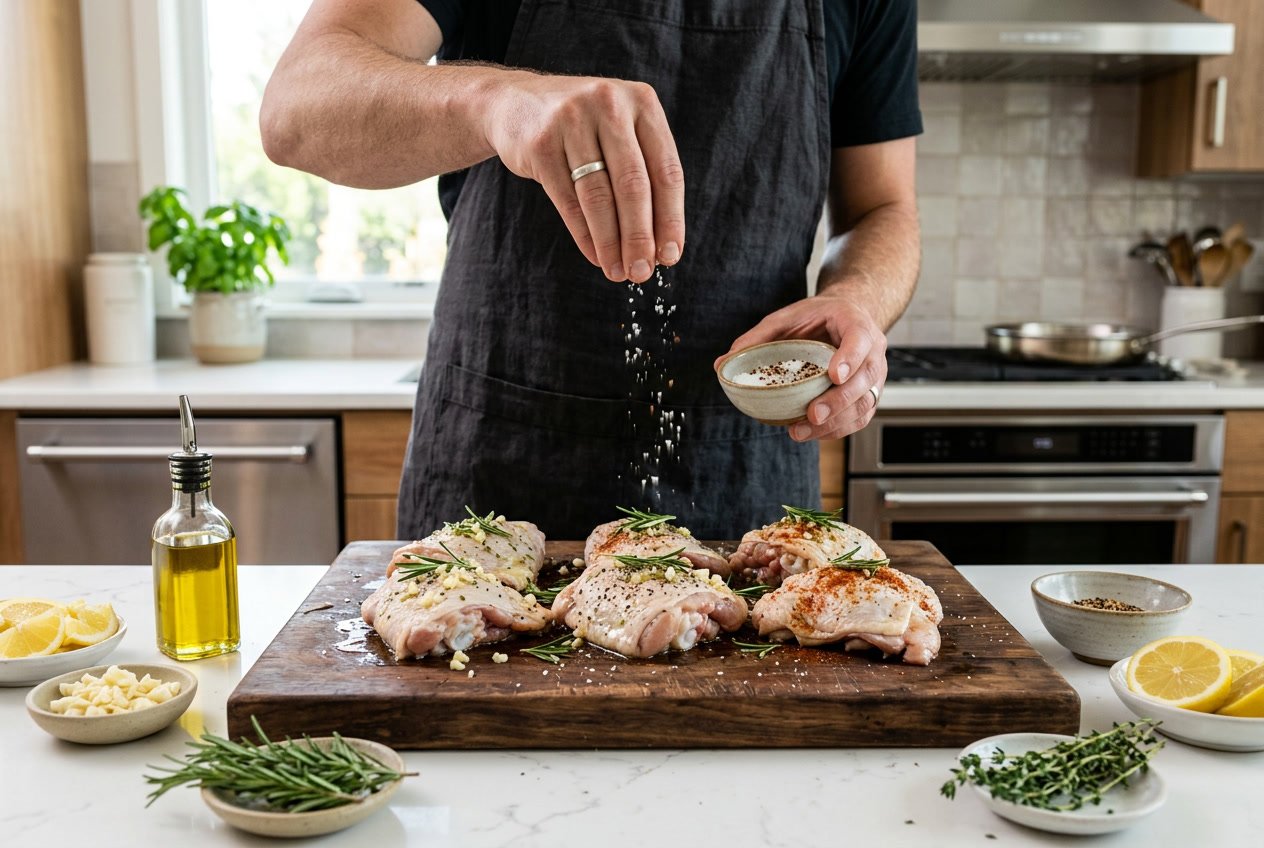
You’ll find step-by-step guidance on preparing the skin for crispiness. Learn timing and temperatures for oven, skillet, grill, air fryer, and pressure-cooker methods, plus how long each method typically takes.
Follow these practical tips to transform a humble package of thighs into reliably delicious weeknight dinners and crowd-pleasing meals.
Understanding Chicken Thighs
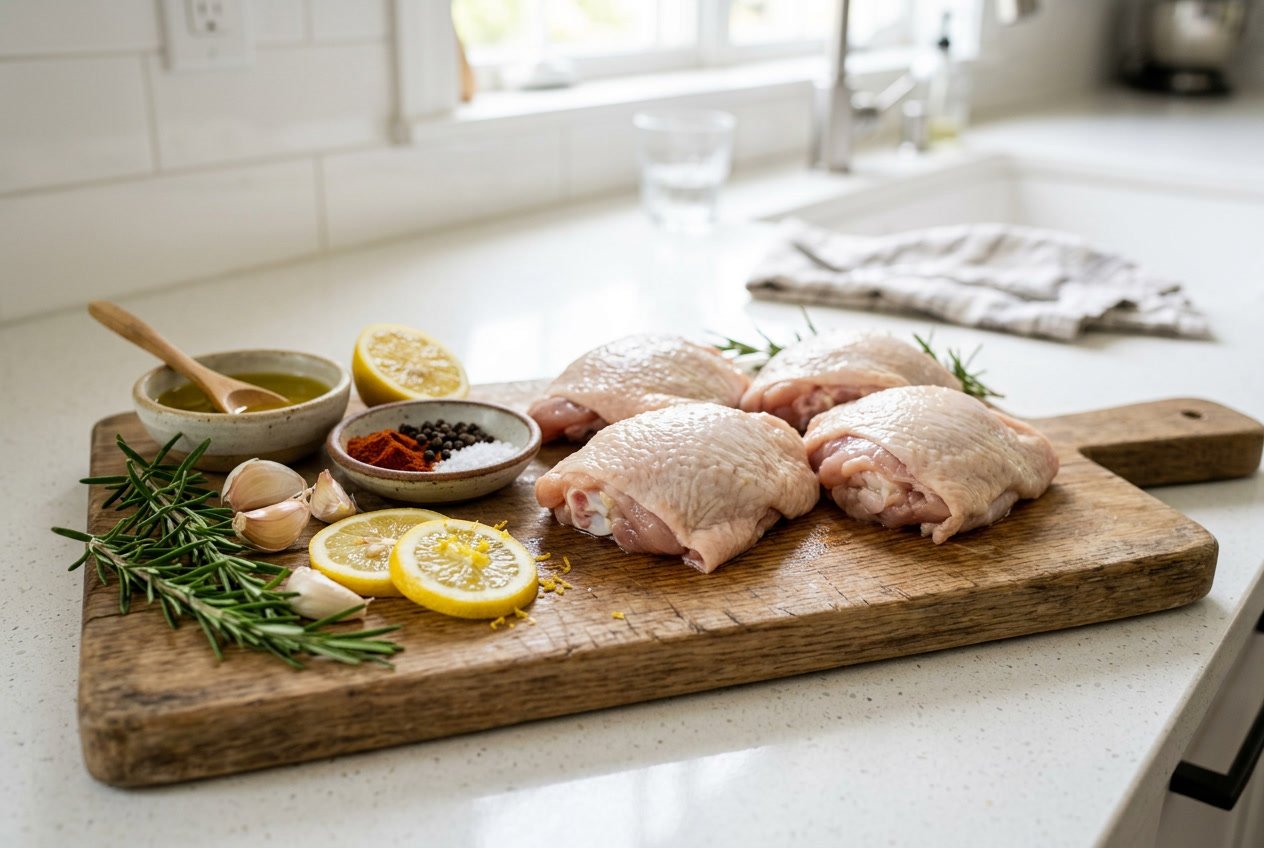
Chicken thighs offer richer flavor and more forgiving texture than breasts. Bone and skin presence change cooking time, moisture retention, and how you should season or finish them.
Types of Chicken Thighs
You’ll typically see four basic cuts: boneless skinless, boneless skin-on, bone-in skinless, and bone-in skin-on. Boneless, skinless thighs cook fastest (about 12–20 minutes depending on method) and suit stir-fries, skewers, and quick pan-sears.
Bone-in thighs take longer to reach safe temperature but hold moisture better and add flavor during braises or roasts. Skin-on thighs crisp under high heat and render fat that bastes the meat; remove skin after cooking if you want less fat.
Skinless thighs lose surface fat and brown less, so use higher heat, sauces, or a sear to build flavor. Choose your cut based on time, desired crispness, and whether you want the extra flavor from bone and skin.
Nutrition and Flavor Profile
Thighs are dark meat with higher fat and slightly fewer grams of protein per ounce than breasts. A 3.5-ounce serving of roasted boneless, skinless thigh contains roughly 170–180 calories, about 24–26 g protein, and 7–9 g fat.
The extra fat gives thighs more flavor and keeps them forgiving against overcooking. If you’re tracking calories or saturated fat, remove the skin before or after cooking to cut fat without losing all the flavor.
For micronutrients, thighs provide more iron, zinc, and B12 than breast meat, which matters if you want nutrient-dense protein.
Essential Preparation Steps
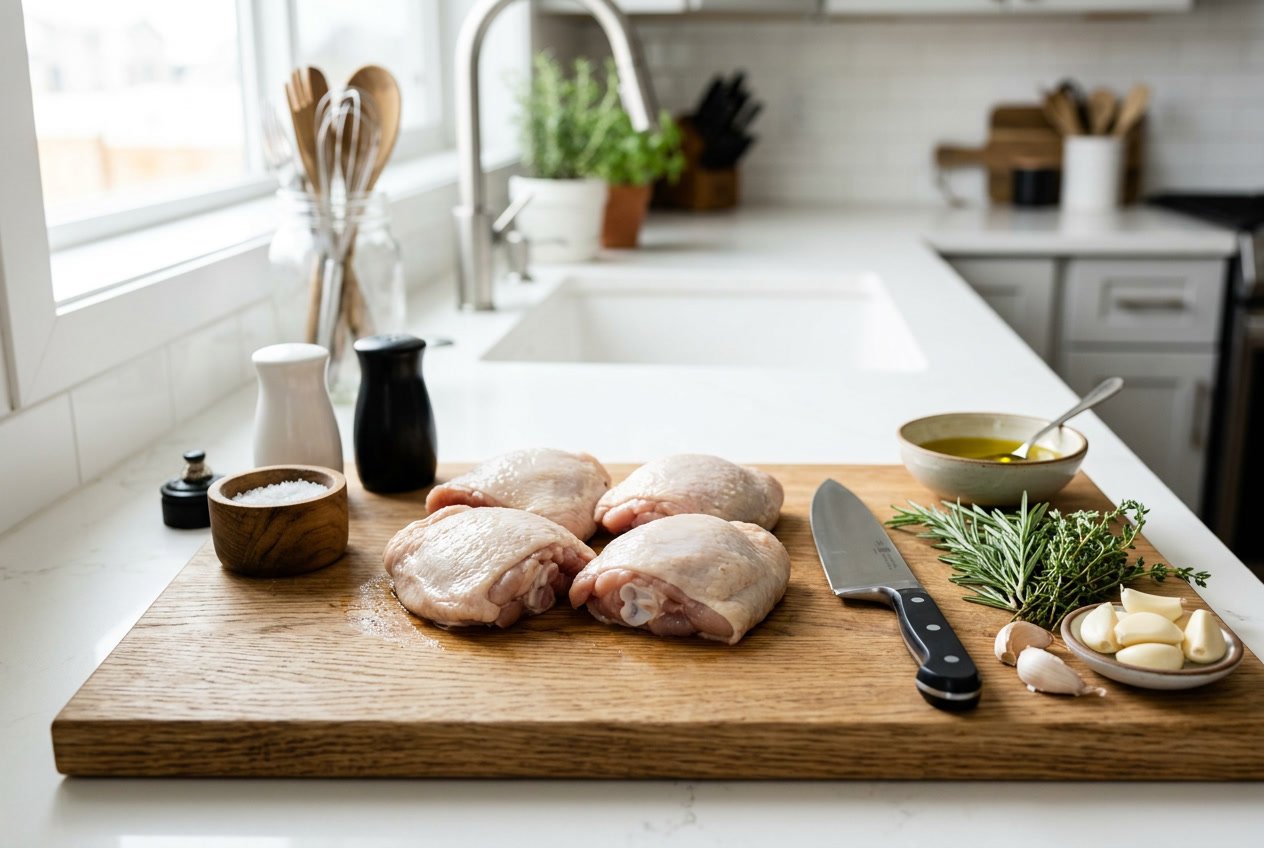
These steps focus on trimming, seasoning, and marinating so your thighs develop crisp, well-seasoned skin and juicy meat. Use specific trimming actions, salt and spice timing, and marinade choices to suit baked, pan-seared, or air-fryer chicken thigh recipes.
How to Trim and Prep Chicken Thighs
Start by removing thighs from packaging and patting them dry with paper towels. Dryness is the single most important step for crisp skin.
Use kitchen shears or a sharp boning knife to trim loose fat and excess skin flaps. Leave enough skin to cover the meat for baked chicken thigh recipes or remove it entirely for lower-fat, faster-cooking options.
If you have bone-in thighs, check the cavity near the bone for cartilage or excess fat and trim that away for even cooking. For boneless, skinless thighs, remove any silver skin and flatten slightly with the palm to create an even thickness.
Always avoid overcrowding the pan or baking sheet. Give each thigh at least 1 inch of space so air and heat circulate and the skin browns rather than steams.
Seasoning Techniques
Salt early when possible. For best flavor and moisture retention, sprinkle kosher salt evenly on both sides at least 15–30 minutes before cooking.
For immediate cooking, use a lighter hand with salt and rely on a spice rub of garlic powder, paprika, black pepper, and onion powder applied just before heat. Rub oil into the skin first to help spices adhere and promote browning—1 tablespoon of neutral oil per pound is usually enough.
Layer flavors by combining dry herbs (thyme, rosemary) in the rub or finish with fresh herbs after cooking. If you plan baked chicken thigh recipes, position skin-side up on a rack to let fat render away and skin crisp.
For pan-seared recipes, press thighs into the hot pan skin-side down and don’t move them for several minutes to build a golden crust. Adjust salt to taste after resting.
Marinating for Maximum Flavor
Choose a marinade purposefully. Acid (vinegar, citrus) tenderizes and brightens, while oil and soy-based marinades add richness and umami.
For bone-in or thicker thighs, marinate 4–12 hours in the fridge. For boneless, skinless pieces, limit strong-acid marinades to 1–3 hours to avoid mushy texture.
Always marinate in a non-reactive container or a resealable bag. Include salt in the marinade or brine separately for consistent seasoning.
If you plan to use the marinade as a sauce, boil it for at least 2–3 minutes to kill bacteria before serving. Pat thighs dry after marinating to restore the skin’s ability to crisp.
Avoid overcrowding the pan or tray when cooking marinated thighs so they sear instead of steam.
Internal Temperature and Doneness
Check internal temperature, choose the right target for the cut, and use an instant-read thermometer correctly to avoid undercooking or drying out the meat. Pull bone-in thighs warmer than the USDA minimum to convert collagen to gelatin and get tender, juicy results.
Safe Internal Temperature for Chicken Thighs
The USDA minimum safe internal temperature for all poultry is 165°F (74°C) measured at the thickest point. That temperature guarantees harmful bacteria are killed.
For bone-in, skin-on thighs, you can safely cook past 165°F to improve texture. Aim for 175°F when you want reliably tender meat, and 185°F if you want very soft, fall-off-the-bone thighs.
Higher targets matter because thighs contain more collagen than breast meat; as collagen heats above 170°F it converts to gelatin, which moistens and tenderizes the muscle fibers.
Boneless, skinless thighs have less collagen. Pulling them around 165–170°F prevents dryness while still being safe.
How to Use an Instant-Read Thermometer
Insert the probe into the thickest part of the thigh without touching bone. Contact with bone gives a false high reading.
For bone-in thighs, angle the probe alongside the bone, not through it. Check temperature toward the end of cooking.
In the oven or on the grill, test one thigh in the center of the pan to avoid opening the oven or grill too often. For seared or pan-finished thighs, measure after resting briefly off heat to read a stabilized temperature.
Calibrate your thermometer periodically by placing the probe in ice water (32°F) or boiling water (212°F at sea level). Clean the probe between uses to prevent cross-contamination.
Instant-read thermometers give fast, accurate readings and are the most reliable way to achieve safe, juicy chicken.
Ideal Doneness Levels for Juicy and Tender Thighs
Use these practical targets based on texture preference and cut:
- 165°F (74°C): Safe minimum; best for boneless, skinless thighs to avoid dryness.
- 175°F (79°C): Sweet spot for bone-in, skin-on thighs; collagen starts converting to gelatin, improving succulence.
- 185°F (85°C): For shreddable, fall-apart thighs and braises where maximum gelatin yields silky mouthfeel.
If you prefer crisp skin, finish at the higher temp for collagen breakdown, then rest 5–10 minutes so juices redistribute. Resting also lets residual heat bring the interior up slightly (carryover), usually 2–5°F depending on size.
Internal temperature, not time or color, determines doneness. Use the thermometer as your guide to consistently get tender chicken thighs that remain juicy.
How to Cook Chicken Thighs in the Oven
You’ll learn temperature, timing, and small techniques that make chicken thighs juicy with crisp skin. Follow explicit steps for bone-in, skin-on thighs and for boneless thighs, plus practical tips to maximize crispiness.
Baking Bone-In, Skin-On Chicken Thighs
Preheat your oven to 400°F–425°F depending on route. Use 400°F for gentler cooking, 425°F for faster browning.
Pat thighs completely dry with paper towels; moisture prevents crispy skin. Season all over and tuck seasoning under the skin when possible.
Arrange thighs skin-side up on a wire rack set over a rimmed baking sheet to allow air circulation and prevent soggy bottoms. Bake uncovered for about 35–45 minutes, checking internal temperature with a meat thermometer.
Pull at 165°F (74°C) for safe meat, or 175–180°F (79–82°C) if you want more tender, fall-apart thigh meat. If skin needs extra crisp, move under the broiler for 1–3 minutes, watching closely to avoid burning.
Rest for 5–10 minutes before serving so juices redistribute.
How to Bake Boneless Chicken Thighs
Preheat oven to 400°F. Pat boneless thighs dry and oil lightly to help seasoning stick and skin (if any) crisp.
Arrange pieces with small gaps on a baking sheet or on a wire rack. Baking directly on foil or a sheet without a rack is fine but may yield less crispness.
Bake 20–30 minutes depending on thickness. Use a thermometer to confirm 165°F (74°C) internal temp.
Because boneless thighs cook faster, start checking at 18 minutes to avoid overcooking. For a caramelized exterior, finish with a 1–2 minute broil or increase oven to 425°F for the last 5–7 minutes.
Rest briefly before slicing to keep juices locked in. Boneless thighs deliver quick, tender results and work well with pan sauces or glazes added during the last few minutes.
Tips for Crispy Baked Chicken Thighs
Start with very dry skin; pat thoroughly and salt at least 15–30 minutes before cooking or just before roasting. Salt draws surface moisture, improving crisping.
A light coat of oil or melted butter helps heat conduct and browns the skin. Use a wire rack over a baking sheet to let hot air circulate and keep skin dry underneath.
Choose a higher temperature (425°F) for initial browning or finish at that temp for 5–10 minutes. If needed, broil on high for short bursts to achieve crispy chicken skin—watch constantly.
Avoid overcrowding the pan; give each thigh space to brown. Check internal temps with a reliable thermometer rather than time alone.
For added texture, sear skin-side down in a hot skillet 3–4 minutes before transferring to the oven to bake at 400°F–425°F.
Popular Chicken Thigh Cooking Methods
You’ll find fast, high-heat techniques that create browned, flavorful crusts and low-and-slow methods that yield fall-apart tenderness. Each approach has a clear best use: quick weeknight dinners, charred outdoor meals, ultra-crispy air-fryer results, or rich braises for hands-off cooking.
Searing Chicken Thighs
Searing gives you a deeply browned crust and concentrated flavor. Pat skin-on thighs dry, season, and heat a heavy skillet (cast-iron preferred) until shimmering.
Add a little oil, place thighs skin-side down, and leave them undisturbed to char for 5–8 minutes, depending on size and heat. Flip and finish in the pan or transfer to a 400°F oven to cook through to 165°F.
Use a probe thermometer to avoid overcooking. For boneless thighs, reduce sear time and press gently for even contact.
Deglaze the pan with stock or wine to make a quick pan sauce using those browned bits.
Grilling Chicken Thighs
Grilling delivers smoky char and crisped skin that you can’t mimic indoors. Preheat the grill to medium-high and oil the grates to prevent sticking.
For skin-on thighs, start skin-side down over direct heat to develop color, then move to indirect heat to finish without burning. Boneless thighs cook faster—about 10–12 minutes total—so watch for flare-ups and flip once.
Bone-in pieces need longer, 15–25 minutes, and benefit from a two-zone fire. Brush with sauce in the last few minutes only to avoid burning sugars.
Aim for 165°F internal temperature, then rest 5–10 minutes before serving.
Air Frying Chicken Thighs
The air fryer cooks chicken thighs quickly and creates crisp skin using less oil. Preheat the basket to 375°F.
Arrange thighs skin-side up in a single layer to allow air circulation and even browning. Spray lightly with oil if you want extra browning on skinless pieces.
Boneless thighs cook in about 12–15 minutes. Bone-in thighs need 18–22 minutes.
Flip halfway through cooking for even color. Use a thermometer to check the thickest part, then let the thighs rest briefly.
For extra crunch, dust the skin with baking powder and salt before cooking. You can finish under the broiler for 1–2 minutes for more color.
Slow Cooking and Braising
Slow cooking and braising make thighs tender and flavorful. Brown thighs in a skillet to sear the skin and render fat.
Transfer the thighs to a slow cooker or heavy pot. Add aromatics, liquid like stock, wine, or tomatoes, and herbs to partially submerge the meat.
Cook on low in a slow cooker for 4–6 hours. For oven braising, cook at 300°F for 1.5–2 hours until the meat pulls away from the bone.
Reduce the braising liquid on the stovetop to create a glossy sauce. This method works best for bone-in thighs and pairs well with grains, mashed potatoes, or polenta.
How Long to Cook Chicken Thighs
Bake most thighs between 375°F and 425°F for crisp skin and rendered fat. Use an instant-read thermometer and focus on the target internal temperatures below.
Baking Times by Thigh Type
- Bone-in, skin-on: Roast at 400°F for 35–45 minutes. Thicker pieces may need 45 minutes; check temperature near the bone.
- Boneless, skin-on: Roast at 400°F for 20–25 minutes. These cook faster since there is no bone.
- Boneless, skinless: Roast at 400°F for 18–22 minutes. Remove promptly once the correct temperature is reached to avoid drying out.
- Lower-temperature option: Roast at 350°F for 45–55 minutes for bone-in, or 30–35 minutes for boneless, if you prefer gentle cooking.
Target internal temperatures
- USDA safe minimum: 165°F (74°C).
- For juicier thighs: 175–185°F (79–85°C) for more rendered fat and a tender texture.
Rest thighs for 5–10 minutes to allow carryover cooking and redistribute juices.
Cooking Times for Other Methods
-
For pan-searing then oven finish, sear skin-side down for 6–8 minutes in a hot skillet. Transfer the chicken to a 400°F oven for 12–18 minutes for boneless pieces or 18–25 minutes for bone-in.
-
When grilling, cook over direct high heat for 8–12 minutes per side for boneless pieces. For bone-in, use indirect heat for a total of 25–35 minutes, depending on thickness. Use a thermometer to check doneness.
-
In an air fryer, cook at 375°F for 15–22 minutes for boneless pieces. For bone-in, cook for 20–25 minutes in a single layer with space between pieces. Flip the chicken halfway through for even browning.
-
In a slow cooker or when braising, cook for 3–4 hours on low. For larger batches, cook for 6–8 hours on low. Long, moist cooking methods make the meat shreddable, not crispy.


