
How Chicken Thighs in Oven: Ultimate Guide to Juicy, Crispy Thighs
You can get golden, juicy chicken thighs from the oven with a few clear choices and a reliable temperature. Bone-in, skin-on thighs roast best for crispy skin and deeply flavored meat, while boneless, skinless thighs cook faster and suit quick weeknight meals.
Aim for 165°F internal temperature and use a hot oven (around 425°F for boneless, 400–500°F for bone-in skin-on) to lock in juices and crisp the exterior.
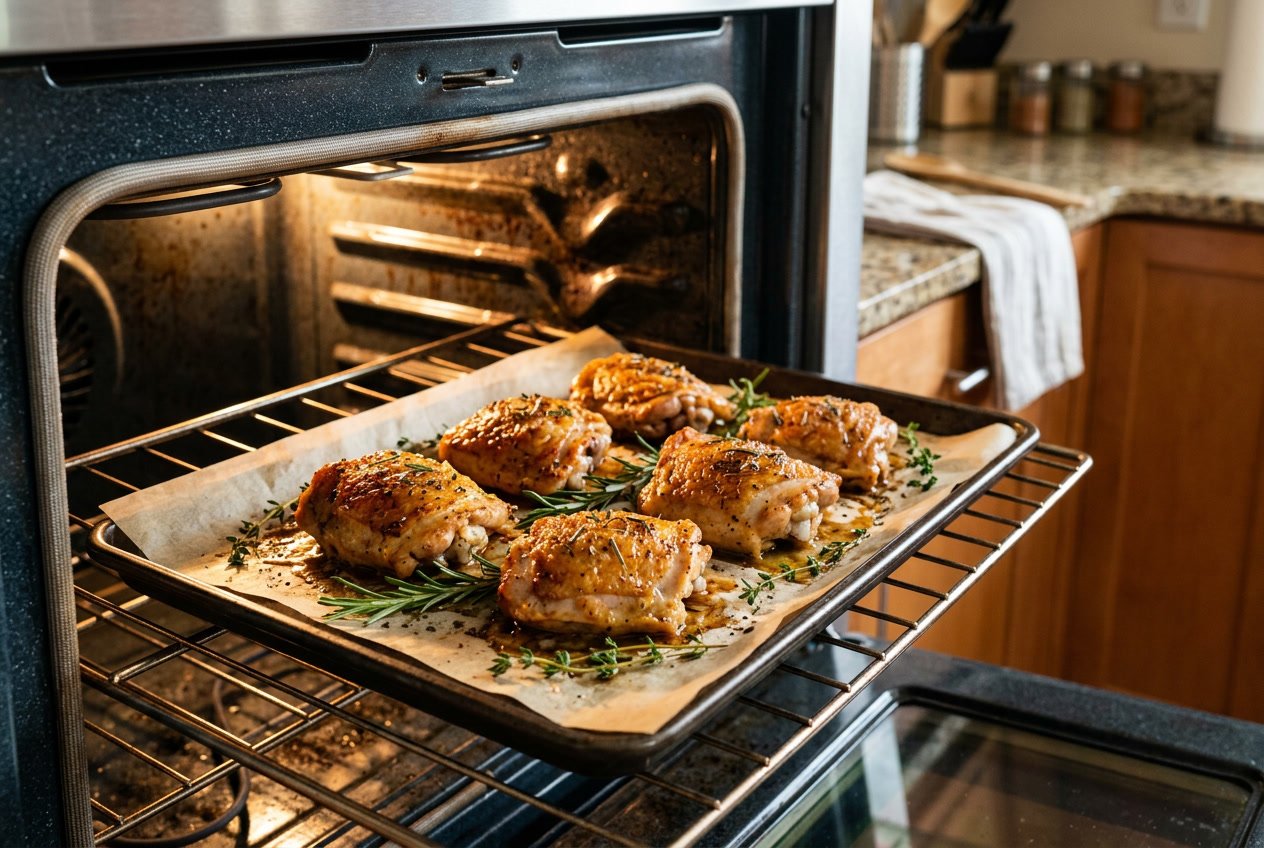
This guide shows how to pick the right thighs and which seasonings and simple techniques make the biggest difference. You’ll learn practical methods for prep, oven setups, timing, and how to store and reheat leftovers so your next batch tastes just as good.
Choosing Chicken Thighs for Oven Baking
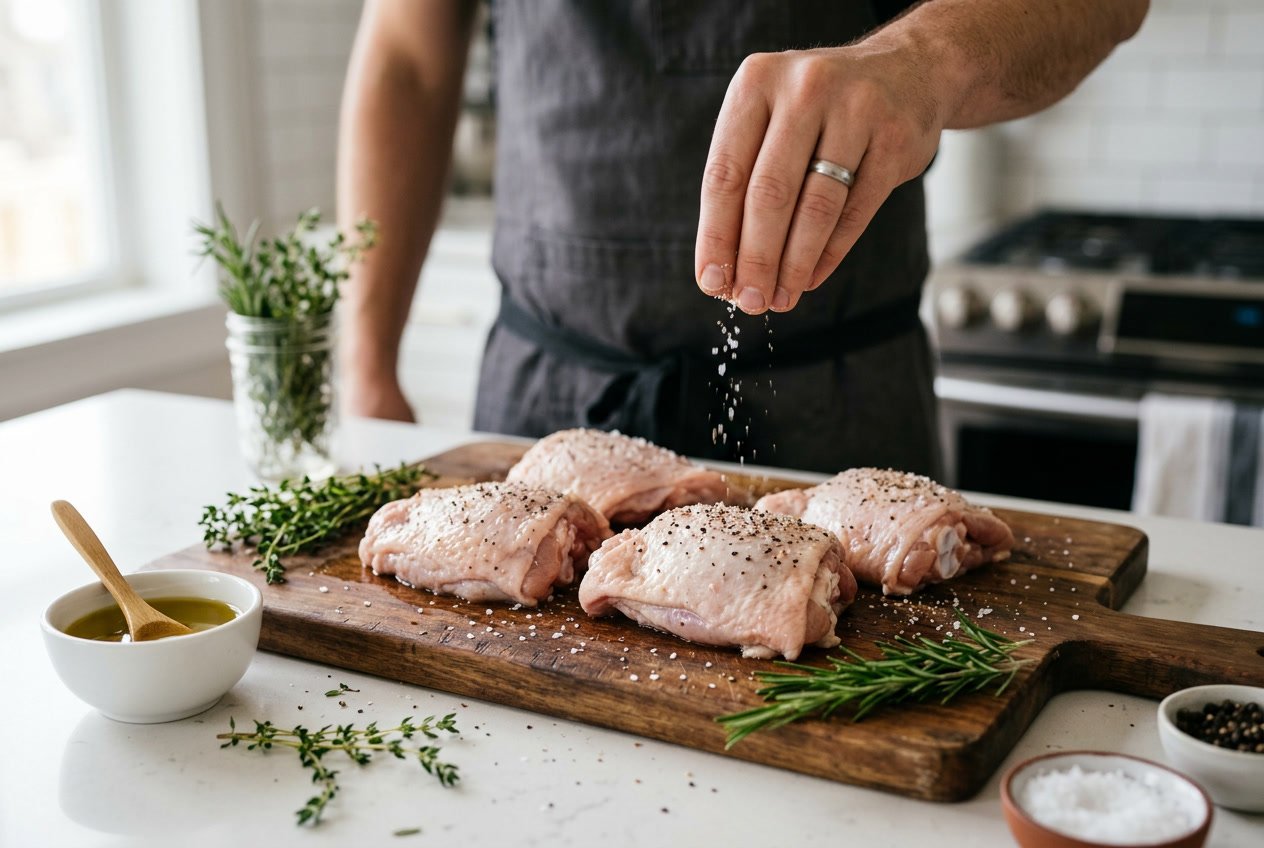
Pick thighs that match the texture and cook time you want. Bone-in pieces take longer and yield more flavor, while boneless cook faster and are easier to eat.
Skin-on thighs give you crispy skin and more fat for flavor. Skinless or boneless skinless thighs trim time and calories but need careful timing to stay juicy.
Bone-In vs Boneless Thighs
Bone-in chicken thighs contain more connective tissue and fat around the bone, which breaks down during oven baking and keeps the meat moist. Expect about 35–45 minutes at 400°F (200°C) for average bone-in thighs; use a meat thermometer and aim for 165°F (74°C) internal temperature for safety, or 175–180°F (79–82°C) if you prefer very tender meat.
Boneless thighs cook faster—typically 20–30 minutes at 400°F—because heat penetrates directly through the meat. They brown differently, so you may need a quick sear or a higher finishing broil to get caramelized edges.
Choose boneless skinless chicken thighs when you want quicker weeknight meals or easier portioning.
Skin-On vs Skinless Thighs
Skin-on chicken thighs give you the best chance at crispy, flavorful skin when roasted uncovered. Pat the skin dry, brush with a little oil, and space pieces on a rack or baking sheet to promote even airflow and crisping.
The skin also helps shield meat from drying during longer bakes. Skinless or boneless skinless chicken thighs reduce fat and calories but lose the built-in barrier that keeps juices locked in.
To keep skinless thighs moist, marinate or brine briefly, roast at a higher temperature, and avoid overcooking. A finishing glaze or sauce added near the end preserves moisture and adds flavor.
Selecting High-Quality Chicken Thighs
Look for thighs with firm, plump flesh and no strong odor. Color should be pale pink to slightly darker depending on breed.
Avoid packaging with excess fluid. Clear, minimal liquid indicates fresher meat.
For bone-in cuts, check that the bone ends are clean and not discolored. Consider labels and source: “no antibiotics ever,” pasture-raised, or certified humane can indicate different farming practices that affect flavor and texture.
If you buy frozen, thaw fully in the refrigerator before oven baking to ensure even cooking. Use a digital thermometer to verify doneness rather than relying on color alone.
Essential Ingredients and Seasonings
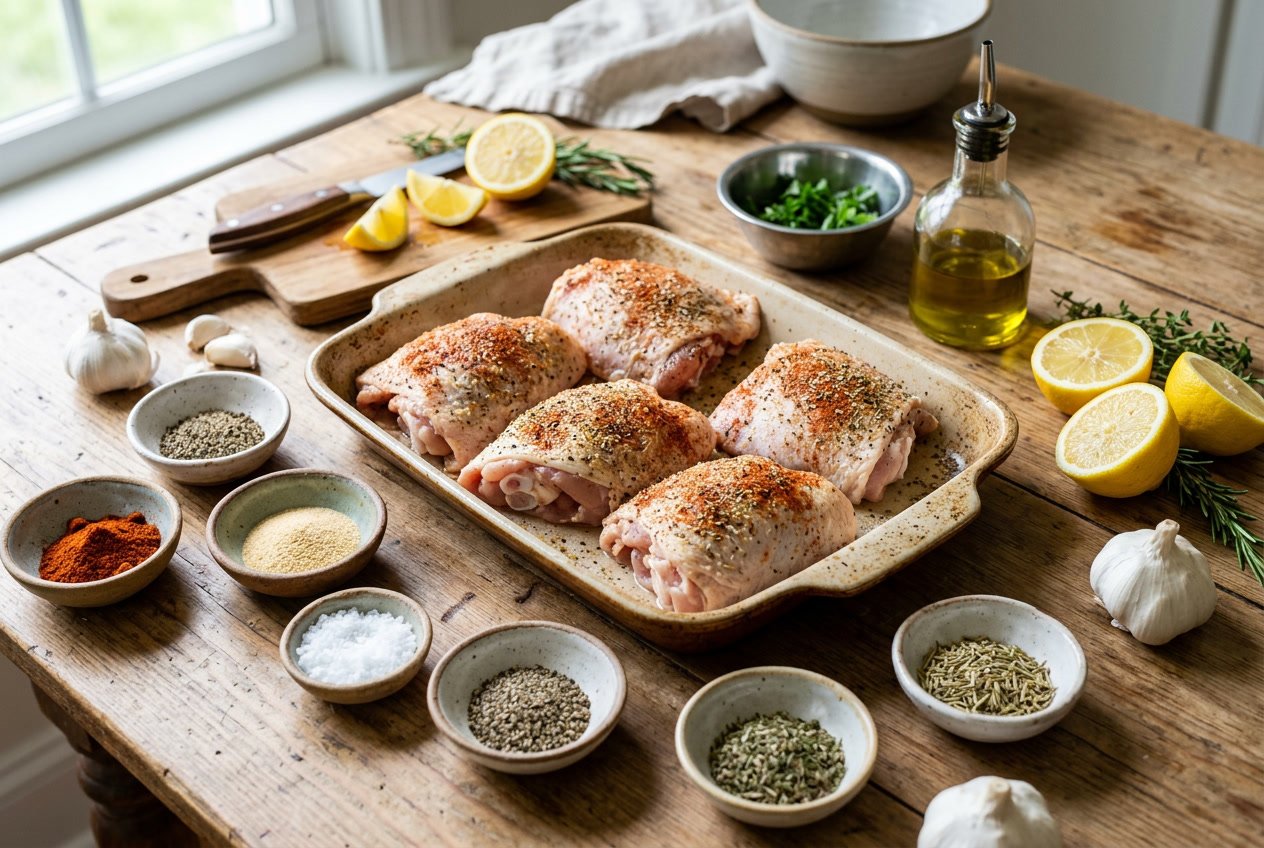
You’ll want a small set of reliable ingredients that create crisp skin, moist meat, and clear, balanced flavors. Focus on salt, a few core herbs and spices, a coating fat, and an optional marinade or glaze to suit the dish.
Classic Herbs and Spices
Use salt and freshly ground black pepper as your base. They control seasoning and enhance the chicken’s natural flavor.
Add paprika for color and a mild sweet-smoky note. Use regular or smoked depending on how assertive you want the crust.
Oregano and thyme pair particularly well with chicken thighs. Sprinkle dried oregano for an earthy, slightly bitter backbone, and tuck thyme sprigs under the skin or use dried thyme for a floral, savory lift.
Garlic powder and onion powder round out savory depth without extra prep. Measure boldly but taste carefully.
For four bone-in, skin-on thighs, start with 1½ teaspoons kosher salt and ¾ teaspoon black pepper, plus 1–2 teaspoons paprika and 1 teaspoon each of oregano and thyme.
Popular Seasoning Blends
A simple all-purpose blend: 2 parts paprika, 1 part garlic powder, 1 part onion powder, 1 part salt, ½ part black pepper. It browns well during baking and complements the thigh’s fat.
For Mediterranean-style baked chicken thighs, combine oregano, thyme, lemon zest, garlic, salt, and pepper. That mix works well with olive oil and yields a bright roast.
If you prefer a spicier edge, add ½ teaspoon crushed red pepper or cayenne to the base blend. For a smoky finish, swap smoked paprika for regular.
Keep a small jar of your favorite blend for consistent results and faster prep.
Olive Oil and Marinades
Coat thighs lightly in olive oil to help spices adhere and encourage even browning. Use about 1 tablespoon of oil per pound of chicken.
Rub oil under and over the skin when possible for direct contact with seasoning. Marinades with acid (lemon juice or vinegar), oil, and aromatics boost flavor and tenderize.
Marinate 30 minutes to 4 hours. Avoid overnight in strong acid to prevent mushy texture.
A basic marinade: 3 tablespoons olive oil, 1 tablespoon lemon juice, 2 cloves minced garlic, 1 teaspoon oregano, 1 teaspoon thyme, salt and pepper.
For a glaze, mix honey and Dijon mustard with a pinch of paprika and brush in the last 10 minutes of baking to caramelize without burning.
Flavor Variations
Build variations around the core spices. Lemon-herb: add lemon zest and fresh thyme leaves to paprika, salt, and pepper for a bright finish.
Smoky-BBQ: use smoked paprika, brown sugar, garlic powder, and black pepper; brush with a thin layer of barbecue sauce in the final 5 minutes to avoid burning.
Cajun style: blend paprika, black pepper, garlic powder, onion powder, and cayenne for a spicy crust.
Italian-style: oregano, basil, garlic powder, and a little grated Parmesan pressed under the skin before baking deliver savory depth.
Adjust salt and intensity to match bone-in, skin-on thighs, which tolerate stronger seasoning and benefit from the added fat during baking.
How to Prepare Chicken Thighs for Oven Baking
Trim excess fat, pat the skin or meat dry, and apply a simple seasoning or rub for even flavor. Give the thighs time to rest at room temperature so they cook through evenly and develop better texture.
Trimming and Patting Dry
Trim any large, loose pieces of fat or excess skin that hang past the edge of the thigh. This prevents uneven browning and flare-ups if you broil.
Use sharp kitchen shears or a small knife and remove only what’s obviously excessive. Leave most skin intact for flavor and crisping.
Pat each thigh thoroughly with paper towels until mostly dry. For skin-on thighs, press harder to remove surface moisture; this helps the skin crisp in the oven.
For boneless, skinless thighs, drying improves seasoning adhesion and reduces steaming during baking. If you rinse, do so briefly and dry immediately.
Place trimmed thighs on a wire rack set over a sheet pan while you finish seasoning. This keeps air around the pieces for more consistent roasting.
Applying the Seasoning Rub
Start with a base of kosher salt and freshly ground black pepper. Use roughly 3/4 to 1 teaspoon salt per pound of chicken.
Add flavor with 1–2 teaspoons per pound total of aromatics such as garlic powder, onion powder, smoked paprika, or dried herbs. For skin-on thighs, rub the seasoning under the skin where possible as well as on top to infuse meat and crisp the skin.
For boneless, skinless thighs, lightly coat with a tablespoon of oil before seasoning to help spices stick and promote even browning. Use a basic wet marinade when you want deeper flavor.
Combine oil, acid (lemon juice or vinegar), and aromatics. Marinate 30 minutes to 2 hours in the fridge.
Avoid long acidic marinades more than 6 hours for boneless thighs to prevent texture change.
Letting Chicken Rest Before Baking
Bring the thighs toward room temperature for 20–30 minutes before they go in the oven. This short rest reduces chill in the center so thighs reach the target internal temperature (165°F / 74°C) without overcooking the exterior.
If you marinated the chicken, remove it from the fridge and let excess marinade drip off before placing on the baking sheet. Pat again if the surface became damp during refrigeration.
Arrange thighs skin-side up (for skin-on) with space between pieces on a rimmed baking sheet or in a roasting pan. Use a wire rack for better air circulation; this promotes even oven-baked chicken thighs and consistent browning across a batch.
Oven Baking Methods and Techniques
You’ll learn specific oven temperatures, timing, and setup that deliver juicy meat and crispy baked chicken thighs. Follow precise steps for skin rendering, rack placement, and finishing methods to avoid soggy skin or undercooked centers.
Traditional Oven Baking Steps
Preheat your oven to 400–425°F (200–220°C) for best roast results. Pat thighs completely dry, season or brine, and let them sit uncovered in the fridge for at least 30 minutes if time allows.
This reduces surface moisture and helps crisp the skin. Place thighs skin-side up on a wire rack set over a rimmed sheet pan.
The rack lifts the thighs so hot air circulates underneath and fat drips away, preventing the thighs from braising in their own juices.
Bake bone-in, skin-on thighs 35–45 minutes; boneless thighs 20–25 minutes. Use an instant-read thermometer: pull boneless at 165–170°F, pull bone-in at 175–185°F for tender, gelatinized meat.
Avoid flipping or covering with foil during roasting. Let thighs rest 5–7 minutes before serving to redistribute juices and reach final temp.
Sheet Pan and Casserole Options
For sheet-pan meals, arrange vegetables in a single layer with a light oil coating and place thighs skin-side up on top of or between vegetables. Leave 1–1.5 inches between pieces so air can circulate.
If you use a casserole or baking dish without a rack, prop thighs on a bed of root vegetables or a layer of onions to lift them off pooled juices. Roast at 400°F; check earlier for boneless pieces.
Tent foil only during slow braises to retain moisture. Do not cover when aiming for crispy baked chicken thighs.
Timing table (single-layer sheet pan, 400°F):
- Bone-in, skin-on: 35–45 min
- Boneless, skin-on: 25–30 min
- Boneless, skinless: 20–25 min
Broiling for Extra Crispiness
If the skin hasn’t reached the level of crisp you want, finish under the broiler for 2–4 minutes. Move the oven rack so thighs sit 4–6 inches from the broiler element.
Watch constantly; sugar or marinades can burn quickly. Before broiling, blot any excess oil to reduce flare-ups.
For even color, rotate the pan once during the broil. After broiling, let the thighs rest briefly.
The broiler will raise surface temperature, so resting prevents juices from escaping when you cut into the meat.
How Long to Bake Chicken Thighs in the Oven
Timing depends on oven temperature, whether thighs are bone-in or boneless, and whether you want crisp skin. Use an instant-read thermometer and aim for 165°F (74°C) in the thickest part for safe, juicy results.
Baking Times by Temperature
At 350°F (175°C) bone-in, skin-on thighs take about 40–50 minutes. Boneless, skinless thighs at this temperature usually finish in 25–35 minutes.
Lower temps give more even cooking but longer time. Higher temps brown skin faster.
At 400–425°F (200–220°C) bone-in thighs often take 30–40 minutes and boneless thighs 20–30 minutes. For crispy oven baked chicken thighs, start hot (425°F) to render fat and crisp skin, then reduce to 375°F if the exterior is darkening too quickly.
Use a rimmed sheet pan or a roasting rack for airflow.
If you roast at very high heat (450–500°F) reduce time to about 20–30 minutes for bone-in and 18–25 minutes for boneless. Watch closely; sugars in marinades can burn at these temps.
Bone-In vs Boneless Cooking Times
Bone-in thighs need more time because the bone slows heat penetration. Plan roughly 5–15 minutes extra versus boneless pieces of similar weight.
A 6–8 ounce bone-in thigh generally takes 30–40 minutes at 425°F. A 4–6 ounce boneless thigh will finish in 20–30 minutes.
Bone-in, skin-on thighs deliver richer flavor and stay moister during longer roasts. This suits lower temperatures and roasted chicken thighs recipes.
Boneless, skinless thighs cook faster and work better for quick weeknight meals. They are ideal when you plan to slice the meat for salads or bowls.
When recipe timing depends on size, weigh or estimate ounces per thigh. Adjust by about 5 minutes per additional ounce at moderate oven temps.
Checking for Doneness
Always verify doneness with an instant-read thermometer. Insert into the thickest part of the meat without touching bone and target 165°F (74°C).
For bone-in pieces, avoid contacting bone to prevent false high readings. Visual cues help: juices should run clear and the meat should be opaque.
For skin-on thighs, look for deep golden-brown, crisp skin. If you prefer a slightly more tender texture, remove thighs at 160–162°F and let carryover heat raise them to 165°F while resting.
Rest thighs 5–10 minutes before serving to let juices redistribute. This step improves juiciness and makes slicing or shredding easier.
Serving, Storing, and Reheating Baked Chicken Thighs
Serve the thighs hot for best texture. Refrigerate leftovers within two hours.
Store them in airtight containers. Reheat using methods that prioritize internal temperature and skin crispness.
Serving Suggestions and Side Dishes
Plate oven baked chicken thighs with sides that balance richness and texture. Try mashed potatoes, roasted root vegetables, or a tangy cabbage slaw.
For a lighter meal, serve thighs over a bed of mixed greens, warm quinoa, or steamed rice. Drizzle with a lemon-herb vinaigrette.
Use sauces to boost flavor without masking the chicken. Chimichurri, garlic yogurt sauce, or a simple pan jus work well.
Garnish with chopped parsley, lemon wedges, or flaky salt for brightness and contrast. Portion one bone-in thigh per person for a main course, or two if appetites are large.
Best Methods for Storage
Cool baked chicken thighs on the counter no more than two hours after cooking. Pat dry any excess moisture before placing in containers to reduce sogginess.
Store in airtight containers or heavy-duty resealable bags. Press out excess air to limit freezer burn.
Refrigerate for 3–4 days at 40°F (4°C) or below. Freeze for up to 3 months and label with the date.
Thaw frozen thighs overnight in the refrigerator, not at room temperature. If you plan to reheat from frozen, add extra time and check internal temperature carefully.
Reheating Tips for Crispy Skin
Preheat your oven to 375°F (190°C) to ensure even heat. Place the thighs on a wire rack over a baking sheet so hot air can circulate and crisp the skin.
Cover the thighs loosely with foil for the first 8–10 minutes if the meat is cold. Remove the foil for the last 5–10 minutes to finish crisping.
For an air fryer, reheat at 375°F (190°C) for 5–10 minutes and check frequently.
Use the microwave only if necessary. Heat in short bursts at medium power, then finish in a hot oven or skillet to restore texture.
Make sure the meat reaches an internal temperature of 165°F (74°C) before serving.


