
How Can I Make Chicken Thighs: Methods, Tips, and Recipes
You get juicy, flavorful chicken thighs by choosing the right cut, drying and seasoning the skin, and cooking to the proper internal temperature for your method. Aim for 175°F–185°F for bone-in thighs and 165°F–170°F for boneless to balance safety and tenderness. Use high heat or finish under the broiler to crisp the skin.
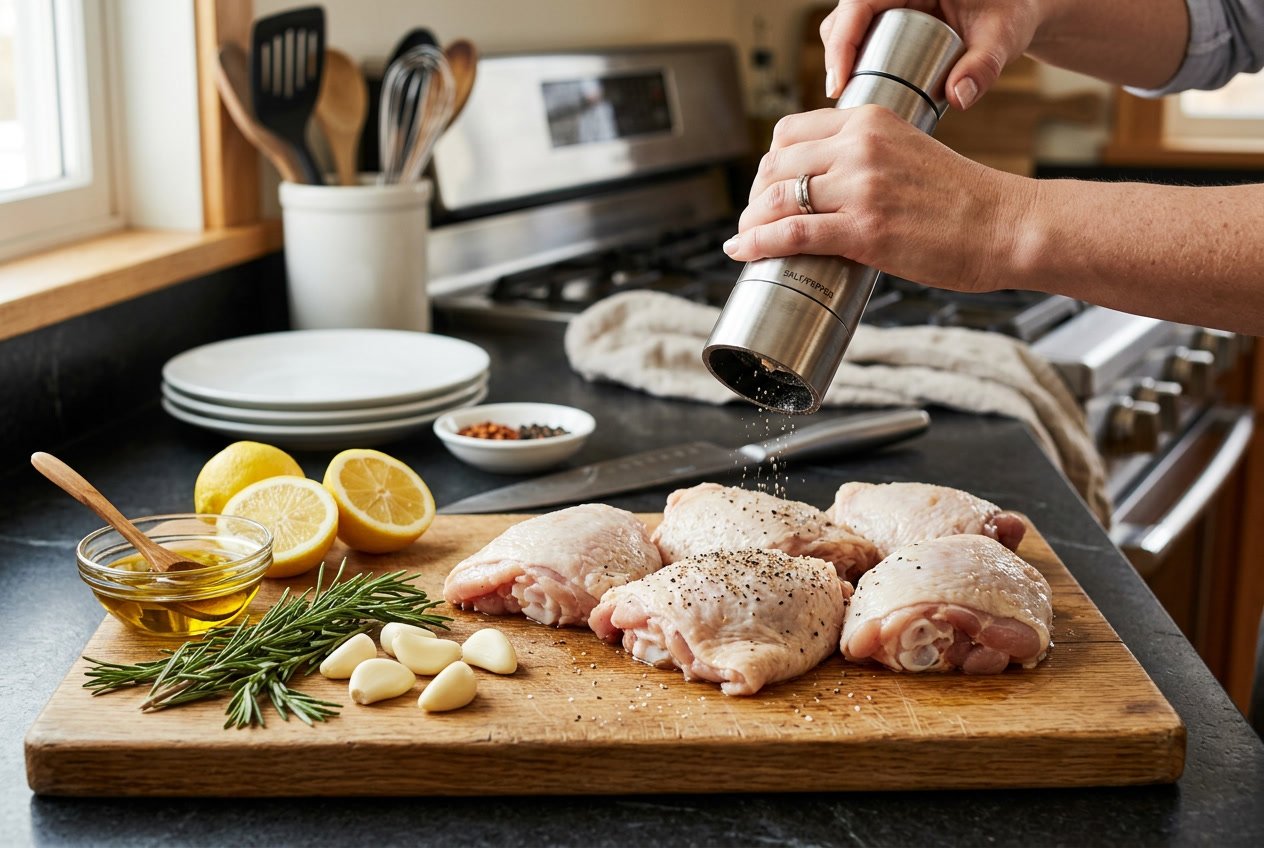
Pat the thighs dry and leave space between pieces so they don’t steam. Use a short marinade or dry rub suited to roasting, pan-searing, grilling, braising, or air-frying.
Follow straightforward techniques. Small adjustments in temperature, timing, and treatment of the skin turn an ordinary weeknight dinner into something reliably satisfying.
Chicken Thighs Overview
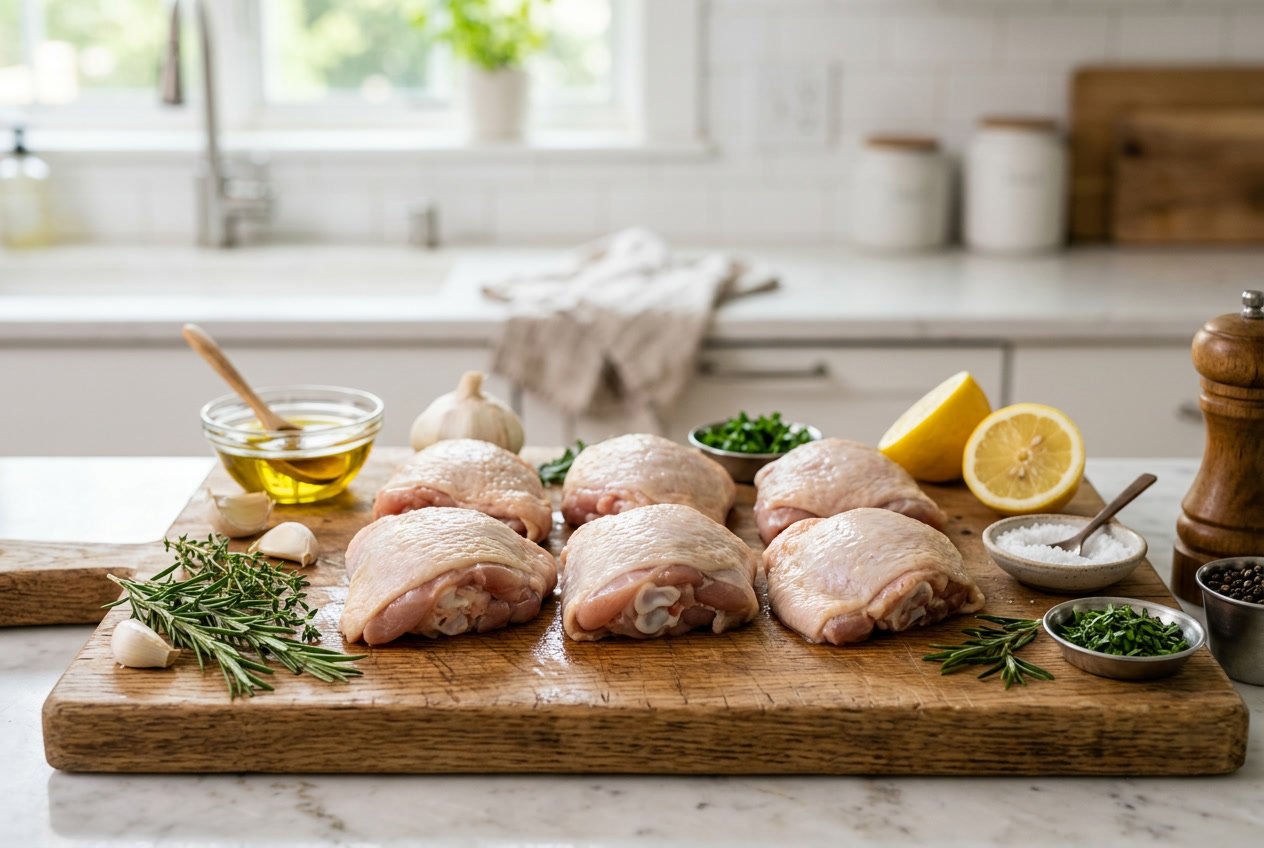
Chicken thighs give you rich flavor and forgiving texture. You can use them for quick weeknight meals or long braises.
Choose between higher-fat, slow-friendly cuts and leaner, faster-cooking pieces depending on the dish and desired texture.
What Are Chicken Thighs
Chicken thighs come from the upper part of the bird’s leg, between the drumstick and the body. They contain more fat and connective tissue than breasts, which gives deeper flavor and greater resistance to drying during cooking.
The extra collagen in thighs turns to gelatin as you cook, especially at higher internal temperatures. The meat feels moist and silky rather than dry.
Thighs work well for grilling, roasting, braising, and frying. You’ll see them sold whole (with bone and skin), or as trimmed pieces; each presentation affects cook time and technique.
Choose thighs when you want forgiving meat that tolerates longer cooking and bolder seasonings.
Boneless vs. Bone-In Chicken Thighs
Boneless thighs are convenient and cook faster—usually 5–10 minutes less in most methods. They’re easier to cut into uniform pieces for stir-fries, skewers, or quick pan-sears, and they absorb marinades quickly because more surface area contacts the seasoning.
Bone-in thighs take longer to reach temperature but give you more flavor and juicier results for many recipes. The bone slows heat penetration, so pull bone-in thighs at slightly higher internal temperatures (about 175°F) to convert collagen into gelatin and maximize tenderness.
If you need shreddable meat for tacos or sandwiches, bone-in works great after slow cooking. For fast weeknight dinners or slices for salads, pick boneless.
Skin-On vs. Skinless Varieties
Skin-on thighs deliver the best texture when you want crisp, browned surfaces. The rendered fat under the skin bastes the meat during cooking and helps create a crunchy exterior when you use high dry heat or broil briefly.
Skinless thighs save time and reduce surface fat, which suits dishes where you want sauce to cling directly to the meat or when you plan to shred the cooked chicken. They also cook a bit faster and produce less splatter when pan-frying.
If you value crispy skin, pat it thoroughly dry, salt ahead, and roast or pan-sear at high heat. If you prefer lower fat or a leaner profile, choose skinless and focus on proper seasoning and moisture-retaining techniques like brining or marinades.
Choosing and Preparing Chicken Thighs
Pick thighs that match your recipe goals and handle them safely. Look for firm, pinkish flesh, minimal odor, and intact skin if you want crisping or bone-in pieces for slow cooking.
How to Select Fresh Chicken Thighs
Check color and texture first. Fresh thighs should be pink to light-red with white fat; avoid gray or greenish tints.
Press the flesh—firmness indicates freshness; a spongy or slimy feel means decline. Decide cut by cooking method.
Choose bone-in, skin-on thighs for roasting, braising, or when you want crispy skin and extra flavor. Pick boneless, skinless thighs for quick sautés, stir-fries, or marinades that penetrate evenly.
Read labels for date and treatment. Prefer free-range or fresh-without-additives if you want a cleaner flavor.
Note package weight and pieces so cooking times stay consistent.
How to Trim, Debone, and Skin Chicken Thighs
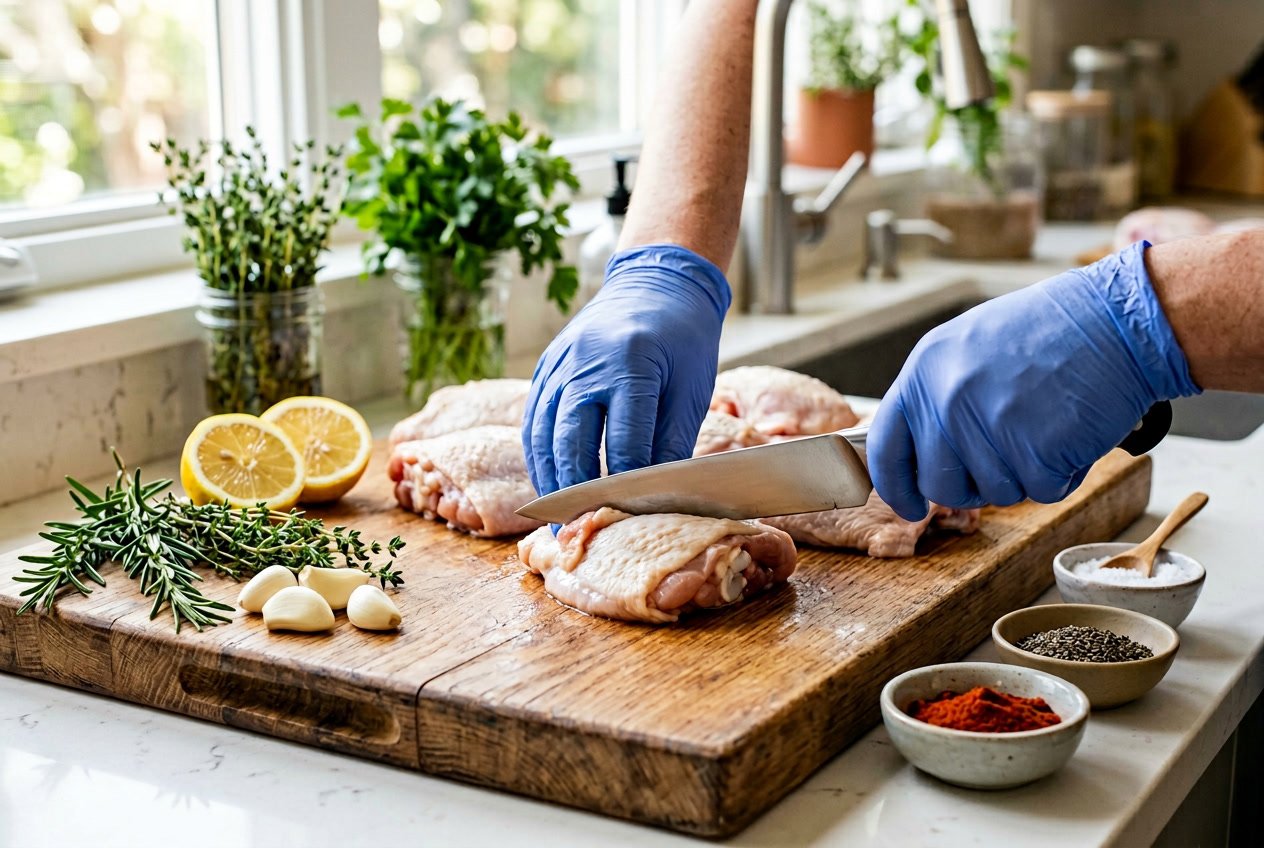
Work on a stable board and use a sharp boning or chef’s knife. Pat thighs dry first to avoid slips.
Trim away excess fat and loose skin flaps; leave a thin fat layer under skin-on thighs for flavor and crisping. To debone a bone-in thigh, cut along the bone, scrape meat away with the tip of the knife, and lift the bone out.
Move deliberately—small strokes minimize meat loss. For boneless thighs bought intact, remove any remaining cartilage or tendon by cutting it out.
Skin removal is simple. Slip your fingers under the edge of the skin and pull while holding the meat down, or use the knife to separate.
Keep skin if you want to render fat and crisp it. Remove skin for lean, saucy dishes.
Rinse only if needed and always pat dry before seasoning or coating.
Storing Chicken Thighs Safely
Refrigerate at 40°F (4°C) or below and use raw thighs within 1–2 days. Store in original packaging on a plate or tray to catch juices and place on the bottom shelf to avoid drips onto other foods.
Freeze for longer storage. Wrap tightly in plastic wrap and place in a freezer bag, or vacuum-seal.
Label with date; use within 6 months for best quality. Thaw in the fridge overnight or use cold-water submersion in a sealed bag, changing water every 30 minutes.
Discard thighs with off-odors, sticky texture, or sliminess. Always wash hands, utensils, and surfaces after handling raw chicken to prevent cross-contamination.
Seasoning and Marinades for Chicken Thighs
Choose seasonings that build savory depth, balance fat, and either create a crisp crust or soak into the meat. Use salt as your baseline, then layer spices, herbs, acid, and oil to control flavor, texture, and browning.
Classic Spice Rubs
Build a dry rub by combining salt with spices that brown and form a crust. A reliable mix: 1 tbsp kosher salt, 1 tsp black pepper, 1 tbsp paprika, 1 tsp garlic powder, 1 tsp onion powder, and 1 tsp brown sugar.
The paprika gives color and mild smokiness; brown sugar helps caramelize the skin. Add dried herbs like 1 tsp Italian seasoning for herbal notes.
Pat thighs dry, massage the rub into the meat, and let rest 30–60 minutes (or refrigerate overnight) to let salt penetrate. For skin-on thighs, apply extra rub to the skin for crispier texture.
For a bolder rub, increase paprika to 2 tbsp and add ½ tsp cayenne for heat. For a simple weeknight option, use a pre-made chicken seasoning and reduce added salt accordingly.
Popular Marinades
Use a marinade when you want deeper, more uniform flavor and tenderizing from acid or enzymes. A basic marinade: ¼ cup olive oil, 2 tbsp lemon juice or vinegar, 2–3 tbsp soy sauce, 2 cloves minced garlic (or 1 tsp garlic powder), 1 tsp onion powder, 1 tbsp brown sugar or honey, and 1 tsp Italian seasoning.
This balances acid, fat, umami, and sweetness. Marinate boneless thighs 30 minutes to 4 hours; bone-in and skin-on can marinate up to 8 hours but avoid overnight in strong citrus-based mixes to prevent mushy texture.
For grilling, reserve some marinade before adding raw chicken and brush during the last minutes of cooking to glaze. For an Asian-style option, replace lemon with rice vinegar, add 1 tbsp soy sauce, 1 tsp sesame oil, and fresh ginger.
For smoky-sweet, use chipotle in adobo and brown sugar with olive oil.
Must-Have Ingredients for Flavor
Salt controls seasoning depth; use kosher salt for even distribution. Paprika (sweet or smoked) brings color and mild smokiness.
Garlic powder and onion powder supply concentrated savory notes without the moisture of fresh aromatics. Brown sugar balances acidity and aids caramelization.
Olive oil functions as a flavor carrier and helps spices stick; use about 2–4 tbsp per pound in marinades. Italian seasoning gives a quick herb blend—rosemary, thyme, oregano—for Mediterranean profiles.
Keep a jar of a ready chicken seasoning blend for fast prep, but adjust salt and sugar to your taste. Measure and taste as you go.
Start modest with salt and brown sugar, increase paprika for color, and add garlic/onion powder incrementally to avoid overpowering the meat.
Cooking Methods for Chicken Thighs
You get reliable results by controlling surface dryness, cooking temperature, and internal doneness. Focus on drying the skin, picking the right heat (hot for crisp, moderate for tender), and using an instant-read thermometer to pull thighs at the proper temperature.
How to Bake Chicken Thighs
Preheat your oven to 400–425°F for crispy oven baked chicken thighs. Arrange skin-side up on a wire rack set over a rimmed sheet pan or on a sheet pan lined with parchment.
Pat thighs dry and season generously; salt ahead for at least an hour if you can. Bone-in, skin-on thighs take about 35–45 minutes; boneless take 20–25 minutes.
Use an instant-read thermometer in the thickest part, avoiding bone. Pull bone-in at 175°F for tender, gelatinized meat, or boneless at 165–170°F.
For extra-crispy baked chicken thighs, finish under the broiler 2–3 minutes, watching closely to prevent burning. Avoid covering with foil, which traps steam and softens skin.
How to Grill Chicken Thighs
Set up a two-zone fire for grilled chicken thighs: direct high heat for searing, indirect for finishing. Sear skin-side down 4–6 minutes over direct heat to build color, then move to indirect heat, cover, and cook until the internal temp reaches 175°F for bone-in.
Boneless can be cooked entirely over medium-high for 5–7 minutes per side to 165–170°F. Trim excessive fat to reduce flare-ups and keep a spray bottle nearby to control flames.
Let char develop and rest the thighs 5–10 minutes before serving so juices redistribute. Use clean grill grates and oil them to prevent sticking and to preserve the crisp exterior.
Skillet Chicken Thighs
Use a heavy skillet (cast iron preferred) and start skin-side down. Place cold thighs in a cold pan, then heat to medium-high; this slow rendering prevents a burnt exterior with unrendered fat underneath.
Cook skin-side undisturbed 7–12 minutes until deep golden and the skin releases naturally. Flip and transfer the pan to a 400°F oven if the thighs are thick or bone-in; finish until the internal temp hits 175°F (bone-in) or 165–170°F (boneless).
For boneless, sear 4–6 minutes per side on the stovetop. Deglaze the pan with wine or stock for a quick pan sauce and spoon over the thighs before serving.
Air Fryer Chicken Thighs
Air fryer chicken thighs crisp quickly thanks to concentrated circulating hot air. Pat thighs completely dry and do not overcrowd the basket; cook skin-side up at 400°F.
Bone-in typically takes 22–28 minutes; boneless takes 16–20 minutes. Flip once halfway through for even browning if your model requires it.
Season simply or use a light baking-powder based rub to accelerate browning for extra-crispy skin. Check doneness with an instant-read thermometer and rest 5 minutes after cooking.
Work in batches for consistent results and avoid stacking, which produces soggy spots.
Best Chicken Thigh Recipes
You can make juicy, well-seasoned thighs in the oven, on the grill or skillet, and across global styles that deliver big flavor. Focus on temperature, seasoning placement (under skin when present), and matching cooking method to the cut (bone-in vs boneless) for best results.
Baked Chicken Thigh Recipes
Baking gives predictable results and works well when you want crispy chicken thighs with minimal hands-on time. Pat the skin dry and rub with oil and a spice mix such as paprika, garlic powder, salt, pepper, and a touch of brown sugar for caramelization.
Bake at 400°F (200°C) for 30–40 minutes for bone-in thighs. Boneless thighs take about 20–30 minutes.
Use a rimmed baking sheet or a 13×9 dish and space pieces skin-side up so hot air circulates. For extra crispness, finish under the broiler for 2–4 minutes.
Quick variations:
- Arrange potatoes and carrots around the thighs for a sheet pan chicken with vegetables and roast together.
- Brush with a mustard-mayo mixture before broiling for deviled-style, tangy, browned tops.
- For safety and best texture, target 175–185°F internal for thighs. Remove earlier if you prefer softer juices.
Grilled and Skillet Chicken Thigh Dishes
Grilling and skillet cooking concentrate flavor with high heat and create charred or pan-seared crusts. Marinate chicken in teriyaki, mustard, or a simple oil-lemon-herb mix for grilling.
Cook over medium-high heat for 5–7 minutes per side for boneless thighs and 8–10 minutes for bone-in, finishing with indirect heat if needed. For skillet cooking, heat a heavy pan until hot, sear skin-side down without moving to render fat and crisp the skin, then lower heat to finish.
Technique tips:
- Score skin lightly and season under the skin for deeper flavor.
- Use a cast-iron skillet for even browning and baste with butter and garlic for richer taste.
- Add teriyaki glaze at the end to prevent burning. Mustard-based sauces tolerate longer cooking.
Global Chicken Thigh Flavors
Try international profiles for distinct weeknight meals. Tandoori chicken and butter chicken start with yogurt-based marinades and benefit from at least 1 hour of marination.
Bake or grill, then finish with a creamy tomato sauce for butter chicken. Tandoori uses yogurt, lemon, and warm spices like cumin, coriander, and garam masala for bright, charred pieces.
Chicken adobo braises thighs in soy, vinegar, garlic, and bay leaves. Cook low and slow until the sauce reduces and glosses the meat.
Other options:
- Braise chicken cacciatore with tomatoes, bell peppers, and olives until tender.
- For a hearty plate, sear thighs and simmer in a sour cream and mushroom sauce for a stroganoff adaptation.
- Try teriyaki for sticky-sweet glazed thighs or use a mustard-chili rub for sharp, savory notes.
Tips for Perfect Chicken Thighs
Focus on three practical areas: surface dryness and heat for texture, accurate temperature for safety and tenderness, and common traps that ruin results. Use an instant-read thermometer, manage moisture, and give the skin time and space to render.
Achieving Crispy Skin
Pat thighs completely dry with paper towels, including skin folds and crevices, to remove surface moisture that prevents browning. Lightly rub the skin with olive oil and salt to help with heat transfer and seasoning.
If pan-searing, start skin-side down in a cold cast-iron or heavy skillet, then heat to medium. This lets fat render slowly and crisps the skin without burning.
For oven roasting or air frying, set 400°F–425°F and place thighs skin-side up on a wire rack so hot air circulates and fat drips away. A small dusting of baking powder (not baking soda) in your dry rub can help by raising pH and promoting faster browning.
Avoid overcrowding the pan or basket. Leave at least 1–1.5 inches between pieces so steam escapes and skin crisps.
Checking Doneness and Safety
Use an instant-read thermometer to test the thickest part of the thigh, avoiding the bone. Remove boneless skinless thighs at 165°F for safe, juicy meat.
Aim for 175°F–185°F for bone-in skin-on thighs. The higher range melts collagen into gelatin and creates a more tender result.
Insert the probe horizontally into the meat, not through to the pan. Let thighs rest 5–10 minutes after cooking so carryover heat rises a few degrees and juices redistribute.
If you braise or slow-cook, ensure the internal temp reaches a safe level. Finish under a broiler or in a hot pan to restore surface texture if desired.
Common Mistakes to Avoid
Pat thighs dry before cooking. Wet skin steams instead of crisps.
Avoid overcrowding the pan. Too many pieces trap steam and produce rubbery skin. Cook in batches or use a rack.
Don’t rely on time alone; thickness and bone presence change cook time significantly. Use an instant-read thermometer to check doneness.
Avoid marinating acidic mixtures more than 8–24 hours. Overlong acid contact can make texture mushy.
Let the skin-side sit undisturbed until it naturally releases or reaches the target color for best crispness.
Ideas for Serving and Using Leftover Chicken Thighs
Leftover chicken thighs work well hot or cold. Turn them into quick meals, plated dinners, or salad toppers with minimal effort.
Focus on simple accompaniments, safe storage and reheating, and easy transformations that make the meat feel fresh again.
Side Dishes and Serving Suggestions
Pair roasted or oven-baked chicken thighs with vegetables that contrast texture and brightness. Roasted Brussels sprouts, honey-glazed carrots, or a lemony green bean salad add crispness and acid to balance the rich thigh meat.
Try garlic mashed potatoes, herbed rice, or a simple quinoa pilaf to soak up pan juices and complete the plate. For an easy dinner, place sliced thighs over warm rice, spoon a quick pan sauce of wine, stock, and mustard on top, and finish with chopped parsley.
For a lighter meal, shred the thighs and toss them into mixed greens with sliced apple, toasted nuts, and a vinaigrette. Use the thighs as a pizza or flatbread topping with pesto or barbecue sauce for a fast weeknight twist.
How to Store and Reheat Leftovers
Cool cooked thighs to room temperature for no more than two hours, then refrigerate in airtight containers. Use within 3–4 days for best quality or freeze up to 3 months in labeled, single-use portions.
Reheat gently to keep thighs juicy. Oven-bake at 325°F (160°C) covered with foil for 10–15 minutes until 165°F (74°C) internal, or reheat sliced pieces in a skillet with a splash of broth over medium heat.
Microwaving works for quick meals. Cover and heat in 30-second bursts, stirring or turning between intervals.
When reheating from frozen, thaw overnight in the fridge or reheat directly in a covered oven dish. Increase cook time and check internal temperature.
Avoid overcooking to prevent dry texture.
Creative Uses for Leftover Chicken Thighs
Transform thighs into salad proteins, tacos, and sandwiches.
Shred the meat and mix it with mayo, lemon, celery, and herbs for a zesty chicken salad you can stuff into pita pockets or serve on whole-grain bread.
Dice thighs and use them in fried rice or a noodle stir-fry to build an easy weeknight meal.
For comfort food, chop thigh meat and fold it into a creamy pasta bake or casserole, then top with breadcrumbs and bake until bubbly.
Try global flavors by tossing shredded thighs in salsa and cumin for tacos.
Combine chicken with tzatziki and cucumber for pita pockets.
Stir leftover chicken into coconut curry with vegetables for a quick, fragrant dinner.


