
How Are Chicken Thighs Deboned: Expert Guide to Deboning Techniques
Deboning chicken thighs is a simple skill you can learn quickly. Use a sharp knife to cut alongside the bone, loosen the meat, and lift the bone out while keeping the skin and meat intact if you want.
You’ll save money, speed up cooking, and get boneless, skin-on or skinless thighs ready for anything by following a few clear, repeatable cuts.
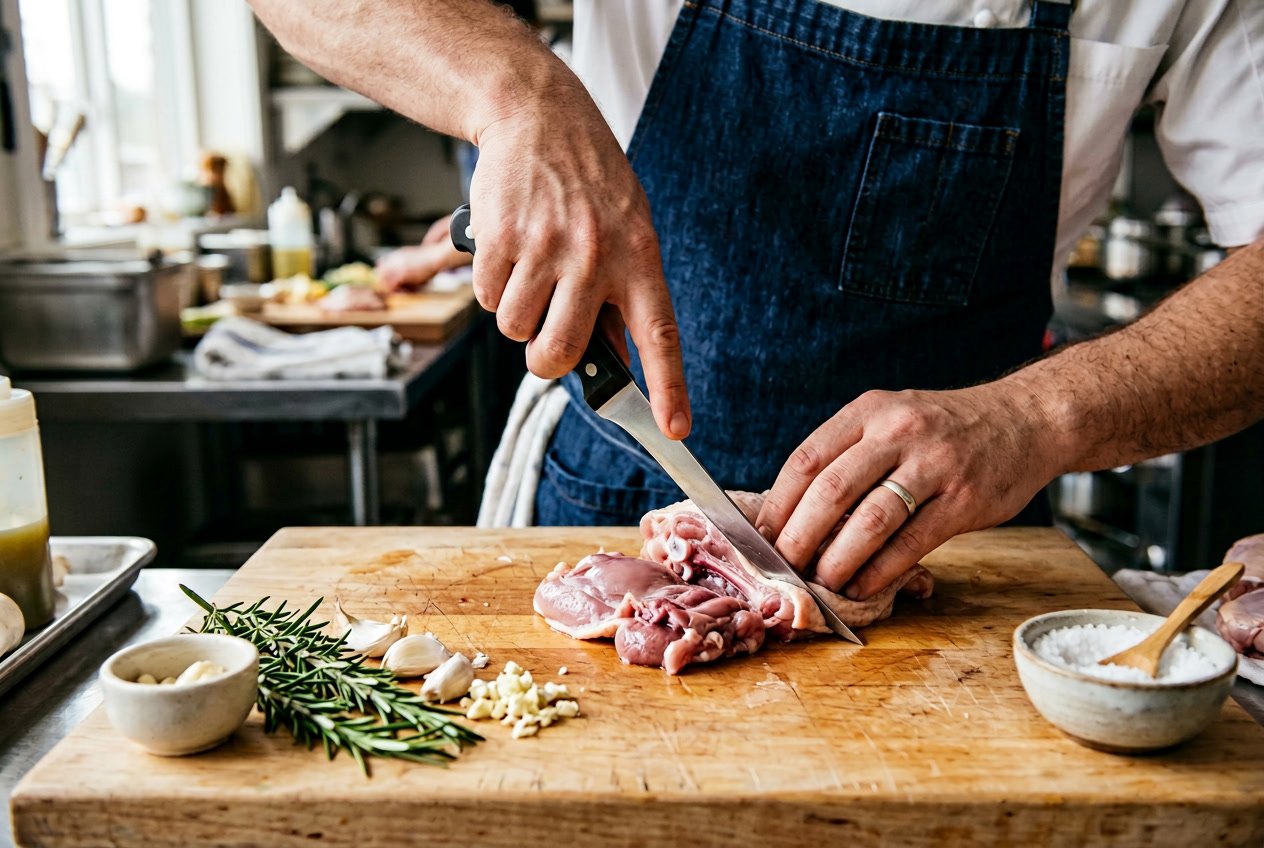
This post explains why deboning matters and what tools make it faster and safer. You’ll also get a step-by-step method you can follow on your first try.
Expect practical tips for handling the knife, optional skin removal, safety reminders, and quick ideas for cooking your freshly deboned thighs.
Why Debone Chicken Thighs
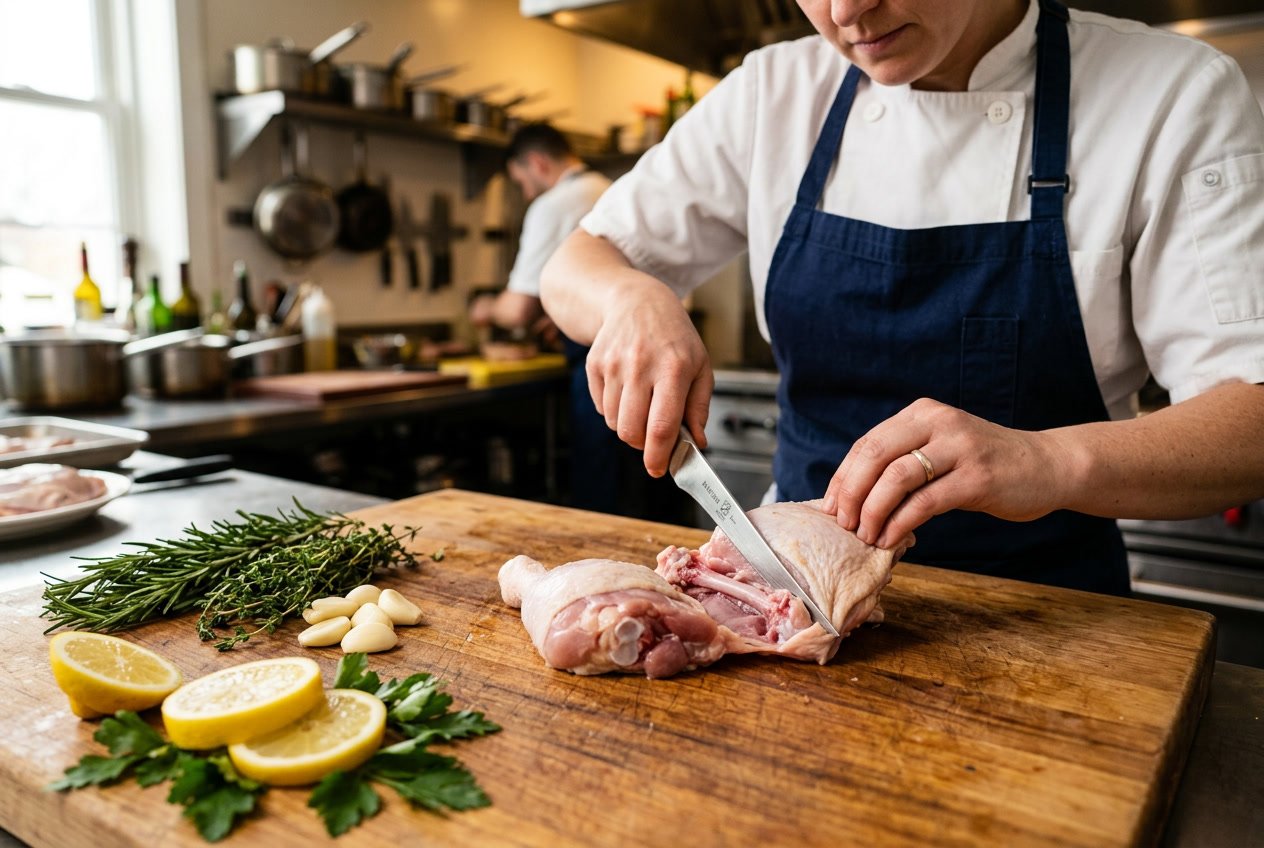
Deboning thighs saves money, speeds cooking, and expands what you can make with the meat. The next sections explain how deboning affects price, flavor, and which recipes benefit most.
Cost Savings and Value
Bone-in chicken thighs usually cost less per pound than pre-trimmed boneless thighs. You can pay 10–30% less depending on store and region, so deboning at home cuts protein costs for weekly meals.
When you remove the bones yourself you also control how much usable meat you keep. Proper technique minimizes waste and preserves the skin if you want it for recipes that call for skin-on, boneless thighs.
You also keep the bones for stock or soup, turning what might seem like waste into a flavorful, low-cost ingredient. If you buy larger packs, deboning in batches reduces total labor time.
That makes deboning a practical step for meal prep, especially if you cook for a family or batch-cook weekly portions.
Taste and Cooking Benefits
Deboned thighs cook more evenly and usually finish faster than bone-in pieces. Without the bone, heat reaches the center sooner, so a boneless thigh often takes about half the grill or oven time of a bone-in thigh.
Keeping the skin while deboning lets you get crisp texture and faster cooking. The skin crisps under high heat while the meat inside cooks quickly.
Removing the bone also makes seasoning and marinades more effective. Rubs and brines penetrate the meat surface more uniformly, so you get more consistent flavor in dishes like stir-fries, tacos, or shredded-chicken recipes.
Versatility in Recipes
Boneless chicken thighs adapt to many preparations you’d avoid with bone-in pieces. You can easily slice, cube, stuff, or roll them for skewers, stir-fries, or roulades without working around a bone.
Deboned thighs are ideal for quick-cook weeknight dishes like stir-fries, tacos, and pasta. They also work better in layered or rolled recipes, such as stuffed thighs or pinned roulades that require a flat, boneless surface.
If a recipe calls for shredded chicken, deboning first saves time during shredding and yields tidier portions. Keep bones for stock and use the boneless meat where ease of eating and uniformity matter.
Essential Tools for Deboning
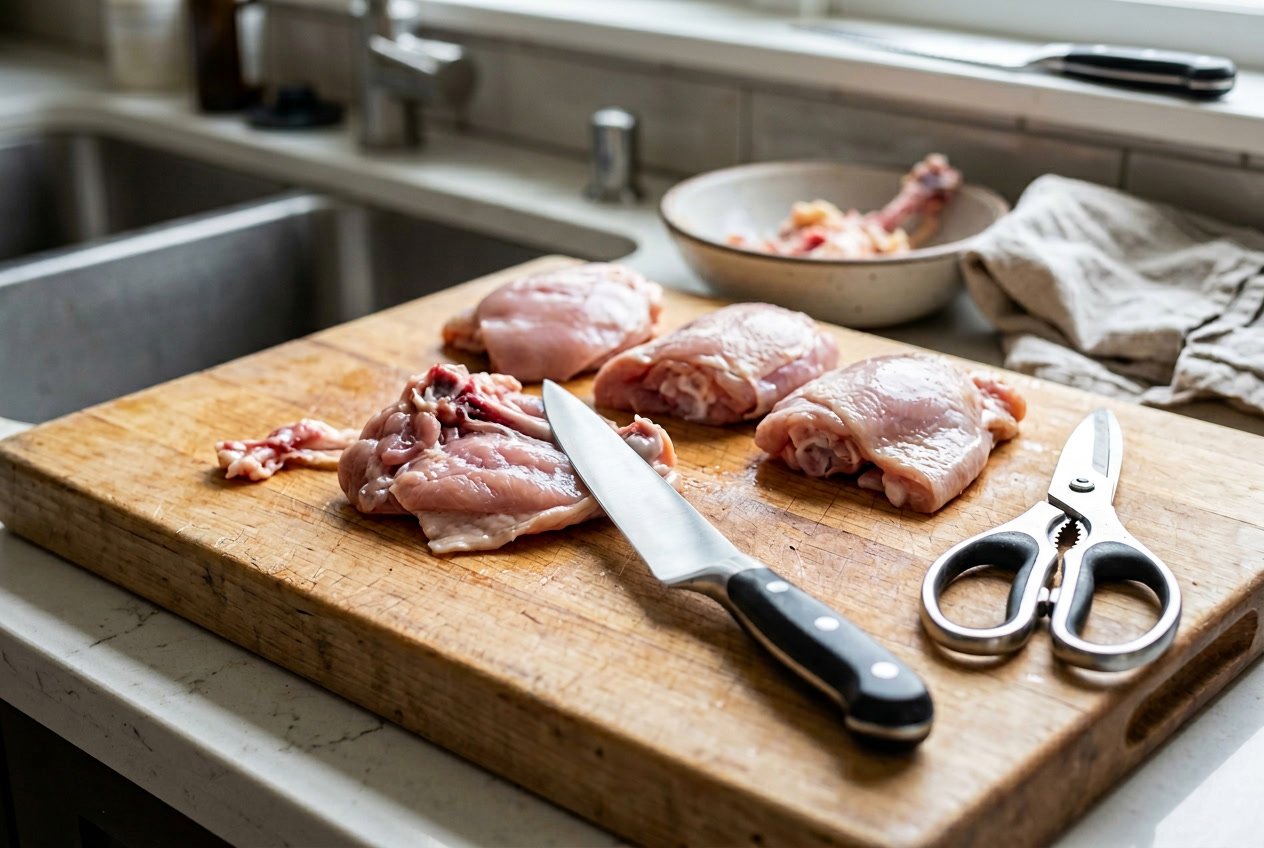
You need a few precise tools and a stable workspace to debone thighs cleanly and safely. A sharp boning knife, sturdy poultry shears, and a prepared cutting area are the most important items.
Choosing the Right Knife
Pick a boning knife with a narrow, flexible blade about 5–7 inches long. The thin profile lets you pivot along the femur and trace the bone’s contour without slicing away meat.
Keep the knife razor-sharp. A dull blade tears meat and forces you to apply extra pressure, which increases slip risk.
Hold the knife in a pinch grip (thumb and forefinger on the blade) for control when making short, precise strokes. Use the tip to expose joints and the flat of the blade to press against bone while slicing meat away.
Wash and dry the knife immediately after handling raw chicken.
Using Poultry Shears Effectively
Use poultry shears for snipping connective tissue and cutting through small cartilage pieces near the joint. Choose heavy-duty shears with a comfortable, non-slip handle and a locking mechanism for safe storage.
Start by using shears to separate the thigh from the body at the joint if you prefer. This reduces sawing with the knife.
Then use short, controlled snips to remove stubborn tendons or trim excess fat after the bone is loosened.
Keep shears dedicated to raw poultry or sanitize thoroughly between uses to avoid cross-contamination. Lubricate the pivot and check the blade alignment periodically for clean, even cuts.
Preparing a Safe Workspace
Set up a non-slip cutting board—preferably plastic or composite—on a damp cloth or rubber mat to prevent movement. Position a bowl for trimmed fat and a separate container for bones to keep the surface uncluttered.
Work with chilled, not frozen, thighs; firm meat gives you better tactile feedback. Keep a damp paper towel and a towel for your hands nearby.
Wear a cut-resistant glove on the non-knife hand if you’re less experienced. Sanitize surfaces, utensils, and your hands before and after deboning.
Maintain a routine: knife, shears, board, waste bowl, and sanitizer all within arm’s reach to reduce distractions and minimize handling time.
Step-by-Step Method: How to Debone Chicken Thighs
Work with a sharp boning or paring knife, a clean cutting board, and one thigh at a time. Keep the skin intact if you want crispy skin later; remove it first if your recipe calls for skinless pieces.
Positioning and Initial Cuts
Place the thigh skin-side down on a stable cutting board. Spread the meat so the bone sits exposed along the centerline for clear access to both sides of the bone.
Use a small, sharp knife and make a shallow cut along one side of the bone from end to end. Keep the blade angled toward the bone to avoid removing excess meat.
Repeat the same shallow cut on the opposite side of the bone so the bone is outlined on both faces of the thigh. Work deliberately and with short slicing motions rather than trying to saw through at once.
Leave thin layers of connective tissue attached at first. You’ll separate them in the next step to avoid nicking the bone or slicing away meat.
Separating the Bone from the Meat
Fold the meat back along one side to expose the bone’s edge. Slide the knife flat against the bone and glide it along the length to free meat from the bone.
Use the bone itself as a guide to keep the knife flush and avoid cutting into the flesh. Rotate the thigh as needed and repeat on the other side until the bone loosens.
When most of the meat is freed, lift the bone and cut any remaining attachments at the ends. Pull the bone out in a single motion if possible; if it resists, re-run the knife along the stubborn spots.
Inspect the removed bone for bits of cartilage or marrow and use them for stock if desired. Work cleanly to preserve the thigh’s shape for even cooking and easier slicing.
Trimming Cartilage and Fat
Turn the deboned thigh over and examine for remaining cartilage, tendon, or excess fat. Use short, precise cuts to trim away white tendons near the joint.
Trim loose skin flaps or thick pockets of fat that won’t render during cooking. Keep some thin fat for flavor if you plan to sear or grill.
Remove thick deposits that could cause flare-ups or uneven cooking. Wipe the thigh with a paper towel, then pat dry before seasoning or marinating.
Proper trimming improves texture, presentation, and ensures the boneless thigh cooks evenly.
Optional: How to Skin Chicken Thighs
Skinning a thigh can be done before or after you remove the bone. Keeping the skin intact matters when you want crispy chicken skin or when a recipe depends on skin-on pieces.
Use a sharp boning knife, pull gently, and trim fat only as needed to preserve texture.
Removing the Skin Before or After Deboning
Skinning before deboning gives you better control when the bone is still anchored to the meat. Lay the thigh skin-side down, slide the tip of a sharp knife between skin and meat, and use short, gentle pushes while pulling the skin taut with your other hand.
Work from one end to the other to avoid tearing. Skinning after deboning can be faster if you want a clean, compact boneless piece for stuffing or quick cooking.
Hold the boneless thigh flat, cut a small flap to start, then peel the skin off with your fingers while trimming connective tissue. Boneless thighs are more likely to slip, so stabilize the meat on a non-slip board.
Tips for Keeping Skin Intact
Keep the skin dry; pat it with paper towels before you start. Moisture weakens the membrane and makes tearing more likely, which also reduces the chance of achieving crispy chicken skin during cooking.
Use a very sharp, narrow knife—a filleting or boning knife—and make micro-cuts rather than long sawing motions. Work slowly and pull the skin gently as you cut.
Let the knife follow the tension to keep large pieces whole. If your goal is crispy skin, leave a thin layer of fat attached to the skin.
Trim excessive fat, but avoid stripping the skin bare. For oven or pan roasting, score the skin lightly or prick with a fork to render fat evenly and promote crisping.
Tips for Safe and Efficient Deboning
Keep a sharp boning or paring knife, steady cutting surface, and clean workspace to reduce slips and contamination. Work deliberately: feel for the bone with your fingers, make small controlled cuts, and trim only what you need.
Avoiding Common Mistakes
Keep your knife sharp. A dull blade forces you to apply more pressure, increasing the chance of slips that can nick skin or waste meat.
Use a narrow, flexible boning knife if you have one; it follows the bone more precisely. Stabilize the thigh on a damp towel or non-slip cutting board.
Hold the meat with your fingertips tucked away from the blade and cut with the flat of the knife against the bone to guide the cut. Avoid sawing motions; instead use smooth, shallow strokes to separate meat from bone.
Watch for small tendons and cartilage near the joint. Cut the connective tissue first, then lift the bone out cleanly.
Sanitize surfaces and wash hands frequently. Raw poultry carries bacteria, so work in a clean area, discard trimmings into a separate container, and wash the knife and board with hot soapy water between batches.
Maximizing Meat Yield
Position the thigh skin-side down and expose the bone by opening the meat like a book. This gives you direct access to both sides of the bone.
Run the knife closely along each side of the bone, keeping the blade angled slightly toward the bone to leave as much meat intact as possible. Use your free hand to pull the meat away gently as you cut.
That tension creates a clear separation and reduces accidental nicks. Trim only excess fat and loose skin after removing the bone.
Save usable trimmings for stock or grinding instead of discarding them; this increases your total usable meat from bone-in thighs.
If you plan to debone multiple thighs, develop a rhythm. Make the same three cuts each time (along both sides and under the bone), then finish by trimming.
Repeating the sequence improves speed and consistency without sacrificing yield.
How to Cook Deboned Chicken Thighs
Deboned chicken thighs cook faster than bone-in pieces and keep more fat and flavor than breast meat. Use high heat for quick searing, moderate heat for pan methods, and low-and-slow for braises.
Reserve bones for stock or soup.
Grilled Chicken Thighs
Preheat your grill to medium-high (about 400–450°F / 200–230°C). Pat thighs dry, oil lightly, and season with salt, pepper, and a spice rub or marinade that contains some acid (like lemon or vinegar) to balance richness.
Grill skin-side down first if skin-on, 4–6 minutes per side for boneless thighs about 3/4-inch thick. Flip once for even char.
Aim for an internal temperature of 165°F (74°C). Rest 5 minutes before slicing to lock juices.
For thicker pieces, use indirect heat after searing to avoid burning while finishing to temperature. Brush with sauce in the last minute to avoid burning sugars.
Pan-Frying and Stir-Frying
Use a heavy skillet or wok on medium-high heat. Dry and season thighs, then add a couple tablespoons of oil and sear them 3–5 minutes per side until a deep golden crust forms.
Finish thicker pieces in the oven at 375°F (190°C) if needed. For stir-frying, slice thighs thin across the grain so each piece cooks in 1–3 minutes.
Don’t overcrowd the pan. Work in batches to preserve high heat and crisping.
Deglaze with a splash of stock, soy, or wine to make a quick pan sauce. Check doneness at the thickest point by ensuring the temperature reaches 165°F (74°C), or cut to ensure no pink remains near the bone area if you deboned close to joints.
Braised and Baked Dishes
Brown thighs first to develop flavor for braises. Add aromatics such as onion, garlic, or ginger, then pour in liquids like stock, tomatoes, or coconut milk to come halfway up the meat.
Simmer gently on the stove or bake at 325°F (160°C) for 25–40 minutes, depending on size, until the meat becomes tender and easily pulls apart.
For baking without braising, arrange thighs in a single layer and roast at 400°F (200°C) for 20–30 minutes for skin-on boneless thighs, checking internal temperature.
Use a convection setting if available for crisper skin. Rest briefly before serving and garnish with herbs or a squeeze of acid to brighten the dish.
Storing and Using Leftover Bones
Freeze trimmed bones and small trimmings in a labeled bag for up to 6 months.
When you have enough, roast the bones at 425°F (220°C) for 20 to 30 minutes for color.
Simmer the roasted bones in a stockpot or pressure cooker with water, onion, carrot, celery, and a bay leaf.
Let the mixture simmer for 4 to 6 hours on the stove or cook for 1 hour at high pressure.
Cool and strain the liquid, then chill and remove the fat.
Use the stock for soups, risottos, braises, or to intensify sauces made with deboned chicken thighs.


