
How Are Chicken Thighs Cooked: Methods, Tips, and Recipes
You can cook chicken thighs in many ways: bake, sear, grill, braise, or air-fry. Each method creates different textures, like crispy skin, tender meat, or juicy bites.
For safe, juicy results, pull boneless thighs at about 165°F and bone-in thighs around 175°F. This helps connective tissue break down and keeps the meat tender.
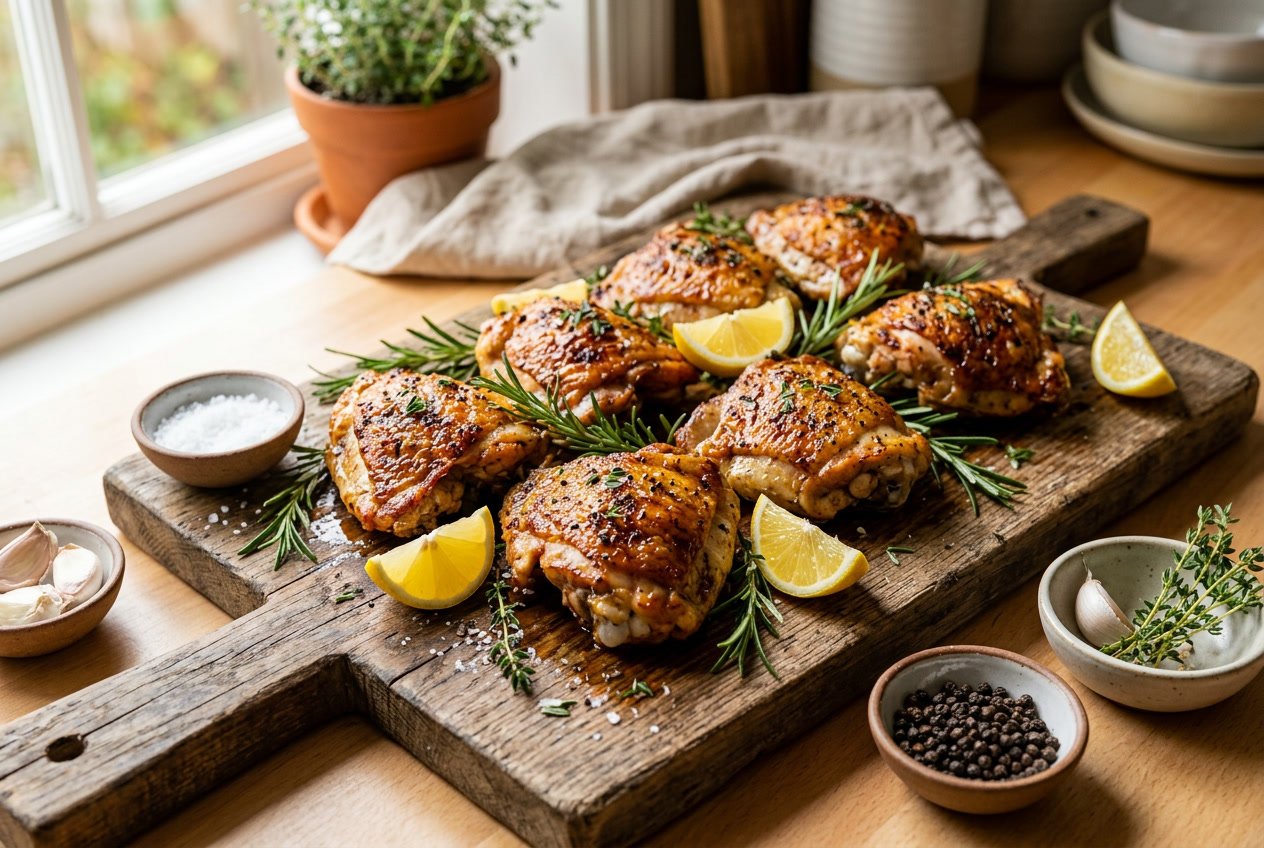
This guide covers basic prep steps, clear timing, temperature targets, and tips for each cooking method. You’ll find advice for seasoning, crisping skin, and using ovens, stovetops, grills, slow cookers, and air fryers.
Chicken Thigh Basics
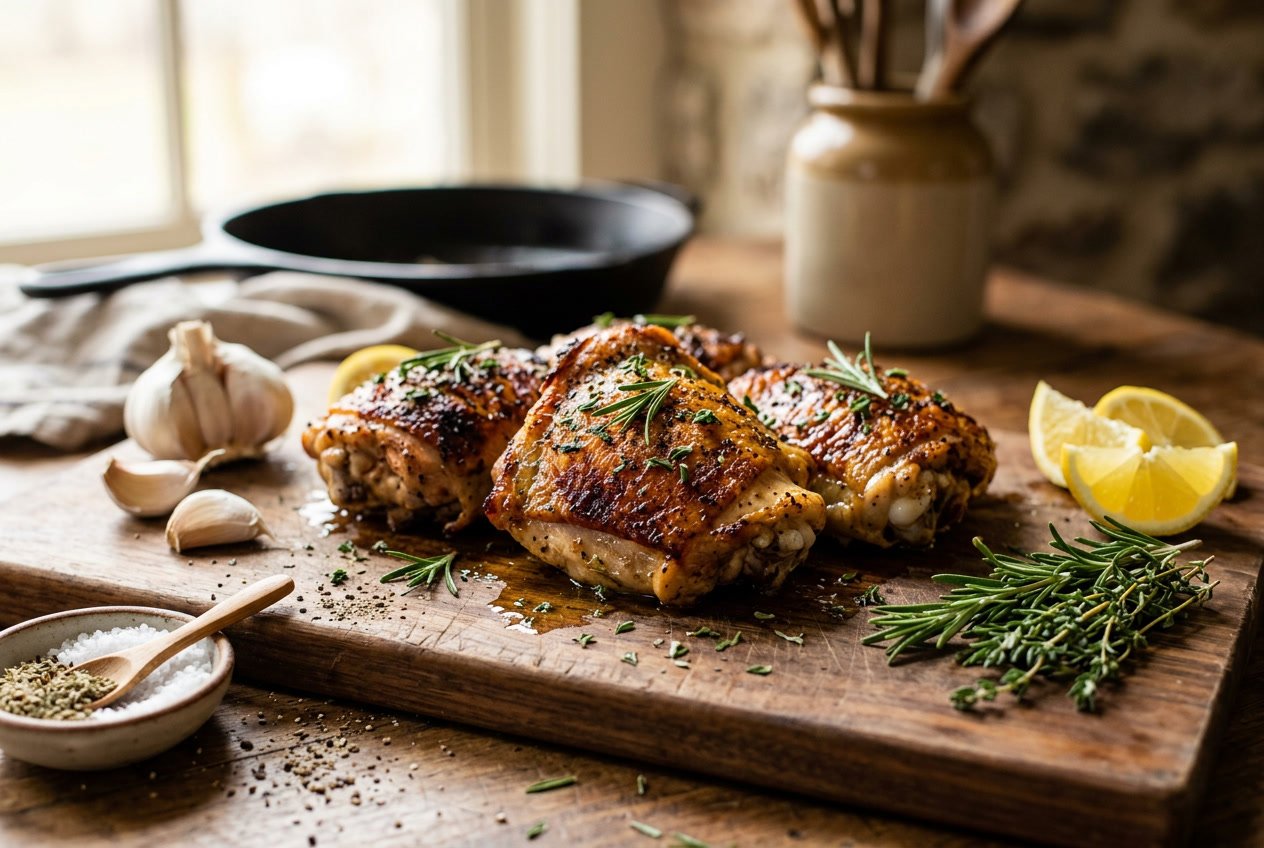
Chicken thighs are flavorful and forgiving. They handle higher heat and longer cooking than breasts.
You’ll choose between different trims and cooking styles based on time, texture, and how much fat or connective tissue you want.
Types of Chicken Thighs
You’ll find three main options: bone-in skin-on, bone-in skinless, and boneless skinless. Bone-in skin-on thighs cost less and deliver the most flavor because the bone and skin retain moisture and fat.
Boneless skinless thighs cook fastest and work well for skillet meals, curries, and stir-fries. Bone-in skinless thighs offer some moisture benefit from the bone but less surface fat.
Choose the type that matches your recipe’s cook time and desired texture.
Bone-In vs Boneless Chicken Thighs
The bone affects both cooking and outcome. Bone-in thighs take longer because the bone slows heat transfer, but they resist drying out and often taste richer.
Add roughly 5–10 minutes to oven or grill times compared with boneless pieces. Boneless thighs cook quickly and are easy to cut for sauces or skewers.
If you remove the bone yourself, you save money but spend extra prep time.
Skin-On vs Skinless Chicken Thighs
The skin boosts flavor and crisping. When you cook skin-on thighs at high heat by roasting, broiling, or searing first, fat renders and bastes the meat, creating a brown, savory crust.
Skinless thighs reduce calories and surface fat. They work best for braises, stews, or recipes where you want the meat to absorb sauces.
If you want less fat but more flavor, cook skin-on and remove the skin after cooking. Connective tissue benefits from longer, moist cooking, so skin-on, bone-in cuts excel in those methods.
Preparing Chicken Thighs for Cooking
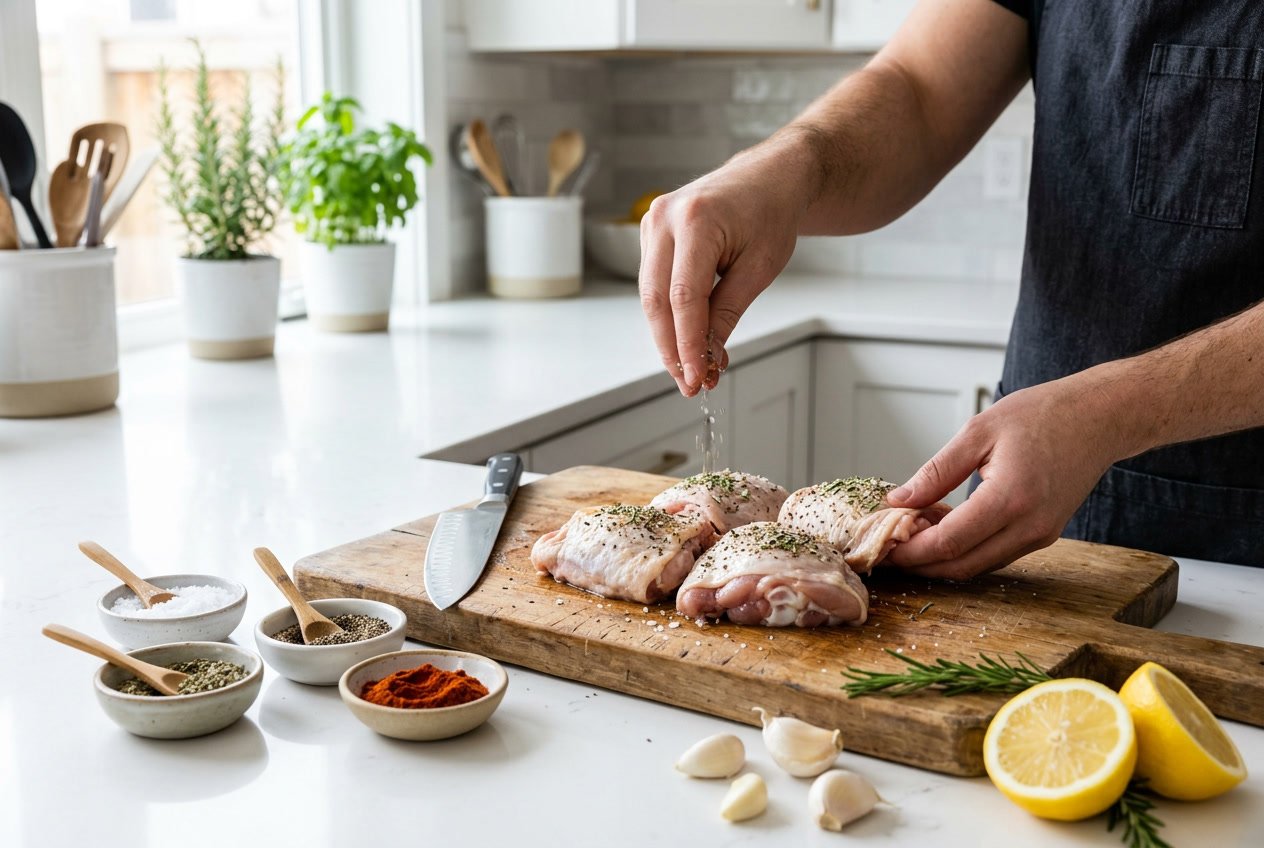
Dry the surface, trim excess fat, and decide whether to marinate or dry-season. Small prep steps affect texture, crispiness, and flavor.
Trimming and Cleaning
Trim large pockets of yellow fat or ragged skin with a sharp knife, but leave a thin fat layer under the skin to keep meat juicy. Remove stray feathers or membrane with tweezers or a paper towel.
Rinse only if necessary to remove packaging juices, and dry immediately with paper towels. Excess moisture prevents browning and makes skin rubbery.
Pat into every fold and crease until the skin feels dry. For bone-in thighs, check for splinters of bone or cartilage and trim them away.
For boneless thighs, press out excess water between paper towels to avoid steaming in the pan.
Bringing to Room Temperature
Take thighs out of the fridge 20–30 minutes before cooking for even cooking and faster searing. Cold meat cooks unevenly, so a short rest balances temperature.
Keep thighs covered loosely while they warm. Do not leave poultry at room temperature for more than two hours.
If marinated overnight, still remove from the fridge briefly before cooking and keep excess marinade off the surface.
Marinating Chicken Thighs
Marinate for at least 30 minutes, but 2–8 hours gives deeper flavor without breaking down texture. Use oil to carry flavors and an acid or enzymatic tenderizer sparingly to avoid a mushy texture.
A common marinade:
- 2 Tbsp oil
- 1 Tbsp acid (lemon juice, rice vinegar, or yogurt)
- 1–2 cloves garlic, minced
- 1 tsp salt per pound, plus black pepper to taste
Add paprika for color and mild smoke, and thyme or oregano for herb notes.
Pat thighs lightly before cooking to remove excess marinade. For yogurt-based marinades, scrape off thick clumps so the skin can brown.
Seasoning Tips and Spice Blends
Salt is essential. Season at least 30 minutes before cooking or dry-brine overnight in the fridge for crisper skin.
Use about 1 tsp kosher salt per pound. For a simple dry rub, mix 1 tsp paprika, 1/2 tsp black pepper, 1 tsp garlic powder, 1/2 tsp dried thyme, and 1/2 tsp dried oregano.
Rub under and over the skin for full flavor. Add cayenne or chipotle for heat.
Finish with chopped fresh herbs after cooking for a fresher flavor. Dusting a pinch of baking powder into the dry rub can help crisp the skin.
Cooking Methods for Chicken Thighs
Choose a method based on whether you want crispy skin, hands-off cooking, or tender meat. Each technique below includes specific temps, timings, and steps for juicy thighs.
Oven-Baked Chicken Thighs
Baking creates crispy chicken thighs when you control temperature and airflow. Preheat the oven to 400–425°F (204–218°C).
Pat skin dry, season, and place thighs skin-side up on a wire rack over a rimmed sheet pan. This lets fat drip away and air circulate.
Bone-in, skin-on thighs need 35–45 minutes; boneless skin-on take 25–30 minutes. Use an instant-read thermometer and pull bone-in at 175°F or boneless at 165–170°F.
Do not cover the pan or flip the thighs. For extra-crispy skin, salt ahead and refrigerate uncovered for 1–8 hours.
A light dusting of baking powder in the dry rub can help browning and texture.
Pan-Searing and Oven Finishing
Pan-searing followed by oven finishing creates browned skin and even interior cooking. Use an oven-safe skillet.
Pat thighs dry and season. Start skin-side down in a cold or room-temperature pan, then heat to medium-high to render fat.
Sear for 6–10 minutes without moving until the skin is golden. Flip once, then transfer the skillet to a 400°F oven.
Finish bone-in thighs for about 15–20 more minutes; boneless for 8–12 minutes. Check temperature: 175°F for bone-in, 165°F for boneless.
Do not overcrowd the skillet; cook in batches for consistent crisping.
Air Fryer Chicken Thighs
The air fryer cooks chicken thighs quickly and creates crispy skin. Preheat the air fryer to 400°F.
Pat thighs dry and arrange skin-side up in a single layer. Do not overcrowd.
Cook bone-in, skin-on thighs for 22–28 minutes; boneless for 16–20 minutes, flipping once halfway. Use an instant-read thermometer and pull at 175°F for bone-in, 165°F for boneless.
Let rest 5 minutes to redistribute juices. For best texture, work in batches if needed.
Slow Cooker and Braised Chicken Thighs
Slow cooking and braising create tender meat and deep flavor. Brown thighs briefly in a pan if you want color, then add aromatics and liquid to the slow cooker or braising pot.
For the slow cooker, cook on high for 3–4 hours or low for 6–7 hours with bone-in thighs. In braises, keep a gentle simmer on the stovetop or a 300°F oven for 1.5–3 hours.
The meat should shred easily with two forks. If you want crispness after slow cooking, transfer thighs to a sheet pan and broil for 2–4 minutes.
Braised and slow-cooked thighs pair well with sauces and grain bowls.
Grilling Chicken Thighs
You can cook chicken thighs on a gas or charcoal grill for juicy meat and crisp skin. Key steps include preheating, using a two-zone setup, timing sears, and checking internal temperature.
How to Grill Chicken Thighs
Pat thighs dry and season or marinate. Dry skin crisps better and seasoning sticks more evenly.
Preheat your grill to medium-high (about 375–400°F / 190–205°C) and oil the grates. Sear skin-side down over direct heat for 4–5 minutes without moving to develop a golden crust.
Flip and sear the other side 3–4 minutes, then move thighs to indirect heat to finish cooking. Boneless thighs need 12–18 minutes total; bone-in need 20–25 minutes.
Use an instant-read thermometer and remove thighs at 165°F (74°C) in the thickest part. Let them rest 5 minutes before serving.
Direct vs Indirect Heat
Direct heat sears and crisps skin quickly. Use it for the initial 6–10 minutes to build color and flavor.
Indirect heat cooks through without burning the exterior. After searing, move thighs to the cooler zone, close the lid, and cook until internal temperature reaches 165°F (74°C).
On a two-burner gas grill, light one side and place thighs on the unlit side to finish. On charcoal, bank coals to one side and place meat over the opposite side.
Tips for Crispy Skin on the Grill
Start with dry skin and season just before grilling. Salt the skin to draw out moisture.
Render fat by searing skin-side down on direct heat and avoid flipping frequently. Keep grill temperature steady and move pieces away from flare-ups.
If skin isn’t crisp enough, finish thighs skin-side up over indirect heat with the lid off or briefly return to direct heat at the end. Rest for 5 minutes before cutting.
Internal Temperature and Doneness
Cook thighs to a temperature that balances safety, tenderness, and moisture. Use a reliable thermometer and aim for target temperatures based on your preferred texture. Avoid long rests that let thighs cool before serving.
Ideal Internal Temperatures
The USDA recommends 165°F (74°C) as the minimum safe internal temperature for poultry.
For dark meat like thighs and drumsticks, cooking to 175°F (79°C) to 195°F (90–91°C) produces more tender results because connective tissue and collagen break down into gelatin.
Use this quick guide:
- 165°F (74°C): safe, slightly firm; good if you must coordinate mixed pieces.
- 175°F (79°C): tender, juicy, still clinging to bone.
- 190–195°F (88–91°C): very tender, almost fall-off-the-bone texture.
If you exceed about 210°F, meat can become stringy and lose characteristic chicken flavor.
Pick the temperature based on the cooking method and how much time you can hold the meat at lower temps to convert collagen.
Using a Meat Thermometer
Insert an instant-read thermometer into the thickest part of the thigh, staying at least ¼ inch away from bone to avoid false highs.
Take the reading after the probe stabilizes; many digital models settle in 2–5 seconds.
If you use a leave-in probe for roasting or smoking, monitor the internal temperature curve rather than a single snapshot.
For sous-vide, set the water bath to the precise target temperature and pasteurize according to time–temperature tables.
Calibrate your thermometer occasionally and clean the probe between checks to prevent cross-contamination.
Moisture Retention and Texture
Both peak temperature and time spent in the collagen-breakdown range (about 140–195°F) affect moisture retention.
Holding thighs longer in the 175–195°F window melts collagen into gelatin, increasing perceived juiciness even at higher internal temperatures.
Prevent surface drying by using higher oven temperatures briefly, basting, or finishing under a broiler for crisp skin.
Rest thighs 5–10 minutes after cooking; residual heat evens out temperature and redistributes juices.
Overcooking quickly at high heat squeezes out moisture.
Slow, controlled cooking preserves tenderness and improves overall mouthfeel.
Chicken Thigh Recipes and Serving Ideas
Choose recipes that match the texture you want, such as crispy skin, shreddable tenderness, or saucy glaze.
Plan sides that complement the fat and richness of thighs.
Popular Chicken Thigh Recipes
Use bone-in, skin-on thighs when you want crisp skin and deep flavor.
Bake or grill them at 400–425°F or sear then finish in the oven for golden results.
For fast weeknights, cook boneless skinless thighs in a skillet.
Season, cook 5–7 minutes per side over medium-high, and finish with a pan sauce of wine, stock, or soy-ginger.
Try these formats:
- Roasted herb thighs on a wire rack for 35–45 minutes (bone-in).
- Sheet-pan dinners with potatoes and carrots for easy clean-up.
- Braised thighs in tomato or wine for 1–2 hours until tender.
Pull boneless thighs at 165°F and bone-in around 175°F for best texture.
Flavor Variations
Match marinades and rubs to the cooking method.
Use yogurt, lemon, and oregano for Greek-style thighs; marinate 2–8 hours and roast or grill.
Combine soy, ginger, sesame, and honey for Asian flavors—great for pan-searing or broiling.
Try chipotle and lime with cumin for smoky, grill-friendly thighs.
Use a dry rub with baking powder for extra-crispy skin.
Coat skin lightly, pat dry first, then roast or air-fry at 400°F.
For braises, favor acidic or tomato-based liquids to break down collagen.
For shreddable results, cook to 185°F in a slow cooker or Instant Pot.
Using Leftover Chicken Thighs
Store cooked thighs in an airtight container for up to 4 days in the fridge. Freeze them for up to 3 months and thaw overnight in the refrigerator.
Reheat thighs in a 350°F oven on a wire rack to restore some crispness. You can also briefly broil them for 2 to 4 minutes to re-crisp the skin.
Use leftovers in:
- Shredded-chicken tacos with lime and cilantro.
- Grain bowls by slicing thighs over rice or farro with quick-pickled vegetables.
- Quick soups or stews by adding diced thighs near the end to warm through.
- Sandwiches and salads by slicing cold thighs and tossing with mustard mayo or vinaigrette.
Label containers with the date and use within safe windows for best texture and flavor.


