
How Are Chicken Thighs Boneless: Step-By-Step Oven Guide
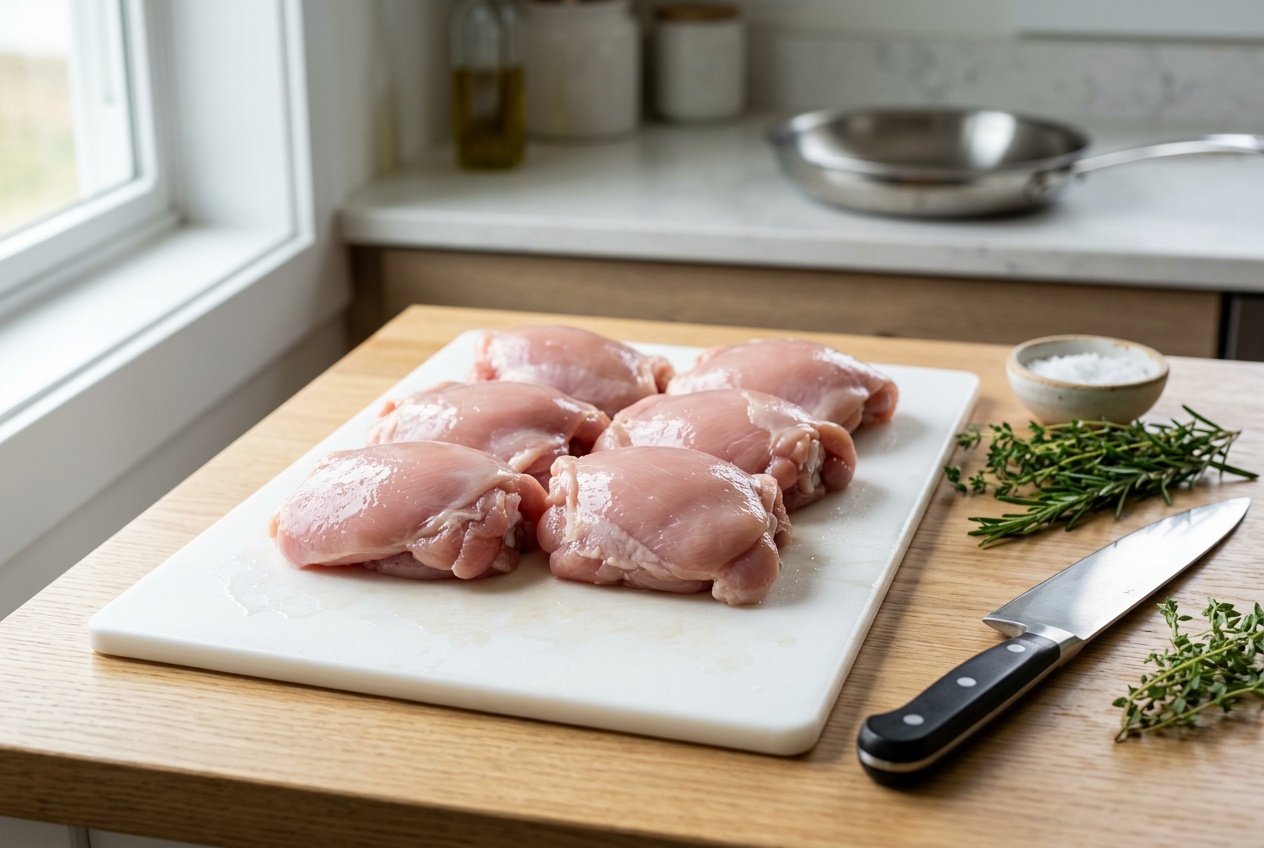
You get boneless chicken thighs when the butcher removes the bone from the thigh cut, leaving the dark meat intact. This makes chicken thighs cook faster and easier to handle.
Boneless, skinless thighs are thigh meat with the bone and usually the skin removed. This keeps the flavor and juiciness while trimming prep time and simplifying recipes.
Knowing this helps you choose the right cut for weeknight dinners, oven baking, or quick pan-searing. The following explains what makes boneless thighs different, why they work well in baked dishes, how to prep them for the oven, step-by-step baking basics, and other cooking methods.
What Are Boneless Chicken Thighs?
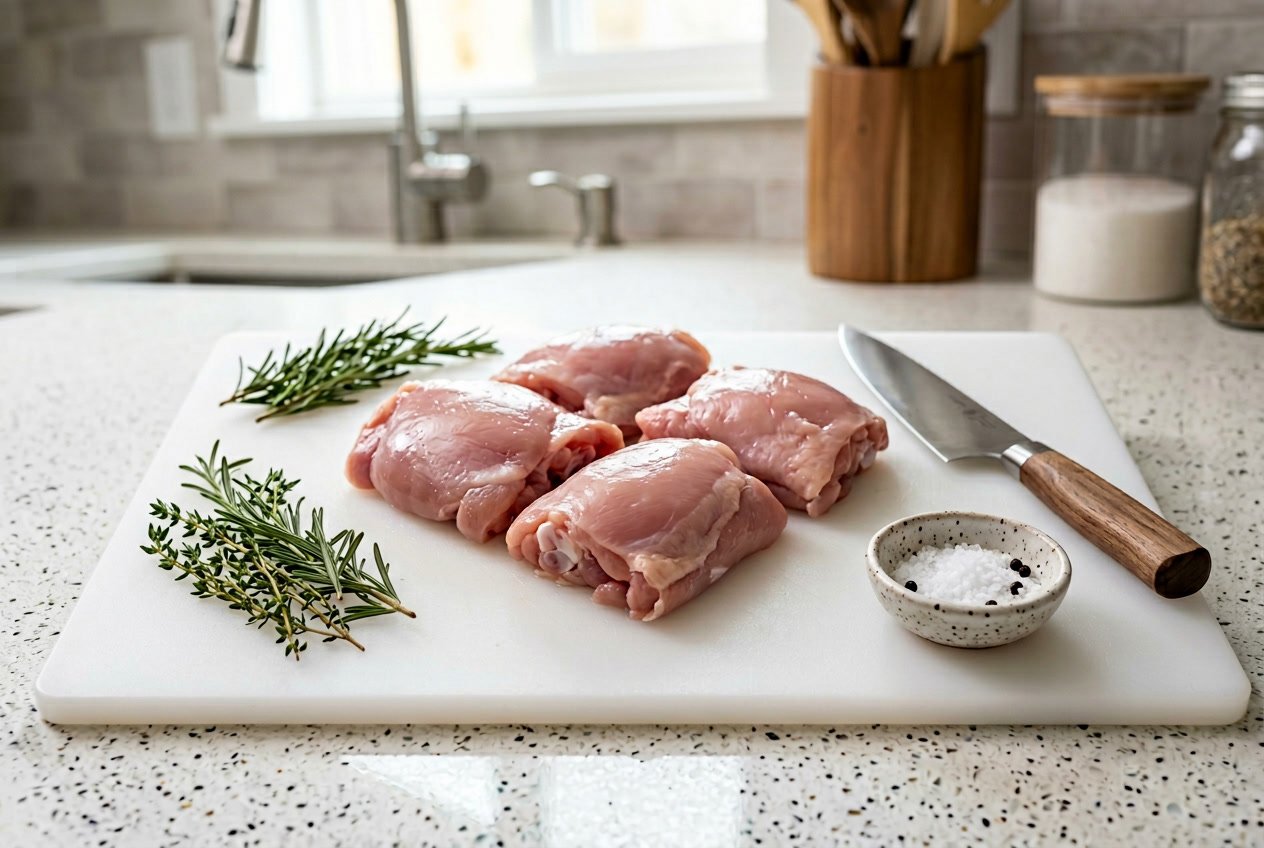
Boneless chicken thighs are the thigh muscle separated from the bone and usually trimmed of excess fat and skin. They offer rich flavor and faster cooking compared with bone-in cuts.
You can use them in stir-fries, grills, braises, and quick weeknight meals.
Chicken Thighs Versus Chicken Breasts
Thighs are dark meat with higher fat content than breasts. This gives them more flavor and better moisture retention during cooking.
Thighs stay juicier when seared, roasted, or grilled. Breasts can dry out faster, especially at high heat.
Texture differs too. Thighs have a firmer, more fibrous bite that holds up to sauces and long cooking.
Nutritionally, thighs contain more fat and slightly more iron, while breasts supply leaner protein and fewer calories per ounce. Choose thighs for taste and forgiving cooking; choose breasts for lower fat.
Benefits of Boneless Chicken Thighs
Boneless thighs save prep time because the butcher removes the bone. You can marinate, slice, or cook them right away.
They cook faster than bone-in thighs, which helps for quick dinners and even cooking in a skillet or oven.
Boneless thighs absorb marinades and seasonings well due to their fat content. You get pronounced flavor with short marinating times.
They remain moist at higher temperatures, so they’re forgiving if you slightly overcook them. Boneless thighs are easy to portion, shred, or cube for tacos, salads, casseroles, and meal prep.
How Chicken Thighs Become Boneless
Processors or butchers remove the bone by following the natural seam between muscle and bone and cutting with a boning knife or mechanical deboning equipment. For small-scale prep, you can use kitchen shears or a sharp knife to cut along the joint, pull out the bone, and trim excess connective tissue.
Commercially produced boneless thighs may be further trimmed of skin and fat and then packaged fresh or frozen. Suppliers may use mechanical deboning to separate meat for ground products, but “boneless chicken thighs” sold as whole pieces are typically hand- or machine-boned to keep the muscle shape.
Why Choose Boneless Skinless Chicken Thighs?
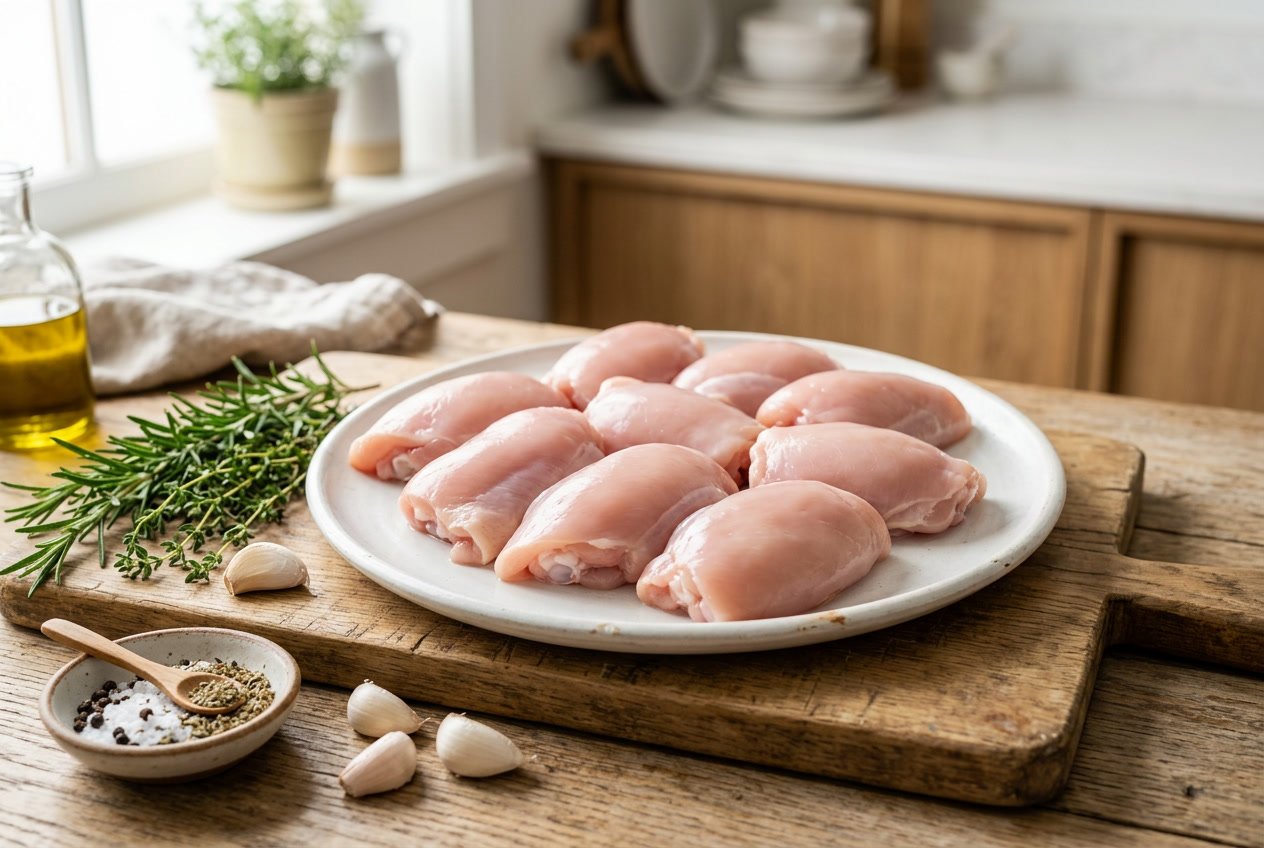
Boneless skinless chicken thighs deliver concentrated flavor, fast prep, and a forgiving texture that works across many recipes. You get juicy meat that cooks quickly and fits weeknight schedules while still offering useful nutrition.
Juiciness and Flavor
Thighs come from the dark meat near the leg, which contains more intramuscular fat than breast meat. That higher fat content keeps the meat moist during high-heat cooking, so you’re less likely to end up with dry chicken when you sear, grill, or bake.
Without skin and bone, the flavor is still richer than breast because of the dark meat’s natural oils. Pat the pieces dry, season well, and avoid overcooking. Target 165°F (74°C) internal temperature and let the meat rest a few minutes.
If you prefer extra tenderness, a quick brine (30–60 minutes) or a short acidic marinade brightens flavor and helps retain moisture.
Quick Prep for Easy Weeknight Dinner
Boneless skinless thighs cut prep time significantly because you skip deboning and removing skin. They cook in about 4–6 minutes per side on the stovetop, 20–25 minutes in a 400°F oven, or 10–15 minutes in an air fryer.
You can toss bite-sized pieces into a stir-fry, sear and finish with a pan sauce, or bake several portions at once on a sheet pan. Use simple pantry seasonings like salt, pepper, garlic, and smoked paprika, or a quick sauce such as teriyaki or lemon-garlic.
Nutrition and Health
Boneless skinless thighs provide about the same protein as breast meat but with more calories from healthy fats. They offer B vitamins (especially niacin and B6), selenium, and zinc.
Removing the skin lowers saturated fat and total calories compared with skin-on thighs, while still keeping enough fat for tenderness. A typical 3-ounce cooked portion has roughly 160–210 calories and 18–22 grams of protein, depending on trimming and cooking method.
Choose grilling, baking, or light pan-searing with a modest amount of oil to maintain a balanced plate.
Oven-Baked Boneless Chicken Thighs
You’ll learn practical oven temperatures, necessary tools and ingredients, and the reliable method to check doneness so your baked boneless chicken thighs come out juicy with crisp edges.
Best Oven Temperatures and Timing
Set the oven between 400°F and 425°F for most boneless skinless chicken thighs. 425°F gives faster browning and crisp edges in 20–30 minutes.
400°F reduces the risk of overbrowning and works well for larger pieces at 25–35 minutes. Arrange thighs on a rimmed baking sheet with parchment or foil and space them at least 1 inch apart for even air circulation.
If you add roasted vegetables, place them on the sheet 10–15 minutes before the chicken so everything finishes together. Use the higher end of the range for thin, trimmed thighs; use the lower end for thicker cuts or if you prefer gentler cooking.
Avoid crowded pans and covered dishes; these trap steam and prevent crisping. If the tops brown too quickly, tent loosely with foil for the final minutes while still allowing edges to crisp.
Essential Tools and Ingredients
Tools:
- Rimmed baking sheet (allows airflow and collects drips).
- Parchment paper or foil (easier cleanup and prevents sticking).
- Instant-read meat thermometer.
- Kitchen shears and paper towels.
Ingredients:
- Boneless skinless chicken thighs, trimmed of large fat deposits.
- 1 tbsp oil per pound to help seasoning adhere and promote browning.
- A balanced dry rub: kosher salt, paprika, garlic powder, onion powder, and a touch of sugar or brown sugar for caramelization.
Pat the thighs very dry before oil and seasoning. Oil plus dry rub creates a crust without a marinade and shortens prep time.
If you prefer a glaze, brush it on in the last 5 minutes to prevent excess burning.
Checking Doneness with a Thermometer
Insert an instant-read meat thermometer into the thickest part of the thigh without touching bone. Target an internal temperature of 165°F (74°C).
You can pull at 160–162°F and rest the chicken 3–5 minutes—carryover heat will reach 165°F. Check multiple pieces, especially if sizes vary.
If a thigh reads below 160°F, return it to the oven and recheck every 3–4 minutes. Clean the probe between checks.
Record your oven’s pattern; some racks and pans run hot or cool. Over time you’ll learn the minutes-per-inch for your typical thighs.
How to Prepare Boneless Chicken Thighs for Baking
You’ll want to remove excess moisture, trim stray fat, and choose a seasoning or marinade that complements your dish.
Trimming, Patting Dry, and Marinating
Trim visible connective tissue, large pockets of fat, or ragged edges from each boneless chicken thigh with a sharp knife. This prevents uneven cooking and reduces flare-ups if you broil at the end.
Use paper towels to pat the thighs thoroughly dry; dry surfaces brown better and allow rubs or marinades to stick. If you plan to marinate, do it in a non-reactive container (glass or food-safe plastic) or a zip-top bag.
For quick marinating, 30 minutes to 2 hours in a citrus- or yogurt-based mix adds brightness and tenderizes. For deeper flavor, refrigerate 4–12 hours with oil, acid (vinegar or lemon), garlic, and herbs.
Discard used marinade or boil it before using as a sauce.
Tip list:
- Dry-brine option: sprinkle ¾–1 tsp kosher salt per pound and refrigerate uncovered for 1–4 hours.
- Avoid long acid-only marinades beyond 12 hours to prevent mushy texture.
- Bring thighs to near-room temperature (15–20 minutes) before baking for even heat penetration.
Seasoning and Spice Blends
Choose a wet marinade, an oil-based rub, or a dry spice blend depending on your dish. For Mediterranean-style chicken, combine olive oil, lemon zest, garlic, oregano, paprika, salt, and black pepper.
For a savory rub, mix smoked paprika, garlic powder, onion powder, ½ tsp salt per pound, and a pinch of cayenne. Apply oil first if using a dry rub to help spices adhere.
Press the rub into each thigh so the surface is evenly coated. Leave space between pieces on the baking sheet for uniform browning.
Quick seasoning guide (per 1 lb boneless thighs):
- Simple rub: 1 tbsp olive oil + 1 tsp kosher salt + ½ tsp black pepper + 1 tsp paprika.
- Herb marinade: 2 tbsp olive oil + 1 tbsp lemon juice + 1 tsp minced garlic + 1 tsp chopped rosemary or thyme.
Let seasoned thighs rest 10–20 minutes before baking to let flavors meld and to bring meat closer to room temperature.
Baking Boneless Skinless Chicken Thighs in the Oven
Baking boneless skinless chicken thighs gives you a quick, reliable weeknight protein that stays moist when you control temperature, timing, and surface dryness.
Step-By-Step Baking
Preheat your oven to 425°F (220°C). Line a rimmed baking sheet with parchment or foil to catch juices and promote even roasting.
Pat each thigh dry with paper towels to reduce surface moisture. Trim excess fat and place thighs on the sheet spaced at least 1 inch apart.
Toss the thighs with 1 tablespoon oil per 1–2 pounds and a simple rub: 2 tsp garlic powder, 2 tsp onion powder, 2 tsp Italian seasoning, 1 tsp salt, ½ tsp black pepper (adjust to taste). Arrange the thighs in a single layer.
Bake uncovered for about 18–22 minutes, depending on thickness. Use an instant-read thermometer and pull them at 165°F (74°C) in the thickest part.
If you want more browning, broil 1–2 minutes, watching closely.
Tips for Juicy Results
Bring the thighs to room temperature for 15–20 minutes before baking. This reduces cooking time variation and prevents dry edges.
Drying the meat is crucial; excess moisture causes steaming instead of roasting. Oil lightly to help the spice rub adhere and promote browning.
Use an instant-read thermometer for accuracy. If you want extra flavor, marinate up to 2 hours or rub under 3 tablespoons of your favorite blend the night before.
Remove thighs as soon as they hit 165°F; carryover will raise the temperature slightly. Cool completely before refrigerating in shallow containers to preserve texture.
Resting and Serving
Let the chicken rest for 5 minutes on a clean plate or cutting board. Resting lets juices redistribute so slices stay moist.
Slice against the grain if serving on salads or sandwiches. Serve whole with roasted vegetables, steamed greens, or a quick pan sauce made from pan juices, a splash of lemon, and a pat of butter.
Store leftovers in an airtight container for up to 4 days in the refrigerator. Reheat gently in a 325°F oven or covered skillet to avoid drying the boneless skinless chicken thighs.
Alternative Cooking Methods for Boneless Chicken Thighs
You can achieve a crisp exterior and juicy interior with short cook times or hands-off convenience depending on your appliance. Follow exact temperatures, times, and simple flavoring steps to avoid dryness and get consistent results.
Air Fryer Instructions
Preheat your air fryer to 380°F (195°C) for the best balance of browning and juiciness. Pat thighs dry and season or brush them with a light oil-based marinade.
Arrange the thighs in a single layer with space between pieces so hot air circulates. Cook for 10–12 minutes and flip once during cooking.
Check the internal temperature with an instant-read thermometer and aim for 165°F (74°C). Thicker pieces may need 2–4 more minutes.
For a crispier crust, raise the temperature to 400°F (205°C) for the last 2–3 minutes.
Tips:
- Do not overcrowd the basket; work in batches if needed.
- Lightly spray or brush oil on the meat, not the basket, to prevent sticking.
- Rest 5 minutes before slicing to let juices redistribute.
Other Methods
Stovetop searing creates fast browning and a pan sauce in the same skillet. Heat 2 tablespoons oil over medium-high, then sear thighs 4–6 minutes per side until golden.
Reduce heat to medium and cook until the internal temperature reaches 165°F. Pour in 1/4 cup broth or wine to deglaze, simmer 1–2 minutes, and spoon the sauce over the meat.
Preheat the grill to medium-high, about 400°F. Oil the grates and cook thighs 5–7 minutes per side, closing the lid between flips for even heat.
Move the pieces to indirect heat if flare-ups occur or if they brown too quickly. Check doneness with a thermometer and let the thighs rest 5 minutes before serving.
Quick reference
- Stovetop: medium-high sear, then medium, total 10–14 min.
- Grill: 5–7 min per side over direct heat; finish on indirect if needed.


