
Has Chicken Thighs Got Bones In: Anatomy, Cooking, and Buying Guide
Wondering whether chicken thighs come with bones or not? You’ll often find them sold both ways: bone-in thighs with the single femur running through the meat, and boneless thighs where that bone has been removed.
If you buy standard bone-in chicken thighs, each thigh typically contains one bone (the femur). Many grocery stores also sell deboned thighs if you prefer convenience.
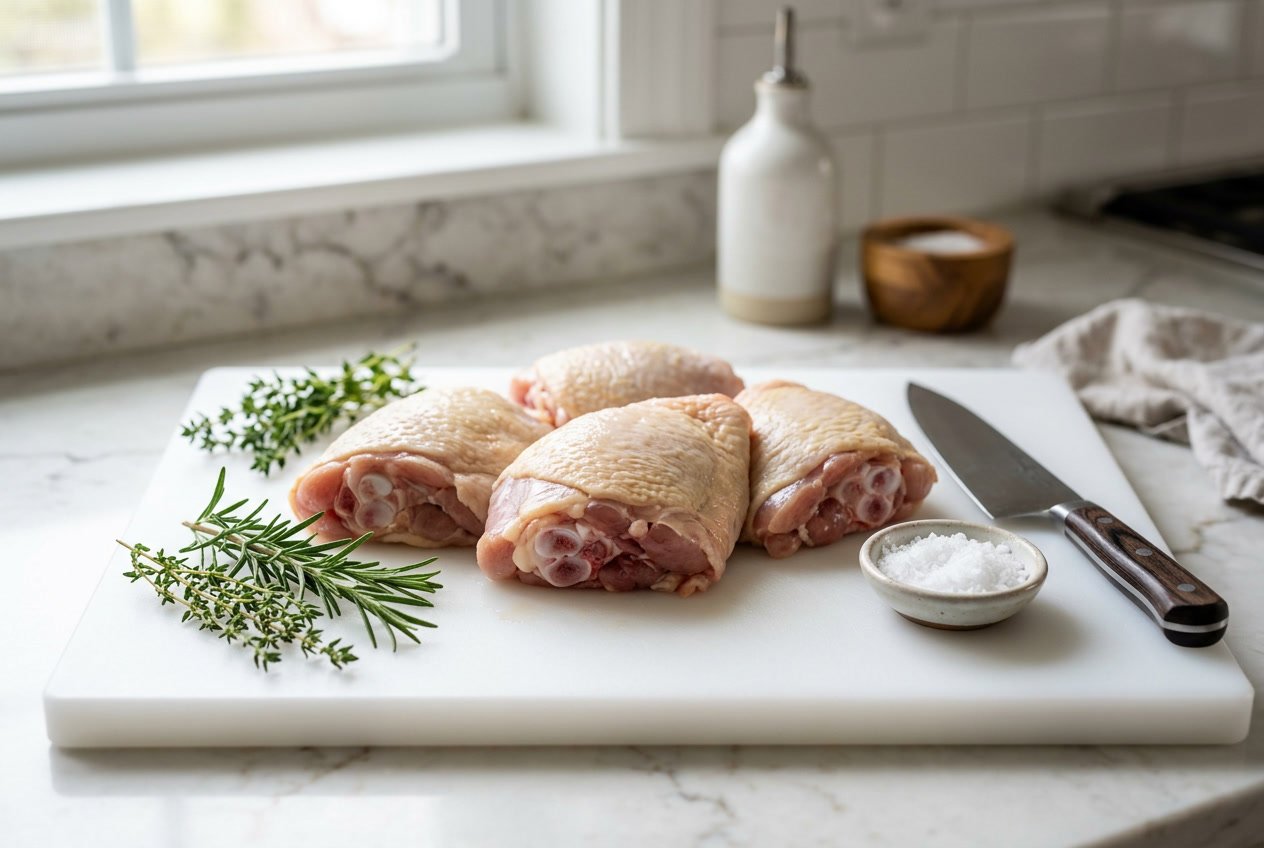
Knowing which type you have affects cooking time, flavor, and cost. Choose bone-in for richer taste or boneless to save prep time.
Do Chicken Thighs Have Bones?
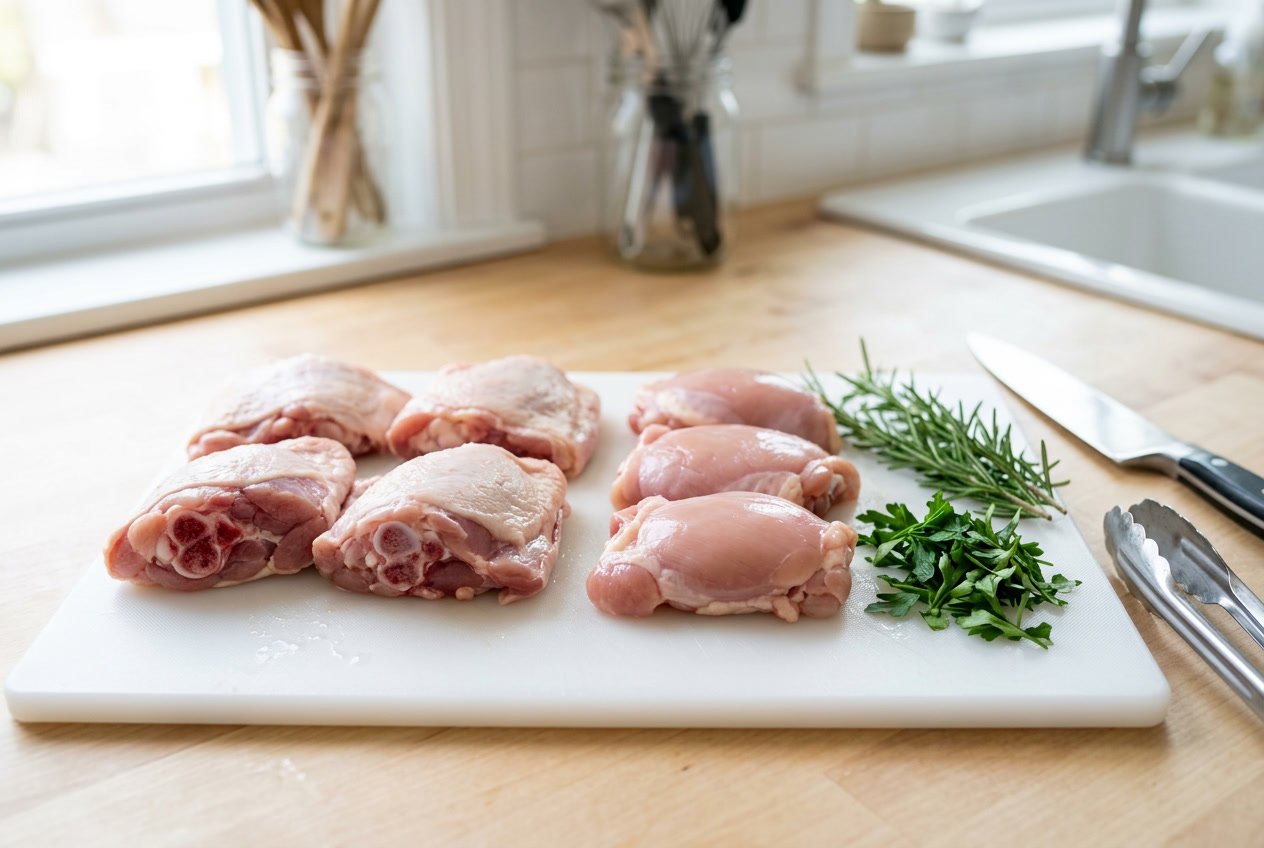
Most standard chicken thighs sold whole contain one central bone with a predictable amount of surrounding meat and skin. You’ll encounter either bone-in thighs with the femur intact or boneless thighs where that bone has been removed during processing.
Understanding the Structure of Chicken Thigh
A chicken thigh is the upper part of the bird’s leg and contains dark, flavorful muscle wrapped around connective tissue and skin. About 20–25% of a typical thigh’s weight can be bone, though that percentage varies by breed and size.
When you buy a bone-in chicken thigh you’ll usually see the meat shaped around a single linear structure. You can identify a bone-in thigh by feeling for a firm ridge running through the center of the cut.
Boneless thighs have had the bone removed. They’re easier to portion and cook quickly but lack the heat-retaining properties a bone provides.
Single Bone Explained: The Femur
The single bone inside a chicken thigh is the femur, which connects the bird’s pelvis to the lower leg. The femur sits centrally, embedded in muscle, and is shorter and more compact than a human femur but serves the same structural role.
When you cook bone-in thighs, the femur helps conduct and retain heat, which often improves juiciness and depth of flavor. If you debone a thigh yourself, you’ll remove the femur cleanly by cutting alongside it and scraping meat away.
Proper butchering leaves one intact femur. Finding fragments or many tiny pieces usually indicates rough processing rather than natural anatomy.
Differences in Butchering and Bone Fragments
Butchers and processors produce two common retail options: bone-in chicken thighs and boneless chicken thighs. Bone-in thighs retain the femur and may be sold skin-on or skinless. Boneless thighs have the femur removed, often by machine or by hand.
Price, cooking time, and moisture retention differ between the two. Occasional small bone fragments can appear from cutting or trimming.
If you find shards in a packaged thigh, treat them as processing defects and avoid serving to children or vulnerable diners. For making stock or broth, the intact femur adds collagen and minerals.
Fragments add little and can be strained out.
Bone-In vs. Boneless Chicken Thighs
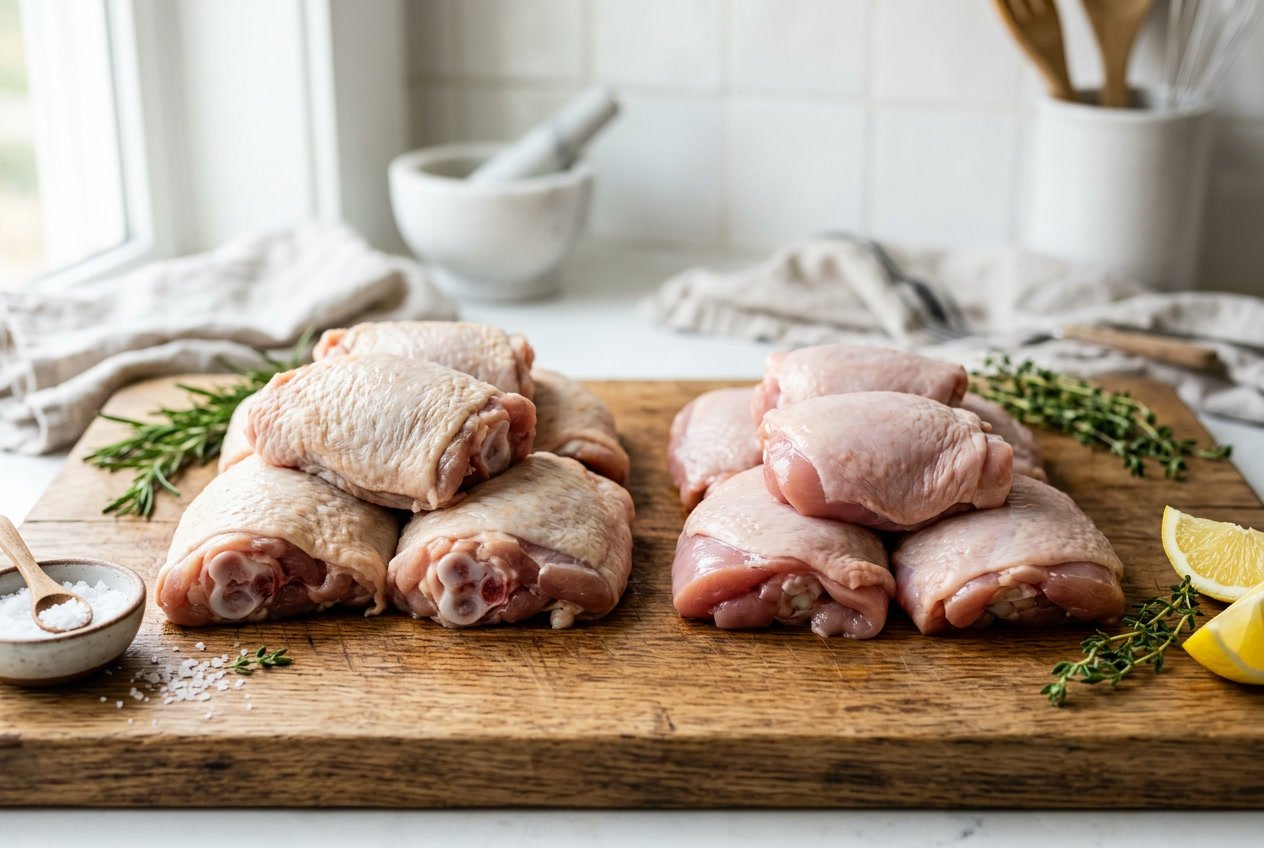
You’ll learn how to tell bone-in from boneless thighs and what packaging labels mean. Each cut suits different cooking methods.
Identification and Characteristics
Bone-in chicken thighs include the femur and surrounding joint. You can see or feel the bone running through the piece.
The bone helps retain moisture during long cooking and often yields richer mouthfeel and deeper roasted flavor. Boneless chicken thighs are trimmed of bone and usually flattened to a uniform thickness.
They cook faster and more evenly, which makes them a better choice for stir-fries, skewers, and quick pan-searing. Skin-on pieces carry additional fat under the skin that crisps when roasted or grilled, adding texture and savory taste.
Skinless thighs lack that exterior fat and crispness but reduce calories and simplify eating.
Common Packaging: Skin-On, Skinless Variations
Labels on packages typically show two attributes: bone vs. boneless, and skin-on vs. skinless. Look for tags such as “bone-in, skin-on,” “bone-in, skinless,” “boneless, skin-on,” or “boneless, skinless” to match your recipe needs.
If you want stock or richer sauces, buy bone-in, skin-on thighs. For meal prep or recipes calling for uniform pieces, pick boneless, skinless thighs to reduce prep time and avoid carving at the table.
Price often reflects processing. Boneless, skinless thighs cost more per pound because of trimming.
Check sell-by dates and packaging integrity. Vacuum-sealed trays keep thighs fresher longer.
Boneless Chicken Thighs Overview
Boneless chicken thighs are easy to handle and flexible in recipes where quick, even cooking matters. They respond well to marinades and high-heat searing because there’s no bone to slow heat transfer.
Watch cooking time closely. Boneless thighs can dry if overcooked because they lack the insulating effect of a bone.
Use an instant-read thermometer. Pull at 165°F (74°C) then rest briefly for juicier results.
You can debone bone-in thighs at home to convert them into boneless thighs while keeping skin for rendering. That approach gives you bones for stock and boneless cuts for fast dinners.
Why Choose Bone-In Chicken Thighs?
Bone-in thighs give you more flavor, juicier meat, and better value per pound. The bone and skin help the meat stay moist during high-heat roasting or pan-searing.
They leave behind trimmings you can use for stock or pan sauce.
Flavor and Moisture Benefits
The bone acts as an insulator, slowing heat transfer so the meat near the bone stays tender while the outer flesh crisps. When you roast chicken thighs at 425°F or sear them skin-side down in a hot skillet, the skin renders fat that bastes the meat from the outside.
This produces a crispy exterior and a juicy interior. You’ll also notice more concentrated chicken flavor in bone-in cuts.
The connective tissue around the bone breaks down during longer cooking, especially in braises or longer roasts, releasing gelatin that adds mouthfeel and depth to both the meat and any pan juices.
Nutritional Value of Bone-In Cuts
Keeping the bone and skin changes the nutrient profile compared with boneless, skinless thighs. Skin-on, bone-in thighs have higher fat and calorie content because of the rendered skin fat.
Bones themselves won’t add calories, but slow cooking bone-in thighs releases minerals and gelatin into stocks and sauces. If you make stock from leftover bones and skin, you’ll capture collagen and trace minerals that can improve texture and boost nutrient density in soups.
Adjust portion sizes and cooking methods if you need lower fat. Trimming visible fat or removing skin after cooking reduces intake while preserving much of the flavor.
Cost Considerations
Bone-in thighs typically cost less per pound than boneless, skinless thighs. That makes them a good value when you’re feeding a family or planning multiple meals from one roast.
Buying bone-in also gives you more usable byproducts—skin and bones for stock or schmaltz—so you extract more utility and flavor from each purchase. Consider the small extra time for handling or carving.
Deboning takes time, and cooking times run longer than boneless thighs. If you want quicker weeknight cooking, boneless might save time.
For roasted chicken thighs or dishes where flavor and juiciness matter, bone-in offers better return on cost.
How to Debone Chicken Thighs
You will remove a single central bone from each thigh. Keep skin on or take it off as preferred, and save bones for stock if desired.
The task requires a sharp knife, firm grip, and steady, economy-minded cuts to preserve meat and minimize waste.
Step-by-Step Deboning Process
Place the thigh skin-side down on a clean cutting board so the bone runs lengthwise beneath the meat. Run the tip of a sharp boning or paring knife along the length of the bone to expose it.
Use small, controlled strokes rather than large sawing motions. Use your free hand to pull the meat away from the bone while angling the knife toward the bone to scrape meat off cleanly.
When the bone is mostly freed, tilt the tip of the knife perpendicular to the bone and make a short incision underneath to release the shaft. Pull the bone up by one end and cut the final connecting tissue to remove it fully.
Trim any excess cartilage or small bone fragments from the cavity. Press the thigh flat if you need even thickness for stuffing or rolling.
If you want skin-on boneless thighs, keep the skin intact while deboning. Remove skin first if you prefer skinless.
Tools Needed for Deboning
Use a sharp boning knife or a small, sharp chef’s knife with a narrow blade. Dull knives cause slips and waste.
Have a non-slip cutting board. Rubber-bottomed boards or a damp towel underneath help stabilize the work surface.
Keep kitchen shears and a pair of clean hands nearby for trimming fat or cartilage. Use a small bowl or tray for scrap bones and a separate plate for trimmed boneless thighs.
Have paper towels or a cloth within reach to pat the meat dry for better control. Keep a container in the freezer for bones if you plan to make stock.
Good lighting and a magnified view are optional but help you see small bone fragments or cartilage.
Safety Tips for Deboning
Always cut away from your body and keep fingertips curled on the hand holding the meat to avoid accidental cuts. Work slowly on the first few thighs until you gain confidence.
Sanitize the board and knife after finishing raw poultry. Wash hands thoroughly with soap and warm water for at least 20 seconds.
Keep raw poultry separate from ready-to-eat foods. Use separate utensils or wash them between uses to prevent cross-contamination.
Cooking Methods for Bone-In and Boneless Thighs
Bone-in thighs give you more flavor and hold moisture at higher heat. Boneless thighs cook faster and are easier to slice.
Choose the cut by how much hands-on time you want, whether you need crisp skin, and how you plan to serve the chicken.
Recommended Cooking Techniques
For bone-in chicken thighs, use high-heat roasting or pan-roasting to crisp the skin while keeping meat juicy. Sear skin-side down in an oven-safe skillet for 5–7 minutes, then finish in a 400°F (205°C) oven for 20–30 minutes.
Use a lid and low heat on the stovetop for braising or long-simmer recipes to break down connective tissue and keep meat tender. For boneless thighs, use a faster method: grill, sauté, or air-fry.
Cook over medium-high heat for 6–8 minutes per side depending on thickness, or air-fry at 400°F for 10–12 minutes, flipping halfway. Boneless thighs respond well to quick marinades and high-heat searing.
Pat skin dry before searing, don’t overcrowd the pan, and let meat rest 5–10 minutes after cooking. Always insert a thermometer away from the bone for an accurate reading.
Cooking Time and Temperature
Use a meat thermometer as your primary guide. Target 165°F (74°C) in the thickest part of the meat.
For bone-in thighs, you can safely cook to 175°F (79°C) without drying thanks to higher fat content and the bone’s heat retention. Expect roughly 25–35 minutes in a 400–425°F oven for bone-in, skin-on thighs placed skin-side up.
Boneless thighs typically reach 165°F in 10–20 minutes depending on method. Cook 6–8 minutes per side on the stovetop, 10–12 minutes in an air fryer at 400°F, or 20–25 minutes in a 375°F oven.
Grilling time varies with direct heat. Plan for 4–6 minutes per side over medium-high flame for average-thickness pieces.
Adjust times for size. Thicker pieces add 5–10 minutes.
If cooking from frozen, add at least 50% more time and verify internal temperature before serving.
Recipe Ideas for Each Cut
Bone-in chicken thighs excel roasted with simple seasoning: salt, pepper, garlic, and lemon. Roast at 425°F on a rimmed sheet for 25–30 minutes until skin is crisp.
Try pan-roasted thighs with rosemary and white wine. Sear first and finish in the oven for a glossy sauce.
Use boneless thighs in quick bowls, stir-fries, or skewers. Marinate 30–60 minutes in soy, honey, and garlic, then grill or sauté 6–8 minutes per side.
Air-fried boneless thighs with a light breadcrumb or spice rub make crisp sandwiches in under 15 minutes. For braised dishes, choose bone-in: brown thighs, add stock and aromatics, and simmer low for 30–45 minutes for fork-tender results.
For fast weeknight meals, use boneless thighs in pan sauces that simmer 8–12 minutes after searing.
Buying and Selecting Bone-In Chicken Thighs
Look for thighs with good color and a firm texture. Choose packages with minimal excess liquid.
Prioritize labeled dates and visible skin quality. Check if the package contains whole bone pieces or trimmed fragments.
What to Look for When Buying
Check the label for “bone-in” or “bone-in, skin-on” to confirm the cut. Note the pack weight and unit count.
Bone-in thighs include bone weight, so expect fewer pieces per pound than boneless. Inspect the skin; it should be intact, pale to light pink, and free of large bruises or dark spots.
Avoid packages with pooling blood or excessive liquid. These signs indicate poor handling or older product.
If price matters, compare per-pound costs between bone-in and boneless. Bone-in is usually cheaper because it requires less processing.
Choose bone-in when you want more flavor and moisture from the cooking process.
Evaluating Quality and Freshness
Smell is immediate. You should detect little to no odor.
A sour or sulfurous smell means you should avoid that package.
Press the meat lightly through the packaging. The flesh should spring back and feel slightly firm, not mushy.
Excess slime or a sticky surface signals spoilage.
Look at the sell-by or packed-on date. Choose packages with several days remaining for fridge storage, or plan to freeze within one to two days.
If you buy bone-in chicken thighs with visible bone fragments or skin trim, save scraps for stock. Bones add depth to broths and help reduce waste.


