
Does Chicken Thighs Shred? How to Make Juicy, Flavorful Shredded Thighs
You want juicy, easy-to-shred chicken that holds flavor and texture across tacos, salads, and casseroles.
Chicken thighs shred well because their higher fat content and connective tissue make them more forgiving than breasts. When you cook them properly, you get tender, flavorful strands.
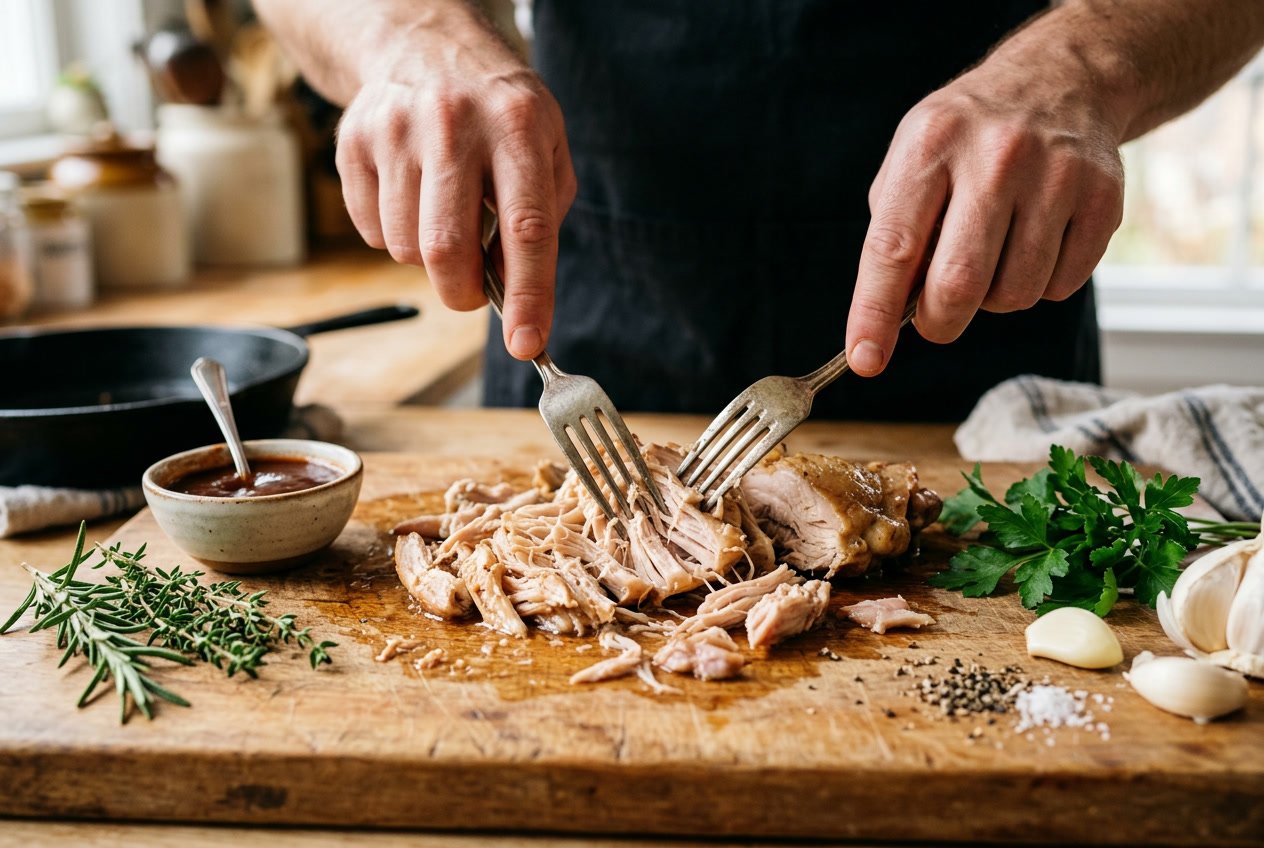
This post will show you which thighs to pick and which cooking methods give you the most shreddable meat. You’ll also get simple shredding techniques and storage tips so you can meal-prep with confidence.
Expect practical steps and expert tips to help you turn basic thighs into consistently great shredded chicken for any dish.
Do Chicken Thighs Shred?
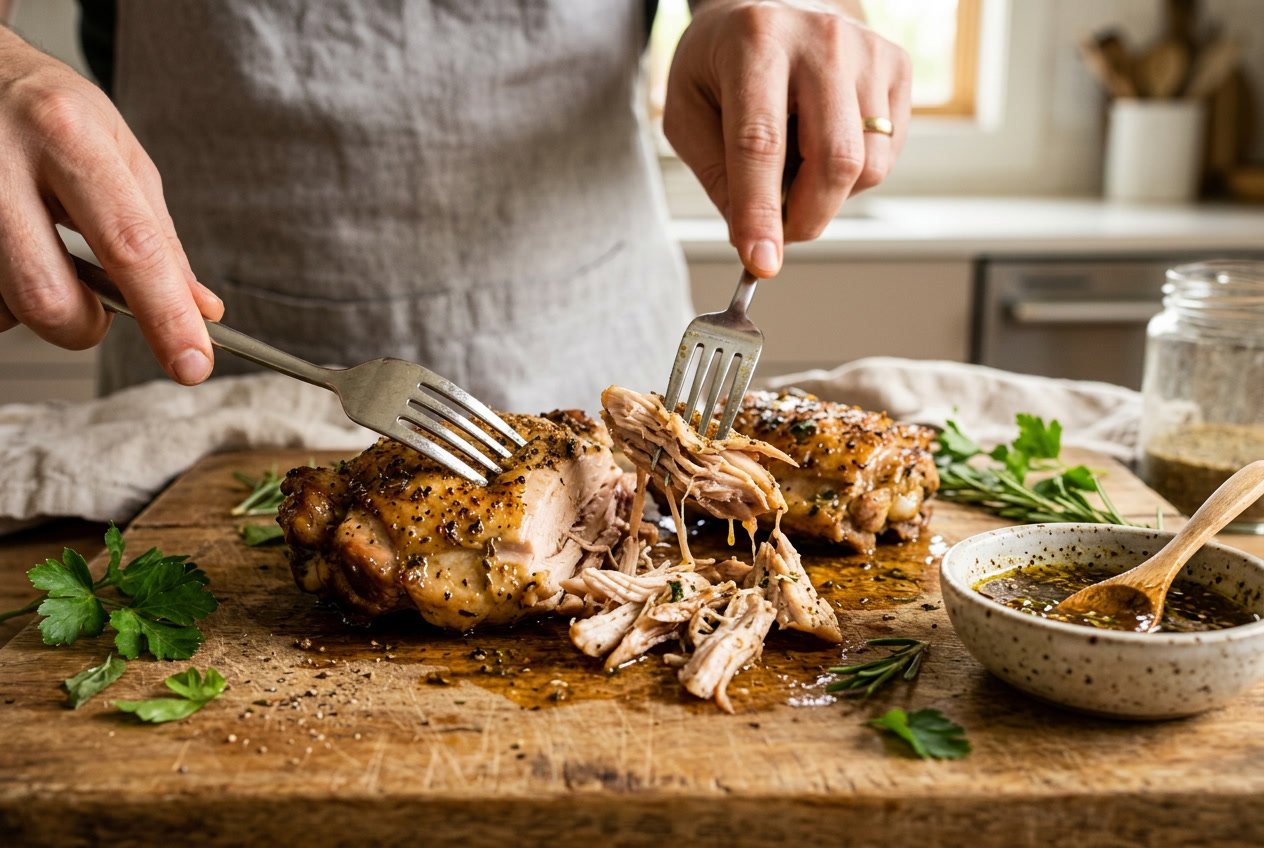
Chicken thighs shred reliably when you cook them until the connective tissue breaks down and the meat reaches a safe internal temperature.
You’ll get juicier shredded chicken thighs than with most lean cuts if you use moist-heat or controlled dry-heat methods and avoid overcooking.
What Makes Chicken Thighs Ideal for Shredding
Chicken thighs contain more intramuscular fat and connective tissue (collagen) than breasts.
That collagen softens into gelatin when you cook thighs low and slow, poach, braise, or use a covered skillet. The meat falls apart into strands you can pull with forks or a mixer.
Bone-in thighs add flavor and help retain moisture during cooking. Remove bones after cooking for easier shredding.
Boneless, skinless thighs save time and are simplest to shred by hand or with a stand mixer. Season the cooking liquid or pan well and reserve some of that liquid to mix back into the shredded chicken for extra juiciness.
Texture and Moisture Compared to Chicken Breasts
Chicken thighs stay moister after cooking because they have higher fat content. That fat keeps the fibers lubricated, so shredded chicken thighs feel tender and less stringy than shredded breast meat.
Breasts can dry and become fibrous if slightly overcooked, which makes shredding yield drier, tougher strands. If you prefer very lean shredded chicken, breasts work, but for reliably juicy shredded chicken, choose thighs and use methods like poaching, braising, or short baking with a lid or foil.
Choosing the Best Chicken Thighs for Shredding
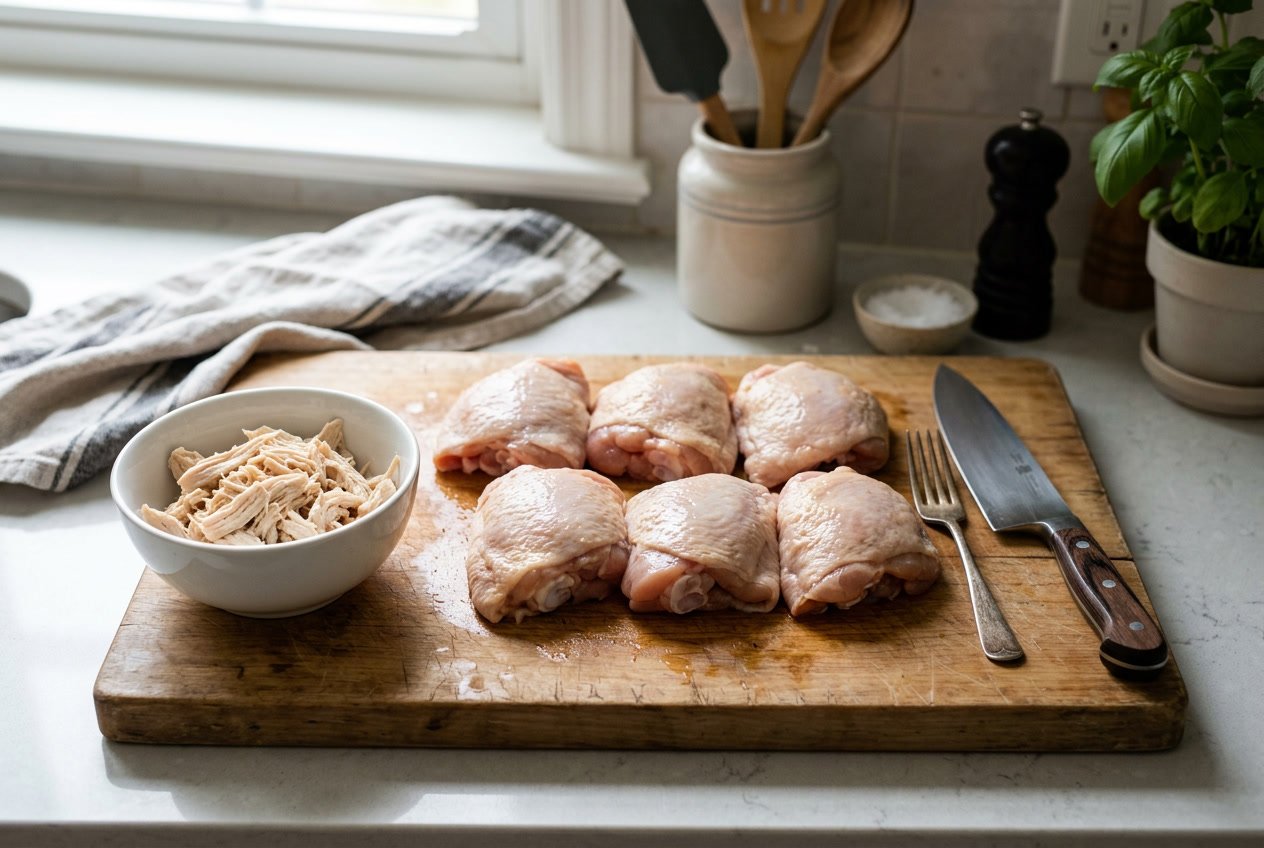
Pick thighs that balance fat, flavor, and ease of handling to get tender, moist shreds. Consider whether you want extra richness from bone-in pieces or speed and convenience from boneless, and choose fresh, responsibly raised meat for better texture and taste.
Bone-In vs Boneless Chicken Thighs
Bone-in chicken thighs deliver more flavor because the bone and surrounding fat melt into the meat during cooking. If you want deeper taste for tacos or stews, pick bone-in and plan to remove bones after cooking.
Bone-in thighs tolerate longer cooking without drying, which helps when you braise, slow-cook, or roast.
Boneless chicken thighs shave prep time and make shredding faster. They cook more quickly and are easier to handle when using two forks or a stand mixer.
If you need uniform shreds for sandwiches or salads, boneless skinless thighs give consistent pieces and require less trimming. Keep some cooking liquid to return moisture to shredded boneless meat.
Selecting Free-Range and Fresh Cuts
Free-range chicken thighs often have slightly firmer texture and more pronounced flavor because birds move more and develop muscle tone. When possible, choose free-range labeled thighs for shreds with better mouthfeel.
Assess freshness by smell and color. Fresh thighs should be pale pink with minimal odor and no sliminess.
Avoid packages with excess liquid, as pooling can indicate older meat. Look for evenly sized pieces so they cook at the same rate, and consider buying a mix of small bone-in thighs for flavor and a few boneless for quicker shredding.
Best Cooking Methods for Shreddable Chicken Thighs
You want thighs that pull apart easily and stay moist for tacos, salads, or sandwiches. Focus on low, steady heat and enough cooking liquid to break down collagen without drying the meat.
Poaching for Tender Results
Poaching keeps thighs uniformly moist and yields very tender shreds. Place boneless or bone-in thighs in a single layer in a pot and cover with simmering liquid.
Use chicken broth, water with aromatics, or a thin sauce so the liquid reaches about 1/2 to 1 inch above the meat. Maintain a gentle simmer at roughly 180 to 200°F (82 to 93°C).
Cook until an instant-read thermometer reads 165°F (74°C) in the thickest part, then continue 5 to 10 minutes off heat if you want softer shreds.
Remove thighs from liquid and let them rest 5 to 10 minutes. Shred with two forks, a stand mixer on low, or meat claws, and reserve a few tablespoons of poaching liquid to add back for juiciness.
Slow Cooking and Braising Techniques
Slow cooking and braising maximize collagen conversion for pull-apart texture. Sear thighs first in a hot pan to develop flavor, then add 1/2 to 1 cup of braising liquid per pound.
Cover and cook low. In a 300°F (150°C) oven, plan 1.5 to 2 hours; in a slow cooker set to low, plan 5 to 7 hours for boneless thighs or 6 to 8 hours for bone-in.
For pressure cookers, use 12 to 18 minutes high pressure with a natural release.
Aim for an internal temp of 175°F to 185°F (79 to 85°C) for easy shredding. After cooking, let thighs sit briefly in the covered pot to reabsorb juices, then shred and mix in some of the braising liquid.
How to Shred Chicken Thighs
Shredding chicken thighs becomes quick once the meat is cooked to tender, accessible doneness and cooled enough to handle.
Two practical approaches give you either coarse, hand-pulled shreds or very consistent, finely shredded chicken for fillings and dips.
Two Forks Method
Use two forks when you want control over shred size and texture. Place a boneless, cooked thigh on a cutting board.
Hold it steady with one fork and use the other to pull the meat away in short, decisive strokes along the grain.
Work in small sections so you can gauge shred thickness. For juicier results, let the thighs rest 5 minutes after cooking.
Bone-in thighs can be shredded this way too, but remove bones first or pull the meat off the bones with your hands before shredding.
This method suits single portions and recipes where you want visible strands of chicken, like tacos, salads, or rustic sandwiches.
Using a Mixer or Food Processor
Choose a hand mixer, stand mixer with paddle, or food processor when you need large batches or finely shredded chicken. Use boneless thighs and cut them into 1 to 2 inch pieces.
For a hand or stand mixer, put pieces in a deep bowl, attach the paddle, and run at medium speed in 15 to 60 second pulses. Stop and check frequently to avoid overprocessing.
For a food processor, pulse in short bursts, watching texture. Aim for consistent strands rather than paste.
Keep the chicken slightly warm to shred more easily. This approach gives you finely shredded chicken ideal for enchiladas, dips, and smooth-textured fillings.
Expert Tips for Perfect Shredded Chicken Thighs
Focus on temperature control and avoiding common errors to keep your shredded chicken thighs juicy and tender.
Small adjustments in resting, moisture, and technique determine whether you get moist, well-defined shreds or dry, mushy meat.
Resting and Shredding at the Right Temperature
Let cooked thighs rest 5 to 10 minutes off the heat if you plan to shred immediately. This briefly lowers surface temperature while keeping the interior warm enough to pull apart easily.
If you prefer cooler handling, wait 15 to 20 minutes so the meat firms slightly and you can shred without burning your hands.
Shred while the meat is warm for the juiciest results. If chicken cools completely, toss the shreds with 1 to 2 tablespoons of warm chicken broth or cooking juices to restore moisture.
Use a probe thermometer when testing doneness. Confirm 165°F (74°C) before resting.
For large batches, keep shredded thighs in a covered container with a splash of broth to prevent drying while you finish other components.
Avoiding Common Mistakes
Do not overcook thighs. Thighs tolerate longer cooking than breasts, but excessive time at high heat squeezes out fat and moisture, leaving you with stringy shreds.
Avoid over-shredding with mechanical tools. If using a stand mixer, run the paddle on low for 10 to 20 seconds and check frequently.
Remove skin and bones before shredding when you want clean, uniform shreds. If you braised with skin on for flavor, discard skin after cooking and save the pan juices to toss into the shredded thighs.
Keep shreds covered and refrigerated within two hours. For reheating, warm gently with a splash of broth and cover to maintain juiciness.
Storing and Freezing Shredded Chicken Thighs
Keep shredded chicken cool, dry, and airtight to preserve texture and safety. Label portions with date and intended use so you don’t overstore or mix flavors.
How to Store Shredded Chicken Safely
Cool cooked chicken thighs to room temperature within two hours, then refrigerate. Place portions in airtight containers or heavy-duty resealable bags and press out excess air before sealing.
Store in the coldest part of the fridge at 40°F (4°C) or below. Use within 3 to 4 days.
If you plan short-term prep, layer shredded chicken between sheets of parchment in a shallow container so you can lift out single portions without thawing the whole batch.
Freezing Shredded Chicken for Later Use
Portion shredded chicken before freezing so you thaw only what you need. Use freezer bags, vacuum sealers, or airtight containers and remove as much air as possible.
For juicier results, add 1 to 2 tablespoons of broth per cup of shredded chicken before sealing. Freeze flat in labeled bags for faster freezing and compact storage.
Frozen shredded chicken thighs keep best for up to 3 months. Thaw overnight in the refrigerator or add directly to hot dishes from frozen for soups or stews.
Reheat to an internal temperature of 165°F (74°C) before serving.
Delicious Ways to Use Shredded Chicken Thighs
Shredded chicken thighs transform into fast, high-flavor meals and adaptable components for salads, sandwiches, tacos, casseroles, and more.
Meal Ideas and Recipe Inspiration
Use shredded chicken thighs for tacos with corn tortillas, diced onion, cilantro, and lime. Make sliders with BBQ sauce and pickles.
For a weeknight pasta, toss shredded thighs into a garlic-cream sauce with pasta water and finish with black pepper and parsley.
Make a hearty rice casserole by mixing shredded thighs with cooked rice, sautéed onions, and chicken broth. Bake until hot and sprinkle with fresh herbs.
Turn leftovers into a bright salad with shredded thighs, avocado slices, lime juice, and olive oil over mixed greens.
For snacks, fold shredded thighs with cheese into quesadillas or stuff into bell peppers with a small amount of broth and bake.
Keep a jar of seasoned shredded thighs in the fridge for quick grain bowls, pizzas, or sandwiches.
Flavor Pairings and Seasoning Suggestions
Bold spices like chili powder, cumin, smoked paprika, and garlic complement the rich, dark-meat flavor in Mexican-style dishes.
For Mediterranean notes, combine oregano, lemon zest, crushed garlic, and a drizzle of olive oil. Add a light yogurt sauce with lemon and dill for brightness.
BBQ flavors come alive with brown sugar, smoked paprika, and a vinegar-forward sauce. Warm shredded thighs in the sauce to meld flavors.
Garlic-butter or cream-based sauces enhance richness in comfort-style dishes. Add thyme or rosemary sparingly to keep the chicken balanced.
Finish with a squeeze of lime or lemon and chopped fresh herbs such as cilantro or parsley. Include a crunchy element like toasted pepitas or pickled onions for texture.


