
Does Chicken Thighs Have Saturated Fat? Nutrition, Health, and Facts
Chicken thighs contain some saturated fat, and the amount depends mostly on whether you keep the skin.
Skinless chicken thighs have a moderate amount of saturated fat. Leaving the skin on roughly doubles the saturated fat and total fat per serving.

If you want flavor without extra saturated fat, choose skinless thighs, trim visible fat, and use grilling or baking instead of frying.
Saturated Fat in Chicken Thighs: The Essential Facts
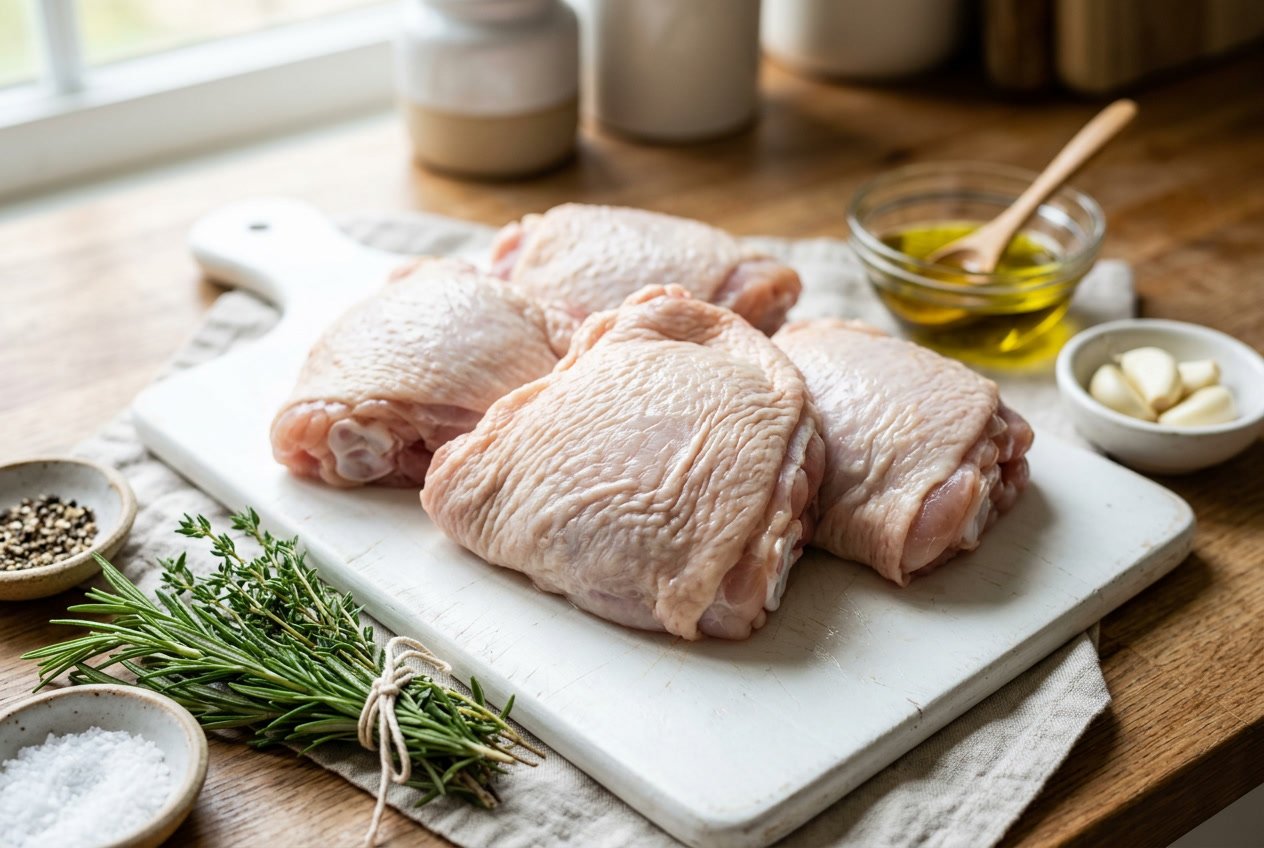
Chicken thighs have more total and saturated fat than breast meat. Most of that extra fat is in the skin and darker muscle tissue.
Specific gram amounts vary by serving size, whether the skin is on or off, and cooking method.
How Much Saturated Fat Is in Chicken Thighs?
A typical 3–3.5 ounce (85–100 g) cooked chicken thigh without skin contains about 1–3 grams of saturated fat.
With the skin on, the same portion can contain about 4–5.5 grams of saturated fat, depending on whether it’s roasted, fried, or braised.
Practical numbers:
- Boneless, skinless 3 oz cooked thigh: ~1–2 g saturated fat.
- Skin-on 3 oz cooked thigh: ~4–5 g saturated fat.
If you track saturated fat for heart health, remove the skin and weigh cooked portions.
Grilling or roasting lets fat drip away and lowers the final saturated fat you eat compared with frying.
Why Chicken Thighs Contain More Fat Than Other Cuts
Thighs are dark meat with higher intramuscular fat than breast. That fat supports sustained activity in the leg muscles.
The skin increases total and saturated fat because it stores subcutaneous fat.
Compare cuts:
- Chicken breast (skinless) is lean and very low in saturated fat per 3 oz.
- Chicken thigh (skinless) has modestly higher saturated fat due to muscle composition.
- Thigh with skin multiplies saturated fat by about two to three times versus skinless.
Choose skinless cuts and cooking methods that let fat drain to reduce saturated fat while keeping flavor.
Skin-On vs. Skinless: Impact on Saturated Fat
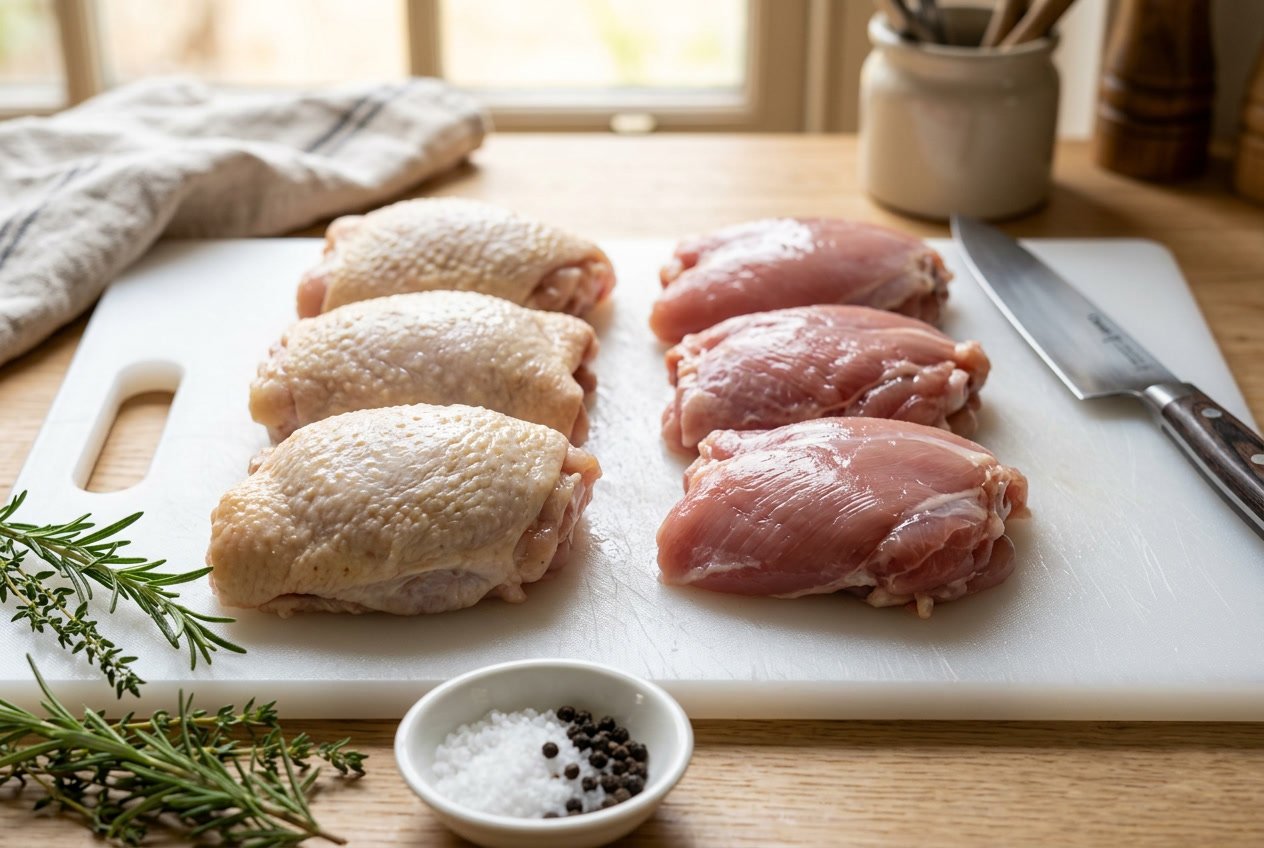
Removing the skin cuts calories and total fat substantially. Keeping the skin increases both saturated and unsaturated fats.
Your choice affects saturated fat per serving and meal planning.
Saturated Fat in Skinless Chicken Thighs
A cooked boneless skinless chicken thigh usually contains about 1–2 grams of saturated fat per 3-ounce (85 g) serving.
Boneless skinless chicken thighs have roughly 4–5 grams of total fat and 15–20 grams of protein per serving, so saturated fat makes up a small portion of the calories.
This lower saturated fat level helps you control LDL cholesterol and stay within dietary targets.
When counting macros, log cooked weight. Moisture loss concentrates nutrients, so 3 ounces cooked skinless thigh provides more fat and protein per gram than the raw equivalent.
Choose skinless if you want leaner protein with iron and B vitamins but limited saturated fat.
Difference With Skin-On Chicken Thighs
Adding skin roughly doubles the fat and raises saturated fat to about 3–5 grams per 3-ounce cooked serving.
A skin-on chicken thigh often delivers 8–18 grams total fat per serving; the skin contributes most of the added calories and saturated fat.
If you grill or roast and discard the skin before eating, the saturated fat impact drops but not as low as a truly skinless cut because some fat renders into the meat.
Frying or crisping the skin increases absorbed fat and raises saturated fat further.
For meal planning, pick skin-on when you need extra calories or flavor. Pick boneless skinless chicken thighs when you need to limit saturated fat while keeping protein and key micronutrients.
Chicken Thigh Nutrition Profile
A single cooked, skinless chicken thigh (about 85 g) gives a concentrated source of protein, moderate fat including saturated fat, and several B vitamins and minerals.
Roasted or pan-seared thighs with skin will increase total calories and fat, so preparation matters for your goals.
Key Macronutrients and Calories
One cooked, skinless chicken thigh (≈85 g) provides roughly 160–210 calories and about 20–26 g of protein.
Fat content typically ranges from about 7–13 g for skinless thighs and about 10–18 g with skin. Of that, saturated fat is usually around 1.5–3.5 g per thigh depending on size and cooking method.
Protein is the dominant macronutrient by weight. Carbohydrates are negligible.
If you roast the thigh with the skin, expect higher calories and more total and saturated fat.
Trimming visible fat and removing skin reduces saturated fat while keeping most of the protein.
Vitamins and Minerals in Chicken Thighs
Chicken thighs supply important micronutrients that support metabolism and immune function.
A single thigh commonly provides selenium and niacin (vitamin B3), plus phosphorus, iron, zinc, and vitamin B6.
These nutrients help energy production, oxygen transport, and cell repair.
If you choose roasted chicken thigh with skin, micronutrient levels remain similar but the meal’s calorie and fat density rises.
Prefer skinless preparations and moderate added fats to retain nutrients while limiting saturated fat.
Comparing Chicken Thighs to Other Cuts
Chicken thighs have more total fat and more saturated fat than lean white meat. They also provide richer flavor and higher amounts of iron and zinc per ounce.
Skin-on thighs add the largest jump in calories and saturated fat, while removing the skin narrows the gap with breasts.
Chicken Thighs vs. Chicken Breasts
A 3–4 oz cooked thigh (skin removed vs. skin-on varies) contains about 9–14 g total fat, compared with roughly 3–4 g total fat for the same cooked weight of breast.
Saturated fat in a skinless thigh is typically around 2–3 g per 3–4 oz serving. A skinless breast usually has under 1 g.
Choose thighs for juiciness, more iron and zinc, and a bit more monounsaturated and polyunsaturated fat.
Choose breasts for the lowest calories and saturated fat per serving.
Quick comparison (approximate per 3–4 oz cooked):
- Thigh, skinless: ~9–13 g fat, ~2–3 g saturated fat
- Thigh, skin-on: ~15–18 g fat, ~4–5 g saturated fat
- Breast, skinless: ~3–4 g fat, <1 g saturated fat
Which Part of Chicken Has the Most Fat?
The skin contains the majority of a chicken cut’s fat, so skin-on pieces have the highest total and saturated fat.
Wings and thighs (with skin) rank highest in fat. Drumsticks are next. Skinless breasts are lowest.
If you remove the skin, dark-meat cuts like thighs still have more intramuscular fat than breasts, but most of the saturated fat reduction comes from removing the skin.
For the lowest saturated fat intake, pick skinless breast or remove skin before cooking. For more flavor with moderate fat, choose skinless thigh and control portion size.
Health Impacts of Saturated Fat in Chicken Thighs
Chicken thighs have more total and saturated fat than breast meat, especially with the skin on.
You can cut saturated fat by removing the skin, trimming visible fat, and choosing cooking methods that don’t add extra fat.
Saturated Fat and LDL Cholesterol
Saturated fat raises LDL cholesterol in many people. Higher LDL levels increase your risk of atherosclerosis.
A typical 100 g chicken thigh with skin has about 4–4.5 g saturated fat. Skinless portions drop to roughly 1.5–2 g.
Current guidelines suggest keeping saturated fat to 5–10% of total calories for many people.
If your diet already contains other sources of saturated fat, eating skin-on thighs can push your LDL-raising intake higher.
To manage LDL, favor skinless thighs, pair them with vegetables and whole grains, and limit high-saturated-fat foods across the day.
Are Chicken Thighs Healthy?
Chicken thighs provide 20–30 g of protein per typical serving and deliver iron, zinc, selenium, and B vitamins.
Their higher fat content gives more calories and flavor than breast meat, which can help if you need energy or struggle to meet protein needs.
Healthiness depends on portion size and preparation.
Choose skinless thighs and low-fat cooking methods such as grill, roast, or braise to reduce saturated fat.
If you have high LDL or cardiovascular disease, prioritize leaner cuts more often. Occasional skinless thighs fit within a balanced diet for most people.
Are Chicken Thighs OK for Weight Loss?
You can include skinless chicken thighs in a weight-loss plan if you control portions and total calories.
A 100–120 g cooked skinless thigh provides around 170–210 kcal and fills you with protein that supports satiety and lean mass retention during calorie deficit.
Track added fats. Frying or using a lot of oil increases calories quickly.
Use measured cooking spray, bake, or grill and combine thighs with fiber-rich vegetables and whole grains to keep meals satisfying.
If your target requires very low fat, choose chicken breast more often, but thighs remain practical when you balance calories across the day.
Reducing Saturated Fat When Eating Chicken Thighs
Remove skin, choose cooking methods that let fat drip away, and balance the meal with fiber-rich vegetables and whole grains to lower saturated fat per serving.
Cooking Methods and Practical Tips
Choose grilling, broiling, baking on a rack, or air-frying to let rendered fat drip away and avoid added fats.
These methods reduce saturated fat compared with pan-frying or deep-frying.
If you sauté, use a teaspoon of olive oil and nonstick cookware to limit added saturated fat.
Trim visible fat from the thigh before cooking.
When slow-cooking or braising, chill the cooked dish and skim solidified fat from the surface before reheating.
For skin-on preparations, you can cook with the skin to retain moisture and remove it before eating to cut saturated fat while keeping tenderness.
How to Make Chicken Thighs Healthier
Remove the skin and portion each serving to about 3–4 ounces of cooked meat to keep saturated fat in check.
Pair chicken thighs with high-fiber sides such as beans, lentils, brown rice, or roasted cruciferous vegetables to improve satiety and reduce cholesterol absorption.
Marinate chicken with olive oil, lemon, garlic, yogurt, or vinegar-based mixes to add moisture without heavy saturated fats.
Swap butter for heart-healthy olive oil when finishing or basting.
Use herbs and spices for flavor instead of breading.
Rotate protein sources throughout the week by including fatty fish, legumes, and skinless chicken breast to benefit from omega-3s and lower saturated fat.
Chicken thighs provide iron, zinc, B vitamins, and monounsaturated fats when you prepare them this way.


