
Does Chicken Thighs Have Protein? Nutrition Facts & Health Insights
Chicken thighs do contain substantial protein and can support muscle maintenance, recovery, and daily protein needs.
A typical skinless, cooked chicken thigh provides roughly 24–27 grams of protein per 100–111 grams. Thighs are a reliable protein source and supply more fat and flavor than breast.

If you want to compare cuts, adjust for skin or cooking method, or get the most nutrition from your meals, this article breaks down exact protein counts. You’ll see how thighs stack up against breast and drumstick, and how preparation affects both protein and calories.
You’ll also find practical guidance on nutrition trade-offs and cooking tips to help you use thighs for your goals.
How Much Protein Do Chicken Thighs Have?
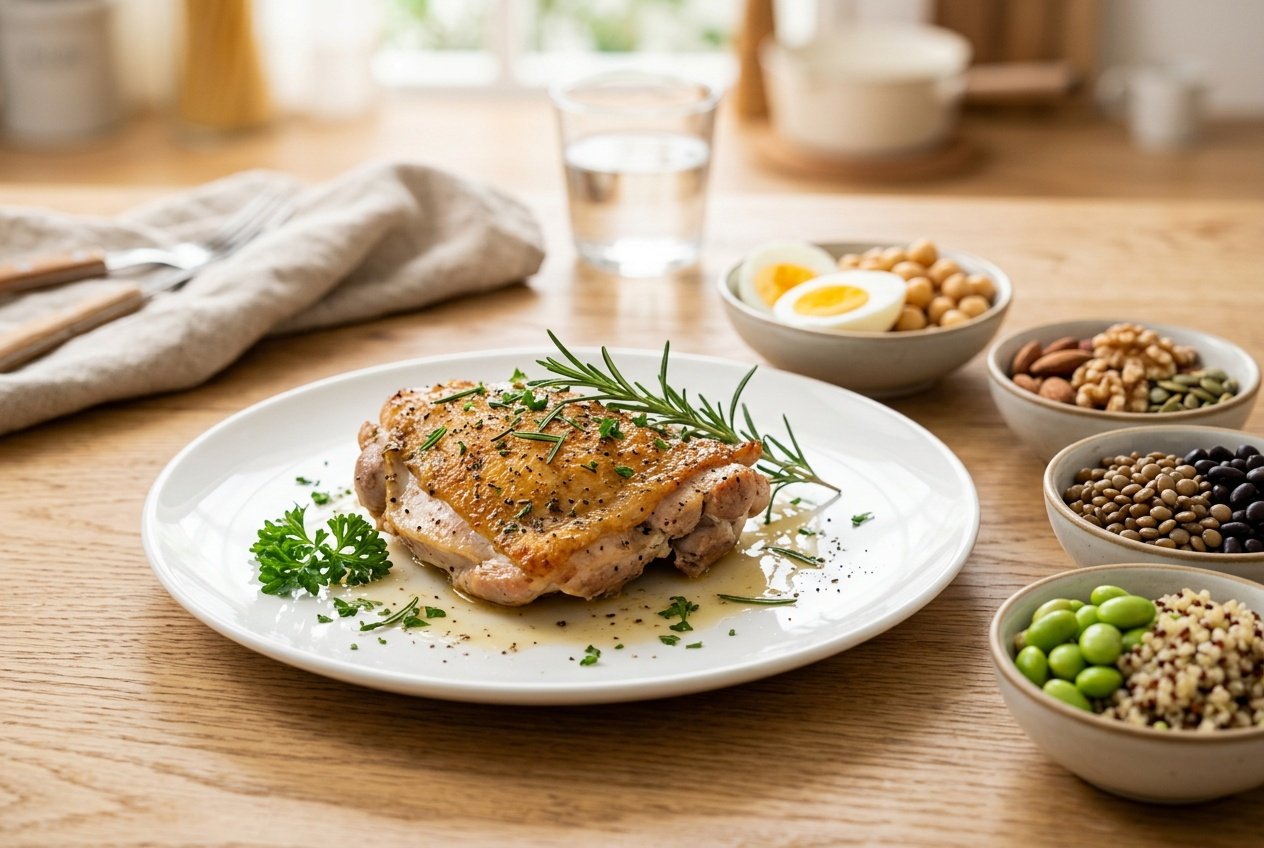
Chicken thighs deliver a substantial amount of protein and contain more fat than breast meat.
Specific protein values change with cooking method, portion size, and whether skin or bones are present.
Protein Content per 100 Grams
Cooked, skinless chicken thigh typically provides about 24–27 grams of protein per 100 grams.
Values vary by source and cooking loss, but 25 g/100 g is a practical midpoint for meal planning.
Raw chicken thigh shows slightly lower measured protein per 100 g because raw meat contains more water.
Cooked measurements are higher on a per-weight basis due to moisture loss during cooking.
If the thigh includes skin, the protein per 100 g drops slightly because fat and skin add weight without much protein.
Check nutrition labels or USDA data for exact figures if you need precision for tracking macros.
Protein Per Chicken Thigh (By Size)
A typical skinless, boneless cooked chicken thigh around 100–115 grams contains roughly 24–30 grams of protein.
Smaller thighs (about 50 g raw, ~40 g cooked) provide about 10–13 grams of protein each.
Large thighs (120–140 g cooked) can supply 30+ grams of protein per piece.
Bone-in thighs weigh more overall, but quoted protein usually refers to edible meat only.
When tracking your intake, weigh the cooked meat for accuracy.
Estimating by package weight or common portion sizes works for casual tracking but may misstate protein by several grams.
Raw vs Cooked Protein Content
Cooking concentrates protein per gram because water and some fat leave the meat.
Raw chicken thigh might list 20–23 g protein per 100 g, while the same piece cooked measures 24–27 g per 100 g.
Protein amount in the whole piece (total grams of protein) stays nearly constant; only the weight changes.
For example, a raw 120 g thigh with 24 g protein per 100 g contains about 28.8 g protein total. After cooking it may weigh 90 g but still contain about 28–29 g protein.
Track cooked-weight values when logging meals you eat.
Use raw-weight labels when following recipes or package nutrition facts, and convert based on typical cooking yield (about 70–80% of raw weight).
Protein Comparison: Chicken Thighs vs Other Cuts
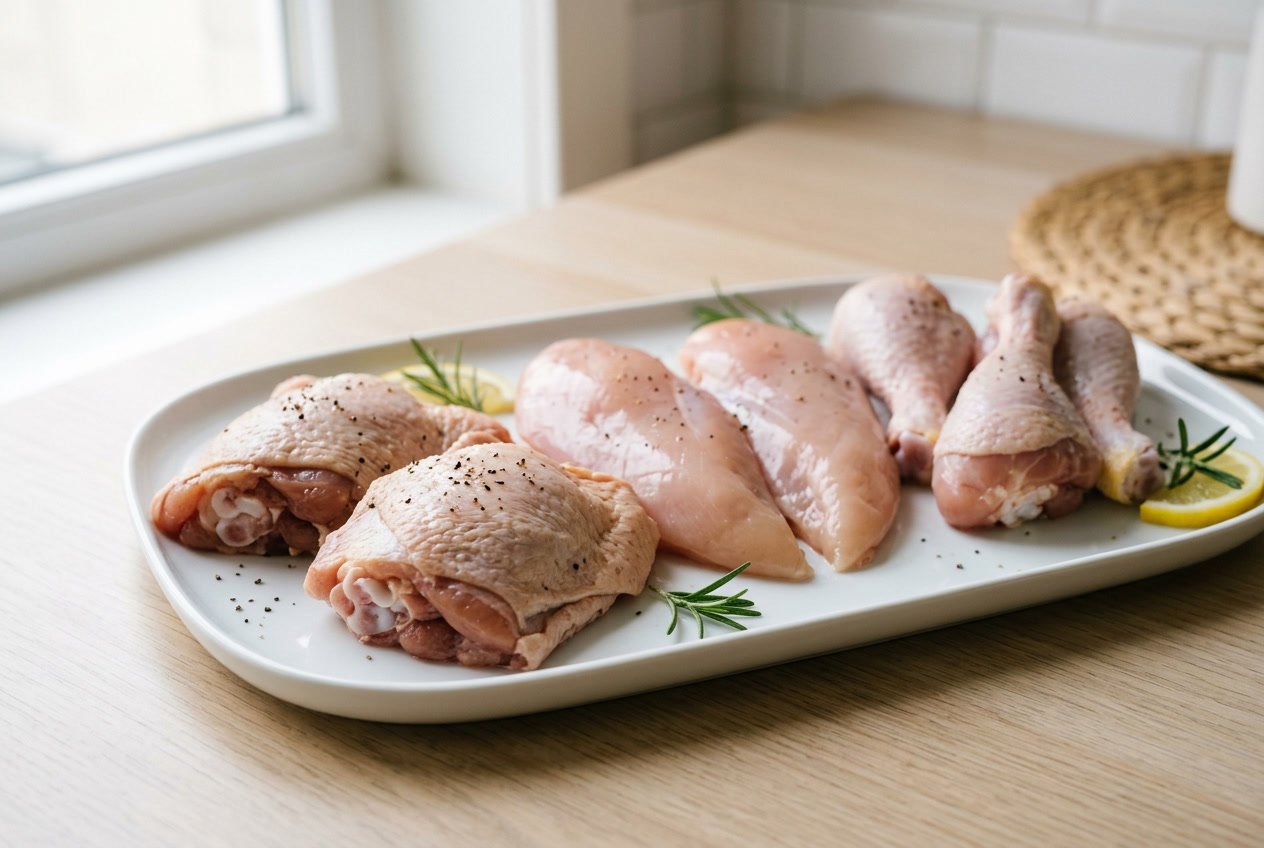
Chicken thighs provide substantial protein and contain more fat than lean cuts.
You’ll get around 25–27 grams of protein per 100 grams of cooked, skinless chicken thigh, which affects calorie density and flavor.
Chicken Breast vs Chicken Thighs
Chicken breast delivers more protein per 100 grams than thighs.
Expect about 32 g protein per 100 g cooked for skinless breast versus about 25 g protein per 100 g cooked for skinless thighs.
Thighs contain more fat—about 11 g fat per 100 g versus 3–4 g fat per 100 g in breast—so thighs provide more calories (roughly 200 vs 165 kcal per 100 g cooked).
Choose breast when you need maximum protein with lower calories. Choose skinless thighs when you prefer juicier texture and still want a solid protein source.
Drumsticks and Wings Protein Levels
Drumsticks and wings fall between breast and thigh on protein and fat, but values vary with bone-to-meat ratio.
Drumsticks typically offer about 24 g protein per 100 g cooked, similar to thighs but often slightly lower because of more connective tissue and less meat per serving.
Wings give around 24 g protein per 100 g cooked as well, though nutrition labels can vary widely depending on whether skin is left on and cooking method.
When you include skin or fry wings, fat and calories rise while protein per cooked gram concentrates if moisture is lost.
Pick drumsticks or skinless thighs for convenient protein with flavor. Pick skinless breast for highest protein density per calorie.
Impact of Skin and Preparation on Protein and Nutrition
Skin and cooking method change calories and fat more than the absolute protein content.
You get similar grams of protein per ounce whether the thigh is skinless or skin-on, but skin and preparation affect calories, saturated fat, and sodium.
Skin-On vs Skinless Chicken Thighs
Keeping the skin raises calories and total fat, often noticeably increasing saturated fat per serving.
A 3.5-ounce (100 g) cooked thigh, skin-on, provides more fat calories while protein stays near 19–20 g; skinless versions cut fat and calories while retaining most of the protein.
Choose skin-on if you prioritize flavor and don’t mind higher fat. Choose skinless if you want to limit calories or saturated fat.
Preparation further alters fat retention. Roasting with skin can render and concentrate fat but leave protein intact.
Frying or breading increases overall calories and often reduces the protein-to-calorie ratio.
Remove skin and use dry-heat methods (grill, bake) to keep protein high and fat lower.
Boneless vs Bone-In Protein Values
Bone-in thighs weigh more on the bone, so cooked portion sizes differ from boneless portions.
A boneless, skinless thigh yields more edible meat per ounce and therefore a higher measured protein per serving by weight.
For example, a raw boneless, skinless thigh (about 69 g edible meat) provides roughly 14–19 g protein depending on size. A bone-in thigh of the same total weight contains less meat and thus less protein when measured by the whole piece.
Cooking losses affect measured protein modestly.
Moist-heat methods (braising) can cause some nutrient leaching into liquid but preserve more moisture. High heat can shrink meat and concentrate protein per weight.
Weigh cooked meat for accurate tracking. Measure the edible portion, not the whole bone-in piece, to assess protein intake reliably.
Nutritional Benefits of Chicken Thighs
Chicken thighs deliver concentrated protein and useful micronutrients while also supplying moderate fat that helps keep you full and supports nutrient absorption.
You get more iron and zinc per serving than from white meat, and the natural fats preserve juiciness during cooking.
Essential Amino Acids and Muscle Health
A cooked, boneless, skinless chicken thigh typically supplies about 25–29 grams of protein per 100–120 g serving, giving you a substantial dose of all nine essential amino acids.
Leucine appears in useful amounts and helps trigger muscle protein synthesis, which matters when you’re rebuilding muscle after exercise or preventing age-related loss.
Protein from thighs digests steadily because of the fat content, which can help maintain a longer amino acid release compared with lean breast meat.
If you aim for muscle growth or recovery, one thigh alongside a carbohydrate source provides an efficient post-workout meal that supports glycogen replenishment and repair.
Vitamins and Minerals in Chicken Thighs
Chicken thighs contain higher levels of iron and zinc than chicken breast, so they better support oxygen transport and immune function per serving.
A 100 g cooked portion typically provides notable amounts of niacin (B3), vitamin B6, and B12, all important for energy metabolism and nervous system health.
You also get selenium and phosphorus, which help protect cells from oxidative stress and support bone health.
If you remove the skin you lower saturated fat and calories while retaining most of these micronutrients.
Potential Drawbacks and Considerations
Chicken thighs provide protein and flavor, but they also bring higher fat and calorie levels compared with lean cuts.
Pay attention to portion size, cooking method, and whether the skin is kept, since these factors change the calorie and saturated fat load substantially.
Fat and Calorie Content
A 3-ounce (about 85 g) skinless chicken thigh typically contains roughly 160–170 calories and about 8–10 grams of total fat, including around 2–3 grams of saturated fat.
If you leave the skin on, a similar serving can jump to about 270–280 calories and 18 grams of fat.
Those differences matter when you track daily energy or saturated fat targets.
Practical tips:
- Remove skin to cut calories and saturated fat.
- Use baking, grilling, or broiling instead of frying to avoid added oil.
- Weigh portions or use a food scale; a common restaurant thigh often exceeds a 3-ounce serving.
Choosing Chicken Thighs for Weight Loss or Muscle Gain
For muscle gain, chicken thighs give you about 20 g of protein per 3-ounce serving along with fats that help fuel recovery and hormone production.
They can fit into a muscle-building plan if you adjust total daily calories and pair them with carbohydrate and veggie sources for balanced meals.
If you aim for weight loss, focus on:
- Portion control: limit thighs to appropriate serving sizes (3–4 oz cooked).
- Preparation: opt for skinless thighs and low-fat methods to keep calories down.
- Tracking: include the thigh’s fat calories in your daily macro targets.
Balance matters. Use thighs for taste and satiety, but manage serving size and cooking method to meet your specific weight-loss or muscle-gain goals.
Best Cooking Methods for Maximizing Nutrition
Choose methods that preserve protein while controlling added fat, sodium, and calorie-dense coatings.
Focus on dry-heat or low-oil moist-heat techniques and plan portions so each serving delivers 20–30 g of protein without excess calories.
Healthy Cooking Techniques
Grill, bake, or roast skinless or skin-removed thighs to keep protein high and added fat low.
Use a rack or grill grate so rendered fat drips away. A 4 oz cooked boneless skinless thigh will still supply roughly 25–30 g protein while limiting fat to about 7–9 g.
Poach or braise in a light broth when you want tender meat without oil.
These moist methods preserve protein and prevent overcooking. Discard or skim the cooking liquid if you want lower fat and sodium.
For crispy texture, air-fry or oven-roast with a light spray of oil instead of deep-frying.
Avoid breading and heavy batters to prevent large increases in calories, carbs, and absorbed oil.
Season with herbs, citrus, and dry rubs rather than salty marinades.
Meal Planning with Chicken Thighs
Portion thighs to match your protein target. One medium cooked boneless skinless thigh typically gives about 18 to 22 grams of protein.
Weigh cooked servings when tracking macros. This helps you avoid confusion between raw and cooked weights.
Combine thighs with high-fiber vegetables and whole grains to balance the meal. This also helps slow digestion.
For lower-calorie plans, pair skinless thighs with leafy greens and roasted root vegetables. For higher-fat or ketogenic plans, keep the skin and add healthy fats like olive oil or avocado.
Batch-cook plain seasoned thighs by grilling or roasting them. Store them in airtight containers for three to four days.
Slice thighs into salads, bowls, or stews to control added sauces and sodium.


