
Does Chicken Thighs Have Iron? Key Facts & Nutrition Insights
Chicken thighs provide a meaningful amount of iron, especially compared with white meat. They make a practical choice if you want to boost your iron intake without eating red meat.
A typical cooked chicken thigh contains about 1–1.5 mg of iron per 100 g. Your body absorbs this heme iron more efficiently than plant-based iron.
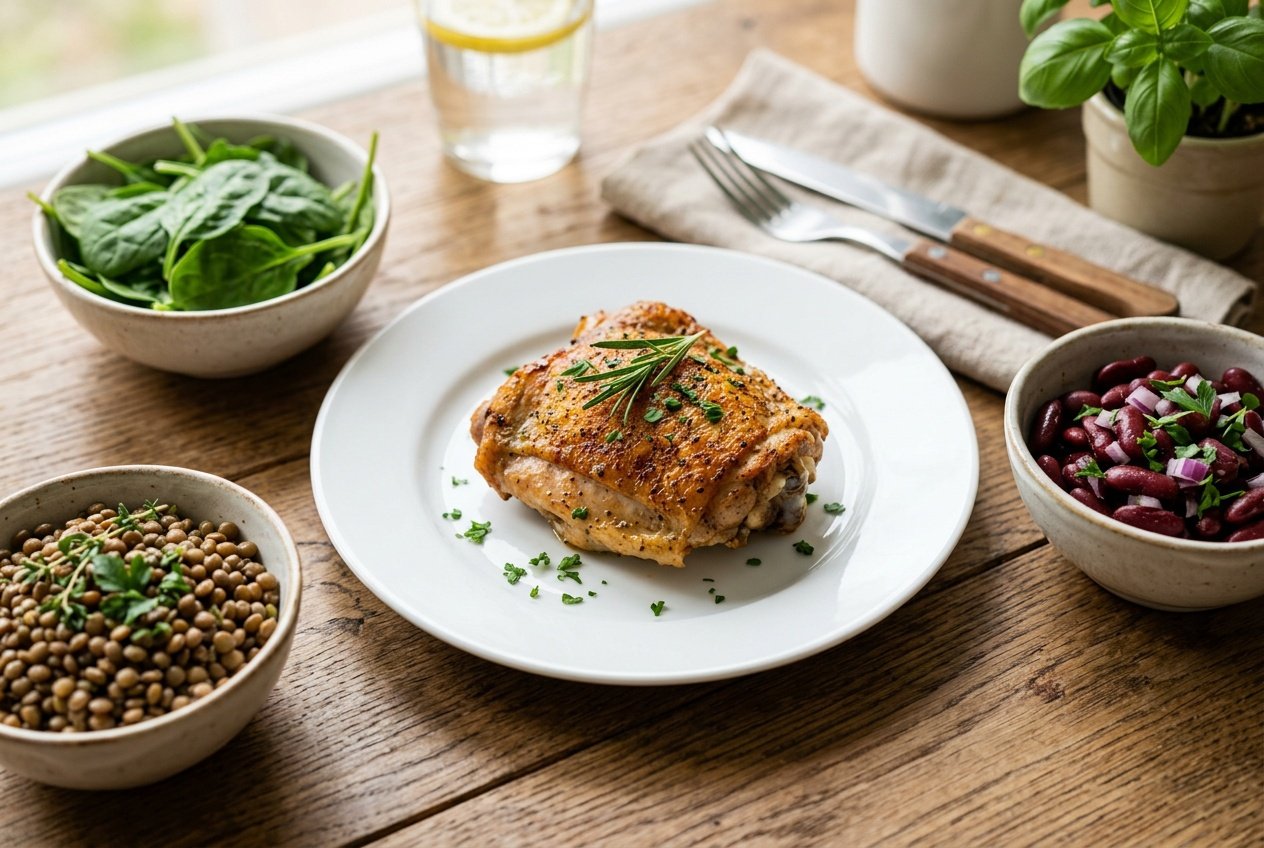
This post explains how much iron thighs contain and how well your body absorbs it. You’ll also find tips on cooking and pairings that help maximize iron absorption from chicken thighs.
Iron Content in Chicken Thighs
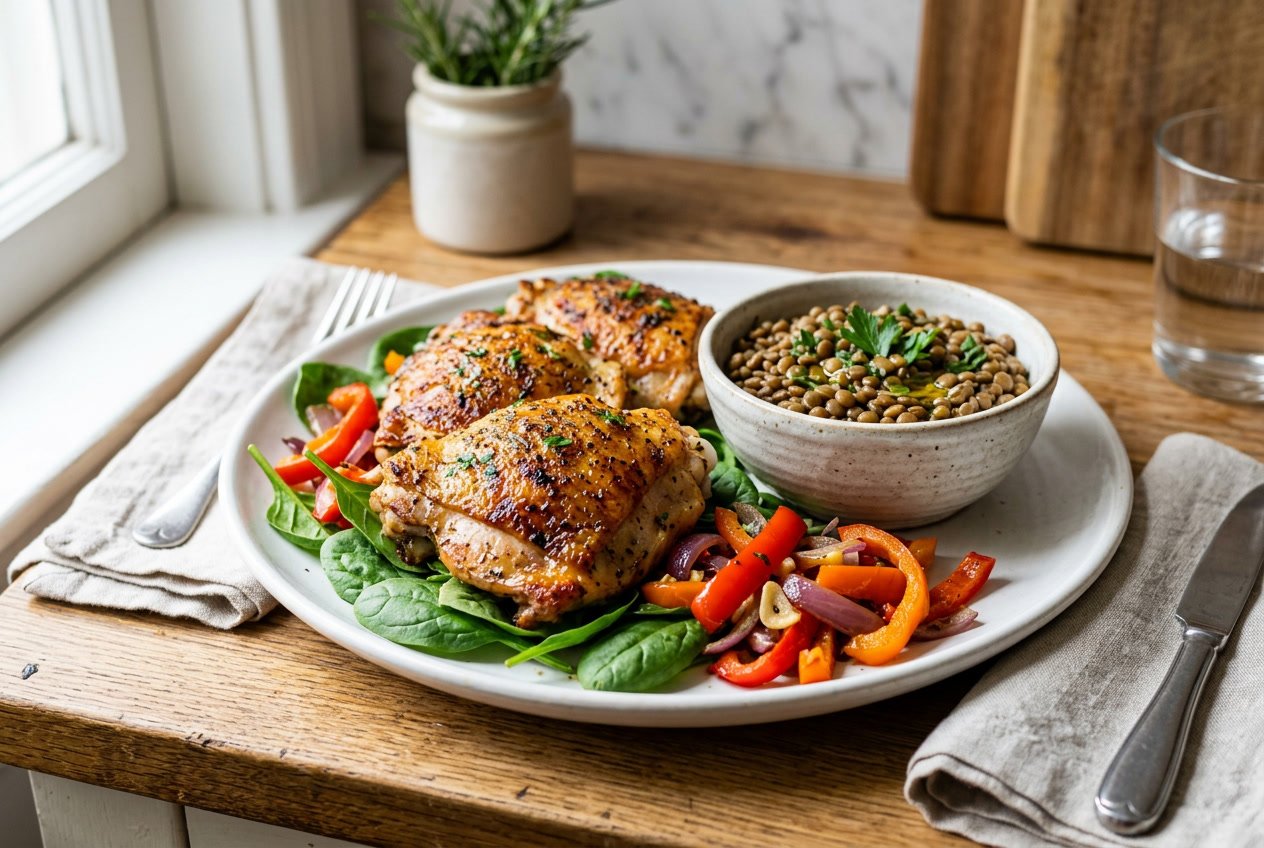
Chicken thighs offer a measurable source of heme iron. The amount depends on portion size, cut, and cooking method.
You can expect modest iron contributions that help meet daily needs, especially compared with chicken breast.
How Much Iron Is in Chicken Thighs?
A typical cooked 100-gram portion of chicken thigh contains about 1.3–1.6 mg of iron.
One cup of cooked, chopped thigh meat has roughly 2 mg of iron, about 10–11% of an average adult’s recommended daily intake.
A single medium cooked thigh (about 100–120 g) offers a similar range.
Use 1.3–1.6 mg/100 g as a practical estimate for meal planning.
Iron in Dark vs. White Chicken Meat
Dark meat (thighs and drumsticks) contains more iron than white meat (breasts) due to higher myoglobin.
Thighs have about 1.3–1.6 mg/100 g, while breasts contain about 0.9–1.3 mg/100 g.
Choose thighs if you want a higher heme-iron contribution from poultry.
Your body absorbs heme iron from chicken more efficiently than non-heme iron from plants.
Variations by Cooking Method
Cooking changes iron concentration mainly through water loss and added ingredients.
Grilling, roasting, or pan-searing concentrates nutrients as moisture evaporates, slightly increasing iron per 100 g compared with poaching or boiling.
Frying can alter nutrient density through batter and oil, and iron per 100 g may appear lower if the final product contains fillers or coatings.
Bone-in thighs or cooking with acidic ingredients (tomato, lemon) do not significantly change iron content, though acids can enhance absorption when eaten together.
Quick reference:
- Estimate: 1.3–1.6 mg iron per 100 g cooked thigh
- Per cup cooked: ~2 mg iron
- Best cooking for density: roasting or grilling
Iron Absorption from Chicken Thighs
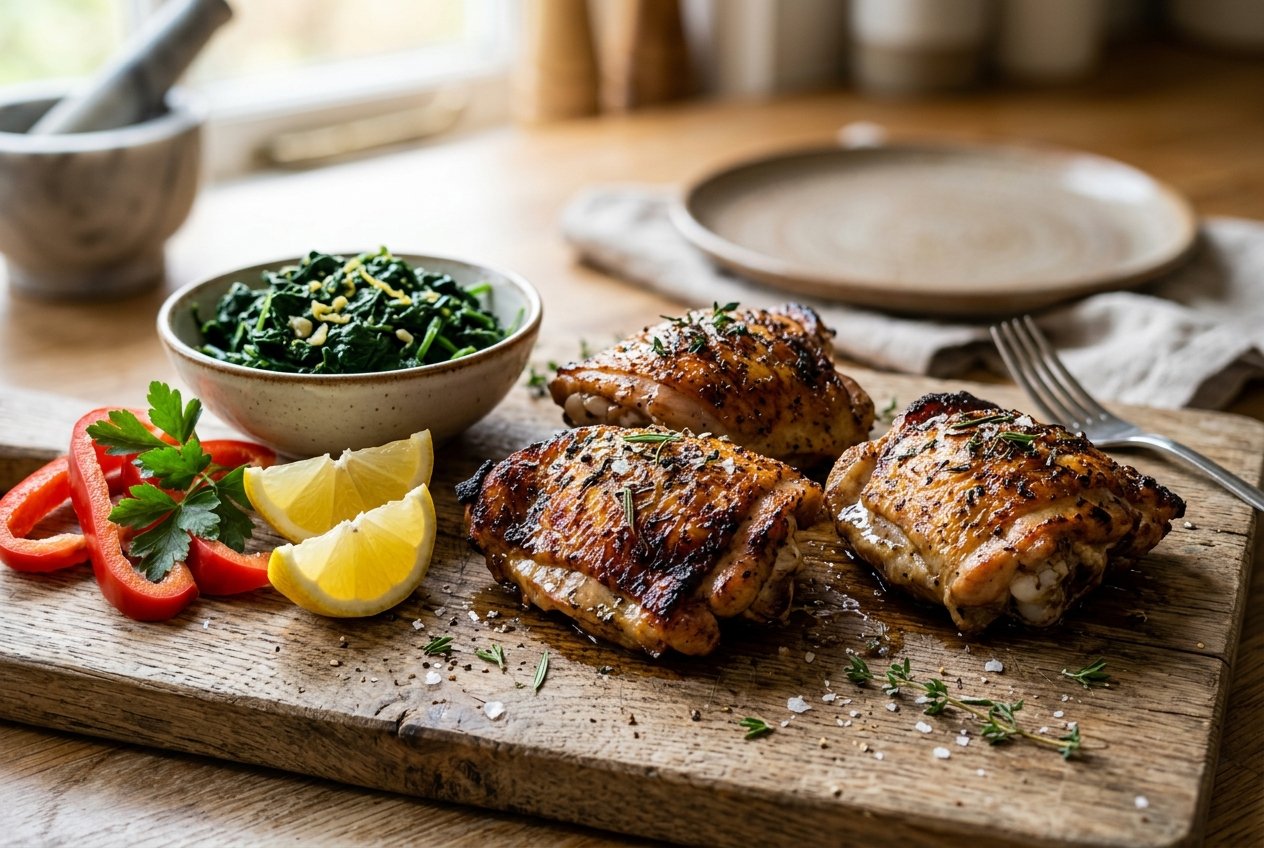
Chicken thighs provide a modest amount of heme iron that your body absorbs efficiently. Absorption depends on the iron form, other foods in the meal, and cooking method.
Heme Iron in Chicken Thighs
Myoglobin and hemoproteins in muscle tissue supply heme iron in chicken thighs.
An 85 g (3-ounce) serving of cooked chicken thigh provides about 0.9–1.1 mg of iron, mostly as heme iron.
Your intestine absorbs heme iron at a higher rate than non-heme iron from plants.
Phytates in grains or polyphenols in tea reduce absorption less when you eat chicken thigh compared with a lentil-only meal.
Factors Influencing Absorption
Your iron status affects absorption. If you are iron-deficient or pregnant, your body increases iron uptake.
Age and sex also matter: menstruating women need more dietary iron than men or postmenopausal women.
Meal composition impacts absorption. Calcium, polyphenols (tea, coffee), and some plant fibers can lower iron absorption.
Cooking method matters: braising or stewing keeps more iron in the dish than discarding cooking liquids.
Portion size and frequency determine how much iron chicken thighs add to your diet.
Vitamin C and Iron Uptake
Vitamin C improves iron uptake by reducing ferric to ferrous iron and forming soluble complexes in the gut.
Eating chicken thighs with vitamin C–rich foods, like bell peppers, citrus, or broccoli, increases non-heme iron absorption from accompanying plant foods and may modestly improve overall iron uptake.
Try these combos:
- Chicken thigh with sautéed spinach and lemon juice
- Roast thigh with roasted red peppers and a citrus vinaigrette
Include a source of vitamin C in the same meal to maximize iron absorption.
Chicken Thigh Nutrition Profile
Chicken thighs provide energy, protein, and several key minerals per serving.
A 100 g cooked chicken thigh delivers substantial protein and more fat than breast meat, along with bioavailable iron and B vitamins.
Calories and Macronutrients
A cooked, skin-on chicken thigh supplies about 200–220 calories per 100 grams.
You get about 25–27 g of protein in that serving, which supports muscle maintenance and satiety.
Fat content is higher than in chicken breast—about 8–11 g of fat per 100 g for skin-on thighs.
Removing the skin lowers fat and calories by a noticeable margin.
Carbohydrates are negligible, so chicken thighs suit low-carb or keto patterns.
A single average thigh (about 85–100 g cooked) provides most of a meal’s protein needs without added carbs.
Cooking method changes calories: frying increases energy density compared with grilling or roasting.
Vitamin and Mineral Content
Chicken thighs supply several B vitamins, especially vitamin B6 and B12, which support energy metabolism and red blood cell formation.
You also get selenium and phosphorus, important for antioxidant defenses and bone health.
Iron content in dark meat is higher than in chicken breast.
Expect about 1.2–1.5 mg of iron per 100 g cooked thigh.
Thighs also contain zinc, which supports immunity, and small amounts of other trace minerals.
If you’re managing iron intake, choose dark meat thighs over white meat for better iron density.
Skinless vs. Skin-On Chicken Thighs
Skin-on thighs add flavor and calories.
Skinless thighs reduce fat and energy density.
You’ll weigh trade-offs between taste, cooking moisture, and how much fat and calories you want.
Nutritional Differences
Skinless chicken thigh (cooked, 100 g) provides about 209 calories and roughly 26 g of protein, with total fat near 10 g.
Removing the skin lowers calories by around 30–70 kcal per thigh and cuts fat roughly in half, depending on size and cooking method.
The skin adds saturated and unsaturated fats and increases caloric density.
It also helps retain moisture during high-heat cooking, so you may need shorter cook times or a moist method (braising, covered baking) to prevent dryness when cooking skinless thighs.
Impact on Iron Content
Most of the iron in chicken thighs is in the meat, not the skin.
A 100 g serving of cooked thigh meat contains about 1–1.5 mg of iron, so switching to skinless has minimal effect on iron per serving.
If you remove the skin, expect only a small change in iron content.
Portion size and whether the thigh is cooked or raw when measured are the main factors affecting iron amount.
To maximize iron absorption, pair chicken thighs with vitamin C–rich foods (citrus, bell peppers).
Avoid drinking tea or coffee with the meal.
Chicken Thighs Compared to Other Chicken Cuts
Chicken thighs contain more iron and higher overall mineral content than the leanest white cuts.
They also carry more fat and calories.
The choice between cuts depends on whether you prioritize iron and flavor or lower calories and higher protein density.
Chicken Thigh vs Chicken Breast
Chicken thigh provides about 0.9–1.1 mg of iron per 100 g.
Chicken breast provides about 0.6–0.8 mg per 100 g.
A 100 g serving of skinless breast delivers about 30–31 g protein and 165 kcal.
Thigh yields 25–27 g protein and 200–210 kcal.
Thighs also provide more zinc and B vitamins.
Choose breast for higher protein-per-calorie, or thigh for more iron and a juicier texture.
Comparison with Drumsticks and Wings
Drumsticks have iron and calorie content between thigh and breast.
A 100 g drumstick (meat only) contains iron similar to thighs but slightly less total fat.
Drumsticks include more connective tissue, which can release slightly more minerals when slow-cooked.
Wings have less meat per piece and generally lower iron content by weight.
Wings are higher in skin-to-meat ratio and add fat and calories if eaten with skin.
For higher iron and richer flavor, use thighs or drumsticks. Use breasts for lean protein.
Roast or braise thighs to preserve iron and moisture.
Remove skin or strain cooking fat to control calories.
Practical Tips for Maximizing Iron from Chicken Thighs
You can increase iron absorption from chicken thighs by choosing the right cooking methods, meal pairings, and portion sizes.
Focus on preserving heme iron and combining it with vitamin C while avoiding known inhibitors at the same meal.
Best Cooking and Pairing Practices
Cook chicken thighs using dry heat (grilling, roasting, pan-searing) to retain more iron than boiling or poaching.
Sear skin-on thighs briefly, then finish in the oven at 180–200°C (350–400°F) to preserve juices and nutrients.
Pair each serving with a vitamin C source to boost iron absorption.
Examples include 1 cup roasted red bell pepper slices or 1 medium orange.
Avoid pairing the same meal with high-calcium foods (large servings of milk, cheese, or calcium supplements) or tannin-rich beverages (strong tea, red wine), as these reduce iron uptake.
If you drink tea or coffee, have them between meals rather than with the chicken.
Include small amounts of acidic marinades (lemon juice, vinegar) for 30–60 minutes; acidity can increase bioavailability of heme iron.
Adding onion, garlic, or tomato also complements flavor and vitamin C content without inhibiting absorption.
Serving Size Recommendations
Aim for 100–150 grams of cooked chicken thigh per meal if you want a practical iron contribution. Cooked dark meat provides roughly 1–2.7 mg iron per 100 g depending on source and preparation.
A 120 g portion supplies about 1.5–3 mg of iron, which helps meet daily needs. If you have higher iron requirements, such as during pregnancy or with a diagnosed deficiency, include two servings across the day.
Pair each serving with a vitamin C-rich side. Remove skin or trim visible fat if you want a leaner profile while keeping the dark meat for iron.
Log cooked weight rather than raw when tracking intake. Note accompaniments that affect absorption.
Consult a clinician for personalized targets if you suspect deficiency or take iron supplements.


