
Does Chicken Thighs Have Carbs? Nutrition, Cooking, and Diet Facts
Chicken thighs contain virtually no carbohydrates when eaten plain and unbreaded.
A typical 3-ounce (85 g) serving of boneless, skinless chicken thigh has about 0–1 gram of total carbs and effectively zero net carbs, making it suitable for low-carb and keto eating.

To keep carbs low, choose simple preparations: breading, sugary sauces, and some marinades add significant carbs, even though the meat itself stays nearly carb-free.
This guide explains exact carb amounts, how cooking and sauces change the numbers, the broader nutrition profile of thighs, and how they compare to breast meat.
Carbohydrate Content in Chicken Thighs

A typical serving of chicken thigh contains essentially no carbohydrates.
Differences come from skin, coatings, or added sauces.
You’ll mainly see 0–1 gram of total carbs per 3–4 ounce serving of plain thigh meat.
Carbs in Skinless Chicken Thigh
Skinless, boneless chicken thigh meat contains virtually zero carbohydrates.
A 3-ounce (≈85 g) cooked portion usually lists 0 g total carbs, with occasional traces (up to 1 g) due to natural glycogen.
You get most of your calories from protein (about 20–26 g per 100 g) and fat.
If you count carbs for keto or low-carb diets, plain skinless thighs are effectively zero net carbs.
Always check packaged or pre-seasoned products, as plain, unbreaded skinless thighs remain the lowest-carb choice.
Carbs in Skin-On Chicken Thigh
Skin does not add carbohydrates to the meat.
Skin increases calories and fat, but carbs remain about 0 g for uncoated, skin-on thighs.
Carb changes occur when skin gets breaded, battered, or glazed.
Common coatings and sugary marinades can add multiple grams per piece.
If you eat a skin-on thigh with a sweet barbecue sauce or a flour-based coating, count those added ingredients toward your carb total.
For low-carb meals, keep skin-on thighs unbreaded and use sugar-free seasonings and marinades.
Net Carbs Versus Total Carbs
Total carbs measure all carbohydrates present, including sugars and starches.
Net carbs subtract fiber (not relevant for plain meat).
Chicken thigh typically shows 0 g total carbs, so net carbs are also 0 g for plain, unprocessed cuts.
When you evaluate prepared or packaged chicken thighs, read the label for “total carbs” and “fiber” to calculate net carbs correctly.
Sauces, breading, and marinades contribute both total and net carbs, so track those additions.
Factors Influencing Carb Count
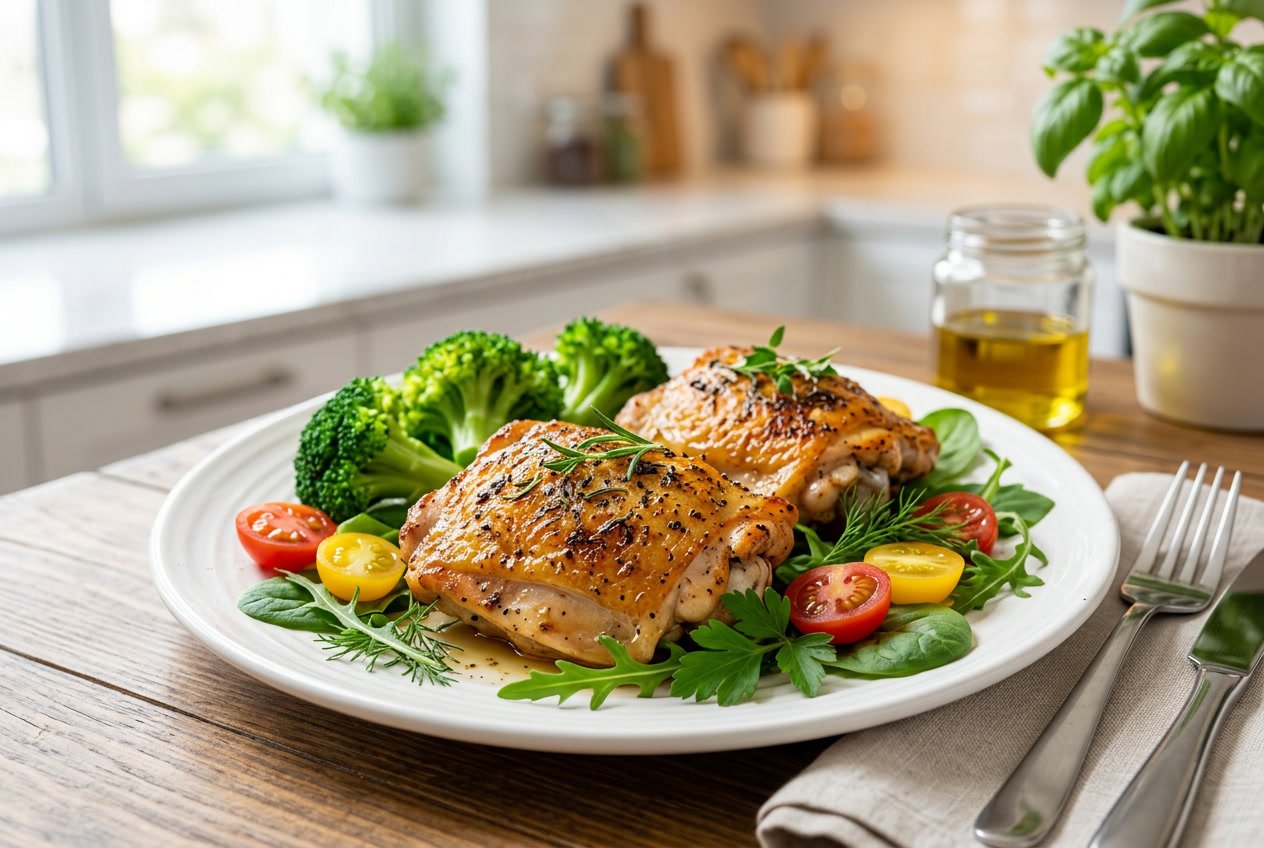
Several practical factors change how many carbs a cooked chicken thigh contributes to your plate.
The cooking method, any sauces or marinades you add, and the portion size can change carbs from virtually zero to several grams per serving.
Impact of Cooking Methods
Grilling, roasting, or baking plain, skinless chicken thighs keeps carb counts at or near 0 g.
Muscle tissue contains negligible glycogen once cooked.
Frying usually raises carbs.
A fried chicken thigh with batter or breading adds starches; a typical battered fried chicken thigh can add 10–20 g of carbs depending on the coating thickness.
Even pan-frying in oil keeps carbs low if you skip flour or breadcrumbs.
Sugars in a glaze concentrate as the meat reduces.
Slow-roasting with a sugar-based glaze or finishing a baked chicken thighs dish with honey will add measurable carbs—often 1–4 g per thigh depending on amount.
Effect of Sauces and Marinades
Most carbs in prepared chicken thighs come from sauces and marinades.
Store-bought marinades and barbecue sauces often list 5–15 g of carbs per serving (2 tbsp).
Marinating a single thigh or coating with sauce can add several grams.
Dry rubs and herb blends usually add negligible carbs unless they include sugar.
If you make your own marinade, use vinegar, oil, herbs, and spices to keep carbs near zero.
Swap sugar for a low-carb sweetener to avoid added grams.
Sticky reductions and bottled glazes concentrate sugars.
Even a small amount brushed on a roasted or grilled chicken thigh can change the carb math.
Check labels and measure portions to keep track.
Role of Portion Size
Portion size directly affects carb totals when carbs come from coatings, sauces, or the skin.
A small baked chicken thigh (skinless) contributes ~0 g carbs, while a larger thigh with skin left on still often registers close to 0–1 g.
Serving two or three thighs multiplies any added carbs from sauces or breading.
Bone-in versus boneless affects weight but not intrinsic carb density.
Measure edible portion (cooked meat weight) for accuracy.
If you eat a fried chicken thigh with breading, estimate carbs per coated piece rather than per raw weight.
Weigh cooked portions, record sauce amounts in tablespoons, and choose skinless or uncoated preparations to keep carbs minimal.
Nutritional Profile of Chicken Thighs
Chicken thighs deliver concentrated protein and fat with virtually no carbohydrates in plain, unbreaded meat.
You get more calories and fat per ounce than breast, but also higher iron and zinc content.
Macronutrients in Chicken Thigh
A 100 g cooked, skinless boneless chicken thigh typically provides about 200–210 calories, ~25–26 g protein, and ~9–11 g fat.
Protein supplies the bulk of calories and contains all essential amino acids.
Fat in the thigh is mainly monounsaturated and saturated.
Leaving the skin on increases total fat and calories considerably.
Carbohydrates are essentially zero in plain thigh meat.
If you’re tracking macros, count thighs as a high-protein, moderate-fat item with negligible carbs unless prepared with sugary or breaded ingredients.
Vitamin and Mineral Overview
Chicken thighs are richer in certain micronutrients than chicken breast.
Per 100 g cooked, they provide notable amounts of iron, zinc, phosphorus, and B vitamins—especially niacin (B3) and B6.
These nutrients support energy metabolism and immune function.
Selenium appears in useful amounts for antioxidant defenses and thyroid support.
If you choose skin-on or dark-meat cuts, expect slightly higher vitamin and mineral density per calorie.
Boneless skinless chicken thigh still delivers these micronutrients but with lower fat and calories compared with skin-on versions.
Chicken Thighs for Low-Carb and Keto Diets
Chicken thighs contain virtually no carbohydrates and provide a solid balance of protein and fat.
You get more fat and flavor per ounce than from breast meat, which helps meet keto fat targets without adding carbs.
Why Chicken Thighs Are Keto-Friendly
Chicken thighs provide zero grams of carbs per typical serving.
A 3-ounce cooked thigh (meat only) typically supplies about 13–14 g protein and 8–10 g fat.
The higher fat content versus breast meat lets you reach keto macros with fewer added oils.
Skin-on thighs add extra calories from fat, useful when you track grams of fat rather than calories.
Thighs also deliver micronutrients like B vitamins, zinc, and selenium that support metabolism while you restrict carbs.
Best Preparation Tips for Keto
Prioritize skin-on, bone-in thighs if you want more fat and flavor.
Roast or pan-sear to render the skin and concentrate fat.
Use high-smoke-point fats (ghee, avocado oil) for searing and finish with butter or olive oil to boost monounsaturated fat.
Avoid carb-heavy marinades and breading.
Season with salt, pepper, garlic powder, paprika, and herbs.
If you want cream-based sauces, choose full-fat dairy (heavy cream, cream cheese) or avocado-based sauces to increase fat without carbs.
Quick reference:
- Choose: skin-on, bone-in for more fat and flavor.
- Avoid: flour, breadcrumbs, sugary glazes.
- Add: ghee, olive oil, full-fat dairy, or avocado for extra fat.
Comparing Chicken Thighs and Chicken Breast
You’ll find clear differences in calories, fat, protein, and micronutrients between thighs and breasts.
One cut is leaner and higher in protein per calorie; the other is higher in fat and certain minerals.
Nutritional Differences
Chicken thigh (boneless, skinless) typically contains about 10–11 g fat and 28 g protein per 100 g cooked serving.
Chicken breast (boneless, skinless) contains about 4–5 g fat and 33–34 g protein per 100 g cooked serving.
Carbohydrate content in both cuts is negligible—usually under 1.5 g per 100 g.
Thighs provide more iron and zinc and slightly higher monounsaturated and polyunsaturated fats.
Breasts supply more niacin (vitamin B3), vitamin B6, selenium, and phosphorus, and give more protein per calorie.
If skin is kept, expect a sizeable jump in calories and saturated fat for either cut.
Choosing the Right Cut for Your Diet
If you aim to reduce calories or maximize protein per calorie, choose skinless chicken breast.
It gives roughly 18 g protein per 100 kcal.
If you prioritize flavor, cooking forgiveness, or higher dietary iron/zinc, choose thighs.
Thighs suit lower-carb, higher-fat plans and require less careful cooking to stay juicy.
Practical tips:
- For low-fat meals: trim skin, grill or bake breast.
- For more calories and richness: keep skin or use thighs in stews and braises.
- For micronutrient balance: rotate both cuts to cover protein, B-vitamins, iron, and zinc.
Carb Content in Popular Chicken Thigh Recipes
Plain chicken thighs contain virtually zero carbs.
Preparation can add significant carbohydrates through sauces, coatings, and accompaniments.
Below are specific carb factors and typical carb ranges for common chicken thigh dishes.
Chicken Thigh Curry
A typical chicken thigh curry adds carbohydrates mainly from vegetables, legumes, and any starchy thickeners or sugar in the sauce.
If you make a curry with onion, tomato, garlic, ginger, and spices only, a 6-ounce serving of cooked thigh in sauce usually contributes about 2–6 grams of carbs, mostly from onions and tomatoes.
Using coconut milk or heavy cream keeps carbs lower than yogurt-based or tomato-sugar sauces.
If you add potatoes or chickpeas, each 1/2 cup of potato adds ~15–20 g carbs and 1/2 cup of chickpeas adds ~20–22 g.
Tip: Replace potatoes with cauliflower rice and use unsweetened coconut milk to keep the dish under 10 g carbs per serving.
Buffalo Chicken Thighs
Buffalo chicken thighs are low in carb when you use a simple hot sauce and butter glaze.
Plain hot sauce (vinegar-based, no added sugar) has roughly 0–1 g carbs per tablespoon; melted butter has 0 g.
A single skinless thigh tossed in a classic buffalo sauce typically contains 0–2 g carbs.
Store-bought buffalo sauces and wing sauces labeled “sweet” or “honey” can add 4–8+ g carbs per tablespoon.
If you serve with blue cheese dressing, check the dressing label: a standard 2-tbsp serving can add 1–3 g carbs for full-fat dressings, or 4–6 g if sweetened.
Tip: Use homemade sauce (hot sauce + butter) and celery sticks to keep carbs minimal.
Chicken Thigh Skewers
Carb content for chicken thigh skewers depends on marinades, vegetables on the skewer, and any glaze or dipping sauce.
Plain marinated chicken with olive oil, lemon, garlic, and herbs adds negligible carbs. A 6‑ounce portion stays near 0–1 g.
Grilled vegetables like bell pepper and onion add 2–5 g carbs per 1/2 cup.
Sweet glazes such as hoisin, teriyaki, or honey increase carbs. One tablespoon of teriyaki adds 3–5 g, hoisin 4–6 g, and honey 17 g per tablespoon.
If you add pineapple chunks or sweet sauces, include those carbs. One ring of pineapple, about 1/4 cup, adds 5–7 g.
Tip: Choose savory marinades and yogurt‑based dips without sugar to keep skewers under 5–8 g carbs per serving.
Chicken Thigh Fajitas
Tortillas, peppers, onions, and sauces provide most of the carbs in chicken thigh fajitas. The chicken itself contains about 0–1 g carbs per 6‑ounce serving when you prepare it without breading.
One flour tortilla adds about 20–25 g carbs. A low‑carb or almond‑flour tortilla usually contains 2–8 g carbs.
Sautéed onions and bell peppers for one fajita serving add about 6–10 g carbs. Salsa remains low in carbs if unsweetened, with 2–4 g per 1/4 cup.
Sweetened sauces and pre‑made seasoning mixes can add hidden sugars. To keep total carbs low, use lettuce wraps or low‑carb tortillas and limit the amount of peppers and onions.


