
Do You Wash Chicken Thighs? Essential Safety & Preparation Guide
You might have always rinsed poultry before cooking because it feels cleaner. Experts warn that washing raw chicken spreads bacteria across your sink and counters and increases the risk of foodborne illness.
Do not wash chicken thighs. Discard packaging, pat the meat dry with paper towels, and rely on proper cooking and safe handling to kill pathogens.
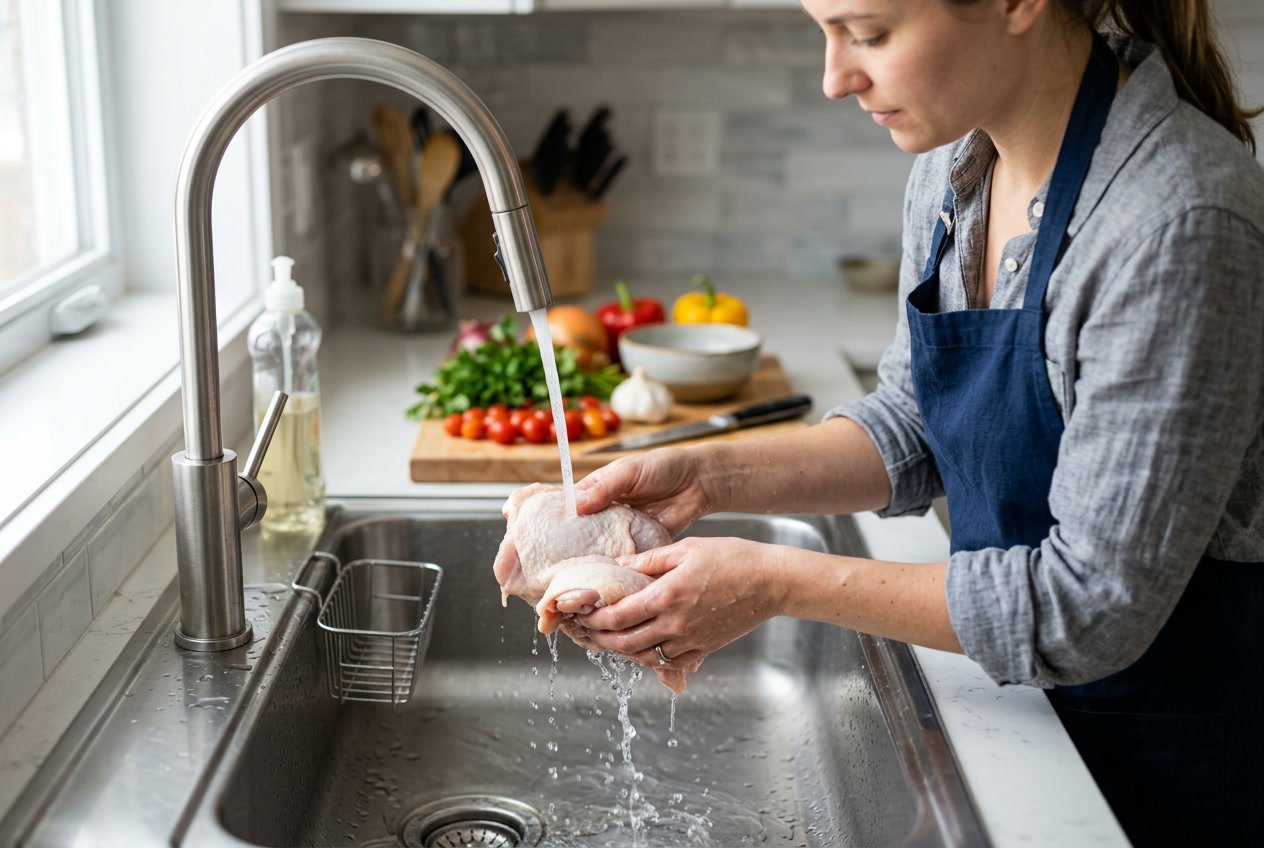
This article explains why washing does more harm than good. It shows the safe way to prep and clean thighs without spreading contamination.
You will also find practical tips for seasoning, storing, and avoiding common handling mistakes so your meals stay delicious and safe.
Should You Wash Chicken Thighs Before Cooking?
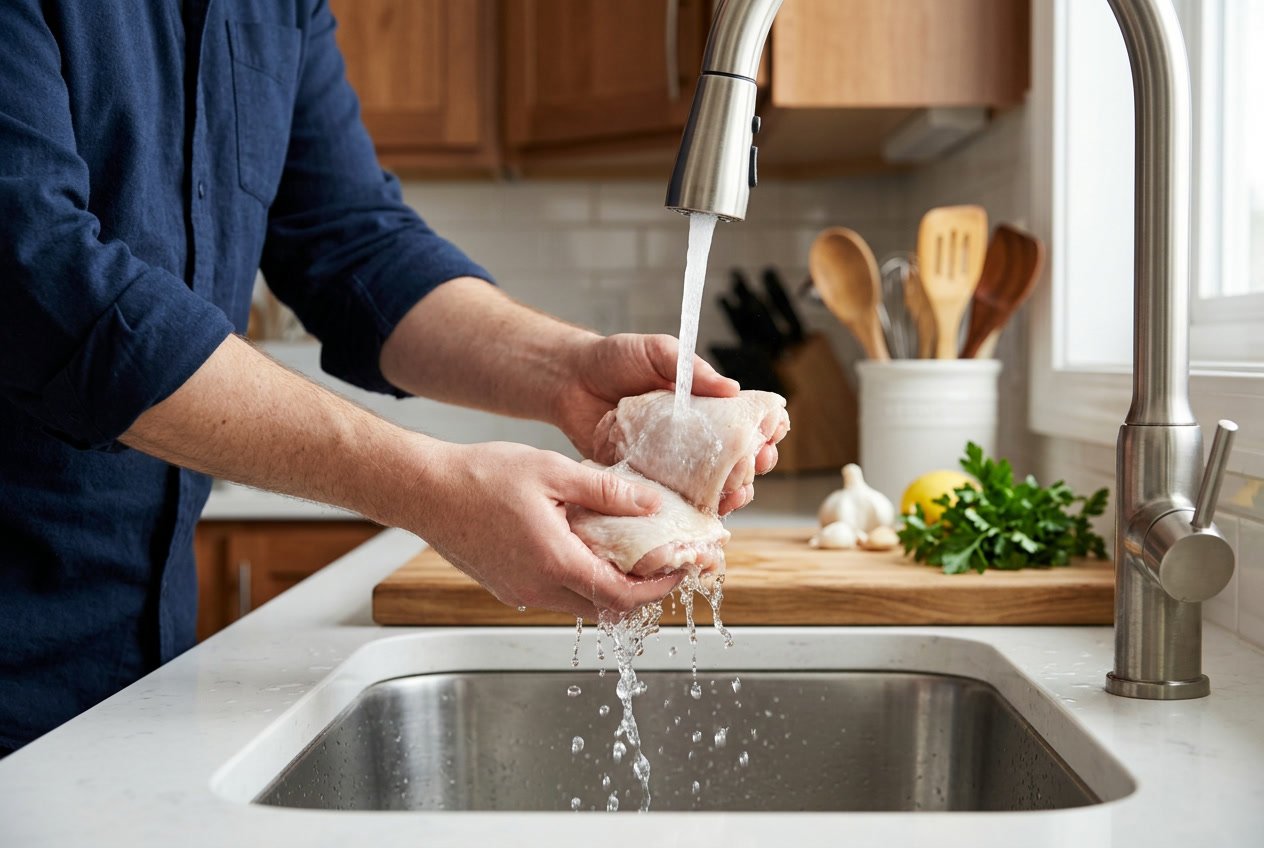
Focus on preventing contamination through handling, not on washing as a way to make the meat safer. Cooking to 165°F (74°C), using clean surfaces, and controlling cross-contamination protect you from pathogens commonly found on raw poultry.
Understanding Food Safety Recommendations
Health agencies including the USDA advise against washing raw poultry because water does not remove bacteria effectively and can spread them. Cooking to an internal temperature of 165°F (74°C) kills Salmonella and Campylobacter.
Pat thighs dry with paper towels if you want better browning. Always wash your hands for 20 seconds after handling raw chicken.
Sanitize any surfaces, sinks, or utensils that contacted the meat. Store raw thighs on the bottom shelf of your refrigerator to prevent drips onto other foods.
Risks of Rinsing Raw Poultry
Rinsing or splashing water over chicken thighs can spread contaminated juices and bacteria up to several feet. Droplets can land on countertops, dishcloths, sponges, utensils, and ready-to-eat foods, increasing the chance of foodborne illness.
If you rinse despite recommendations, use cold running water, minimize splashing, and immediately sanitize the sink area and any surfaces contacted. Use disposable paper towels to dry and discard them promptly.
Remember, rinsing does not replace proper cooking or hygiene.
Common Misconceptions About Washing Chicken
Many people believe rinsing removes bacteria or “cleans” visible residue from chicken. Rinsing may remove surface slime or packaging juices but does not reliably eliminate Salmonella or Campylobacter.
These bacteria adhere to tissue and require sufficient heat to be destroyed. Do not use soap or detergents on food; they are unsafe to ingest.
Brining or marinating can improve flavor and texture, but these steps do not sanitize the meat. Focus on temperature, hygiene, and preventing cross-contamination for safety.
Dangers of Washing Chicken Thighs
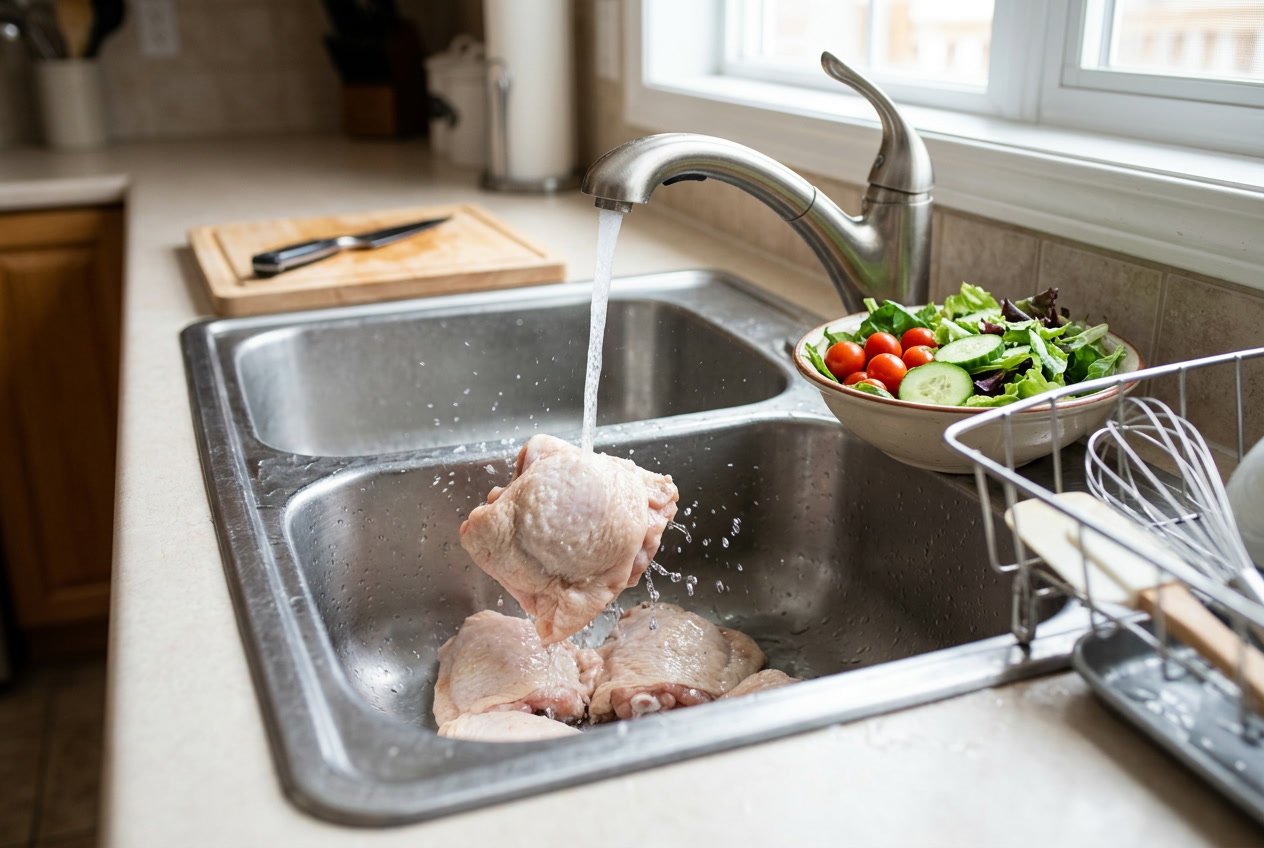
Washing raw chicken thighs can move bacteria from the meat onto your sink, counters, utensils, and hands. This increases the chance someone will eat contaminated food or touch a contaminated surface.
The risks include splatter that travels several feet and pathogens that survive on surfaces long enough to infect others.
Cross-Contamination Risks
When you rinse chicken thighs, water droplets can carry bacteria onto nearby surfaces and utensils. Droplets often travel up to three feet, landing on cutting boards, sponges, and ready-to-eat foods.
If you use the same cutting board or a wiped knife without sanitizing, you create a direct path for contamination. Your hands are another common vector.
Handling wet chicken increases the chance of transferring bacteria to refrigerator handles, spice jars, and phone screens. Avoid washing poultry, use separate cutting boards for raw meat, and sanitize surfaces with a bleach solution or hot, soapy water after any raw-meat contact.
Spread of Salmonella and Campylobacter
Chicken thighs can carry Salmonella and Campylobacter on their surfaces. Rinsing does not remove these bacteria; they can spread around the kitchen.
A brief rinse can disperse pathogens onto objects and into crevices that are hard to clean. Cook chicken to 165°F (74°C) and keep raw poultry refrigerated below 40°F (4°C).
Pat thighs dry with paper towels and discard them immediately to reduce surface contamination without splashing.
Impact on Foodborne Illness
If Salmonella or Campylobacter spread from washed chicken to other foods, you raise the risk of foodborne illness. Symptoms can include diarrhea, fever, and abdominal cramps.
Young children, pregnant people, older adults, and immunocompromised individuals face higher risk of severe outcomes. Preventing foodborne illness depends on breaking contamination chains.
Avoid practices that create aerosolized bacteria, like washing poultry. Focus on temperature control, separate equipment, thorough handwashing, and sanitizing surfaces to protect your household.
How to Properly Clean Chicken Thighs
Handle chicken with hygiene first. Avoid spreading juices and use a dedicated board or container.
Remove visible fat or loose bone fragments before cooking. Prep a clean workspace and tools, and trim any excess skin or fat that could affect cooking or splatter.
Safe Handling Practices for Raw Chicken
Treat raw chicken as a contamination risk. Always wash your hands with soap and warm water for at least 20 seconds before and after touching raw thighs.
Avoid touching other surfaces while handling raw meat. Keep raw chicken on the bottom shelf of the refrigerator in a sealed container to prevent drips.
When moving thighs from packaging, open them over the sink or a disposable tray to catch juices. Never reuse towels that touched raw chicken.
Use paper towels or wash cloths in hot water immediately. Use separate cutting boards and utensils for raw poultry and ready-to-eat foods.
If you must use the same board, wash it with hot, soapy water then sanitize with a diluted bleach solution (1 tablespoon bleach per gallon of water) and air dry before reusing.
Preparing Your Workspace and Tools
Clear counter space and remove items that could get contaminated. Phones, mail, and spices should be out of the way.
Lay out everything you need: paper towels, a sharp boning or chef’s knife, a dedicated cutting board, a bowl or plate for trimmed pieces, and sanitizing spray or solution.
Sanitize the cutting board and knife before use. If you use plastic boards, run them through the dishwasher after cleaning.
If you use wood, scrub with hot soapy water and air dry. Keep a separate plate for raw thighs and another for cooked or seasoned pieces to avoid cross-contact.
If you choose to rinse despite guidance, minimize splash by using a low flow of cold water and keeping the sink area clear. Immediately sanitize the sink and surrounding counters afterward.
Pat thighs dry with disposable paper towels to improve browning and reduce splatter while cooking.
Trimming and Removing Excess Fat or Skin
Place the thigh skin-side up on your cutting board. Use a sharp knife or kitchen shears to trim away large fat deposits, excess skin flaps, and stray feathers or bone slivers.
Cut away any bits that look bruised or discolored. If a recipe calls for skin-on thighs, remove only loose or excess skin so the piece still holds juices.
For skinless thighs, grasp the skin edge with a paper towel and pull while sliding the knife between skin and meat. Trim silver skin and connective tissue to improve texture.
Collect trimmed pieces on a disposable plate or a bowl that you’ll wash immediately. After trimming, wash your hands and sanitize the board and knife before touching other ingredients or cooked food.
Best Practices for Preparing Chicken Thighs
Keep work surfaces sanitized and use separate tools for raw poultry. Cook thighs to 165°F (74°C).
Focus on drying, avoiding splash-prone rinsing, and safe marinating or brining to preserve flavor and reduce contamination risk.
Patting Chicken Thighs Dry with Paper Towels
Pat chicken thighs dry with clean paper towels immediately after removing them from packaging. Press gently to absorb surface moisture.
Do not rub, which can tear the skin or spread juices. Drying helps the skin brown evenly and reduces hot-oil splatter during cooking.
Use a single-use paper towel for each thigh or discard towels after contact with raw meat. If you use reusable towels, launder them on a hot cycle before reuse and never use the same towel for other tasks.
After patting, transfer thighs to a clean plate or pan. Avoid placing them back on the packaging or on countertops without sanitizing first.
Sanitize the sink, counters, and any utensils that contacted raw juices. Wash your hands for 20 seconds after handling.
Avoiding Unnecessary Rinsing Methods
The USDA advises against rinsing raw chicken because running water can disperse bacteria across sinks, counters, and nearby items. Splashing spreads Salmonella or Campylobacter more than rinsing removes them.
Rinsing gives a false sense of security since proper cooking kills pathogens. If you feel compelled to rinse, keep it controlled: use cold water, shield surrounding areas, and immediately sanitize the sink and surfaces afterward.
Consider using a basin so splashes stay contained. Hygiene and cooking temperature are more effective than rinsing.
Maintain separate cutting boards and wash cloths and utensils with hot, soapy water after use. These practices protect your kitchen more effectively than water alone.
Using Marinades and Brining Safely
When you brine or marinate chicken thighs, do so in the refrigerator in a sealed container. Use a non-reactive container (glass, stainless steel, or food-grade plastic).
Discard any marinade that contacted raw chicken unless you boil it for at least one minute before using as a sauce. Measure salt levels for brines: a basic ratio is about 1/4 cup kosher salt per quart (liter) of water.
Brine times vary—30 minutes to 2 hours for smaller thighs. Pat chicken thighs dry after brining to remove surface moisture before searing or roasting.
Label and date marinated or brined chicken if storing more than a few hours. Always wash hands and sanitize containers after handling.
Storing and Freezing Chicken Thighs Safely
Store raw or cooked chicken thighs in airtight packaging. Keep them cold and label with dates so you can use or freeze them before quality declines.
How to Store Cleaned Chicken Thighs
If you plan to use cleaned raw chicken thighs within 1–2 days, place them in a sealed container or heavy-duty resealable bag on the bottom shelf of the refrigerator at 40°F (4°C) or below.
Keep the package on a tray to catch any leaks and prevent juices from dripping onto other foods. For cooked thighs, cool them quickly to room temperature within two hours, then refrigerate in shallow, airtight containers.
Use cooked thighs within 3–4 days. Always label containers with the date and discard any chicken with an off smell, slimy texture, or unusual color.
Freezing and Thawing Procedures
To freeze raw or cooked thighs, wrap each piece tightly in plastic wrap or use vacuum sealing, then place packages in a freezer-safe bag or container. Freeze at 0°F (-18°C) or lower.
Raw thighs keep best for up to 9 months. Cooked thighs maintain quality for 2–6 months.
Thaw frozen thighs in the refrigerator overnight or for 24 hours for a full package. For faster thawing, submerge a sealed bag in cold water and change the water every 30 minutes.
Cook immediately after thawing. You may also use the microwave’s defrost setting but plan to cook the chicken right away.
Preventing Contamination in Storage
Keep raw chicken separate from ready-to-eat foods at all times. Store raw thighs on the lowest refrigerator shelf and away from fresh produce to prevent cross-contamination.
Use dedicated cutting boards and utensils for raw poultry and wash them in hot, soapy water after each use. When handling thawed thighs, never refreeze raw meat that has fully thawed in the refrigerator unless you cooked it first.
If you thaw in cold water or the microwave and don’t use the chicken immediately, discard it. Sanitize surfaces with a diluted bleach solution or an EPA-registered disinfectant after cleaning.
Mistakes to Avoid When Handling Chicken Thighs
Avoid actions that spread bacteria or leave your kitchen contaminated. Focus on safe techniques for cleaning, thawing, cutting, and hygiene to prevent cross-contamination and foodborne illness.
Improper Cleaning Solutions and Methods
Do not wash chicken thighs under running water. Splashing can spread Salmonella or Campylobacter up to several feet.
Pat thighs dry with paper towels if you need to remove excess moisture. Dispose of those paper towels immediately.
Never use dish soap, household cleaners, or bleach directly on raw chicken. These products leave harmful residues and do not reliably reduce pathogens inside the meat.
If you want a surface treatment, wipe with a cloth dampened in a 1 tablespoon per quart bleach solution and then rinse the surface. Do not rinse the chicken.
If you use a mild acidic wipe, such as lemon or diluted vinegar, to remove visible debris, use a single-use paper towel. Sanitize the workspace afterward.
The only reliable way to kill bacteria in chicken is to cook it to an internal temperature of 165°F (74°C).
Unsafe Thawing and Cutting Techniques
Do not thaw chicken thighs at room temperature on the counter. Thaw in the refrigerator, in cold water changed every 30 minutes while sealed, or in the microwave and cook immediately afterward.
These methods keep the meat out of the 40°F–140°F danger zone where bacteria multiply rapidly.
Use a dedicated cutting board for raw poultry, preferably plastic or another nonporous surface. Place the board on a stable surface and cut away from your body.
Clean and sanitize the board, knife, and any utensils immediately after use with hot, soapy water. Disinfect them after cleaning.
Arrange your workspace so you handle raw chicken at one station. Keep produce or cooked items well away to prevent drip contamination.
Neglecting Kitchen and Hand Hygiene
Wash your hands for at least 20 seconds with soap after touching raw chicken, packaging, or juices.
Dry your hands with a clean towel or disposable paper towels to avoid recontaminating them.
Sanitize any surface that touched raw thighs, such as countertops, sink rims, faucet handles, and refrigerator door handles.
Use a dishwasher for utensils and high-heat cycles when possible. If you wash by hand, use hot, soapy water and follow with a food-safe sanitizer.
Boil marinades that touched raw chicken before reusing them.
Label and separate raw poultry in the fridge so juices cannot drip onto other foods.


