
Do You Trim Chicken Thighs? Essential Preparation and Cooking Guide
You don’t always have to trim chicken thighs. Trimming loose skin, obvious fat flaps, and tendons improves texture, reduces grease, and helps pieces cook more evenly.
Trim when appearance, crisp skin, or even cooking matters. Skip extensive trimming for braises or slow-cooked dishes where fat and skin add flavor.
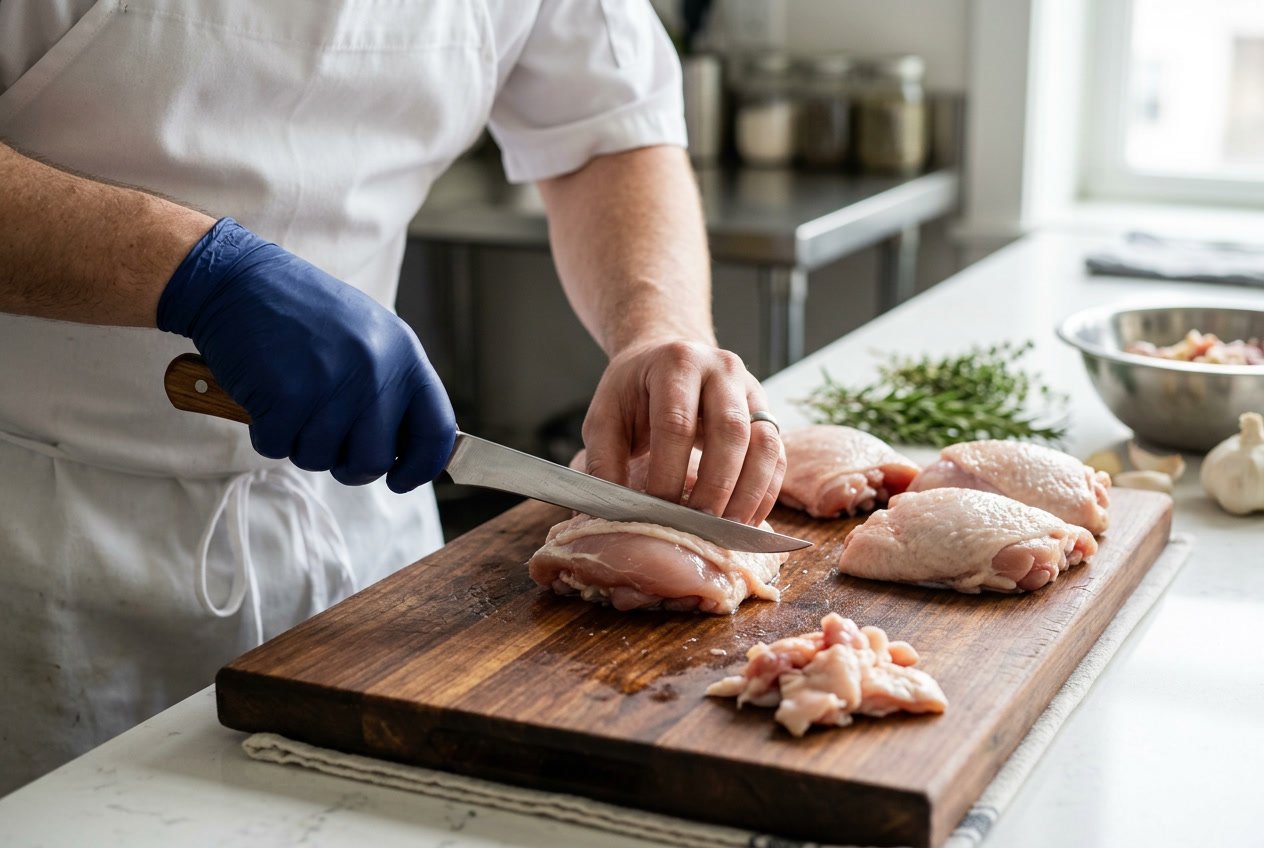
You can use the right tools to make trimming faster. Handle bone-in and boneless thighs differently, and follow simple trimming steps to keep meat tender without losing flavor.
Choose the right trimming level for your recipe and skill level. This helps your next chicken dish turn out the way you want.
Should I Trim Chicken Thighs?
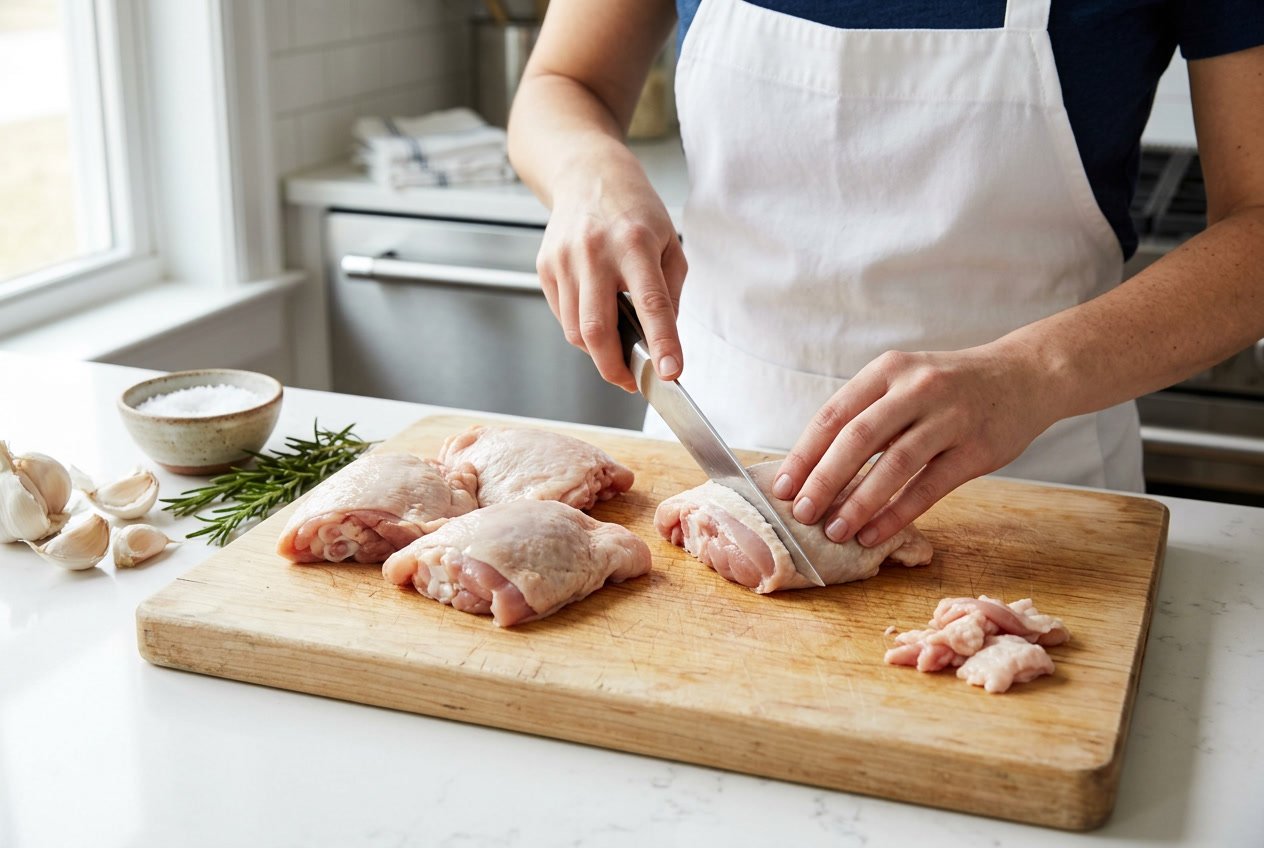
When you trim chicken thighs, you change the fat level, texture, and appearance. Balance your health goals, the recipe’s needs, and the look and cooking of the finished dish.
Personal Preference and Health Considerations
Trim chicken thighs to reduce visible fat and lower calories per serving. Removing large fat flaps and excess skin cuts saturated fat, while leaving some fat preserves moisture and flavor.
If you follow a calorie-controlled or lower-fat diet, trim more. If you prioritize juiciness, leave some fat.
Trimming affects how you season and marinate. Taking off the skin lets marinades penetrate the meat, but skin-on thighs hold seasonings and moisture during high-heat cooking.
Trimming doesn’t change food safety steps. Wash hands, use a clean board, and refrigerate promptly.
Recipe and Cooking Method Impact
Match how you trim to the cooking method. For pan-frying, grilling, or broiling, trim loose skin and excess fat to reduce flare-ups and get crisper skin.
For braising, stewing, or slow cooking, leave more fat and skin to keep meat tender and add richness to the sauce.
Boneless thighs cook faster and benefit from even thickness, so trim and flatten as needed. Many recipes call for skin-on or skinless thighs—follow that guidance for best texture and timing.
If a recipe expects rendered fat, such as confit or roast, keep the fat that adds flavor.
Visual Appeal and Even Cooking
Trim to even out irregular edges and remove tendons for a cleaner presentation. Remove ragged bits and the small triangular fat pocket under the thigh to create uniform pieces that brown and cook consistently.
When appearance matters, temporarily remove the skin, trim and square the meat, then re-drape the skin for a neat finish. This keeps the look of skin-on chicken while removing excess fat that could cause uneven cooking.
Tools Needed for Trimming
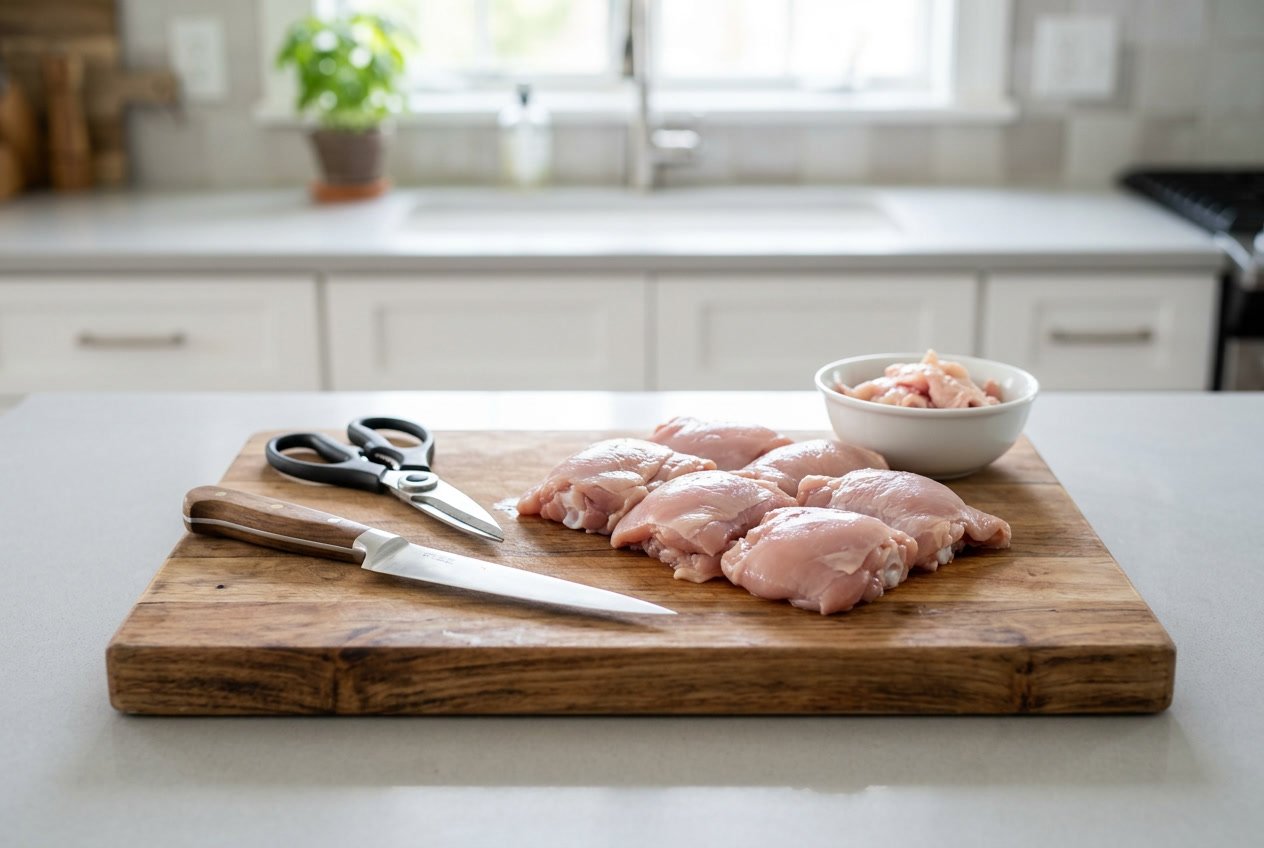
Use a sharp, narrow knife for precise cuts and shears for cutting through small bones and tough connective tissue. A stable cutting board sized to hold several thighs and catch juices makes the work faster and safer.
Boning Knife vs. Kitchen Shears
A boning knife gives you control for removing skin, fat, and cartilage close to the bone. Choose a 5–7 inch blade with a narrow, flexible profile for following curves without tearing meat.
Use short, deliberate strokes and the knife tip for delicate work around joints. Kitchen shears work well for cutting through small bones, thick fat, and snipping away uneven skin edges.
Look for full-tang, stainless-steel shears with a comfortable non-slip handle and a joint that can be taken apart for cleaning. Use shears where a knife would be awkward or might slip.
Start with the boning knife to separate skin and trim fat. Finish tight or awkward spots with shears.
Choosing a Cutting Board
Pick a board large enough to hold multiple thighs without crowding. Plastic or non-porous composite boards work best for raw poultry because they’re easy to sanitize and resist deep grooves.
Keep one board dedicated to raw poultry if possible. Use a damp, non-slip mat or a board with rubber feet to prevent sliding.
Replace boards when knife grooves become deep. Those grooves trap juices and are hard to clean.
Sanitize after use with hot soapy water and an occasional diluted bleach solution or a commercial food-safe sanitizer. Dry completely before storing.
Knife Safety and Maintenance
Always keep your knife sharp. A sharp blade requires less force and reduces slips that cause cuts.
Hone with a steel before each session. Sharpen with a whetstone or guided sharpener when you feel resistance cutting paper or tomatoes.
Store knives in a block, magnetic strip, or blade guard to protect edges and prevent accidents. When trimming, cut away from your body and tuck fingertips under in a claw grip to protect them.
Clean knives and shears immediately after use with hot, soapy water. Avoid the dishwasher for quality blades.
Inspect tools regularly for loose handles, rust, or play in shears’ joints. Repair or replace them to keep trimming safe and efficient.
How to Trim Chicken Thighs
Prepare a clean work area, a sharp boning or chef’s knife, kitchen shears, paper towels, and a plastic cutting board you can sanitize. Work with cold thighs straight from the fridge and keep raw poultry separate from other foods.
Initial Cleaning and Preparation
Pat each thigh dry with paper towels for better control and a cleaner cut. Place the thigh skin-side down on a clean plastic cutting board to expose the underside and any hidden fat pockets.
Wipe your knife and hands between pieces if they get slippery. Keep a small bowl for trimmed waste and discard or wrap it immediately.
Sanitize surfaces and tools after trimming or whenever they touch raw juices. Use separate towels for drying hands and wiping up spills to reduce cross-contamination risk.
Removing Skin and Fat
If your recipe calls for skinless thighs, lift an edge of skin and use the knife tip to separate it from the meat, sliding the blade nearly parallel to the flesh. Work slowly to avoid tearing and to preserve usable skin.
Trim large fat flaps and the small triangular fat pocket on the underside. Cut close but don’t remove all fat—leave a thin layer for flavor and moisture unless you need very lean pieces.
Use kitchen shears for stubborn bits and to snip away excess without overcutting. For skin-on preparations, skim only loose, excessively thick fat and pat the skin dry to promote crisping.
Season under the lifted skin when appropriate for better flavor penetration.
Trimming Connective Tissue and Gristle
Locate tendons, silver skin, and any visible veins along the meat’s edge. Grasp the tendon or silver skin with your non-knife hand and slide the blade under it, angling slightly upward to slice it away.
Remove small pieces of gristle and ragged edges that won’t break down during cooking to improve texture. Use short, controlled strokes and keep the knife blade almost flat against the meat to avoid removing good flesh.
Rinse only if necessary, then re-pat dry. Immediately sanitize the board, knife, and any surfaces that contacted the trimmed bits before you proceed with seasoning or cooking.
Cutting and Portioning Chicken Thighs
Trim excess fat and loose skin. Decide whether you need bone-in or boneless pieces, and choose slice thickness based on the recipe.
Use a sharp boning knife or kitchen shears and keep a clean, stable cutting board.
How to Cut Chicken Thighs for Recipes
Decide the final use first. Stew or braise works best with larger, roughly cubed pieces.
Stir-fry or salads need thin, even slices across the grain. For cubes, press the thigh flat and cut into 1–1.5 inch pieces for even cooking.
For thin slices, pat the meat dry, tilt the knife slightly, and slice against the grain into 1/8–1/4 inch strips to shorten muscle fibers and improve tenderness.
Use a sharp, narrow blade for clean cuts. If the recipe calls for uniform portions, square off ragged edges and trim high fat lobes before portioning.
Deboning Techniques
Locate the thigh bone and the ball joint where it meets the hip socket. Make a shallow cut along the bone, then use the tip of a boning knife to separate meat from bone with short strokes.
For faster work, cut through the joint with kitchen shears or follow the bone to the joint and twist it free with a firm pull.
Leave a thin layer of meat on the bone to prevent waste if you want small intact pieces. For completely boneless, run the knife flat along the bone to scrape meat away, then trim cartilage and any dark connective tissue.
Always check for bone fragments and remove them before cooking.
Best Way to Cut Chicken Thighs
Choose boneless-skinless or bone-in depending on flavor and cooking time. Bone-in holds moisture for roasting; boneless cooks faster and portions cleanly.
Aim for uniform thickness. Use a bench scraper to transfer portions to a tray to maintain order.
When precision matters, partially freeze thighs for 15–25 minutes. Firmer meat slices cleaner and thinner.
Sanitize knives and boards between raw poultry and other foods. Make sure pieces reach 165 °F (74 °C) during cooking.
Tools checklist:
- Sharp boning knife — control and precision
- Kitchen shears — joint cuts and cartilage
- Cutting board with grip — stability
- Thermometer — final doneness verification
Trimming for Boneless vs. Bone-In Thighs
Trim differently based on whether the bone is present. Remove loose fat and connective tissue from boneless pieces for even cooking.
Be precise around the bone to preserve meat and shape for bone-in thighs.
Trimming Boneless Chicken Thighs
Boneless chicken thighs are quick to trim. Lay each thigh flat on a cutting board and use a sharp knife or kitchen shears.
Remove silver skin, large fat pockets, and ragged edges so the piece cooks evenly and won’t spit excessive grease. If a recipe needs uniform thickness, gently pound the thigh to an even ¾–1 inch.
Trimmed boneless thighs brown more consistently in a skillet and absorb marinades more predictably. Keep small amounts of fat for flavor, but remove visible excess for less grease or a crisper crust.
Work quickly and refrigerate trimmed thighs if not cooking immediately.
Preparing Bone-In Chicken Thighs
With bone-in thighs, trim carefully to protect the bone and meat. Start by trimming excess fat caps and loose skin flaps.
Avoid cutting too close to the joint where meat is thinner. Leave a thin layer of fat under the skin if roasting to help baste the meat.
If you plan to debone later, score around the bone and slide the knife along it. For grilling or roasting, score the skin to encourage rendering and reduce shrinkage.
Use kitchen shears for tough tendons and a filleting knife for precise work around the bone.
Trimmed bone-in thighs should keep their shape for even cooking and presentation while minimizing flare-ups and greasy pan drippings.
Cooking with Trimmed or Untrimmed Thighs
Trimmed thighs cook more evenly and reduce flare-ups. Untrimmed thighs keep more fat for juiciness and crisp skin.
Choose trimming level based on cooking method and how much render you want during cooking.
BBQ and Grilling Techniques
On direct high heat, use trimmed thighs to reduce dripping and flare-ups. Trimmed, skinless thighs sear quickly and need oil brushed on to prevent drying.
Cook them over medium-high heat 4–6 minutes per side until 165°F internal temp. For skin-on thighs, leave some fat and grill skin-side down first to render fat and crisp the skin.
Start over medium heat to render, then move to indirect heat to finish. This prevents charred skin and undercooked meat.
If you barbecue with sauce, par-cook the thighs until nearly done, then apply sauce in the last 5–10 minutes to avoid burning. Rest thighs 5 minutes before serving.
Seasoning and Marinades
Put salt and spices under the skin on skin-on thighs to flavor the meat directly. For trimmed thighs, massage marinade into the flesh and marinate 30 minutes to 4 hours.
Acid-heavy marinades longer than 4 hours can change texture. Use a dry rub on skin-on pieces and refrigerate uncovered for an hour to help the skin dry and crisp while cooking.
For BBQ chicken thighs, apply a sugar-based rub sparingly and hold back until the last stage to avoid burning. Apply oil or a binder when using dry spices on trimmed, skinless thighs so the seasoning sticks and forms a good crust.
Recipe Variations by Trimming Method
Trimmed, skinless thighs work best in recipes that demand fast, uniform cooking. Use them in stir-fries, skewers, and pan-seared plates.
They take seasoning quickly and absorb marinades. Choose bold herbs, citrus, or yogurt-based marinades to boost flavor.
Skin-on, lightly trimmed thighs suit roasting, smoking, and classic BBQ chicken thighs. Rendered fat adds moisture in these preparations.
For oven roasting, score excess fat. Roast at 425°F to crisp skin while keeping meat juicy.
If you want both crisp skin and controlled fat, remove large fat pockets but keep the skin. Season under the skin and roast or grill as directed for balanced texture and flavor.


