
Do Chickens Have Thighs? Understanding Anatomy, Cuts, and Cooking
Chickens have thighs. The thigh is the upper part of each leg, attached at the hip and ending at the knee where it meets the drumstick.
The thigh is a distinct, meaty section of the bird with darker, more flavorful meat than the breast. You’ll find it whether you’re looking at a whole chicken or a package of parts.
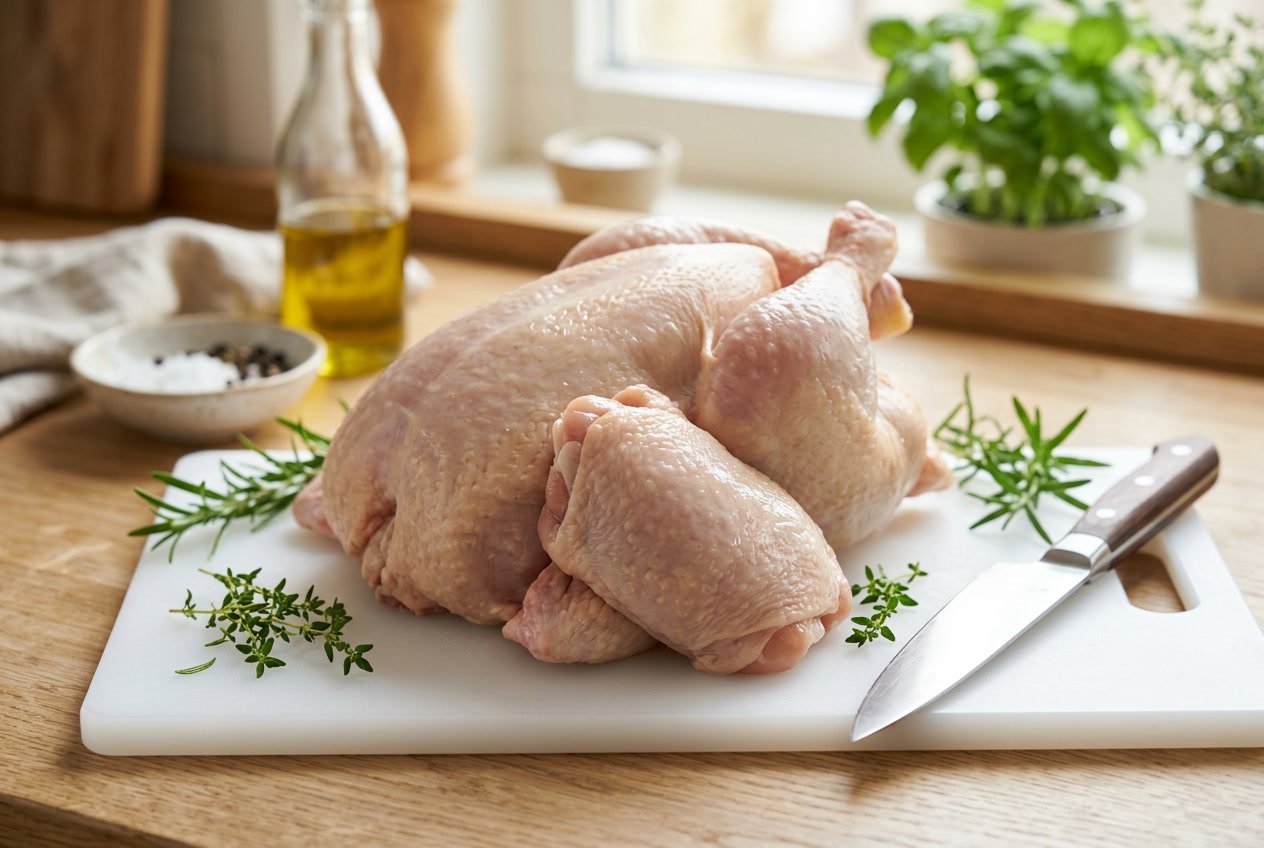
If you’ve ever stared at a whole bird or a butcher’s counter wondering which part is which, this piece will walk you through the anatomy. You’ll learn how thighs differ from drumsticks and breasts, the common types of thigh cuts, and practical cooking uses.
Do Chickens Have Thighs?
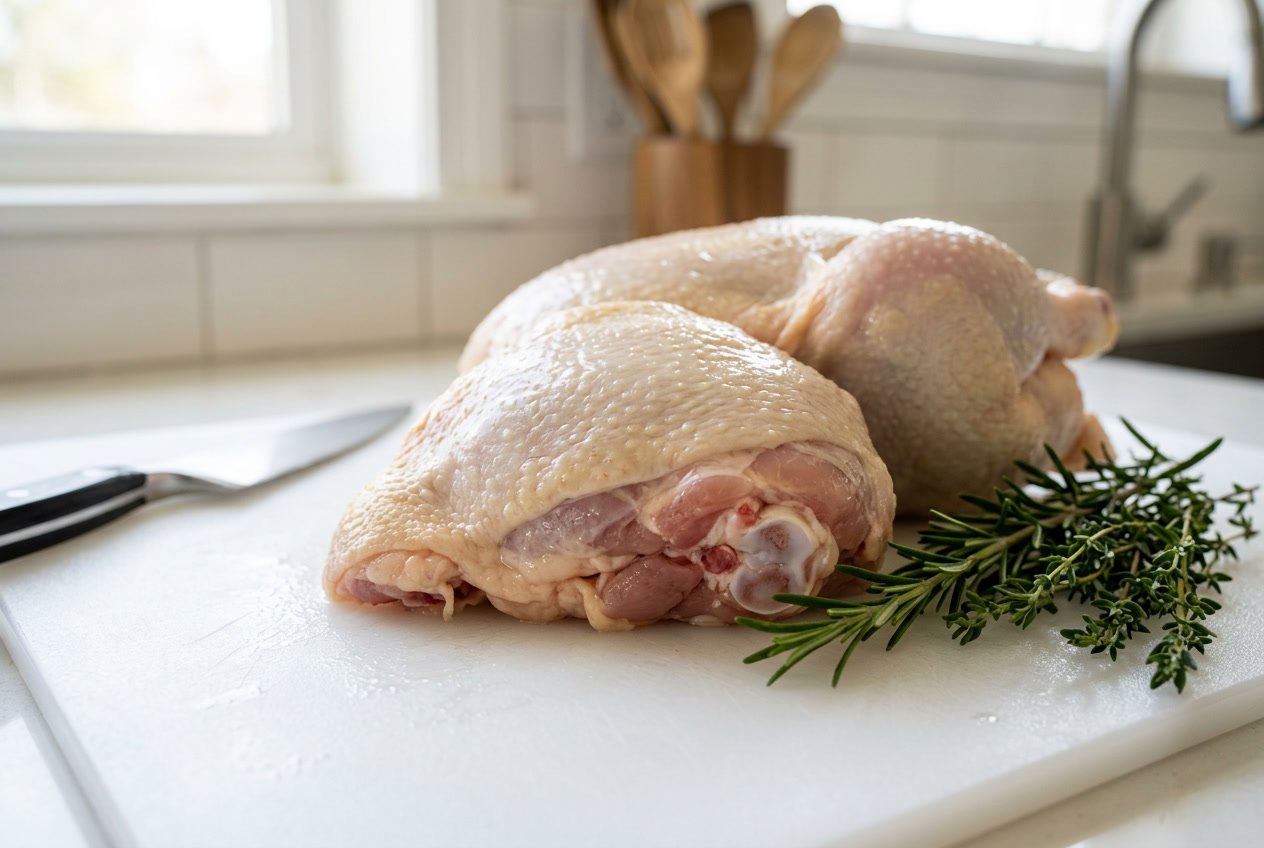
Chickens have a distinct upper-leg region composed of muscle, skin, and bone. That region supports weight-bearing and movement, and butchers call it the thigh.
Definition of a Chicken Thigh
A chicken thigh is the upper portion of the bird’s leg between the body and the drumstick.
It contains dark meat, with muscle fibers that do more sustained work than breast muscle, so thighs have higher fat and connective tissue.
The thigh includes the femur bone, surrounding muscles, blood vessels, nerves, and skin when left intact.
Butchers label thighs as bone-in skin-on, bone-in skinless, or boneless.
Where Thighs Are Located on a Chicken
Imagine the chicken standing: the thigh connects the body cavity to the lower leg.
It sits under the wingline and behind the breast, attaching at the hip joint to the pelvis.
You can see a plump, rounded area between the body and the drumstick on each side.
The femur runs through that area; the thigh muscles anchor to the pelvis and power walking and standing.
Thighs in Hens and Roosters
Both hens and roosters have thighs with the same bones and muscle groups.
Roosters often develop larger, firmer thigh muscles because of greater body mass and activity.
Hens used for egg production may show slimmer thighs compared with meat breeds raised as broilers.
Breed, age, and activity level determine thigh thickness, fat marbling, and flavor more than sex.
Chicken Leg Anatomy
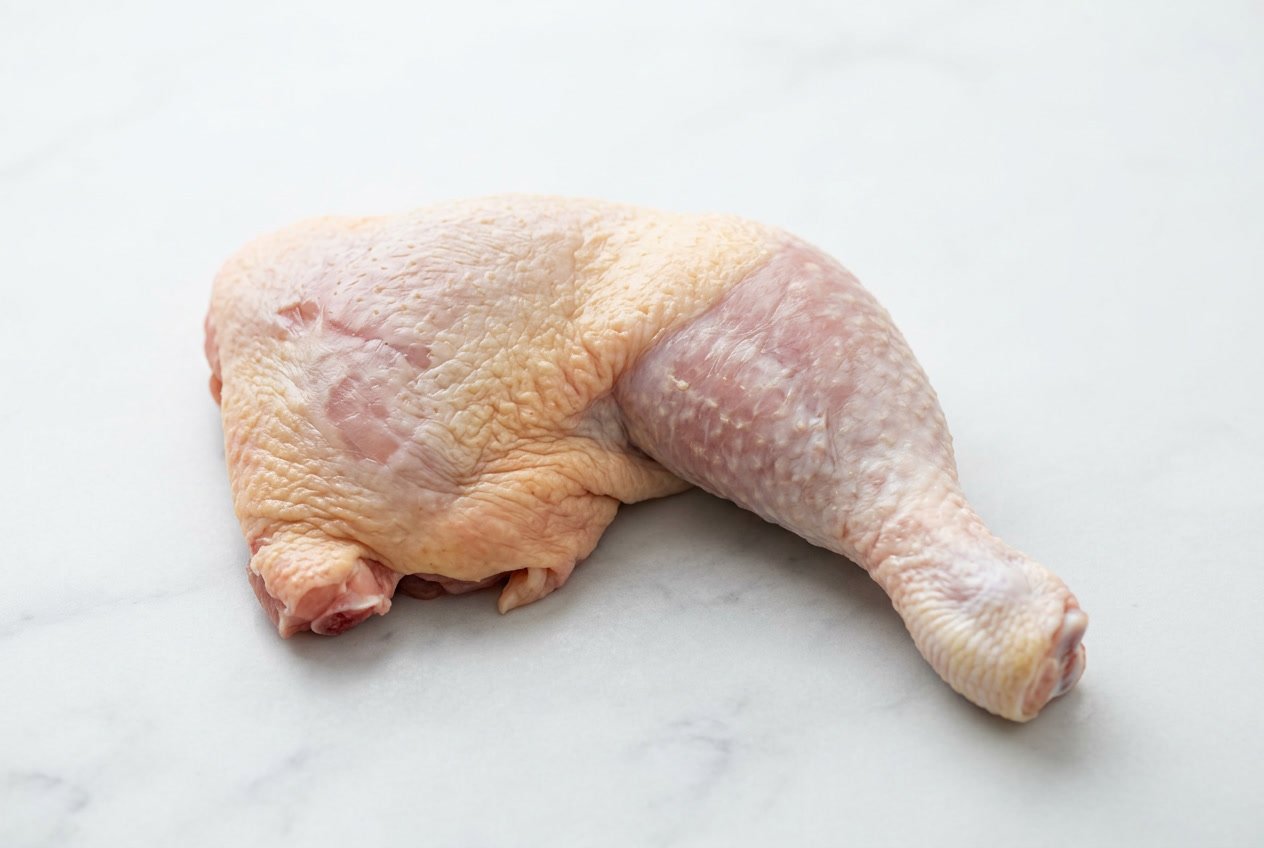
A chicken leg includes the thigh, drumstick, hock, and the bones and muscles inside. Thigh and drumstick differ in location and structure.
Thighs vs. Drumsticks
You’ll find the thigh at the upper portion of the leg, between the body and the knee joint. It’s the darker, fattier meat often sold as a bone-in chicken thigh or skin-on piece in stores.
The drumstick sits below the knee (hock area) and ends where the foot would attach. Drumsticks have a single prominent bone and a higher concentration of connective tissue near the hock.
Thigh meat has broader muscle groups, more fat, and stays moist at higher temperatures.
Drumsticks are denser, with more tendon near the lower end, and have rich flavor from concentrated muscle use.
A whole chicken leg (thigh plus drumstick) often keeps juices better than separated pieces.
You’ll also see features like spurs on males near the thigh and the scaly shank leading to toes if the foot remains attached.
What is a Leg Quarter?
A leg quarter combines the whole chicken leg (thigh and drumstick) with a portion of the adjacent back and skin. It’s a single retail cut used for roasting or grilling that preserves connective tissue and skin, which improves flavor during long cooking.
You’ll often find leg quarters sold bone-in and skin-on. The extra bone mass and surrounding tissues help the piece retain moisture.
Cooks choose leg quarters for value, flavor, and versatility.
When butchering a whole chicken leg from the carcass, you separate at the hip joint for an individual leg or leave the leg attached to create a leg quarter.
Muscles and Bones in the Thigh
The thigh’s primary bone is the femur, which anchors several large muscles that form the bulk of thigh meat. Major muscles include the semimembranosus and biceps femoris equivalents; these generate power for walking and produce the darker, oxygen-rich myoglobin characteristic of thigh meat.
Tendons and fascia wrap those muscles. Near the joints you’ll find denser connective tissue that benefits from slow cooking.
Bones and connective tissues you’ll encounter:
- Femur (main thigh bone) gives the piece its shape.
- Joint cartilage at the hip softens with long cooking.
Oysters and small pockets of oyster meat lie near the back, just above the thigh on the carcass and are prized for flavor.
If you’re trimming or deboning, note where tendons meet bone. Removing the patellar tendon near the knee separates thigh from drumstick cleanly.
Chicken Cuts and Meat Types
You can spot thighs at the store by their shape and labeling. Thighs differ from breasts and wings in flavor, fat content, and cooking needs.
Identifying Chicken Thighs at the Store
Look for the thigh as the upper portion of the leg separated at the hip and knee joints. Packaged thighs are usually labeled “thigh” or shown with a curved bone.
Boneless thighs appear as compact, rectangular pieces while bone-in thighs show a rounded bone and more irregular shape.
Check labeling for skin-on or skinless and for terms like “whole leg” or “leg quarter.” Those include both thigh and drumstick.
For slow cooking and braises, buy bone-in, skin-on thighs.
For quick sautéing or kabobs, pick boneless, skinless thighs or tenderloins.
Dark Meat vs. White Meat
Dark meat comes from parts that do more work, like thighs and drumsticks, so it contains more myoglobin and fat. That extra fat gives thighs richer flavor and greater resilience to long cooking without drying out.
White meat (breast, split breasts, and tenderloins) has less fat and milder taste. It cooks faster and benefits from careful timing or brining to avoid toughness.
Comparison With Chicken Breasts and Wings
Thighs provide richer flavor and higher fat than breasts. Breasts and tenderloins deliver milder taste and leaner protein.
A whole breast or split breast has more surface area and cooks faster than a similar-weight thigh.
Wings (including drumettes) are smaller white-meat pieces often used for appetizers. They crisp well and hold sauces.
Thighs work better in stews, curries, and grilled dishes where sustained heat and fat improve texture. Choose bone-in cuts for deeper flavor and boneless cuts for ease of slicing and faster cooking.
Types of Chicken Thighs
Thighs vary by whether the bone and skin remain. Your choice affects cooking time, flavor, and how you handle the piece before cooking.
Bone-In vs. Boneless Thighs
Bone-in thighs include the femur and connective tissue. The bone adds flavor during long, moist cooking methods like braising or roasting and helps the meat stay juicy.
Expect longer cook times and a different carving or serving routine because you must remove or work around the bone.
Boneless thighs have the bone removed and often come trimmed and ready to cook. They heat more evenly and faster, which suits pan‑searing, grilling, or quick braises.
Boneless pieces also work better when you need uniform cuts for skewers, stir‑fries, or breading.
Skin-On vs. Skinless Thighs
Skin-on thighs give you renderable fat and a crispy exterior when roasted, grilled, or seared. The skin protects the meat from drying and concentrates flavor.
You’ll often get better browning and a richer pan sauce from the drippings. Plan for slightly longer roasting times and higher initial heat to crisp the skin.
Skinless thighs are leaner and lower in surface fat, which shortens cooking time and makes them easier to marinate thoroughly. They suit recipes where you want the sauce or spice rub to contact the meat directly, such as stews, curries, or quick sautés.
Many grocery packages label skinless, boneless thighs as “ready to cook,” which saves you trimming time and speeds meal prep.
Uses and Cooking Methods for Chicken Thighs
Chicken thighs serve as a versatile ingredient that adapts to high-heat searing, long braises, and quick frying. They work well as the main protein, shredded for other dishes, or simmered down to enrich stocks and sauces.
Popular Cooking Methods for Thighs
You can pan-sear, roast, grill, air-fry, braise, or pressure-cook thighs depending on the texture you want.
For crispy skin and caramelized flavor, start skin-side down in a cold cast-iron or heavy skillet, render the fat slowly, then finish in a 400–425°F oven for 20–40 minutes depending on size and whether bones are present.
For fall-apart tenderness, braise in a flavored liquid (stock, wine, or coconut milk) at low heat for 1–2 hours or use a pressure cooker for 10–15 minutes under high pressure.
Air fry at 400°F for roughly 16–28 minutes for faster crispiness without excess oil. Frying produces classic crunchy fried chicken thighs; maintain oil at 350–375°F and avoid overcrowding.
Common Dishes With Chicken Thighs
Thighs appear across global dishes because they hold up to bold sauces and extended cooking. Use boneless thighs in chicken fajitas or chicken parmesan where quick searing and saucing matter.
Bone-in thighs shine in grilled or roasted preparations and in dishes like peri-peri or buffalo-style thighs where charring and a saucy finish are desirable.
Shred slow-braised thighs for tacos, curries, or sandwiches. Use leftover roasted or fried thighs to boost salads or repurpose into chicken fried rice.
Simmer bones after removing meat to make rich poultry stock for soups, stews, and curry bases.
Flavor and Texture Benefits
Thighs have higher fat and connective tissue than breast meat, which gives them deeper flavor and forgiveness against drying. When cooked to 175–185°F for bone-in pieces, collagen breaks down into gelatin and yields silkier, more succulent meat.
Fat under the skin bastes the meat during cooking and helps develop a richer mouthfeel. That same fat lets thighs tolerate high-heat grilling and frying without drying out.
Basic Chicken Anatomy and External Features
A chicken’s external anatomy includes distinct parts you can see and touch, like the thighs and comb, and feather types that reveal sex and breed.
External Parts: Thighs, Hocks, Spurs, and More
The thigh sits between the body and the lower leg (shank); it contains the femur and is covered by contour feathers. When you part the feathers at the leg joint you can feel a thick, muscular area—that is the true thigh, used for walking and standing.
Below the thigh sits the hock, a joint that bends backward and connects to the shank. The shank ends in toes, claws, and sometimes spurs on roosters or older males.
Spurs are bony projections on the back of the shank used for defense and dominance; they vary in size by age and sex.
Other external parts include the comb on top of the head, wattles under the beak, earlobes beside the ears, and eye rings that frame the eyes. Each part has practical roles: heat regulation (comb and wattles), hearing protection (feathers over the ear opening), and species or breed signals (earlobe color).
Differences Between Male and Female Chickens
Males (roosters) generally have larger combs and wattles than females. You can use comb size as a quick indicator of sex, especially after maturity.
Roosters also develop larger, sharper spurs on the shank. Hens may have small or no spurs.
Feather shape helps too. Male hackle feathers (neck) and cape feathers (shoulder region) are pointed and more lustrous.
Females’ hackles and cape feathers are rounded and softer in appearance. Tail differences appear as well.
Roosters grow long, curved sickle feathers in the tail that hens lack.
Breed and age can affect these differences. Some breeds have similar comb sizes between sexes.
Juvenile birds may not show clear sexual traits until several months old.
Feather Types and Combs
You can identify feathers by their categories. Contour feathers cover the body. Flight feathers form wing primaries and secondaries.
Hackle and cape feathers appear on the neck and back. Male chickens have narrow and pointed hackle feathers. Roosters display cape feathers that form a dramatic mantle.
Roosters have long, curved sickle feathers unique to their tails.
Feather condition shows health. Molting often starts near the axial feather between primaries and secondaries.
Comb types differ by breed. You may see single, pea, and rose combs, each with a distinct shape and size.
Comb color and texture, such as soft, warm, and red, reflect circulation and reproductive status. Pale combs can signal illness or stress.


