
Do Chicken Thighs Take Long to Cook? Timing, Methods & Tips
You can usually get chicken thighs on the table quickly. Boneless, skinless pieces often finish in about 25–30 minutes at high heat.
Bone-in, skin-on thighs typically need around 40–45 minutes in the oven. If you aim for 165°F (74°C) you’ll hit the safe minimum, but bone-in thighs become more tender if cooked a bit higher to break down connective tissue.
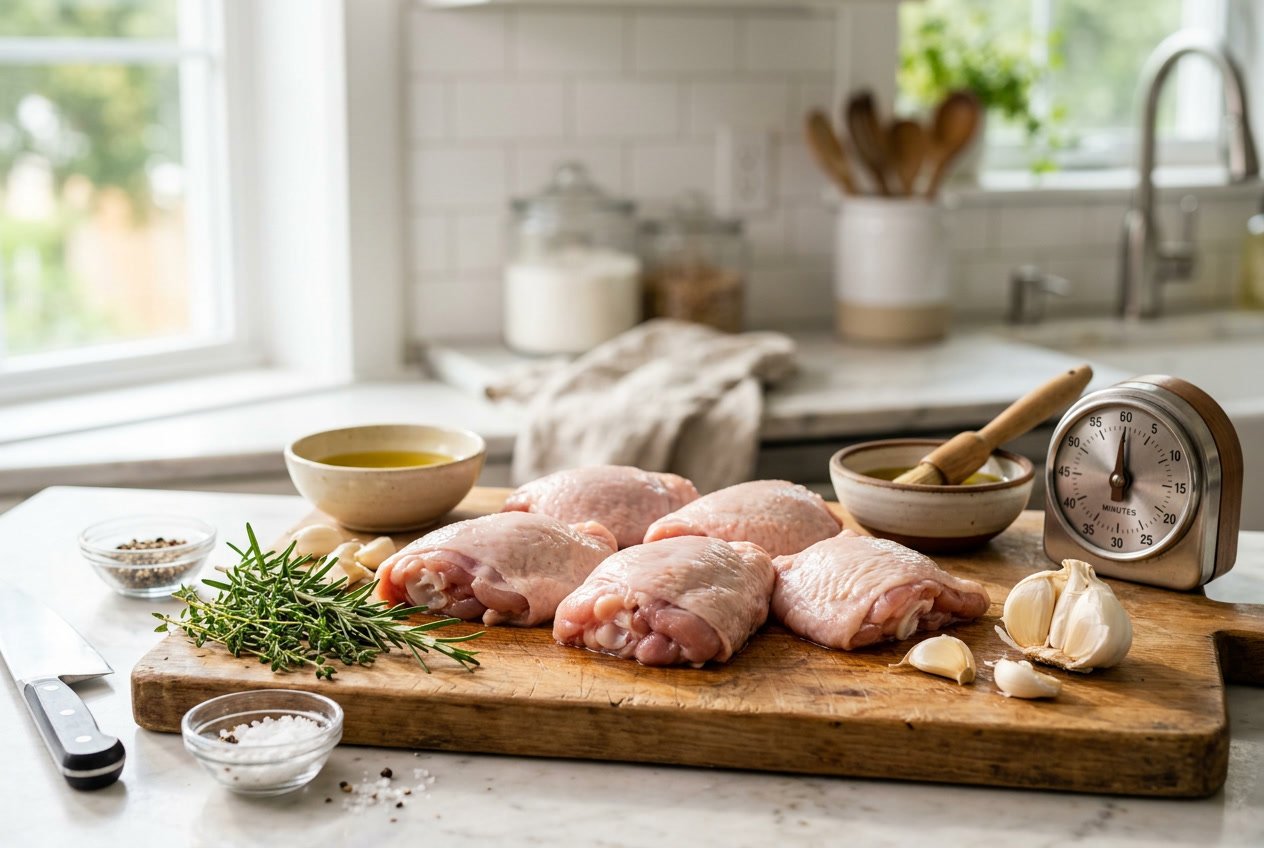
This guide explains how cooking time changes based on bone, skin, oven temperatures, and simple techniques that crisp skin and keep juices in. Use the timing and method tips ahead to pick the fastest or most flavorful route for your meal.
How Long Do Chicken Thighs Take To Cook?
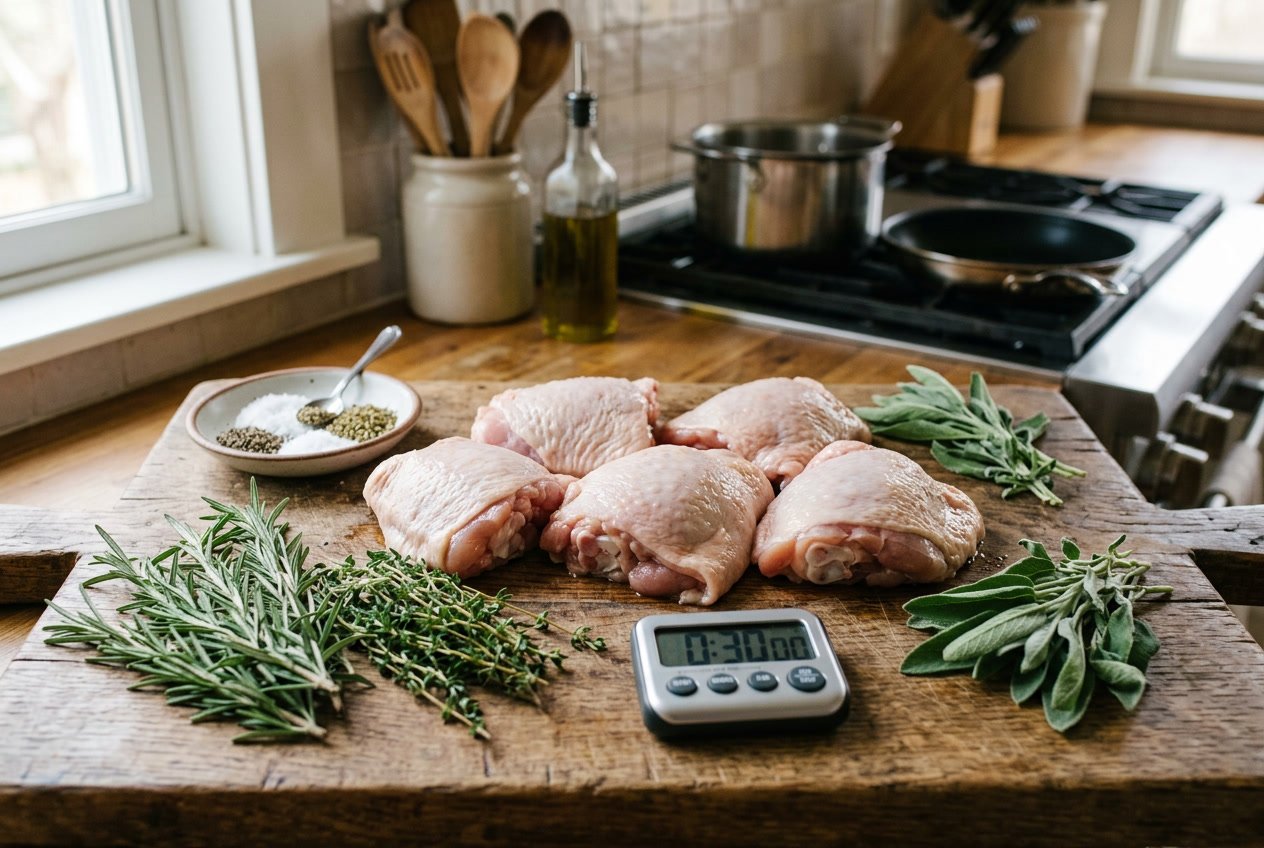
Boneless vs. bone-in thighs and oven temperatures affect cook times. Use an instant-read meat thermometer to check doneness rather than relying just on the clock.
Standard Cooking Times for Chicken Thighs
Bake boneless, skinless thighs (4–6 oz each) at 400–425°F for about 20–30 minutes. At 350°F, plan on 30–40 minutes.
Bone-in, skin-on thighs need more time because the bone slows heat penetration. At 400–425°F they usually take 30–40 minutes, and at 350°F expect 40–50 minutes.
For pan-searing then oven finishing, sear skin-side down 4–6 minutes, flip, then transfer to a 375°F oven for 12–18 minutes for boneless or 20–30 minutes for bone-in. Air fry times are shorter: boneless about 12–18 minutes at 375°F, bone-in about 18–25 minutes.
Let chicken thighs rest 3–5 minutes after cooking so juices redistribute.
Internal Temperature Guidelines
Target 165°F (74°C) using an instant-read meat thermometer in the thickest part of the thigh. For bone-in thighs, keep the probe away from the bone to avoid a falsely high reading.
Insert the thermometer at a slight angle into the center of the meat. You can remove thighs at 160–163°F and let carryover heat reach 165°F during the 3–5 minute rest for more tenderness.
Use thermometer readings for safety rather than relying on cooking time alone.
Signs of Doneness
Visual and tactile checks help when you don’t have a thermometer. Juices should run clear when you pierce the thickest part; pink or bloody juices mean undercooking.
The exterior should be opaque and golden-brown for skin-on thighs. When you press the meat with a fingertip, properly cooked thighs feel springy and yield slightly.
Overcooked thighs feel very firm and dry. If you cut into the thickest spot, the meat should be opaque with no translucent or jelly-like texture.
Combine these cues with a thermometer for best results.
Bone-In vs Boneless Chicken Thighs
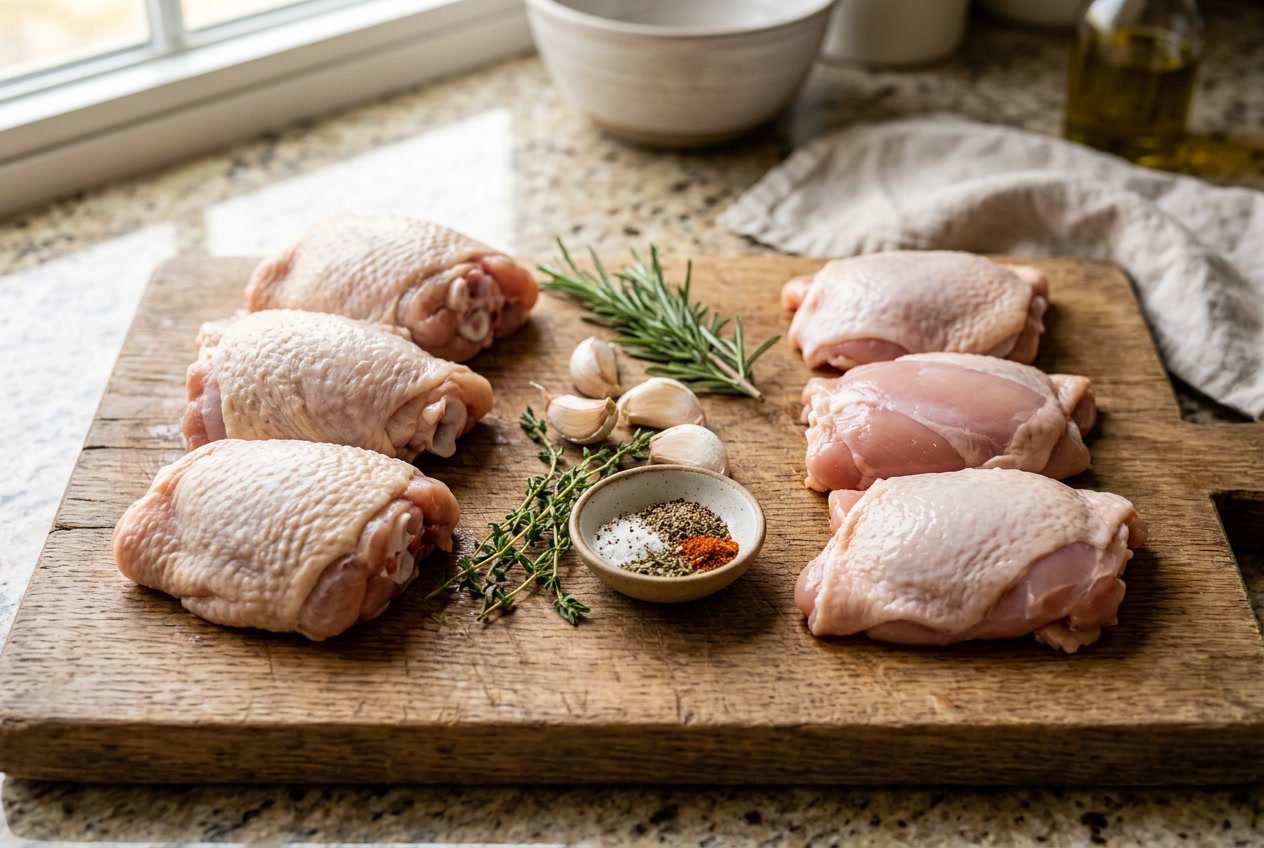
Bone-in thighs take a bit longer to reach safe doneness but offer more moisture and flavor. Boneless thighs cook faster and more evenly, which helps when you want consistent timing or quicker meals.
Cooking Time Differences
Bone-in chicken thighs need extra time because the bone slows heat penetration. Expect roughly 5–10 minutes longer in the oven compared with similar-sized boneless thighs at the same temperature.
At 375°F (190°C) boneless thighs often finish in about 22–30 minutes, while bone-in thighs typically take 35–45 minutes.
Use an instant-read thermometer and target 165°F (74°C) in the thickest part, avoiding the bone. For more tender dark meat, pull bone-in thighs at 175°F (80°C).
When roasting mixed batches, place bone-in pieces on a cooler part of the sheet or start them earlier so everything finishes together.
Texture and Flavor Considerations
The bone and surrounding connective tissue in bone-in thighs release collagen and fat during cooking. This keeps the meat juicier and adds depth of flavor.
Skin-on bone-in pieces develop a crisper, more savory crust when roasted at higher heat. Boneless chicken thighs trim away bone and often skin, reducing cook time but increasing the risk of drying if overcooked.
Boneless thighs work well for quick braises, stir-fries, or recipes where uniform thickness matters. For both convenience and moisture, choose boneless with a short marinade or brine and avoid high, prolonged heat.
Skin-On vs Skinless Chicken Thighs
Skin-on thighs take a bit longer to reach safe internal temperature but offer more flavor and moisture. Skinless thighs cook faster and brown less, making them better for quicker, leaner meals.
Choose skin-on when you want crisp skin and richer taste. Choose skinless when you need shorter cook times or lower fat.
Cooking Time for Skin-On Chicken Thighs
Skin-on, bone-in thighs typically take about 30–40 minutes at 375–425°F (190–220°C) in a conventional oven, depending on size. At higher heat (425°F), expect closer to 25–35 minutes; at 350°F, plan for 40–50 minutes.
Check the thickest part with an instant-read thermometer—165°F (74°C) is the safe target. Avoid touching the bone with the probe on bone-in pieces.
For crisp skin, start skin-side up and roast on a preheated baking sheet or broil for 1–3 minutes at the end. Rest the thighs 5 minutes before slicing so juices redistribute.
Benefits of Skinless Chicken Thighs
Skinless thighs reduce cooking time by roughly 5–15 minutes versus skin-on, especially when boneless. In the oven at 400–425°F, boneless skinless thighs usually finish in about 20–25 minutes.
The absence of skin lowers surface fat and calories, which suits leaner meal plans and quicker weeknight dinners. Because skinless thighs lack a fat barrier, they respond well to marinades and high-heat searing.
Pan-sear 4–6 minutes per side, then finish in the oven if needed. Use an instant-read thermometer to confirm 165°F.
To keep them juicy, brine briefly, add a bit of oil, or remove them as soon as they hit temperature.
Oven-Baked Chicken Thighs: Key Techniques
You can use practical steps to get juicy meat and crisp skin. Oven temperature controls cooking time and texture.
Pat dry, season, use the right pan, and check internal temperature to get reliable results.
How to Bake Chicken Thighs for Best Results
Pat the thighs dry with paper towels to remove surface moisture. Dry skin crisps much better.
Season generously with salt at least 15 minutes before baking or right before roasting. Add black pepper, garlic powder, and smoked paprika for balanced flavor.
Arrange thighs skin-side up on a rimmed baking sheet or oven-safe skillet so air can circulate. Avoid crowding.
For extra crispness, sear skin in a hot skillet for 2–4 minutes before transferring to the oven. Use a wire rack over a baking sheet for maximum airflow under the pieces.
Insert an instant-read thermometer into the thickest part, avoiding bone. Pull boneless thighs at 165°F (74°C). For bone-in, you can cook to 175°F (80°C) for more tender texture.
Let rest 5–10 minutes before serving to redistribute juices.
Recommended Baking Temperatures
Pick your temperature based on texture: 350–375°F (175–190°C) for gentler cooking and even doneness; 400–425°F (205–220°C) for crispier skin and shorter cook times.
Higher heat reduces baking time by 10–15 minutes for bone-in pieces.
Typical ranges:
- Bone-in, skin-on: 35–55 minutes depending on temp and size.
- Boneless, skinless: 20–30 minutes at 375°F.
Place thighs on the middle rack and fully preheat oven to avoid prolonged heat-up time. If skin isn’t crisp enough near the end, broil 1–3 minutes watching carefully.
Use an oven thermometer if your oven runs hot or cold.
Roasting Methods for Chicken Thighs
Roast chicken thighs by controlling oven temperature and time to render fat, break down connective tissue, and get juicy meat. Crisp skin depends on surface dryness, high heat, and finishing technique.
Roasting Temperature and Time
Set your oven between 400°F (205°C) and 425°F (218°C) for a good balance of rendered fat and doneness. Roast bone-in, skin-on thighs 40–45 minutes at 400°F and check with a thermometer in the thickest part away from bone.
Aim for an internal temperature of 165°F (74°C) to meet safety guidelines. For extra-tender, pull-apart texture, let thighs reach 175–200°F (79–93°C).
For boneless, skinless thighs, use 425°F and plan 20–30 minutes depending on thickness. Let thighs rest 5 minutes after roasting to let juices redistribute.
Give multiple pieces space on the pan so heat circulates evenly and cooking time stays predictable.
Achieving Crispy Skin When Roasting
Pat thighs thoroughly with paper towels to dry the skin. Salt at least 15–30 minutes before roasting to draw out moisture and season the meat.
Use a wire rack over a baking sheet so air circulates beneath the thighs and fat renders away from the skin.
Start at high heat (425°F) for 10–15 minutes to jump-start browning, then drop to 400°F to finish. Or roast at 400°F and finish with 2–3 minutes under the broiler, watching closely.
Lightly coat skin with a neutral oil and avoid heavy sugary glazes until the last few minutes to prevent charring.
Tips for Perfectly Cooked Chicken Thighs
Control temperature, manage moisture, and time each step. Use a probe thermometer, keep skin dry for crisping, and let thighs rest before serving.
Importance of Resting After Cooking
Resting lets residual heat finish cooking and redistributes juices so slices stay moist. After you remove thighs from the pan or oven, tent loosely with foil and rest 5–10 minutes for boneless and 10–15 minutes for bone-in pieces.
During rest, carryover cooking can raise internal temperature by 5–10°F (3–6°C). You can remove thighs from heat at about 170–175°F (77–79°C) if you plan to reach a final target near 175–180°F (79–82°C) after resting.
Resting also firms the meat slightly, making it easier to slice without squeezing out juices. For shredded preparations, rest briefly then shred while still warm to preserve moisture.
Marinating and Flavor Enhancements
A simple marinade improves flavor and can mildly tenderize dark meat. Combine acid (1–2 tbsp lemon or vinegar per cup), oil (2–3 tbsp), salt (1 tsp per cup liquid), and aromatics (garlic, thyme, smoked paprika).
Marinate 30 minutes to 8 hours; avoid over-marinating acidic mixes longer than 12 hours to prevent mushy texture.
For dry-brine, sprinkle ½–1 tsp kosher salt per thigh and refrigerate on a rack for 1–24 hours to concentrate flavor and dry the skin for better crisping. Pat dry before cooking.
To finish, sear skin-side down in a hot skillet for 6–8 minutes to render fat, then roast at 400°F (200°C) to finish. Or broil 2–3 minutes at the end to crisp skin.
Baste with pan juices for added gloss and flavor.
Common Mistakes to Avoid
When you cut into thighs to check doneness, you squeeze out juices and dry the meat. Instead, use an instant-read thermometer and insert it into the thickest part, away from the bone.
If you cook skin-on thighs at too low a temperature, the skin will not crisp properly. Start with medium-high heat for a sear. Lower the heat to 375–400°F (190–200°C) if you finish cooking in the oven.
When you overcrowd the pan, you drop the surface temperature and cause steaming. Cook in batches or use a larger skillet so each thigh contacts the surface.
Do not rely on time alone, because thigh size, bone-in versus boneless, and starting temperature (cold or room temp) all change cook times.


