
Do Chicken Thighs Smell: How to Tell Freshness, Spoilage, and Safety
You’ll usually notice a mild, neutral scent from fresh chicken thighs. That slight meaty or fatty smell comes from natural proteins and fat, not spoilage.
If the odor turns sour, ammonia-like, sulfurous, or strongly unpleasant, something’s wrong and you should discard the meat.
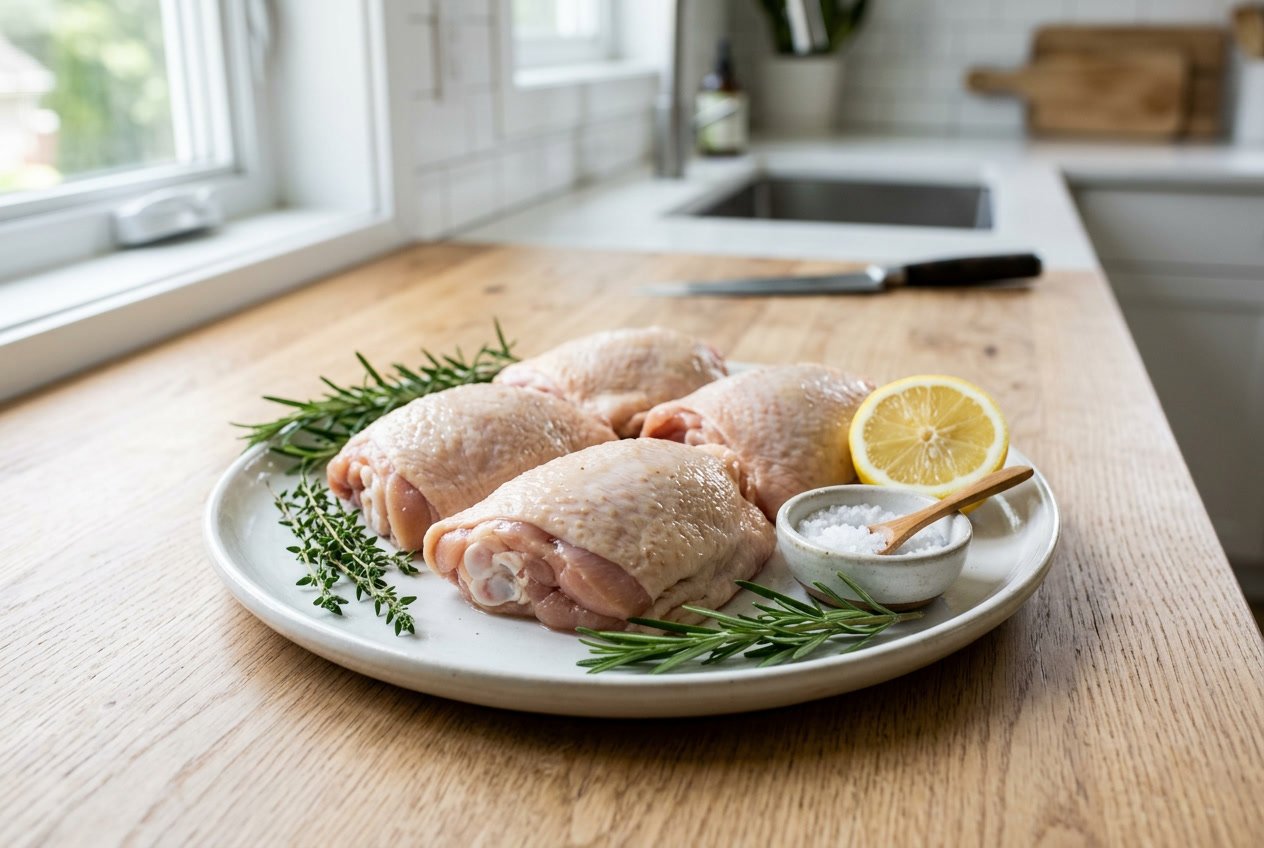
Chicken thighs can smell different from breasts due to their composition. Recognizing which scents are normal and knowing how bacteria change odor helps you keep your chicken safe and tasty.
Why Do Chicken Thighs Smell?
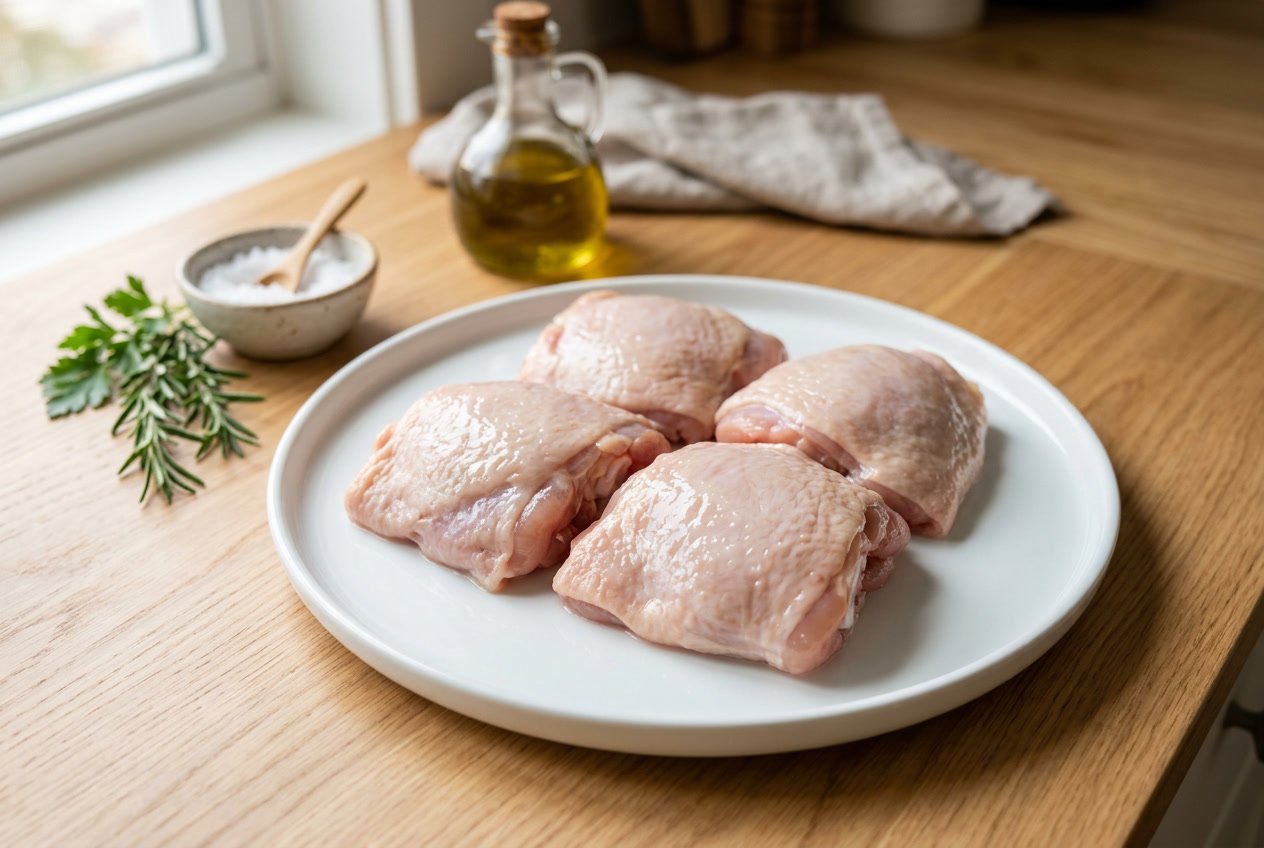
You may notice a distinct scent when you open a pack of chicken thighs. The smell can come from the meat itself, the cut and bones, or the packaging used during sale and storage.
Natural Aromatic Profile of Chicken Thighs
Thighs contain more fat, connective tissue, and myoglobin than breast meat, giving them a deeper, meatier aroma. Sulfur-containing amino acids in the thighs can create a faint eggy or broth-like note.
Blood and bone marrow near the joint add subtle metallic or iron-like tones. As long as the meat looks pink and glossy and the texture feels moist rather than slimy, a mild meaty or slightly eggy smell is normal.
Differences Between Thighs and Other Cuts
Thighs have more fat and connective tissue than breasts, so their aroma is richer and often stronger at room temperature. Dark meat holds onto marrow and residual blood near the bone, producing a different scent profile than white meat.
You’ll often notice a bigger scent difference when cooking or when you open the package. The stronger smell reflects the cut’s composition and higher fat content, not necessarily spoilage.
Role of Packaging and Confinement Odors
Tight supermarket wrapping or vacuum sealing traps gases released by the meat. Hydrogen sulfide and other volatile compounds can build up in the package and hit your nose as a concentrated burst when you open it.
If the smell fades after the thighs sit uncovered for 10–15 minutes, it was likely a confinement odor. If a sulfurous, sour, or rotten-egg scent persists or the meat feels sticky, slimy, or shows dull gray or green color, treat that as spoilage and discard the chicken.
Normal vs. Unusual Chicken Thigh Odors
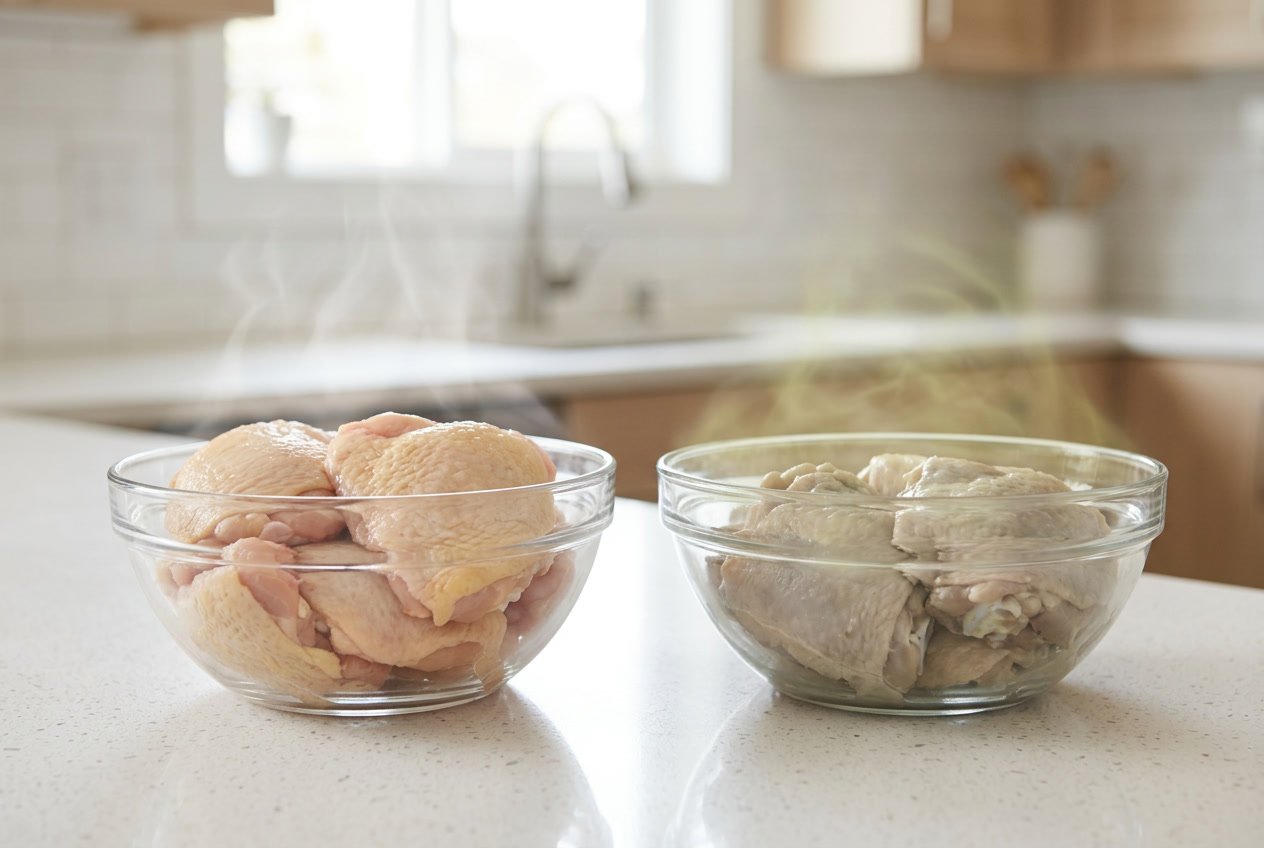
Raw chicken thighs should have a faint, neutral scent. Watch for strong sour, ammonia-like, or sulfurous odors that signal spoilage.
What Fresh Chicken Thighs Should Smell Like
Fresh raw chicken thighs typically give off a mild, slightly meaty or metallic scent. You should not notice sharp, sweet, or chemical notes when you sniff the package.
Store-bought chicken that’s been refrigerated properly often smells almost neutral. If you thaw frozen thighs, let them air briefly because very cold meat can mask a light natural odor until it warms slightly.
If you compare to another fresh protein, the intensity should be similar to fresh pork or beef, just with a poultry character. When the scent feels stronger than that, inspect other attributes.
Understanding Raw Chicken Smell
Raw chicken smell comes from natural proteins, fats, and minimal bacterial activity during storage. Low levels of harmless bacteria can produce a faint aroma, but they do not create sharp, unpleasant gases.
Environmental factors can change that smell. A refrigerator above 40°F (4°C), frequent door opening, or cross-contamination from other foods speed bacterial growth and alter odor.
Packaging also matters. Vacuum-sealed thighs hold a different scent profile than loose-packed pieces.
Combine smell with time in the fridge. Chicken stored more than 1–2 days needs closer inspection. If you notice any rapid change in smell after handling or thawing, discard the meat.
Mild Odors vs. Signs of Spoilage
Mild odors such as slight meaty, faint metallic, or a very light earthy scent are acceptable for fresh chicken thighs. These are normal if other signs like color and texture are also normal.
Spoilage indicators include:
- Sour or ammonia-like odor
- Rotten-egg or sulfur smell
- Strong, putrid, or sharp chemical notes
Pair smell checks with visual and tactile signs. If the meat looks grayish or green-tinged, or feels slimy or sticky, discard it. Strong off-odors can indicate bacteria that produce toxins. When in doubt, throw it out.
Signs of Spoiled Chicken Thighs
Use smell, feel, and sight to decide whether chicken thighs are safe. Strong sulfur or sour odors, slimy texture, and color changes are the clearest red flags.
Sulfur or Rotten Egg Smell
If your chicken thighs give off a sulfuric or rotten-egg odor, throw them out. Bacterial breakdown of proteins and sulfur-containing compounds creates that specific and unpleasant odor.
Smell the meat with the package open and again after you touch it. Persistent sulfur notes after airflow usually indicate spoilage.
Don’t try to mask the odor with cooking. Sulfur smells signal bacteria that can cause foodborne illness.
Sour, Ammonia, or Off Odors
A sharp sour or ammonia-like smell also means the chicken is bad. These odors result from bacterial metabolism and chemical changes as spoilage bacteria multiply.
If the chicken smells tangy, chemical, or generally “off” compared with the faint, slightly sweet or neutral scent of fresh poultry, discard it.
Texture, Color, and Other Spoilage Indicators
Fresh raw thighs feel moist but not slippery. A slimy, sticky, or tacky surface indicates bacterial growth.
Healthy raw thighs are pale pink with white fat. Gray, greenish, or dull brown tones point to spoilage.
Inspect packaging for swelling or excess liquid. Bloating or cloudy juices suggest gas-producing bacteria or leakage.
Visible mold, fuzzy spots, or an unusual film mean the meat is unsafe. If multiple signs appear together, discard the chicken.
Bacteria and Food Safety Risks
Bacterial growth changes smell, texture, and color. Certain pathogens on raw chicken thighs can cause serious illness.
Common Bacteria Linked to Chicken Spoilage
Spoilage bacteria such as Pseudomonas, Brochothrix, and some Enterobacteriaceae grow on raw chicken thighs and produce volatile compounds that create off-odors. These microbes prefer cool, moist environments and multiply when refrigeration is too warm or packaging is compromised.
Spoilage bacteria usually make the meat slimy, grayish, or ammonia-like in smell. Their byproducts indicate the meat’s quality has degraded.
Check for:
- Appearance: gray or greenish tint
- Texture: sticky or slimy surface
- Smell: sour, ammonia, or sulfur notes
If you detect any of these signs, discard the chicken.
Campylobacter and Salmonella Concerns
Campylobacter and Salmonella often contaminate raw chicken thighs and can cause gastroenteritis if ingested. These pathogens may be present without obvious spoilage signs, so smell alone cannot guarantee safety.
Symptoms include diarrhea, fever, and abdominal pain. Vulnerable people face higher risk of severe illness.
Cook chicken to an internal temperature of 165°F (74°C) to kill these bacteria. Prevent cross-contamination by using separate cutting boards and washing hands and surfaces after contact with raw chicken thighs.
Raw Chicken Handling Guidelines
Store raw chicken thighs at or below 40°F (4°C) and use within 1–2 days, or freeze for longer storage. Thaw frozen chicken in the refrigerator, in cold water changed every 30 minutes, or in the microwave.
When preparing chicken:
- Keep raw chicken and its juices away from salads, fruits, and cooked foods.
- Wash hands for 20 seconds after touching raw poultry.
- Sanitize utensils, cutting boards, and counters with hot, soapy water or a mild bleach solution (1 tablespoon bleach per gallon of water).
If a package leaks or the chicken gives off a strong sour, ammonia-like, or rotten-egg smell, discard it in a sealed bag.
Storage, Freezing, and Freezer Burn
Store raw chicken thighs cold, wrapped tightly, and use or freeze within the recommended timeframes to avoid odor and texture changes. Proper packaging and controlled freezing slow quality loss.
Proper Storage Practices for Chicken Thighs
Keep raw chicken thighs in their original store packaging only if you’ll use them within 24–48 hours. For longer refrigeration, transfer thighs to an airtight container or resealable bag with excess air pressed out.
Label packages with the date and place them on the bottom shelf of the refrigerator at 40°F (4°C) or below. Store cooked thighs in shallow, sealed containers and eat within 3–4 days.
If you freeze, use vacuum-seal bags or heavy-duty freezer bags and remove as much air as possible. Freeze single layers flat so pieces freeze quickly and thaw evenly.
Write the freeze date on each package.
How Freezing Affects Odor and Quality
Freezing halts bacterial growth but does not stop chemical changes like oxidation that can produce off-odors over time. Chicken thighs retain best quality for about 6–9 months.
Rapid freezing forms smaller ice crystals and preserves texture better. Slow freezing creates large crystals that rupture cells, causing a mushy texture and stronger odor after thawing.
Thaw in the refrigerator or under cold running water to limit temperature abuse and odor development. Cook thawed thighs to 165°F (74°C) to ensure safety.
If a thawed thigh smells strongly sour, putrid, or otherwise unpleasant, discard it.
Recognizing and Handling Freezer Burn
Freezer burn appears as dry, grayish-brown patches on meat surfaces where air contacted the flesh. It changes texture and flavor, producing dry, cardboard-like or stale odors that may be unpleasant when cooked.
To minimize freezer burn:
- Use vacuum sealing or double-wrap with plastic wrap plus foil.
- Keep freezer temperature at 0°F (-18°C) and avoid frequent temperature swings.
- Store for the shortest practical time and rotate older packages forward.
If freezer-burned areas are small, trim them away after thawing and use the remaining thigh in stews or heavily sauced dishes. If the entire piece shows severe discoloration and off-odors, discard it.
What to Do If Chicken Thighs Smell
If chicken thighs give off an unusual odor, act promptly. Check the smell, look for texture and color changes, and decide whether to keep or discard.
Assessing Smell and Deciding on Safety
Smell the chicken briefly once you remove the packaging. Fresh thighs have a mild, raw-meat scent.
Sour, ammonia-like, or sulfurous odors indicate bacterial activity and spoilage. Inspect texture and color after smelling.
Sliminess, sticky film, grayish or greenish tints, or any odd discoloration combined with a bad smell means you should not eat the meat.
If the smell is faint and the thighs look normal, consider other factors like purchase date, refrigerator temperature, and how long they’ve been stored. When in doubt, discard the chicken.
Eliminating Mild Odors vs. Discarding
If you notice very mild, non-offensive odors from packaging or brief exposure to other foods, rinse the thighs under cold running water and pat them dry with paper towels.
Store them in an airtight container and use within 24 hours or freeze immediately.
Do not try to cover up a sour or ammonia-like smell with marinades, spices, or strong sauces.
Covering up odors does not remove bacteria or toxins.
Throw away any thighs that feel slimy, have a strong odor, look discolored, or have been refrigerated for more than 1–2 days.
Use this simple checklist:
- Keep: mild neutral scent, normal color, firm texture, stored for 48 hours or less.
- Clean and use soon: faint packaging odor, normal appearance.
- Discard: strong sour, ammonia, or sulfur smell; slimy texture; gray or green tint; or unknown storage history.
When to Trust Your Senses
Trust your nose and touch as primary safety tools. You can detect volatile compounds produced by spoilage bacteria long before some lab tests would.
A clearly off smell signals you should throw the chicken away. If you hesitate, lean toward safety.
Discard questionable chicken to avoid the risk of foodborne illness like salmonella or campylobacter. Document storage details such as purchase date and fridge temperature to reduce future uncertainty.
If you need to confirm, consult local food safety guidance or use a thermometer. Keep fresh raw chicken at or below 40°F (4°C) and cook it to 165°F (74°C).
Correct cooking does not neutralize all bacterial toxins. Do not rely on cooking to fix spoiled chicken.


