
Do Chicken Thighs Shred? Complete Guide for Juicy, Pulled Chicken
You can shred chicken thighs easily because their higher fat and connective tissue break down during cooking. This gives you tender, juicy meat that pulls apart with minimal effort.
If you cook thighs using gentle, moist methods or finish them until the internal collagen softens, you’ll get shred-ready chicken every time.
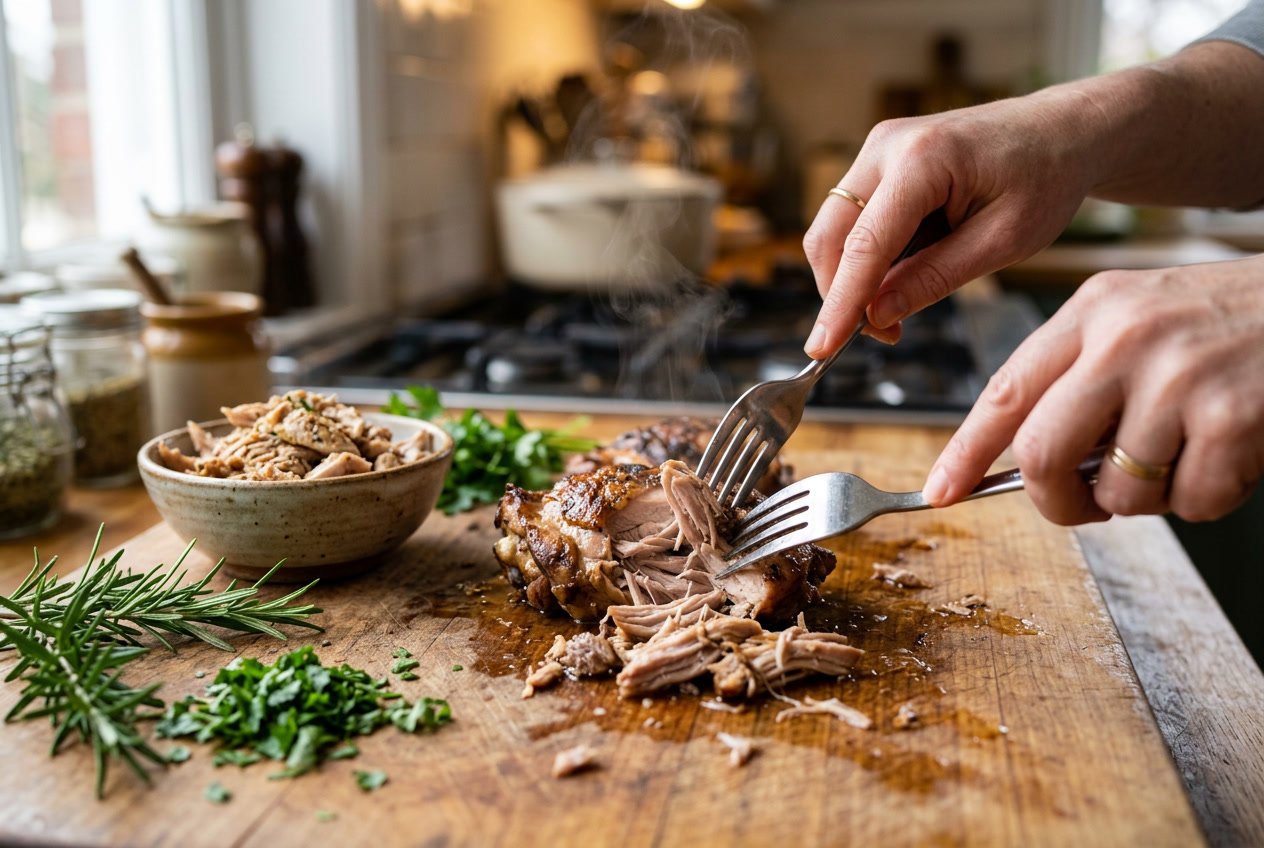
This post explains why thighs work better than lean cuts and which cooking methods make shredding simplest. You’ll also find tips for pulling the meat apart and using shredded thighs in tacos, salads, soups, and more.
Why Chicken Thighs Shred Easily
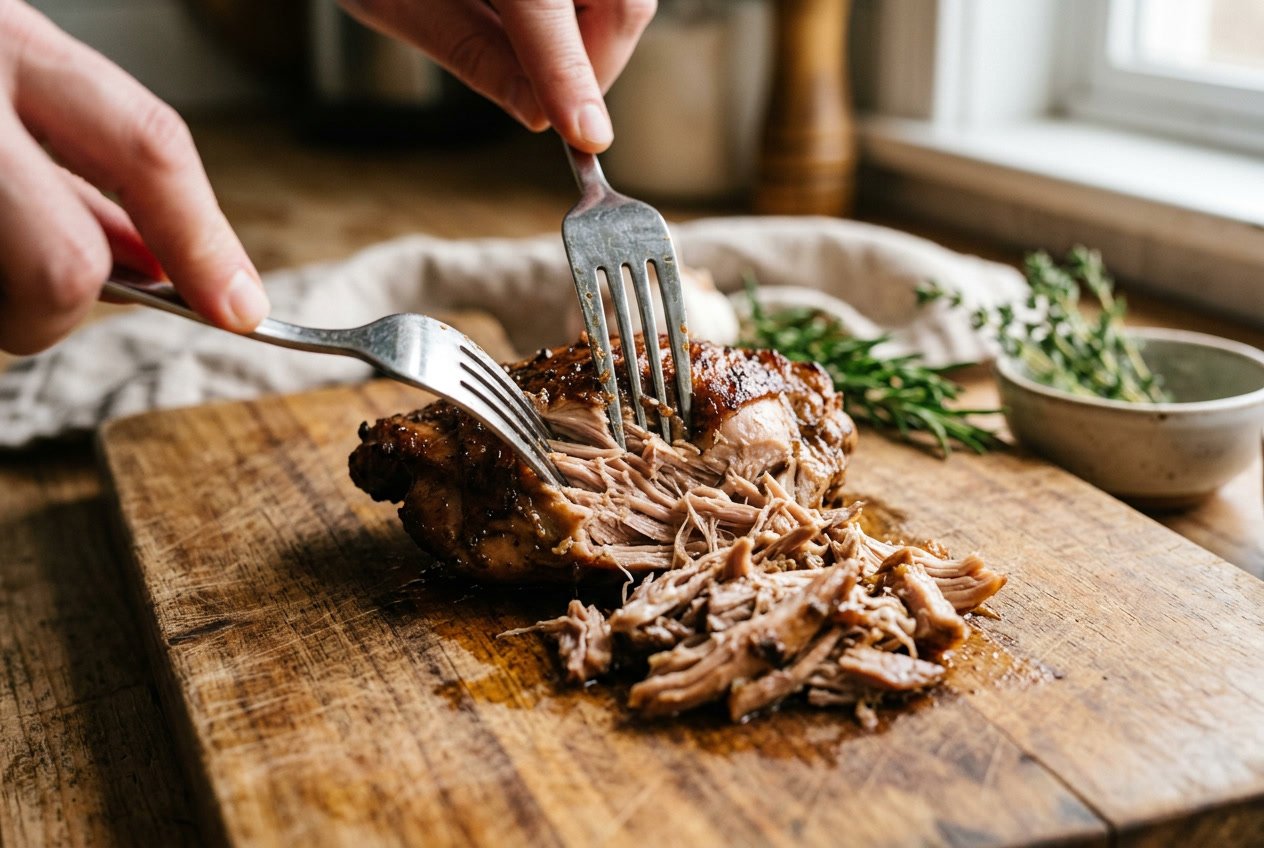
Chicken thighs contain more intramuscular fat and connective tissue than breast meat. This combination lets fibers separate during slow, moist cooking and keeps the meat juicy when you pull it apart.
Fat Content and Collagen Breakdown
Thighs have higher fat than breasts, which melts during cooking and lubricates the muscle fibers. As collagen in the connective tissue converts to gelatin at temperatures above about 160–170°F (70–77°C), the tissue softens and the muscle separates naturally.
That gelatin adds moisture to shredded chicken thighs, so your finished meat tastes richer and resists drying when mixed into sauces or salads. Poaching, braising, or slow-cooking thighs with low heat maximizes collagen breakdown and produces shreddable chicken.
Bone-In vs. Boneless Thighs
Bone-in chicken thighs add extra flavor because marrow and nearby connective tissue release taste during cooking. Remove bones after cooking, as the meat comes off easily once collagen has softened.
Boneless chicken thighs skip the deboning step and shred faster in a stand mixer or with two forks. Choose bone-in for deeper flavor and boneless for speed and convenience.
Texture and Juiciness Compared to Other Cuts
Chicken thighs maintain moisture better than chicken breasts when shredded. Breasts are leaner and dry out if cooked to the same shredding temperature.
The final texture of shredded chicken thighs is looser and silkier because of the gelatin and fat. That texture blends well into tacos, sandwiches, and soups where you want visible strands that stay moist.
Best Cooking Methods for Shredding Chicken Thighs
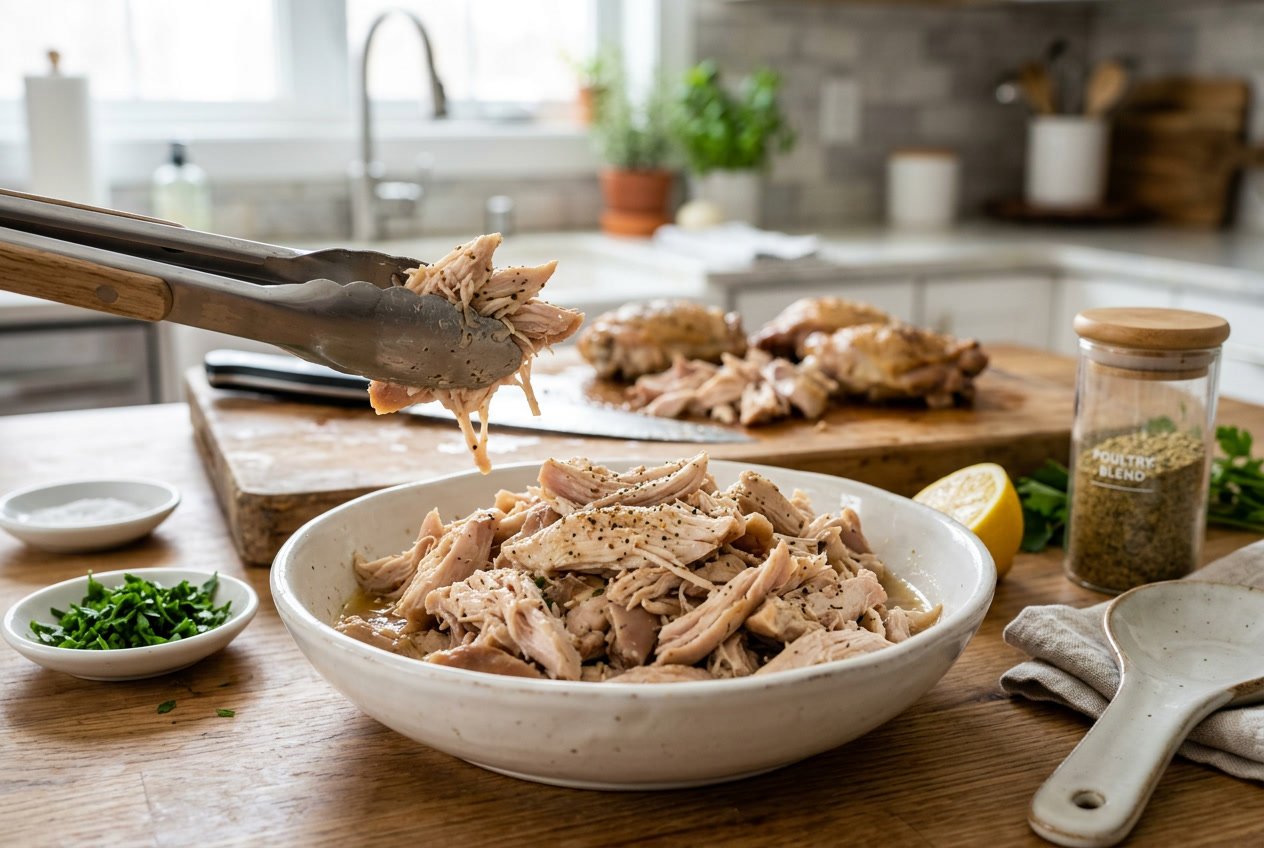
Choose a cooking method that builds moisture and breaks down connective tissue without drying the meat. This helps you get tender, easily shredded thighs that stay juicy and flavorful.
Slow Cooking and Braising
Slow cooking and braising turn thighs into pull-apart, shredded chicken by breaking down collagen over low heat. Use bone-in or boneless thighs; bone-in adds flavor but remove bones after cooking.
Add 1 cup of broth or sauce per 2 pounds of thighs to keep the environment moist. Set a slow cooker to low for 4–6 hours or high for 2.5–3.5 hours, or braise in a covered Dutch oven at 300°F (150°C) for 1.5–2 hours.
Check for an internal temperature around 185–195°F for very tender, pull-apart meat. After cooking, let the meat rest 5–10 minutes, then shred with two forks or a stand mixer on low.
Reserve 1/4–1/2 cup cooking liquid per pound to mix back into shredded chicken for moisture.
Poaching Techniques
Poaching gives you moist chicken ideal for salads and tacos. Place boneless, skinless thighs in a saucepan and cover with cold water or broth by about 1–2 inches.
Season the liquid with salt, peppercorns, smashed garlic, and a bay leaf for added flavor. Bring to a gentle simmer, then reduce heat, cover, and simmer for 10–15 minutes depending on thickness.
Target 165°F for safe doneness, then remove and let rest 5–10 minutes. Use the poaching liquid to moisten the shredded chicken or reduce it into a sauce.
Oven Baking and Roasting
Oven methods give you convenience and concentrated flavor. Preheat to 375°F (190°C).
Season thighs with salt, pepper, and spices or a dry rub. Add 1/2–3/4 cup broth or glaze to the baking dish to maintain humidity.
Bake bone-in, skin-on thighs 25–35 minutes; boneless, skinless may take 20–30 minutes. Tent foil over the dish for part of the cook if you want extra moist pulled chicken, then uncover to allow browning.
Aim for 165°F, then let rest 5–10 minutes before shredding. After shredding, mix in pan juices or a splash of broth to restore moisture and flavor.
How to Shred Chicken Thighs
You need to know when the meat is ready, how to pull it apart cleanly, and which tools to use. Follow temperature targets and use simple hand or tool-based techniques for consistent, juicy shreds.
Temperature and Resting Guidelines
Cook thighs to an internal temperature of 165°F (74°C) measured with a meat thermometer. Avoid touching the bone with the probe on bone-in thighs.
After removing thighs from heat, rest them 5–10 minutes. Resting lets juices redistribute so the meat shreds without running dry.
If you plan to shred warm, keep them covered loosely with foil during the rest. For cold shredding, refrigerate until firm, then shred and add a splash of broth for moisture.
Shred Chicken By Hand
Use two forks or your fingers for control. Hold the thigh steady with one fork or your hand, then pull the meat apart with the other fork in long, even strokes.
Work along the grain for uniform strands. If the meat is hot, use tongs and a fork to avoid burns.
For bone-in thighs, pull the meat off the bone first, then shred on a cutting board. Add 1–2 tablespoons of reserved cooking liquid or broth to the shredded meat if it looks dry.
Using Mixers or Tools to Shred
A stand mixer with the paddle attachment shreds cooked thighs quickly. Place warm, boneless thighs in the bowl, use low speed, and stop after 15–30 seconds to check texture.
Hand mixers work similarly. Hold the bowl steady and use low speed to avoid splatter.
Avoid using electric shredders on bone-in meat. You can also use a food processor with short pulses for coarse shredding, but this can turn the meat into a paste.
Strain off excess liquid first and add back 1–3 tablespoons of warm broth while mixing to keep shreds moist and separate.
Tips for Perfect Juicy Shredded Chicken Thighs
Focus on bold seasoning, keeping meat moist during and after shredding, and gentle handling. These practices ensure chicken thighs stay tender and flavorful in tacos, salads, or sandwiches.
Seasoning for Maximum Flavor
Season thighs before cooking and adjust after shredding. Use 1–2 teaspoons kosher salt per pound and 1 teaspoon black pepper as a baseline.
Add 1 teaspoon smoked paprika, 1/2 teaspoon garlic powder, and 1/2 teaspoon onion powder for a balanced savory profile. For Mexican-style dishes, swap smoked paprika for 1 teaspoon ground cumin and include 1/2 teaspoon chili powder.
If you brine, dissolve 1/4 cup kosher salt and 1/4 cup sugar in 4 cups water and brine boneless skinless chicken thighs for 30–60 minutes. For wet marinades, include 1–2 tablespoons acid and 2 tablespoons oil for flavor penetration.
After shredding, taste and toss with a small splash of reserved cooking liquid or a finishing sauce to reinforce seasoning.
Adding Moisture to Shredded Chicken
Keep shredded chicken thighs moist by adding liquid and storing correctly. Reserve 1/4–1/2 cup of cooking broth per pound of shredded chicken and toss gently into the meat right after shredding.
Use low-sodium chicken broth, pan juices, or a mix of 1 tablespoon melted butter per cup of broth for richness. When reheating, warm covered in a skillet on low with a tablespoon or two of broth to prevent drying.
For storage, pack shredded chicken in airtight containers and pour a thin layer of broth over the top. Refrigerate up to 4 days or freeze in portioned bags with 1–2 tablespoons of liquid per cup of chicken.
Avoiding Dry or Stringy Meat
Handle thighs gently and stop shredding as soon as you reach the desired texture. Shred while meat is warm but not scalding; warmth makes fibers separate cleanly.
Use two forks, a hand mixer on low, or a stand mixer with the paddle attachment in short bursts. Check frequently to avoid over-processing.
Cook thighs to an internal temperature of 165°F (74°C) and avoid prolonged high heat after that point. Remove meat promptly when tender and shred immediately.
Remove skin before shredding to prevent chewy pieces in the final dish.
Storing and Freezing Shredded Chicken Thighs
Store shredded chicken thighs so they stay safe, moist, and easy to reheat. Proper refrigeration limits bacterial growth, and correct freezing preserves texture and flavor.
Refrigeration and Shelf Life
Cool shredded chicken thighs to room temperature, then refrigerate within two hours. Use airtight containers or heavy-duty zip-top bags and press out excess air.
Label each container with the date and portion size. Cooked shredded chicken keeps 3–4 days in the fridge when stored properly.
Keep fridge temperature at or below 40°F (4°C). Store shredded chicken on a middle shelf away from raw foods.
How to Freeze Shredded Chicken
Divide cooled shredded chicken thighs into meal-sized portions before freezing. Use vacuum sealing or heavy-duty freezer bags and remove as much air as possible.
You can freeze plain shredded chicken or mix it with a few tablespoons of broth to retain juiciness. If you add broth, use within about 2 months; plain shredded chicken can keep up to 3 months at 0°F (-18°C).
Lay flat in bags for quick, even freezing. Label each package with contents and freeze date.
Thaw in the refrigerator overnight for best texture, or add directly to soups, casseroles, or skillet dishes from frozen if the recipe allows.
Reheating Tips
Reheat thawed shredded chicken thighs until internal temperature reaches 165°F (74°C). Use a skillet with a splash of broth or sauce to keep the meat moist and heat gently.
If reheating from frozen, simmer in a covered pan with liquid or bake covered at 350°F (175°C) until heated through. Microwave in short bursts, stirring between intervals, and cover to trap steam.
Only reheat the portion you plan to eat. Discard leftovers that have been reheated once.
Popular Recipes and Uses for Shredded Chicken Thighs
Shredded chicken thighs add rich flavor and moist texture to tacos, dips, sandwiches, soups, salads, and casseroles. Use them as a ready protein to speed weeknight meals and adjust seasonings for different cuisines.
Chicken Tacos and Burritos
Shredded thighs work well in tacos and burritos because the meat stays tender and oily enough to carry bold sauces and salsas.
Heat the shredded chicken in a skillet with a splash of chicken broth or oil. Toss the chicken with taco seasoning, adobo, or a smoky chipotle sauce so each strand picks up flavor without drying out.
Top warm corn or flour tortillas with the chicken, diced onion, cilantro, lime juice, and crumbled queso fresco for tacos.
For burritos, combine chicken with rice, black beans, shredded cheese, and a spoonful of salsa before wrapping tightly.
You can also roll the chicken into tortillas for enchiladas, cover with enchilada sauce and cheese, and bake until bubbly.
Buffalo Chicken Dip
Buffalo chicken dip uses shredded thighs’ natural juiciness and holds up better than white meat in a creamy, spicy dip.
Mix warm shredded chicken with cream cheese, sour cream or Greek yogurt, hot sauce, and shredded cheddar or Monterey Jack.
Bake until bubbling and finish with a sprinkle of blue cheese or chopped green onions.
Serve with celery sticks, tortilla chips, or toasted baguette slices.
Pulled Chicken Sandwiches
Pulled chicken sandwiches use shredded thighs in place of pork for a faster, leaner option.
Simmer the shredded chicken briefly in barbecue sauce. Choose a vinegar-based sauce for tangy sandwiches or a molasses-style sauce for sweeter profiles.
Pile the sauced chicken on toasted brioche or potato rolls, and add pickles, coleslaw, or sliced red onion.
For oven-baked sliders, layer chicken and extra sauce on small rolls, top with cheese, and bake until warmed through.
You can freeze shredded thigh meat in sauce and reheat it for sandwiches on busy days.
Soups, Salads, and Casseroles
Shredded chicken thighs add concentrated flavor and tender texture to soups, salads, and casseroles.
Stir shredded chicken into chicken noodle or tortilla soup near the end of cooking so it warms through without overcooking.
For salads, toss chilled shredded thighs with a light dressing, chopped herbs, and crunchy vegetables for a protein-rich lunch.
Combine shredded thighs with cooked pasta or rice, a creamy binder, vegetables, and cheese for casseroles, then bake until set.
Chicken thighs resist drying, making them ideal for dishes that require reheating or long bake times.


