
Do Chicken Thighs Need to Rest? Essential Tips for Juicier Meat
You want juicy, evenly cooked chicken thighs without losing heat or crisp skin. For most dry-heat methods like roasting, grilling, or pan-searing, a short rest of about 3–10 minutes improves juiciness and allows carryover cooking to finish. Braised or sauced thighs often don’t need resting.
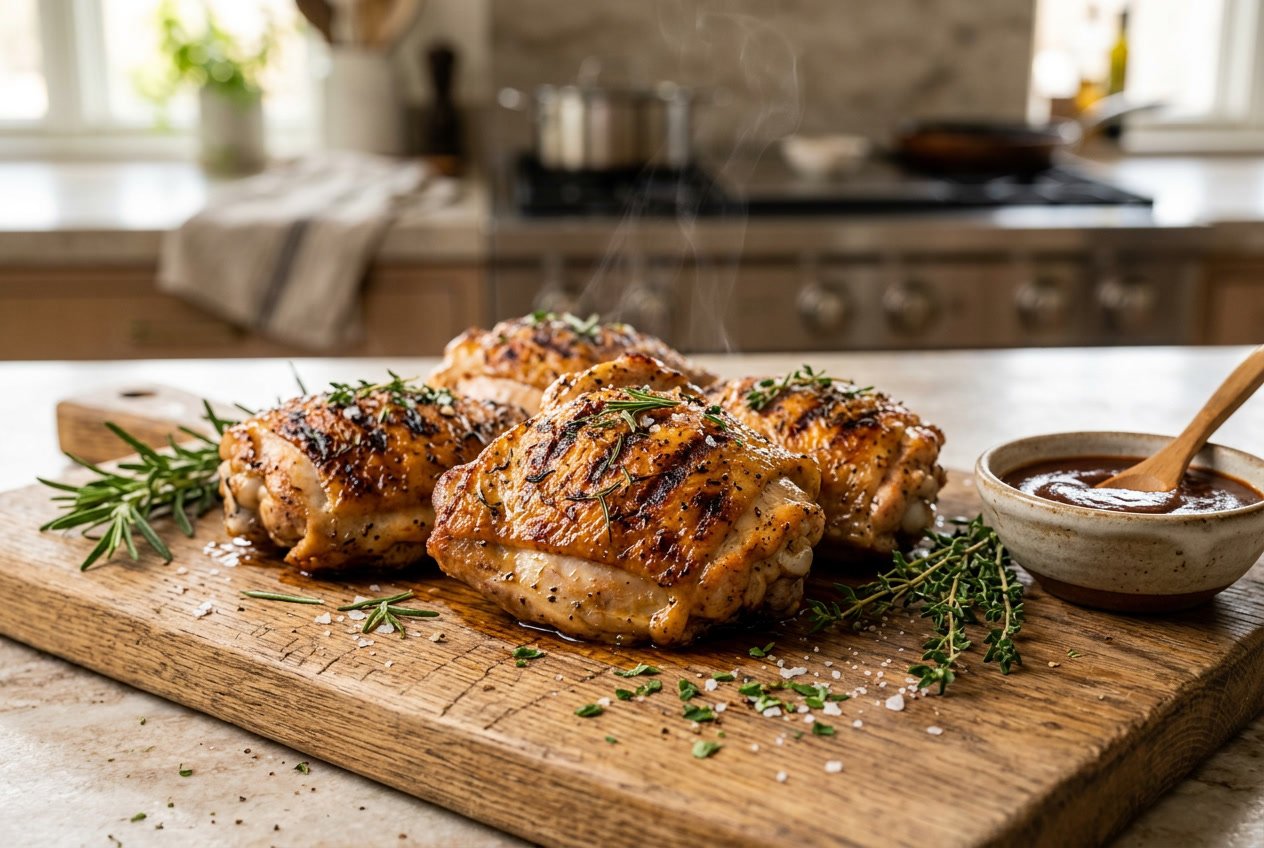
This post explains when resting matters, how long to wait for different thighs, the science behind juices and carryover heat, practical resting techniques that preserve crisp skin, and common mistakes to avoid.
Do Chicken Thighs Need to Rest?
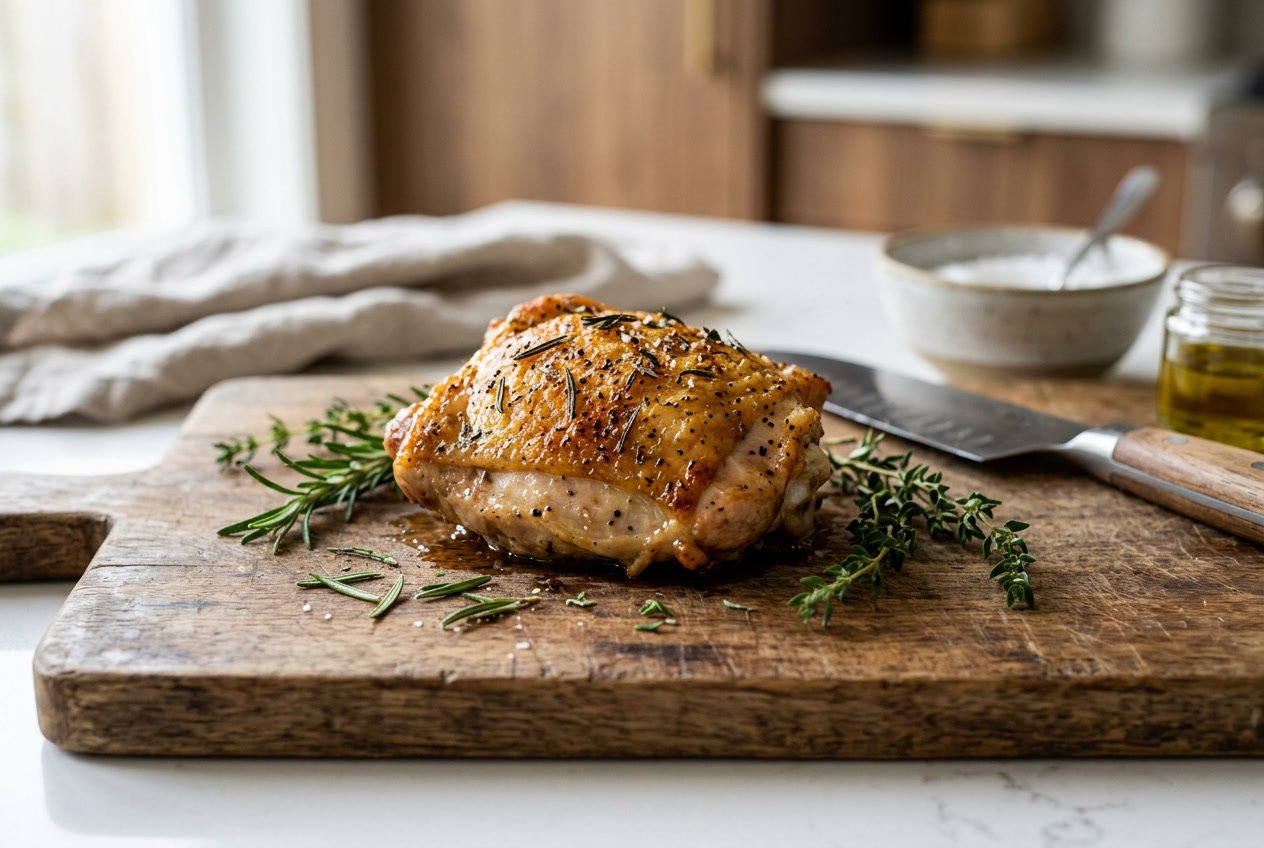
Resting chicken thighs after cooking preserves juices, lets internal temperature stabilize, and improves texture. Use a short rest so juices redistribute but the meat doesn’t cool too much.
Purpose of Resting Chicken Thighs
Resting gives the meat time to reabsorb moisture pushed toward the surface during cooking. When you remove thighs from heat, muscle fibers relax and fluids that would otherwise run out move back into the meat.
Transfer thighs to a clean platter or cutting board and tent them loosely with foil. That keeps them warm without trapping steam against the skin.
A brief rest lets you check carryover cooking and adjust serving temperature. For bone-in thighs, the bone retains heat, so a short pause helps equalize temperature near the bone and in the surrounding flesh.
Juiciness and Tenderness Benefits
Resting improves juiciness because redistributed juices stay in the meat when you slice. If you cut thighs immediately, juices escape onto the cutting board and the meat tastes drier.
Tenderness improves as the muscle fibers relax, so you’ll notice less resistance when you bite or slice. This is especially helpful with dark meat like thighs.
Aim for about 5–10 minutes for boneless or small bone-in thighs. That range balances juice retention and serving temperature.
Potential Drawbacks to Resting
If you rest too long, thighs cool below an enjoyable serving temperature. You might lose desired crispness on skin if you trap steam; tight wrapping causes sogginess.
Over-resting risks food-safety issues if meat sits too long at unsafe temperatures. Keep the rest short or hold in a low oven (around 200°F / 95°C) or warming drawer if you need more time before serving.
If you cook multiple batches, tent individual thighs rather than stacking them. Stacking traps steam and produces uneven texture and moisture loss.
Carryover Cooking Explained
Carryover cooking raises internal temperature after you remove thighs from heat. For chicken thighs, expect a modest increase—often 3–8°F (2–4°C)—depending on size and whether they’re bone-in.
Pull thighs from heat a few degrees below your target temperature because they’ll reach the safe minimum (165°F / 74°C) while resting. Use an instant-read thermometer in the thickest part, avoiding bone, to monitor this.
Carryover matters more with larger bone-in pieces since bones store and release heat. For small boneless thighs, carryover is smaller but still worth accounting for.
How Long to Let Chicken Thighs Rest
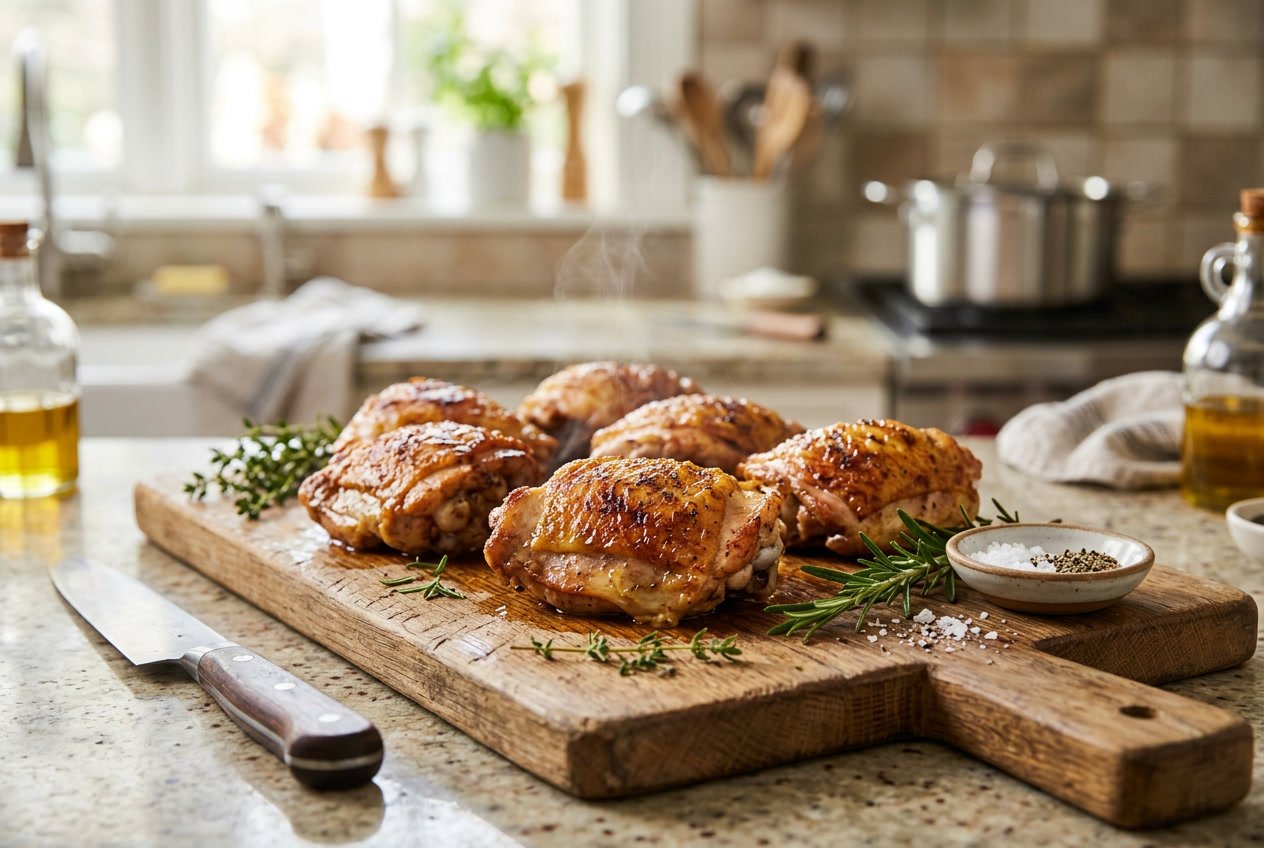
Resting chicken thighs lets internal juices redistribute and allows carryover cooking to finish the meat. Aim for short, controlled rests and use a meat thermometer to confirm safe doneness.
Recommended Resting Times by Cooking Method
Grilled or pan-seared thighs: rest 5–8 minutes. These methods deliver high surface heat, so carryover cooking is modest and a shorter rest preserves temperature and juiciness.
Loosely tent with foil to retain heat without trapping steam.
Baked or roasted thighs: rest 7–10 minutes. Oven heat penetrates more evenly, so give slightly longer for juices to settle and warm to even out.
Transfer to a cutting board or rack before tenting.
If you finish in a hot skillet, move thighs off direct heat before resting. For quick-methods like high-temp broil or sear, 3–5 minutes can help if you plan to serve immediately.
Resting Time for Bone-In vs. Boneless Thighs
Bone-in chicken thighs need more rest than boneless. The bone holds heat and slows cooling, so plan 8–12 minutes for medium-to-large bone-in pieces.
That extra time lets heat near the bone equalize and ensures the center reaches safe temperature.
Boneless thighs are smaller and cook faster; rest 5–8 minutes is usually sufficient. Over-resting boneless pieces longer than 10 minutes risks a noticeable drop in serving temperature and potential drying.
When cooking mixed batches, remove boneless pieces a bit later than bone-in so they finish resting together. Use a meat thermometer at the thickest part near the bone or center to guide timing.
Resting Skin-On Chicken Thighs
Skin-on chicken thighs benefit from a brief rest, but the method matters for crispness. Loosely tent with foil to keep meat warm while preventing the skin from steaming.
Keep foil off the skin surface to avoid sogginess.
If crisp skin is a priority, rest on a wire rack over a baking sheet to allow air circulation under the skin. Rest 5–10 minutes depending on thickness.
Longer than 12–15 minutes can soften skin and lower serving temperature.
For skin-on bone-in thighs, combine rack resting with a light tent for 8–12 minutes to balance juiciness and texture. If you want to recover crispness after resting, return to high heat for 1–2 minutes.
Best Practices for Checking Doneness
Always use a meat thermometer to check internal temperature. Insert into the thickest part near the bone for bone-in thighs or the center for boneless.
Pull thighs at about 160°F (71°C) if you want carryover to reach the USDA-recommended 165°F (74°C) during rest.
If you prefer fully reached 165°F before resting, remove and rest 5–10 minutes; the meat will stay safe but may finish slightly drier.
Avoid cutting immediately; juices will run out and the meat will lose moisture.
Check multiple pieces in a batch. Use visual cues like clear juices and no translucent center alongside thermometer readings.
The Science Behind Resting Meat
Resting allows internal juices to redistribute, proteins to relax, and residual heat to finish the cook. These processes determine moisture, texture, and final internal temperature of chicken thighs.
What Happens to Juices During Resting
When you remove thighs from heat, muscle fibers that tightened during cooking begin to relax. That relaxation reduces pressure on the liquid in the fibers, letting some fluid move back into areas it was pushed away from during cooking.
If you cut immediately, that pressure forces more juice out onto the cutting board. Let chicken rest for 5–10 minutes and much of that liquid stays in the meat.
For large or thick thighs, favor the longer end of that range to let juices redistribute fully.
Tent loosely with foil to retain warmth without trapping steam. That prevents rapid cooling while keeping skin from getting soggy.
Protein Structure and Moisture Redistribution
Heat changes muscle proteins like myosin and actin; they denature and contract, squeezing out water. During rest, some proteins partially relax and the meat’s internal structure stabilizes, allowing water to reabsorb into the intercellular spaces.
This reabsorption doesn’t recover all lost moisture, but it measurably reduces drip loss compared with immediate slicing. In thighs, higher fat and connective tissue buffer moisture loss better than lean breast meat, so resting yields noticeable improvement in tenderness and juiciness.
Use a meat thermometer during cooking to avoid over-tightening proteins by overcooking. Proper doneness before resting lets the structural recovery maximize eating quality.
Temperature Rise After Cooking
Carryover cooking raises internal temperature after you remove thighs from heat because residual heat moves inward. Expect a typical rise of 3–10°F (1.5–5°C), depending on size and cooking method.
For chicken thighs you should reach at least 165°F (74°C) for safety. Monitor temperature at the thickest point and factor in carryover when deciding when to stop cooking.
If a thigh reads 162°F, resting often pushes it to a safe range without additional direct heat.
For large batches or very thick pieces, tenting slows heat loss so carryover can complete gently. If you need to hold cooked thighs longer, use a low oven (175–200°F) to maintain temperature without overcooking.
Resting Techniques and Common Mistakes
Resting chicken thighs briefly lets juices redistribute, finishes carryover cooking, and preserves crisp skin when done correctly. Use a clean board or platter, tent lightly if needed, and time the rest to the cooking method to avoid heat loss or sogginess.
How to Properly Rest Chicken Thighs
Place cooked thighs on a clean cutting board or shallow platter immediately after removing them from heat. Space pieces so air circulates; do not stack them.
For bone-in roasted or grilled thighs, rest 5–10 minutes to allow carryover cooking near the bone and for juices to reabsorb. Boneless or pan-seared thighs usually need only 3–5 minutes.
Lightly tent with foil to retain warmth but leave gaps for steam to escape. If you want to keep skin crisp, avoid tight wrapping.
If you collected pan juices, spoon them back over the thighs just before serving to return moisture and flavor.
Avoiding Loss of Heat and Moisture
Don’t rest thighs on a cold surface. Use a room-temperature board or a shallow warmed platter to slow heat loss.
Rapid cooling causes meat to stiffen and juices to congeal away from the cutting surface.
If you must hold thighs longer than recommended, keep them in a low oven (about 140–150°C / 285–300°F) uncovered for a few minutes. That preserves temperature without overcooking.
Avoid covering thighs tightly with foil or plastic; trapped steam will soften skin and reduce crispness. Also avoid leaving thighs uncovered in a drafty area—evaporation will dry the surface.
Monitor internal temperature if you need precise timing.
Over-Resting Chicken Thighs
Resting too long lets thighs cool and can make meat less appealing to eat. After about 10–15 minutes the temperature drops enough that texture and flavor become muted.
Extended resting also risks bacterial growth once meat falls below safe holding temperatures. If you plan to serve later than 15–20 minutes, keep thighs at 60°C (140°F) or in a warm oven.
Over-rested thighs also lose surface crispness even without tight covering. If you anticipate a longer wait, briefly reheat in a hot oven or under a broiler for 1–2 minutes to restore texture before serving.
Expert and Food Network Recommendations
Resting chicken thighs after dry-heat cooking usually improves juiciness and allows carryover cooking to finish. Bone-in pieces and methods like roasting or grilling benefit most. Braised or sauced thighs often need no rest.
Guidelines from Professional Chefs
Many chefs recommend a short rest to let juices redistribute and to finish carryover cooking, especially for bone-in thighs. Aim for about 5 minutes for smaller, boneless thighs and 5–10 minutes for bone-in or larger pieces.
Leave thighs on a warm platter and tent loosely with foil so steam can escape. Tight wrapping traps moisture and will soften crisp skin.
Use a meat thermometer to verify internal temperature. Insert into the thickest part away from bone; remove when it reaches 1–2°F below your target because temperature will rise during resting.
If you plan to carve, rest first. Meat firms up slightly and slices cleaner.
Food Network’s Resting Advice
Food Network recommends resting fried or dry-heat–cooked chicken thighs for 5–10 minutes to keep them juicier and to protect crisp skin.
Transfer thighs to a plate or cutting board immediately after cooking and tent lightly with foil to retain warmth without trapping steam.
Thighs cooked in liquid (braised) don’t require resting since the cooking method already preserves moisture.
For serving, pour any collected juices back over the thighs to add flavor and prevent drying when plating.
Factors That Affect Resting Chicken Thighs
Rest time for thighs depends on how you cooked them, how you plan to serve them, and whether you monitor internal temperature. These factors determine how long carryover cooking continues and how well juices redistribute.
Cooking Method Considerations
High-heat methods like grilling and pan-searing create a hot exterior and can cause rapid moisture loss if you cut too soon. For these, rest the meat for about 5–7 minutes because the internal temperature will rise a few degrees during carryover cooking.
Low-and-slow methods such as braising and roasting large trays produce more collagen and fat. These benefit from a slightly longer rest, up to 10 minutes, to let juices and melted collagen redistribute.
When using sous-vide, rest only long enough to dry the surface if you plan to sear for a crust.
If you want crisp skin, tent loosely with foil after resting for just 3–5 minutes. Then remove the foil to preserve texture.
Place the meat on a wire rack to avoid steam buildup under the thighs.
Serving Style Impact on Resting
If you serve immediately plated portions, use a shorter rest to keep the temperature high for diners. For family-style serving or carving, a longer rest helps maintain even moisture across all pieces as you slice or transfer to a platter.
For sauced dishes, rest on a cutting board and spoon sauce over the thighs after resting. This keeps pan juices from diluting while they redistribute.
If you need to hold thighs before serving, set them in a 175–200°F oven or tent loosely with foil to slow heat loss without trapping steam.
When serving to guests who prefer very hot food, factor in a 2–3 minute carryover rise so you don’t overcook before resting.
Using a Meat Thermometer for Accuracy
Check the thickest part of the thigh away from bone with a probe thermometer. Reach 165°F (74°C) for safety, and expect carryover cooking to increase the temperature by about 2–5°F during resting.
If the thermometer reads 160–163°F, hold the thigh in a warm spot or return it briefly to heat until it reaches 165°F. Use a leave-in probe during roasting or an instant-read for pan-finished pieces.
Track temperature during the rest if you’re unsure. Aim to stabilize between 140–150°F for serving warmth while ensuring safety.
A reliable thermometer removes guesswork and prevents drying from overcooking.


