
Do Chicken Thighs Look Pink When Cooked? Safety and Color Guide
You might notice pink in cooked chicken thighs and wonder if something went wrong. Pinkness can be normal in dark meat because of myoglobin, smoking, brining, or younger birds. The only reliable way to confirm safety is to check that the internal temperature reaches 165°F (75°C).
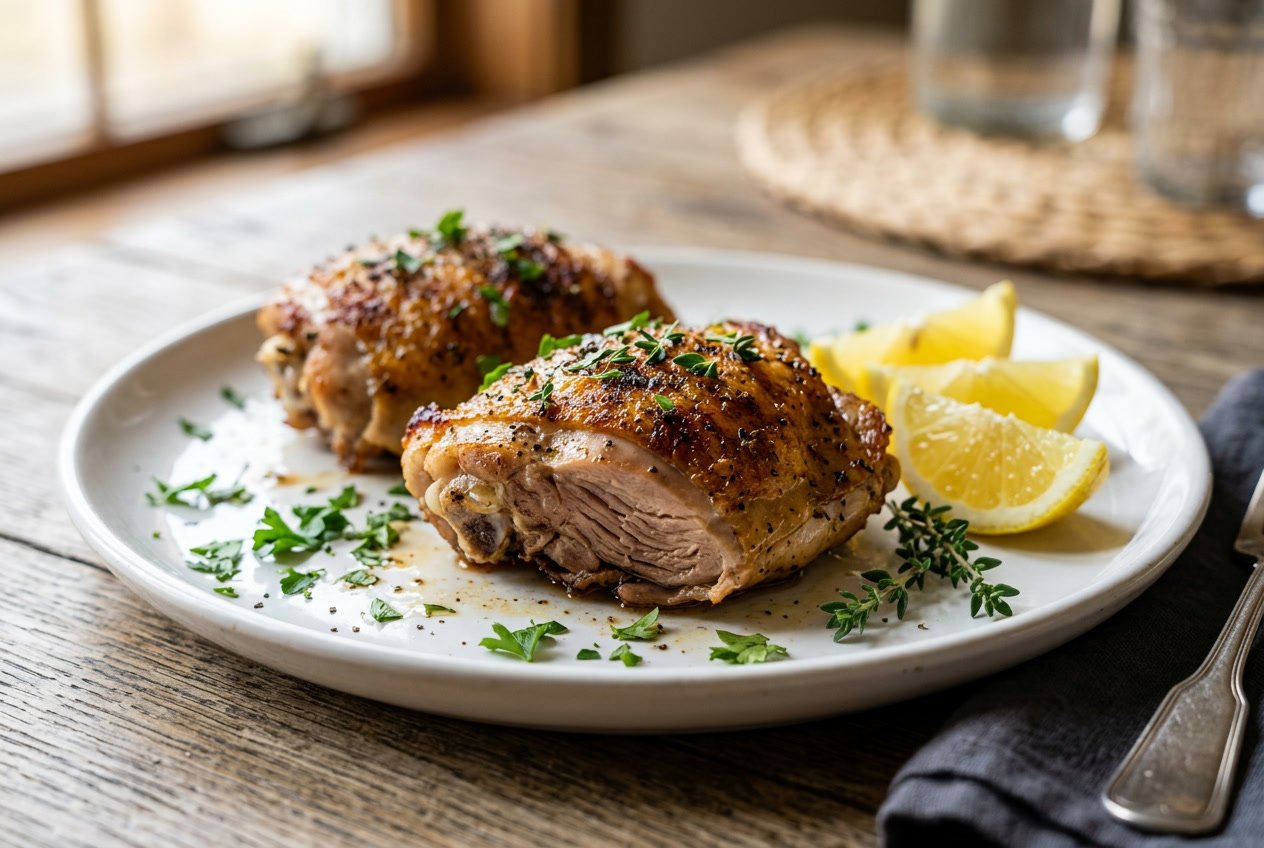
This article explains what causes pink hues and how to use a meat thermometer correctly. You will also learn which cooking methods or handling practices make pink more likely.
Follow the guidance here to cook juicy, safe thighs and stop guessing based on color alone.
Understanding Chicken Thigh Color When Cooked
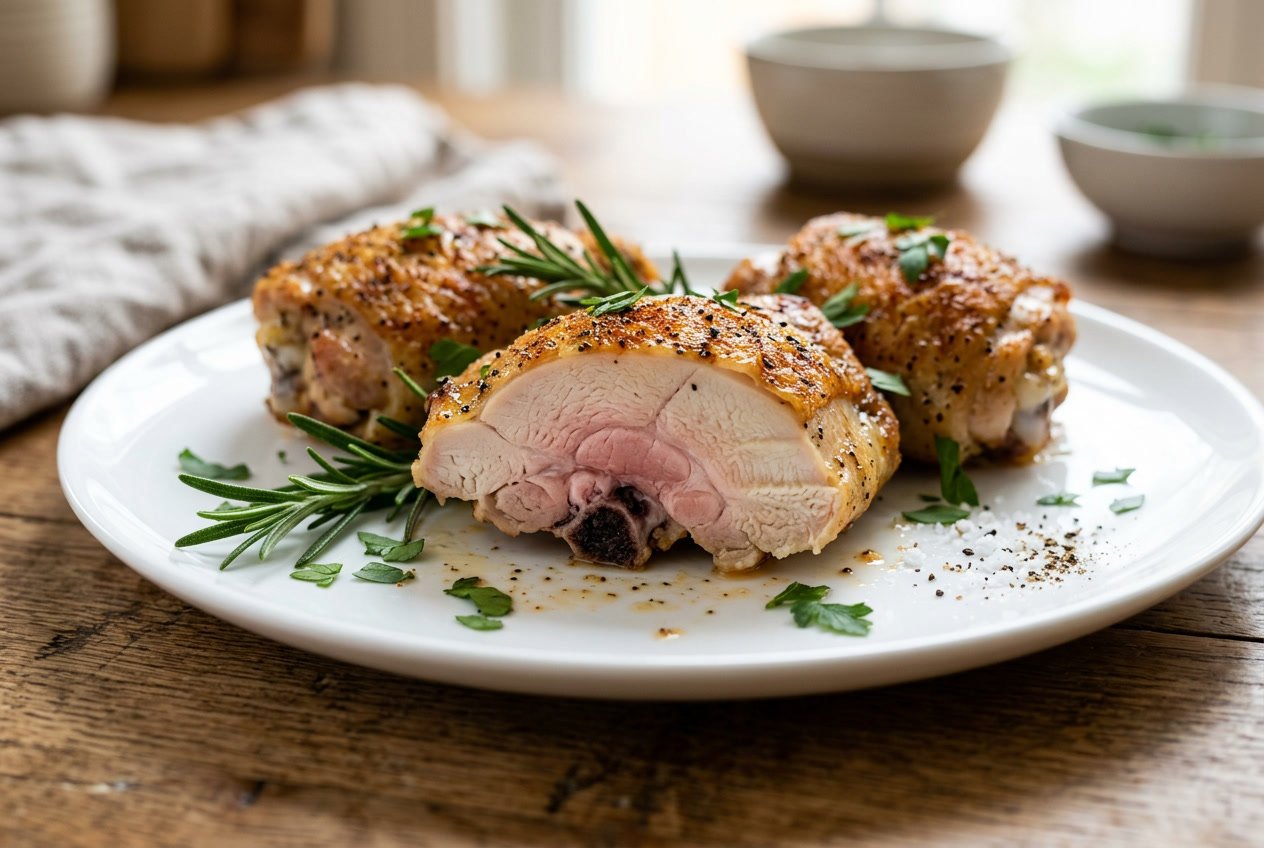
Cooked chicken thighs can show a range of colors from pale tan to pink near the bone. That variation does not always reflect safety.
Meat chemistry, cooking method, and anatomy affect color. You’ll learn how to read those signs correctly.
Why Cooked Chicken Thighs May Appear Pink
You might notice pinkness even when thighs reach a safe internal temperature. Myoglobin and other pigments can remain partially unchanged by heat, especially in darker cuts.
Smoking, brining, or quick high-heat searing can also produce a pink ring or blush from chemical reactions between smoke compounds, salt, and meat proteins. Cooking technique matters.
Rapid, high-temperature methods can brown the surface while leaving the interior with a pink hue. Long, moist cooking can keep the meat uniformly darker.
Always verify doneness with an instant-read thermometer rather than color alone.
Role of Myoglobin in Chicken Thighs
Myoglobin is the key pigment that gives thigh meat its darker tone compared with breast. It stores and transports oxygen in muscle.
With heat, myoglobin denatures and typically turns brownish. Dark meat contains higher myoglobin concentrations and connective tissue that can preserve a pink tint.
Temperature and pH influence myoglobin behavior. Acidic marinades and lower final temperatures can stabilize pink pigments.
For safety, focus on internal temperature—165°F (74°C) recommended—because a safe temp ensures pathogens are destroyed regardless of residual pink myoglobin.
Impact of Bone and Fat on Color
Bone proximity and fat content change how the thigh looks after cooking. Hemoglobin from bone marrow can leach into surrounding tissue during cooking, producing a pink or reddish color near the bone even when the meat is fully cooked.
That’s especially common in younger birds or when thighs are roasted or smoked. Fat and connective tissue also affect perceived color.
Higher fat keeps meat moist and can make the tissue appear darker or more translucent, which sometimes reads as pink. When you see pink near the bone or within fatty areas, check temperature at the thickest point away from bone to confirm doneness.
Food Safety and Safe Internal Temperature
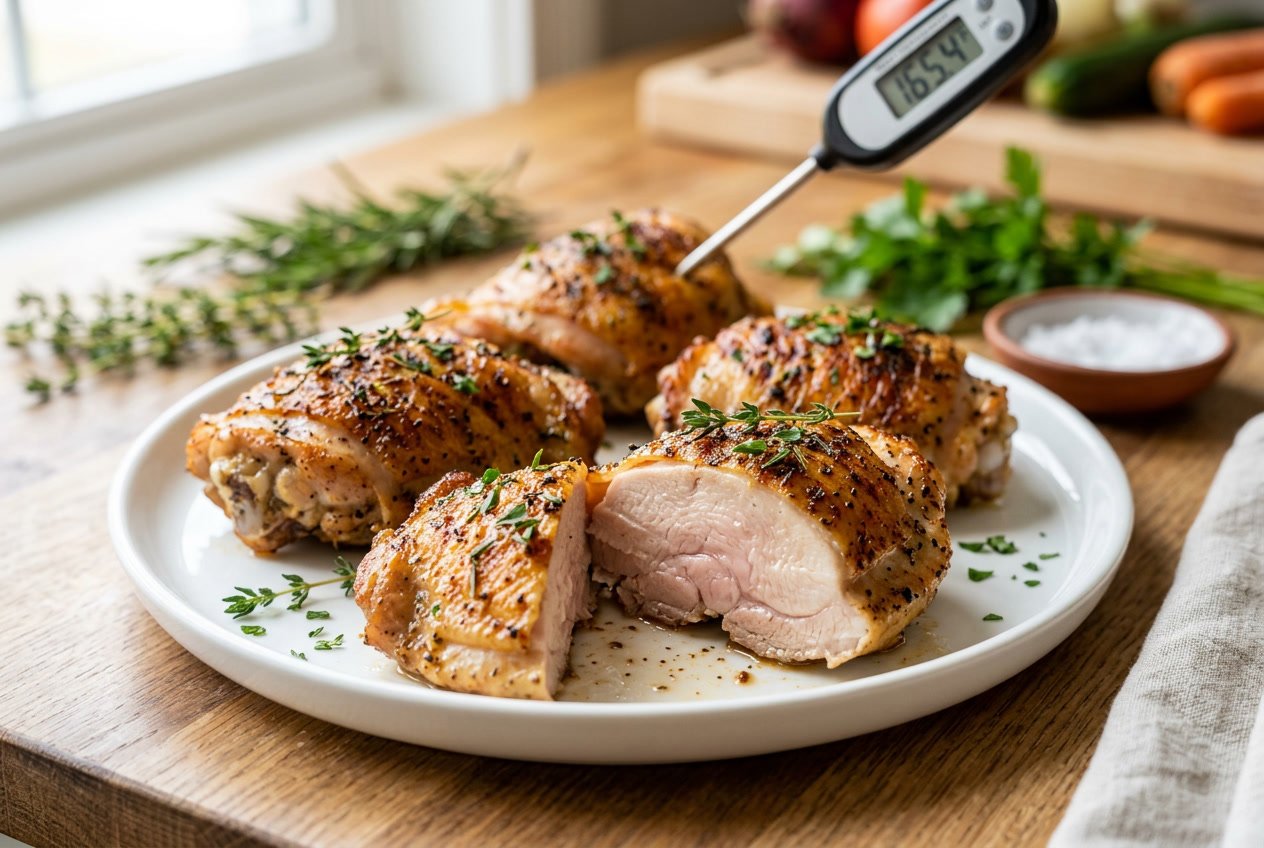
Cook chicken thighs to a reliable internal temperature and handle them to prevent cross-contamination and bacterial growth. Use a digital probe thermometer and check the thickest part without touching bone.
Importance of Cooking Chicken Thighs Safely
Cook chicken thighs until the thickest part reaches at least 165°F (74°C). That temperature kills common poultry pathogens and is the standard recommended by food-safety agencies.
Insert the probe into the center of the meat, not against bone, and wait for a steady reading. Rest the thighs for a few minutes after cooking; carryover heat can raise the internal temperature slightly and redistribute juices.
If you cook in batches, check multiple pieces because size and placement cause uneven cooking. When reheating leftovers, heat them back to 165°F before serving.
Practical steps:
- Calibrate or check your thermometer periodically.
- Probe several thighs when cooking multiple pieces.
- Avoid relying on color; dark meat can stay pink even at safe temperatures.
Dangers of Undercooked Chicken
Undercooked chicken can harbor bacteria such as Campylobacter and Salmonella, which cause gastrointestinal illness and, in some cases, severe complications. Symptoms include diarrhea, fever, and abdominal cramps; vulnerable people face higher risk.
Eating chicken that hasn’t reached 165°F raises the chance these pathogens survive. Cross-contamination during preparation—using the same cutting board or utensils for raw and ready-to-eat foods—also spreads risk.
If juices in the thickest part run pink or red, or the thermometer reads below 165°F, continue cooking.
Safe handling checklist:
- Thaw in the refrigerator or sealed cold water, never on the counter.
- Keep raw juices away from other foods.
- Refrigerate cooked leftovers within two hours and reheat to 165°F before eating.
How to Check Chicken Thigh Doneness
Use an accurate temperature check as your primary method and use visual cues as a secondary check. Focus on the thickest part of the thigh, avoid the bone, and look for clear juices rather than relying on color alone.
Using a Meat Thermometer Properly
Insert an instant-read meat thermometer into the thickest part of the thigh, steering clear of the bone. Aim for an internal temperature of 165°F (74°C); that temperature ensures pathogens are killed.
Hold the probe steady for a few seconds until the reading stabilizes. If you use a leave-in probe during roasting, check multiple thighs because heat can vary across pieces.
Calibrate your thermometer periodically per manufacturer instructions so readings stay accurate. If the reading is borderline (162–164°F), return the thigh to heat briefly and recheck.
For a drier texture you can cook to 170–175°F, but expect firmer meat. Rely on the thermometer over color or a bone jiggle every time.
Visual Indicators: Color and Juices
Cooked thighs may still show pink near the bone or in the meat even when safe. Myoglobin and certain cooking methods can keep a pink hue, so color alone can mislead you.
Press the thickest part of the thigh or cut a small slit to check juices. Clear juices indicate doneness more reliably than a completely white interior, but slightly pink juices don’t automatically mean undercooked—verify with your thermometer.
Avoid using the “bone wiggle” or surface appearance as your only test. Combine the juice check with a verified internal temperature to confirm doneness and safety.
Factors Influencing Pinkness in Cooked Thighs
Several physical and chemical factors change thigh color during cooking. Temperature, exposure to smoke or curing agents, and whether the meat was brined or marinated all affect how pink the finished thigh looks.
Cooking Methods and Their Effects
High-heat methods like grilling, broiling, or pan-searing create rapid surface browning while the interior can remain pinker longer. Dark meat contains more myoglobin and connective tissue, so it heats unevenly and stays moist, and color near the bone can remain pink even after safe temperatures are reached.
Slow cooking and braising raise internal temperature more evenly and break down collagen, producing uniformly brown or gray meat. Long, moist cooks can also intensify a pinkish tint from released myoglobin and retained juices.
Always check the internal temperature in the thickest part away from bone—165°F (74°C) is the safety target—rather than judging doneness by color alone.
Smoke Ring and Marinated Chicken Thighs
When you smoke thighs, nitrogen dioxide from wood smoke reacts with myoglobin and forms a stable pink layer called the smoke ring. That ring can extend several millimeters beneath the surface and looks pink despite full cooking; it does not indicate undercooking.
Marinating with salt, nitrites, or acidic ingredients also alters color. Brines and nitrite-containing cures bind with myoglobin and can lock in a pink hue.
Citrus or vinegar can change surface proteins and intensify pinkness. If you use marinades or a smoke bath, use a meat thermometer to confirm doneness rather than relying on visual cues.
Is Pink Chicken Safe to Eat?
You can’t judge doneness by color alone. Use a probe thermometer and check handling practices to decide if pink chicken thighs are safe.
When Pink Chicken Thighs Are Safe
If the thickest part of the thigh (avoiding bone) registers at least 165°F (74°C), the meat is safe even if it looks pink. Use an instant-read thermometer inserted into the deepest point for a reliable reading.
Pink color can come from myoglobin, bone marrow leakage, or certain cooking methods like smoking that leave a pink ring. If juices run clear and the thermometer reads 165°F or higher, pathogens such as Salmonella and Campylobacter will have been inactivated.
Also confirm that the chicken was properly stored and thawed: refrigerated below 40°F (4°C) and not left at room temperature more than two hours. If those conditions were met, a pink hue alone does not indicate a safety risk.
Signs Chicken Thighs Are Not Safe to Eat
Do not eat thighs that feel slimy, smell sour or rotten, or have a sticky film; those are spoilage signs unrelated to cooking color. Discard meat that emits an off odor even if the thermometer reads 165°F.
If the internal temperature is below 165°F, the meat is undercooked regardless of appearance. Return it to heat until it reaches the safe level.
Also avoid chicken with unusual colors like green or gray, or visible mold, which indicate contamination. If you suspect cross-contamination during prep (raw juices contacting ready-to-eat foods or surfaces not cleaned), either reheat thoroughly to safe temperature or discard to protect yourself from foodborne illness.
Additional Tips for Cooking and Storing Chicken Thighs
Follow simple cooking steps to keep thighs juicy and reach a safe internal temperature of 165°F. Store and freeze cooked thighs quickly in airtight packaging to preserve flavor and prevent bacterial growth.
Preventing Overcooking and Ensuring Tenderness
Use a probe thermometer to check the thickest part of the thigh; pull the meat at 165°F and let it rest 5–10 minutes. Resting lets carryover heat finish the cook and redistributes juices, so the meat stays tender rather than drying out.
For bone-in thighs, finish in the oven after searing to cook through without charring. Cook boneless thighs faster—monitor time closely: about 15–20 minutes at 425°F for baking or 10–12 minutes on a hot grill.
If you braise, keep liquid at a gentle simmer to break down connective tissue without boiling the meat dry. Use brines or marinades with salt and acid to improve moisture and flavor.
Pat thighs dry before searing to get a good Maillard crust. Avoid crowding the pan; leave space so heat circulates and the surface browns evenly.
Freezing and Reheating Cooked Chicken Thighs
Cool cooked thighs to room temperature within two hours. Then refrigerate or freeze them promptly.
For freezing, wrap each thigh tightly in plastic wrap. Place them in a labeled freezer bag and remove excess air to prevent freezer burn.
Cooked thighs maintain quality for about 4 months at 0°F. Thaw frozen thighs in the refrigerator overnight for best texture.
Reheat covered in a 325°F oven until the internal temperature reaches 165°F. This usually takes 20 to 30 minutes depending on size.
For faster reheating, slice thighs and warm them in a skillet over medium heat with a splash of broth to keep them moist. If using a microwave, cover and use short intervals, turning pieces to avoid hot spots.
Never refreeze thawed cooked thighs unless you first heat them to 165°F. Use airtight containers and date labels to track storage times and maintain safety.


