
Do Chicken Thighs Have Iron? Comprehensive Guide to Iron Content and Nutrition
You can get a meaningful amount of iron from chicken thighs. Dark meat typically contains more iron than white meat, so choosing thighs helps boost your intake without drastic diet changes.
A 100-gram serving of cooked chicken thigh usually provides around 1.3–1.5 mg of iron. Your body absorbs this heme-iron source more efficiently than plant-based iron.
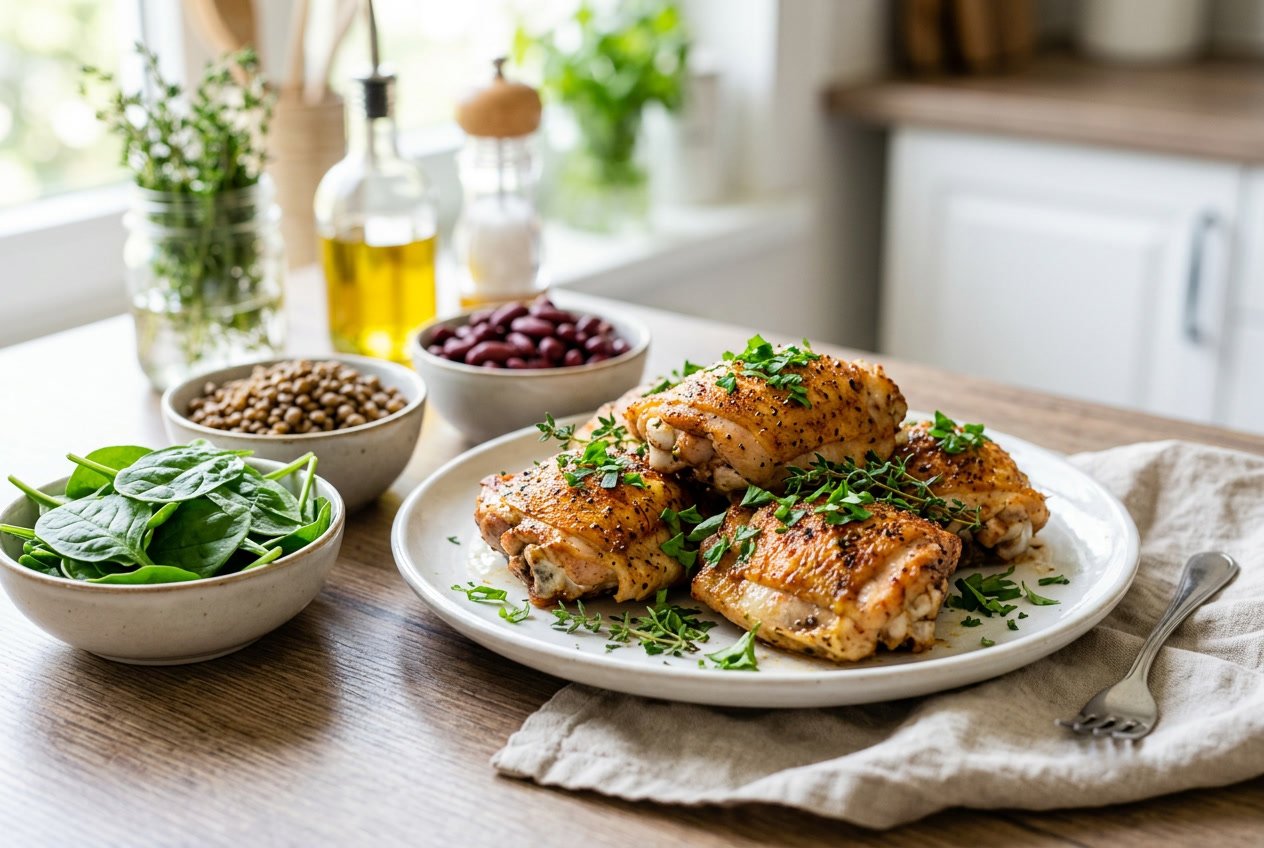
If you want to know how much chicken thighs contribute to your daily needs and how they compare to other iron-rich foods, keep reading. You’ll also find simple ways to maximize absorption and meal ideas that fit your nutrition goals.
Iron Content in Chicken Thighs
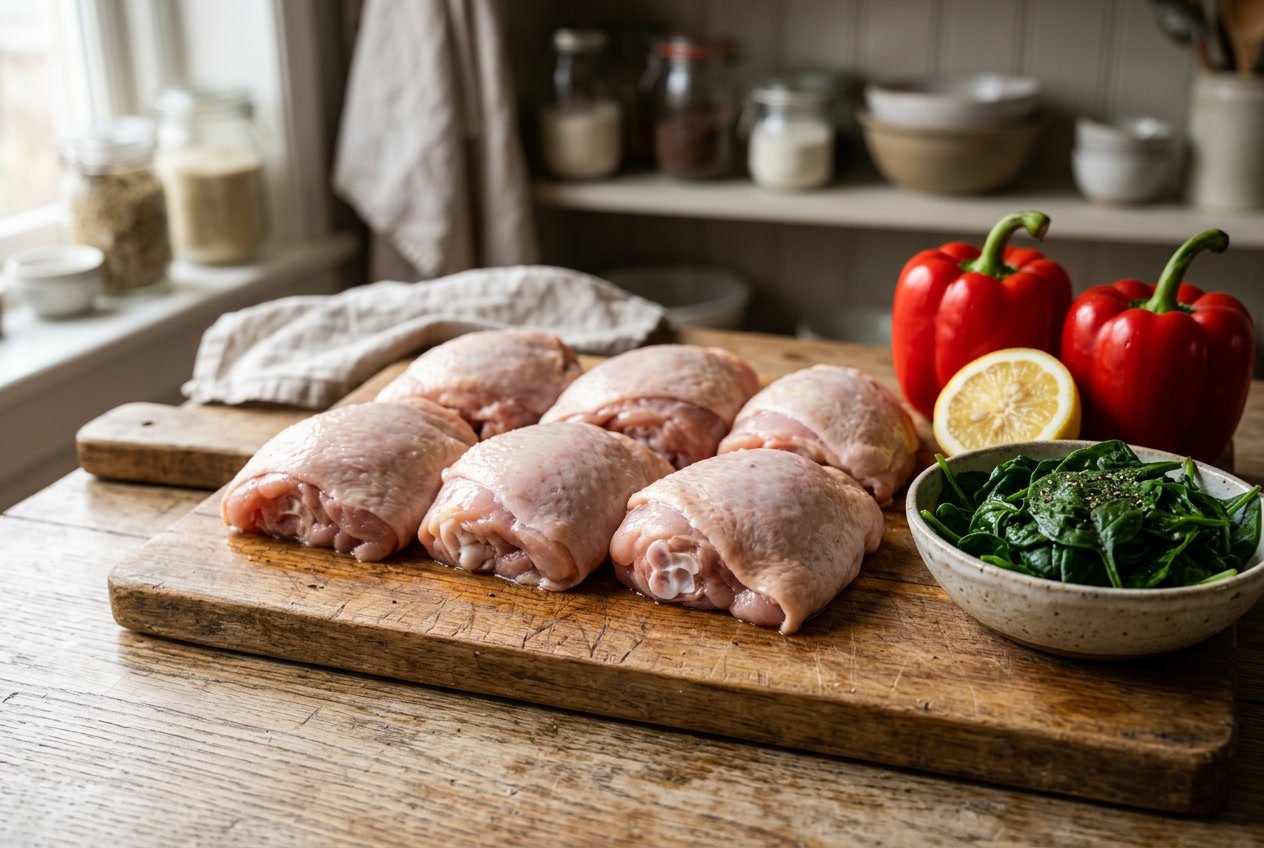
Chicken thighs provide modest amounts of iron. The exact value varies by portion size, cut, and cooking method.
A typical cooked thigh supplies a measurable share of daily iron needs. Dark meat generally contains more iron than breast meat.
Average Iron Levels per Serving
A 100 g portion of cooked chicken thigh commonly contains about 1.1 mg of iron. Database values range from 0.37 mg to 1.49 mg per 100 g depending on type and preparation.
For a single cooked thigh (about 50–70 g), expect roughly 0.5–1.0 mg of iron. That equals about 3–11% of an adult’s 14 mg reference RDA.
Key points:
- Typical cooked thigh (100 g): ~1.0–1.4 mg iron
- Single cooked thigh (50–70 g): ~0.5–1.0 mg iron
- 1 cup chopped cooked thighs (≈140 g): ~1.4–2.0 mg iron
Heme iron in chicken is more bioavailable than plant iron. Your body absorbs iron from thighs more easily than from most vegetables.
Dark Meat vs. White Meat Iron Comparison
Dark meat (thighs and legs) contains more iron than white meat (breasts). Thighs average about 1.0–1.5 mg per 100 g when cooked, while breast meat often falls below 1.0 mg per 100 g.
If you need more dietary iron, choose thighs over breast. The difference matters when you combine servings across a day.
If you are monitoring iron for anemia or dietary planning, track cooked weights and prefer dark cuts for higher iron density.
How Cooking Methods Affect Iron
Cooking changes iron content by concentrating minerals as water is lost and by adding ingredients that contribute iron. Frying or roasting reduces water and increases iron per 100 g compared with raw meat.
Breaded or battered preparations can alter values by adding weight from coating. Raw thigh iron may read lower (e.g., ~0.4–0.8 mg/100 g) because of higher water content.
Stewing or braising in iron cookware can increase iron transfer into the meat. Marinades with acidic ingredients don’t change total iron but can affect absorption when paired with vitamin C–rich sides.
Adjust your portion estimates based on recipe ingredients and cooking method to get a realistic iron intake figure.
Iron Absorption From Chicken Thighs
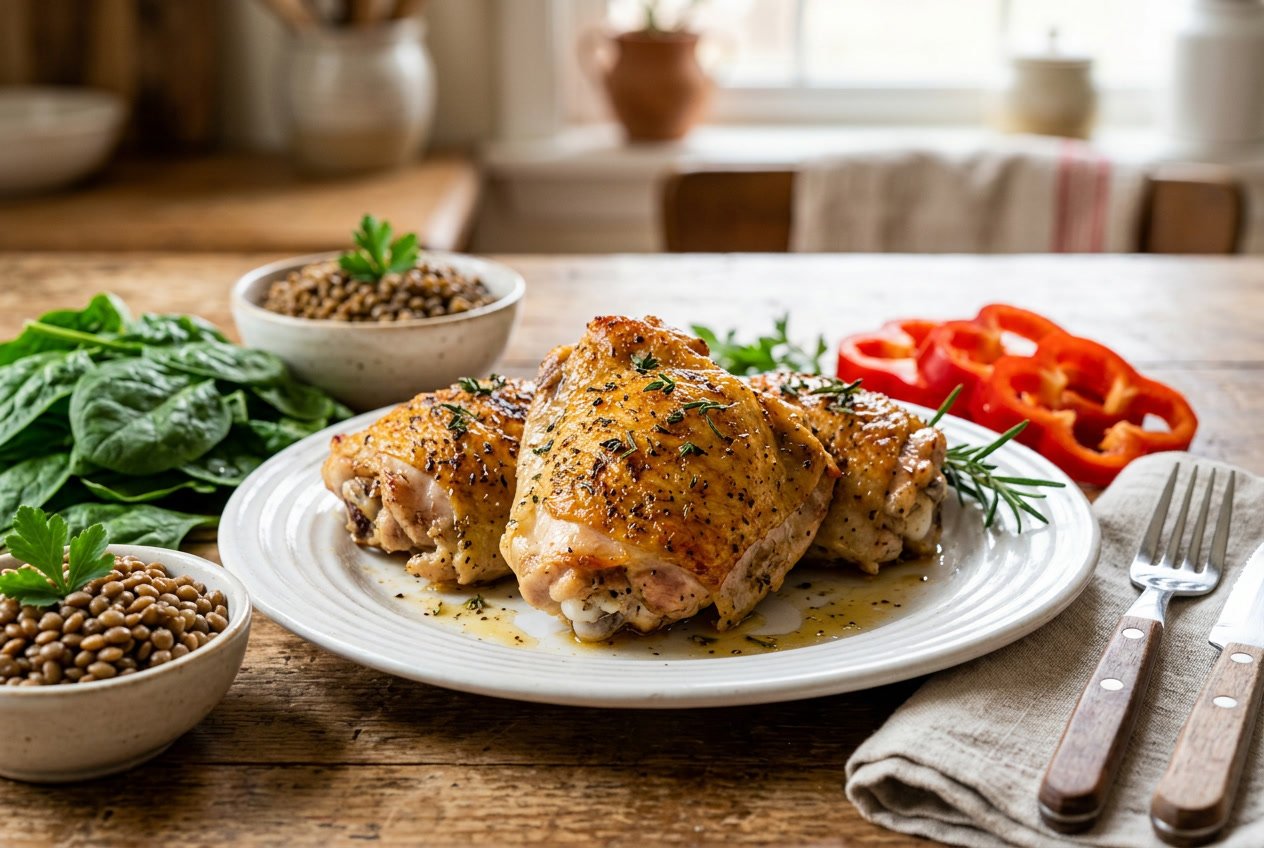
Chicken thighs provide a source of iron that your body absorbs more efficiently than most plant sources. The following sections explain why that iron is easier to use and what helps or blocks absorption.
Heme Iron and Its Benefits
Chicken thighs contain heme iron, the form bound to hemoglobin and myoglobin in animal muscle. Your intestinal cells absorb heme iron intact through a separate pathway from plant (non-heme) iron.
A serving of dark meat from chicken delivers more bioavailable iron than an equivalent amount of many vegetables. Chicken thighs are practical when you need to raise or maintain iron stores, especially with increased needs from pregnancy, heavy exercise, or recovery from blood loss.
Micronutrients That Enhance Iron Absorption
Vitamin C and certain meat components can increase iron uptake from meals. If you eat chicken thighs with a citrus-based sauce, bell peppers, or a salad containing tomatoes, vitamin C boosts non-heme iron absorption from plant foods.
The meat itself also produces a “meat factor” (peptides and amino acids) that modestly enhances iron absorption when meat is eaten alongside plant iron sources.
Zinc and B vitamins in chicken do not directly increase iron absorption, but they support blood and metabolic health. Pair chicken thighs with vitamin-C–rich sides to maximize the total iron you absorb from a mixed meal.
Factors That Inhibit Iron Uptake
Tannins, calcium, and polyphenols reduce iron absorption when present at the same meal. Drinking strong tea or coffee with your chicken can lower absorption because tannins bind iron in the gut.
Dairy, calcium supplements, or high-calcium foods can also compete with iron uptake when consumed immediately before, during, or after the meal. Phytates in grains, legumes, nuts, and seeds inhibit non-heme iron more than heme iron, but they can still have a mild effect on overall iron availability.
To protect your iron intake from chicken thighs, avoid high-calcium or high-tannin beverages at mealtime and separate calcium supplements by two hours from iron-containing meals.
Nutritional Benefits of Chicken Thighs
Chicken thighs provide concentrated protein, iron, B vitamins, zinc, and a mix of saturated and unsaturated fats. They offer more micronutrients per ounce than white meat and work well with many cooking methods.
Essential Vitamins and Minerals
Chicken thighs are a reliable source of iron and several B vitamins. A 100 g cooked thigh supplies meaningful amounts of iron, vitamin B12, and vitamin B6—nutrients important for red blood cell formation, nerve function, and energy metabolism.
You also get zinc and selenium, which support immune function and antioxidant defenses. Phosphorus appears in useful amounts for bone health and cellular energy.
Thighs contain more iron and zinc than skinless chicken breast. Skin-on and pan-fried thighs do not change micronutrient content but add fat and calories.
Protein and Healthy Fats
Per 100 g cooked, chicken thigh gives roughly 25–27 g of protein. That protein density makes thighs a practical choice for muscle repair and satiety.
Fat content averages about 8–12 g per 100 g for skinless thighs; skin-on versions add more, shifting calories upward. The fat profile includes both monounsaturated and saturated fats.
Choose skinless, roasted, or grilled preparation to lower added fat and retain protein quality.
Suitability for Special Diets
If you follow low-carb or ketogenic plans, chicken thighs fit well because they contain negligible carbohydrates and provide higher fat than breasts.
For people at risk of iron deficiency—such as menstruating individuals, endurance athletes, or those with low dietary iron—thighs can help raise dietary iron intake more effectively than white meat.
Thighs also work for gluten-free and most paleo-style approaches. Watch for marinades and breading that can add sugars, gluten, or excess sodium.
Chicken Thighs Versus Other Iron-Rich Foods
Chicken thighs provide modest amounts of heme iron and fit well into a varied diet. Here’s how their iron content and bioavailability compare to common animal and plant sources.
Chicken Thighs vs. Beef and Red Meat
Beef generally contains more iron per 100 g than chicken thighs. Many beef cuts provide around 2.5–3.0 mg iron per 100 g, while typical chicken thigh values are about 1.3–1.5 mg per 100 g.
A 100 g serving of beef can cover a larger share of daily needs than the same weight of chicken thigh.
Both beef and chicken supply heme iron, which your body absorbs more efficiently than plant iron. Beef also delivers higher levels of zinc and vitamin B12, nutrients that support iron metabolism.
If you need to boost iron intake quickly, choose lean beef or organ meats. If you prefer poultry, increase portion size or pair chicken with vitamin C–rich foods to improve absorption.
Comparing Iron With Plant-Based Sources
Plant-based iron (non-heme) appears in foods like lentils, spinach, and fortified cereals. These can match or exceed the iron content of chicken thighs by weight; for example, cooked lentils often contain 3–3.5 mg per 100 g.
Your body absorbs non-heme iron less efficiently than heme iron from chicken thighs. You can enhance non-heme absorption by eating vitamin C sources (citrus, bell peppers) alongside plant foods and by avoiding calcium-rich foods or tannin-rich tea at the same meal.
If you follow a mostly plant-based diet, plan portion sizes and food combinations so total absorbable iron meets your needs. Including occasional chicken thighs adds reliably absorbable heme iron.
How Chicken Stacks Up Against Seafood
Seafood shows wide variation in iron. Oysters and some clams are top performers, often supplying 6–10 mg or more per 100 g.
Tuna and sardines provide moderate amounts, similar to or slightly higher than chicken thighs. Shellfish and oily fish also offer nutrients that support iron status, like vitamin B12 and certain omega-3s.
If you want a high-iron seafood option, choose shellfish such as clams or oysters. For regular meals, chicken thighs and firm white fish give steady heme iron with lower cost and milder flavor.
Rotate poultry and seafood across meals to balance iron intake, nutrient diversity, and taste preferences.
Maximizing Iron Intake From Chicken Thighs
You can increase the iron you get from chicken thighs by choosing cooking methods that preserve heme iron and by pairing the meat with foods that enhance absorption. Small changes like shorter cook times, acidic marinades, and vitamin C–rich sides make a difference.
Best Cooking Techniques for Retaining Iron
Cook chicken thighs quickly at high heat to limit iron loss. Grill, broil, or pan-sear for shorter times so juices stay in the meat.
If you braise or stew, keep the cooking liquid and use it as a sauce or in soup to recover iron leached into the broth. Marinate thighs in acid (lemon juice, vinegar, or yogurt) for 30–90 minutes; acidity can help free bound iron and slightly improve bioavailability.
Remove skin if you want lower fat but know that skinless dark meat still retains most iron. Use an instant-read thermometer and stop cooking as soon as internal temperature hits 165°F (74°C) to avoid overcooking and nutrient loss.
Food Pairings to Boost Iron Absorption
Pair chicken thighs with vitamin C sources to enhance iron absorption from both heme and non-heme iron. Add roasted red peppers, citrus-dressed salad greens, or a squeeze of lemon over the finished meat.
Avoid consuming high-calcium foods or tannin-rich drinks (milk, calcium-fortified juices, black tea) at the same meal, as calcium and polyphenols can inhibit iron uptake.
If you eat grains or legumes with your meal, include vitamin C–rich vegetables to help offset their non-heme iron’s lower absorption. Combining chicken thighs with iron-rich sides like spinach or lentils can improve overall meal iron absorption.
Small, practical swaps like lemon wedges, a bell pepper salsa, or a citrus vinaigrette deliver benefits without changing your recipe.
Dietary Role of Chicken Thighs for Iron Needs
Chicken thighs provide a modest, bioavailable source of iron that can help meet daily needs when paired with other iron-rich foods and vitamin C. Dark meat contains more myoglobin-based iron than white meat, and practical serving strategies can boost absorption.
Who Benefits Most From Chicken Thigh Iron
Chicken thighs help more than breast meat because dark muscle contains slightly more iron per serving. People with higher iron requirements benefit the most.
Physically active adults, pregnant people with physician guidance, and those with mild iron depletion who eat omnivorously can increase heme-iron intake with chicken thighs instead of red meat.
Older adults and people recovering from blood loss can use chicken thighs as a regular, lower-fat heme-iron option compared with some red meats.
Vegetarians and strict vegans do not gain this advantage because they avoid heme sources. They rely on plant iron and enhancers like vitamin C instead.
Incorporating Chicken Thighs Into an Iron-Rich Diet
Choose practical portions. A cooked 3–4 ounce (85–113 g) chicken thigh provides heme iron and pairs well with sides rich in vitamin C to improve absorption.
Serve chicken thighs with steamed broccoli, bell peppers, or a citrus-based dressing to enhance iron uptake.
Do not drink tea or coffee with the meal, since polyphenols reduce iron absorption.
Rotate chicken thighs with other iron sources such as lean beef, legumes, or fortified cereals to meet your weekly iron needs.
If you have diagnosed iron-deficiency anemia, follow your clinician’s treatment plan.


