
Do Chicken Thighs Have Dark Meat? Nutrition, Taste, and Cooking Guide
Chicken thighs are dark meat, built for steady movement and richer flavor because they contain more myoglobin and fat than breast meat.
If you want juicy, flavorful pieces that tolerate longer cooking and deliver deeper taste, choose thighs for dark meat.
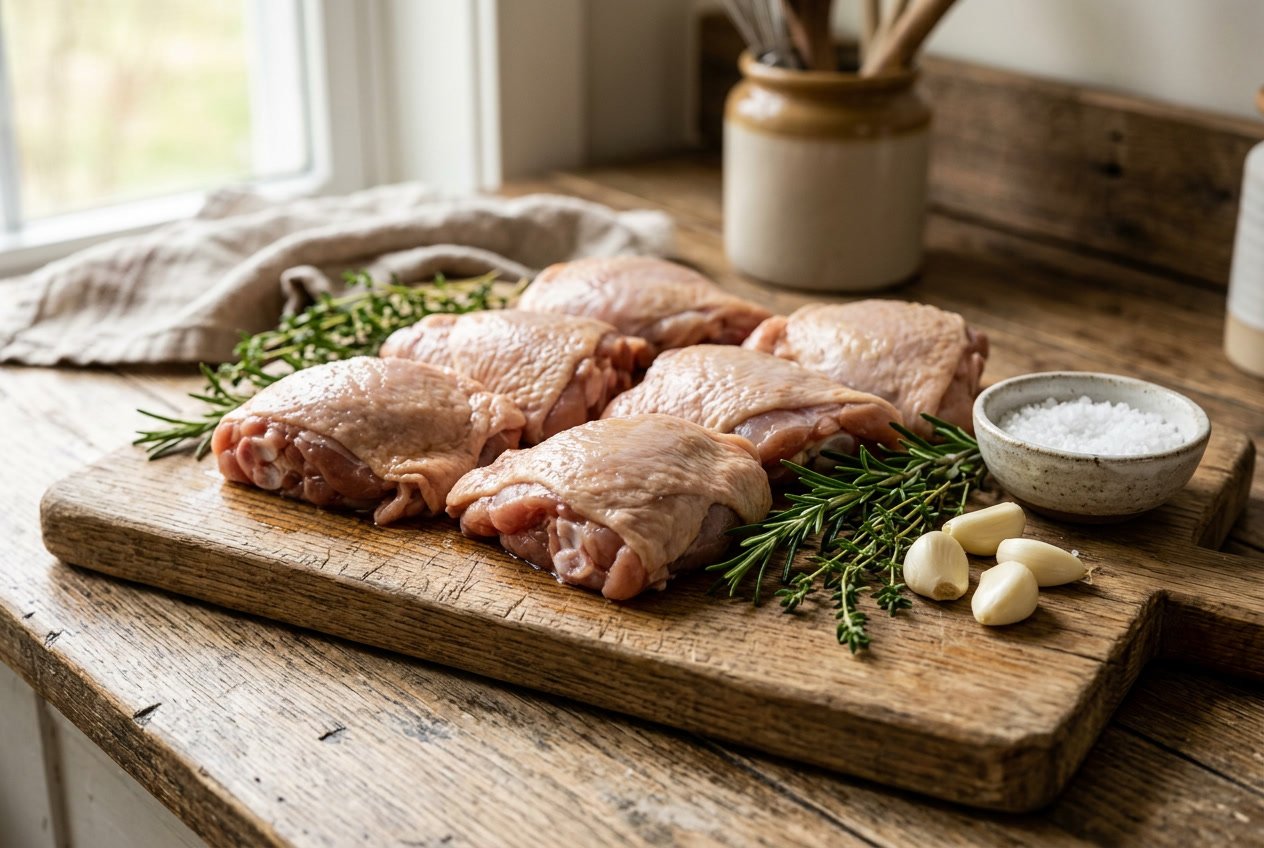
Thighs differ biologically from breasts, which affects nutrition and cooking.
You’ll also find tips on selection and safe storage to help you cook reliably good meals.
Are Chicken Thighs Considered Dark Meat?
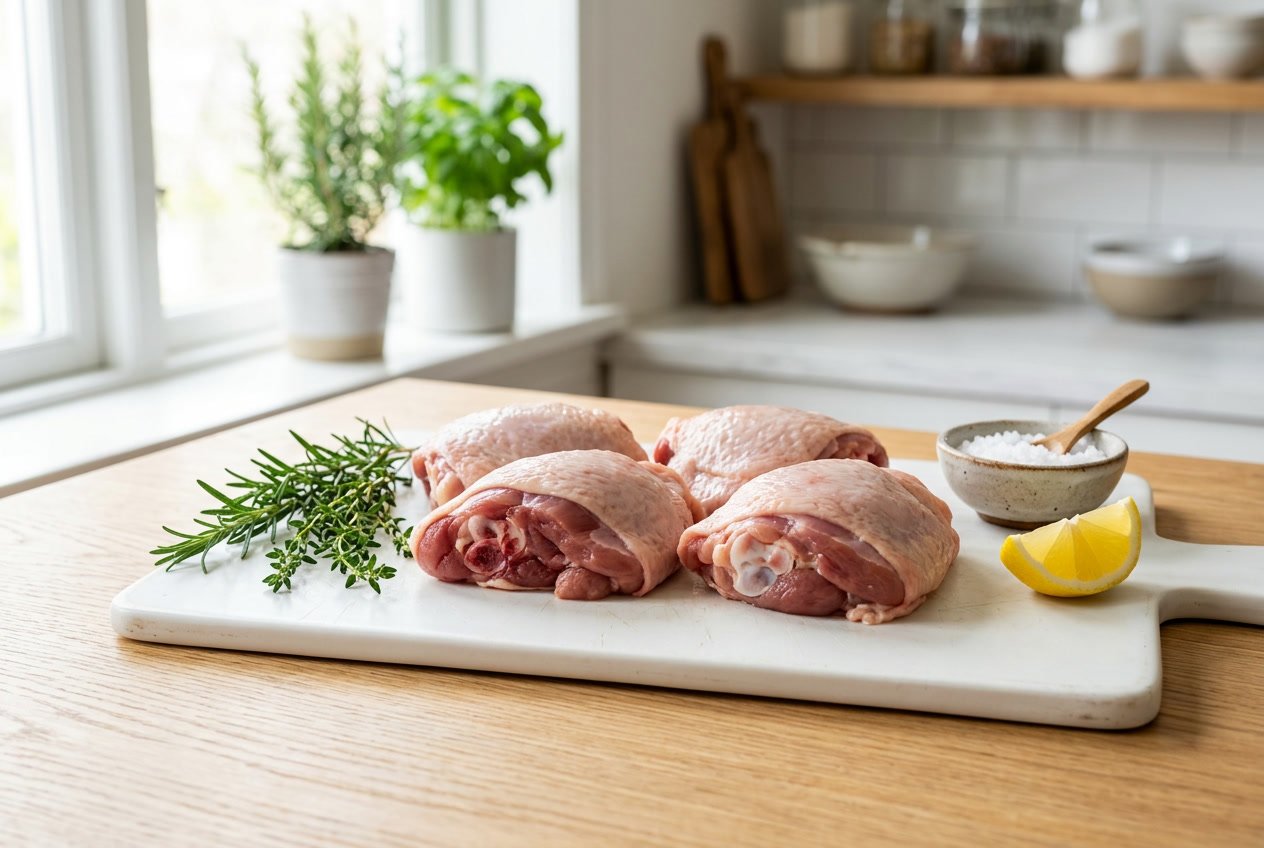
Chicken thighs are dark meat.
Thigh muscles contain higher myoglobin and more fat, making them richer in flavor and more forgiving during cooking than leaner cuts.
What Defines Dark Meat in Chicken
Muscles with a higher concentration of myoglobin, the oxygen-carrying protein, have a darker color.
These muscles are mostly slow-twitch fibers used for sustained activity like standing and walking.
That means thighs and drumsticks store more oxygen and energy, helping them retain moisture and develop deeper flavor when cooked.
Fat also plays a role.
Skin-on thighs and whole leg quarters contain more intramuscular and surface fat than breasts, contributing to tenderness and juiciness.
Skinless, boneless thighs have less fat but remain darker than breast meat due to their muscle composition.
Comparison With Chicken Breasts and Drumsticks
Breasts are white meat, with more fast-twitch fibers and less myoglobin because those muscles power short bursts of flight.
This gives breasts a paler color and a leaner texture, so they dry out faster if overcooked.
Drumsticks, like thighs, are dark meat.
Both come from the leg and are often sold together as a leg quarter.
Thighs typically have slightly more connective tissue than drumsticks, which can make them more tender after slow cooking.
Thighs and drumsticks perform better in braises, grills, and stews, while breasts suit quick searing or poaching.
The Science Behind Dark Meat in Chicken Thighs
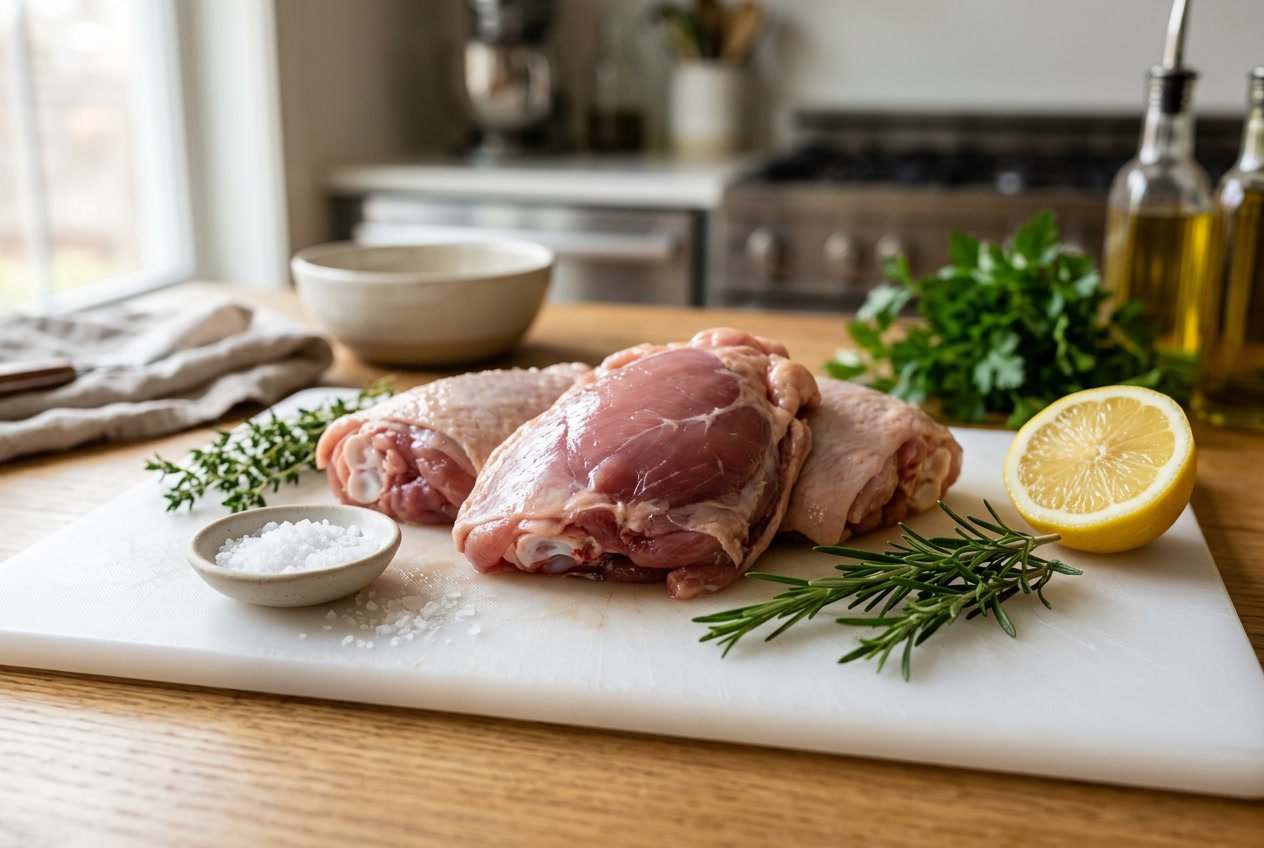
Thigh muscles store more oxygen and are built for endurance, making them darker.
This affects color, flavor, and mineral content.
Role of Myoglobin in Meat Color
Myoglobin is an oxygen-binding protein inside muscle cells.
Thigh muscles have higher myoglobin concentrations than breast muscles, giving the thighs a reddish-brown color before and after cooking.
Myoglobin’s presence also influences how meat reacts to heat.
As myoglobin denatures, it changes color and affects perceived doneness, so thighs can appear darker even when fully cooked.
More myoglobin means darker meat and a stronger, beefier flavor compared with white meat.
Muscle Fiber Type and Activity
Thighs contain more slow-twitch muscle fibers, which contract repeatedly for posture and walking.
These fibers need steady oxygen delivery.
Thigh muscles work constantly, while breast muscles handle short, powerful bursts like flapping and rely on fast-twitch fibers.
Slow-twitch fibers depend on oxidative metabolism and contain more mitochondria and capillaries.
That supports endurance and increases myoglobin levels.
Thighs stay juicier during longer cooking and develop a richer texture than white meat from the breast.
Impact on Iron and Zinc Content
Higher myoglobin and oxidative activity in thigh muscles raise the iron concentration in the meat.
Thighs usually provide more heme iron than breast, which matters if you track dietary iron intake.
Thighs also contain more zinc, another trace mineral tied to muscle metabolism.
Both dark and white meat supply protein and essential micronutrients.
If you need extra iron or zinc in your diet, thighs offer a modest but reliable boost.
Nutritional Profile of Chicken Thighs
Chicken thighs are higher in fat and calories than breasts but provide more iron and certain B vitamins, plus substantial protein.
You get a nutrient-dense cut that supports satiety and can help meet higher-fat or calorie-targeted diets while supplying key micronutrients.
Calories and Macronutrient Breakdown
A 100 g raw boneless, skinless chicken thigh contains roughly 120–140 calories.
The same weight cooked can reach about 165 calories.
Protein runs about 20–26 g per 100 g depending on raw vs cooked weight, making thighs a solid protein source.
Fat typically sits around 4 g (skinless) to 16 g (skin-on) per 100 g, with a mix of monounsaturated and saturated fats.
Those fats slow digestion and increase fullness, which can aid weight-loss plans when portions are controlled.
Keeping the skin adds more calories and “healthy fats” alongside the saturated fraction.
Key Vitamins and Minerals Found in Dark Meat
Dark meat in thighs contains higher amounts of iron and zinc than white meat, which helps reduce the risk of iron-deficiency anemia.
Thighs also supply B vitamins—notably vitamin B6 and vitamin B12—important for energy metabolism, red blood cell formation, and nervous system function.
A typical serving provides meaningful percentages of daily B12 and niacin.
Selenium and phosphorus appear in moderate amounts, supporting immune function and bone health.
These micronutrients make thighs valuable if your diet lacks red-meat sources of iron or B12.
Comparison With White Meat Cuts
Compared with chicken breast, thighs deliver more calories and fat but less protein per gram when measured raw.
Cooked comparisons narrow the protein gap because thighs retain more moisture.
Breasts are leaner and often preferred for strict calorie- or fat-controlled plans.
Thighs offer richer flavor and better iron and B-vitamin content.
For athletes who need both calories and protein, thighs can provide denser fuel and help meet higher-fat macro targets.
If you aim for weight loss, choose skinless thighs and control portion size to balance calories while still benefiting from the micronutrient advantages of dark meat.
Flavor, Tenderness, and Texture Differences
Chicken thighs deliver richer flavor, greater juiciness, and a softer bite compared with breast meat.
Fat distribution, muscle use, and connective tissue explain why thighs behave differently in most recipes.
Why Dark Meat Is Juicier
Dark meat retains more intramuscular fat and has a higher collagen content than white meat.
When you cook thighs, that fat melts and bastes the meat from the inside, preserving moisture and producing juiciness even at higher internal temperatures.
Collagen in the thigh breaks down into gelatin during slow or moist cooking, which increases tenderness and mouthfeel.
Thighs work well in longer braises, stews, or roasts, where breasts often dry out.
Taste Differences Between Thighs and Breasts
Thighs taste more savory and “chickeny” because fat carries and amplifies flavor compounds.
You’ll notice deeper umami notes and a richer aroma from thigh meat, especially when cooked with high-heat searing or slow simmering.
Breasts taste milder and cleaner, which works well when you want delicate flavors or pair with citrus or light sauces.
If you prefer bold spices, thighs hold up better; if you prefer subtlety or lower-fat protein, breasts suit your dish.
Effect of Fat Content on Texture
Fat content directly alters texture: thighs feel more tender and silky, while breasts are firmer and drier when overcooked.
Melted intramuscular fat in thighs lubricates fibers, producing a soft, buttery bite in well-cooked pieces.
Connective tissue in the thigh also affects chew; slow cooking converts it to gelatin, yielding a tender texture.
Breast muscle fibers contract more quickly under heat, so you must monitor cooking time closely to keep the texture pleasant and avoid toughness.
Best Cooking Methods for Chicken Thighs
Chicken thighs handle high heat and long, wet cooking equally well.
You get crispy skin and rich flavor from dry-heat methods, and fall-off-the-bone tenderness from braises and slow cooks.
Grilling and Roasting Techniques
Grilling and roasting let the thigh’s higher fat content render while the exterior crisps.
For skin-on thighs, pat them dry and season.
Start skin-side down over medium-high heat to brown and render fat, then move to indirect heat or into a 400°F (205°C) oven to finish.
That two-step approach gives you a browned, crisp surface and an internal temperature of 165°F (74°C) without overcooking.
Boneless, skinless thighs grill faster.
Pound to even thickness, marinate 30–60 minutes if using acidic ingredients, and cook over direct heat 3–5 minutes per side depending on thickness.
Use a probe thermometer for consistent results.
Slow Cooking and Braising Benefits
Slow cooking and braising use the thigh’s connective tissue and fat to produce tender, juicy results.
Brown the thighs first to build flavor, then simmer in liquid (stock, wine, or sauce) at low heat for 1.5–3 hours depending on size.
Moist heat breaks down collagen into gelatin, which enriches the sauce and keeps meat moist.
Use a slow cooker or Dutch oven for coq au vin, stews, or braised dishes.
Add root vegetables and aromatics early so they soften and absorb flavors.
Avoid over-salting at the start—reduction concentrates seasoning.
Using Thighs in Classic Dishes
Thighs suit fried chicken, coq au vin, and robust stews because their fat and connective tissue tolerate long cooking and strong flavors.
For fried chicken, brine or marinate briefly (buttermilk or pickle/kimchi brine works) to tenderize, then dredge and fry at 350–375°F (175–190°C) until golden and cooked through.
In coq au vin or braised dishes, use bone-in, skin-on thighs for deeper sauce flavor.
Brown first, then braise slowly with wine, herbs, and mushrooms.
For quick weeknight stews, use boneless thighs cut into pieces to shorten cooking time while retaining richness.
Selecting and Storing Chicken Thighs Safely
Choose thighs that match your recipe and handle them to minimize risk.
Pay attention to packaging, sell-by dates, and how you plan to store or cook them.
Choosing Between Skinless and Skin-On Thighs
Skin-on thighs give you more flavor and a crisp exterior when roasted or grilled.
Expect extra fat and calories; trim visible fat if you want less richness.
If you need quicker cooking, skinless thighs heat through faster and absorb marinades more directly.
Look at color and smell at the store.
Raw thighs should be pinkish with no strong odor.
Avoid packages with torn seals, excess liquid, or a grayish tint.
If you buy bulk or value packs, divide into meal-sized portions and wrap each piece tightly.
Label with date and intended use to avoid keeping raw thighs past safe windows.
Proper Storage and Food Safety Practices
Keep raw chicken thighs refrigerated at 40°F (4°C) or below and use them within 1–2 days. Store cooked thighs in the fridge for 3–4 days.
Place raw thighs on the lowest shelf in a sealed container or leak-proof bag to prevent cross-contamination.
For longer storage, freeze thighs in airtight freezer bags or vacuum-seal them. Skinless chicken thighs retain best quality for about 4–6 months in the freezer. Skin-on thighs can last a similar length of time but may lose crispness.
Thaw frozen thighs in the refrigerator overnight or use the microwave defrost setting and cook them immediately.
Always cook poultry to an internal temperature of 165°F (74°C). Wash hands, utensils, and surfaces after handling raw meat.


