
Difference Between Chicken Leg and Thigh: Cuts, Nutrition & Cooking
You often hear “leg” and “thigh” used interchangeably, but they refer to different portions of the bird and behave differently in the kitchen.
The leg includes both the thigh (upper portion) and drumstick (lower portion), while the thigh is the meatier section attached to the body.
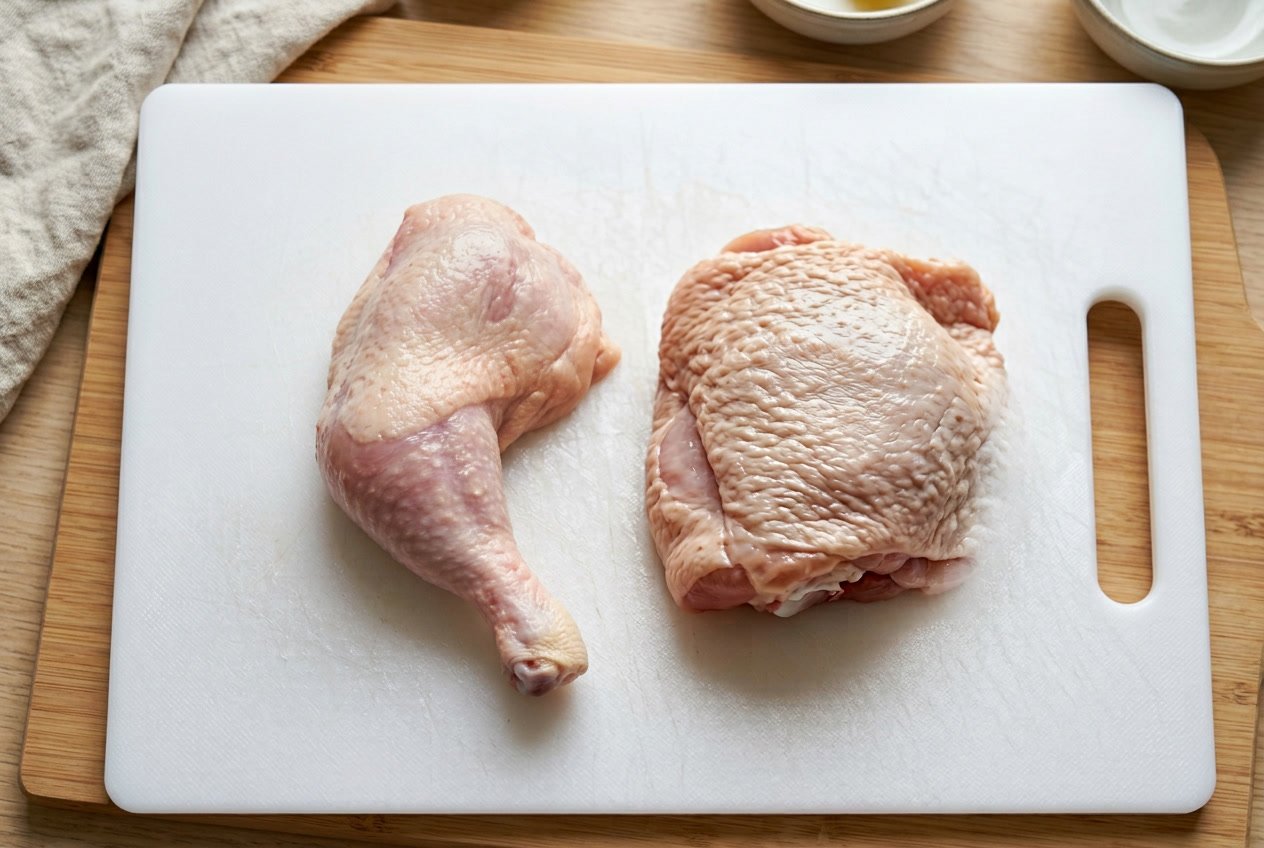
Choose thighs when you want richer, fattier dark meat that stays juicy under higher heat. Choose whole legs or drumsticks when you want a cheaper, classic portion that’s easy to eat and often cooks faster.
This guide explains how anatomy, nutrition, flavor, cooking methods, and cost affect what you buy and how you cook.
What Is the Difference Between Chicken Leg and Thigh?
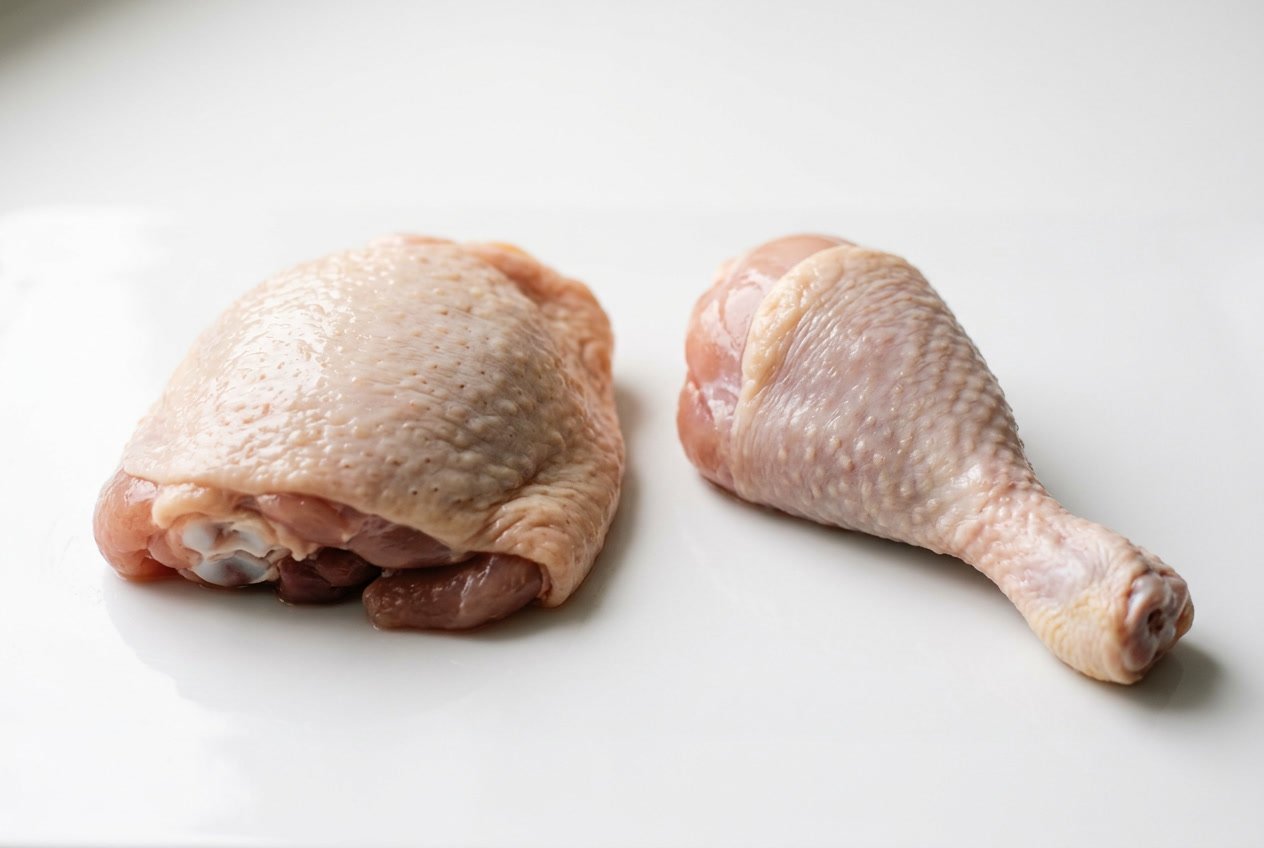
Each name refers to a specific part of the bird, and butchers label these pieces differently.
You’ll see clear distinctions in anatomy, cooking behavior, and labeling.
Anatomy and Cut Definitions
The thigh is the upper portion of the bird’s leg, attached to the body at the hip joint.
It contains one major bone (the femur) and has a higher fat content than the drumstick, with more meat per bone.
A chicken leg means the entire lower limb: thigh plus drumstick.
Stores often sell it as “whole chicken leg.” “Thigh” signals a single upper-leg cut, while “chicken leg” may mean whole or separated.
When you buy boneless skinless thigh, butchers remove the bone and skin. That changes cooking time and fat content.
Pay attention to labels and bone presence when following recipes or planning portion sizes.
Drumstick vs Thigh
The drumstick is the lower leg section below the knee.
It has a single bone surrounded by comparatively leaner dark meat and less fat than the thigh.
Drumsticks cook slightly faster and crisp up well under high heat.
Thighs stay moister during long cooking because of their higher intramuscular fat and connective tissue.
Drumsticks offer firmer, meat-on-bone eating and are often cheaper per piece.
If you debone, you’ll find thighs easier to remove from the bone, while drumsticks require more work with joints and cartilage.
Choose drumsticks for grilling and frying. Choose thighs for stews, curries, and slow-cooked dishes.
Whole Leg and Leg Quarters
A whole chicken leg typically means the thigh and drumstick left attached.
Buying whole legs gives you both textures and can be cost-effective.
Roasting whole legs yields contrasting results: thigh stays succulent while the drumstick skin crisps faster.
Chicken leg quarters include the whole leg plus a portion of the back, increasing meat and fat content.
Leg quarters are common in bulk packs and work well for long roasts or barbecues.
When choosing between whole legs, leg quarters, or separated thighs/drumsticks, consider portion control, cooking method, and whether you need boneless pieces.
Nutritional Comparison of Chicken Leg and Thigh
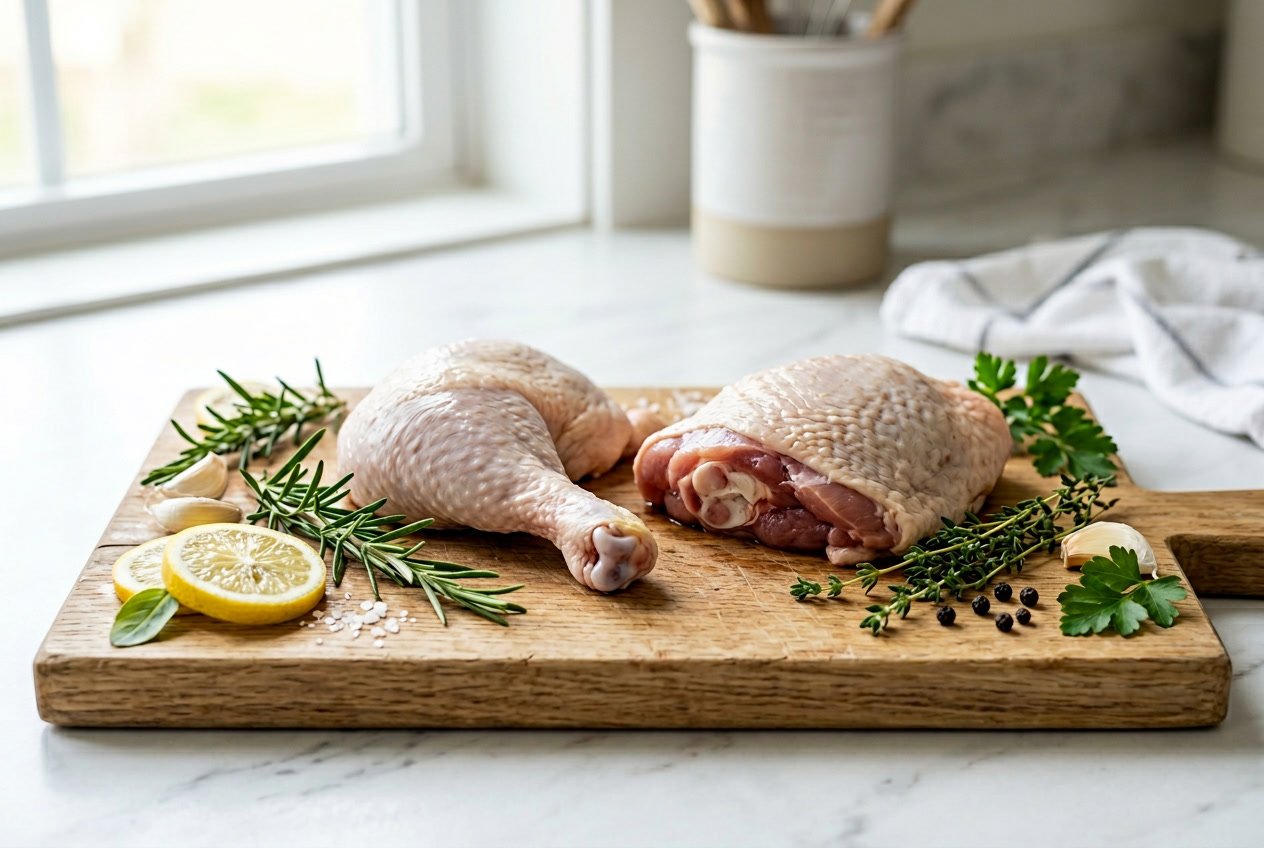
Chicken legs (drumstick plus sometimes part of thigh) and chicken thighs differ in calories, fat, protein, and vitamins.
Those differences change further if you eat the skin or choose skinless chicken thigh.
Calories and Fat Content
A cooked 3-ounce skinless chicken thigh usually contains about 170–210 calories and roughly 8–15 grams of total fat.
A 3-ounce cooked chicken leg (drumstick, meat only) typically ranges from about 140–170 calories with roughly 3–6 grams of fat.
Thighs are higher in calories and total fat because they contain more intramuscular fat and connective tissue.
If you eat the skin, add about 40–60 calories and several grams of fat per 3-ounce portion.
Frying adds fat, while grilling or roasting without added oil keeps the calorie gap smaller.
Protein and Micronutrients
Both cuts provide similar protein per 3-ounce serving—roughly 15–26 grams depending on whether skin and bone are included.
The leaner drumstick often yields a slightly higher protein-to-calorie ratio than a skinless chicken thigh.
Thighs contain more iron and zinc because of greater myoglobin and connective tissue.
Both cuts supply B vitamins (niacin, B6) and selenium, with thighs sometimes offering marginally more B6 and niacin.
Choose chicken thighs to boost iron intake. Choose the leg if you want slightly fewer calories for similar protein.
Skin-On vs Skinless Cuts
Removing skin lowers calories and saturated fat.
A 3-ounce skin-on thigh may add about 50 extra calories and 4–6 grams saturated fat compared with the same skinless piece.
Choose skinless chicken thigh for lower fat and nutrient density.
Leave skin on for roasting when flavor and moisture matter, then remove excess fat or eat smaller portions.
For long cooking (braises, stews), thighs with skin yield juicier results. For leaner grilling or quick roasting, use skinless chicken thigh or drumsticks.
Flavor and Texture Differences
Thighs and legs both deliver dark-meat flavor, but they differ in fat, firmness, and how they respond to heat.
These differences affect seasoning choices, cook times, and the final mouthfeel you get from each cut.
Taste Profile of Chicken Leg
The chicken leg (drumstick) has a milder, slightly sweet flavor compared with the thigh.
You’ll notice a clean, straightforward poultry taste that works well with bright marinades like citrus, vinegar, or yogurt-based blends.
Because the leg is leaner, bold, oily sauces or heavy rubs can overwhelm it.
Lighter herb, lemon, or garlic pairings let the natural flavor come through.
The skin crisps nicely at high heat, adding a savory, slightly smoky note when roasted or grilled.
Taste Profile of Chicken Thigh
Chicken thighs taste richer and more savory due to higher intramuscular fat.
That fat carries and amplifies flavors, so you can use robust seasonings and the thigh will remain flavorful and tender.
Thighs also absorb long marinades and braising liquids well, giving you deeper, more complex flavor in slow-cooked dishes.
If you want concentrated umami, choose thigh. If you prefer a lighter profile that pairs with acidic brighteners, choose leg.
Tenderness and Juiciness
Thighs typically stay juicier during cooking because their higher fat and connective tissue render slowly and baste the meat.
You can cook thigh to a higher internal temperature without drying it, making it forgiving for grilling, roasting, or braising.
Legs are firmer and slightly chewier, since the drumstick muscles are more worked.
They cook faster and can dry out if overcooked, so monitor internal temperature closely and use shorter, hotter methods or moist-heat techniques.
For maximum juiciness, cook bone-in, skin-on thighs at moderate heat or braise.
For drumsticks, sear or roast at high heat briefly, then finish at moderate temperature to preserve moisture.
Cooking Methods for Chicken Leg and Thigh
Choose methods that match each cut’s size, fat content, and bone structure to get tender meat and crispy skin.
Focus on temperature, cook time, and whether you want a moist result or a crispy exterior.
Best Ways to Cook Chicken Legs
Legs (drumsticks) work best with slower, gentler heat because the meat is leaner and has more connective tissue.
Braise or roast at 325–350°F (160–175°C) for 40–60 minutes until the internal temperature hits 165°F (74°C).
For quick meals, oven-roast at 400°F for 35–45 minutes, starting skin-side up and finishing under the broiler for crispness.
Pat skin dry and season liberally for even browning.
Use a meat thermometer to avoid drying.
Marinate in yogurt or buttermilk for 30–120 minutes to tenderize and add flavor.
Techniques for Cooking Chicken Thighs
Thighs tolerate higher heat because fat keeps them juicy.
Pan-sear bone-in, skin-on thighs over medium-high heat for 6–8 minutes skin-side down, then transfer to a 375°F oven for 12–20 minutes.
For pulled chicken, slow-cook boneless thighs on low for 3–4 hours until they shred easily.
Score skin lightly to render fat faster.
For grilled chicken thighs, brine briefly to retain moisture.
Let rested thighs sit 5–10 minutes before carving to redistribute juices.
Grilling, Roasting, and Braising
Grill thighs over direct heat for 6–8 minutes per side.
For legs, start over indirect heat and finish over direct to avoid charring before the center cooks.
Roast thighs at 425°F for 25–35 minutes for crispy skin and juicy interior.
Roast legs at 375–400°F for 35–50 minutes, checking internal temperature.
Braise by browning meat first, then simmering in 1–2 cups of liquid at a gentle simmer for 45–90 minutes.
Aim for internal temps of 165°F (safe); thighs often benefit from 170–175°F for tenderness.
Dry skin and high heat give crisp results; low and slow yields soft but tender meat.
Thighs pair with bold marinades, while legs work well with dry rubs and smoky flavors.
Price, Availability, and Serving Suggestions
Thighs and legs are priced differently at the store, sold in bone-in or boneless options, and suit distinct serving styles.
Think about per-pound price, edible yield, and how you plan to serve the pieces when choosing which to buy.
Cost Differences
Chicken legs (drumsticks) usually cost less per package than chicken thighs because drumsticks have a higher bone-to-meat ratio.
If a store advertises drumsticks at $1.29/lb and thighs at $1.79/lb, the drumsticks still yield less edible meat after cooking.
Boneless skinless thighs often give better yield and may be more economical for meat-forward dishes despite a higher sticker price.
Look for sales on bulk packs if you meal-prep or freeze.
Organic, free-range, or pre-marinated options raise the price for both cuts.
Boneless/skinless processing usually adds $0.50–$1.50 per pound compared with bone-in versions.
Portion Sizes and Presentation
A single drumstick serves one person as a casual handheld portion. Plan on 1–2 drumsticks per adult.
Thighs are meatier and flatter, making them better for plated entrees. One thigh per adult or two for large eaters works well.
Present drumsticks whole and allow guests to eat with their hands.
Thighs present well sliced across the grain or kept bone-in for a rustic plate.
If you need uniform portions for catering, choose boneless thigh fillets.
For family-style or barbecue service, bone-in legs create a familiar, casual look and are cheaper per piece.
Popular Dishes
Drumsticks shine in quick roasting, grilling, or frying—think oven-baked BBQ drumsticks, fried legs, or skewered leg pieces.
Their shape and lower fat content make them faster to cook and conveniently portable.
Thighs excel in slow-cooked, braised, or saucy dishes: coq au vin, chicken tikka, and braised thighs hold up to long cooking and absorb marinades well.
Use thighs when you want moist, rich bites and sauces that cling to the meat.
Pick legs for casual, budget-friendly, handheld meals. Pick thighs for richer, meat-forward plates that require tenderness and sauce absorption.
Choosing Between Chicken Leg and Thigh
Pick based on fat content, cooking method, and ease of eating. Consider calories and cooking time if you track macros. Choose bone-in or boneless to match your recipe.
Choosing for Health Goals
If you want lower calories and slightly higher protein per ounce, choose the drumstick portion of the chicken leg. A roasted drumstick with skin typically has fewer calories and less fat than a thigh.
Remove the skin to cut saturated fat and calories further. Skinless thighs still provide more fat than skinless drumsticks.
For higher iron and flavor, thighs give you more myoglobin and fat. This helps with satiety if you’re limiting carbs.
If you monitor sodium or cholesterol, pay attention to preparation. Brining and marinades add sodium, and frying increases calories.
Use grilling or baking to keep a leaner profile.
Selecting for Cooking Style
Choose thighs for slow, moist cooking such as braising or stewing. Thighs resist drying and become tender at 175–185°F (80–85°C).
Pick drumsticks for quick, high-heat methods like frying, grilling, or baking. The shape offers a convenient handle and faster cook time.
If the recipe calls for boneless pieces for stir-fries or quick sautés, use boneless thigh for juiciness. Use boneless leg for a slightly leaner bite if available.
Bone-in pieces work well for roasting or smoking because the bone helps even cooking and adds flavor.
Substituting Leg and Thigh in Recipes
Use thigh in place of drumstick in most braises and slow-cooked dishes without changing liquids or times. Thighs give a richer mouthfeel.
When you replace thigh with drumstick for high-heat methods, reduce cooking time slightly to avoid overcooking.
If a recipe relies on shape, such as finger-food drumsticks for parties, keep drumsticks for presentation and handling.
For nutrition swaps, use skinless drumstick instead of thigh to cut about 20–30 calories and a few grams of fat per serving.
For texture swaps, choose boneless thigh to mimic thigh behavior in quick-cook recipes while preserving juiciness.
Adjust internal temperature targets. Aim for 165°F (74°C) minimum for safety, but you can use higher temperatures for thighs to break down collagen.


