
Cook Chicken Thighs to What Temp: Internal Temperatures & Best Methods
You want juicy, safe chicken thighs without guesswork. Aim for an internal temperature around 175°F for tender, reliably cooked thighs. Pushing to 190–195°F can make dark meat even more tender if you use slow, gentle heat.
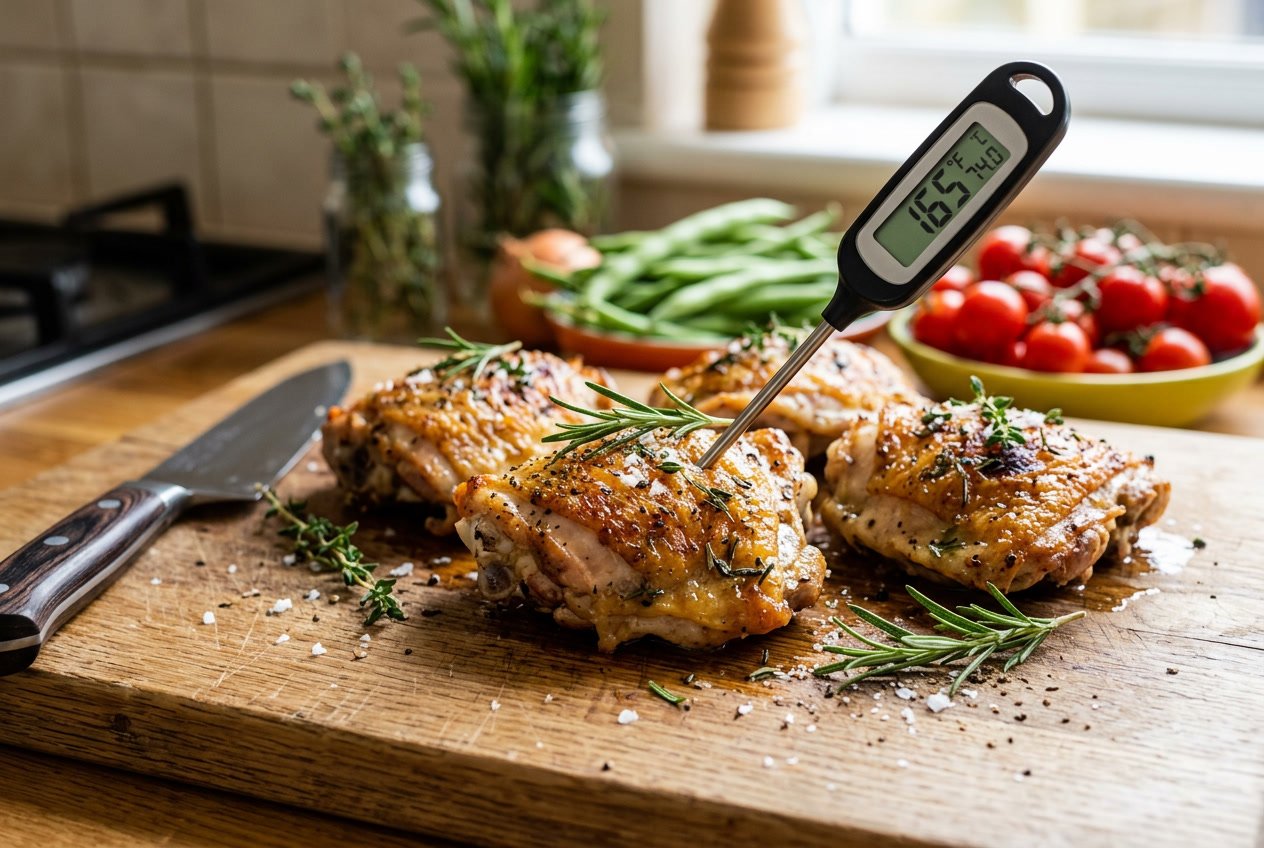
This guide shows how to check temperature accurately and why the USDA’s 165°F guideline matters. You’ll get practical timing, oven settings, prep tips, and cooking techniques so your thighs come out perfectly every time.
Safe Internal Temperature for Chicken Thighs
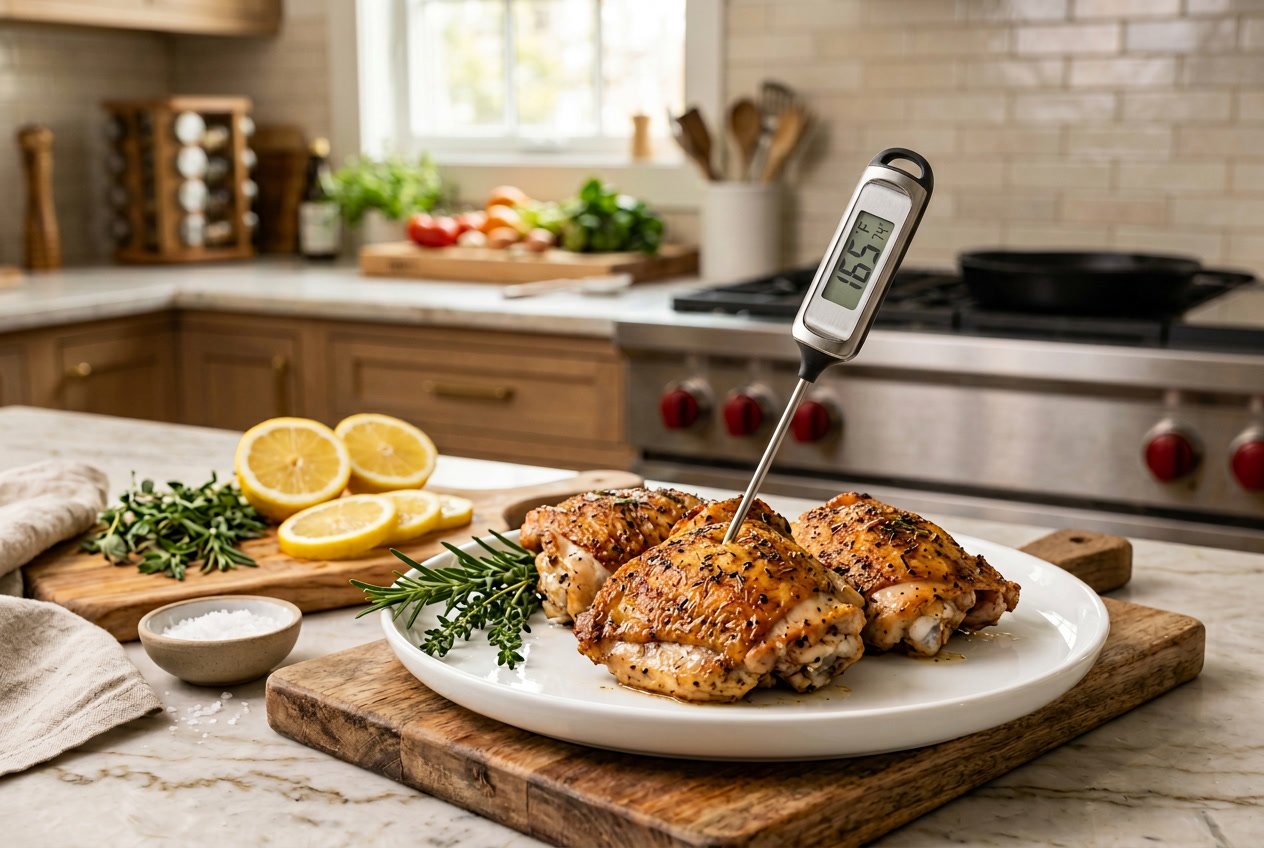
Aim for temperatures that eliminate harmful bacteria and match your preferred texture. Use an instant-read thermometer in the thickest part of the thigh, avoiding the bone.
USDA Guidelines for Chicken Thighs
The USDA sets the minimum safe internal temperature for all poultry at 165°F (74°C). When you reach 165°F, you reduce pathogens like Salmonella and Campylobacter to safe levels.
Measure at the thickest part of the thigh and avoid touching bone, which gives a falsely high reading. If you cook whole birds or mixed cuts, check multiple thighs to confirm consistent doneness.
The guideline prioritizes food safety over texture. Hold chicken briefly at or above 165°F for safety. Follow the 165°F rule when serving young children, pregnant people, older adults, or immunocompromised individuals.
Why 165°F Is the Minimum Safe Temperature
Temperature directly affects pathogen kill rates. At 165°F, you quickly inactivate Salmonella and most other bacteria associated with raw poultry.
Time at temperature matters less at 165°F because the lethal effect is swift. Lower temperatures can still be safe if held long enough, but that requires precise time-temperature control and is less practical for home cooks.
Using 165°F as your baseline removes guesswork and keeps foodborne illness risk low. If you prefer a lower endpoint for moisture, use validated sous-vide or controlled-temperature methods and follow clear time protocols.
Optimal Temperatures for Juicier Thighs
Chicken thighs contain more connective tissue and collagen than breasts, so they tolerate and often benefit from higher final temps. Many cooks find thighs especially tender and flavorful when cooked to 175–195°F (79–90°C), where collagen breaks down into gelatin.
At 175°F the meat becomes more tender. At 190–195°F, the meat can become falling-off-the-bone if cooked slowly. Avoid exceeding about 210°F, which can make meat stringy and alter flavor.
Choose your target based on method. Roast or grill to 175–185°F for a balance of juiciness and shape. Braise or slow-roast toward 190–195°F for pull-apart texture.
Risks of Undercooking Chicken
Undercooked thighs pose a food-safety risk because Salmonella and Campylobacter can survive at temperatures below 165°F. Eating undercooked poultry can cause foodborne illness with symptoms like diarrhea and fever.
Color can mislead you; dark meat often remains slightly pink even when fully cooked. Use a calibrated instant-read thermometer to remove uncertainty.
Cross-contamination is another risk when handling raw thighs. Wash hands, sanitize surfaces, and avoid reusing marinades that touched raw meat unless you boil them first.
How to Accurately Measure Chicken Thigh Temperature
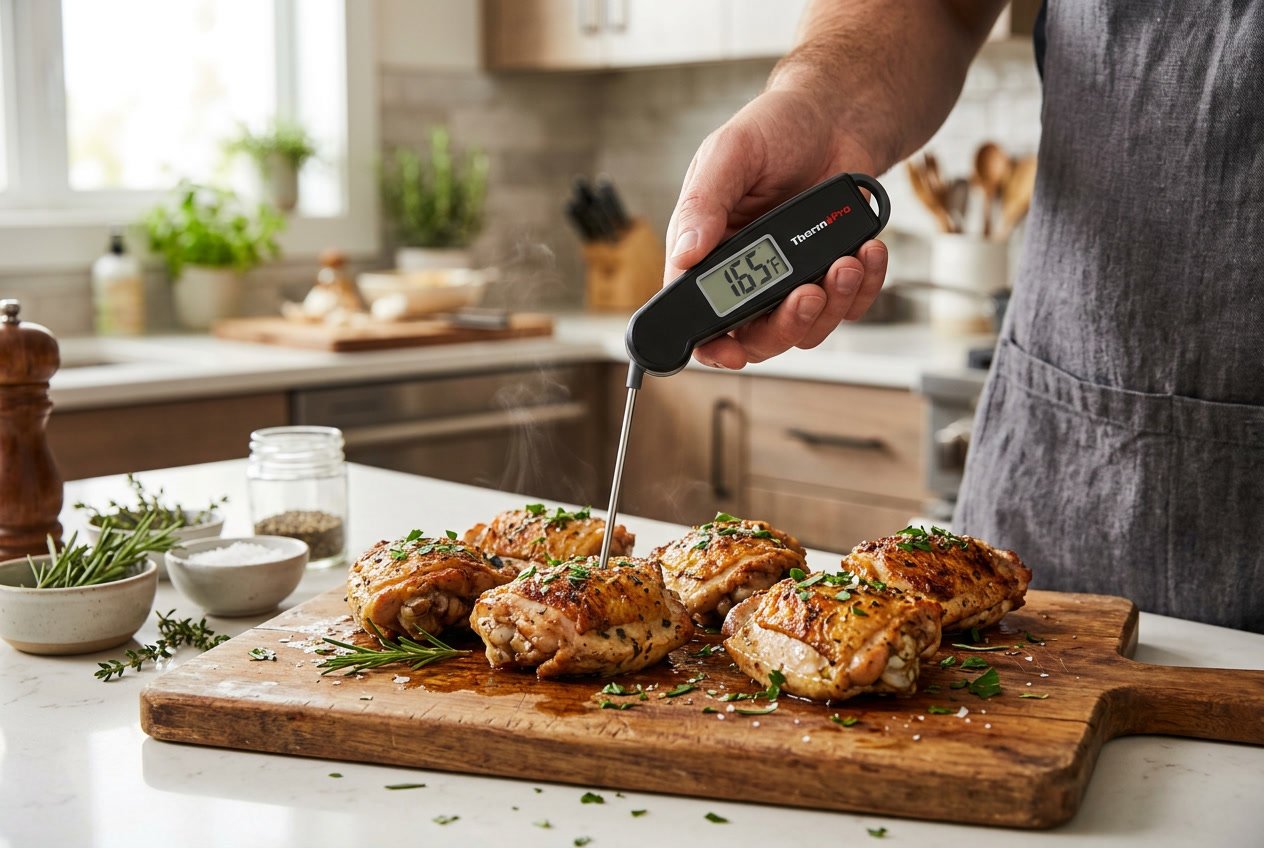
Use a reliable thermometer, target the thickest part of the meat, and avoid touching bone. Insert the probe deep enough to reach the muscle core. Let the reading stabilize before recording.
Choosing the Right Meat Thermometer
Pick a digital instant-read or a leave-in probe with a wired display for accuracy and speed. Instant-read thermometers give quick spot checks, while leave-in probes monitor carryover cooking when roasting or smoking.
Look for a thermometer with a range of at least 100–210°F (38–99°C) and an accuracy of ±1–2°F. Water- or splash-resistant housings and a thin probe tip help you reach the thickest part of a thigh without large punctures.
Calibrate periodically using the ice-water (32°F / 0°C) or boiling-water method. Clean the probe with hot, soapy water before and after use.
Where to Insert the Thermometer
Insert the probe into the thickest portion of the thigh, near the center of the flesh. Aim the tip toward the middle of the piece to read the slowest-heating zone.
Push the probe in at least 1–1.5 inches so the tip sits in the core of the muscle. If the probe is too shallow, the reading will reflect surface heat and understate the true internal temperature.
Wait until the digital readout stabilizes before recording. Hold steady for the manufacturer’s recommended time.
Avoiding Bone for Accurate Readings
Keep the probe tip clear of bone because bone conducts heat and produces falsely high readings. Angle the probe parallel to the bone and stop short of contact.
When testing bone-in thighs, insert the probe from the side toward the center rather than straight down over the bone. If in doubt, test multiple locations to confirm consistency.
If you get a borderline reading, remove the thigh from heat, tent with foil, rest 5 minutes, then recheck in the thickest meat away from bone.
Cooking Time and Oven Temperatures
Oven temperature determines how long to bake chicken thighs and whether the skin crisps or the meat stays juicy. Use a meat thermometer and aim for an internal temperature of 165°F (74°C).
Cooking Times by Oven Temperature
At 375°F (190°C) you get moderate cooking times and even doneness. Boneless thighs usually take about 20–30 minutes. Bone-in thighs take about 30–40 minutes.
At 425°F (220°C) the skin crisps faster and cooking time shortens. Boneless thighs often finish in 15–25 minutes. Bone-in thighs finish in 25–35 minutes.
At 450°F (232°C) browning speeds up but risk of uneven cooking increases. Use high heat for smaller pieces or when you’ll finish under the broiler for extra crisp. Check internal temperature frequently.
Baking Bone-In vs. Boneless Thighs
Bone-in chicken thighs take longer to reach 165°F because the bone slows heat penetration. Plan on roughly 10–15 minutes extra compared with boneless pieces at the same oven temperature.
Boneless chicken thighs cook faster and more evenly in the center. They respond well to 400–425°F for a balance of crisp exterior and juicy interior.
For bone-in thighs, place them skin-side up and leave space between pieces so hot air circulates. For boneless thighs, flattening slightly or using a convection setting speeds cooking and promotes even browning.
How Oven Temperature Affects Texture
Lower oven temps (around 375°F/190°C) let fat render slowly and preserve moisture, producing tender, juicy meat with moderate skin crispness.
Higher oven temps (425–450°F) promote rapid browning on the skin, yielding crispy texture and stronger roasted flavor. High heat can dry the meat if you overshoot the 165°F target.
If crisp skin is essential, dry the skin before baking and finish under the broiler for 1–3 minutes if needed. Always rest the thighs 5 minutes after removing them so juices redistribute and the final texture stays moist.
Preparing Chicken Thighs for Cooking
You want juicy, safe-to-eat thighs with pronounced flavor and a good surface texture. Use controlled salt contact and targeted flavorings so the meat tenderizes and the skin crisps.
Marinating and Brining Techniques
Brining adds moisture and seasons through the meat. For a basic wet brine, dissolve 3 tablespoons kosher salt per quart (1 L) water. Submerge skin-on thighs for 30 minutes to 2 hours in the fridge.
Rinse and pat dry before cooking to avoid overly salty skin. For a short brine, 30–60 minutes gives noticeable improvement without waterlogging.
Marinades add layered flavor but don’t replace brining for moisture retention. Acidic marinades (vinegar, citrus, yogurt) tenderize surface proteins. Limit time to 30–60 minutes for boneless thighs, 1–2 hours for bone-in.
Include oil and aromatics to carry flavors. Garlic, soy, mustard, or olive oil work well.
Use a resealable bag or nonreactive container and keep everything refrigerated. Discard used marinade or boil it before using as a sauce.
Seasoning for Flavor and Texture
Dry seasonings help create crisp, flavorful skin. Pat thighs completely dry with paper towels before seasoning.
Use a base of kosher salt (about ¾–1 teaspoon per thigh) and freshly ground black pepper. Add herbs and spices that complement your cooking method.
For roasting, use paprika, garlic powder, onion powder, and thyme. For grilling, use cumin, smoked paprika, and oregano. For pan-searing, use a simple blend of salt, pepper, and a touch of cornstarch or flour to increase crust formation.
Apply seasoning just before cooking for wet-brined pieces. For unbrined thighs, you can season and rest for 15–30 minutes to let salt penetrate. Lightly oil the skin to promote even browning.
Cooking Techniques for Tender and Juicy Thighs
Control temperature, manage moisture, and use surface browning to develop flavor. Choose a method that matches your time, equipment, and desire for crispy skin or fall-off-the-bone tenderness.
Oven Roasting and Baking
Preheat your oven to 375–400°F for reliable roasted chicken thighs. Use bone-in, skin-on thighs on a rimmed sheet or roasting pan so heat circulates.
A convection oven at 375°F speeds cooking and promotes even browning. Pat skin dry and season well with salt to help the skin crisp and draw out excess moisture.
Roast uncovered so the skin crisps. Expect 30–45 minutes depending on size and oven. Check internal temperature with a probe in the thickest part, avoiding bone.
Remove at 165–175°F then rest 5–10 minutes for carryover to finish at a slightly higher temp and stay juicy. If you want extra browning, finish under a broiler for 2–4 minutes, watching closely.
Basting is optional. A light brush of oil or pan juices mid-roast can improve color but isn’t necessary for crisp skin.
High Heat for Crispy Skin
Use high heat (425–450°F) when you want crisp, crackling skin. Preheat the oven thoroughly and give the thighs space on a hot pan so the skin starts rendering fat immediately.
Sear skin-side down in an oven-safe skillet over medium-high heat for 4–6 minutes first to render fat and start browning. Then transfer the skillet to the preheated oven to finish.
Total time often falls between 25–35 minutes. Monitor internal temp and remove at 165–175°F depending on your preferred texture.
Avoid overcrowding the pan; trapped steam softens skin. For a crispier finish, use a light dusting of baking powder on the skin, then season after applying.
Grilling and Searing
Set up a two-zone fire for grilling chicken thighs: use direct high heat for searing and indirect medium heat to finish cooking.
Preheat the grill to 400–500°F on the hot side and 300–350°F on the cool side.
Place the chicken skin-side down over direct heat for 3–6 minutes to render fat and create crispness.
Move the chicken to indirect heat to finish cooking.
Flip the thighs occasionally and close the lid to maintain an even temperature.
Aim for an internal temperature of 165–175°F.
Thicker bone-in pieces may need longer at lower heat so the connective tissue breaks down without burning the outside.
For stovetop searing, heat a heavy skillet until it shimmers.
Sear the chicken skin-side down until deeply golden.
Transfer the chicken to a 375°F oven or finish in the pan with reduced heat and a lid.
Baste with pan juices to keep the meat moist.
Sous Vide and Slow Cooking
Use sous vide to control doneness and maximize tenderness.
Set the water bath to 165°F for traditional texture or 145–150°F for a more tender, slightly pink result.
Vacuum-seal skin-on thighs with aromatics and cook for 1.5–4 hours depending on thickness.
After sous vide, pat the chicken dry.
Crisp the skin in a very hot skillet or under a broiler for 1–3 minutes per side.
This method keeps the chicken juicy while delivering crisp skin through high-heat finishing.
For slow cooking, braise thighs in liquid at low heat until connective tissue breaks down.
Cook for 2.5–4 hours at 275–300°F in the oven or 4–6 hours on low in a slow cooker.
Finish under high heat to refresh the skin if using skin-on pieces.
Tips for Perfect Baked Chicken Thighs
Control the temperature, dry the skin, and use a rack for airflow to achieve crispy skin while keeping the meat juicy and tender.
Check the internal temperature with an instant-read thermometer and let the thighs rest so juices redistribute.
Getting Even Doneness
Select thighs of similar size so they cook at the same rate.
Trim large pieces or pound them slightly to even thickness if needed.
Arrange the thighs in a single layer on a wire rack set over a rimmed baking sheet to allow hot air under and around each piece.
This setup helps render fat and crisps the skin evenly.
Preheat the oven to your target temperature.
A temperature of 400°F (200°C) balances crisp skin and tender meat.
Start checking internal temperature at the lower end of the cooking time to avoid overcooking.
Rotate the pan halfway through if your oven has hot spots.
Visual and Texture Signs of Doneness
Insert an instant-read thermometer into the thickest part without touching the bone.
Aim for 175°F (80°C) for bone-in thighs to break down connective tissue and keep the meat juicy.
For boneless thighs, 165–175°F works; the higher end produces more tender, shreddable meat.
Look for deep golden-brown, taut skin with rendered fat pooling on the sheet below.
When pierced, juices should run clear, not pink.
The meat should pull slightly from the bone and feel springy but not firm.
Resting Chicken Thighs After Cooking
Rest thighs 5–10 minutes on a warm plate or the cooling rack before cutting or serving.
This pause lets muscle fibers relax and helps juices redistribute, which preserves juiciness and prevents dry slices.
Tent loosely with foil if you need to hold them longer, but avoid sealing tightly. Trapped steam will soften the crispy skin.
For best texture, finish under the broiler for 1–2 minutes after resting if the skin lost crispness and you plan to serve immediately.


