
Cook Chicken Thighs on Stove: Easy, Juicy, Crispy Results Every Time
You can get juicy, crispy chicken thighs on the stove in about 15–25 minutes by searing them over medium-high heat and finishing until the internal temperature reaches 165°F (75°C).
Sear skin-side down in a hot skillet, then reduce heat and cook until the thickest part hits 165°F (75°C) for reliably juicy, safe chicken.
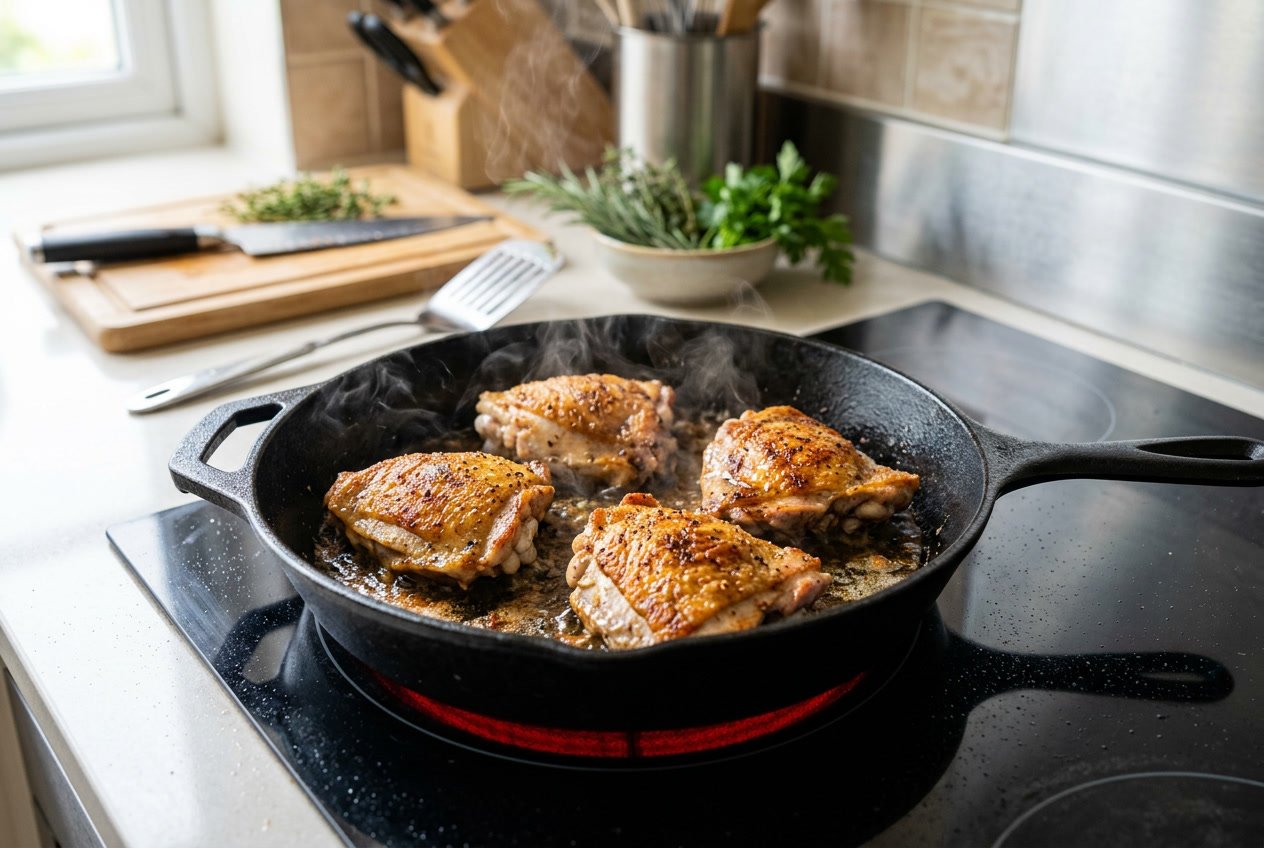
This guide explains how to choose the right thighs, which tools matter, how to prep and season, and a step-by-step stove-top method for crisp skin.
You’ll find timing and temperature tips, quick sauce ideas, tasty variations, and storage and reheating advice.
Why Cook Chicken Thighs on the Stove?
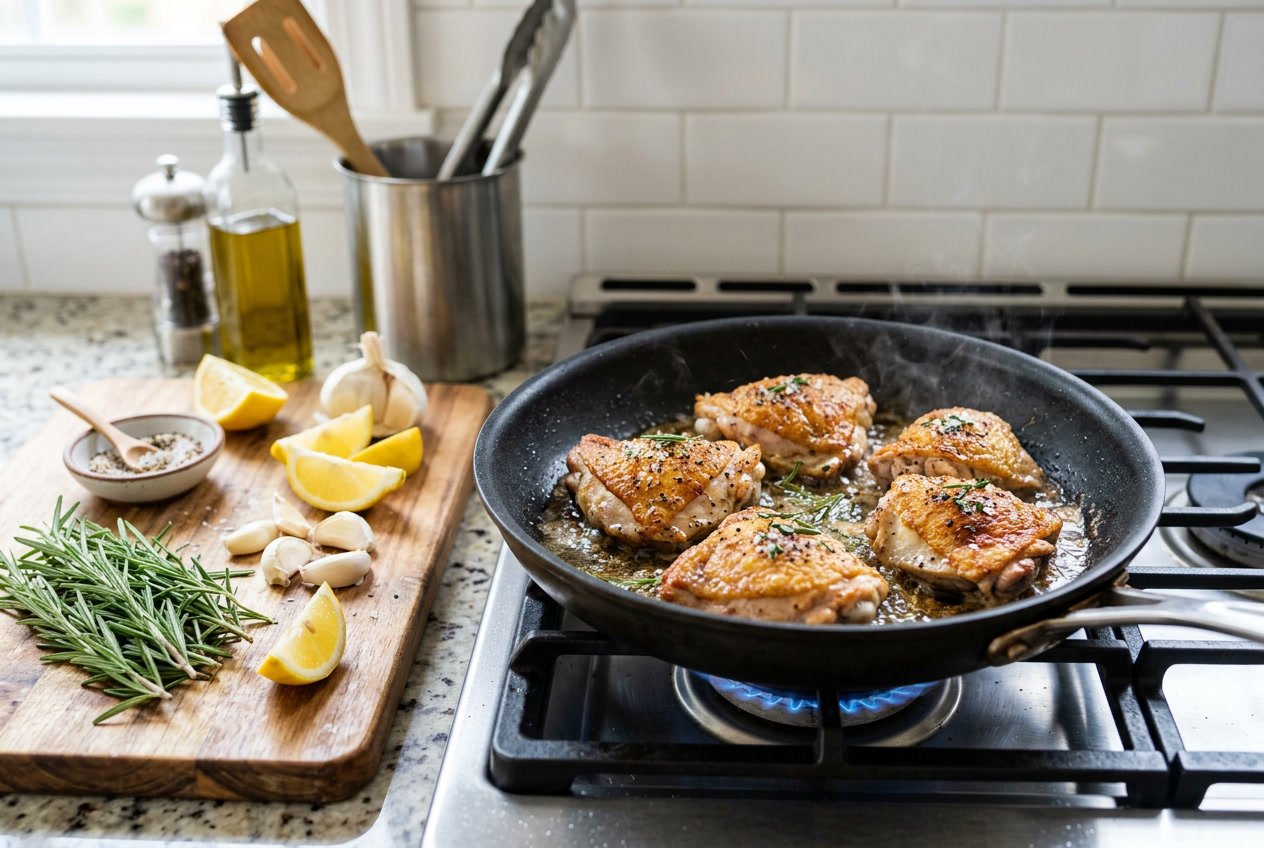
Stovetop cooking gives you precise control over temperature, browning, and timing while keeping cook time short and cleanup minimal.
You can get crispy skin, juicy meat, and a quick pan sauce using only a skillet, oil, and a thermometer.
Benefits of Stovetop Cooking
Stovetop chicken thighs heat quickly and let you manage sear and finish independently.
You can sear skin-on thighs over medium-high heat to develop a crisp crust, then lower the flame to finish through without drying the interior.
You avoid long oven preheats and can cook smaller batches fast, which is useful for weeknight meals or meal prep.
A single large skillet handles 4–6 boneless thighs or 3–4 bone-in thighs comfortably. Cook in batches to avoid overcrowding and steaming.
A pan captures fond (browned bits) that you can turn into an instant sauce with stock, wine, or butter.
That boosts flavor without extra dishes and makes stovetop thighs a one-pan option for busy cooks.
Flavor and Texture Advantages
Stovetop methods maximize contrast: a crisp exterior and moist interior.
Skin-on, bone-in thighs render fat during searing, which bastes the meat and deepens flavor. Boneless thighs sear faster and still hold juiciness due to higher fat content than breasts.
You control Maillard reaction by adjusting heat and contact time.
That control means golden skin and a savory crust rather than uneven browning from an oven’s ambient heat.
Use a probe thermometer to reach 165°F (75°C) at the thickest point for safety without overcooking.
Finishing in the pan lets you add aromatics like garlic, shallots, and herbs, and deglaze to capture pan juices.
Those quick pan sauces cling to stovetop chicken thighs and amplify flavor.
Budget and Meal Planning
Chicken thighs cost less per pound than many other cuts, so they stretch your food budget while yielding satisfying portions.
Bone-in thighs give more flavor per dollar. Boneless thighs save prep time and work well for salads, sandwiches, and meal-prep bowls.
Stovetop cooking shortens active cook time, helping you get meals on the table in 20–30 minutes.
Cook a larger batch, cool, and store in airtight containers. Refrigerated thighs keep 3–4 days, making them ideal for lunches and quick dinners.
You can cook small or large quantities in the same pan, so stovetop chicken thighs fit flexible meal plans.
Choosing the Right Chicken Thighs
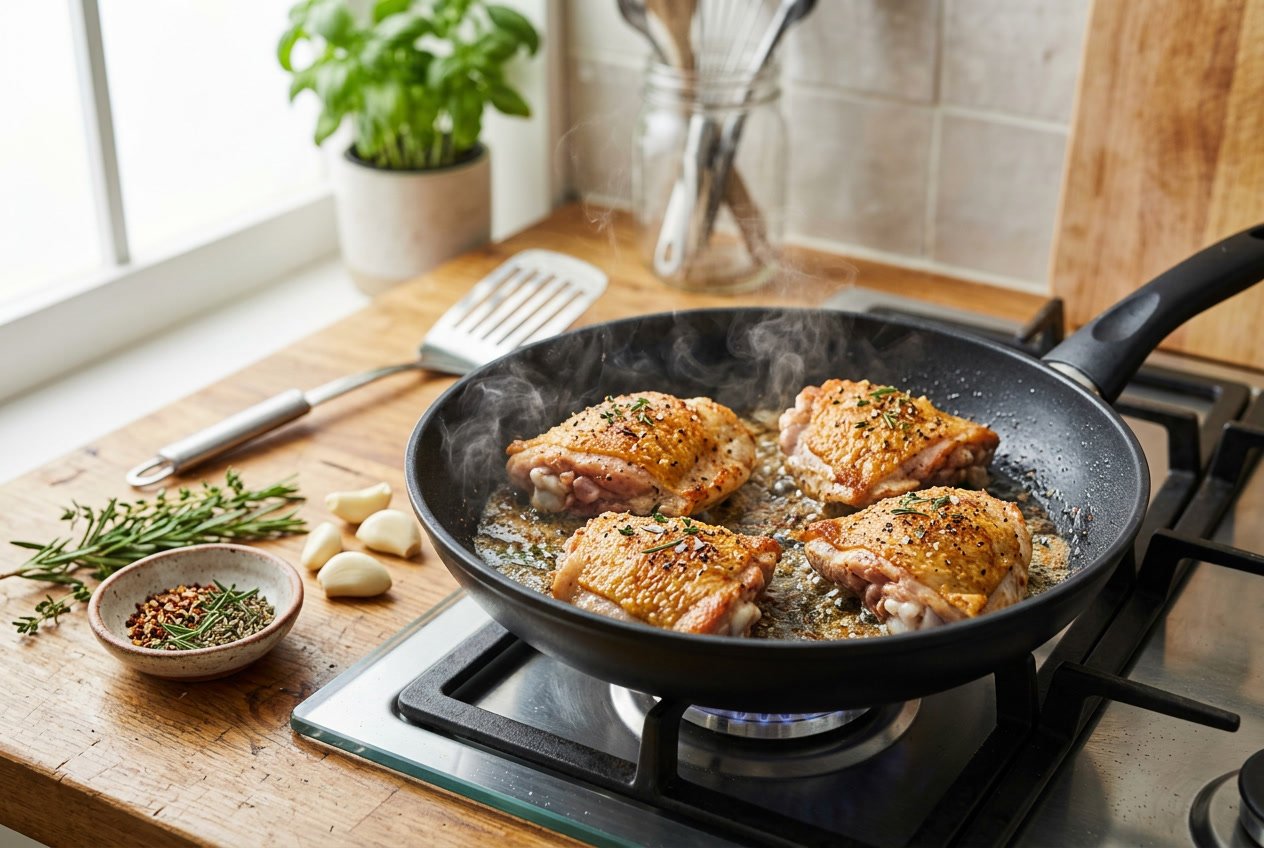
Pick thighs that match the texture and cook time you want.
Focus on whether you need quick-cooking, easy-to-eat pieces or deeper flavor and crispier skin.
Boneless vs. Bone-In
Boneless chicken thighs cook faster and are easier to slice for sandwiches, salads, or stir-fries.
Expect 8–12 minutes total on the stove depending on thickness. They brown quickly but can dry if overcooked, so monitor internal temperature to 165°F (75°C).
Bone-in chicken thighs take longer—usually 15–25 minutes—but the bone adds flavor and helps the meat stay moist during stovetop searing.
Use a lower heat after the initial sear and consider covering the pan to ensure the thicker parts reach safe temperature without burning the exterior.
Choose boneless if you prioritize speed and convenience.
Choose bone-in when you want richer flavor and slightly juicier results.
Skin-On vs. Skinless
Skin-on chicken thighs deliver the best chance for crispy, golden skin when cooked skin-side down first.
Pat skin dry and use a high-smoke-point oil. Let the skin sear undisturbed for 6–10 minutes until it releases from the pan.
After browning, you can finish covered or in a lower oven to cook through while preserving crispness.
Skinless chicken thighs skip the crisping step and are less likely to develop a caramelized crust.
They cook a bit faster and accept marinades and spice rubs more directly, but they require gentler heat to avoid drying.
For boneless skinless chicken thighs, watch the pan closely and add a finishing sauce or butter to boost juiciness.
If you want texture and a crisp finish, pick skin-on.
If you need convenience or lower fat, pick skinless.
What to Look For at the Store
Inspect color and smell first. Fresh thighs should be pinkish without strong odor.
Avoid any with gray tones or sour smells.
Check packaging dates and choose thighs with minimal liquid in the tray.
Excess fluid can mean the meat was frozen and thawed or sits too long.
For uniform cooking, pick pieces of similar size and thickness—this is especially important with bone-in chicken thighs.
Label reading matters: look for “boneless skinless” when you want shorter cook times and easier shredding.
Choose “skin-on” or “bone-in” when a recipe calls for crispy skin or deeper flavor.
If possible, buy from a butcher counter for trimmed, matched portions and ask whether the thighs were previously frozen.
Essential Equipment and Tools
You need a sturdy, well-seasoned pan and a reliable thermometer to get consistent, juicy results.
Pick tools that handle high heat, let you sear without overcrowding, and help you check doneness accurately.
Best Skillets for Stovetop Cooking
Choose a heavy-bottom skillet that holds heat for an even sear.
Cast iron skillets work well for skin-on, bone-in thighs because they retain heat and build a superior crust.
They’re ideal for skillet chicken and transfer well to the oven if you finish the thighs that way.
Use a 10–12-inch pan for 4–6 thighs. A pan that’s too large will waste oil and one that’s too small will overcrowd the meat.
If you prefer lighter care, opt for a stainless-steel skillet with a thick base.
Stainless sears well and releases browned bits for quick pan sauces.
Avoid thin nonstick pans for high-heat searing. Reserve them for lower-heat, skinless thighs or reheating.
- Cast iron: best for high-heat sears, long-lasting, requires seasoning
- Stainless steel: great for fond and sauces, easier cleaning than cast iron
- Size: 10–12 inches for typical batches; use multiple pans if necessary
Thermometers and Other Key Tools
A probe or instant-read thermometer prevents guessing. Target 165°F (75°C) at the thickest part of the thigh.
Instant-read models give a fast temperature check after searing, while oven-safe probe thermometers let you monitor internal temp if you finish in the oven.
Keep these extras on hand:
- Tongs: long, sturdy tongs let you flip skin-on thighs without piercing the meat
- Splatter screen: reduces mess when searing skin-on pieces in oil
- Fish spatula or metal turner: helps release crust without tearing
- Paper towels and wire rack: pat thighs dry for crisp skin, rest on a rack to keep crispness
Choose tools built for heat and durability.
Cheap utensils can melt or scratch skillets and change how well your cast iron chicken thighs brown.
How to Prepare Chicken Thighs for Stove Cooking
Trim excess fat, pat the meat dry, and bring thighs to a uniform thickness so they sear evenly and reach 165°F reliably.
Season just before cooking to avoid drawing out moisture.
Trimming and Cleaning
Remove any loose fat, excess skin flaps, and visible connective tissue with a sharp knife.
For bone-in thighs, trim away large pockets of fat near the bone. For boneless thighs, remove silver skin if present.
Rinse only if needed to remove bone fragments, then immediately pat dry.
Check for pin bones or cartilage around the joint and pull them with tweezers if you find any.
Trim ragged skin edges so they crisp evenly rather than burn.
Keep trimmed pieces for stock if you want to boost later sauces.
Drying for Crispiness
Pat thighs thoroughly with paper towels on both sides; moisture is the main barrier to a good sear.
If you have time, place the thighs uncovered on a wire rack in the fridge for 30–60 minutes to further dry the skin.
This helps produce a golden, crackling surface when you heat the pan.
Before cooking, blot again and lightly oil the surface to promote even browning.
If you’re using skinless thighs, drying still matters. A dry surface lets the meat develop a flavorful crust rather than steam.
Prepping for Even Cooking
Bring the thighs to near-room temperature for 15–20 minutes to reduce cook-time variance between exterior and center.
For very thick pieces, pound to an even thickness (about 1/2–3/4 inch) using a meat mallet or rolling pin, placing the thigh between plastic wrap first.
Season on both sides with salt and your chosen spices just before they hit the pan.
If using a marinade, limit the acid content and marinate for no more than 1–2 hours to avoid mushy texture.
Alternatively, brine briefly (30–60 minutes) for juiciness.
Use a thermometer during cooking and aim for an internal temperature of 165°F (75°C).
Seasoning and Spice Mixes
Choose seasonings that build a clear flavor profile: salty backbone, aromatic base, and one element for heat or brightness.
Use oil to help spices adhere and release flavor during searing.
Basic Seasonings
Start with salt and freshly ground black pepper as the foundation.
They bring out the chicken’s natural flavor.
Add garlic powder and onion powder for consistent savory notes that won’t burn as fast as fresh garlic during high-heat searing.
Use about ¾–1 teaspoon salt and ¼–½ teaspoon each of garlic and onion powder per pound of thighs, adjusting to taste.
Lightly coat the thighs with 1 tablespoon olive oil per pound before applying the dry seasoning to help the rub stick and promote even browning.
If you want heat, sprinkle a pinch of red pepper flakes.
Pat the thighs dry first to ensure a crispy exterior and even seasoning adhesion.
For bone-in or skin-on thighs, season under the skin where possible for deeper flavor.
Creating Custom Spice Rubs
Build a spice rub by combining a base of 1 tablespoon kosher salt and 1 teaspoon black pepper with complementary spices.
Try 1 teaspoon smoked paprika, ½ teaspoon cumin, and ½ teaspoon coriander for a warm, slightly smoky rub that sears well.
For every 1–1½ pounds of chicken, mix: 1–2 teaspoons garlic powder, 1 teaspoon onion powder, and ½–1 teaspoon red pepper flakes if you want heat.
Apply rub generously and let the thighs rest refrigerated for 30 minutes to 2 hours.
This helps flavors penetrate without needing a long marinade.
Store extra rub in an airtight jar.
Label the blend and use within two months for best potency.
Use a light hand with salt in premade seasoning mixes to avoid over-salting when you add other salty ingredients later.
Popular Marinades and Flavor Profiles
Marinades add moisture and deeper flavor; include an acid, oil, and aromatics.
A simple lemon-olive oil marinade uses 2 tablespoons olive oil, 1 tablespoon lemon juice, 1 teaspoon garlic powder, 1 teaspoon dried oregano, and ½ teaspoon salt per pound of chicken.
For an Italian-style profile, combine olive oil, Italian seasoning, minced garlic, and grated parmesan in the finishing stage.
A soy-garlic marinade adds umami: 2 tablespoons soy sauce, 1 tablespoon olive oil, 1 teaspoon garlic powder, and ½ teaspoon red pepper flakes.
Marinate boneless thighs 30 minutes to 4 hours. Bone-in can take up to 6 hours.
Pat thighs dry before searing to get a good crust. Reserve any marinade you plan to use as a cooked sauce, not raw.
Using Herbs and Cheese
Dried oregano and Italian seasoning flavor the chicken directly or work well in marinades for Mediterranean flair. Use 1–2 teaspoons per pound, adjusting for desired herbiness.
Grated parmesan brings savory umami and forms a light crust when sprinkled near the end of cooking or mixed with breadcrumbs. Mix 2 tablespoons grated parmesan with 1 teaspoon garlic powder and 1 teaspoon dried oregano, then press onto thighs after searing and finish with a splash of broth.
Add fresh herbs like parsley or basil after cooking to brighten the dish. Crumble dried herbs between your fingers before sprinkling to release oils and boost aroma.
Step-by-Step Guide
Pat the thighs dry and season them. Use a hot pan to build a browned crust, then finish over lower heat or with a lid.
Sear first for texture. Cook covered until the internal temperature reaches 165°F and the juices run clear.
Searing for Caramelized Crust
Heat a heavy skillet over medium-high until shimmering. Pour in 1–2 tablespoons oil with a high smoke point and lay the thighs skin-side down in a single layer.
Press gently for 30 seconds for full contact. Sear undisturbed for 5–8 minutes for skin-on thighs or 3–5 minutes for boneless skinless until a golden crust forms.
Flip and brown the other side for 2–4 minutes. Use tongs and avoid piercing the meat to keep juices inside.
Covered Cooking for Juicy Results
After searing, lower heat to medium-low and add ¼–½ cup broth, wine, or water. Cover and cook gently to finish without drying the meat.
Bone-in thighs take about 10–15 minutes covered; boneless need 6–10 minutes. Check doneness with an instant-read thermometer at 165°F in the thickest part.
Let thighs rest 5 minutes after cooking. Resting helps juices redistribute and firms the crust for neater slicing.
Making a Simple Pan Sauce
Remove thighs and tent with foil. Pour off excess fat, leaving about 1 tablespoon in the pan.
Add minced shallot or garlic and sauté for 30–60 seconds. Deglaze with ¼–½ cup wine, broth, or water, scraping browned bits.
Reduce by half, then swirl in 1 tablespoon cold butter or a splash of cream to thicken and gloss the sauce. Taste and season with salt, pepper, and lemon juice.
Spoon sauce over chicken thighs for added moisture and flavor.
Timing and Temperature
Aim for clear targets for time and temperature to get juicy thighs with crispy skin. Rely on minutes per side and internal temperature for accuracy.
How Long to Cook Chicken Thighs
For boneless thighs on the stove, cook for 10–14 minutes total. Bone-in thighs need 20–24 minutes when searing over medium-high heat.
Start skin-side down for 5–8 minutes to render fat and crisp the skin before flipping. On medium heat (300–350°F), cook boneless thighs for 6–8 minutes per side.
Bone-in thighs require 8–12 minutes per side depending on thickness. Avoid overcrowding the pan to ensure proper searing.
Temperature Guidelines and Checking Doneness
Use an instant-read thermometer in the thickest part, avoiding bone. The USDA minimum is 165°F (74°C); remove at 160°F (71°C) and rest 3–5 minutes to reach 165°F.
If you lack a thermometer, check for clear juices and a firm, springy texture. Wiggle the bone in bone-in pieces; easy movement signals doneness.
Rest thighs 3–6 minutes tented with foil to redistribute juices and finish cooking.
Timing Differences by Cut
Boneless, skinless thighs cook fastest: 10–14 minutes total. Watch for overcooking due to less insulation.
Bone-in, skin-on thighs need 20–24 minutes or more. The skin protects the meat during searing and should cook skin-side down longer for crispness.
Skinless bone-in thighs fall between types and need close temperature checks. Skin-on boneless thighs crisp quickly but cook faster than bone-in.
Quick reference:
- Boneless, skinless: 5–7 minutes per side (10–14 minutes total)
- Boneless, skin-on: 5–8 minutes per side
- Bone-in, skin-on: 8–12 minutes per side (20–24+ minutes total)
Delicious Variations and Recipes
Try quick stovetop techniques, bold seasonings, and simple pan sauces for consistent results.
Honey Garlic Chicken Thighs
Sear skin-side down in a hot skillet for 6–8 minutes until golden. Flip, reduce heat, and briefly remove thighs.
Add minced garlic, 2–3 tablespoons honey, 1–2 tablespoons soy sauce, and 1 tablespoon rice vinegar to the pan. Simmer 2–3 minutes, then return chicken to coat.
Use bone-in, skin-on thighs for the best texture and pan juices. Dry and season before searing.
Finish with sliced scallions and toasted sesame seeds. Try maple syrup instead of honey or add chili flakes for heat.
Add sliced mushrooms after searing and cook in the sauce until tender. Target 165°F internal temperature and rest 5 minutes off heat for the glaze to set.
Parmesan and Herb Chicken Thighs
Pat thighs dry and season with salt, pepper, 1 teaspoon garlic powder, and 2 tablespoons grated Parmesan. Sear in clarified butter or oil for 5–7 minutes per side for boneless; bone-in needs a few extra minutes.
Lower heat, add a splash of chicken broth, fresh thyme, and a knob of butter to baste. For extra crust, mix Parmesan with panko and press onto skin before searing.
Finish with fresh parsley and lemon zest. Deglaze with white wine for a more complex sauce.
Serve over buttered pasta or sautéed greens. Add extra Parmesan right before serving.
Spicy and Savory Options
Rub thighs with smoked paprika, cumin, garlic powder, and cayenne. Sear until crisp, then add 1/2 cup chicken broth and 1 tablespoon tomato paste.
Simmer covered for 8–12 minutes until done, then uncover and reduce to concentrate flavors. Stir in chopped olives or capers for briny depth.
Add lime juice or apple cider vinegar to balance richness. Store sauce and meat together for best reheating.
Freeze in portions for up to 3 months for quick dinners.
Serving Suggestions and Sides
Pair sides that balance the thighs’ richness and highlight pan flavors. Aim for contrasting textures and bright colors.
Pairing with Vegetables and Grains
Roast or sauté vegetables for color and texture. Blistered green beans with lemon zest and toasted almonds or roasted Brussels sprouts at 425°F give a caramelized bite.
Quickly sauté spinach or kale with garlic for a slightly bitter counterpoint. For grains, choose options that soak up sauce, such as rice, herbed quinoa, or buttered couscous.
For comfort, whip mashed potatoes with pan juices or serve roasted fingerling potatoes with rosemary and sea salt. For a light option, try lemony orzo salad with cucumber and parsley.
Using Sauces and Gravy
Build a pan sauce using the skillet fond. After removing the thighs, deglaze with 1/3–1/2 cup wine, stock, or water, scraping browned bits.
Simmer and finish with 1–2 tablespoons butter and chopped herbs. Add lemon juice or vinegar to brighten.
For creamy sauces, stir in a tablespoon of Dijon and 1/4 cup cream or Greek yogurt off heat. For bold flavors, add soy sauce, honey, and chili flakes for an Asian-inspired glaze.
Spoon sauce over thighs and starch for a complete bite.
Storing and Reheating
Store cooked chicken promptly and keep it cold. Reheat once to 165°F (75°C).
Use airtight containers or vacuum seal bags and label with the date.
Refrigeration and Freezing
Refrigerate cooked thighs within 2 hours; if above 90°F (32°C), refrigerate within 1 hour. Use shallow airtight containers or wrap tightly to cool quickly.
Store in the fridge at 40°F (4°C) or below for up to 3–4 days. For longer storage, freeze in single-use portions.
Use heavy-duty freezer bags or vacuum sealing to prevent freezer burn. Label with the date.
Frozen cooked chicken stays safe indefinitely but tastes best within 2–6 months. Thaw overnight in the refrigerator or use the cold-water method: submerge sealed chicken in cold water, changing water every 30 minutes until thawed.
Reheating Tips for Best Texture
Reheat food to an internal temperature of 165°F (75°C) using an instant-read thermometer. This keeps your meal safe without overcooking.
For the oven, preheat to 325–350°F (160–175°C). Add 1–2 tablespoons of broth or water per dish, cover with foil, and heat for 15–25 minutes depending on size.
Remove the foil for the last 5 minutes to crisp the skin.
On the stovetop, heat a skillet over medium-low with a splash of broth. Cover and turn occasionally for 6–10 minutes.
This method works well for boneless thighs and helps keep them moist.
For air frying, set to 350°F (175°C) and heat for 5–8 minutes. Check doneness and avoid overcrowding.
Use the microwave only for small portions. Add a tablespoon of liquid, cover, and heat in 1–2 minute bursts, checking temperature between intervals.
Reheat only once to reduce bacterial risk and preserve flavor and texture.


