
Cook Chicken Thighs in Pan: Step-by-Step to Crispy, Juicy Perfection
You can get golden, crispy skin and juicy meat using a simple skillet, a hot pan, and a few practical techniques. Sear skin-side down in a hot, lightly oiled pan until the skin is deeply browned, then lower the heat or transfer to the oven until the internal temperature reaches 165°F (75°C).
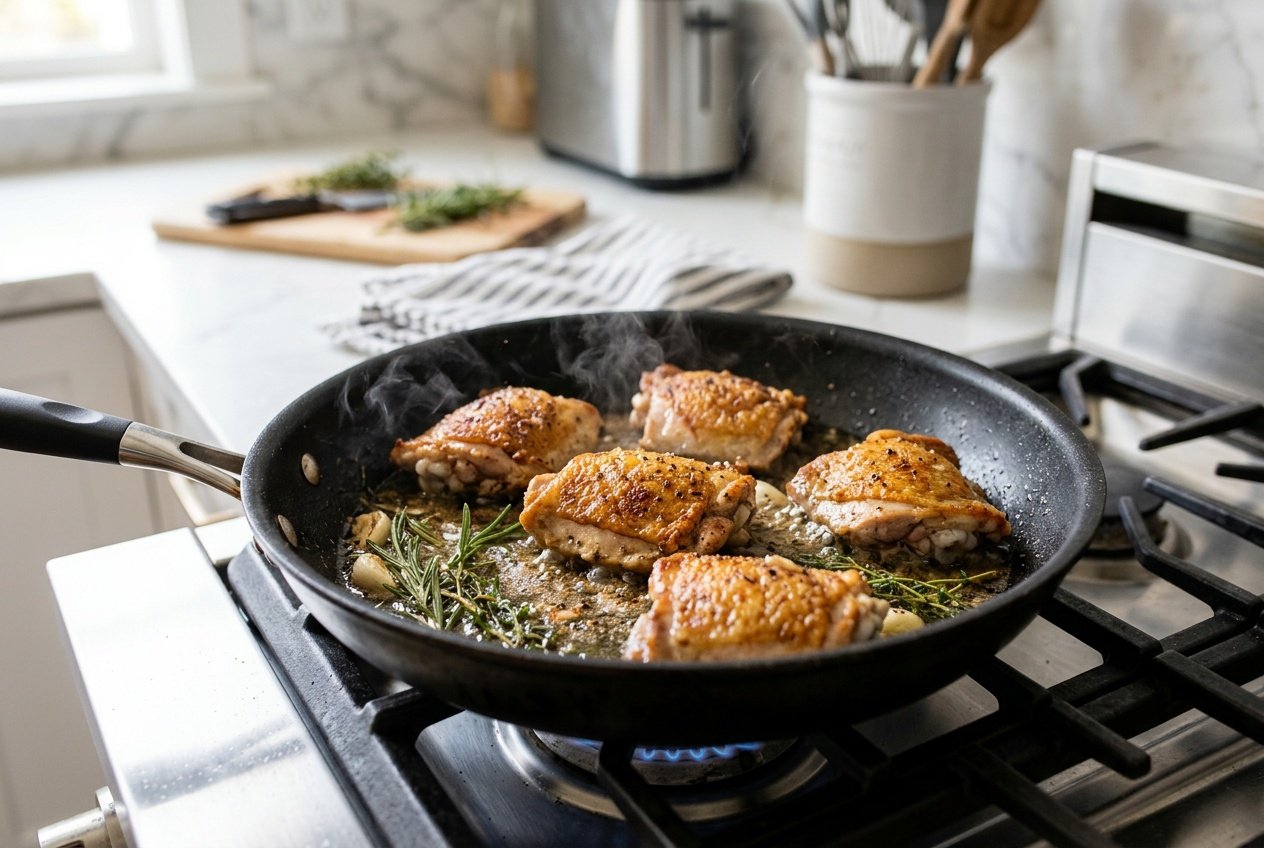
This guide covers which thigh types work best, the right pans and tools, seasoning approaches, and step-by-step pan methods. Use the tips on temp control, resting, and pairing to make a weeknight meal reliably satisfying.
Understanding Different Types of Chicken Thighs
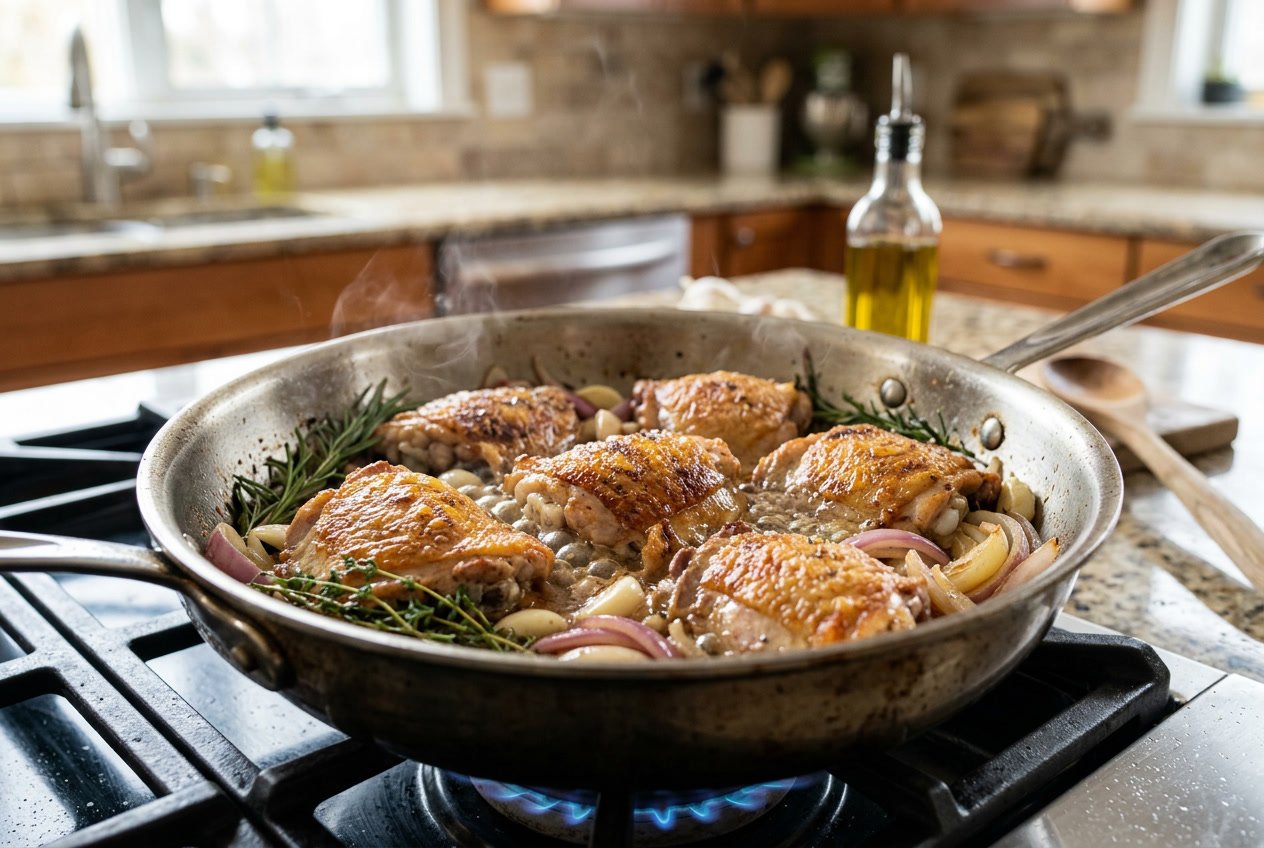
Different thigh cuts change cooking time, texture, and flavor. Knowing whether the piece has bone, skin, or specific production labels helps you choose the best option for pan cooking and lets you adjust seasoning and doneness checks.
Choosing Bone-In vs. Boneless Thighs
Bone-in chicken thighs have the femur and surrounding bone intact. The bone slows heat transfer, so you’ll need 3–6 minutes longer per side compared with similarly thick boneless thighs.
That slower cook time helps keep the meat juicier and adds depth of flavor. Boneless chicken thighs cook faster and give you more surface contact with the pan.
They are ideal for quick weeknight pan-searing or slicing for salads and tacos. Trim excess fat and pound evenly if pieces vary in thickness to ensure uniform doneness.
If you prefer a pan-to-oven finish, bone-in thighs tolerate higher oven times without drying. Use a meat thermometer and target 165°F (75°C) in the thickest part, avoiding direct contact with bone for accurate reading.
Skin-On and Skinless Thighs
Skin-on chicken thighs produce the crispiest exterior when you sear in a hot, oiled skillet. Pat the skin dry, season it, and start skin-side down to render fat and achieve golden-brown crispness.
The rendered fat also bastes the meat, improving flavor and moisture. Skinless thighs offer easier, leaner cooking and faster heat penetration.
They won’t crisp the same way, so use higher heat briefly or add a finishing sauce to compensate. Watch them closely; overcooking skinless thighs dries the meat faster than skin-on cuts.
For balanced results, sear skin-on thighs to crisp the skin, then flip and finish skin-side up in a low oven or covered pan to bring the internal temperature up without burning the exterior.
Organic, Free-Range, and Quality Considerations
Labels like “organic” or “free-range” affect feed, rearing conditions, and often price, but not basic cooking technique. Organic bone-in chicken thighs and conventional ones sear and roast the same way.
Inspect pieces for even thickness and minimal excess water. Excess moisture from packaging prevents browning; pat thighs thoroughly with paper towels before seasoning.
For bone-in or skin-on thighs, look for intact skin and clean bone ends to ensure even cooking. If flavor matters, higher-quality thighs sometimes show firmer texture and a slightly deeper chicken flavor.
You still follow the same pan techniques: dry, season, hot pan, and check internal temp, while adjusting cook time for bone-in pieces.
Essential Equipment and Pan Selection
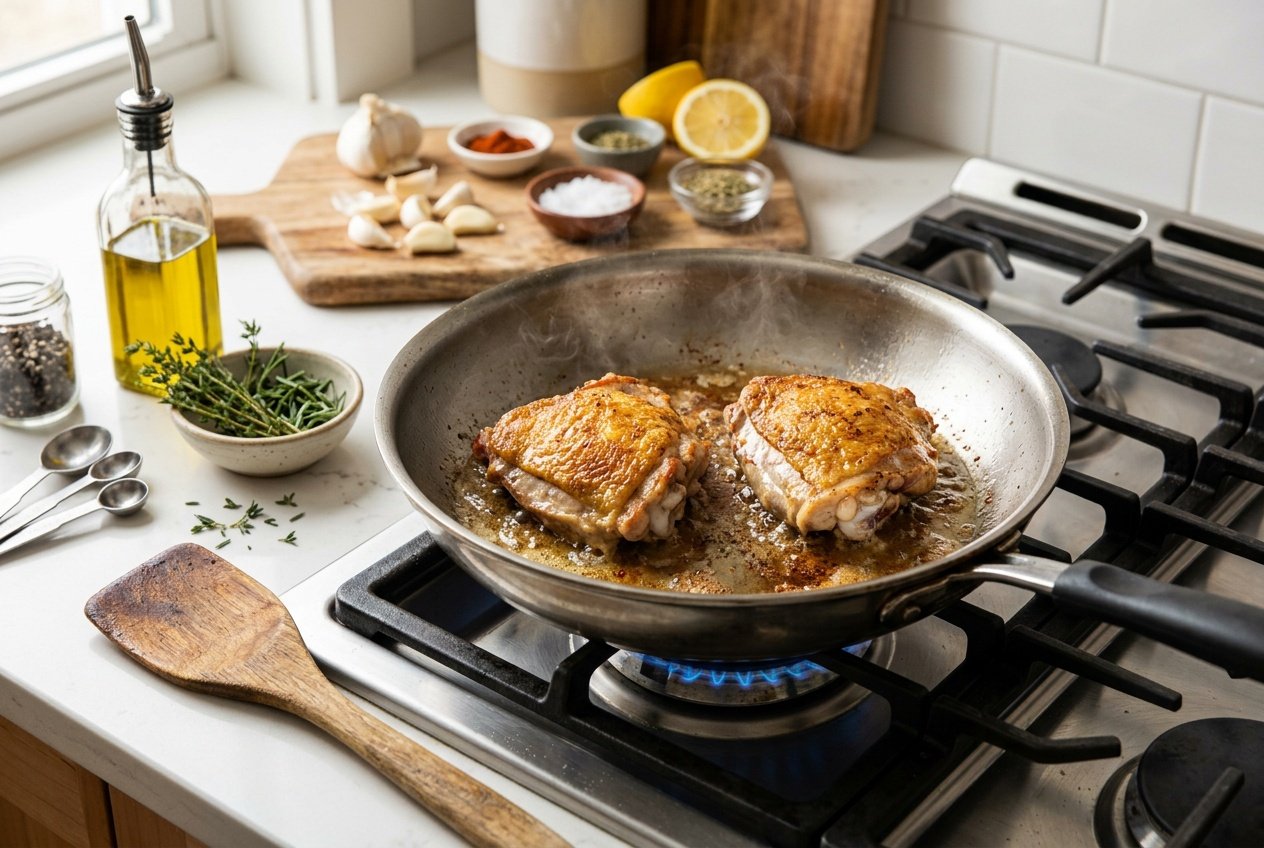
Choose a heavy, even-heating pan, a high-smoke-point oil, and a quick digital thermometer. These three pieces of equipment make it easier to get crispy skin and fully cooked thighs.
Skillet, Cast Iron, and Nonstick Pan Options
Pick a pan large enough to hold thighs without crowding. Overcrowding causes steaming instead of searing.
A 10–12 inch cast-iron skillet is ideal for skin-on, bone-in thighs because it holds heat and produces a reliable crust. Preheat the skillet for several minutes until it’s evenly hot before adding oil.
Use a heavy-bottomed stainless steel pan if you don’t have cast iron. It sears well but needs more attention to avoid sticking.
Choose a high-quality nonstick only for boneless, skinless thighs or lower-heat finishes. Nonstick doesn’t give the same deeply browned skin.
Make sure the pan’s surface is dry and room temperature meat sits flat for even contact.
Oil Choices for Searing
Use oils with smoke points above 400°F to avoid burning and off-flavors. Good choices include refined avocado oil, grapeseed oil, or light olive oil.
Add a small amount—1–2 tablespoons—to coat the pan and help transfer heat quickly to the skin. Reserve butter or extra virgin olive oil for basting late in the cook when temperatures are lower.
Butter adds flavor but burns at high heat. If you plan to finish with butter and herbs, add butter in the last 2–3 minutes and baste to build a brown, flavorful pan sauce.
Thermometers and Useful Tools
Use an instant-read digital thermometer to verify doneness. Insert into the thickest part without touching bone and target 165°F.
A leave-in probe thermometer can monitor while you sear and finish in the oven. Keep tongs for controlled flipping and a metal spatula for scraping fond.
Use paper towels to pat skin dry before seasoning. A splatter screen helps contain oil while searing, and a small ladle or spoon performs effective basting with hot pan fats.
Preparation and Seasoning Techniques
Start by removing surface moisture and deciding whether to salt, brine, or rub. Proper drying, seasoning under the skin, and timed marinating or brining deliver crisp skin and juicy meat.
Patting Dry and Marinating
Pat each thigh thoroughly with paper towels until the skin feels nearly dry. Dry skin helps form a brown, crispy crust when it hits a hot pan.
If you plan to marinate, do that after drying and lifting the skin to season the meat directly. Marinate for 30 minutes to 4 hours for most acid-based or oil-herb marinades.
Always refrigerate while marinating and discard used marinade or boil it before using as a sauce. Salt immediately before cooking for crisp skin, or salt 30–60 minutes prior to allow the salt to draw out and then reabsorb moisture.
For overnight flavor, brine instead.
Dry Rubs and Seasoning Mixes
Mix a basic dry rub: 1 tsp kosher salt per pound, 1/2–1 tsp black pepper, 1 tsp garlic powder, 1 tsp onion powder, and 1 tsp smoked or sweet paprika. Adjust heat with 1/4–1/2 tsp red pepper flakes or cayenne.
Lift the skin and rub a portion of the mix directly onto the meat. Reserve a lighter dusting for the skin to avoid burning.
For boneless thighs, use slightly less salt because they cook faster and concentrate flavors more quickly. For herb-forward profiles, add 1–2 tsp dried oregano or thyme.
For an Asian twist, replace paprika with 1 tsp five-spice and add 1 tbsp brown sugar to promote caramelization. Apply rub 15–60 minutes before cooking for best crust formation.
Refrigerate uncovered for an hour to further dry the skin if desired.
Advanced Flavoring: Brining or Herbed Marinades
Use a simple wet brine for juiciness: dissolve 1/2 cup kosher salt and 1/4 cup sugar in 4 cups water. Submerge thighs 1–2 hours in the refrigerator; rinse and pat dry before seasoning.
For a quick herbed marinade, whisk 3 tbsp olive oil, 2 tbsp lemon juice, 2 smashed garlic cloves, 1 tbsp chopped rosemary or thyme, and 1 tsp salt. Marinate 30 minutes to 4 hours in the fridge.
Longer acid contact (over 6 hours) can toughen the surface. Chop fresh herbs and tuck them under the skin with a thin layer of softened butter or oil to baste the meat during cooking and prevent herb burning.
How to Cook Chicken Thighs in a Pan
Focus on rendering fat, building a deep brown crust, and finishing thicker pieces gently so the interior reaches safe, tender temperatures. Each method below shows when to control heat, when to flip, and when to finish in the oven.
Pan Searing Step-by-Step Guide
Pat the thighs very dry and season both sides with salt and pepper. Use a heavy skillet (cast iron preferred) and heat a thin film of oil until it shimmers but doesn’t smoke.
Start skin-side down in a cold pan, then turn heat to medium-high to slowly render fat. Leave undisturbed for 7–10 minutes for bone-in, about 6–8 for boneless, until skin releases easily and is deep golden.
Flip once and sear the other side 3–5 minutes until the internal temp reaches your target: 165°F for boneless, 175°F for bone-in for better tenderness. Rest 5 minutes before serving.
Pan-Frying and Achieving Crispiness
Remove excess moisture and salt at least 30 minutes ahead for crispy chicken thighs. You can refrigerate uncovered to dry the skin.
Lightly dust skin with a 50/50 mix of flour and baking powder to boost browning and crispness. Use enough oil to coat the pan and maintain medium heat to avoid burning while the fat renders.
Keep 1–1.5 inches between pieces to prevent overcrowding and steaming. Tilt the pan occasionally and spoon hot fat over the tops in the last minute to finish the crust.
Transfer to a wire rack after cooking so steam doesn’t soften the skin.
Oven Finishing for Thick Cuts
When thighs are thick, sear both sides first to lock in flavor and color, then finish in a 400°F oven for even cooking. After searing skin-side down, flip and transfer the skillet to the oven for 12–20 minutes depending on thickness and bone presence.
Use a probe thermometer in the thickest part, avoiding bone: aim for 175°F for bone-in thighs, or 165°F–170°F for boneless. If you need extra-crisp skin after oven time, broil 1–3 minutes watching closely to prevent burning.
Let thighs rest on a cutting board for 5 minutes so juices redistribute before serving.
Best Practices for Cooking Juicy, Crispy Chicken Thighs
Keep the skin dry, give each thigh space to breathe, and control the heat so fat renders without burning. These steps help you get a golden, crisp exterior while the interior reaches the right temperature.
Don’t Overcrowd the Pan
Leave at least 1–1.5 inches between pieces to avoid crowding, which traps steam and keeps thighs from searing. If thighs touch, they will sit in rendered fat and steam instead of crisping.
Cook in batches for consistent browning. Use a large skillet—10–12 inches for four bone-in thighs—or split into two pans.
Drain excess fat between batches if it accumulates. For oven finish, transfer seared thighs to a wire rack over a rimmed sheet pan so hot air circulates underneath.
Managing Heat and Searing Times
Start skin-side down in a cold or moderately warm pan to slowly render the fat, then increase to medium-high for color. For bone-in, skin-on thighs, sear skin-side down 7–10 minutes until deep golden and the skin releases easily.
Flip and reduce heat to medium; finish cooking 8–12 minutes, or transfer to a 400°F oven to reach 175°F. Avoid sustained high heat that chars the skin before fat renders.
Use an instant-read thermometer inserted into the thickest part, avoiding bone, to confirm doneness. Adjust times for boneless thighs.
Resting and Slicing for Optimal Results
Rest thighs 5–10 minutes after cooking to let juices redistribute. Cutting too soon forces flavorful juices onto the plate.
Tent loosely with foil for even carryover heat without steaming the skin. When slicing, cut across the grain to shorten muscle fibers for more tender bites.
If you want extra-crispy skin after resting, place thighs skin-side up under a hot broiler for 1–2 minutes and watch closely. Store any leftovers in an airtight container within two hours.
Serving and Pairing Suggestions
Choose sides, sauces, and reuse ideas that highlight the thighs’ crispy skin and rich juices. Aim for contrasts in texture and acidity to balance the fattiness and keep the meal lively.
Side Dishes That Complement Chicken Thighs
Roasted vegetables add caramelized sweetness that pairs well with browned skin. Try carrots, Brussels sprouts, or asparagus roasted at 425°F (220°C) with olive oil and a pinch of salt until the edges brown.
A simple starch grounds the plate. Mashed potatoes or buttered rice absorb pan juices.
Couscous salad adds a lighter, Mediterranean touch. Mix cooked couscous with chopped cucumber, cherry tomatoes, parsley, lemon zest, olive oil, and a splash of red wine vinegar.
For greens, serve sautéed spinach or a crisp mixed salad with arugula, shaved fennel, and a lemon vinaigrette. If you want something heartier, pan-roast potatoes or prepare a grain bowl with farro for chew and substance.
Suggested Sauces and Garnishes
Make quick sauces with pan drippings to amplify flavor. Remove the thighs, deglaze the skillet with 1/4–1/2 cup chicken broth or white wine, scrape browned bits, then reduce and finish with a pat of butter and a squeeze of lemon.
Herb-forward finishes work well. Chop parsley, cilantro, or thyme and sprinkle over the hot thighs.
For a bold option, spoon chimichurri or gremolata (parsley, lemon zest, garlic) on top. If you prefer creamier sauces, stir a little creme fraiche or plain yogurt into the reduced pan liquid and thin with stock.
Season with salt and freshly cracked black pepper. Add toasted almonds or pistachios for crunch.
Using Cooked Thighs in Other Dishes
Shred or slice leftover thighs for versatile second meals. Toss shredded meat into tacos with pickled onions and cilantro.
The dark meat stays juicy and absorbs salsa well. Add shredded or sliced thighs into salads and bowls.
Slice thighs over couscous salad, grain bowls, or leafy greens to add protein and flavor without extra cooking. Drizzle with the pan sauce or a yogurt-tahini dressing.
Cut cooked thighs into strips and fold them into pasta with lemon, capers, and spinach. Add sliced thighs to a tomato-based stew for deeper flavor.
Store cooked thighs in airtight containers and freeze for up to 3 months.


