
Cook Chicken Thighs in Oven: Ultimate Guide for Juicy, Crispy Results
You can get juicy, safe-to-eat chicken thighs with crispy skin by roasting them at the right temperature until the internal temperature reaches 165°F.
You’ll learn practical steps to choose, prep, season, and time them for consistent results.
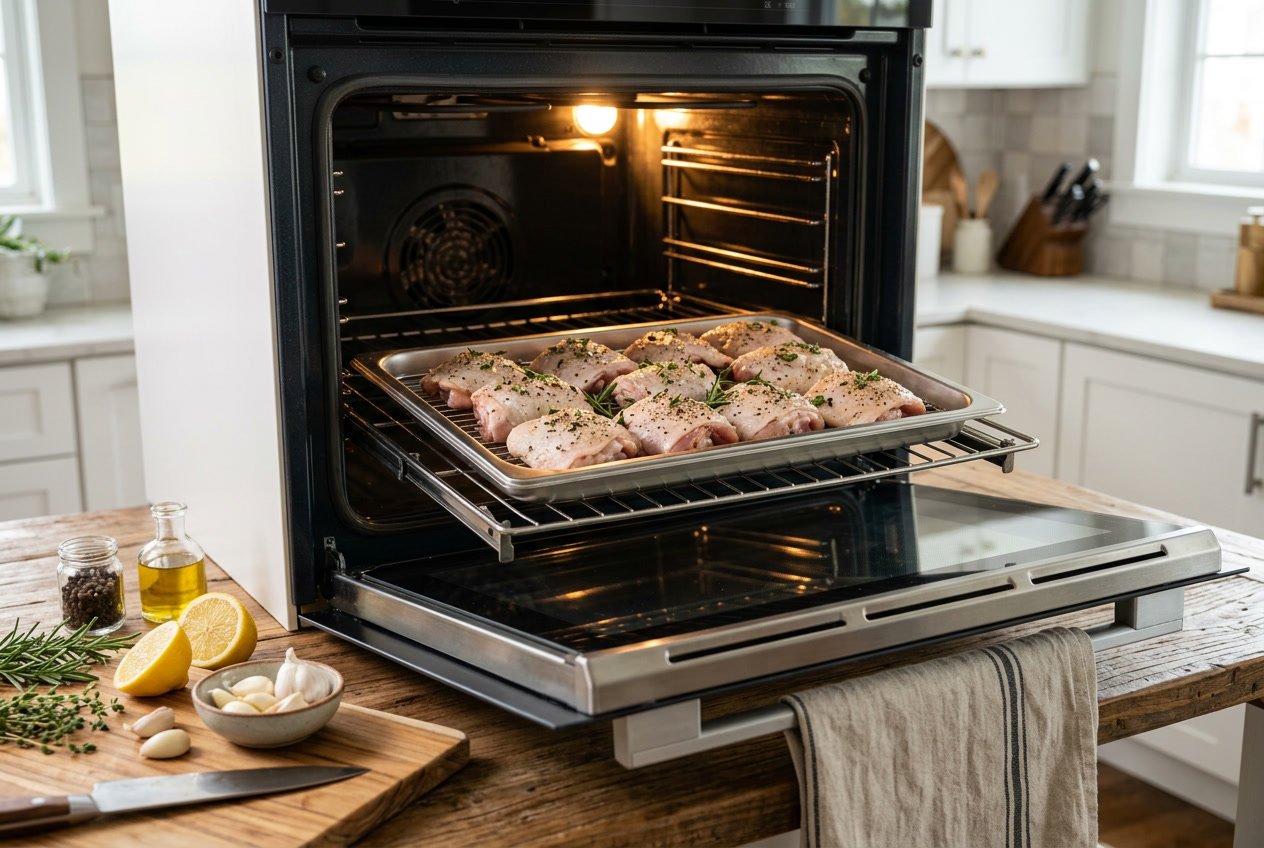
This guide shows how to pick bone-in or boneless thighs, prep and season for flavor, and select oven temperatures and cook times for juicy, tender meat.
You’ll find tricks for crisp skin, ideas for sides and storage, and clear timing guidelines for perfect oven-baked chicken thighs.
Choosing the Best Chicken Thighs
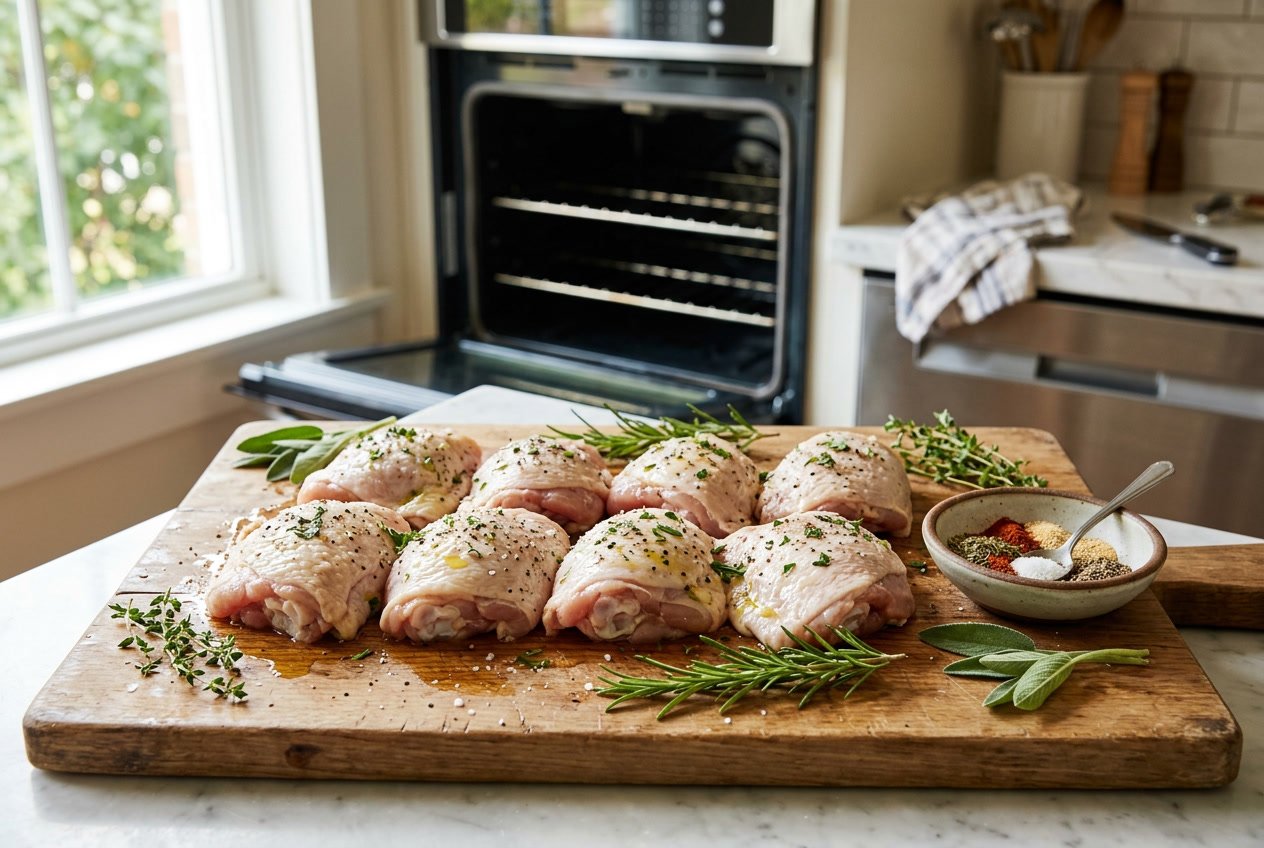
Pick thighs based on your available time, desired crispiness, and texture preference.
Bone-in thighs give more flavor and stay moist during long cooking, while boneless and skinless options save prep time and cook faster.
Bone-In vs. Boneless Chicken Thighs
Bone-in chicken thighs retain more moisture and deliver deeper flavor because the bone conducts heat and cushions the meat.
Bake bone-in thighs for 35–45 minutes at 400°F (200°C); they handle higher finishing temperatures or a short broil for crisp skin.
Boneless chicken thighs cook faster and are easier to cut for serving.
They usually finish in 25–30 minutes at 400°F (200°C).
Choose bone-in for tender, fall-apart meat and boneless for speed and easy slicing.
Skin-On vs. Skinless Chicken Thighs
Skin-on chicken thighs give the crispiest, most flavorful exterior because the skin renders fat and browns under high heat.
Roast skin-side up on a wire rack or hot pan, and broil 1–3 minutes at the end to crisp the skin.
Skinless thighs skip the crisping step and reduce fat, but they can dry out faster.
Use marinades, sauces, or lower roasting temperatures to keep them juicy.
Pick skin-on for crispy results, and skinless if you want less fat or pre-trimmed thighs.
Selecting Quality Chicken
Inspect color and smell: fresh thighs should look pinkish and moist without odor.
Avoid packages with excess liquid or dark spots.
Check labels for “fresh” versus “previously frozen,” and note sell-by dates.
Look for certifications if you want antibiotic-free, hormone-free, or organic chicken.
When buying from a butcher, ask when the thighs arrived and if they were vacuum-sealed.
Proper handling and packaging help ensure even cooking and consistent texture.
How to Prep Chicken Thighs for Oven Baking
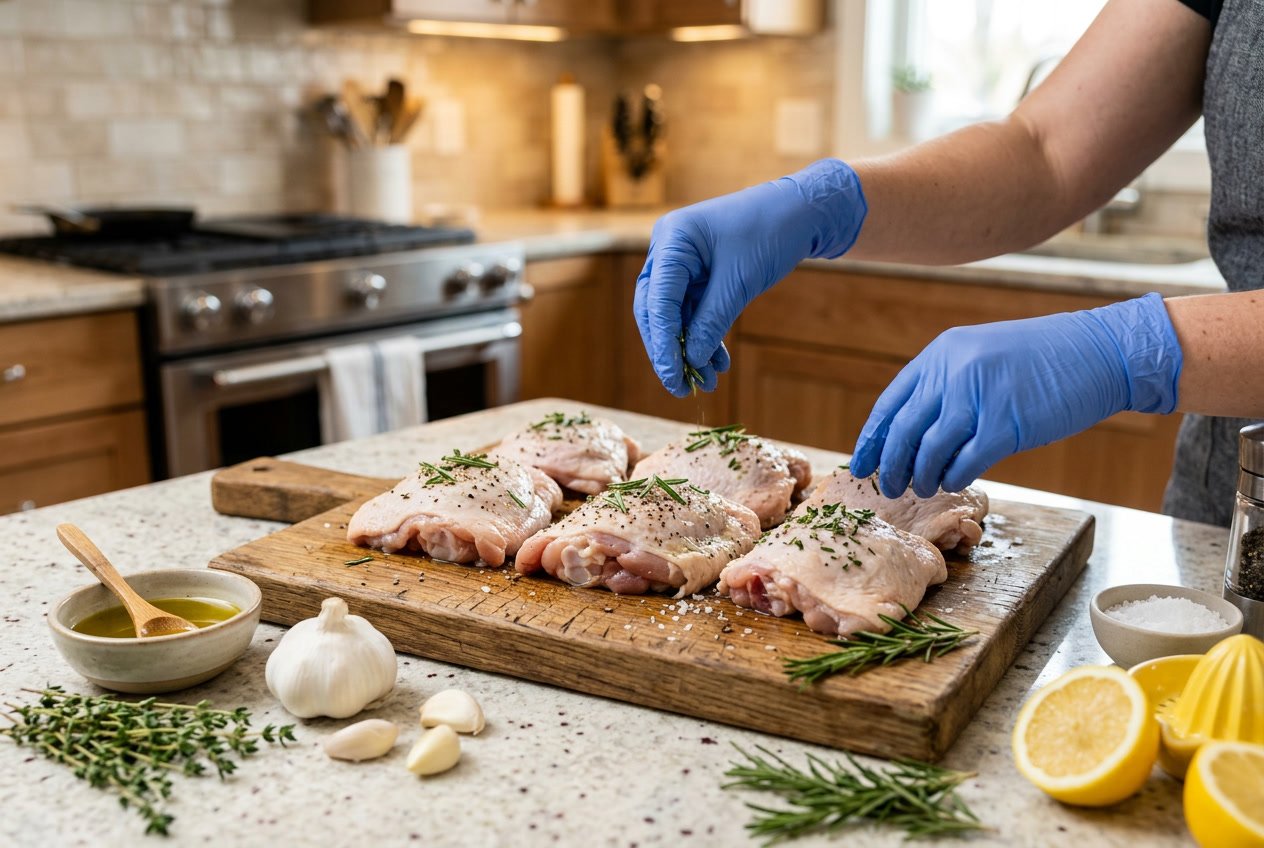
Proper prep leads to juicy chicken and crispy skin.
Focus on removing surface moisture, trimming excess fat or loose skin, and rubbing the meat with a thin layer of oil.
Patting Dry for Crispy Skin
Use paper towels to thoroughly dry each thigh, pressing firmly into the skin and under any folds.
Moisture on the surface turns to steam and prevents crisping, so dry each piece until the towel comes away mostly dry.
For best results, leave the thighs uncovered on a wire rack in the fridge for 30–60 minutes after patting dry.
This extra step removes more moisture and improves browning.
Trimming and Sizing
Trim away large flaps of loose skin and excess fat that will render and pool during cooking.
Leave the skin covering the meat intact for protection and flavor.
If thighs vary in size, cut the largest to match the smaller ones or use smaller pieces so all finish at the same temperature.
Even sizing prevents overcooking small pieces and undercooking large ones.
Applying Olive Oil
Lightly coat each thigh with about 1/2 to 1 teaspoon of olive oil.
Rub it evenly over skin and exposed meat.
Oil promotes even browning and helps seasoning adhere.
After oiling, sprinkle your salt and spice mix and gently press it into the skin.
The oil and salt combination encourages golden, crispy skin while keeping the inside juicy.
Seasoning Mixes and Flavor Enhancements
Choose a base salt level and a dominant flavor profile, then layer supporting spices and finish with fresh herbs.
Balance savory (salt, garlic powder), sweet-smoky (paprika), and aromatic (dried thyme, onion powder) spices.
Plan for a final sprinkle of fresh parsley after resting.
Classic Seasoning Blend
Use a straightforward mix that crisps the skin and seasons meat evenly.
Combine 1 tsp kosher salt and 1/2 tsp black pepper per pound of thighs, plus 1 tsp garlic powder, 1 tsp onion powder, and 1 tsp paprika per 4 thighs.
Add 1/2 tsp dried thyme for subtle herb notes.
Pat thighs dry, rub with oil, then massage seasoning under and over the skin.
Roast skin-side up so the paprika browns and the thyme infuses.
Finish with chopped fresh parsley after resting.
Creative Flavor Variations
Change one or two components to shift the dish’s direction.
For Mediterranean-style thighs, use smoked paprika, 1 tsp dried oregano, and a squeeze of lemon.
For a warm, slightly sweet profile, add 1 tsp brown sugar and 1/2 tsp ground cumin.
Increase paprika for smokiness, or use sweet smoked paprika for barbecue notes.
Always taste your dry mix on a small piece of cooked chicken or in neutral oil before seasoning the whole batch.
Finish with fresh parsley for brightness.
Rubs and Marinades
Use a dry rub for a crisp exterior or a wet marinade for deeper flavor.
Dry rub: mix 2 Tbsp kosher salt, 1 Tbsp paprika, 1 tsp garlic powder, 1 tsp onion powder, 1 tsp black pepper, and 1/2 tsp dried thyme.
Rub into dry skin and refrigerate uncovered for at least 1 hour.
Marinade: whisk 1/4 cup olive oil, 2 minced garlic cloves (or 1 tsp garlic powder), 2 Tbsp lemon juice, 1 tsp salt, 1/2 tsp black pepper, and 1 tsp dried thyme.
Marinate 2–8 hours; pat dry before roasting.
Garnish either method with chopped fresh parsley before serving.
How to Cook Chicken Thighs in the Oven
These steps help you achieve juicy meat with crisp skin by using the right pan setup, oven temperature, and technique.
Follow placement, heat, and timing to avoid soggy skin or undercooked centers.
Arranging on Baking Sheet
Place bone-in, skin-on chicken thighs skin-side up on a rimmed baking sheet or in an oven-safe skillet.
Leave about 1 inch between pieces so hot air circulates.
Use a wire rack over the baking sheet for extra-crispy skin and even browning.
If you don’t have a rack, line the sheet with foil for easier cleanup.
Brush each thigh with a thin coat of oil and season all over, including under the skin if possible.
Arrange thighs with the thickest parts facing the center of the sheet for even cooking.
Ideal Oven Temperature
Preheat the oven to 400°F (200°C) for crispy skin and juicy meat.
This temperature browns the skin without drying the interior and works well for bone-in, skin-on thighs in about 35–40 minutes.
For faster cooking or smaller boneless thighs, use 425°F (220°C) and monitor closely.
If you prefer very tender thighs with more rendered fat, roast at 375°F (190°C) and extend the time.
Finish under the broiler for 2–3 minutes if you want extra crispness.
Always use a meat thermometer.
Aim for an internal temperature of 165°F (74°C).
Many cooks remove thighs at 170–175°F (77–79°C) for more tender results.
Cooking Steps for Oven Baked Chicken Thighs
- Preheat oven and prepare pan. Heat to 400°F (200°C); position rack in middle. Line a rimmed baking sheet with foil or place a wire rack on it.
- Dry and season. Pat thighs dry. Rub with oil and season with salt, pepper, and your chosen spices.
- Arrange and bake. Place thighs skin-side up with spacing. Bake uncovered for 35–40 minutes for bone-in, skin-on; 20–30 minutes for boneless, skinless at 400°F. Rotate pan midway if browning unevenly.
- Check temperature and rest. Insert thermometer into the thickest part without touching bone. Remove at 165–175°F (74–79°C). Let rest 5–10 minutes before serving.
For an easy dinner, baste with a sauce in the last 5–10 minutes or broil 1–3 minutes to finish the skin.
Achieving Crispy and Juicy Chicken
Focus on getting the skin golden and crackling while keeping the meat moist.
Use high heat, minimal interference, and precise temperature checks.
Follow practical steps for skin prep, oven timing, and finishing under the broiler.
Golden Brown and Crispy Skin Tips
Pat each skin-on, bone-in thigh very dry with paper towels.
Trim loose skin and leave any fat cap intact so it renders and crisps during cooking.
Season the skin lightly with salt at least 20–30 minutes before cooking.
Use a thin coating of oil to promote even browning.
Start in a cold skillet on medium heat if you want extra crispness: arrange thighs skin-side down, cover until fat renders, then sear undisturbed 8–12 minutes.
Alternatively, roast directly at 425°F on a rimmed sheet or in a cast-iron pan for consistent browning.
Arrange thighs skin-side up with space between pieces so hot air circulates.
Flip only once if needed.
Avoid overcrowding and don’t baste with pan juices.
Broiling at the End
Move the pan to the top rack with the oven set to Broil for the final 2–4 minutes to deepen color and crisp the top.
Watch continuously; broilers vary and skin can burn quickly.
Position thighs about 5–6 inches from the broiler element for even finishing.
If some pieces brown faster, rotate the pan rather than moving thighs.
If using a sheet pan, transfer to a lightly oiled rimmed baking sheet before broiling to prevent sticking.
Remove thighs immediately when the skin is golden brown and bubbling.
Using a Meat Thermometer
Insert an instant-read thermometer into the thickest part of the thigh without touching bone.
Target 165°F as the safe minimum internal temperature.
Pull thighs at 160–163°F if you plan a short rest—the temperature will rise a few degrees.
Check temperature toward the end of oven time.
Test multiple thighs since size and placement affect heat.
Let thighs rest uncovered for 5–8 minutes after removing from oven.
Resting locks in juices and finishes carryover heating so the chicken reaches a safe temperature while the skin stays crispy.
Oven Timing and Temperature Essentials
Use time and temperature together to control juiciness and skin crispiness.
Target internal temperatures and bone-in vs. boneless differences to determine your oven choice and minutes per batch.
How Long to Bake Chicken Thighs
Bone-in, skin-on thighs usually take 35–45 minutes at 400°F (200°C). Use a meat thermometer to check the thickest part near the bone and aim for at least 165°F (74°C) for safety.
Many cooks let thighs reach 175–180°F (80–82°C) for more tender, pull-apart meat. If you bake at 350°F (175°C), expect about 50–55 minutes for bone-in thighs.
Cooking time changes with thigh size, so add 5–10 minutes for very large pieces. Rest the thighs for 5–10 minutes after baking to let juices redistribute.
Adjusting for Boneless or Skinless Thighs
Boneless, skinless thighs cook faster and usually take 20–30 minutes depending on oven temperature and thickness. At 400°F, plan on 20–25 minutes; at 350°F, plan for 25–30 minutes.
Stop cooking at 165°F to avoid dryness and let them rest briefly. For extra juiciness, brine boneless thighs for 30 minutes to 2 hours before cooking or coat lightly with oil and give them a quick pan-sear before baking.
Use a shallow baking dish and avoid overcrowding to help heat circulate and prevent steaming. This method keeps the meat juicy and evenly cooked.
Oven Temperature Guidelines
Choose your oven temperature based on desired texture.
- 350°F (175°C): slower, gentle cooking for tender meat without aggressive browning. Bone-in: 50–55 min, boneless: 25–30 min.
- 375°F (190°C): balanced for even cooking and moderate browning. Bone-in: 45–50 min, boneless: 22–27 min.
- 400°F (200°C): reliable for crispy skin and shorter times. Bone-in: 40–45 min, boneless: 20–25 min.
- 425°F (218°C): best for crisping; use for bone-in thighs only if you monitor closely. Bone-in: 35–45 min, boneless may dry out.
Use a meat thermometer as your main doneness check. Place thighs skin-side up on a wire rack over a sheet pan for crispy results and even air circulation.
Serving and Side Dish Pairings
Serve oven-roasted chicken thighs with one or two hearty sides and a vegetable for texture contrast. Add a fresh garnish to lift flavors.
Aim for a balance of starch, seasonal produce, and a bright element to cut the chicken’s richness. This approach creates a satisfying and well-rounded meal.
Mashed Potatoes and Comfort Sides
Mashed potatoes make a classic base for roasted thighs and soak up pan juices. Use Yukon Golds for a buttery, smooth texture or Russets for a fluffier mash.
Enrich with 2–3 tablespoons of butter and warmed cream or milk per pound of potatoes. Season with salt and white pepper to taste.
Pair mashed potatoes with an extra comfort side like garlic-butter green beans or creamed spinach to add color. For a lighter option, stir in roasted garlic or a spoonful of sour cream instead of extra butter.
Serve the chicken on top of or beside a scoop of mash. Spoon pan sauce or juices over the potatoes to tie the plate together.
Roasted Seasonal Vegetables
Roast vegetables at 425°F for 20–30 minutes depending on size to get caramelized edges. Root vegetables like carrots, parsnips, and fingerling potatoes hold up well and develop sweetness when roasted alongside thighs.
Tender vegetables such as asparagus, zucchini, and bell peppers need less time; add them in the last 10–12 minutes to avoid overcooking. Toss vegetables with olive oil, salt, and a high-heat herb like rosemary or thyme.
Finish with a squeeze of lemon or a drizzle of balsamic glaze for variety. Arrange vegetables beside the chicken or mix on a sheet pan for a one-pan meal.
Fresh Garnishes
Use fresh garnishes to brighten each bite and cut through richness. Sprinkle chopped parsley or cilantro for a fresh contrast, or scatter thinly sliced scallions for sharpness.
Grate lemon zest over the chicken and vegetables or serve lemon wedges on the side for citrus lift. Add a simple sauce or condiment such as chimichurri, lemon-garlic yogurt, or honey-mustard.
Serve sauces in small ramekins or spoon them directly over the chicken to let diners adjust intensity.
Meal Prep, Leftovers, and Storage
Plan portions, pack airtight, and label containers with the date. Use refrigerated chicken within four days or freeze portions for up to three months.
Meal Prep for Weeknight Dinner
Roast 4–6 bone-in or boneless chicken thighs at 400°F (200°C) for 35–40 minutes (bone-in) or 25–30 minutes (boneless) until the internal temperature reaches 165°F (74°C). Let the thighs rest 5–10 minutes before slicing to retain juices.
Portion cooked chicken into individual containers with ½–1 cup of a cooked grain such as quinoa or rice and 1 cup roasted or steamed vegetables. Add a small separate cup for sauce or dressing to prevent sogginess.
Label each container with the cook date and intended meal. For faster weeknights, keep one ready-to-eat whole thigh and one sliced portion for salads, wraps, or bowls.
Storing and Reheating Baked Thighs
Cool chicken to room temperature within two hours, then refrigerate in airtight containers. Store whole or sliced chicken up to 4 days; freeze in single-meal portions up to 3 months.
To preserve texture, use these reheating methods:
- Oven: 350°F (175°C) for 8–12 minutes for sliced; 12–18 minutes for whole, covered with foil.
- Air fryer: 5–7 minutes at 375°F (190°C) for crisp skin.
- Microwave: 1–2 minutes on medium, covered and checked frequently; skin will soften.
If frozen, thaw overnight in the fridge before reheating. Always check that the temperature reaches 165°F (74°C) before serving.
Using Leftover Chicken
You can adapt leftovers to bowls, salads, sandwiches, and stir-fries.
For a Spanish rice bowl, cube sliced thighs and briefly reheat them with cooked rice, black beans, corn, and a squeeze of lime.
For quick salads, shred or slice cold chicken and toss it with greens and cherry tomatoes.
Add a vinaigrette that you store separately.
Use the chicken in sandwiches or wraps with crisp vegetables and a smear of yogurt sauce for moisture.
Simmer bite-sized chicken in tomato, curry, or apricot glaze for 5 to 10 minutes to refresh the flavor and add moisture.


