
Cook Chicken Thighs From Frozen: Complete Methods & Timing Guide
You can safely cook chicken thighs straight from the freezer and still get juicy, flavorful results if you follow clear temperature, timing, and handling steps.
Aim for an internal temperature of 165°F (75°C) and expect about 50% longer cook time than thawed thighs to ensure safety and doneness.
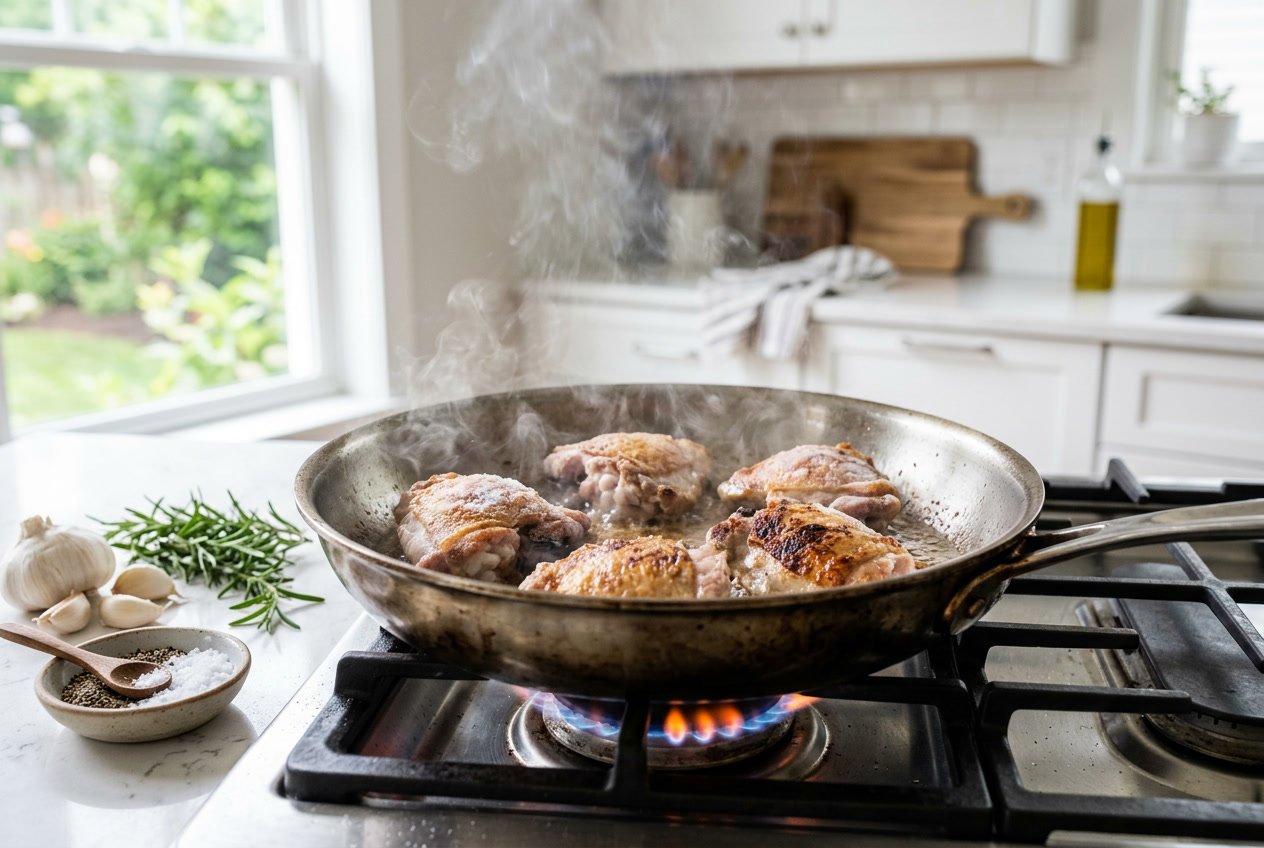
This guide explains why frozen thighs behave differently, offers prep and safety tips, and gives reliable oven-baking steps.
You’ll also see faster and alternative methods like Instant Pot, skillet, and air fryer, plus a timing and doneness guide.
You’ll find quick notes on serving, storing, and reheating as well.
Understanding Frozen Chicken Thighs
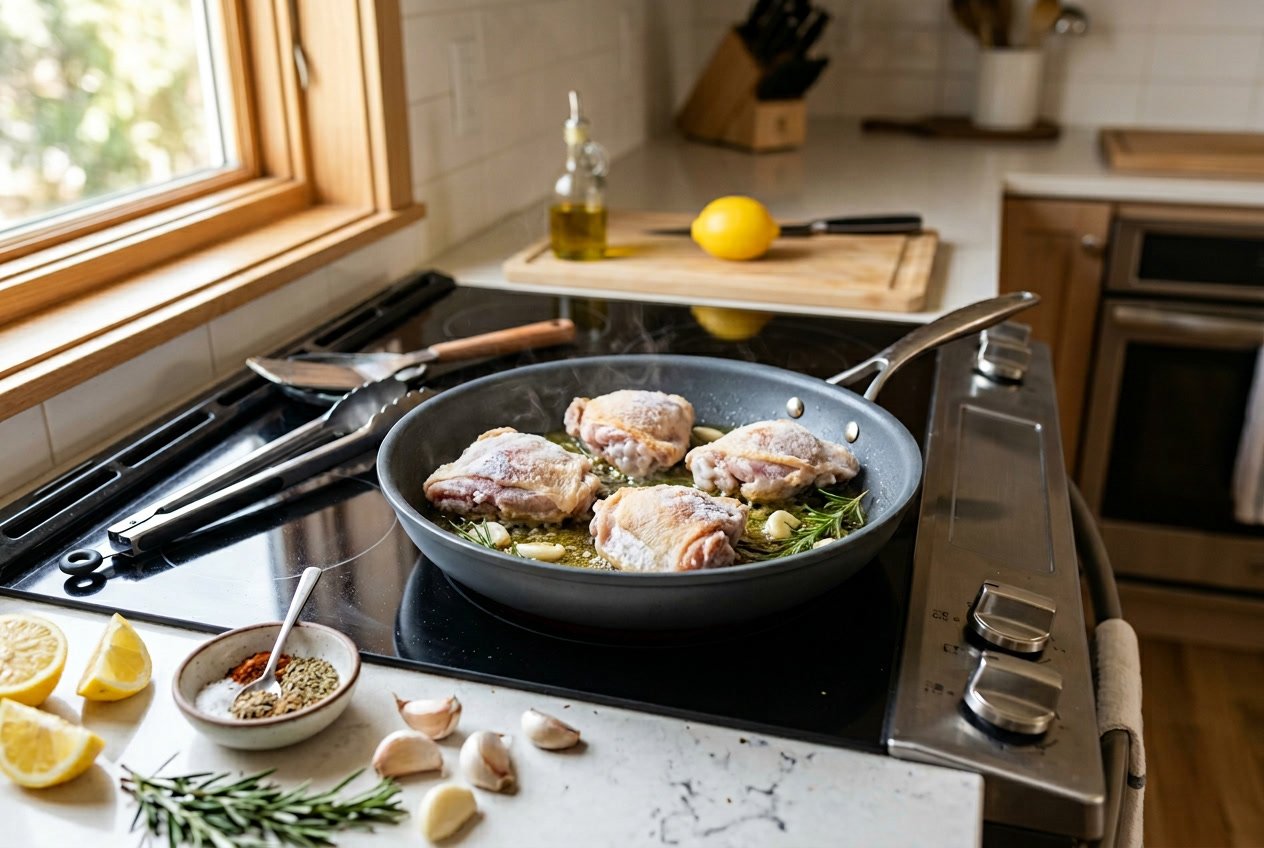
Frozen chicken thighs keep flavor and texture well when cooked correctly.
Cooking from frozen changes timing, moisture, and the choice between bone-in, boneless, skin-on, and skinless pieces.
Benefits of Cooking From Frozen
Cooking frozen chicken thighs saves time when you forget to thaw and reduces food waste.
You can start a meal directly from the freezer and still reach a safe internal temperature of 165°F (75°C) if you adjust cooking time and method.
Frozen thighs release more moisture during cooking than thawed meat, which can keep thighs tender thanks to dark meat’s higher fat content.
Plan for roughly 30–50% longer cook times depending on method. Oven baking and pressure cooking provide even heat penetration.
Use a meat thermometer at the thickest part to confirm doneness.
Finish cooking in one session to prevent bacterial growth.
Bone-In vs. Boneless Thighs
Bone-in chicken thighs retain heat differently than boneless thighs.
The bone slows heat penetration, so frozen bone-in chicken thighs take longer to reach 165°F.
Bone-in pieces often yield juicier, more flavorful results because the bone helps conduct and retain heat.
If you need faster meals or plan to shred the meat, frozen boneless skinless chicken thighs cook quicker and simplify slicing or shredding.
When using an Instant Pot or oven, increase time for bone-in cuts by several minutes and check temperature near the bone.
Boneless thighs reach safe temps sooner and can dry if left too long.
Skin-On vs. Skinless Options
Skin-on frozen chicken thighs give you crispy skin when roasted or broiled, but the skin needs higher, direct heat late in cooking to crisp without burning the meat.
Start skin-side up in the oven and finish under high heat or broil for a few minutes to render fat and crisp the skin.
Skinless options heat more evenly and reduce fat in the finished dish.
Frozen boneless skinless chicken thighs are convenient for soups, stews, and pressure-cooker recipes because they absorb flavors and shred easily.
For both convenience and texture, cook frozen boneless skinless chicken thighs in a moist method and add a quick pan-sear or broil at the end for browning.
Always verify internal temperature in the thickest part, no matter the skin.
Preparation and Safety Tips
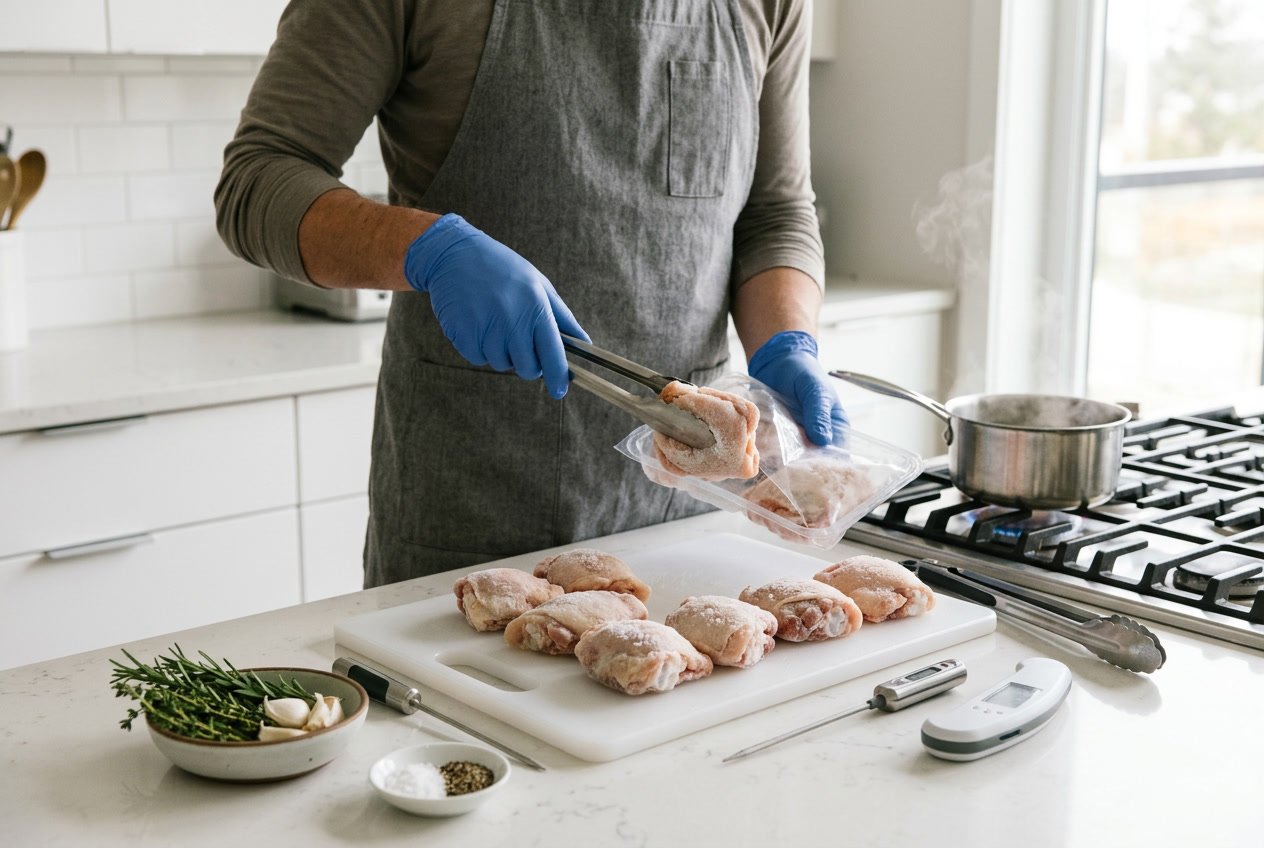
Gather the right tools, use safe storage practices, and confirm doneness with a thermometer to cook frozen chicken thighs safely.
Keep raw and cooked surfaces separate and always confirm the internal temperature.
Essential Equipment and Tools
Use a digital instant-read meat thermometer and probe it into the thickest part of the thigh, avoiding bone contact.
A rimmed baking sheet or ovenproof dish with a rack promotes airflow when baking frozen chicken thighs.
For stovetop or pressure-cooker methods, use a heavy-bottomed skillet or an Instant Pot/pressure cooker.
Keep tongs, a silicone spatula, and oven mitts handy for safe handling.
Have a thermometer and timer visible to monitor progress.
Cooking from frozen usually adds about 50% more time compared with thawed chicken.
Use separate cutting boards for raw poultry, paper towels for spills, and clean surfaces and utensils immediately after contact with raw chicken.
Safe Handling and Storage
Store raw frozen chicken thighs on the bottom shelf of the freezer or refrigerator to prevent drips onto other foods.
If outer packaging is torn, place frozen packages in a sealed plastic bag.
If you thaw some thighs, thaw in the refrigerator for 24 hours per 3–4 pounds, or use the cold-water method with a sealed bag and change water every 30 minutes.
Never thaw at room temperature or in hot water.
Do not partially cook frozen chicken and then refrigerate to finish later.
Wash hands for 20 seconds after handling raw or thawed chicken, sanitize counters and utensils, and use separate plates for raw and cooked pieces.
When cooking directly from frozen, plan for longer cook times and avoid overcrowding pans.
Importance of Internal Temperature
Internal temperature determines safety more than color or texture.
The USDA recommends cooking poultry to an internal temperature of 165°F (75°C).
Insert a calibrated digital probe into the thickest part of the thigh, not touching bone, and wait until the reading stabilizes.
Baking may take 30–50 minutes for individual frozen thighs at 375°F (190°C), while an Instant Pot might take 12–15 minutes on high pressure plus natural release.
Always check multiple pieces.
After the thermometer reads 165°F, let the chicken rest 3–5 minutes.
If any piece reads below 165°F, return it to heat immediately and recheck before serving.
Oven-Baked Frozen Chicken Thighs
Bake frozen chicken thighs with minimal prep and a reliable temperature.
Use a short broil at the end for crisp skin.
How to Bake Frozen Chicken Thighs
Place frozen chicken thighs skin-side up on a rimmed baking sheet or in a roasting pan.
Line the pan with foil or parchment for easier cleanup and leave at least 1/2 inch between pieces.
Preheat the oven before adding the thighs.
Bake straight from frozen; do not thaw in the oven.
Expect cook time to increase roughly 1.5 times compared with thawed thighs—about 40–55 minutes for average bone-in pieces.
Check internal temperature with a meat thermometer at the thickest part, not touching bone.
Remove thighs when they reach 165°F (74°C) and rest 5 minutes under loose foil.
Recommended Oven Temperatures
Choose 375°F (190°C) for gentler, more even cooking, or 425°F (220°C) to reduce cook time and help skin crisp.
For bone-in, skin-on thighs, 425°F balances tenderness and browning.
At 375°F, expect 50–65 minutes depending on size.
At 425°F, plan 40–55 minutes.
Confirm doneness with a thermometer rather than time alone.
Finish with a 2–3 minute broil if you want extra color.
For boneless thighs, reduce time by 10–15 minutes.
Adjust rack to middle or upper-middle position so skin crisps without overbrowning the underside.
Seasoning and Crisping Techniques
Because the surface of frozen thighs resists deep marinating, use oil or melted butter to help spices stick.
Pat on oil, then sprinkle salt, pepper, garlic powder, paprika, and dried herbs right before baking.
For crispier skin, bake uncovered and start at high heat.
Near the end, switch to broil for 2–3 minutes, keeping the pan 6–8 inches from the broiler.
Use a wire rack set over the sheet pan to allow air beneath the thighs.
If you prefer sauce, brush on BBQ or glaze during the last 10 minutes of baking.
For lower fat, remove skin after cooking; the meat stays moist if internal temp reached 165°F.
Alternative Cooking Methods
These options give fast, safe results when you can’t thaw.
Each method needs adjustments to time and liquid or oil to ensure the thighs reach 165°F (75°C) and cook evenly.
Stovetop and Pan-Searing
Sear frozen thighs over medium-high heat to build color and flavor.
Heat 1–2 tablespoons of oil in a large skillet, add thighs, and brown 3–4 minutes per side.
After searing, add 1/2 to 1 cup of liquid and reduce to medium-low.
Cover and simmer 20–30 minutes for boneless, 30–40 minutes for bone-in, until a thermometer reads 165°F (75°C) at the thickest point.
For crisp skin, uncover for the final 5–10 minutes and raise heat slightly.
Rotate pieces for even browning.
This method works well if you want a pan sauce from the cooking liquid.
Instant Pot and Pressure Cooking
Place frozen chicken thighs in the Instant Pot with at least 1 cup of liquid.
Arrange thighs in a single layer when possible; stacking increases cook time slightly.
Set to high pressure for 12–15 minutes for boneless thighs, 15–18 minutes for bone-in.
Allow natural pressure release for 5–10 minutes, then quick-release remaining pressure.
Verify internal temperature is 165°F (75°C).
You can sear before or after pressure cooking for better texture.
The Instant Pot cooks frozen chicken thighs quickly and keeps meat moist.
Air Fryer Techniques
Preheat the air fryer to 360°F (182°C).
Place frozen thighs in a single layer with space between pieces.
Cook for about 25–30 minutes for boneless thighs, 30–40 minutes for bone-in, flipping once halfway.
Spray lightly with oil to promote browning and check temperature at the thickest point.
If skin isn’t crisp, raise temperature to 400°F (204°C) for the final 3–5 minutes.
Apply seasoning once the surface softens during cooking, or use a thin oil-based rub before cooking.
The air fryer reduces total time versus an oven and produces a crisp exterior.
Timing and Doneness Guide
You’ll find clear oven temperatures, estimated times for bone-in and boneless thighs, and how to confirm safety and quality.
Follow the timing rules and use a thermometer to avoid undercooking or drying out the meat.
How Long to Cook Frozen Chicken Thighs
Bake frozen chicken thighs at 375–425°F (190–220°C).
For bone-in, plan about 45–60 minutes at 375°F.
Increase to 35–50 minutes at 400–425°F.
For boneless thighs, plan about 30–45 minutes at 400°F.
Times vary with thigh size: small thighs finish sooner, large or thick pieces need more time.
For crisp skin, bake uncovered at 400–425°F and broil 1–3 minutes at the end.
For extra-moist meat, cover with foil for the first 20–30 minutes, then uncover to brown.
Do not raise temperature excessively.
Quick reference (approximate):
- 375°F (190°C): bone-in 45–60 min
- 400°F (200°C): bone-in 40–50 min, boneless 30–40 min
- 425°F (220°C): bone-in 35–45 min, boneless 30–35 min
Checking for Safe Doneness
Insert an instant-read thermometer into the thickest part near the bone.
The safe internal temperature is 165°F (74°C).
Measure in several thighs if sizes vary.
Look for clear juices and no pink at the bone, but rely on temperature over color.
After reaching 165°F, rest thighs 3–5 minutes.
If one thigh reads below 165°F, return the pan to the oven and recheck every 5–7 minutes.
Serving, Storing, and Leftovers
Serve cooked frozen chicken thighs hot within minutes of resting.
Refrigerate leftovers promptly in shallow containers.
Reheat to a safe internal temperature before eating and store raw or cooked thighs properly to avoid spoilage.
Serving Suggestions and Sides
Serve pan-seared or oven-roasted frozen chicken thighs with high-acid or crunchy sides to balance the rich, juicy meat.
Make a simple pan sauce by combining the cooking juices, 1/2 cup chicken stock, and a tablespoon of mustard or lemon. Simmer for 3 to 5 minutes and spoon the sauce over the chicken thighs.
Roast asparagus, Brussels sprouts, or carrots at 425°F (220°C) for 12 to 20 minutes. Time the vegetables so they finish close to the chicken’s resting time.
Add a starchy side such as garlic mashed potatoes, rice pilaf, or lemon-herb couscous. These options help the meal feel complete without competing flavors.
Garnish the dish with fresh herbs like parsley, cilantro, or thyme and add a squeeze of lemon to brighten the flavors.
If you brined or heavily seasoned the thighs before cooking from frozen, select milder sides to avoid overpowering the palate.
Leftover Storage and Reheating
Let cooked chicken thighs cool at room temperature for no longer than 2 hours. Divide them into shallow airtight containers and refrigerate.
Store cooked leftovers for 3–4 days at or below 40°F (4°C). Label containers with the date if you keep multiple batches.
For longer storage, freeze cooked thighs in vacuum bags or freezer-safe containers for up to 4 months for best quality. Raw thighs stay safe in the freezer for up to 9 months if you keep them consistently at 0°F (-18°C).
Reheat leftovers until they reach an internal temperature of 165°F (74°C). Use an oven at 325°F (160°C) for 15–20 minutes for whole thighs.
Reheat slices in a covered skillet over medium heat with a splash of stock to prevent drying. Only reheat the portion you plan to eat.


