
Chicken Thighs vs Tenderloins: Differences, Nutrition & Cooking Tips
Deciding between chicken thighs and tenderloins changes how your meal will taste, cook, and fit your diet.
Thighs give you richer flavor and forgiving cooking because of higher fat and connective tissue. Tenderloins deliver lean, mild meat that cooks fast and pairs well with bold seasonings.
If you want juicy, flavor-forward results, choose thighs. If you need quick, lean protein that adapts to strong sauces and quick methods, choose tenderloins.
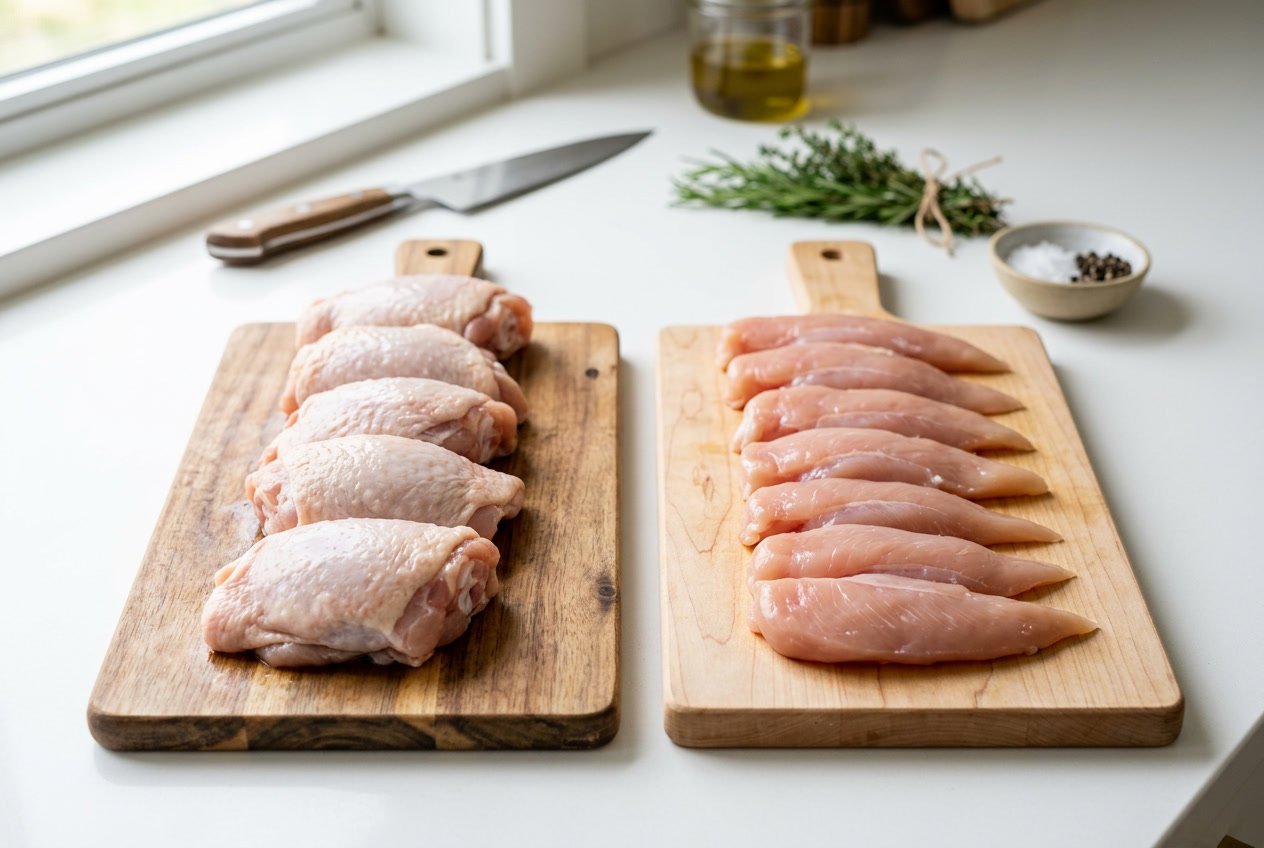
This guide explains where each cut comes from, how they compare nutritionally, and the best cooking methods for each.
You’ll find clear, practical comparisons on flavor, versatility, health impact, and cost to help you decide what to buy and how to cook it.
What Are Chicken Thighs and Tenderloins?
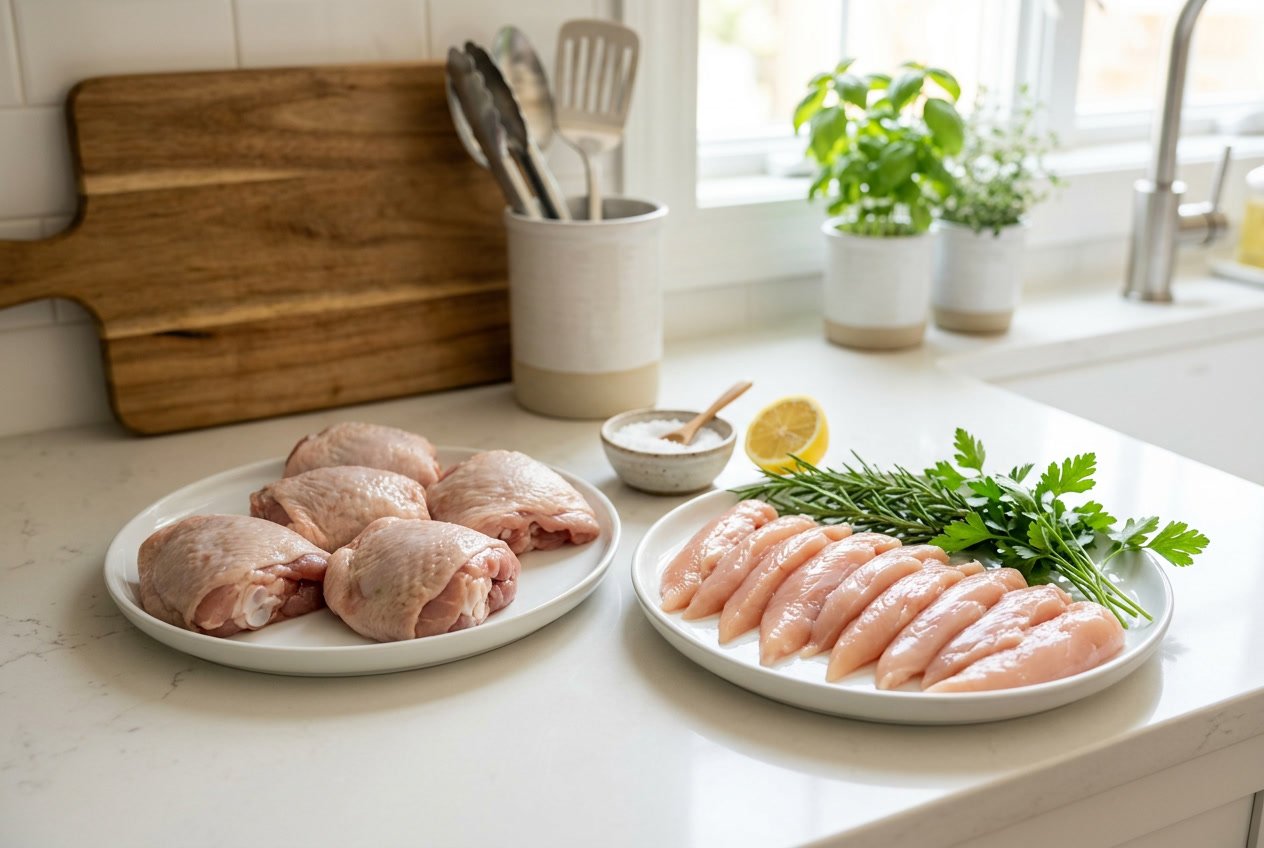
These two cuts come from opposite parts of the bird and behave differently in flavor, fat content, and cooking methods.
One is dark, richer, and forgiving. The other is lean, delicate, and fast-cooking.
Chicken Thigh: Cut and Characteristics
Chicken thighs come from the upper part of the leg and are dark meat.
They contain more fat and connective tissue than breast cuts, which gives them a richer flavor and a juicier mouthfeel when cooked properly.
You can buy thighs bone-in with skin, boneless skinless, or skin-on boneless; each form affects cooking time and crispness.
Thighs tolerate higher internal temperatures and long, slow methods like braising or roasting without drying out.
They brown well and hold up in stews, curries, and grilled dishes.
Tenderloin: Cut and Characteristics
The chicken tenderloin is a small, narrow muscle located under the breast near the breastbone.
It’s the most tender piece of chicken because it does little work during the bird’s life.
Tenderloins are sold skinless and usually boneless; they’re lean and pale in color.
Because tenderloins have low fat, they cook quickly and can dry out if overcooked.
They work best with high-heat, short-duration techniques—sautéing, grilling, or breading and frying—and with marinades or bold seasonings to add flavor.
Use tenderloins when you want quick, tender pieces that absorb sauces and spices.
Nutritional Comparison
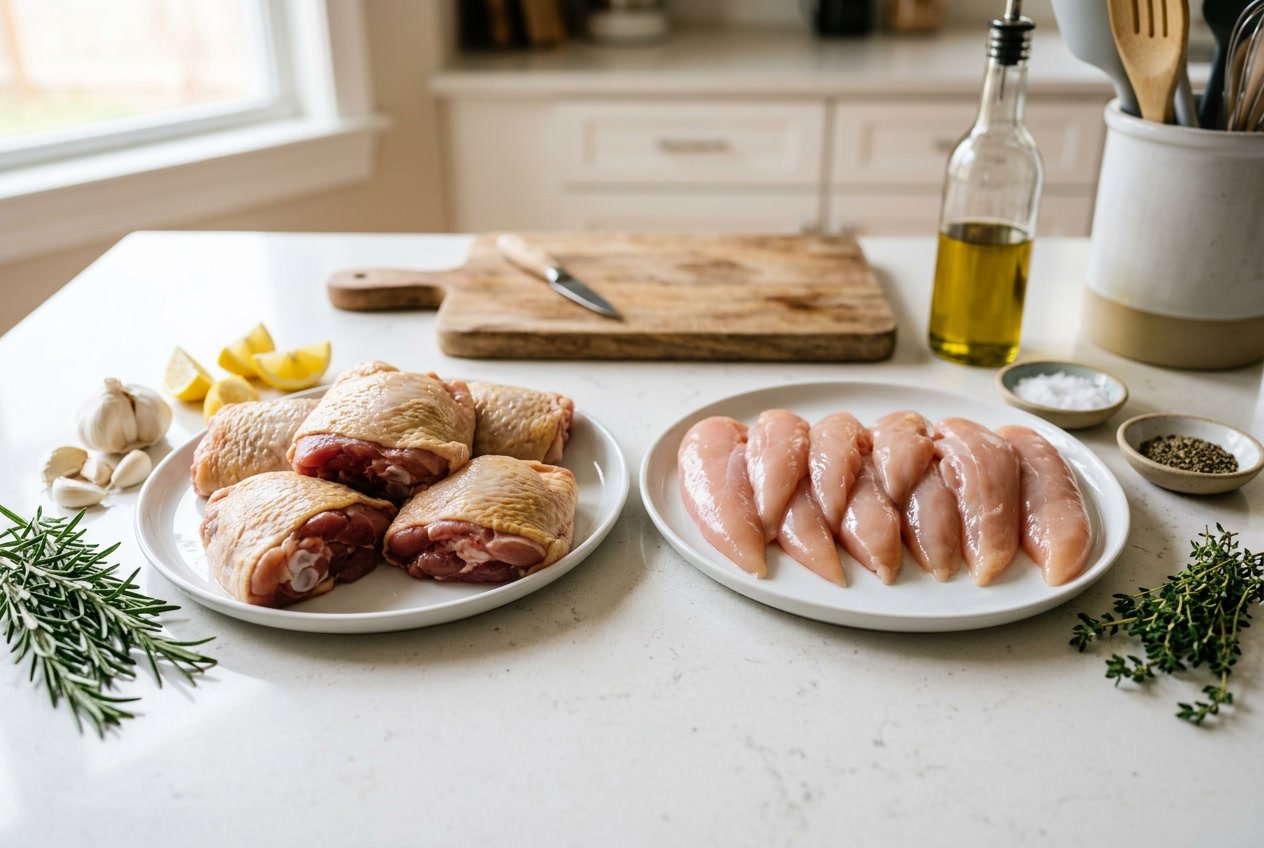
Chicken thighs contain more fat and calories, while tenderloins are leaner and lower in energy.
Protein amounts are similar per ounce, but the fat type and vitamin content shift the health profile between the two cuts.
Protein, Fat, and Calorie Content
Per 3-ounce cooked serving, chicken tenderloins typically provide about 20–24 g of protein and roughly 100–120 calories.
Chicken thighs (skinless, cooked) deliver a similar protein range—about 19–23 g—but add more calories, usually 150–190, because they contain higher total fat.
Key differences in fat:
- Tenderloins: about 2–5% fat by weight; mostly lower total and saturated fat.
- Thighs: about 10–15% fat by weight; higher monounsaturated and saturated fat.
If you track macronutrients, choose tenderloins to minimize calories and saturated fat.
Choose thighs when you want extra fat for flavor and juiciness; that fat raises calorie density and can increase satiety.
Vitamins and Minerals
Chicken thighs and tenderloins differ in several B vitamins and minerals important for your diet.
Thighs generally contain higher amounts of niacin (B3), vitamin B6, and folate compared with tenderloins, which can support energy metabolism and red blood cell formation.
Mineral notes:
- Iron and zinc: thighs often have slightly higher iron and zinc than tenderloins, beneficial for oxygen transport and immune function.
- Vitamin B12: both cuts are low compared with red meat.
If you need more B vitamins and iron in each serving, thighs give modestly higher values.
If you prioritize lower fat but still meaningful protein, tenderloins provide those nutrients with fewer calories.
Flavor and Texture Differences
Thighs bring richer, meatier flavor and more forgiving texture.
Tenderloins deliver a mild taste and very lean, quick-cooking bite.
Expect different fat levels, cooking windows, and mouthfeel that affect seasoning, sauces, and techniques.
Dark Meat vs White Meat
Dark meat (thighs) carries a fuller, more savory profile because it contains higher fat and connective tissue.
That fat blends with muscle during cooking, intensifying umami and making simple salt-and-pepper seasoning taste more pronounced than on white meat.
White meat (tenderloins) sits on the breast and tastes milder and cleaner.
Bold marinades or salty brines often help you build flavor without masking its delicate profile.
If you want a stronger, self-sufficient chicken flavor, choose thighs.
If you prefer a neutral canvas for sauces or spices, choose tenderloins.
Juiciness and Tenderness
Thighs stay juicy over a wider temperature range due to intramuscular fat and collagen.
When slow-roasted, braised, or pan-seared, collagen breaks down and keeps the meat moist.
Tenderloins demand precise, fast cooking to remain tender.
They lack the same fat and collagen, so you should cook them to about 145–150°F (63–66°C) and rest briefly to avoid stringy, dry texture.
Use high-heat sears, quick grilling, or quick braises with a sauce to preserve moisture and highlight tenderness.
Cooking Methods for Each Cut
Thighs handle longer, higher-heat methods that render fat and break down collagen.
Tenderloins cook very quickly and benefit from gentle, fast techniques to stay moist and tender.
Best Ways to Cook Chicken Thighs
Chicken thighs tolerate high heat and long cook times because of their higher fat and connective tissue.
Use pan-searing, roasting, braising, grilling, or air frying depending on the result you want.
- Pan-sear then oven-finish: start skin-side down in a cold cast-iron pan to render fat, then transfer to a 400°F oven until internal temp reaches 175°F for bone-in or 165–170°F for boneless.
- Braise or slow-cook: low-and-slow (175–185°F final) converts collagen to gelatin; ideal for shredding and tacos.
- Grill: sear over direct heat then move to indirect heat until cooked through.
- Air fryer: 400°F for 22–28 min (bone-in) or 16–20 min (boneless) gives crisp skin quickly.
Always pat skin dry, salt ahead, and avoid overcrowding the pan to preserve crispness.
Best Ways to Cook Tenderloins
Tenderloins, also sold as chicken tenders or used for chicken fingers, are thin and low in fat; they cook fast and dry out if overcooked.
Use quick, moist, or coated methods to keep them juicy.
- Sear or sauté: 3–4 minutes per side over medium-high; pull at 165°F.
- Bake: 375°F for 12–18 minutes depending on thickness; use a thermometer to avoid dryness.
- Grill: direct medium heat for 3–5 minutes per side; watch closely.
- Breaded, fried, or air-fried: breaded chicken tenderloins become crisp outside while staying tender inside—350–400°F for short times.
- Poach or sous-vide: poach gently or sous-vide at 140–146°F then finish with a quick sear.
For dishes like stir-fries or salads, slice tenderloins thinly and cook just until opaque.
Popular Recipes and Uses
Choose thighs when you need flavor and forgiving texture.
Pick tenderloins for speed and leaner profiles.
- Thigh-focused dishes: braised peri-peri thighs, oven-roasted rosemary thighs, shredded slow-cooker tacos, grilled skewers.
- Tenderloin-focused dishes: chicken tenders, quick stir-fries, chicken salads, salt-and-pepper tenders, breaded strips for sandwiches.
- Cross-use tips: slice thighs thin for stir-fries if you want richer flavor; use tenderloins for battering and frying to get uniform breading and fast cook times.
Use internal temperature, not cooking time alone, to ensure safe, juicy results for both cuts.
Versatility in the Kitchen
Chicken thighs bring rich flavor and forgiving cooking behavior.
Tenderloins offer quick-cook leanness and easy portioning.
Both cuts adapt to sauces, marinades, and global cuisines.
You’ll choose thighs for long braises and tenderloins for fast, high-heat dishes.
Dishes Suited for Chicken Thighs
Choose thighs when you need sustained moisture and deep flavor.
Use bone-in, skin-on thighs for roasting at 400°F to get crisp skin and juicy meat; the rendered fat bastes the flesh and adds flavor to roasted vegetables.
Thighs excel in braises and stews.
Try coq au vin, slow-simmered curry, or a tomato-based ragù where the connective tissue breaks down and enriches the sauce.
Shredded thighs work well in tacos, enchiladas, and pulled-chicken sandwiches.
For frying, thighs stay moist under high heat, making them ideal for Southern-style fried chicken or Korean fried chicken.
If you prefer lower fat, trim skin but retain thighs’ richer taste for dishes that need texture and body.
How to Use Tenderloins in Recipes
Tenderloins suit quick-cook, high-heat methods and precise portion control.
Slice them into strips for stir-fries and fajitas; they sear in 2–3 minutes per side and absorb marinades fast.
Use whole tenderloins for grilled skewers, pan-seared cutlets, or breaded chicken fingers.
For sandwiches and salads, poach or poach-then-chill tenderloins to keep them tender and easy to slice.
They also work well in skewered satays with peanut sauce or in light lemon-garlic piccata.
When breading for chicken tenders or chicken fingers, pat dry, season, dredge in flour-egg-crumbs, and fry or bake at 425°F for a crisp exterior without overcooking the interior.
Health Considerations and Dietary Impact
Thighs and tenderloins differ mainly in fat, calories, and cooking resilience, which affects portioning, meal planning, and how often you should eat each cut.
Your choice can change calorie totals, satiety, and preparation methods that preserve nutrients.
Weight Loss and Diet Preferences
If you aim to lose weight, tenderloins give you a predictable calorie and protein profile.
They are lean, low in fat, and cook quickly without added oil.
A 3‑ounce cooked tenderloin portion typically provides about 120–140 calories and 25–26 g protein, so you can fit it precisely into calorie targets and track macros more easily.
Chicken thighs contain more fat and calories per ounce but also stay moist longer and may increase satisfaction per serving.
A 3‑ounce cooked thigh (skinless) often ranges 170–200 calories with similar protein.
Use thighs when you want a higher‑satiety meal with fewer added fats during cooking; trim visible fat or remove skin to reduce calories while keeping flavor.
Plan portions: choose tenderloins for strict calorie limits or high‑protein lean meals, and select thighs when you prioritize taste and satiety, then adjust serving size accordingly.
Concerns About Fat and Cholesterol
Thighs have higher total fat and saturated fat than tenderloins, which affects daily saturated fat and cholesterol targets.
If you follow guidelines limiting saturated fat to under 10% of calories, an extra thigh or two can use a significant portion of that allowance.
Removing skin from thighs cuts much of the saturated fat while retaining some of the meat’s flavor and moisture.
Tenderloins are naturally low in saturated fat and contain less cholesterol per serving, making them preferable if you monitor LDL risk or have a cholesterol‑focused diet plan.
Cooking method changes fat impact: pan‑frying in oil raises total fat; baking or grilling keeps added fat minimal.
For heart‑focused meals, choose skinless tenderloins or skinless thighs cooked without extra oil, and pair with vegetables and whole grains to balance saturated fat and fiber.
Price and Availability
You’ll likely pay less per pound for chicken thighs than for tenderloins.
Thighs are more commonly sold in larger bulk packs.
Tenderloins appear more often as boneless, trimmed portions and are priced higher due to demand and processing.
Cost Comparison
Chicken thighs usually cost less because they are a more abundant, less-processed cut. Retailers often price boneless, skinless thighs 10–30% lower per pound than tenderloins.
Bone-in thighs can be even cheaper. Tenderloins are a premium cut because they are small, lean, and require trimming, which increases the price.
If you buy breast tenders labeled as “tenderloins,” you will pay more per ounce than for thigh meat. Buying thighs on sale or in family packs lowers the cost per serving.
Thighs work well for stews, braises, or shredded recipes since they tolerate longer cooking and cheaper flavoring. Tenderloins are best for quick meals where portion control matters.
Where to Find Each Cut
Supermarkets carry both cuts, but placement differs. You’ll find tenderloins in the fresh meat case labeled “chicken tenders” or “tenderloins.”
Stores usually sell them boneless and skinless. Thighs appear both bone-in and boneless, often in larger trays or family packs.
Discount grocers and warehouse clubs offer bulk packs of chicken thighs at lower unit prices. Farmers’ markets and specialty butchers sell thighs and tenderloins.
Butchers may provide fresher or custom-trimmed tenderloins if you ask. You can find frozen options for both cuts.
Frozen thighs come in economy packs. Frozen tenderloins are sold for convenience and quick meals.
Check store flyers or online grocery listings when availability is tight. Stores often run sales on thighs during roasting and grilling seasons.
Tenderloin promotions usually align with quick-cook meal marketing.


