
Chicken Thighs vs Legs: Nutritional Value, Cooking Tips & Flavor
You want a quick, practical answer: choose thighs when you want richer, juicier meat that tolerates longer cooking and bold flavors. Choose legs (drumsticks or whole leg quarters) when you want a slightly leaner bite with a distinct texture that grills or fries well.
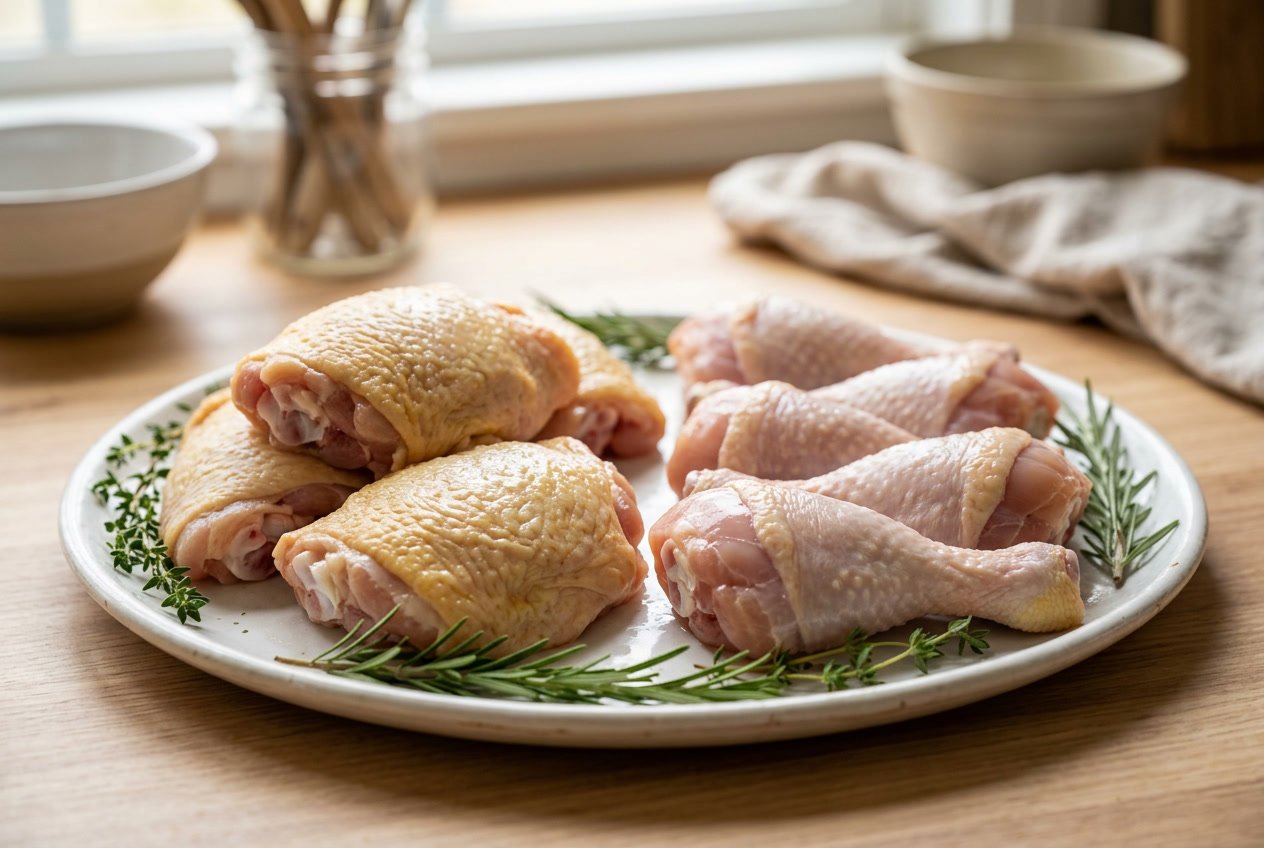
This post explains what thighs and legs are, compares flavor, texture, and nutrition, and shows which cooking methods and dishes suit each cut. You can pick the right one for your meal.
If you want forgiving, flavorful meat that stays moist under heat, pick thighs. If you want a leaner, hands-on piece that crisps and carries seasoning differently, pick legs.
What Are Chicken Thighs and Legs?
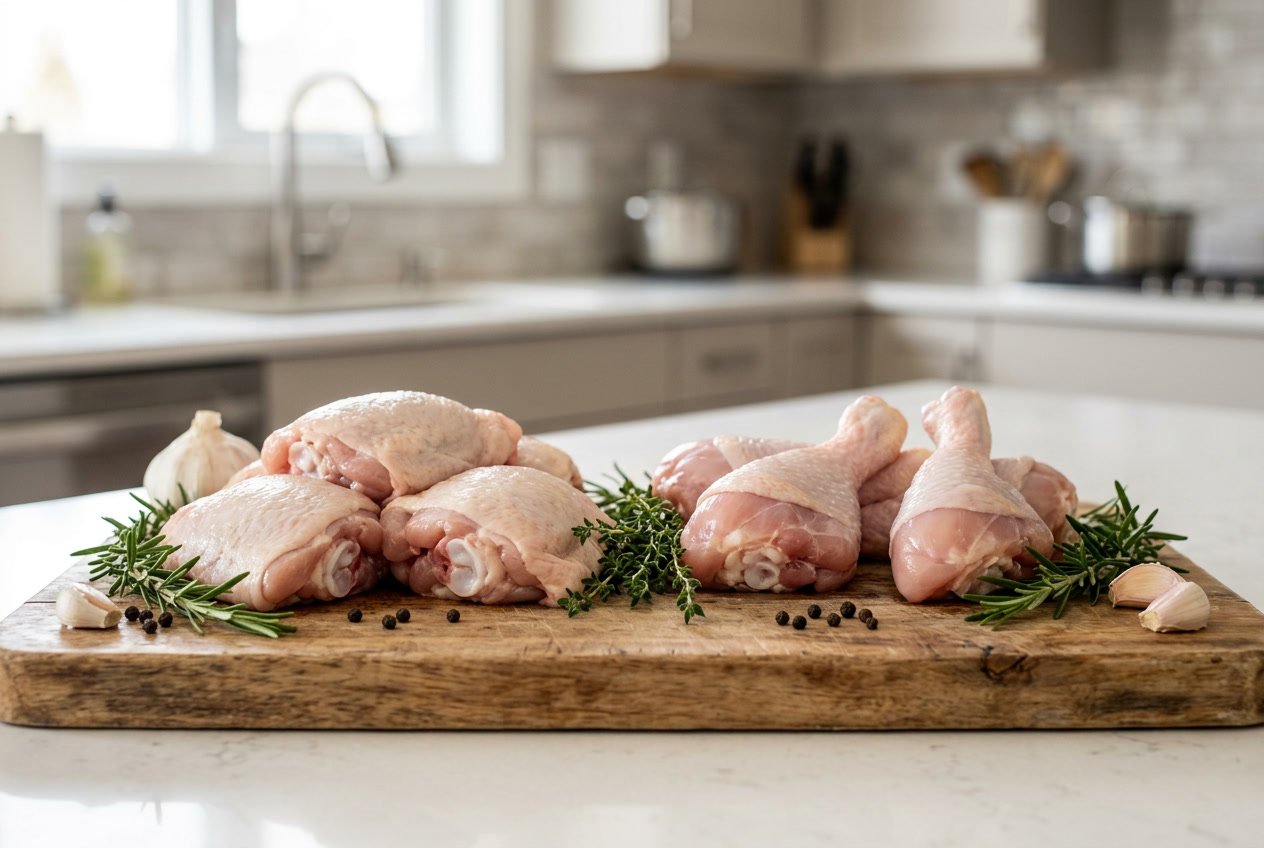
You’ll find both thighs and legs labeled in the meat case. Each cut has distinct anatomy, texture, and cooking uses that affect flavor, cook time, and prep.
Anatomy and Structure
The chicken leg includes two parts: the thigh (upper leg) and the drumstick (lower leg).
The thigh sits between the body and the joint. It contains the thigh bone and surrounding muscle.
This section has a more complex muscle structure and higher myoglobin, which gives darker, richer-flavored meat.
The drumstick attaches below the knee joint and contains the leg bone with a single long bone running through the meat.
Skin and bone often stay intact on both cuts. Bones add flavor during braises and stocks and help regulate cooking temperature.
Drumstick vs Thigh: Key Differences
A drumstick is usually firmer and meatier around a single cylindrical leg bone.
You’ll notice a slightly chewier bite and concentrated flavor near the bone. Drumsticks pair well with grilling, frying, and roasting where crisp skin helps texture.
A thigh is broader and flatter with a shorter thigh bone.
Thighs have more marbling and connective tissue, making them more forgiving to longer cooking and better at staying juicy in high heat or slow-cooked dishes.
Meat-to-Bone Ratio
Meat-to-bone ratio varies. A bone-in thigh typically yields more edible meat per piece than a drumstick of similar weight.
Thighs are often sold boneless or bone-in. Boneless thighs increase the meat-to-bone ratio and reduce cook time and carving.
Drumsticks have a higher proportion of bone relative to total weight, which can make them cheaper per pound but give less cooked meat per piece.
When planning portions, count roughly one drumstick or one thigh per person for casual meals. Use weight-based estimates if you prefer precise meat-to-bone calculations.
Flavor and Texture
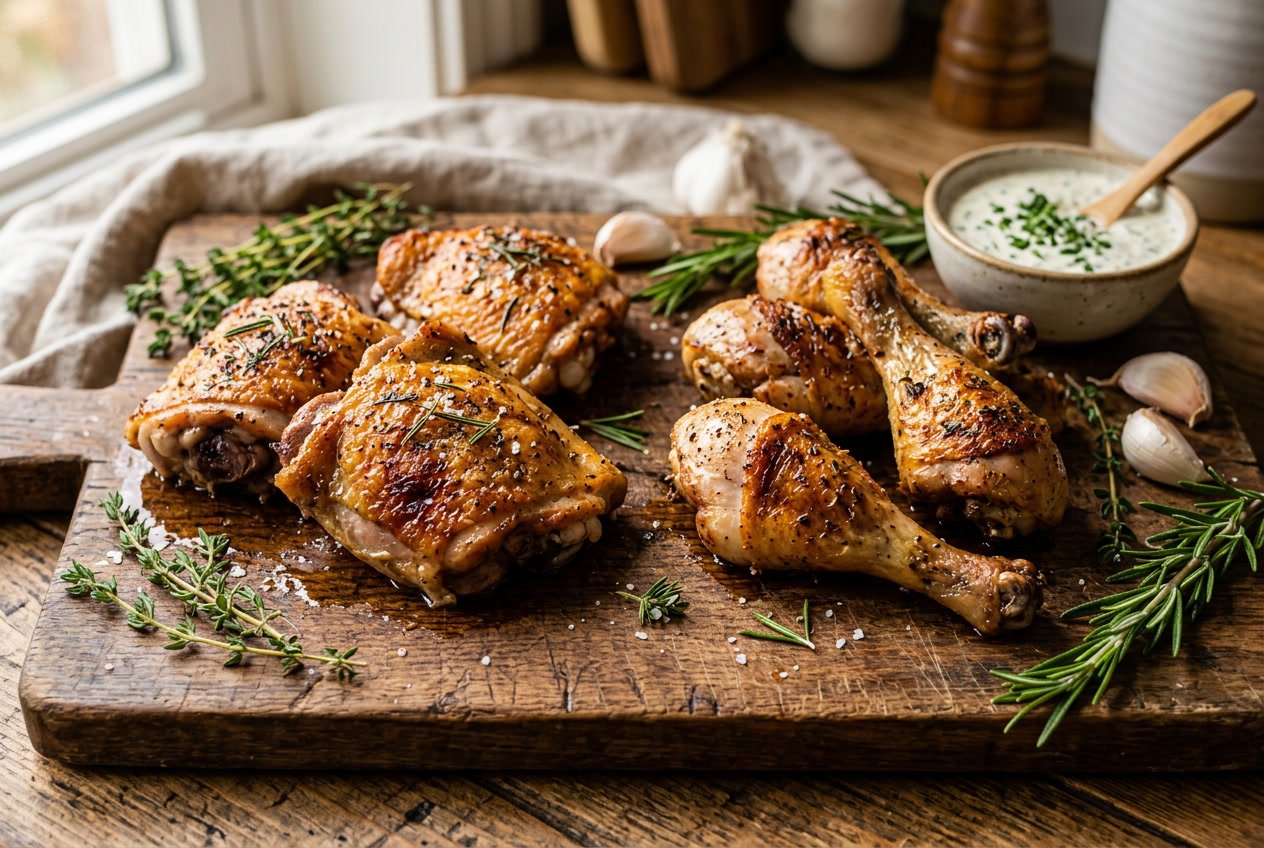
You’ll notice darker color, richer taste, and more connective tissue in some cuts. This changes how they behave during cooking and how they feel when you eat them.
Dark Meat Characteristics
Dark meat, found in thighs and drumsticks, contains more myoglobin than white meat. This gives it a deeper red-brown color and a stronger, meatier flavor.
The higher fat content concentrates flavor. A single 3-ounce serving of thigh typically has several grams more fat than the same weight of breast.
That fat carries fat-soluble aromatics and keeps the meat forgiving during high-heat or long-cook methods.
You’ll also see a different mouthfeel. The meat feels denser and more unctuous.
If you prefer bold, savory profiles or saucy preparations, dark meat usually delivers more satisfaction per bite than lean cuts.
Juiciness and Tenderness
Juiciness depends on both fat and cooking technique. Thighs and whole legs retain moisture better because intramuscular fat melts and lubricates fibers as they cook.
You can sear thighs at high heat to brown the exterior while keeping the interior moist. You can also braise legs slowly so they stay juicy and pull easily from the bone.
Tenderness varies by cut and time. Thighs are naturally more tender when cooked quickly, but legs with more connective tissue need longer, moist heat to reach the same pull-apart texture.
Use a thermometer and target 165–175°F (74–79°C) for safe, juicy results depending on method.
Connective Tissue Impact
Connective tissue, mainly collagen, increases from the thigh toward the drumstick and into the leg assembly.
At low, sustained temperatures, collagen converts to gelatin, which both tenderizes meat and enriches cooking liquid.
If you grill or roast leanly, collagen won’t break down fully and the meat can seem chewy.
For recipes like stews or braises, the collagen’s conversion is desirable. It yields a glossy sauce and a silky texture on the plate.
Pick cooking methods with collagen in mind. Use quick, high heat for minimal connective tissue and slow, wet cooking when you want gelatinized richness.
Nutritional Comparison
You’ll find thighs have more calories and fat per serving, while legs (drumstick) often offer slightly less fat but similar protein.
Both provide important B vitamins and minerals. Differences matter most when you watch calories, saturated fat, or sodium.
Calories and Fat Content
A 3-ounce cooked chicken thigh (about 85 g) typically contains more calories than a 3-ounce drumstick because thighs are larger and contain more fat.
Expect roughly 180–225 calories per 100 g for thighs versus about 145–215 calories per 100 g for drumsticks, depending on whether skin is eaten.
Fat content drives most of that difference. Thighs generally have higher total fat and somewhat more saturated fat.
A skin-on thigh can add several grams of fat compared with skinless cuts. If you remove the skin, calories and fat drop substantially for both cuts.
Watch sodium in prepared or rotisserie products. Seasoning and brines can add 100–300 mg of sodium per serving, which affects the overall nutritional profile more than the cut itself.
Protein Content
You get substantial protein from either cut, but amounts per 3-ounce serving vary slightly.
A typical 3-ounce cooked thigh provides about 16–18 g of protein, while a similar drumstick offers roughly 18–20 g, depending on whether you include skin and bone-in weight calculations.
Protein density (grams protein per calorie) is slightly higher in drumsticks when comparing equal weights with skin removed. That makes drumsticks marginally better if your priority is maximizing protein while minimizing calories.
Both cuts deliver complete animal protein, useful for muscle repair and satiety.
If you track macros, account for bone weight in drumsticks and adjust portion sizes to hit precise protein targets.
Vitamins and Minerals
Both thighs and legs are good sources of niacin (vitamin B3) and vitamin B6, nutrients that support energy metabolism and brain health.
Typical values: niacin often ranges 3–5 mg per 3-ounce serving and vitamin B6 around 0.4–0.6 mg, with some variation by cut and preparation.
Selenium, phosphorus, and small amounts of iron and zinc appear in both cuts. Thighs can supply slightly more iron and zinc per ounce because dark meat is richer in myoglobin.
Cholesterol content remains similar between cuts—usually in the 70–90 mg range per 3-ounce cooked portion.
If you need to limit sodium or want more B vitamins per calorie, choose skinless preparations and check labels for added salt or brines.
Cooking Methods for Thighs and Legs
Thighs and legs respond differently to heat. Thighs are thicker and higher in fat and connective tissue, while legs (drumsticks) have denser bone and leaner muscle.
Choose high, dry heat for crisp skin and lower, moist heat for fall-off-the-bone tenderness.
Best Ways to Cook Chicken Thighs
Thighs work well with both dry and moist methods because of their higher fat content.
For roasted chicken, roast at 425°F (220°C) on a wire rack for 25–35 minutes to render fat and crisp skin while keeping the interior juicy.
Use a meat thermometer and remove at 165°F (75°C). Residual heat will carry it a few degrees.
For braising or slow cooking, brown thighs first to develop flavor, then simmer in stock, wine, or tomatoes for 35–60 minutes until collagen breaks down.
This yields tender meat for stews or chicken soup. Pan-frying gives a golden crust—sear skin-side down in medium-high oil for 7–10 minutes, then finish in a 375°F (190°C) oven if needed.
Optimal Techniques for Chicken Legs
Legs (drumsticks) tolerate higher, longer heat because the bone conducts heat differently.
Grill or broil legs over medium-high for 20–30 minutes, turning every 5–7 minutes, to get even char and avoid burning.
Aim for 165°F (75°C) at the thickest part without touching bone.
For fried chicken, maintain oil at 325–350°F (160–175°C). Fry larger pieces 12–15 minutes, finishing at a lower temp so the center reaches safe temperature without overbrowning.
Slow cooking and braising also work. Cook 1–1.5 hours on low in liquid for shreddable meat suitable for tacos or stews.
Skin-On vs Skinless Chicken
Skin-on chicken preserves moisture and gives you the option for crispy roasted or fried skin.
Pat the skin dry, season under and over the skin, and use high initial heat to render fat. Finish at moderate heat to avoid burnt skin.
For roasted chicken thighs or legs, leave skin on for best texture.
Skinless pieces cook faster and absorb marinades more readily, which suits stir-fries, soups, and leaner recipes.
When baking or grilling skinless chicken, brush with oil or sauce to prevent drying.
Reduce cook time by several minutes and monitor internal temperature closely.
For chicken soup, skinless or skinned pieces release less surface fat and produce a clearer broth.
Popular Dishes and Recipe Inspirations
You’ll find dark meat shines in bold, textured preparations and in slow, flavor-building dishes.
Expect examples that show when to choose thighs for richness or legs for hearty portions, and practical recipe ideas you can cook tonight.
Chicken Tacos and Global Cuisine
For tacos, boneless skinless thighs work best. They shred easily, stay moist after searing, and hold strong marinades like adobo, chipotle, or citrus-chile.
Use a quick marinade (lime, garlic, cumin, oregano) then pan-sear and finish in the oven for 8–12 minutes to get crisp edges and juicy interiors.
If you prefer drumsticks, remove the meat from the bone after slow-roasting and toss with salsa verde for a rustic taco filling.
Beyond tacos, thighs and legs appear across cuisines. Tandoori thighs take yogurt and spice well, braised leg quarters suit Filipino adobo, and Mediterranean roasted thighs pair with olives and lemon.
Choose thighs when you want intense, spiced flavors. Pick legs when you want a satisfying, hand-held portion.
Classic Comfort Foods
Use thighs for stews and braises like coq au vin or a rich chicken soup base. Their fat and connective tissue melt into a silky broth.
For chicken soup, brown bone-in thighs first to deepen flavor, then simmer with mirepoix and herbs until the meat falls from the bone.
Roasted whole legs make hearty Sunday dinners. Season under the skin, roast at 400°F to crisp skin while keeping meat tender.
For fried chicken, drumsticks deliver the classic crunchy bite and easy handling. Thighs give extra juiciness under a crispy crust.
Choose based on whether you want shreddable, braise-friendly meat (thighs) or iconic, hand-held pieces (legs).
Versatility in Meals
Thighs adapt to fast weeknight cooking and to slow-cooked comfort.
Sheet-pan roasted thighs with root vegetables finish in 30–40 minutes and yield caramelized skin plus a pan sauce.
Boneless thighs also excel in quick stir-fries or grilled skewers for meal prep.
Legs perform well when portion size matters. They feed families without slicing, and bone-in pieces add depth to stocks and roasted dishes.
For multi-use cooking, roast legs or thighs, then repurpose the meat—tacos, salads, sandwiches, or a hand-stirred fried rice.
Keep both on hand so you can match texture and cooking method to the dish you want to make.
Health and Food Safety Considerations
You can lower fat and calories by choosing or preparing thighs and legs with simple steps.
Handle and cook poultry safely to avoid foodborne illness.
Making Leaner Choices
Choose skinless cuts to reduce visible fat. Removing skin from a cooked thigh or leg lowers fat while preserving most protein.
A 3-ounce skinless serving usually has fewer calories than one with skin. Trim excess external fat before cooking.
Pat meat dry to help it brown without added oil. Prefer cooking methods that don’t add fat, such as grilling, roasting on a rack, broiling, or poaching.
If you pan-sear, use a thermometer and a small amount of oil or nonstick spray to avoid deep-frying. Control portions by aiming for about 3 to 4 ounces cooked per serving, which is about the size of a deck of cards.
Thighs provide more iron and zinc but tend to be higher in total fat and calories than drumsticks or whole legs. Choose thighs when you need extra calories or minerals, and legs when you want leaner protein.
Safe Handling and Cooking Practices
Use separate cutting boards and utensils for raw poultry and ready-to-eat foods to prevent cross-contamination. Wash your hands with soap and water for at least 20 seconds after touching raw chicken.
Sanitize surfaces with a kitchen sanitizer or a solution of 1 tablespoon bleach per gallon of water. Measure the internal temperature of chicken with an instant-read thermometer in the thickest part.
Insert the probe into the meat without touching bone. If you hit bone, move the thermometer to another spot.
Rest cooked chicken pieces for a few minutes to let the temperature even out. Store raw chicken in the refrigerator at 40°F (4°C) or below and use it within 1–2 days.
Freeze chicken at 0°F (-18°C) for longer storage. Thaw frozen poultry in the refrigerator, in cold water changed every 30 minutes, or in the microwave.
Do not thaw chicken on the counter. Discard any marinades that contacted raw chicken or boil them before using as a sauce.


