
Chicken Thighs vs Drumsticks: Key Differences, Nutrition & Best Uses
Thighs and drumsticks both come from the chicken leg. Thighs pack more fat and meat, while drumsticks offer a firmer bite and slightly different texture.
Choose thighs for richer, juicier meat. Pick drumsticks for a portable, easy-to-hold piece with a distinctive chew.
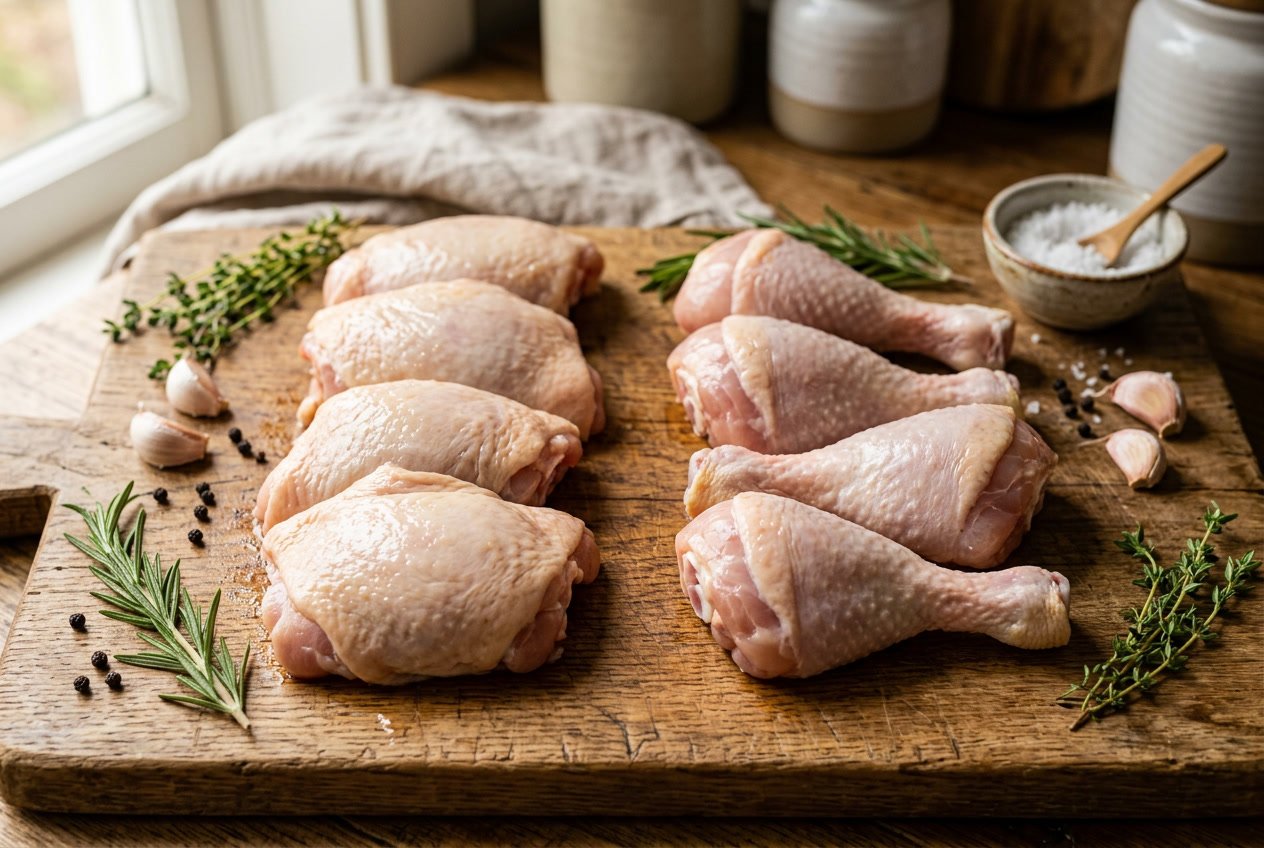
This guide covers anatomy, flavor, texture, nutrition, cooking methods, and how to choose the best cut for your meal and budget.
What Are Chicken Thighs and Drumsticks?
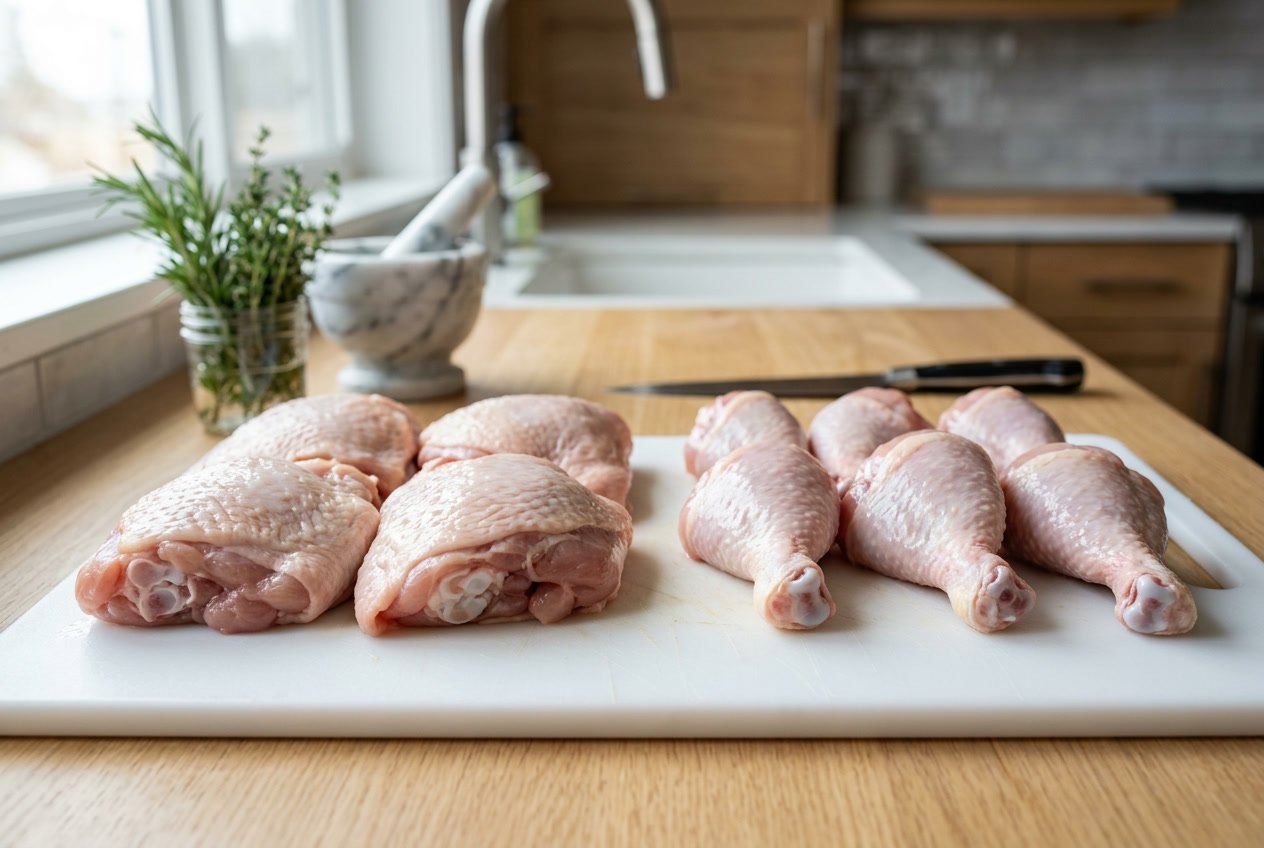
You’ll learn the location, texture, and cooking strengths of each cut so you can choose the right piece for your recipe.
Chicken Thigh
A chicken thigh is the upper portion of the bird’s leg, attached to the body at the hip joint. It contains the femur bone and a thicker band of muscle than the drumstick, which gives it more meat per piece.
Thighs have higher fat content and connective tissue than white meat. That extra fat keeps them moist during long cooking and makes them tolerant of high-heat methods like grilling, roasting, and pan-frying.
Use thighs for rich flavor and forgiving cooking. They work well boneless for sandwiches or skin-on bone-in for braises.
Drumstick
A drumstick is the lower leg below the knee joint, built around the tibia and kneecap. It has less overall meat than the thigh but a high meat-to-skin ratio, making it ideal for hand-held eating.
Drumsticks are slightly leaner and firmer in bite compared with thighs. The shape concentrates flavor near the bone, so you get intense taste from short roasts, grilling, or frying.
Choose drumsticks for easy portioning, a sturdy textured bite, or a piece that presents well on a platter.
Dark Meat vs Other Chicken Cuts
Dark meat refers to the thigh and drumstick sections of the chicken leg. Both cuts contain more myoglobin and intramuscular fat than breast meat, which produces deeper flavor and a moister mouthfeel after cooking.
Compared with white meat, dark meat tolerates longer cooking without drying out. Thighs and drumsticks have slightly more calories and fat but similar protein; they also supply B vitamins, iron, and zinc.
Match the cooking method to the meat. Use breasts for quick, lean cooking. Use thighs and drumsticks for slow, high-heat, or flavor-forward techniques.
Anatomy and Structure
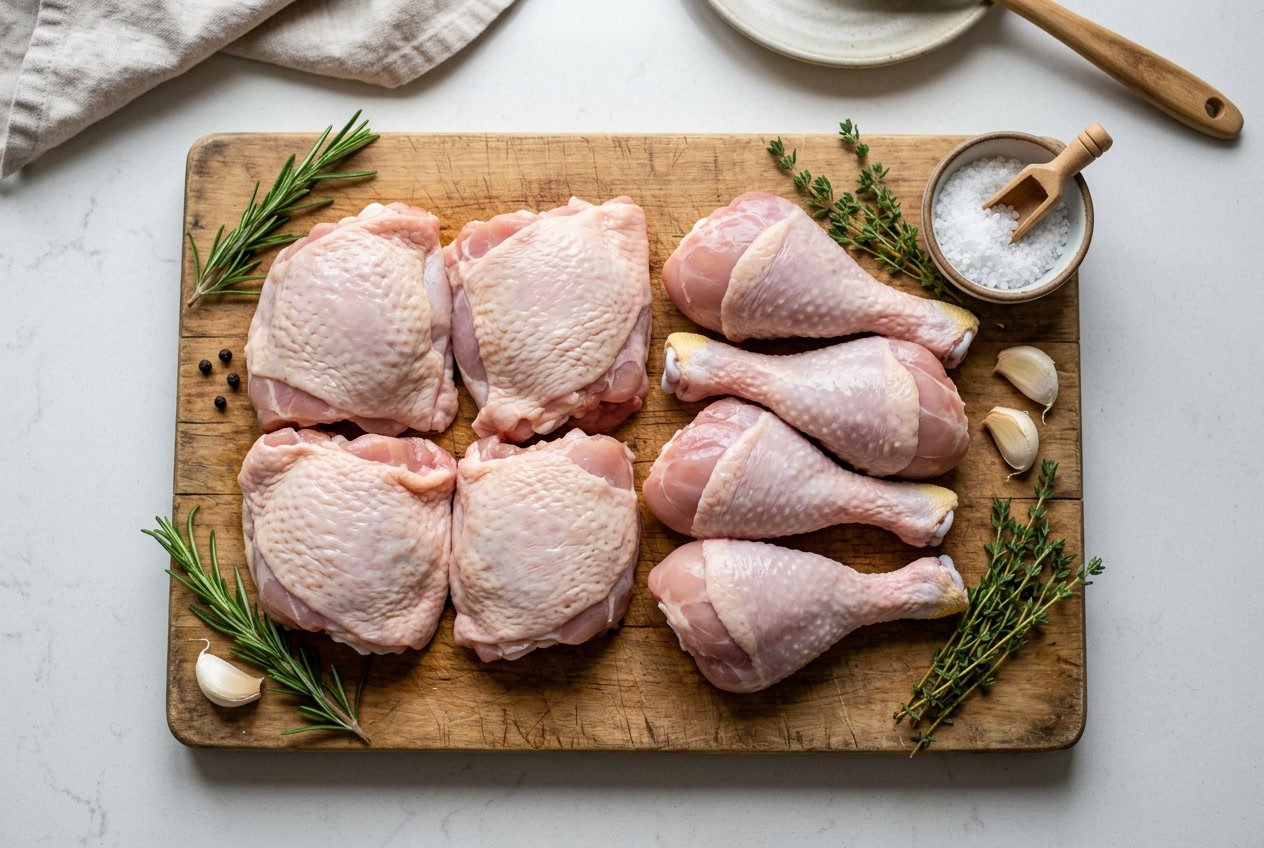
You will learn where each cut sits on the bird, how their size and weight compare, and why the meat-to-bone ratio matters for cooking and portioning.
Location on the Chicken
The chicken thigh is the upper part of the leg, connecting the body at the hip joint. It sits between the backbone and the knee joint and contains the femur bone; the meat surrounds that single, thicker bone.
The drumstick is the lower leg below the knee joint. It contains the tibia and fibula area and tapers toward the foot.
When you buy “chicken legs” at the store, vendors sometimes mean the whole leg or just drumsticks. Labels vary, so check if the pack lists “leg quarters,” “whole leg,” or separate thighs and drumsticks.
Size and Weight Differences
Thighs generally weigh more than drumsticks. A typical boneless, skin-on thigh ranges from about 3.5 to 6 ounces (100–170 g).
A drumstick usually falls between 2.5 and 5 ounces (70–140 g). Thighs are broader and thicker because the upper leg supports more muscle mass.
Drumsticks are narrower with a pronounced curvature around the bone, which concentrates meat in a smaller volume.
You’ll cook thighs longer when bone-in and thick. Drumsticks cook more quickly through the center but may need more surface time to crisp the skin.
Meat to Bone Ratio
Thighs offer a higher meat-to-bone ratio than drumsticks. The single, centralized femur accounts for less relative bone volume inside the larger thigh muscle.
Drumsticks have a higher proportion of bone relative to total weight because the lower leg bone occupies more of the cut’s volume.
This ratio influences cost-effectiveness and recipe choice. Choose thighs for greater yield or longer braising; choose drumsticks for handheld servings or grilling.
Flavor, Texture, and Tenderness
Both cuts are dark meat with rich flavor, but they differ in fat distribution and muscle structure. Those differences change how each responds to heat and seasoning.
Flavor Profiles
Chicken thighs have higher fat content and more intramuscular fat. They deliver a deeper, more savory taste and retain richness when grilled or braised.
You’ll notice a buttery mouthfeel as the fat renders, which pairs well with bold marinades, slow sauces, and spice blends.
Drumsticks taste a bit leaner and slightly more pronounced in pure “chicken” flavor because of their muscle makeup and higher bone-to-meat ratio.
They absorb rubs and sauces easily, so drumsticks work well for punchy, sauce-forward dishes.
Texture and Tenderness
Thigh meat is more tender and forgiving. The extra fat and connective tissue melt with moderate heat, so it stays juicy even if you cook a little longer.
For pan-searing, roasting, or low-and-slow braises, thighs give you consistent tenderness and pull-apart texture.
Drumsticks have firmer, slightly chewier meat and more collagen near the joint. This can become very tender when braised or slow-roasted but remains more toothsome when quickly cooked.
The single large bone helps the meat retain moisture during cooking. You’ll need to watch time and temperature to avoid a rubbery bite.
Use thighs for dishes where richness and ease of doneness matter. Use drumsticks when you want a meatier bite or a shape that crisps well under high heat.
Nutrition Facts and Health Impact
You will find clear differences in calories, fat, and micronutrients between thighs and drumsticks. Those differences matter for portion control and cooking choices.
Calorie Comparison
A typical cooked chicken thigh (about 100 g, bone removed) contains roughly 210–230 kcal. A cooked drumstick of similar edible weight is around 170–190 kcal.
If you weigh portions by whole pieces instead of grams, a single medium drumstick usually has fewer calories than a single medium thigh because the drumstick has less meat by weight.
When you track calories, focus on cooked weight and whether the skin remains. Marinades and frying add extra calories. Roasting or grilling keeps counts closer to the values above.
If you’re reducing calories, choose skinless chicken thighs or skinless drumsticks and control added fats during cooking.
Fat and Protein Content
Per 100 g cooked, chicken thighs generally provide about 10–12 g of fat and 25–27 g of protein. Drumsticks tend to be leaner, with roughly 6–9 g of fat and 22–24 g of protein for the same cooked weight.
Thighs deliver slightly more total fat and often a little more saturated fat.
If you want higher protein with lower fat, skinless drumsticks are a better pick. If texture and richer flavor matter more, skinless chicken thighs still give robust flavor with only modestly higher fat.
Consider trimming visible fat and removing skin to reduce saturated fat intake.
Iron, Zinc, and Key Nutrients
Dark meat—both thighs and drumsticks—provides more iron and zinc than white meat cuts. Per 100 g cooked, expect approximately 1–1.2 mg of iron and about 1.5–2.5 mg of zinc, with thighs often on the slightly higher end.
Both cuts supply B vitamins (niacin, B6, B12) and selenium. If you need more iron or zinc, choose thighs or drumsticks over breast, and prefer the skinless variants to limit extra fat while keeping micronutrients.
Cooking method does not destroy these minerals significantly, but long exposure to high heat can reduce some B vitamins.
Skinless vs Skin-On
Skin-on thighs and drumsticks retain more fat and calories. Removing the skin lowers calories by roughly 30–40 kcal per 100 g and trims saturated fat.
Skin-on pieces also crisp and taste richer, which can help satisfaction and reduce the urge to add fatty sauces.
If you choose skinless chicken thighs or drumsticks, you get leaner meat that cooks faster and absorbs marinades differently.
For health-oriented cooking, remove the skin and use dry-heat methods like grilling, baking, or broiling.
Cooking Methods and Culinary Uses
Thighs and drumsticks both deliver rich flavor and stay moist under high heat. They differ in size, fat content, and best applications.
Choose thighs when you need generous, shreddable meat. Choose drumsticks when you want handheld pieces with pronounced bite and crispy skin.
Cooking Techniques for Thighs
Thighs benefit from methods that render fat and break down connective tissue. Roast bone-in thighs at 400°F (200°C) for 35–45 minutes to crisp skin while keeping meat juicy.
Boneless thighs work well for quick pan-searing: sear skinless or skin-on over medium-high heat for 4–6 minutes per side, then finish in the oven if needed.
Use braising or slow cooking for shreddable results. Brown thighs first, then simmer in stock, tomatoes, or curry sauce for 30–60 minutes until tender.
Thighs absorb marinades and spices. For frying, cut larger thighs into pieces or use whole boneless thighs. Coat with seasoned flour or batter and fry at 350°F (175°C) until internal temperature reaches 165°F (74°C).
Cooking Techniques for Drumsticks
Drumsticks take high, direct heat and handle longer cooking without drying. Grill over medium-high heat for 20–30 minutes, turning often to avoid charring and reach 165°F (74°C).
Their shape and bone help conduct heat, so they cook evenly on skewers or a rotisserie. Roasting works well for batches: arrange drumsticks skin-side up, brush with oil or glaze, and roast at 425°F (220°C) for 30–40 minutes to crisp skin.
Drumsticks are ideal for frying whole. Use marinades and dry rubs; the bone helps flavor the meat during cooking.
Popular Dishes and Ideas
Thighs shine in saucy, slow-simmered dishes and recipes that demand shredding. Try chicken tikka masala with boneless thighs for tender bites that soak up spiced tomato-cream sauce.
Use thighs in pulled chicken tacos, stews, or Asian stir-fries. Drumsticks excel as casual, shareable pieces.
Make oven-baked BBQ drumsticks brushed with sauce in the last 10 minutes for sticky glaze. Prepare classic fried chicken using a seasoned buttermilk brine and dredge for crunchy skin and moist interior.
Use thighs for hearty casseroles and drumsticks for grilled platters. For family meals, roast a tray of mixed thighs and drumsticks.
Price, Availability, and Choosing the Right Cut
Consider cost, pantry needs, and your planned dish when choosing between chicken thighs and drumsticks. Availability at stores and your cooking method will influence both price and the best cut for your recipe.
Cost Comparison
Check per-pound prices at your usual grocery store. Drumsticks often cost less than thighs.
Many cooks prefer thighs for their higher meat yield and richer fat content, so stores usually charge a small premium for them.
If you buy bone-in chicken, you will pay less than for boneless thighs or value-added options like marinated or pre-trimmed cuts.
Bulk packs and family-size trays usually lower the unit price for both cuts.
Compare price per pound and meat yield. Thighs give more usable meat per piece than a single drumstick.
Recipe and Meal Planning Considerations
Match the cut to the cooking method.
Use thighs for slow braises, curries, and dishes where you want a silky texture and rendered fat.
Thighs hold up to long, wet cooking without drying.
Choose drumsticks for grilling or high-heat roasting.
The bone gives structure and a satisfying presentation, and the skin crisps well at high temperatures.
Plan servings by weight: estimate about 6–8 ounces raw per adult if thighs are the main protein.
For a mixed-plate meal, plan on 2 drumsticks per adult. Buy extra if you expect second helpings or want leftovers.
Personal Preference Factors
Decide by taste and eating experience. If you prefer richer, more tender dark meat and a higher fat content that flavors sauces, pick thighs.
If you like hand-held pieces with a firmer bite and crispy skin, choose drumsticks.
Consider prep time and cleanup. Boneless thighs require more trimming, while drumsticks need less prep but may take more time to carve.
Also think about family preferences. Children often prefer drumsticks because they’re easy to hold.
Thighs adapt well to shredding and mixing into salads or tacos. Drumsticks work best whole for casual meals and barbecues.
Choose the cut that fits your cooking style and the texture you want on the plate.


