
Chicken Thighs vs Chicken Thigh Fillets: Nutrition, Taste & Uses Explained
Deciding between chicken thighs and chicken thigh fillets changes how your dish turns out. Thighs give richer flavor and juicier results because of bone and fat.
Thigh fillets cook faster and offer a leaner, more uniform texture.
Choose thighs when you want deep flavor and forgiving slow cooking. Choose thigh fillets when you need quick, lean protein that adapts to fast methods.
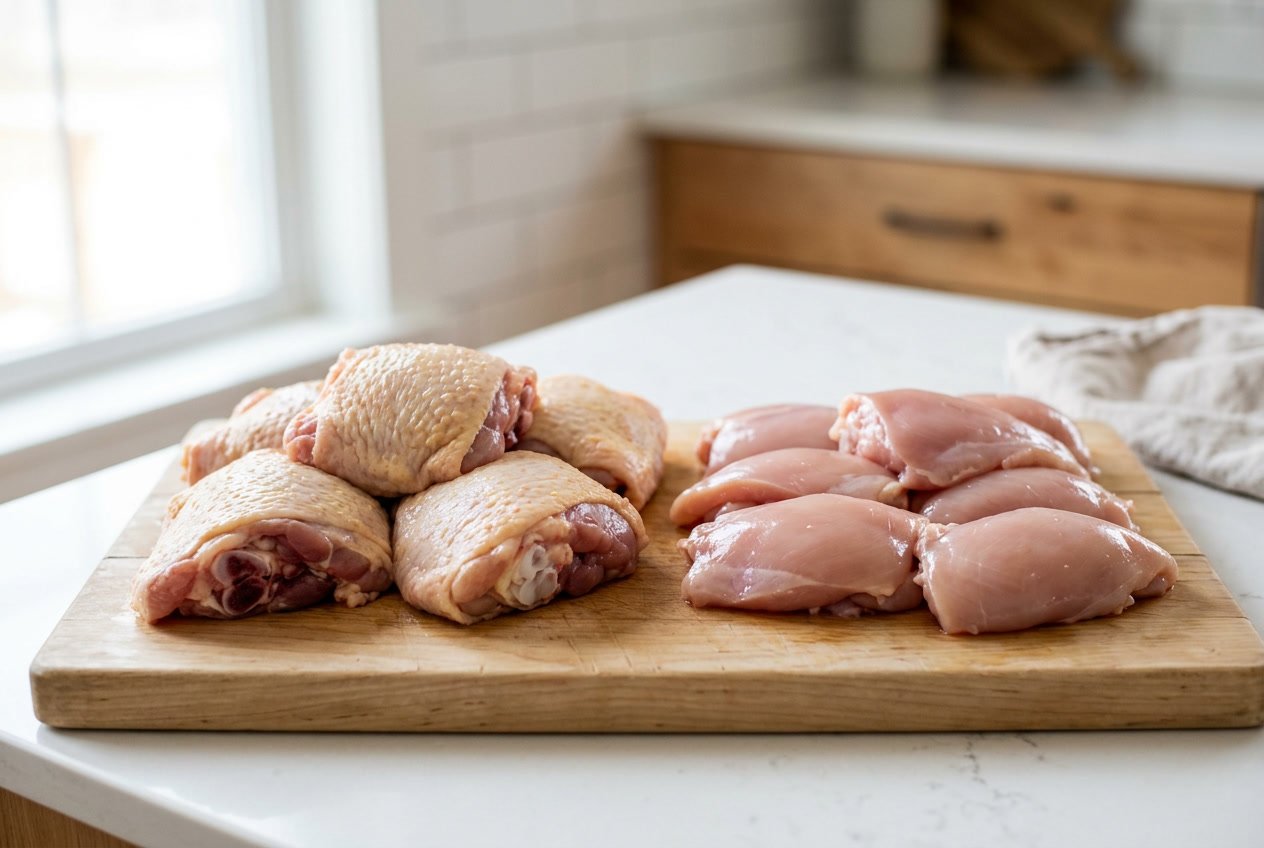
You’ll learn what each cut is, how their texture and nutrition differ, and which cooking methods suit each one best.
Expect practical tips on swapping cuts, handling cooking times, and picking the right option for steaks, stews, grills, or weeknight meals.
What Are Chicken Thighs?
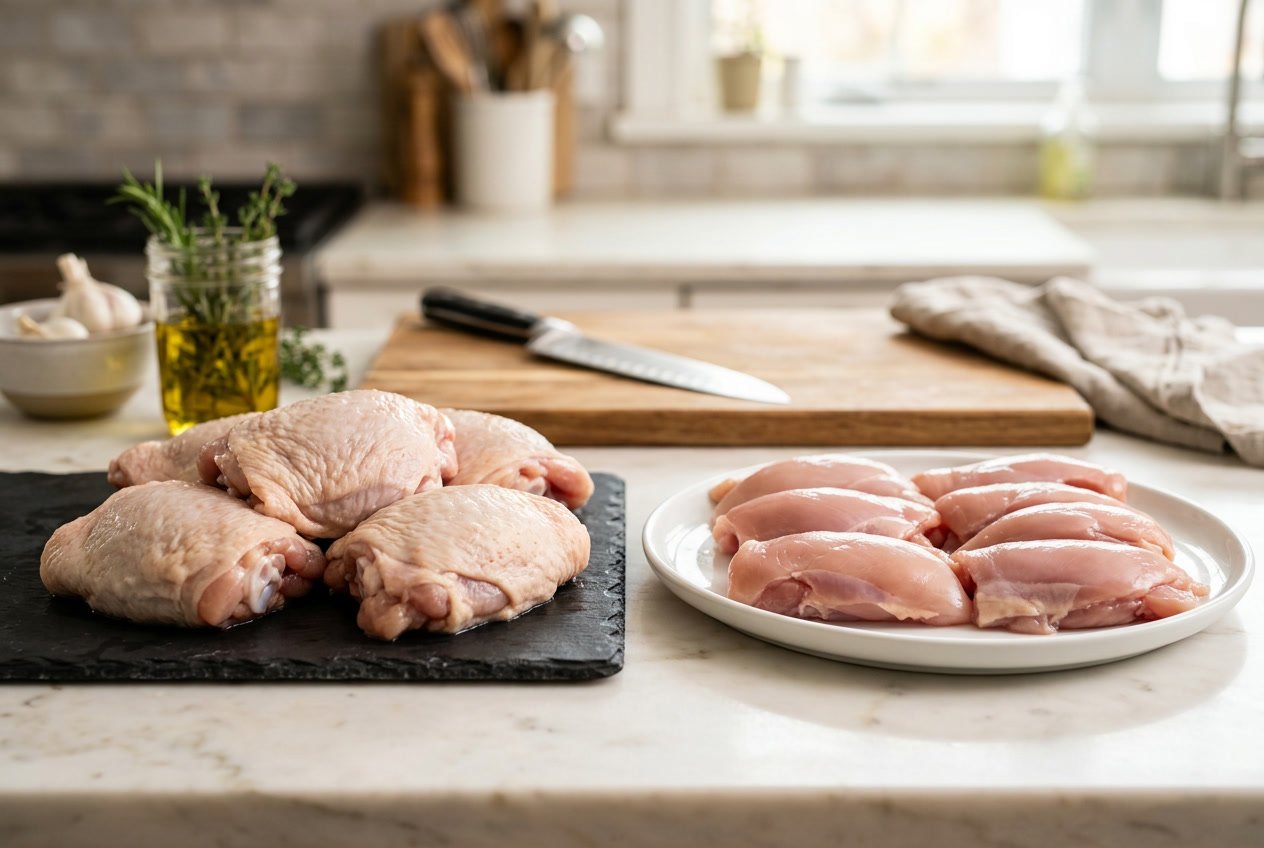
Chicken thighs are the upper portion of the bird’s leg. They typically come with bone and skin and supply rich flavor, higher fat content, and connective tissue that affects cooking methods and yield.
Anatomy and Composition
A whole chicken thigh includes skin, meat, bone, and connective tissue. The bone sits along the center; cartilage and joint tissue appear where the thigh meets the drumstick.
You’ll also find a layer of subcutaneous fat under the skin that renders during cooking and boosts flavor. Butchers sell thighs in several forms: bone-in with skin, boneless skin-on, and boneless skinless (often labeled thigh fillets or thigh cutlets).
Boneless thigh cutlets remove the bone and most skin, increasing usable yield but reducing some cooking benefits that bones provide. Thigh meat contains more myoglobin than breast meat, giving it a darker color and slightly higher iron and fat content.
It also delivers about the same protein per ounce as other chicken cuts, but with greater collagen from connective tissue.
Flavor and Texture
Thighs taste richer than breasts because of the fat and connective tissue. The skin crisps when roasted or fried, producing a crunchy exterior and tender interior.
Bone-in thighs retain moisture better during long, slow cooking. The bone and surrounding collagen break down into gelatin, which keeps meat succulent.
Texture varies by cut. Bone-in, skin-on thighs feel firmer and more substantial. Boneless thigh fillets cook faster and present a uniform thickness that suits pan-frying or quick grilling.
Thighs excel in braises, stews, and dishes that benefit from slow rendering of fat and collagen. Thigh cutlets or fillets work well when you need quicker, leaner pieces without the bone.
What Are Chicken Thigh Fillets?
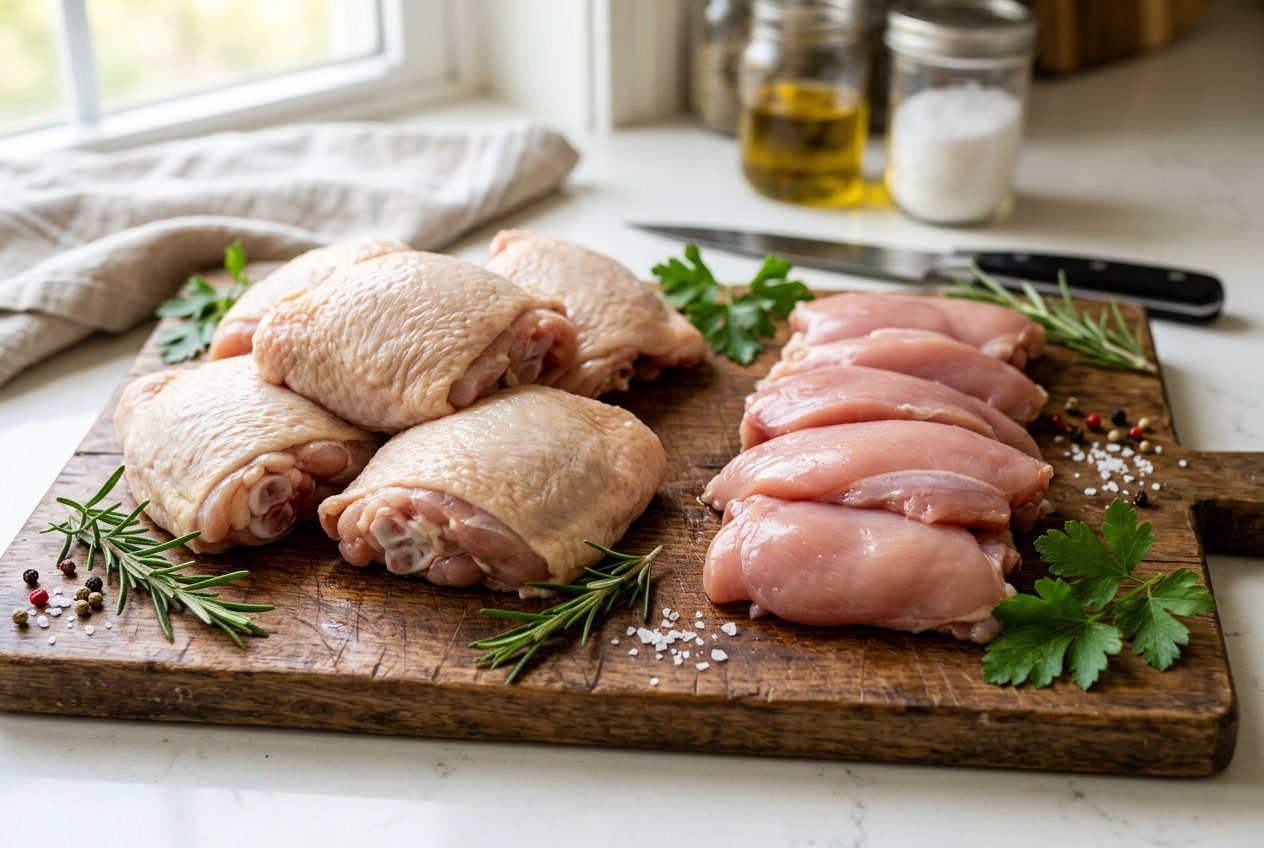
Chicken thigh fillets are boneless, skinless pieces trimmed from the thigh muscle. They give you a compact, uniform cut that cooks faster than bone-in thighs and retain more connective-tissue flavor than breast meat.
How Thigh Fillets Are Prepared
Butchers start with whole chicken thighs. They remove the bone and any large pieces of cartilage, then trim excess fat and skin to create a single, even piece of meat.
Stores often sell them as individual fillets roughly 2–4 ounces each, though size varies by bird and packaging. If you buy them prepped, they may be labeled “boneless skinless thigh” or simply “thigh fillet.”
At home, you can further portion fillets for even cooking. Press them flat for quick pan-searing or cut into strips for stir-fries.
Store them refrigerated at 40°F (4°C) and use within 1–2 days. Freeze in airtight bags for 6–9 months to preserve texture and flavor.
Flavor and Texture
Thigh fillets come from dark meat, so they have higher fat and myoglobin than breast, which means richer flavor. You’ll notice a tender, slightly fibrous texture that stays moist through high-heat methods and short braises.
Compared with bone-in thighs, fillets lose some depth of flavor that bones and skin provide. They still outperform breast meat for succulence.
They take marinades and rubs well and tolerate strong seasoning without drying. Use them when you want juicy, flavorful pieces that cook quickly.
Key Differences
You’ll weigh trade-offs between flavor, cooking time, and trimming when choosing between whole chicken thighs and boneless thigh fillets. Decide whether you want the richness from bone and skin or the speed and uniformity of fillets.
Bone-In vs Boneless
Bone-in chicken thighs include the femur portion and joint cartilage. The bone slows heat transfer, so meat near the bone cooks more slowly and stays moister during long braises or roasts.
You get extra flavor from marrow and connective tissue that dissolves into sauces, which helps when you want depth without adding fat.
Boneless chicken thigh fillets have no bone and usually come trimmed. They cook faster and more evenly on a grill, skillet, or in stir-fries.
Use fillets when you need consistent portion sizes, quicker weeknight meals, or a leaner yield per weight because you’re not discarding bones.
Skin-On vs Skinless
Skin-on chicken thighs carry a fat layer that crisps when roasted or pan-seared. This gives a pronounced mouthfeel and more surface flavor.
If you want a caramelized crust and richer pan juices for a sauce, keep the skin. The skin also insulates the meat, reducing moisture loss during high-heat cooking.
Skinless chicken thigh fillets are leaner and reduce prep time since you don’t need to crisp or remove skin. They work well in applications where you want sauces to cling directly to meat or when dietary fat is a concern.
Expect slightly less flavor intensity. Compensate with marinades, spices, or finishing fats.
Appearance and Preparation
Chicken thighs (bone-in, skin-on) present as irregular, thicker pieces with a visible bone and variable fat pockets. Trim excess fat and possibly score skin for even cooking.
They often shrink less visibly in braises and have rustic appeal when plated. Chicken thigh fillets appear as uniform, boneless pieces—flat and consistent in thickness.
They accept quick marinades and breading easily and sear uniformly. For even cooking, pound thicker fillets to match thinner edges or use a two-zone heat method: quick sear, then finish at lower temperature.
Nutritional Comparison
You get different balances of calories, fat, protein, and micronutrients depending on whether you choose bone-in thighs or boneless thigh fillets. The differences matter for meal planning, calorie targets, and nutrient needs like iron or vitamin B12.
Calories and Fat Content
Chicken thighs (with skin) pack more calories per 100 g than thigh fillets because of higher total and saturated fat. Expect roughly 220–260 kcal per 100 g for skin-on thighs versus about 160–200 kcal per 100 g for boneless, skinless thigh fillets, depending on cooking method.
Higher fat content increases juiciness and flavor but raises saturated fat and overall calorie intake. If you monitor calories or saturated fat, trimming skin or choosing fillets reduces both.
- Calories: thighs > fillets (typical range above).
- Total fat and saturated fat: higher in thighs, lower in fillets.
- Cholesterol: similar order of magnitude; modest differences based on cut and portion size.
Protein and Amino Acids
Both cuts provide high-quality protein with complete essential amino acid profiles suitable for muscle maintenance and repair. Per 100 g, thigh fillets (leaner) often give slightly more protein by weight than skin-on thigh portions because they contain less fat and water displacement.
Typical protein values fall around 20–25 g per 100 g for both cuts.
- Leucine, isoleucine, valine (BCAAs) support muscle protein synthesis.
- Lysine and methionine are abundant and help meet daily essential amino acid needs.
Choose fillets when you prioritize protein-to-calorie ratio. Choose thighs when you prefer flavor and don’t need the tightest protein-per-calorie numbers.
Vitamins and Minerals
Dark-meat thighs generally contain higher amounts of several micronutrients than thigh fillets, notably iron, zinc, selenium, vitamin B6, and vitamin B12. Those nutrients support oxygen transport, immune function, antioxidant defense, and nervous-system health.
- Iron and zinc: modestly higher in thighs, useful if you need dietary iron or zinc.
- Vitamin B12 and B6: higher in thigh meat than in leaner fillets.
- Vitamin D: minimal in both; not a reliable source.
- Selenium: present in both and contributes to recommended intakes.
If you need iron or B12, choose thighs more often. If you follow strict calorie goals but still want micronutrients, fillets still supply meaningful B vitamins, selenium, and zinc while cutting calories.
Best Cooking Methods and Culinary Uses
You get richer flavor and forgiving texture from bone-in, skin-on thighs. Boneless, skinless thigh fillets cook faster and work best in quick pans or grills.
Each cut needs slightly different timing, moisture control, and seasoning to perform at its best.
Cooking Methods for Chicken Thighs
Use bone-in, skin-on thighs with methods that build or preserve moisture and develop skin crispness. Roast at 200–220°C (400–425°F) for 25–35 minutes to render fat and crisp skin.
Finish under the broiler for extra color. Braise in a covered pot with 1–2 cups of liquid (stock, wine, or water plus aromatics) for 35–60 minutes to break down connective tissue and yield tender meat.
Grill over medium heat for 10–12 minutes per side, watching flare-ups from dripping fat. For pan-frying, sear skin-side down in a heavy skillet until brown, then finish in the oven to reach 74°C (165°F) internal temp.
Cooking Methods for Chicken Thigh Fillets
Thigh fillets (boneless, skinless) suit quick, high-heat techniques that preserve juiciness. Sear or pan-fry 3–5 minutes per side over medium-high heat, flipping once.
Stir-fry in a hot wok with small oil quantities and vegetables for 3–6 minutes total. Grill or broil on direct heat for 3–6 minutes per side depending on thickness.
Bake at 190–200°C (375–400°F) for 15–20 minutes. Because fillets lack fat and bone, brine 30 minutes (salt and water) or use a short marinade to prevent dryness.
Target 74°C (165°F) internal temperature and rest 3–5 minutes.
Suitable Recipes for Each Cut
Choose bone-in thighs for long-cook, flavor-rich dishes like coq au vin, slow-braised curries, barbecue smoked thighs, and sheet-pan roasted vegetables with pan juices. The bone and skin add depth to soups and stocks when simmered in water with aromatics.
Use thigh fillets in recipes that require uniform slices or quick cooking. Stir-fries, chicken tacos, skewers, schnitzel, and quick bakes with sauces all work well.
Fillets also work sliced cold for salads or sandwiches because they hold shape after cooking. Match method to texture needs: use thighs for shredding and fillets for slicing.
Tips for Freezing and Storage
Store raw thighs or fillets in airtight packaging with minimal air to avoid freezer burn. Vacuum sealing works best.
Label packages with date and use within 6–9 months for best quality. Thaw safely in the refrigerator overnight or in cold running water if you need faster thawing.
If thawing in water, keep the meat in sealed packaging and change water every 30 minutes. Cooked leftovers keep 3–4 days in the fridge or freeze for 2–3 months.
When refreezing previously frozen meat, expect some texture loss. Reheat gently with added moisture (sauces or a splash of water) to restore juiciness.
Chicken Thighs, Thigh Fillets, and Other Cuts
This section explains key differences in texture, cooking times, and typical uses so you can pick the right cut for flavor, cost, and method. It highlights how fat, bone, and processing affect results and which cuts work best for quick versus slow cooking.
Chicken Breasts vs Thighs and Fillets
Chicken breasts are lean, low-fat, and cook quickly. They suit grilling, pan-searing, and slicing for salads or sandwiches.
Because breasts dry out faster, use a thermometer (165°F / 74°C) and shorter cook times or brines to keep them moist.
Thighs (bone-in, skin-on) contain more fat and connective tissue, which gives richer flavor and better tolerance for long, moist cooking like braises and stews.
Boneless, skinless thigh fillets offer the same dark-meat flavor with faster cook times and easier portioning. Use thigh fillets for stir-fries, skewers, and recipes where you want tenderness without deboning.
Compare quickly:
- Breast: lean, mild flavor, fast cook, best for dry-heat methods.
- Bone-in thigh: juicier, more flavor, slower or high-heat methods.
- Thigh fillet: flavor of dark meat, versatile, cooks faster than bone-in.
Thigh Cutlets and Chicken Fillet Options
Thigh cutlets are thin slices from the thigh, sometimes still attached to skin or bone. They cook very fast while retaining thigh flavor.
Choose cutlets when you need even, quick cooking for pan-frying or breading. They brown well and stay juicy because of higher fat content.
“Chicken fillet” usually refers to boneless breast fillets, but some retailers also call boneless thigh pieces “thigh fillets” or “leg fillets.” Check the label before buying.
Breast fillets provide uniform, mild meat for delicate dishes. Thigh fillets give richer taste and forgiving cooking for curries, tacos, and sandwiches.
Buying tips:
- For cost savings and stock-making potential, buy bone-in thighs.
- For uniform portions and fast prep, buy boneless fillets (breast or thigh).
- For pan-fry or schnitzel-style dishes, choose cutlets for thin, even pieces.
Choosing the Right Cut for Your Needs
Decide whether you want richer flavor and juiciness or a lean, quick-cooking option.
Consider how calories, protein, cooking method, and prep time affect the final dish.
Flavor Preferences
If you want deep savory taste and moist texture, choose chicken thighs with skin or bone-in thighs. The higher fat content in thighs gives more mouthfeel and browns during roasting or grilling, which intensifies flavor.
If you prefer milder flavor that takes on marinades and sauces quickly, pick chicken thigh fillets. They are boneless and skinless, so they absorb seasonings evenly and work well for pan-searing, stir-fries, or skewers.
Use thighs for slow-cooked stews, braises, or barbecued pieces where rendered fat improves the sauce. Use fillets for quick high-heat methods where you want uniform slices and faster turnaround.
Health and Dietary Considerations
Thigh fillets are leaner than whole thighs and generally contain fewer calories per cooked ounce while retaining similar protein levels.
If you track calories, choose fillets to lower total fat intake without sacrificing protein.
If you follow a higher-fat or ketogenic plan, whole chicken thighs supply more calories from fat and can help with satiety. Watch portion sizes, since a typical cooked skinless thigh and a thigh fillet can differ by 20–30 calories and a few grams of fat.
For sodium or added-fat concerns, remove the skin and trim visible fat, and use low-sodium marinades. Always cook to 165°F (74°C) internal temperature to ensure safety while preserving protein quality.
Cost and Convenience
Thigh fillets cost more per pound than bulk bone-in thighs in many markets. They save prep time because they’re already boneless and skinless.
If you shop on a budget and plan to slow-cook or roast, bone-in thighs give better value and flavor for stocks and sauces. Buy fillets for even cooking and faster marination if convenience matters, such as for quick weeknight dinners or meal prep.
Consider deboning whole thighs yourself only if you frequently cook thighs and want to control trim and cost. Both cuts freeze well; label packages with the date and use within 6 months for best quality.


