
Chicken Thighs vs Breasts: Nutrition, Taste, and Best Uses
Decide what matters most for your meal: leanness and protein or flavor and juiciness. Both cuts can fit a healthy diet depending on your goals.
If you want lower calories and less fat, choose breast. If you want richer flavor, more iron and B12, and forgiving cooking, choose thighs.

Compare calories, fat, protein, nutrients, and cooking tips to pick the cut that matches your menu, time, and budget. Get practical guidance on taste, texture, health trade-offs, and simple preparation techniques that make each cut shine.
Key Differences

Flavor, fat content, and texture differ between thighs and breasts, affecting cooking choices and nutrition. These differences come from where the meat is located on the bird and the muscle composition.
White Meat vs Dark Meat
White meat (chicken breast) is leaner and higher in protein per ounce. A 100 g cooked chicken breast provides more protein and fewer calories and saturated fat than the same amount of chicken thigh.
Dark meat (chicken thigh) contains more intramuscular fat and connective tissue, creating a richer flavor and juicier texture after cooking. Thighs retain moisture better during high-heat cooking and reheating, making them more forgiving if overcooked.
Where Each Cut Comes From
Chicken breasts are the pectoral muscles on the front of the bird. These large, lean muscles do little sustained work, so they store less fat and contain more quickly cooked protein.
When you buy boneless, skinless breasts, you remove most of the fat, further reducing calories.
Chicken thighs are the upper leg muscles, used for standing and walking. These active muscles contain more fat, connective tissue, and flavor compounds.
Thighs may come bone-in or boneless and often include skin, which increases calories and crispiness when roasted or fried.
Myoglobin and Muscle Types
Myoglobin, an oxygen-carrying protein, gives darker meat its color. Thighs have higher myoglobin concentrations because leg muscles require more oxygen during sustained activity, resulting in the darker appearance and different flavor profile.
Breast muscle fibers are mostly fast-twitch (white) fibers that contract quickly and rely less on oxidative metabolism. Thigh muscles contain more slow-twitch (red) fibers that depend on aerobic metabolism and accumulate more myoglobin and fat.
These cellular differences explain why breasts cook faster and can dry out, while thighs stay tender and flavorful.
Nutrition Comparison
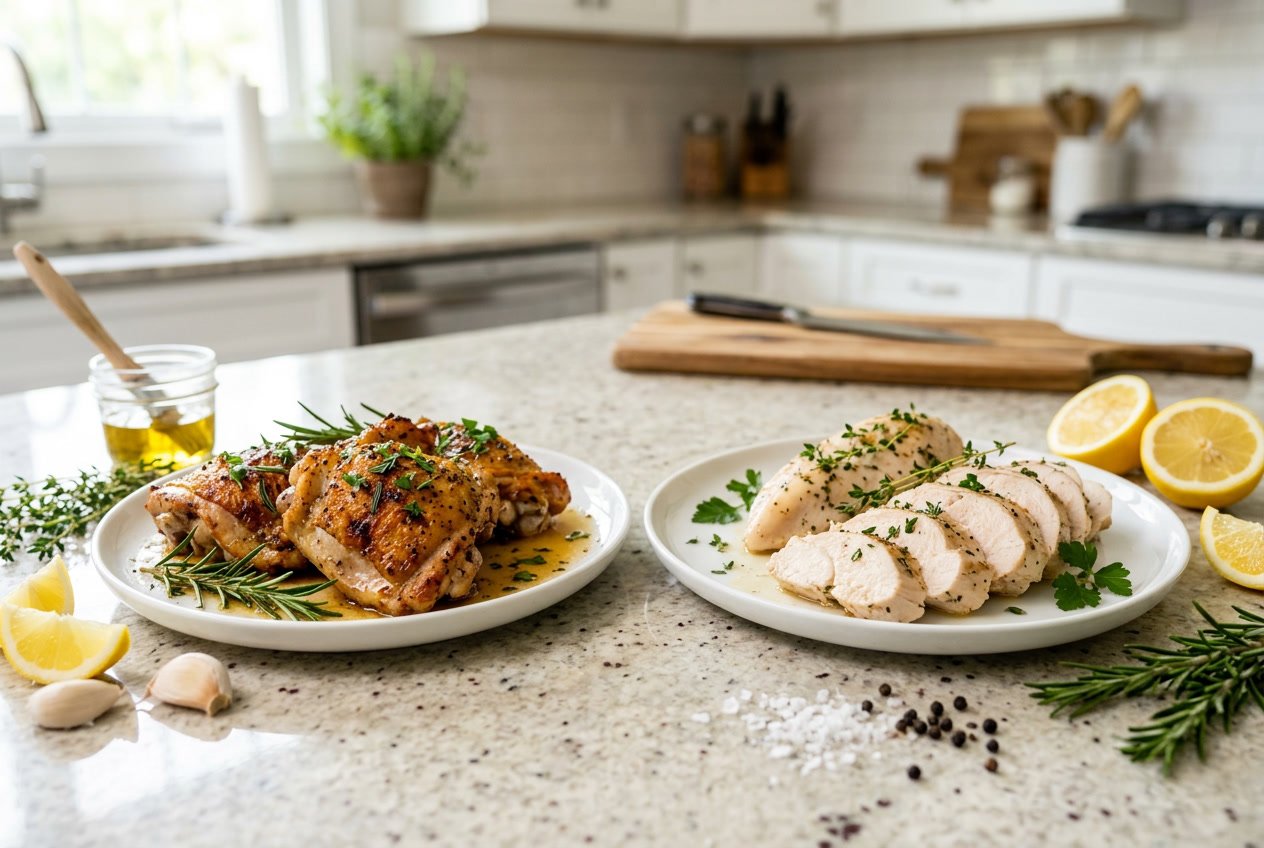
Thighs and breasts differ in calories, protein, fat type, and micronutrients. These differences affect calories per serving, cooking resilience, and contributions to nutrients like B vitamins and minerals.
Calorie and Protein Content
Skinless chicken breast delivers more protein per 100 g and fewer calories than skinless chicken thigh. For example, 100 g of raw skinless breast typically provides about 31–33 g protein and roughly 110–130 kcal, while 100 g of raw skinless thigh gives about 16–20 g protein and roughly 200–220 kcal depending on trimming.
If you prioritize lean protein and lower calorie density, breast helps you meet higher protein targets with fewer calories. Thighs provide less protein per calorie but can be advantageous when you need more energy or prefer a juicier texture.
Fat Content and Types
Thighs contain substantially more total and saturated fat than breasts. Skinless chicken thigh often has roughly 15–17 g total fat per 100 g, including higher monounsaturated and polyunsaturated fats, while skinless breast usually has about 3–5 g total fat with considerably less saturated fat.
Higher unsaturated fat in thighs contributes to flavor and mouthfeel. If you monitor saturated fat for health reasons, choose skinless breast or trim visible fat.
If you want richer taste and satiety, thighs’ fat profile supports that without adding trans fats.
Vitamin and Mineral Differences
Breast and thigh differ in several micronutrients. Skinless breast tends to be richer in vitamin B3 (niacin), vitamin B6, phosphorus, selenium, choline, and iron compared with thigh on a per-gram basis.
Thighs contain more vitamin B12 and slightly higher iron and myoglobin-derived color, which contributes to the darker meat. Selenium and phosphorus in breast support metabolism and bone health; vitamin B3 and B6 aid energy and amino acid metabolism.
Thighs’ higher myoglobin and connective tissue content deliver more iron-like taste and a different amino acid profile. Zinc levels are similar but can be modestly higher in thighs.
Choose the cut based on which nutrients you emphasize in your diet.
Health Implications
Choosing between skinless chicken breast and skinless chicken thighs affects calories, fat, and certain micronutrients. Consider how each cut fits your daily energy needs, cholesterol goals, and specific nutrient requirements.
Weight Loss Considerations
If you track calories or aim for a calorie deficit, skinless chicken breast offers lower calories and higher protein per ounce than skinless chicken thighs. That higher protein helps preserve lean mass during weight loss and supports satiety when paired with fiber-rich vegetables.
Thighs contain more fat and therefore more calories per serving, which can make portions easier to overshoot if you don’t weigh or measure. However, the additional fat slows digestion and can increase fullness for some people.
Use 100 g portions to compare: skinless chicken breast provides roughly 100–110 kcal and about 22–24 g protein, while skinless chicken thighs are roughly 140–160 kcal with about 18–20 g protein.
Saturated Fat and Heart Health
Skinless chicken breast is leaner and contains less saturated fat per serving, which can help keep LDL cholesterol lower when you replace higher saturated-fat foods in your diet.
Skinless chicken thighs have higher total fat and a higher proportion of saturated fat than breast meat. If you have elevated LDL cholesterol or a family history of cardiovascular disease, favoring skinless chicken breast or moderating thigh portions makes sense.
Reduce saturated fat further by trimming visible fat and avoiding added butter or high-saturated-fat sauces. Swap some red or processed meats for skinless chicken breast to lower saturated fat intake across your meals.
Nutrient Density and Dietary Needs
Skinless chicken thighs supply more iron and zinc per serving than skinless chicken breast, which matters if you have higher needs—such as during pregnancy, heavy training, or if you follow a low-red-meat diet.
Thighs also contain slightly more fat-soluble nutrients tied to muscle metabolism. Skinless chicken breast excels when you need concentrated lean protein without extra calories or fat.
The breast provides notable B vitamins (B6, niacin) and selenium that support energy and immune function. Balance both cuts across the week to cover nutrient gaps.
Taste, Texture, and Culinary Uses
Fat and muscle differences shape flavor and affect which cut suits specific cooking methods and dishes.
Flavor Differences
Chicken thighs have more intramuscular fat and myoglobin, giving them a deeper, savory flavor that stands up to bold spices and long cooking. You’ll notice richer umami notes in dark meat, which pair well with soy, smoked paprika, and braising liquids.
Chicken breasts are leaner and milder in taste, so they act like a blank canvas for marinades, citrus, and delicate herbs. Because white meat lacks the same fat-driven flavor, you often compensate with added fats like olive oil or sauces.
When you need pronounced chicken flavor in stews, curries, or grilled preparations, choose thighs. When you want a neutral protein for salads, sandwiches, or quick sautés, choose breasts.
Texture and Juiciness
Thighs contain more connective tissue and fat, which break down during cooking into gelatin and rendered fat. You’ll get a tender, moist texture even with higher internal temperatures.
Breasts are denser and contain less connective tissue, so they firm up quickly and dry if overcooked. For best results, brine or use moist-heat methods, and remove breasts from heat as soon as they reach the safe internal temperature.
If you want shreddable, silky meat for tacos or ragù, select thighs. If you want firm slices for stir-fries or grilled platters, choose breasts.
Adaptability in Recipes
Use thighs for slow-cooked applications like braises, slow-roasts, and stews, where connective tissue transforms into body and flavor. Thighs also excel in high-heat grilling when you want juiciness and robust seasoning.
Reserve breasts for quick-cook methods: pan-searing, poaching, and fast baking. You’ll get clean slices that hold shape in salads, sandwiches, and stir-fries.
When substituting, adjust fat and timing: add more external fat and shorten cooking time if replacing thighs with breasts. Cook thighs skin-on for extra flavor and moisture; remove skin or trim fat when you need a leaner dish.
Cooking Methods and Preparation Tips
Choose methods that protect moisture for breasts and that break down connective tissue in thighs. Use a thermometer, adjust timing, and match technique to whether pieces are skin-on or skinless.
Best Cooking Methods for Breasts
Cook skinless chicken breast quickly over moderate heat to prevent drying. Pan-sear for 3–4 minutes per side (depending on thickness) then finish in a 375°F oven until 160–162°F.
Poaching at a gentle simmer keeps the breast moist for salads or shredding; use seasoned broth and remove at 160–162°F. Grilling works if you pound to even thickness or butterfly the breast and grill over medium heat with frequent turns.
Brining (30 minutes to 2 hours) adds moisture and reduces the chance of overcooking for lean, skinless chicken breast.
Best Cooking Methods for Thighs
Use longer, slower heat for skinless chicken thighs to soften connective tissue and render fat. Roast thighs at 400°F for 25–35 minutes, checking for 165°F; bone-in takes longer than boneless.
Braise or slow-cook in liquid at low heat to produce tender meat that easily shreds. Pan-sear skinless chicken thigh pieces to develop browning, then finish covered with a sauce for 15–20 minutes.
Grill on indirect heat (or a cooler zone) to prevent the exterior from burning before the center reaches safe temperature.
Skin-On vs Skinless: Impact on Fat and Flavor
Skin-on pieces add fat and flavor; the skin protects meat from direct heat and helps retain juices. Roast or pan-sear skin-on thighs to crisp the skin and render fat; then finish to the recommended internal temperature.
Skinless chicken thighs handle longer cooking well, while skinless chicken breast benefits most from brief, controlled heat or a brine. If you remove skin, increase basting, sauces, or use a marinade to replace lost fat and flavor.
For even cooking across mixed pieces, start skin-on or bone-in thighs first, then add skinless chicken breast later or use separate pans to avoid overcooking the breasts.
Cost and Accessibility
You’ll find differences in price and how easy each cut is to buy. Price, packaging, and local demand shape which cut fits your budget and cooking routine.
Price Differences
Chicken thighs generally cost less per pound than chicken breasts in most U.S. stores. Expect thighs often in the $1.50–$3.00 per pound range, while boneless, skinless breasts commonly run $3.00–$6.00 per pound.
Adjust price comparisons for edible yield: breasts yield more lean meat per pound than bone-in thighs, so compute price per usable ounce if you need accurate cost-per-protein.
Factors that raise price for either cut include organic certification, free-range labeling, and regional demand. Watch seasonal sales—breasts can drop in price during grilling promotions, and bulk packs at warehouse stores may change the math in favor of breasts if you can store them properly.
Availability and Convenience
You’ll usually find both cuts stocked year-round at major grocery chains. Packaging differs between them.
Stores commonly sell breasts boneless and skinless in vacuum-sealed family packs. Thighs appear as bone-in, skin-on, or boneless in smaller trays.
If you want convenience, boneless skinless breasts require less prep. Thighs often need deboning or trimming unless you buy the boneless option.
Location and shopping channel affect accessibility. Urban supermarkets and online grocers offer more specialty and organic options for breasts.
In regions with strong demand for dark meat, you may find thighs easier to source. They often appear in larger bulk bags at lower per-pound prices.


