
Chicken Thighs vs Breast Macros: Nutrition Facts and Comparison
If you want higher protein with fewer calories and less saturated fat, choose breast. If you want more flavor, slightly more calories, and higher fat (including some beneficial fat-soluble nutrients), choose thigh.

Breast provides a leaner, higher-protein option per ounce. Thigh delivers more calories and fat with richer flavor and certain micronutrients.
You’ll see a clear macro breakdown next. Cooking, portion size, labeling, and health goals also influence which cut works best for your meals.
Macro Comparison: Chicken Thighs vs Breast
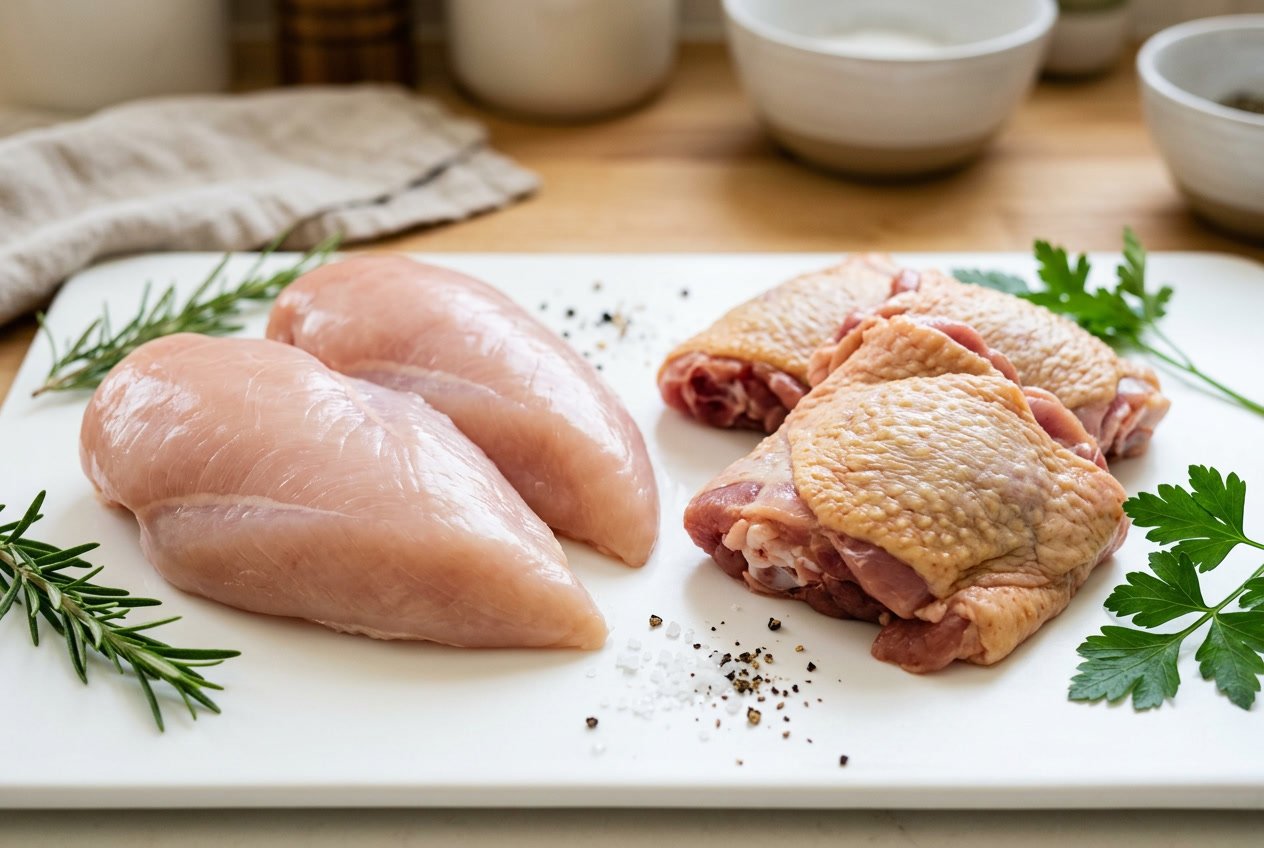
Breasts deliver more protein per calorie and lower saturated fat. Thighs provide more total fat, some additional micronutrients, and slightly higher calories.
Choose based on your protein target, calorie limit, and taste preference.
Protein Content Differences
Chicken breast contains more protein per 100 g than chicken thigh. For raw, skinless cuts, breast typically provides about 31–33 g protein per 100 g cooked, while thigh gives about 25–28 g.
That means breast gives roughly 15–20% more protein by weight. If you track protein per calorie, breast is more efficient.
Breast often yields about 18 g protein per 100 kcal versus about 13 g per 100 kcal for thigh. Use breast for higher protein with fewer calories, such as for muscle building on a calorie-controlled plan.
Thighs still supply substantial protein and may be preferable when you want more flavor. If you rely on portion size rather than weight, check cooked weights because one whole breast can weigh much more than one thigh.
Fat Content Breakdown
Chicken thighs contain noticeably more total fat than breasts. Typical values: breast about 4–5 g fat per 100 g cooked; thigh about 9–11 g.
That difference doubles the fat and raises calories. Thighs have higher saturated fat (about 2.5–3.0 g vs. 1.2–1.3 g in breast) but also more monounsaturated and polyunsaturated fats.
If you want to reduce saturated fat, choose skinless breast and trim visible fat. If you want healthy fats and more satiation, thighs provide more monounsaturated and polyunsaturated fats when portions are controlled.
Carbohydrate Profile
Both chicken breasts and thighs are negligible sources of carbohydrates. Typical carb values for both cuts are near 0–1 g per 100 g cooked.
Net carbs remain close to zero. Your meal’s carbohydrate load will come from sides, sauces, or marinades.
Small differences in carb content may appear from cooking methods or if you include skin and coatings. For strict macro tracking, use plain cooked, skinless values.
Calorie Comparison
Calories differ mainly because of fat content. Cooked, skinless chicken breast typically has about 165–190 kcal per 100 g, whereas thigh ranges around 205–230 kcal per 100 g.
If you eat by portion (one breast vs one thigh), total calories depend on cooked weight. A 175 g cooked breast can contain about 300–330 kcal and 55–60 g protein, while a 120 g thigh might contain about 240–275 kcal and 30–35 g protein.
Adjust portions to meet calorie goals. Use breast to lower meal calories while maximizing protein.
Nutritional Value and Micronutrients
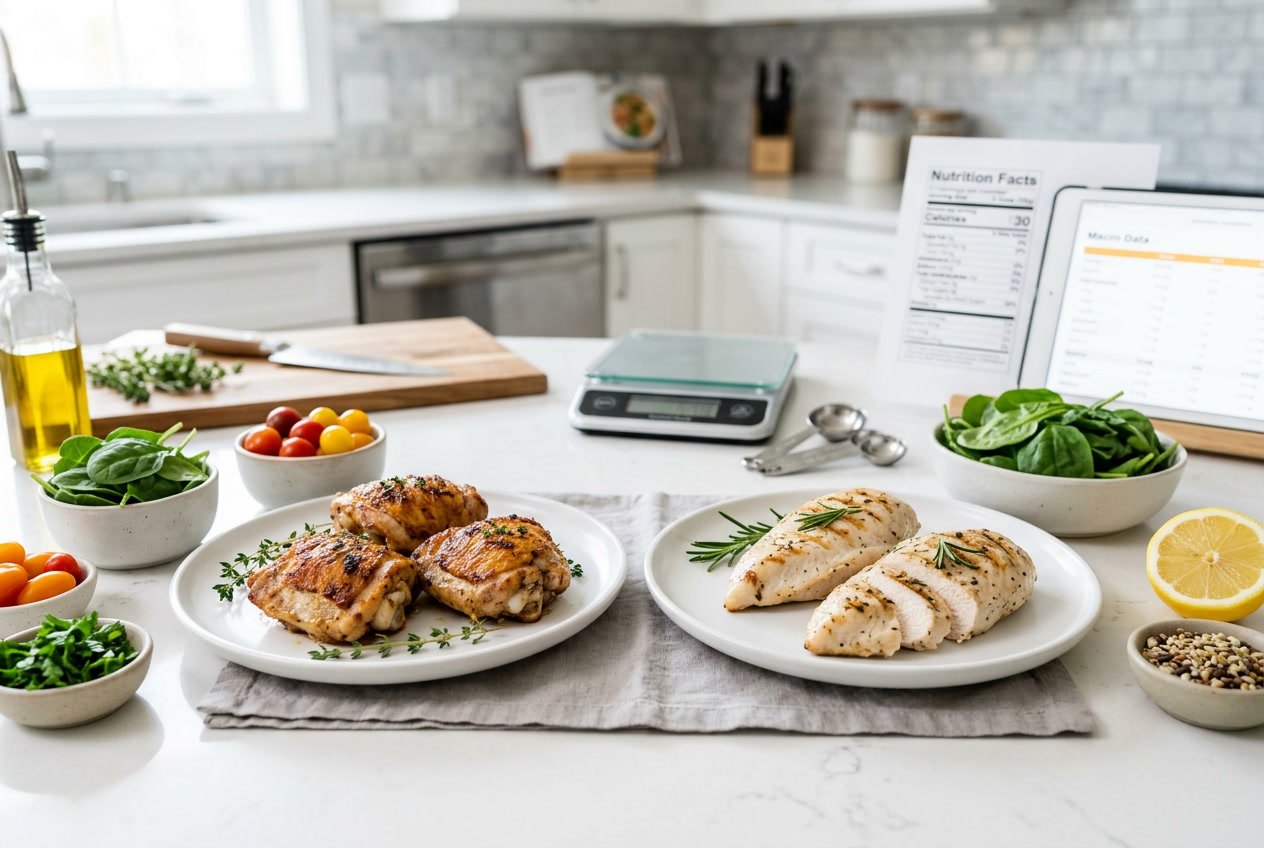
Both cuts supply high-quality protein and several B vitamins. Thighs provide more iron, zinc, and vitamin B12 per 100 g, while breasts deliver more protein and higher niacin, vitamin B6, phosphorus, and choline.
Vitamin and Mineral Content
Chicken thighs contain higher concentrations of iron and vitamin B12 thanks to greater myoglobin in dark meat. Per 100 g, thighs typically provide noticeably more vitamin B12 and iron than skinless breast.
Breasts supply more niacin (B3) and vitamin B6, nutrients important for energy metabolism. They also tend to have higher phosphorus and potassium values.
If you track calories, remember thighs are higher in fat and calories per 100 g, so their micronutrient density comes alongside more energy.
Choline, Iron, and Zinc Levels
Choline is higher in chicken breast. A 100 g serving of skinless breast commonly supplies more choline than the same weight of thigh.
Iron and zinc are higher in thighs. Per 100 g, thighs often provide roughly double the zinc and more than twice the iron compared with breast.
Leaving skin on increases fat and calorie content but has minimal effect on these micronutrient ratios.
Impact of Preparation and Cooking Methods
Preparation and cooking change the calories, fat, and protein you get from chicken more than the cut alone. How you handle the skin and whether you bake, grill, or fry will shift macros.
Skinless vs Skin-On Chicken
Keeping the skin increases calories and fat because the skin contains most of the chicken’s surface fat. For a 100 g cooked chicken thigh, skin-on adds roughly 40–80 kcal and 4–8 g fat compared with the same piece skinless.
The change to protein is minimal. If you want higher fat for satiety or ketogenic needs, retain the skin and roast or grill to render some fat while keeping flavor.
If you aim to reduce calories or meet lean-protein targets, remove the skin before or after cooking to reduce about 80–120 kcal per typical thigh portion.
Tip: Pat skin dry and cook at higher heat to crisp without heavy added oils.
Baked, Grilled, and Fried Chicken Nutrition
Baking and grilling mostly preserve the chicken’s native macros, adding only small amounts of oil or marinade calories. Baking a skinless breast with a spray of oil adds about 20–40 kcal.
Grilling lets excess fat drip away, lowering calories for skin-on pieces compared with pan-frying. Frying increases calories significantly.
A typical breaded, fried 100 g breast or thigh can add 150–300 kcal from batter and oil absorption, and raise total fat by 10–25 g.
Baked chicken (skinless) offers the lowest added fat. Grilled chicken (skin-on or skinless) is flavorful, with moderate fat if skin-on.
Fried chicken (breaded or battered) has the highest calories and saturated fat.
For accurate tracking, weigh cooked portions and include oils, marinades, or breading in your macro calculations.
Health Considerations and Dietary Goals
Choose between cuts based on calories, fat, and how each fits into your macronutrient targets and health needs. Consider sodium and cooking method too, since added oil or breading changes the macros more than the cut itself.
Lean Protein Choices
If you prioritize lean protein, chicken breasts deliver the highest protein per calorie: roughly 23–27 g protein and about 100–130 kcal per 100 g cooked, depending on method.
Chicken thighs contain more fat, typically 5–10 g per 100 g cooked, which raises calories to roughly 150–200 kcal per 100 g.
The extra fat provides flavor and satiety and includes monounsaturated and polyunsaturated fats. Protein density is lower compared with breast.
Use breasts for calorie-restricted meals or high-protein snacks. Use thighs when you want higher satiety, richer taste, or less risk of drying out during cooking.
Trim visible fat and choose cooking methods like grilling, baking, or poaching to control added fats.
Weight Loss vs Muscle Building
For weight loss, focus on total energy balance and protein intake. Choosing chicken breast helps because it provides more protein for fewer calories.
For muscle building, total daily protein and overall calories matter more than cut. Thighs provide slightly less protein per gram but add dietary fat that can help you meet higher calorie needs.
Many people combine both: breasts for lean meals and thighs for calorie-dense recovery or mass-gaining meals.
If cutting, aim for breast-based meals with 20–30 g protein per serving and minimal added oils. If bulking, include thighs to increase calories and meal palatability, and track protein to reach your target.
Monitor portion sizes and cooking fats to keep macros aligned with your goals.
Serving Size, Measurement, and Labelling
You need clear, consistent measurements to track calories and macros accurately. Weighing and reading labels directly affects the calories in chicken you record.
Raw vs Cooked Weights
Raw and cooked weights differ because chicken loses water and fat during cooking. A 100 g raw boneless, skinless chicken breast typically yields about 70–75 g cooked.
Thighs shrink similarly but retain more fat, so weight loss varies by cut and method. Always weigh the form you eat.
If you plate cooked chicken, weigh it cooked. If you meal-prep raw portions, record raw weight and use a reliable conversion factor.
Raw to cooked (boneless, skinless breast): multiply raw weight by 0.70–0.75. Raw to cooked (thigh, boneless, skin-on may vary): multiply by 0.65–0.75.
Cooking method changes calories per gram. Grilling or roasting drains fat; pan-frying or braising can add oil, increasing calories in chicken by 20–100+ kcal per 100 g depending on added fat.
Track added oils and sauces separately.
Understanding Nutrition Labels
Nutrition labels usually list values per 100 g or per serving, and they often reflect the raw product unless specified. Check the package for “raw” or “cooked” and the serving size.
A typical 100 g raw chicken breast shows about 110–130 kcal and about 22–25 g protein. A comparable thigh shows about 150–200 kcal and about 18–22 g protein because of higher fat content.
If a product lists drained or cooked values, align your tracking to that state. When labels omit water loss during cooking, recalculate using the raw-to-cooked conversion.
Log added ingredients (oil, marinades) separately to keep your chicken nutrition facts accurate.
Culinary Uses and Recipe Versatility
Choose cuts based on texture and fat. Thighs give juiciness and forgiving cooking; breasts give lean protein and quicker cook times.
Use thighs when you need flavor and moisture. Use breasts when you need lowest calories per ounce and firmer slices.
Boneless Skinless Chicken Thighs in Recipes
Boneless skinless chicken thighs work well in braises, stir-fries, and slow-cooker recipes because their higher fat content keeps them tender during long or high-heat cooking.
Slice or cube them for kebabs, curries, or fried rice to boost flavor without adding extra oils.
For quick weeknight meals, sear thighs over medium-high heat for 4–6 minutes per side until internal temperature reaches 165°F. They tolerate marinades with acid or yogurt, which both tenderize and deepen flavor.
Marinate 30 minutes to 8 hours depending on intensity.
If you prefer shredded chicken, cook thighs in a covered pot with 1 cup liquid for 20–30 minutes, then pull with forks. Thighs pair especially well with bold spices, soy-based sauces, and creamy sauces that balance their richness.
Best Chicken Recipes by Macro Needs
Choose chicken breast for higher protein and lower fat. Try recipes like grilled breast salads, poached breast slices over grain bowls, or pan-seared strips for fajitas.
Aim for 4–6 oz cooked breast per serving to get 25–40 g protein while keeping calories low.
If you want more calories or higher fat for satiety, use thighs in dishes like coconut curry or sheet-pan roasted thighs with root vegetables. You can also make BBQ pulled chicken with thighs.
A 4–6 oz cooked thigh portion gives more fat and flavor, and often improves mouthfeel in slow-cooked meals.
Here’s a quick pairing list to guide you:
- Lean macros: grilled chicken breast, poached chicken breast salad, chicken breast stir-fry (minimal oil).
- Higher-fat macros: braised boneless skinless chicken thighs, chicken thigh curry, roasted thigh with pan sauce.
Adjust portion sizes and added fats like oil, butter, or sauces to meet your macro targets.


