
Chicken Thighs vs Breast Calories: Differences, Nutrition & Health Impact
Chicken breast has fewer calories and more protein per ounce. Chicken thighs contain more fat and therefore more calories.
Choose breast when you’re cutting calories or prioritizing protein. Choose thighs when you want extra calories, juiciness, and richer flavor.

You’ll see exact calorie and macronutrient comparisons. Cooking methods change those numbers.
You can pick the best cut for your goals and meals by learning practical swaps, portion tips, and simple cooking notes.
Calorie Comparison

Chicken thighs provide more calories per serving than chicken breast because thighs contain more fat. Skin and portion size change the calorie gap, so check if the pieces are skin-on or skinless and compare cooked vs raw weight.
Average Calorie Content Per Serving
A 100 g cooked skinless chicken breast contains about 165 kcal. A 100 g cooked skinless chicken thigh contains roughly 209 kcal.
That difference comes mostly from fat. Thighs have more intramuscular and surface fat, which increases calories by about 40–50 kcal per 100 g.
If you measure by common portions, a 6 oz (170 g) cooked chicken breast has about 280 kcal. A 6 oz cooked thigh has about 355 kcal.
Use a kitchen scale for accuracy when tracking calories or protein needs. Breast offers more protein per calorie, so it’s often preferred when you prioritize lean protein.
Impact of Skin-On vs Skinless
Keeping the skin adds roughly 50–100 kcal per 100 g, depending on thickness and cooking method. For example, a 100 g skin-on chicken thigh can exceed 300 kcal after cooking with the skin rendered.
A skin-on breast also rises in calories but remains leaner than a thigh with skin. Removing skin reduces saturated fat and total calories.
If you want the flavor of skin-on chicken but fewer calories, remove the skin after roasting or pat off visible fat. Grilling or baking on a rack lets drippings escape and lowers retained fat compared with pan-frying in oil.
Serving Size Considerations
Portion size changes the practical calorie difference more than cut alone. A small chicken breast (about 3 oz cooked) may be about 140 kcal, while a large thigh (about 4 oz cooked) may be 180–220 kcal.
Two thighs can easily match the calories of a larger breast plus sides. Cooking method and added fats matter: 1 tbsp olive oil adds about 120 kcal.
If you sauté skinless chicken breasts in oil, the added calories can close or reverse the expected gap versus plain thighs. Track cooked weight and any added oil, butter, or sauces to estimate calories accurately.
Macronutrient Differences
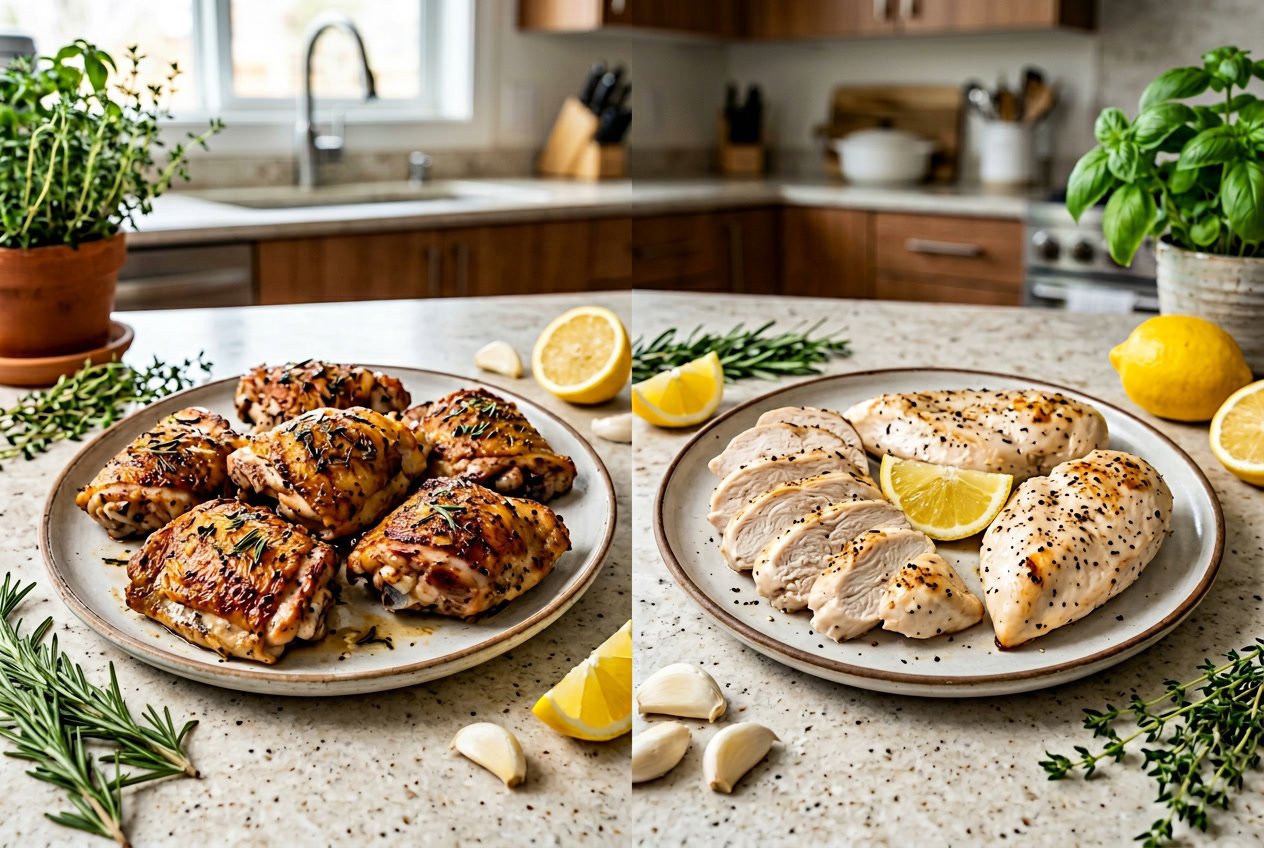
Breast and thigh differ mainly in protein and fat. One provides higher lean protein per calorie, while the other supplies more fat and flavor.
Protein Content Breakdown
Chicken breast (white meat) gives you more protein per gram than chicken thigh (dark meat). For 100 g raw, breast typically offers about 22–24 g protein, while thigh gives roughly 16–18 g.
Breast gives more lean protein for the same weight, which helps if you track grams of protein for muscle gain or weight loss. Protein quality is similar between cuts: both supply complete amino acids useful for muscle repair and satiety.
Choose breast for maximum protein density per calorie. Choose thigh if you prefer a juicier texture and are willing to eat a larger portion to match protein targets.
Fat Content and Types
Thighs contain more total fat than breasts, mostly due to darker muscle and often the skin. Per 100 g raw, thighs can have 10–15 g fat versus breasts at 1–4 g when skinless.
That extra fat raises calorie content and improves juiciness and flavor during cooking. Thighs have more monounsaturated and polyunsaturated fats and higher omega-6 levels.
Breasts are lower in total and saturated fat when skinless. If you’re on keto or need extra calories, thighs help meet fat targets without added oils.
If you’re reducing saturated fat or omega-6 intake, skinless breast is the better option.
Carbohydrates
You won’t find meaningful carbohydrates in either cut. Both chicken breast and thigh are essentially zero-carb foods when plain and unprocessed.
This makes both cuts suitable for low-carb, ketogenic, and low-FODMAP approaches. Watch for added carbs only in marinades, breading, or sauces.
If you need a zero-carb protein source, choose plain, unbreaded breast or thigh. The macronutrient differences will then hinge on protein vs fat rather than any carbohydrate content.
Micronutrients and Nutritional Benefits
Chicken breast and thigh differ beyond calories and fat. Thighs provide more iron-rich myoglobin and several micronutrients.
Breasts supply higher amounts of certain B vitamins and minerals like phosphorus and potassium. Both cuts contribute useful nutrients for muscle, nerve, and cellular function.
Key Vitamins and Minerals
Chicken thighs contain higher levels of iron and zinc because of increased myoglobin in dark meat. You’ll also find more vitamin B12 in thighs.
Chicken breast delivers more niacin (vitamin B3) and vitamin B6 per 100 g. Breast meat also tends to have more potassium and phosphorus by weight.
Compare typical 100 g values (approximate):
- Thigh: higher vitamin B12, iron, zinc, myoglobin.
- Breast: higher niacin, B6, potassium, phosphorus.
Notable Nutrients
Choline: Breast usually supplies more choline per 100 g than thigh. Choline supports cell membrane integrity and neurotransmitter synthesis.
Vitamin B12: Thighs provide roughly two to three times the B12 of breast meat. If you rely on poultry for B12, thighs help meet requirements for nerve function and red blood cell production.
Phosphorus and Potassium: Both cuts supply phosphorus and potassium, but breast often has higher densities per serving. These minerals help with bone health, ATP production, and electrolyte balance.
Collagen and connective tissue: Thighs include more connective tissue and collagen. That makes them richer in gelatin-forming proteins useful for broth and adds amino acids like glycine.
Influence of Preparation and Cooking Methods
Cooking method and prep choices change calories and fat more than the cut you choose. You can reduce or add dozens to hundreds of calories per serving by trimming skin, choosing dry-heat methods, or adding oils, batters, or sauces.
Baking, Grilling, and Roasting
Baking, grilling, and roasting let fat render and drip away from skinless chicken thighs and skin-on chicken. For a 100 g skin-on chicken thigh, baking on a rack can reduce surface fat compared with pan-searing.
Use a wire rack or elevated pan to maximize drip-off. High, dry heat (200–230°C / 400–450°F) crisps skin quickly and reduces cooking time, which limits additional oil needs.
For skinless chicken thighs, these methods keep calories close to raw values. A 100 g skinless thigh will stay near 209 kcal when you avoid added fats.
Flip only once to retain juices and avoid adding oil mid-cook.
Impact of Frying and Added Fats
Frying and sautéing add the most calories because oil transfers to the meat. Pan-frying with one tablespoon of oil can add about 100–120 kcal to a single serving.
Skin-on pieces absorb more surface oil than skinless ones. Breading or battering multiplies the effect: a standard breadcrumb coating can add 80–150 kcal per piece.
Deep-frying soaks both skin-on and skinless thighs. Expect at least a 30% calorie increase versus baking.
To limit added calories, use an air fryer (1–2 teaspoons of oil) or measure oil precisely and blot excess after cooking.
Role of Marinating or Processing
Marinades, glazes, and processed preparations change calories depending on sugar, oil, or coatings. A tablespoon of a honey-soy glaze adds roughly 50–70 kcal.
An oil-based marinade can add similar calories if the meat absorbs fat. Commercially processed items—pre-breaded, pre-marinated, or canned—often include added sugars, starches, or oils that raise calories and sodium.
If you want flavor with minimal calories, use acid-based marinades (vinegar, citrus) and herbs. Pat meat dry before cooking to reduce surface oil pickup.
Remove visible skin when you need to cut 40–80 kcal per 100 g based on whether the piece is skinless or skin-on.
How Cut Choice Aligns With Health and Dietary Goals
Choose between breast and thigh based on how calories, protein, and fat fit your daily targets.
Weight Management and Calories
If you track calories for weight loss or maintenance, skinless chicken breast gives you more protein per calorie than thighs. A 3-ounce cooked skinless breast typically contains about 120–140 kcal and 25–30 g protein.
A same-size skinless thigh is closer to 150–180 kcal with 18–21 g protein. That difference matters when you count calories or aim for a calorie deficit.
Prioritize breast when you need lean protein that supports satiety without adding much fat. Use thighs sparingly or trim visible fat if you want the flavor but must keep calories tighter.
You can switch between cuts across meals to balance satisfaction and calorie control.
Muscle Building and Protein
For muscle gain, total daily protein and adequate calories matter more than which cut you choose. Breast supplies higher protein density, so it helps hit precise gram targets with fewer calories.
If you need 1.6–2.2 g/kg body weight, breast makes meeting those numbers easier without overshooting fat. Thighs still provide quality complete protein and can be useful when you need extra calories for mass gain.
Combine breast and thigh across meals. Use breast for lean protein portions and thighs when you want extra energy or post-workout replenishment with some added fat.
Focus on total protein across the day, timing around workouts, and pairing with carbs for recovery.
Heart Health and Fat Content
Chicken thighs contain more total and saturated fat than breasts, especially if cooked with skin. If you follow a heart-healthy pattern or a diet recommended by clinicians, choose skinless breast more often to lower saturated fat intake.
Use thighs occasionally for variety and nutrients like iron and zinc that dark meat provides. When you choose thighs, remove skin and use cooking methods that limit added fat—grilling, baking, or broiling.
Follow established guidance on saturated fat limits and prioritize a dietary pattern rich in vegetables, whole grains, and lean protein.
Taste, Texture, and Culinary Uses
You’ll find clear contrasts in flavor, moisture, and best cooking methods between the lean white meat of chicken breasts and the fattier dark meat of chicken thighs.
These differences dictate which cut performs better in quick high-heat cooking or slow braises.
Flavor Differences
Chicken thighs (dark meat) have higher intra-muscular fat, which gives them a richer, more savory flavor and helps them stay moist during long cooking. Thighs hold up to bold spices and acidic marinades without drying out.
Chicken breasts (white meat) taste milder and cleaner. They’re lower in fat and can become dry if overcooked, so use brines, quick sears, or slice against the grain to preserve tenderness.
Thighs brown well and release flavorful juices. Breasts pick up delicate herbs and citrus notes more distinctly.
Choose thighs when you need sustained juiciness. Choose breasts when you want a neutral canvas for lighter sauces.
Best Uses in Various Recipes
Choose chicken thighs for braises and stews like coq au vin or curries. The fat in thighs enriches the sauce.
Grill or roast thighs when you want juicy kebabs or spicy rubs that stay moist. Thighs also work well in slow-cooker recipes because they hold their texture during long cooking.
Pick chicken breasts for quick pan-searing, stir-fries, and sautés where even cooking is important. Use breasts in sandwiches, salads, and lean meals when you want lower calories and firmer slices.
Breasts suit recipes with delicate flavors such as lemon, white wine, or fresh herbs. They let subtle sauces shine through.
Remove the skin for fewer calories, or keep it on for extra flavor. Use a meat thermometer for accuracy: cook breasts to 165°F (74°C) and thighs to 175–185°F (79–85°C) for tender results.


