
Chicken Thighs Versus Chicken Breast Protein: Nutrition, Differences, and Health Impact
You want to know which cut gives you more protein and which one fits your goals.
Chicken breast delivers more protein per ounce and fewer calories. Thighs give you more fat and flavor, so choose breast for lean protein and thighs when you want extra calories or juiciness.
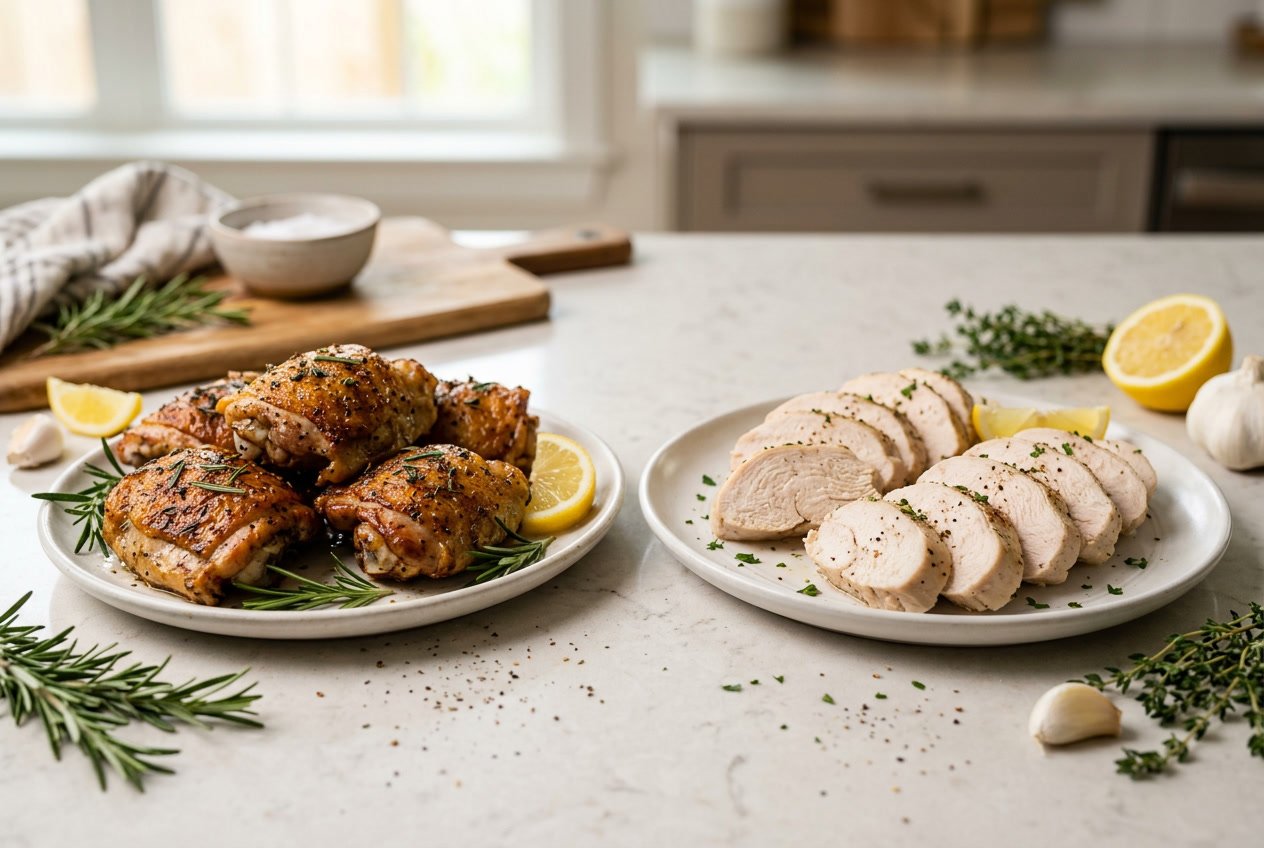
This article breaks down protein amounts, calories, vitamins, and cooking effects. You can match the cut to your goals, such as weight loss, muscle gain, keto, or everyday meals.
Expect clear comparisons of macronutrients, micronutrients, and practical cooking tips. These help you pick the best cut for your plate.
Chicken Thighs Versus Chicken Breast: Key Protein Differences

Chicken breasts give more protein per gram and fewer calories. Thighs deliver more fat and slightly fewer grams of protein but better juiciness and flavor.
Choose based on your protein target, cooking method, and how much fat or taste you want in your meal.
Protein Content Comparison
Chicken breast contains more protein per 100 grams. Cooked, skinless chicken breast typically provides about 30–32 grams of protein per 100 g.
Cooked, skinless chicken thigh gives roughly 24–26 grams per 100 g. If you need a strict protein target, one medium breast may meet it while you’d need more thigh meat.
A 100 g serving of breast has fewer calories than the same weight of thigh because thighs contain higher intramuscular and attached fat. If you track protein-per-calorie, breast usually wins.
If you track protein-per-serving, the gap can narrow depending on portion sizes.
Lean Protein Sources Explained
When you want lean protein, chicken breast is the standard choice. It’s lower in total fat and saturated fat, which reduces overall calories without sacrificing high-quality protein.
This makes breasts useful when you’re cutting calories or aiming for high protein density in meals. Chicken thighs count as a moderately lean option when trimmed of skin and excess fat.
Thighs contain more monounsaturated and polyunsaturated fats, which add calories but also improve flavor and mouthfeel. For braises, stews, and high-heat searing, thighs stay juicier and are more forgiving, so you waste less protein to dryness.
Amino Acid Profile and Quality
Both chicken breast and thigh provide complete protein with all essential amino acids you need for muscle repair and maintenance. The relative proportions of essential amino acids are similar between cuts, so amino acid quality does not strongly favor one cut over the other.
If you aim for rapid muscle protein synthesis, focus on total grams of high-leucine protein per meal. Because breast supplies more protein per 100 g, it can more efficiently deliver leucine per bite.
Thighs still supply sufficient essential amino acids and may pair better with meals where added fat enhances calorie needs or nutrient absorption.
Macronutrient and Calorie Breakdown
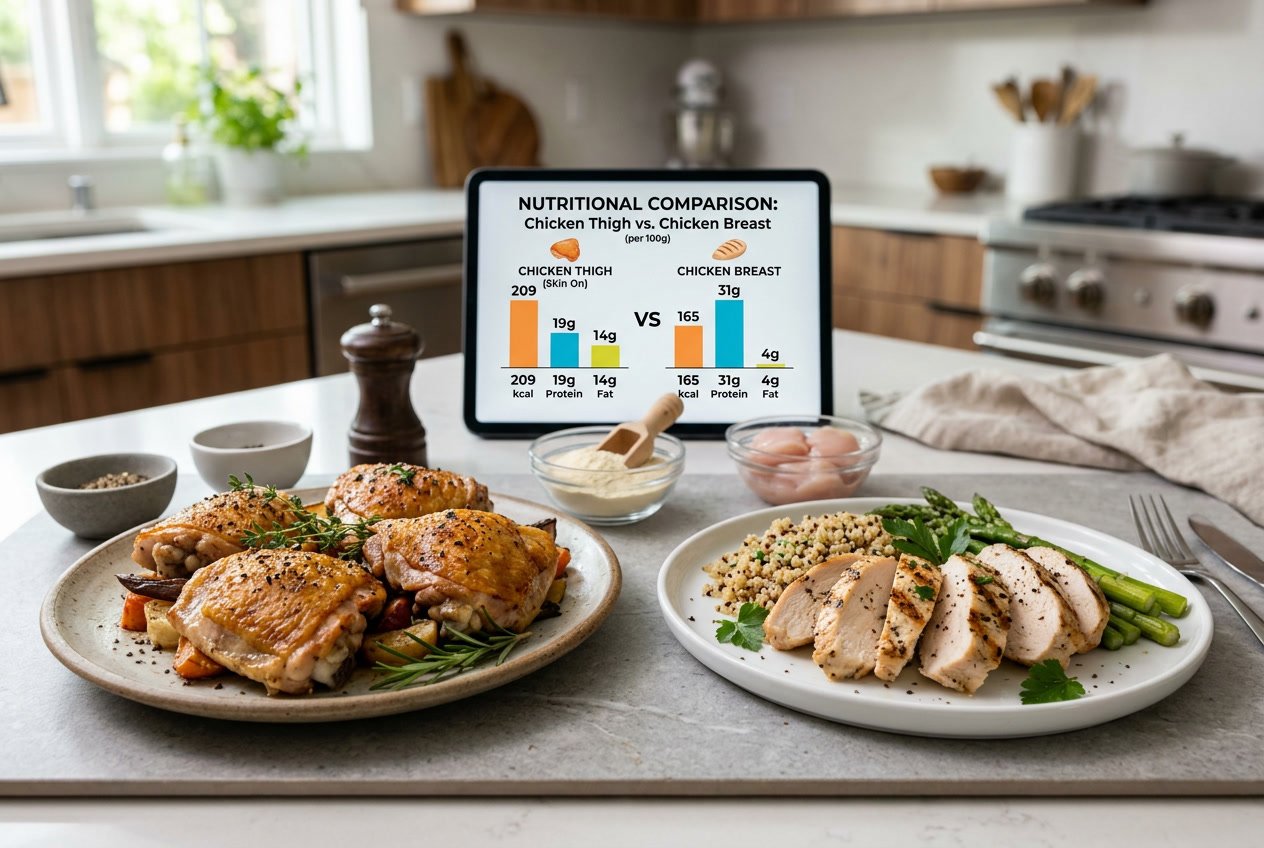
Chicken breast and thigh differ in fat, calories, and how skin or portion size changes those numbers. Knowing the typical grams per 100 g and per common serving helps you pick the cut that fits your goals.
Fat and Saturated Fat Content
Skinless chicken breast is the leaner choice, with about 3–4 g total fat per 100 g and saturated fat typically under 1 g. That low saturated fat makes skinless breast a common pick if you monitor saturated fat for heart health or calorie control.
Skinless chicken thighs contain more total fat, roughly 6–10 g per 100 g, and higher saturated fat, commonly around 1–2 g. The extra fat is mostly monounsaturated and provides more flavor and juiciness.
If you eat chicken with skin, total and saturated fat rise noticeably. Removing skin reduces both calories and saturated fat.
Calorie Content Per Serving
Per 100 g, skinless chicken breast usually provides about 100–120 kcal. A typical cooked boneless breast (about 170–180 g) gives roughly 170–220 kcal depending on cooking method.
Skinless chicken thigh runs higher, roughly 150–180 kcal per 100 g. One boneless thigh (approximately 115–135 g) yields about 170–240 kcal.
Cooking with oil or marinades adds extra calories. Use this quick reference:
- Skinless chicken breast: ~110 kcal / 100 g
- Skinless chicken thigh: ~165 kcal / 100 g
Adjust for cooking fat and portion size when tracking daily calories.
Impact of Skin and Portion Size
Skin adds substantial calories and fat. One medium cooked thigh with skin can add 40–70 kcal and several grams of fat versus the same cut skinless.
If you’re counting saturated fat, skin-on portions increase that component. Portion size matters beyond weight, since recipes often treat a “breast” and a “thigh” as single servings even though their weights differ.
Compare on an equal-weight basis (per 100 g) to make accurate choices. When you pick portions by piece, expect a whole breast to supply significantly more protein and calories than a single thigh, but more fat if the thigh is skin-on.
If you want lower saturated fat and calories without losing all flavor, choose skinless breast or skinless thighs and control added oils during cooking.
Vitamin and Mineral Variations
Chicken breast is leaner and higher in some B-vitamins per calorie. Thigh has more iron, zinc, and myoglobin-driven nutrients.
These differences affect energy metabolism, red blood cell support, and mineral intake when you choose one cut over the other.
B-Vitamin Differences
Breast contains more vitamin B6 per typical serving than thigh, which matters if you rely on chicken for pyridoxine to support amino acid metabolism and neurotransmitter synthesis. A 3‑ounce cooked breast often provides substantially more B6 than the same-weight thigh.
Thighs still supply several B vitamins, including niacin (B3) and B12, but at lower amounts per ounce compared with breast for some B vitamins.
Iron, Zinc, and Myoglobin
Thigh meat contains more iron and zinc than breast because dark muscle fibers have higher myoglobin and stored heme iron. That makes thigh a better choice when you need more dietary iron for hemoglobin formation or zinc for immune function and wound healing.
Myoglobin concentration gives thigh its darker color and increases bioavailable heme iron, which your body absorbs more efficiently than nonheme iron from plant sources.
If you are managing iron intake, regularly including thigh in meals provides a tangible benefit over breast for these minerals.
Other Essential Vitamins and Minerals
Both cuts provide useful amounts of selenium, phosphorus, and potassium, but their levels shift with fat content and muscle type. Breast tends to be higher in selenium and potassium per ounce.
Thigh delivers slightly more fat‑soluble nutrients and certain B vitamins like riboflavin (B2) and pantothenic acid (B5) in some analyses, due to higher fat and myoglobin content.
If you want to tune micronutrient intake, combine both cuts. Use breast for higher B6 and lean protein, and thigh when you need extra iron, zinc, or a modest boost in fat‑associated micronutrients.
White Meat Versus Dark Meat
White meat and dark meat differ in muscle function, pigment content, and nutrient composition. These differences influence protein concentration, fat content, and micronutrient levels.
Muscle Types and Myoglobin
Dark meat comes from chicken legs and thighs, muscles used for standing and walking. Those muscles contain more myoglobin, an oxygen-binding protein, which gives the meat a darker color and supports sustained, aerobic activity.
White meat comes from the breast and wings, which engage in short, rapid bursts of activity. Those muscles have less myoglobin and more fast-twitch fibers.
Breast meat appears paler and has a leaner texture.
Key differences at a glance:
- Dark meat: higher myoglobin, more slow-twitch fibers, richer color.
- White meat: lower myoglobin, more fast-twitch fibers, paler color.
This physiology explains why thighs retain more moisture and flavor when cooked compared with breasts.
Nutritional Role of White and Dark Meat
Both cuts provide high protein quality, but composition varies. Skinless chicken breast typically provides more protein per ounce and less fat, making it efficient for meeting lean-protein targets.
A 3-ounce cooked breast often yields about 25–27 g protein with minimal fat. Thighs deliver slightly less protein per ounce but more calories and fat, including some saturated fat, especially with skin.
Thighs also supply higher amounts of iron, zinc, selenium, and certain B vitamins. Those micronutrients can matter if you aim to increase iron or zinc in your diet.
- Choose breast to maximize protein and minimize fat.
- Choose thigh to boost micronutrients and improve juiciness.
- Remove skin to lower added fat without losing muscle-specific nutrients.
Cooking Methods and Their Impact on Nutrition
Different cooking methods change calories, fat content, and protein availability. How you cook chicken, whether baked, grilled, marinated, or left skin-on, will affect moisture, flavor, and the final nutrition values.
Grilled, Baked, and Roasted Chicken
Grilling, baking, and roasting use dry heat and usually preserve protein while reducing added fat. When you grill chicken thighs or breasts, fat drips away, lowering total fat compared with frying.
Broiled or grilled skinless chicken breast keeps protein high (about 30 g per 100 g cooked) while remaining low in fat. Baked chicken lets you cook at moderate temperatures without added oil.
If you bake skinless chicken thighs, expect slightly higher fat than breast because thigh meat contains more intramuscular fat. Baking still avoids the extra calories that breading or frying add.
Roasting on a rack further reduces fat by allowing juices to drip away. Avoid charring or blackening chicken at very high heat, as that can form harmful compounds.
Aim for an internal temperature of 165°F (74°C) to ensure safety without overcooking and drying the meat.
Marinated Versus Plain Chicken
Marinades change moisture, flavor, and sometimes nutrition. Acidic marinades like lemon, vinegar, or yogurt can tenderize chicken and help the meat retain moisture during cooking.
A 30–60 minute marinade improves juiciness without adding many calories if you use low-oil recipes. Oil-heavy or sugar-based marinades increase calories; a tablespoon of oil adds roughly 120 kcal.
If you marinate chicken thighs, choose low-oil options or measure oil to keep calories controlled. Salt-heavy commercial marinades can add sodium, so check labels on pre-marinated chicken to avoid unexpectedly high sodium intake.
Marinating can also reduce formation of some cooking byproducts when grilling. Use herbs, spices, and minimal oil to protect flavor and keep protein density high without excessive added calories.
Skin-On Versus Skinless Preparation
Removing the skin substantially lowers fat and calories, which directly affects protein-per-calorie ratio. Skinless, roasted chicken breast provides the most protein with the least fat by weight.
Skinless chicken thighs still deliver more fat than breast, but removing skin narrows that gap. Keeping skin on preserves moisture and flavor, especially for thighs, and can prevent the meat from drying during baking or roasting.
If you keep the skin, cook on a rack so excess fat drips away and remove the skin before eating to cut calories. When you buy skin-on pre-seasoned cuts, account for added sodium and oils in the label.
If you want to maximize lean protein, choose skinless cuts and use grilling, baking, or roasting methods with minimal added fat.
Selecting the Best Cut Based on Health Goals
Choose the cut that matches your calorie, protein, and flavor priorities. Think about how much protein you need per meal, whether you want lower saturated fat, and whether juiciness or convenience matters most.
Weight Management and Satiety
If you aim to lose or maintain weight, chicken breast gives you more protein per calorie. A 100 g serving of skinless chicken breast typically provides about 22–31 g protein with lower total and saturated fat than an equivalent thigh portion.
Higher protein density helps preserve lean mass and increases fullness between meals. If you prefer more calories for energy or find low-fat meals unsatisfying, a skinless chicken thigh still offers substantial protein but adds fat and flavor.
To control calories with thighs, remove the skin and trim visible fat. You can also reduce portion size and pair with high-volume, low-calorie vegetables.
Practical tips:
- Prioritize skinless chicken breast for calorie control and a higher protein-to-calorie ratio.
- Use thighs in smaller portions when you want extra satiety from fat.
- Track portion weight, such as 100–150 g servings, to keep calories consistent.
Muscle Building and Recovery
For muscle gain and post-workout recovery, focus on meeting absolute protein targets. Chicken breast provides more lean protein per gram, making it easier to hit targets like 0.8–1.2 g protein per pound of body weight.
Chicken thighs supply additional calories and fat, which can help you reach a daily surplus needed for muscle growth without eating much larger volumes. Combine cuts across meals to meet your goals.
Protein timing and complement:
- Aim for 20–40 g high-quality protein per meal. Breast portions help you reach that with smaller servings.
- Add carbs and a little fat to meals with breast to support glycogen replenishment and hormone balance.
- Use thighs on higher-calorie training days.
Taste, Tenderness, and Meal Planning
Thighs stay moist during cooking and resist drying out. This reduces the need for added fats or sauces that increase calories.
You can use thighs in stews, braises, and quick pan-sears. These methods help preserve moisture and flavor.
Breast works best in recipes that need lean protein, like grilled salads, stir-fries, and meal-prep bowls. To prevent dryness, brine briefly, slice thin, or cook to 160–165°F and let it rest before serving.
Meal-planning checklist:
- Use breasts for controlled-calorie meal prep and higher protein density.
- Use thighs for flavorful meals, batch-cooked dishes, or when you want fewer added oils.
- Alternate cuts across your weekly plan to balance nutrient intake, variety, and cost.


