
Chicken Thighs Versus Chicken Breast Nutrition: Detailed Comparison
You want a clear answer: chicken breast is leaner and higher in protein per ounce, while chicken thighs contain more fat and calories but deliver richer flavor and extra micronutrients. If your goal is lower calories and higher protein, choose breast. If you want juiciness, more calories, or higher iron and zinc per serving, choose thighs.

This post compares calories, protein, saturated fat, omega‑6 content, and key vitamins and minerals. Cooking methods can change those numbers and help you match your nutrition plan without sacrificing taste.
Nutritional Overview of Chicken Thighs and Chicken Breasts
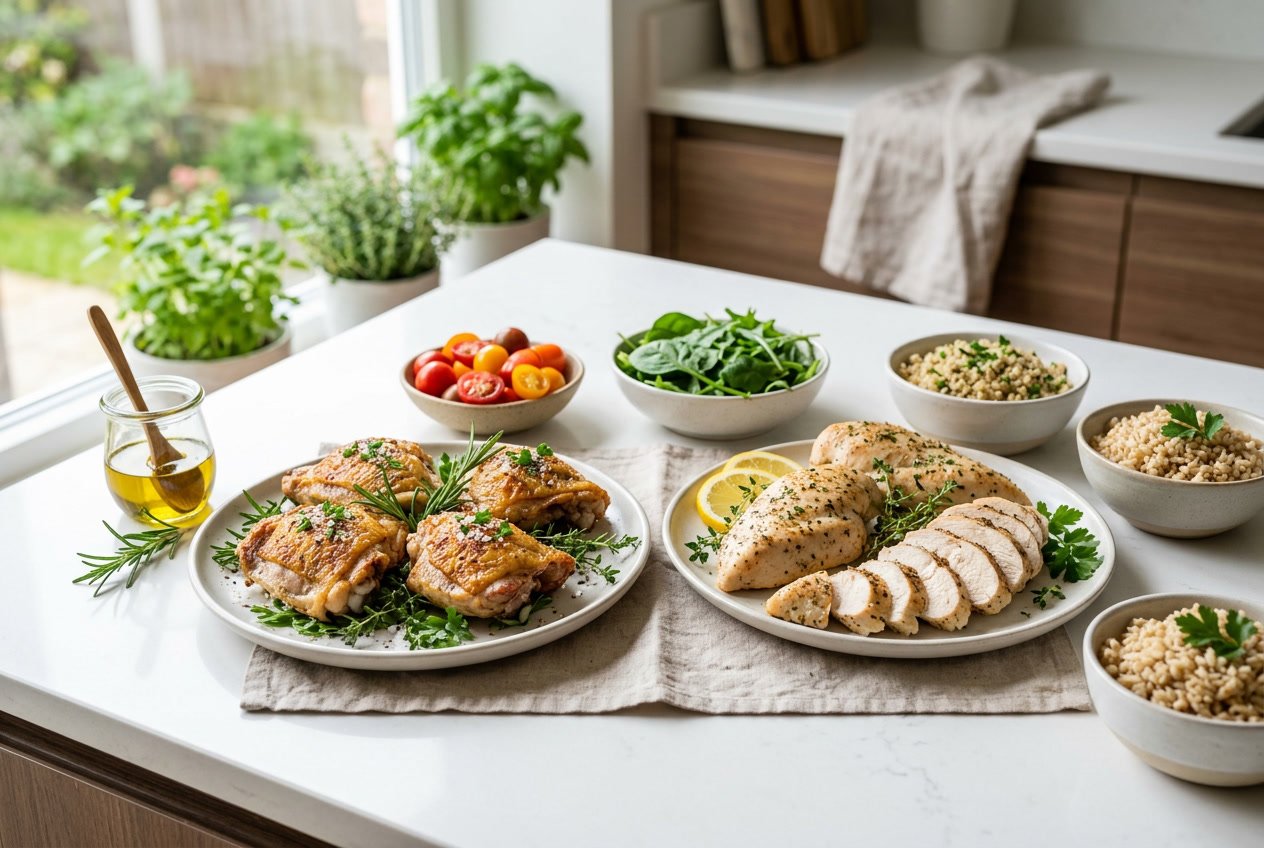
Thighs and breasts differ most in calories, protein density, and fat type. Skinless chicken breast is leaner and higher in protein per gram, while skinless chicken thighs deliver more fat and slightly different micronutrients.
Calorie Differences
A 3-ounce (85 g) serving of skinless chicken breast contains about 140 calories, while the same amount of skinless chicken thigh contains roughly 170 calories. The extra calories in thighs come almost entirely from higher fat content.
For meal planning, choose breast when you need a lower-calorie, higher-protein base. Choose thighs when you want more calories from natural fats, which can improve satiety and flavor.
Protein Content
Skinless chicken breast contains approximately 26 grams of protein per 3-ounce cooked serving. Skinless chicken thighs provide around 21 grams of protein for the same cooked portion.
If your goal is maximizing protein while minimizing calories, prioritize skinless chicken breast. If you value a bit more culinary flexibility and still want a solid protein dose, skinless chicken thighs remain a good choice.
Fat Content
Skinless chicken thighs contain more total fat than skinless chicken breast—roughly 9–10 grams versus 3–4 grams per 3-ounce cooked serving. Thighs supply higher amounts of monounsaturated and some polyunsaturated fats, while breasts are primarily very low in fat.
Those fats in thighs contribute to juiciness and richer flavor, and they raise the calorie count. If you remove the skin, you reduce fat significantly, but thighs will still have more intramuscular fat than breasts.
Micronutrient Profile Breakdown
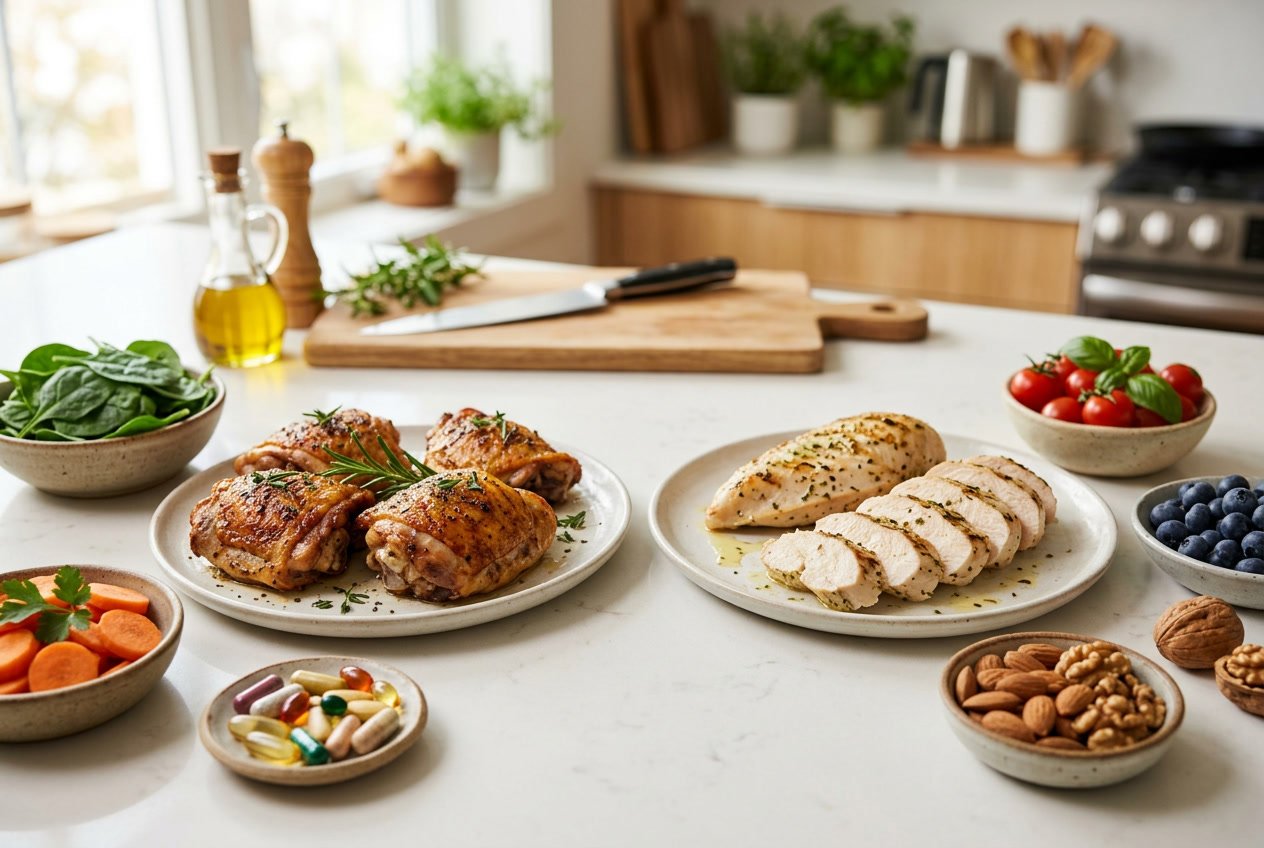
Chicken thighs and breasts differ more in vitamins and minerals than in protein. Thighs contain higher iron and zinc, while breasts supply more niacin and vitamin B6 per calorie.
Vitamin Content Comparison
Chicken breast contains higher concentrations of B vitamins per 100 g cooked, especially niacin (B3) and vitamin B6. These nutrients support energy metabolism and neurotransmitter synthesis.
Thighs provide B vitamins but at slightly lower amounts per gram and with more calories from fat. Both cuts offer small amounts of riboflavin (B2), pantothenic acid (B5), and vitamin B12.
Minerals and Trace Nutrients
Thighs are richer in several minerals because dark muscle stores more myoglobin. Per serving, you usually get higher levels of phosphorus, selenium, and magnesium from thighs compared with breasts.
Breasts remain a good source of phosphorus and selenium and typically contain less cholesterol per gram than thighs. If you need to boost trace minerals without increasing saturated fat too much, remove the skin and favor thighs cooked with low-added fat.
Iron and Zinc Levels
Skinless chicken thighs deliver more heme iron and zinc per 100 g cooked than skinless breasts. Thighs are a better option if you need to support oxygen transport, red blood cell formation, or immune function through dietary iron and zinc.
If you’re managing iron-deficiency risk, include thighs in some meals rather than relying solely on breasts. Cooking with acidic ingredients (like lemon or vinegar) can slightly enhance iron absorption when you pair these cuts with vitamin C–rich foods.
Impact of Preparation and Cooking Methods
Preparation and cooking choices change calories, fat, and nutrient retention more than the cut itself. Removing skin lowers fat. Methods that let fat drip or use little added oil keep calories down while preserving protein.
Skin-On vs. Skinless Options
Choosing skinless chicken reduces total fat and saturated fat. Removing skin from a roasted chicken thigh cuts about 25–30% of its fat calories, making skinless chicken thighs closer to skinless chicken breast in energy density.
You keep most protein whether the skin remains or not, but the skin contains the majority of visible fat and adds calories. If you want flavor without excess fat, crisp the skin separately and remove it before eating, or use spices, citrus, and low-fat marinades.
Skinless chicken breast stays leanest. Skinless chicken thighs still have more intramuscular fat, which gives juiciness but raises calories slightly. Check packaged products: some “skinless” pieces may be brined or injected with sodium-containing solutions that increase salt and calorie content.
Effects of Baking and Other Cooking Techniques
Baking, grilling, and roasting let fat drip away and require minimal added oil, so they keep both skinless chicken breast and skinless chicken thighs lower in calories. Use a wire rack in the oven to further separate meat from pooled fat.
Pan-frying or deep-frying adds oil. Breading increases carbs and calories and masks the difference between breast and thigh.
Low-temperature methods like braising or slow-cooking preserve moisture in skinless chicken breast but may require added liquids or fats for tender results. High-heat searing locks juices fast, which benefits lean skinless chicken breast to avoid drying.
When tracking protein and calories, log the cooking method. A 100 g baked, skinless chicken breast has noticeably fewer calories than the same weight deep-fried or breaded.
Health Benefits of Chicken Breast
Chicken breast delivers high protein with relatively low calories and fat, plus key B vitamins and selenium that support metabolism and immune function. You can use skinless chicken breast to meet protein targets while controlling saturated fat and overall energy intake.
Lean Protein Advantages
Skinless chicken breast provides about 31–33 g of protein per 100 g cooked portion. That high protein supports muscle repair, preserves lean mass during weight loss, and helps keep you full between meals.
You get this protein with comparatively little total fat and saturated fat. If you track macronutrients, choosing skinless chicken breast lowers calories per gram of protein versus fattier cuts. Chicken breast contains all essential amino acids, including leucine, which triggers muscle protein synthesis.
Nutrient-Density for Weight Management
Chicken breasts supply vitamin B3 (niacin), vitamin B6, phosphorus, and selenium—nutrients that support energy production and thyroid and immune function. A typical 100 g cooked skinless breast covers a meaningful portion of daily niacin and vitamin B6 needs.
Because skinless chicken breast is low in calories but rich in protein, it improves satiety per calorie. That makes it practical for calorie-controlled diets and meal planning aimed at fat loss without losing muscle.
Use it in balanced meals with fiber-rich vegetables and moderate healthy fats to enhance nutrient balance and long-term adherence to your diet.
Health Benefits of Chicken Thighs
Chicken thighs offer higher iron and zinc, richer fats, and more pronounced flavor compared with breast. Choosing skinless chicken thighs can reduce saturated fat while keeping the benefits below.
Nutritional Value for Higher Iron Needs
If you need more iron, chicken thighs provide higher heme iron than breast meat, which your body absorbs efficiently. A typical 100 g serving of cooked, boneless, skinless chicken thigh contains more iron and slightly higher zinc than the same amount of breast.
You also get slightly more B vitamins such as riboflavin (B2) and vitamin B12 from thighs, which help energy metabolism and nerve health. Protein remains high, so you still meet muscle-repair needs while gaining minerals.
Choose skinless chicken thighs to limit extra saturated fat and calories while keeping iron and zinc advantages. Pairing thighs with vitamin C–rich vegetables will further boost iron absorption from your meal.
Flavor, Satiety, and Other Considerations
Chicken thighs contain more total and unsaturated fats than breast, which increases mouthfeel and keeps you fuller longer. That extra fat can help with satiety at meals, so you may eat less overall without sacrificing protein intake.
For cooking, thighs tolerate longer, higher-heat methods and stay juicier, which reduces the chance of drying out compared with lean breast. If you watch saturated fat, remove the skin or use skinless chicken thighs; this preserves most flavor benefits while lowering saturated fat and calories.
Consider your goals. If you need richer taste, longer satiety, and higher iron or zinc, integrate skinless chicken thighs into balanced meals. Use portion control and cooking methods like grilling, braising, or roasting to maximize benefits while managing calories.
Choosing Between Chicken Thighs and Breasts Based on Dietary Goals
Pick the cut that matches your calorie, protein, and fat targets while considering skin and cooking methods. Thighs give more calories and fat. Breasts give more protein per ounce and fewer calories.
Suitability for High-Protein Diets
If you prioritize protein per serving, skinless chicken breast is the better choice. A 100 g portion of skinless breast typically provides more grams of protein than the same weight of thigh.
Smaller portions can help if you track protein for muscle gain, weight maintenance, or intermittent fasting windows. If you prefer thighs, increase portion size or add another lean protein (egg whites, Greek yogurt, whey) to hit your target grams of protein.
Cooking method matters. Grilling or baking preserves protein content without adding extra fat. Avoid heavy breading or thick sauces that increase calories and mask protein density.
Considerations for Lower Fat or Calorie Needs
Choose skinless chicken breast when you need fewer calories or less saturated fat per serving.
Removing the skin cuts most of the fat from thighs and breasts. This narrows the calorie gap between them.
If you prefer flavor but need lower calories, use skinless thighs in moderation. Apply low-calorie cooking techniques like roasting with herbs or broiling.
Track portion size. Thighs deliver more calories and more omega-6 fats per 100 g, which matters if you limit dietary fat or inflammation-promoting oils.
For strict calorie or saturated-fat limits, weigh portions and prefer skinless breast. For flexible plans that allow higher calories, thighs can provide satiety and richness with careful portion control.


