
Chicken Thighs Versus Chicken Breast Calories: Nutrition, Protein & Cooking Differences
You probably already know thighs taste richer and breasts cook leaner. Which cut actually fits your calorie goals?
For the same portion size, chicken breast has fewer calories and more protein. Chicken thigh contains more fat and thus more calories, especially if the skin stays on.
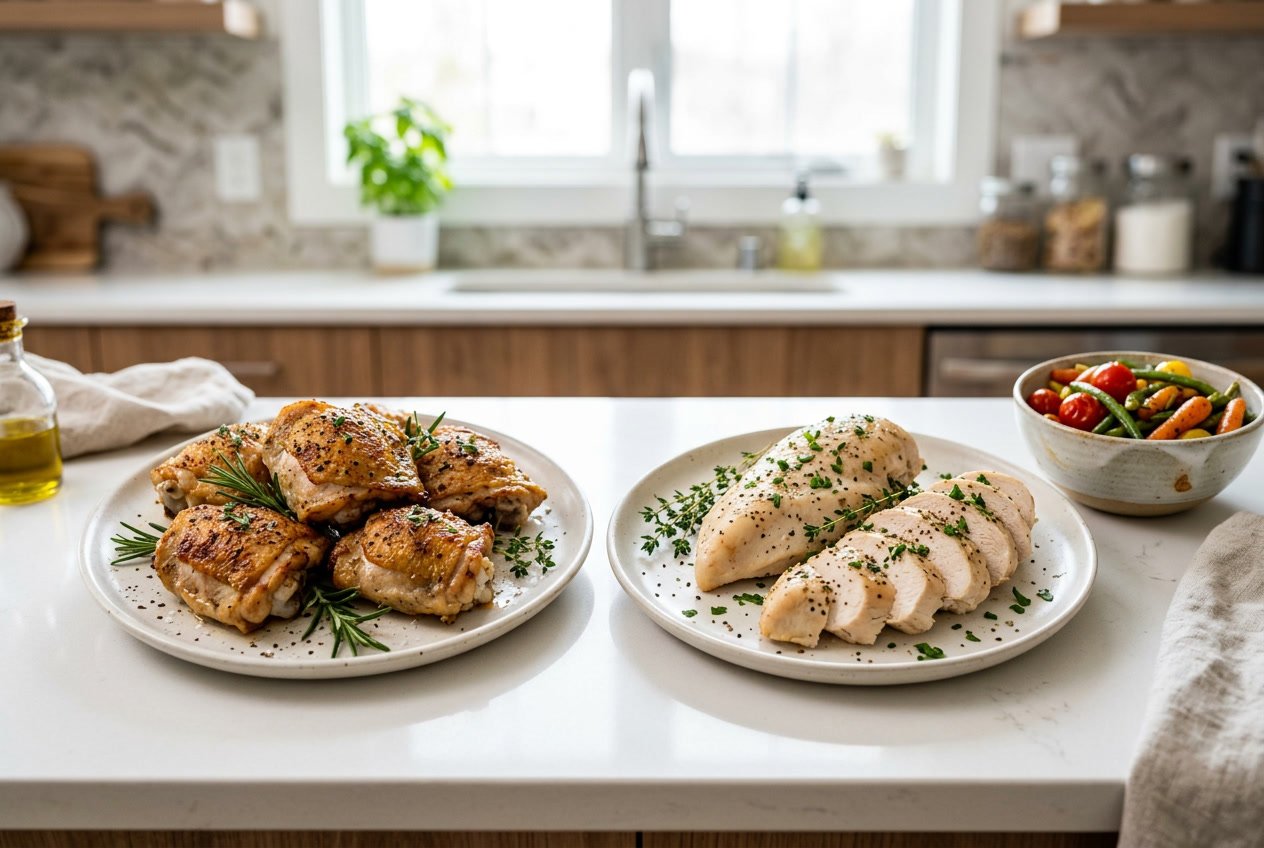
This article breaks down calorie and protein differences. Learn how fat and cooking methods change the numbers and which cut suits your nutrition goals.
Calorie and Protein Comparison
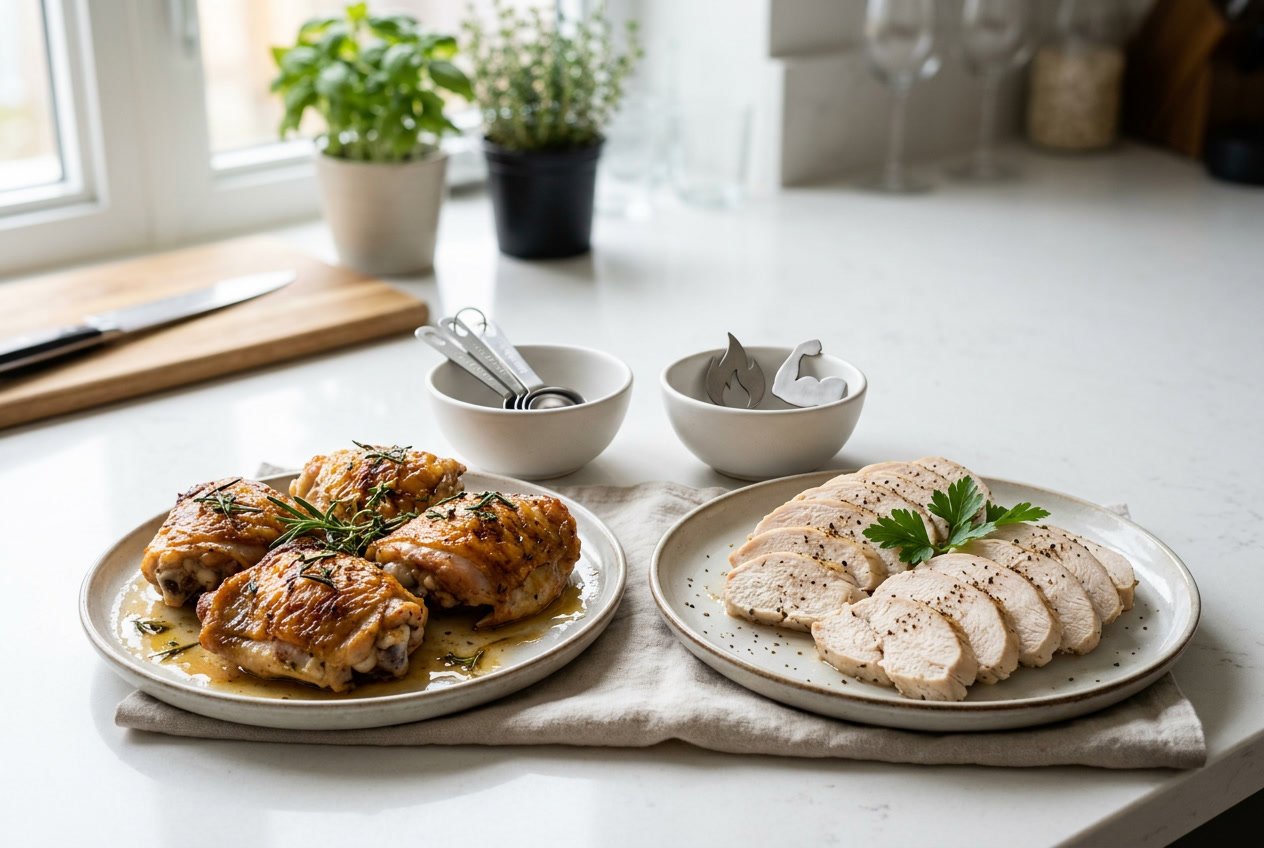
Chicken breast and chicken thigh mainly differ by calories, fat, and how much protein you get for each calorie. These differences affect meal planning and whether you prioritize lean protein or flavor.
Calories Per Serving
A typical cooked, skinless 100 g serving of chicken breast contains about 165 calories. The same weight of cooked, skinless chicken thigh has roughly 175–180 calories, depending on cooking method.
If you include skin, add about 80–100 calories per 100 g because the skin is mostly fat.
A 3.5 oz (100 g) breast gives fewer calories than an equivalent portion of thigh. Cooking method matters too. Frying or adding oil increases calories significantly compared with grilling or roasting.
If you track calories, weigh the cooked meat. Chicken loses water during cooking (roughly 20–25%), which concentrates calories per gram.
Protein Content Differences
Cooked, skinless chicken breast typically provides about 30–31 g of protein per 100 g. Cooked, skinless chicken thigh provides about 24–25 g of protein per 100 g.
Breast is a denser source of protein, making it a common choice when you need high protein with low fat. Thighs contain more fat and therefore offer richer flavor and greater satiety for some people.
Protein Per Serving and Per Calorie
Per 100 g cooked: breast gives about 31 g protein and 165 kcal. Thigh gives about 25 g protein and 179 kcal.
Expressed as protein per 100 kcal: breast provides about 18.8 g protein/100 kcal. Thigh provides about 13.9 g protein/100 kcal.
Breasts deliver more protein for each calorie consumed, useful when you track macros or aim for a calorie deficit. Thighs supply less protein per calorie but add fat that can aid satiety and flavor.
Fat Content and Nutrition Profile
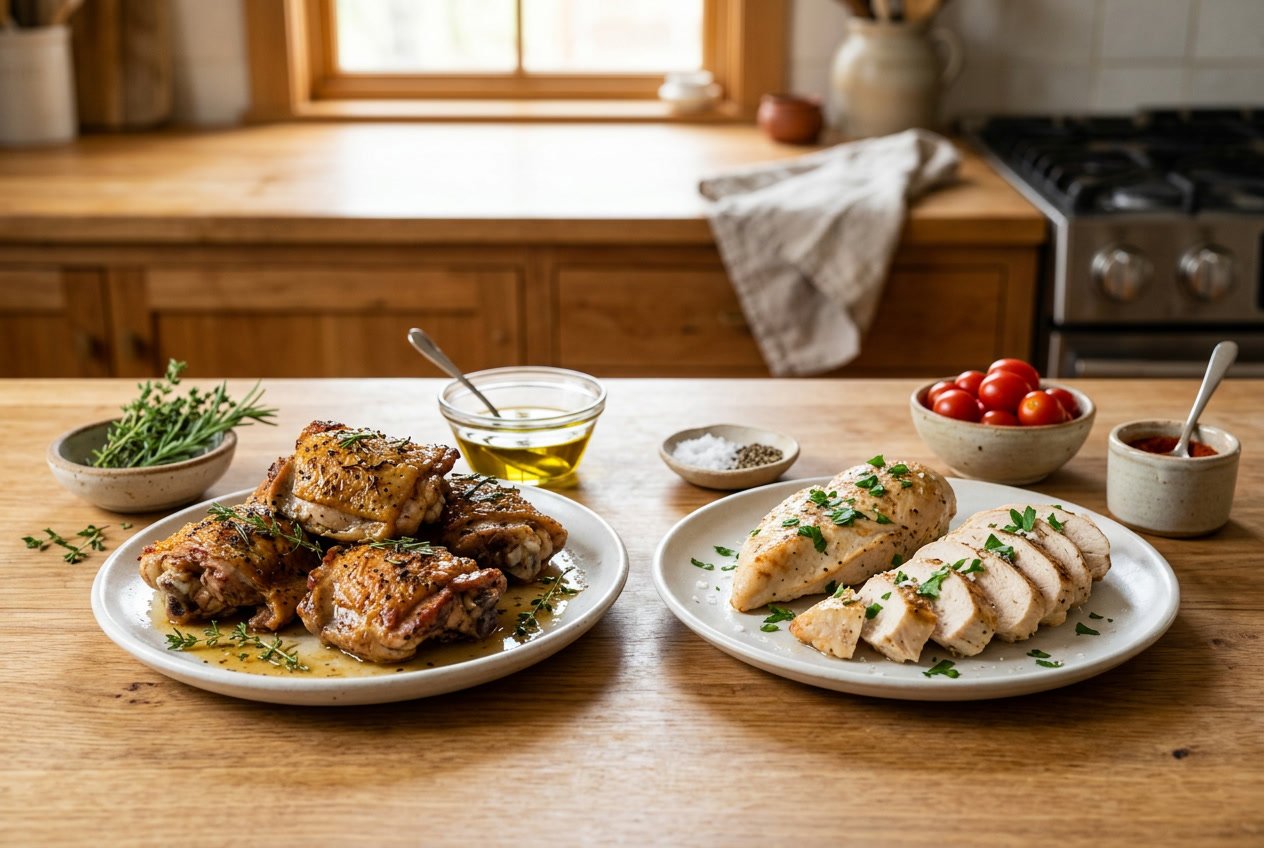
Chicken thighs contain more fat and calories than chicken breasts. That extra fat affects flavor, juiciness, and nutrient density.
Skinless options reduce total fat substantially, but thigh still has more monounsaturated and saturated fat than breast.
Total Fat and Types of Fat
A 100 g serving of skinless, cooked chicken breast contains about 3–4 g of total fat. The same amount of skinless chicken thigh has roughly 8–9 g.
The thigh’s higher fat comes from both monounsaturated fats and saturated fats.
If you leave the skin on, expect a roughly 25–30% increase in calories and a marked rise in saturated fat. Choose skinless chicken breast when you prioritize lean protein and lower calories per serving.
Opt for skinless chicken thigh when you want more flavor and moisture with a moderate increase in total and saturated fat.
Micronutrients: Vitamins and Minerals
Chicken thighs tend to have higher amounts of iron, zinc, and vitamin B12 per 100 g compared with chicken breast. That difference links to myoglobin and the slightly darker meat of the thigh, which stores more iron and contributes to richer flavor.
Skinless chicken breast still supplies substantial B vitamins (B3, B6) and selenium and provides more choline per gram in some nutrient databases.
If you need extra iron or zinc, adding chicken thigh can improve your intake without changing portion size much.
Carbohydrate Content
Both chicken breast and chicken thigh contain virtually no carbohydrates when unbreaded and unprocessed.
If your goal is to control carbs, choose plain, skinless cuts and avoid breading, sugary marinades, or processed products that add starches and sugars.
Processed or pre-marinated chicken can contain added sodium, sugars, or fillers, so always check labels if you track carbohydrate or added-sugar intake.
Either skinless chicken breast or thigh fits well for low-carb or ketogenic meal planning. Focus on cooking method to control added carbs.
Impact of Cooking Methods on Calories
Cooking method, skin presence, and portion size each change the calories you eat by tens to hundreds of calories per serving. Small choices like oil amount and whether you keep skin often determine whether a meal fits your calorie target.
Grilled vs. Baked Chicken
Grilling and baking both use dry heat, but they affect calories differently depending on surface oil and drip loss. When you grill skinless chicken breasts or thighs without added oil, calories stay close to raw values because fat drips away. A 100 g skinless chicken breast remains near 165 kcal after grilling.
If you brush on oil or a glaze, each tablespoon adds about 120 kcal. Marinades with sugar add 40–80 kcal per tablespoon.
Baking often requires less active flipping and can let rendered fat pool away from the meat. A baked skinless chicken thigh will retain more internal fat than a grilled thigh but usually gains fewer added calories than frying.
Use a rack to let fat drip and reduce calories by up to 10–15% compared with baking directly in a pan.
Effects of Skin-On vs. Skinless
Keeping skin adds substantial calories. Chicken skin is high in fat and can add roughly 40–80 kcal per 100 g portion compared with the skinless equivalent.
If you choose skin-on chicken thighs, expect a larger calorie increase than with skin-on breasts because thighs start with more fat.
Removing the skin before or after cooking cuts calories substantially and lowers saturated fat.
Crisping skin by pan-searing or roasting with oil concentrates calories on the exterior. Air-frying can give a crispy texture with 1–2 teaspoons of oil, saving 50–100 kcal versus deep-frying.
For portion control, prefer skinless chicken or remove skin before eating to reduce 50–70 kcal per thigh on average.
Serving Size Adjustments
Weighing your portions prevents hidden calories from creeping in. A typical serving difference—100 g skinless chicken thigh (~209 kcal) vs. 100 g skinless chicken breast (~165 kcal)—translates to about 44 kcal per 100 g.
That adds up: two 150 g thighs vs. two 150 g breasts can differ by about 132 kcal.
Account for added ingredients. A tablespoon of oil or a breadcrumb coating can add 50–120 kcal.
When you track calories, record cooked weight and note method (grilled, baked, fried). Cooked weight often concentrates calories per gram due to water loss.
Use scales and log cooking method to keep your totals accurate.
Health Considerations and Dietary Goals
Choose between higher-protein, lower-calorie cuts and fattier, more calorie-dense ones based on your calorie target and protein needs. Cooking method and portion size also change calories and satiety.
Best Choice for Weight Loss
If you aim to lose weight, prioritize calorie control and protein density. A 3-ounce skinless chicken breast typically provides about 140 calories and roughly 26–27 g of protein. A same-sized skinless thigh often delivers about 170 calories with 20–21 g protein.
Chicken breasts are a more efficient lean protein per calorie.
Grill or roast without added oil, remove skin, and pair with high-fiber vegetables to cut calories further. Track serving size with a kitchen scale and aim for 20–30 g protein per meal to support muscle retention during a calorie deficit.
Best Choice for Muscle Gain
When your goal is muscle growth, total daily protein and adequate calories matter more than cut choice. Chicken breasts give higher protein per calorie, helping you reach protein targets without excess fat.
If you need extra calories to support mass gain, thighs add healthy calories and more fat, which can make meeting calorie goals easier.
Aim for 1.6–2.2 g protein per kg body weight per day. Include both cuts across meals for variety. Use breasts for lean, post-workout protein and thighs when you need calorie-dense meals.
Nutrient Absorption and Satiety
Fat content affects nutrient absorption and how full you feel. Thighs contain more fat, which slows gastric emptying and increases satiety.
Fat also aids absorption of fat-soluble vitamins from vegetables you eat with your chicken.
Protein boosts satiety and preserves lean mass. Both breasts and thighs supply quality animal protein with complete amino acids.
If you follow a low-calorie plan, pair breasts with a small healthy fat like olive oil or avocado to improve nutrient absorption and satisfaction. If you tolerate more fat, choosing thighs can naturally increase fullness.
White Meat vs. Dark Meat Explained
The breast and thigh differ in muscle type, pigment, and eating qualities that directly affect calories, fat, and cooking choices.
Anatomical Differences
White meat primarily comes from the chicken breast and wings. These muscles do less continuous work, so they contain fewer mitochondria and fat cells.
A 3-ounce skinless chicken breast typically contains fewer calories and less total fat than an equivalent portion of thigh.
Dark meat comes from the legs and thighs, muscles the bird uses for standing and walking. Those muscles store more intramuscular fat and connective tissue.
That higher fat content raises calories per ounce and keeps the meat moister during longer cooking.
- Choose breast to minimize calories and saturated fat.
- Choose thigh for juicier results and higher fat-soluble nutrients.
- Removing skin lowers calories significantly for both cuts.
Myoglobin and Color
Myoglobin is an oxygen-binding protein in muscle that gives dark meat its color. Muscles used more frequently develop more myoglobin to support sustained activity; thigh muscles therefore appear darker.
White meat has lower myoglobin, producing a pale color and a milder taste.
Myoglobin concentration also influences cooking signals. Dark meat tolerates longer, slower cooking because its fibers and fat render without drying. White meat loses moisture faster and can become dry if overcooked.
- If color matters for presentation or recipes, expect breasts to stay pale and thighs to brown and deepen in hue during cooking.
Flavor and Texture Profile
Thigh meat carries more intramuscular fat and connective tissue, which yields a richer, more savory flavor and a tender, slightly denser bite.
Thighs remain moist after roasting or braising and require less added fat or sauce to taste satisfying.
Breast meat is leaner and milder, with a firmer, flakier texture when cooked properly. It absorbs marinades and seasonings readily but can become stringy or dry if exposed to high heat too long.
- Use high-heat, quick methods (grill, sear) or precise timing for breasts.
- Use low-and-slow methods (braise, roast) or high-moisture techniques for thighs.
- Match cut to recipe goals: lean protein and crisp exterior (breast); depth of flavor and moistness (thigh).
Choosing the Right Cut for Your Meals
Pick the cut that matches your meal goals. Prioritize lean, high-protein options when you need lower calories and quicker digestion. Choose fattier cuts when you want more flavor, longer satiety, and easier reheating.
Meal Prep and Versatility
If you build weekly meals around protein sources, skinless chicken breasts give you predictable calorie and protein counts. A typical 100 g cooked breast provides about 22–25 g protein and low fat, which helps you track macros for workouts or calorie targets.
Breasts cook quickly and slice thin for salads, wraps, or stir-fries without adding extra fat.
Chicken thighs tolerate longer cook times and reheating better because their higher fat content keeps them moist.
Thighs deliver more iron and zinc per serving, which matters if you rotate proteins for micronutrients. Use thighs for slow-cooked stews, curries, or sheet-pan dinners where flavor and texture matter more than minimal calories.
Cost and Accessibility
Skinless chicken breasts and thighs usually have similar prices, but supermarkets often sell thighs for less per pound.
Thighs offer a practical choice when you need to feed a family or stretch a food budget while still getting quality protein.
Check packaging for added ingredients like brines or sodium solutions. These can increase calorie or sodium numbers.
If you shop frozen, both cuts keep well. Breasts are common in portioned packs for precise meal planning, while thighs often come in bulk packs for batch cooking.


