
Chicken Thighs Smell Like Fart: What It Means and Safety Guide
You open the package and a sulfurous, fart-like smell hits you. This can be alarming, but not always a sign to panic.
A mild sulfur smell can come from normal reactions in cooking or packaging gases. A strong, persistent odor combined with sliminess, discoloration, or an off use-by date usually means the thighs have spoiled and you should discard them.
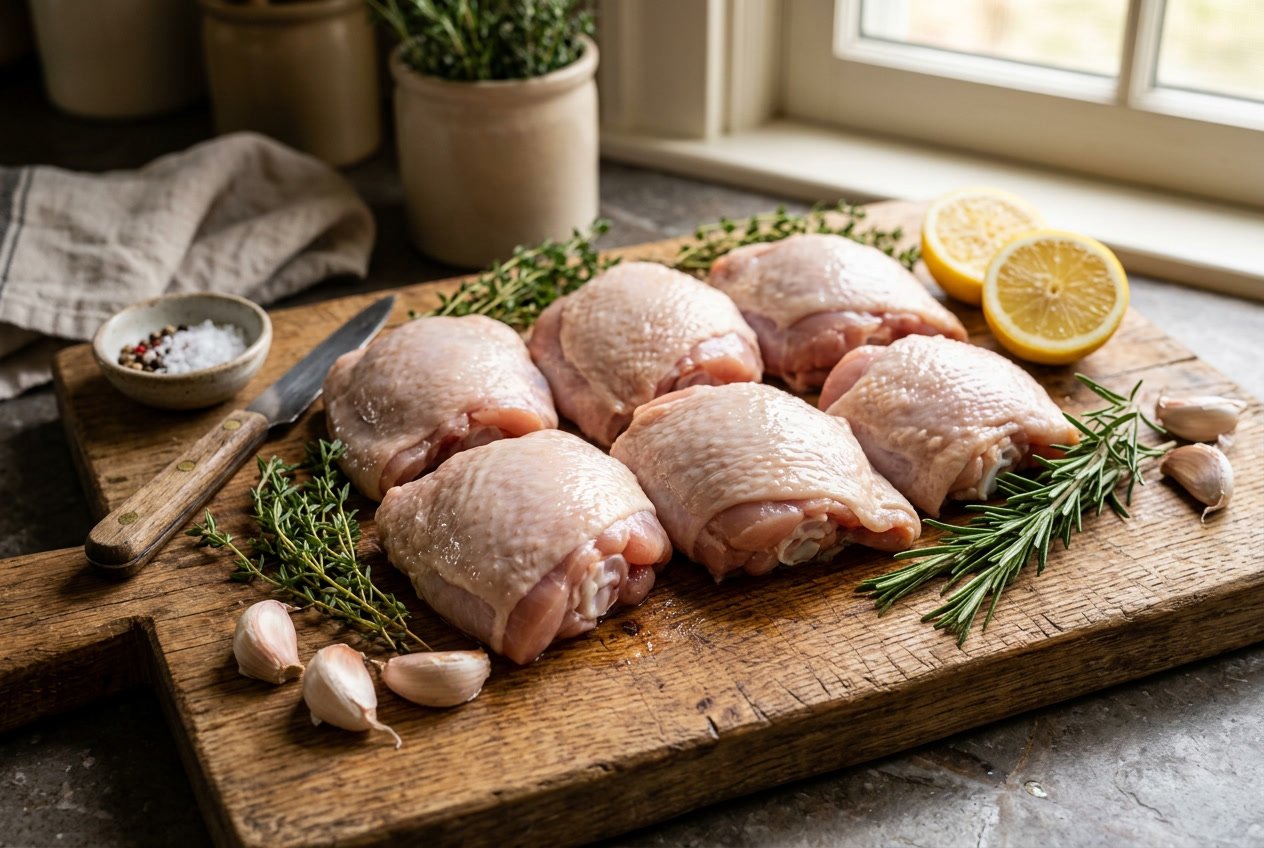
You’ll learn what causes that unpleasant odor and how to tell harmless chemical or packaging smells from real spoilage. Practical checks before cooking and simple storage steps can help you avoid future surprises.
Understanding Why Chicken Thighs Smell Like Fart
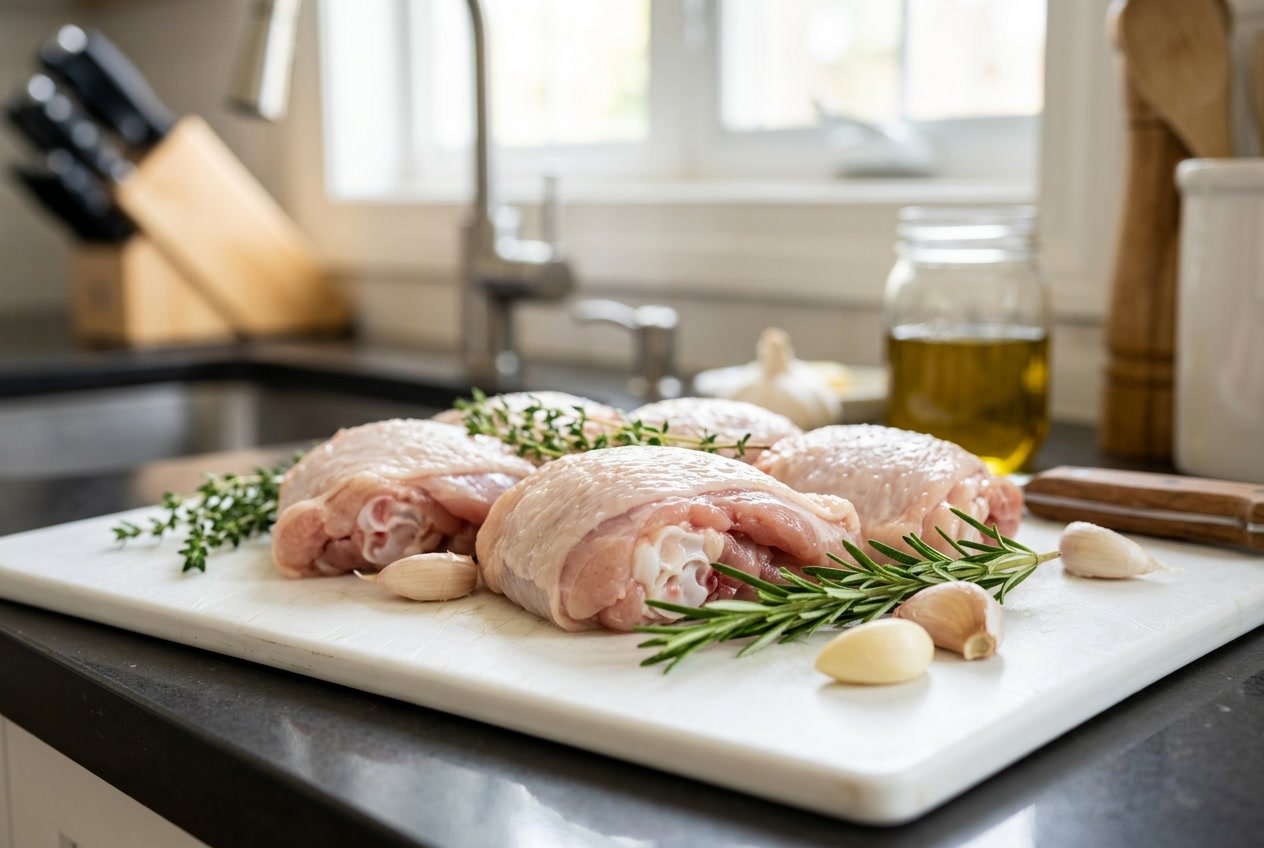
Chicken thighs can give off a sulfurous, fart-like odor for a few specific chemical and biological reasons. You can usually tell whether the smell comes from harmless cooking chemistry or from bacterial contamination that makes the meat unsafe.
Sulfur Compounds and Hydrogen Sulfide
Sulfur-containing amino acids in chicken, especially cysteine and methionine, break down when heat or enzymes act on them. That breakdown produces hydrogen sulfide, a gas with a rotten-egg or flatulence-like smell.
You may notice this most when high heat browns skin or when dark meat renders fat. Marinades with acid or aromatic spices can mask or reduce the perception of hydrogen sulfide by altering surface chemistry and aromas.
Bacterial Activity and Spoilage
Certain bacteria produce sulfurous gases as they metabolize proteins. If raw thighs smell strongly of flatulence, that can indicate bacterial growth from improper storage, temperature abuse, or the meat being past its safe date.
Look for other spoilage signs: sticky texture, slimy film, or a sour/putrid odor layered with the sulfur note. Cooking won’t reliably make contaminated meat safe because toxins or high bacterial loads can remain.
If you suspect spoilage, discard the chicken to avoid foodborne illness.
Normal Versus Unusual Odors
A faint sulfur or “eggy” scent can be normal for dark meat due to higher myoglobin and different fat composition. You should expect only a mild, not unpleasant, aroma from fresh thighs.
Strong, persistent, or unpleasant fart-like smells combined with sliminess, discoloration, or an off sell-by date are unusual and unsafe. If you’re unsure, mild sulfur notes can be cooked away or masked, but strong, foul odors mean you should throw the chicken out.
Is It Safe to Eat Chicken That Smells Funny?
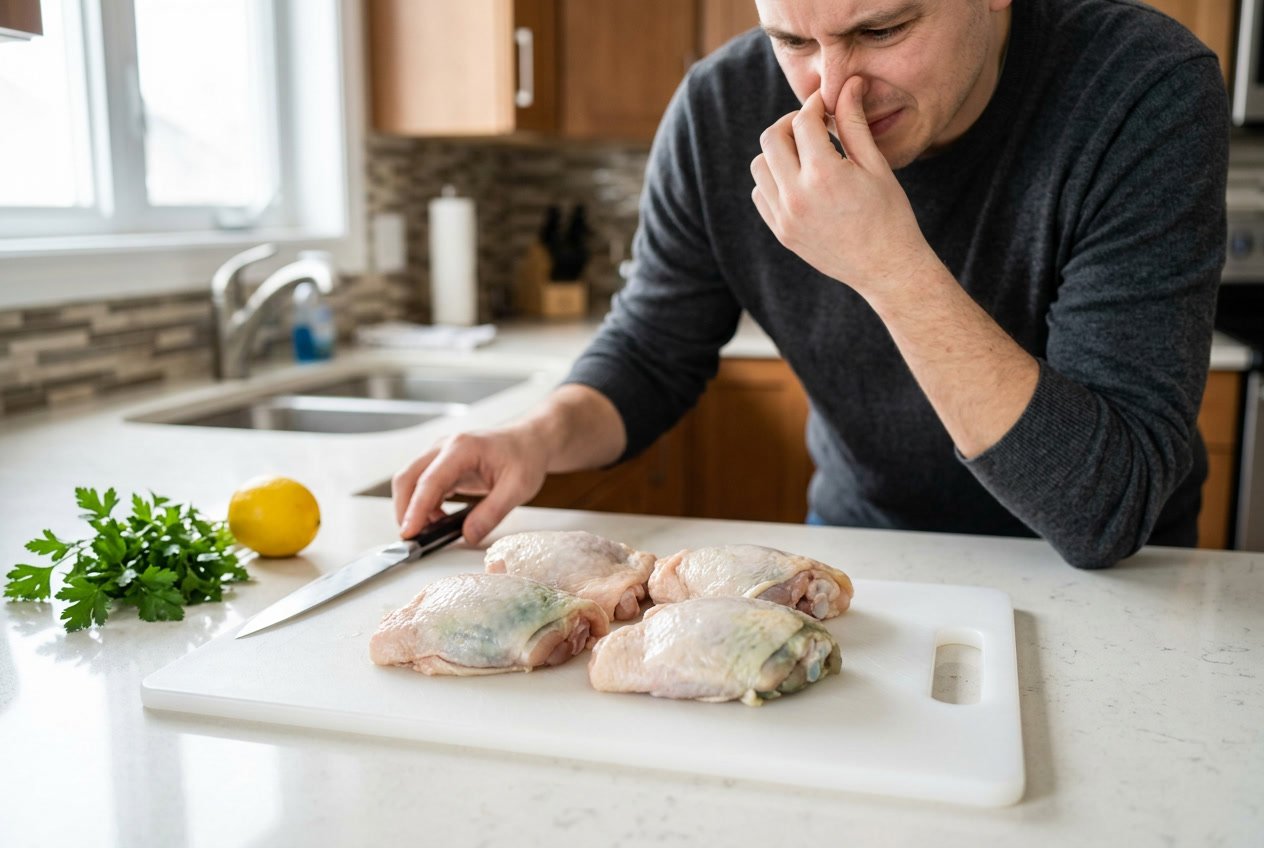
A sulfurous, sour, or otherwise off odor can mean anything from harmless packaging gases to active spoilage. Use specific checks—smell strength, texture, color, and the sell-by date—to decide whether to cook or discard the chicken.
Assessing Odor Intensity
Start by smelling the chicken at arm’s length, then again closer if needed. A very mild, momentary sulfur note that fades after the package is opened often comes from vacuum packaging gases and is not an automatic discard signal.
If the smell is pungent, sour, or clearly like rotten eggs, treat it as a strong warning sign. Combine that with other findings: slimy or sticky texture, gray or greenish discoloration, or a passed use-by date.
Those together point to bacterial spoilage and increased risk of pathogens such as Salmonella or Campylobacter. If you have any doubt after the checks, discard the chicken to avoid potential foodborne illness.
Food Safety Guidelines for Chicken
Keep raw chicken at 40°F (4°C) or below and use within 1–2 days of purchase for best safety. Frozen chicken is safe for long-term storage, but thaw it in the fridge, not at room temperature.
Cook chicken to an internal temperature of 165°F (74°C) measured in the thickest part with a calibrated thermometer. Proper cooking kills Salmonella and Campylobacter, but it does not make spoiled chicken safe if toxins or heavy bacterial growth are present.
Prevent cross-contamination. Store raw chicken on the lowest fridge shelf, use separate cutting boards, wash hands and utensils thoroughly, and discard packaging immediately after transfer.
Common Misconceptions About Chicken Odors
A common myth is that cooking bad-smelling chicken makes it safe. Cooking destroys pathogens, but it won’t remove all toxins or the unpleasant signs of spoilage.
Some believe all raw chicken should be odorless. Fresh chicken typically has only a faint neutral smell. Slight packaging-related odors can dissipate, but persistent sulfurous or rotten smells are not normal and usually indicate bacterial activity.
Not every off-smelling piece will make you sick, but the presence of foul odor significantly raises the chance of contamination. Err on the side of safety.
How to Identify Spoiled Chicken Thighs
You can spot bad chicken thighs by checking color, feel, and dates. Smell often gives the clearest early warning—especially sulfurous or sour odors.
Discoloration and Visual Signs
Look for consistent color across the piece. Fresh raw chicken thighs are pale pink with white fat.
Gray, green, or brown patches indicate breakdown of the meat or bacterial growth. Also check for surface spots or fuzzy growth.
Any mold-like appearance or dark spots near the bone means you should discard the chicken immediately. Inspect the packaging for excess liquid.
A small amount of clear juice is normal. Cloudy, milky, or green-tinged liquid suggests spoilage and increases the chance of off smells.
Use a quick lighting check. Hold the thigh up under bright light to reveal subtle discoloration you might miss in dim fridge lighting.
Texture and Sliminess
Touch the chicken with clean hands or a gloved finger. Fresh thighs feel moist but not slippery.
Slime feels tacky, sticky, or gelatinous. If the meat leaves a residue on your fingers, that indicates bacterial film.
That film often accompanies the sulfurous or “fart-like” smell people notice when protein breaks down. Washing the chicken won’t reliably remove slime or bacteria.
If texture is off, don’t attempt to salvage it. Cooking won’t make slimy chicken safe.
When handling questionable pieces, keep them separate and wash surfaces and utensils immediately.
Expiration Dates and Storage Time
Check the package for “use-by” or “sell-by” dates and follow the tighter of the two. Use-by dates indicate safety.
Refrigerated raw chicken lasts 1–2 days at 40°F (4°C) or below. In the freezer at 0°F (-18°C) it remains safe indefinitely, but quality drops after several months.
Once thawed in the fridge, use within 1–2 days. If the chicken was left at room temperature more than two hours (one hour above 90°F/32°C), discard it.
When in doubt, rely on smell and texture in addition to dates. Sulfurous, sour, or persistent foul odors mean you should throw the thighs away.
Key Causes of Fart-Like Smells in Chicken
You’ll most often encounter three specific causes: what the bird ate, how the meat was packaged, and chemical changes during cooking. Each can produce sulfurous compounds, mainly hydrogen sulfide, that give chicken thighs an eggy or fart-like odor.
Sulfur-Rich Diets in Chickens
What chickens eat directly affects the molecules in their muscle tissue. Diets high in sulfur-containing ingredients, like certain brassicas or alfalfa, lead to greater levels of sulfur-containing amino acids in the meat.
When those amino acids break down, they can release hydrogen sulfide and related mercaptans, which smell like rotten eggs or farts. You’ll notice this most with pasture-raised or specialty-fed birds where feed composition varies.
The smell isn’t automatically a sign of spoilage, but it can be stronger in thighs because dark meat holds more fat and connective tissue that trap flavor compounds. If the odor appears immediately after cooking and the chicken is otherwise normal in texture and color, the diet is a likely cause.
Vacuum Packaging Effects
Vacuum-sealed and modified-atmosphere packaging can concentrate gases around the meat during storage. Without oxygen, anaerobic bacteria and natural breakdown processes may produce sulfurous gases inside the bag.
When you open the package, the trapped gases escape and can smell sharply like hydrogen sulfide. This packaging smell is often transient.
Let the meat air out for a few minutes; mild odors commonly dissipate. If the scent persists or the chicken feels sticky or slimy, don’t risk it.
Those are signs of bacterial spoilage rather than just trapped packaging gases. Check the sell-by date and storage temperature before deciding.
Breakdown of Amino Acids During Cooking
Heat drives chemical reactions in meat that can create volatile sulfur compounds. Cysteine and methionine, two sulfur-containing amino acids, break down during high-heat cooking and can form hydrogen sulfide.
You’ll most notice that smell when cooking methods concentrate juices, such as pan-searing or roasting thighs at high temperature. Moist-heat methods or lower temperatures reduce the intensity of sulfurous volatiles.
Browning reactions also produce odor compounds that interact with sulfur gases, sometimes enhancing the “fart-like” note. If the chicken reaches a safe internal temperature and shows no sliminess or discoloration, the smell is usually a cooking byproduct rather than a foodborne risk.
Best Practices to Prevent Bad Odors in Chicken Thighs
Keep thighs cold, dry, and isolated from other foods. Use airtight packaging, limit time in the refrigerator, and cook thighs to proper internal temperature to avoid off-odors and food-safety risks.
Proper Storage Techniques
Store raw thighs at 40°F (4°C) or below and use them within 1–2 days of purchase. Place packaged thighs on the lowest refrigerator shelf or in a dedicated meat drawer to prevent juices from dripping onto other foods.
Use airtight containers or double-bag in freezer-safe bags when freezing. Remove as much air as possible; vacuum-sealing reduces oxidation and rancid smells.
Label with the date and use frozen thighs within 6–9 months for best quality. Pat thighs dry with paper towels before refrigerating to reduce surface moisture that promotes bacterial growth.
Keep marinades and brines refrigerated and discard any that have contacted raw chicken after use.
Safe Handling and Cross-Contamination
Always wash hands with soap and warm water for at least 20 seconds before and after handling raw chicken. Avoid rinsing raw chicken under running water; splashing can spread bacteria across your sink and counters.
Use separate cutting boards, knives, and utensils for raw poultry. If you must reuse a board, sanitize it with hot, soapy water followed by a bleach solution or run it through a dishwasher cycle.
Store raw thighs away from ready-to-eat foods and produce. Keep raw packaging sealed and immediately dispose of or sanitize any surfaces or containers that contacted raw juices.
Cooking Tips to Minimize Odors
Bring thighs to room temperature for no more than 30 minutes before cooking. Pat skin and meat dry to speed browning and limit greasy smells.
Sear at high heat for a few minutes per side to render fat quickly, then finish in the oven until internal temperature reaches 165°F (74°C). Use a thermometer to ensure safety.
Use acid-based marinades for 30–120 minutes to neutralize some fatty odors. Aromatics like garlic, onion, rosemary, and thyme can help mask thigh aromas.
If a strong sulfurous or ammonia smell persists after cooking, discard the meat.
When to Discard Chicken Thighs
If the chicken gives you clear sensory warnings or shows physical breakdown, don’t risk eating it. Use your nose and touch first; visible changes confirm your decision.
Strong Persistent Odors
Trust your senses. A faint raw-meat scent is normal.
If you notice a sour, ammonia-like, or sulfurous odor that lingers after you open the package, the meat has spoiled. If the smell resembles rotten eggs or sulfur and remains after airing the meat for a few minutes, discard the thighs.
A strong odor signals bacterial contamination that cooking cannot reliably fix. Harmful bacteria can produce gases and toxins.
Thorough cooking kills bacteria but cannot neutralize toxins already present.
Checklist:
- Mild, brief “package” smell → OK if it disappears.
- Persistent sour, ammonia, or sulfur smell → discard immediately.
- Any foul odor with an uncertain sell-by date → discard.
Severe Color or Texture Changes
Inspect the color closely. Fresh skin-on thighs appear pink to light beige.
Gray, green, or iridescent patches signal spoilage and indicate you should dispose of the chicken. Discoloration combined with odor suggests bacterial growth.
Feel the surface. Fresh chicken feels moist but not slimy.
A tacky or slippery film that doesn’t wash off shows bacterial contamination. Discard the chicken if you see visible mold or dark spots.
Quick checks to follow:
- Color: pink → OK; gray, green, or iridescent → discard.
- Texture: moist, non-sticky → OK; slimy or tacky → discard.
- Visible mold or excessive darkening → discard immediately.


