
Chicken Thighs or Breast for Dogs: Which Is Best & Why
Choosing between chicken thighs and breast for your dog depends on your dog’s weight, health needs, and taste preferences.
Thighs pack more fat and flavor, which benefits active or underweight dogs. Breast gives lean protein that suits dogs needing to lose weight or maintain a lean physique.
If your dog needs fewer calories or a low-fat option, pick chicken breast. If your dog needs extra calories, richer flavor, or better fat-soluble vitamin absorption, pick chicken thighs.
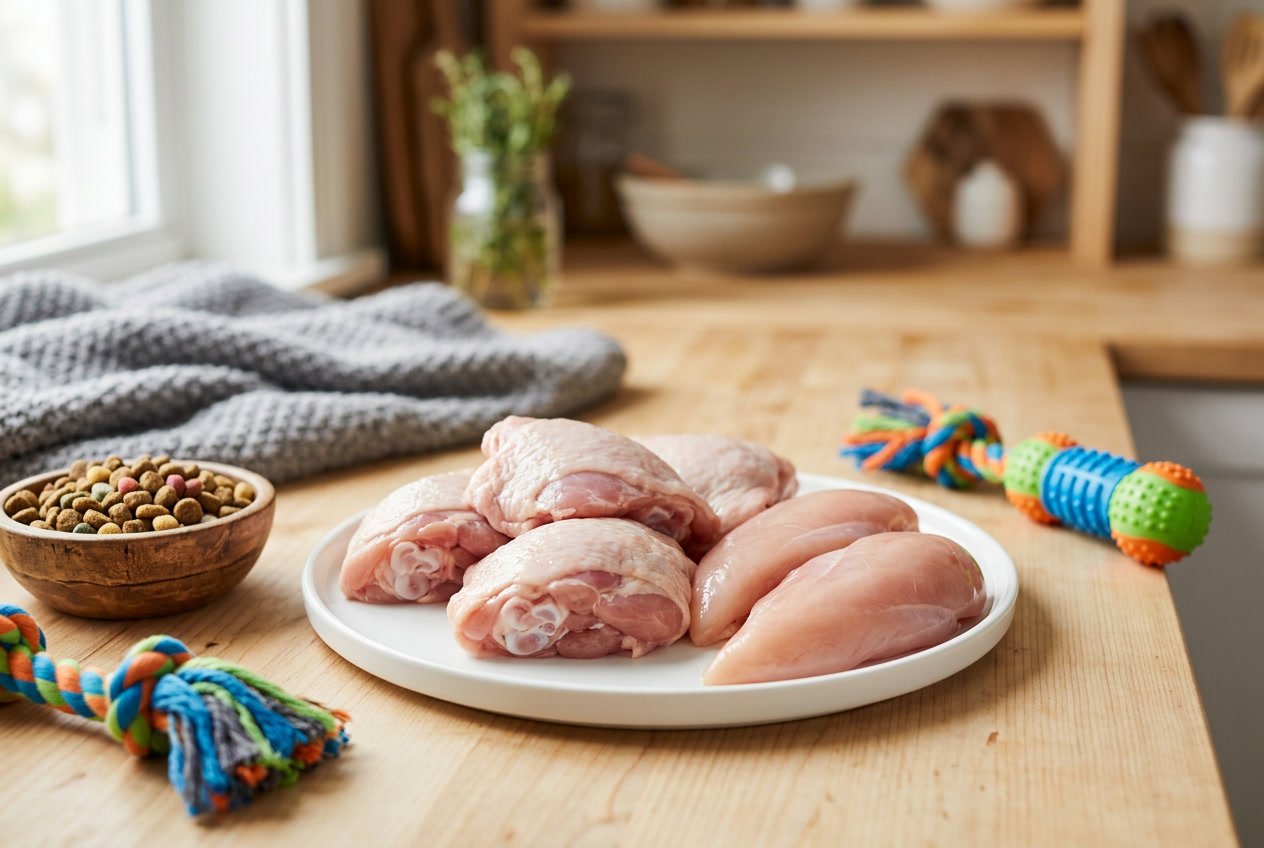
Chicken thighs and breast have different nutritional profiles that affect allergies, digestion, and risks like bones and pancreatitis. Safe preparation methods and practical feeding tips help keep meals balanced and vet-friendly.
This guide breaks down the core differences, benefits, and precautions so you can pick the best cut for your dog’s needs.
Chicken Thighs or Breast for Dogs: Core Differences
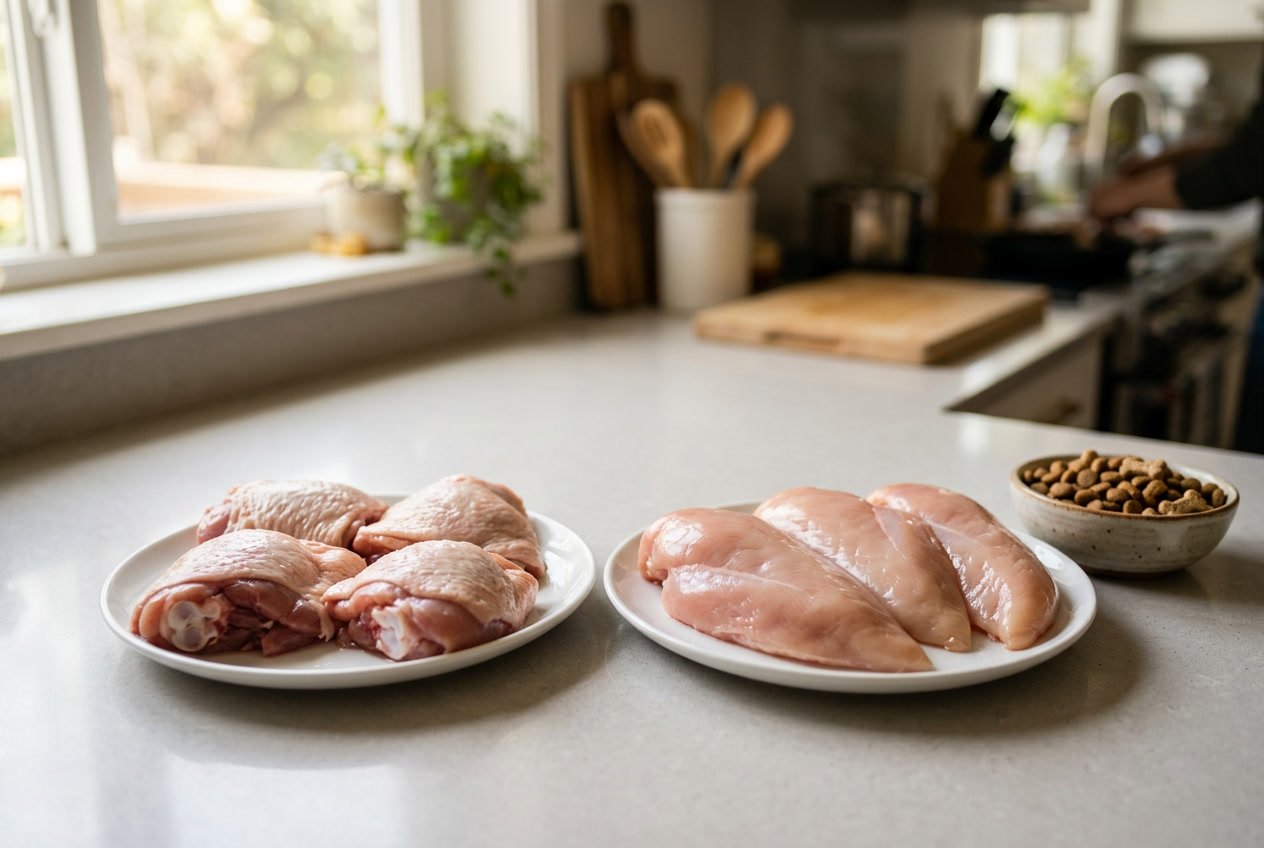
You’ll weigh fat, calories, flavor, cost, and availability when choosing between cuts.
One cut gives lean protein with fewer calories. The other delivers more energy and richer taste.
Nutritional Content Overview
Chicken breast is lean. Skinless breast delivers about 31 g protein and 3–4 g fat per 3.5 oz (100 g) cooked portion.
This makes breast suitable for calorie control, weight management, or limiting dietary fat for dogs at risk of pancreatitis. It also supplies B vitamins and selenium without added fat calories.
Chicken thigh contains more fat and calories, with about 26 g protein and 9–12 g fat per 3.5 oz cooked portion if skinless.
That extra fat raises energy density, which helps very active, working, or underweight dogs. Thighs also retain more iron and zinc because dark meat has more myoglobin.
Leaving skin on increases calories and saturated fat.
Flavor and Palatability
Chicken thighs taste more flavorful to most dogs because higher fat content amplifies aroma and mouthfeel.
Picky eaters often accept thighs more readily, making them useful for coaxing appetite in recovering or finicky dogs.
Breast is milder and less fatty. Some dogs still enjoy it, especially when mixed with other ingredients or lightly moistened.
Texture differs: breast is firmer and dryer when overcooked, while thigh stays juicier.
If you feed cooked chicken regularly, rotate cuts to keep meals appealing and reduce risk of developing protein sensitivities.
Price and Availability
Chicken breast usually costs more per pound because of demand for lean cuts.
You can find sales or buy frozen bulk breast to lower the price. Store brands and boneless options vary in price.
Chicken thighs often sell cheaper and are widely available fresh or frozen, bone-in or boneless.
Buying bone-in thighs can lower cost and provide cartilage for joint-support nutrients if you prepare bone broth safely.
Check labels: value packs may include skin-on pieces, so factor trimming into prep time and calorie counts.
Benefits and Considerations of Chicken Breast

Chicken breast offers a lean, high-quality source of animal protein with low fat and minimal flavor additives when prepared plainly.
It supports muscle maintenance, weight management, and digestive tolerance in dogs when part of a balanced diet.
Low-Fat and Lean Protein
Chicken breast provides concentrated protein with far less fat than dark meat or skin-on cuts.
A typical 3-ounce cooked, skinless portion contains about 25–30 grams of protein and minimal saturated fat.
You can use breast meat to help meet daily protein needs without adding extra calories that contribute to weight gain.
This works well when you calculate portions by calories or grams of protein per kilogram of body weight.
If your dog needs a lower-fat diet due to obesity, pancreatitis risk, or post-surgery recovery, skinless, boneless chicken breast is a practical choice.
Always account for the protein when adjusting commercial food portions to avoid overfeeding.
Digestibility and Sensitive Stomachs
Chicken breast digests easily for most dogs when cooked plainly and served in appropriate portions.
The meat’s lower fat content reduces the chance of greasy stools, nausea, or pancreatitis flare-ups compared with fattier cuts.
Boiled, baked, or poached breast without seasoning minimizes gastrointestinal upset and bacterial risk when fully cooked to 165°F (74°C).
Avoid raw feeding if your dog or household members are immunocompromised due to Salmonella and Campylobacter concerns.
Introduce small amounts and monitor stool consistency and energy levels for 48–72 hours.
If your dog shows vomiting, diarrhea, or lethargy after chicken breast, stop feeding it and consult your veterinarian for allergy or intolerance testing.
Suitable Dog Profiles
Pick chicken breast for dogs that require weight control, have a history of pancreatitis, or need easily digestible protein during recovery.
Puppies growing rapidly need balanced nutrients, so use breast as a supplement only after confirming overall diet adequacy with your vet.
Senior dogs with reduced activity levels often benefit from lean protein to preserve muscle without excess calories.
Dogs with food-allergy suspicions may need elimination trials. Plain chicken breast can serve as a test protein only under veterinary guidance.
Active, working dogs usually need higher fat and calorie density, so breast alone may not meet energy demands.
Combine breast with a complete diet or add approved healthy fats per your veterinarian’s recommendations.
Always serve boneless, skinless, fully cooked chicken breast, and adjust commercial food portions to account for the added protein.
Benefits and Considerations of Chicken Thighs
Chicken thighs deliver more calories, fat, and certain micronutrients than breast meat. They usually taste richer and stay moist when cooked.
You’ll weigh energy needs, portion sizes, and any digestive or fat-sensitive conditions before choosing thighs for your dog.
Higher Fat and Nutrient Density
Chicken thighs contain about 2–3 times the fat of chicken breast per equal serving.
That extra fat includes monounsaturated and polyunsaturated fats that support skin and coat health, but also raises saturated fat and total calories.
You’ll also find higher amounts of iron, zinc, and B vitamins (including B12) in thigh meat compared with breast.
Those micronutrients support red blood cell production and metabolic function.
Control portion sizes and trim excess skin when necessary to balance the benefits against extra calories.
Best for Active and Underweight Dogs
If your dog performs high-energy work, competes in sports, or has difficulty maintaining weight, chicken thighs provide concentrated calories that help meet daily energy demands.
A single thigh can supply significantly more kilocalories than a breast portion of the same weight.
For underweight dogs, the fat and calorie boost supports gradual weight gain when combined with balanced protein sources.
Monitor body condition and consult your veterinarian to set target calories and adjust meal plans to ensure adequate protein while avoiding excess fat.
Palatability for Picky Eaters
Chicken thighs rank high for palatability because fat enhances flavor and moisture, making meals more appealing to picky dogs.
You can use small amounts of cooked, unseasoned thigh meat as a training reward, meal topper, or appetite stimulant.
When using thighs to increase acceptance, avoid adding salt, onion, garlic, or spices.
Rotate protein sources to reduce the risk of developing sensitivities from repeated exposure to a single protein.
Keep treats and toppers to under 10% of daily caloric intake to maintain nutritional balance.
Potential Risks: Allergies, Bones, and Digestive Issues
Chicken can be a healthy protein but it also carries specific risks: immune reactions, bone hazards, and digestive upset from fat, skin, or improper preparation.
Allergies to Chicken
Some dogs develop a true food allergy to chicken protein.
Signs include persistent itching, recurrent ear infections, chronic vomiting, and loose stools.
These symptoms often appear within hours to days after eating chicken and may persist with continued exposure.
If you suspect an allergy, work with your vet to try an elimination diet.
A typical approach removes chicken and chicken-based foods for 8–12 weeks, then reintroduces them under supervision to confirm the trigger.
Your vet may recommend blood or skin testing, but elimination trials remain the most reliable method.
Cross-contamination matters. Even treats or kibble containing small amounts of chicken can sustain allergic reactions.
Read labels and use clearly labeled novel-protein foods during testing.
Bone Safety and Preparation
Cooked chicken bones, including thigh and breast bones, can splinter and cause choking, mouth injuries, or intestinal perforation.
Never give your dog cooked bones from thighs or any other cooked poultry.
Raw bones are softer but not risk-free.
If you choose raw, supervise feeding, select appropriately sized bones, and source them from reputable suppliers to reduce bacterial risk.
Freeze-thaw cycles make bones more brittle, so avoid previously frozen bones for chewing.
Safe preparation tips:
- Remove all bones from cooked chicken you feed.
- Serve skinless pieces to lower fat content.
- Cut meat into bite-sized pieces appropriate for your dog’s size.
- Avoid seasoned, fried, or heavily sauced chicken.
Can Chicken Thighs Give Dogs Diarrhea
Chicken thighs are fattier than breasts, and excess fat can trigger gastrointestinal upset or pancreatitis in susceptible dogs.
If your dog eats too many chicken thighs, you may notice vomiting, loose stools, or abdominal pain within 12–48 hours.
Other causes of diarrhea after chicken include:
- Rich skin, sauces, or seasonings (onion/garlic are toxic).
- Sudden diet change without gradual transition.
- Underlying bacterial contamination from raw poultry.
If diarrhea is mild and short-lived, withhold food 12 hours (water available) and then reintroduce a bland, low-fat diet.
Seek immediate veterinary care for persistent diarrhea, bloody stools, lethargy, or signs of severe abdominal pain.
Raw vs. Cooked: Safe Preparation Practices
You need practical steps to reduce bacterial risk, prevent bone hazards, and keep your dog’s diet balanced.
Focus on hygiene, portion control, and choosing the right cut for your dog’s size and chewing habits.
Raw Chicken: Safety Factors
Raw chicken can carry Salmonella, Campylobacter, and E. coli.
Handle it as you would raw poultry for humans: wash hands, sanitize surfaces, and keep raw chicken isolated from other foods.
Only use high-quality, fresh chicken from a trusted source.
Store at 40°F (4°C) or below and freeze if you won’t use within 1–2 days.
Thighs have more fat than breast; balance fat and calcium if you feed them regularly.
Avoid giving small, splinter-prone bones to dogs that gulp or to puppies and seniors.
Supervise bone consumption and remove uneaten pieces.
If you feed raw long-term, consult a vet or a veterinary nutritionist to ensure the diet supplies calcium, vitamins, and trace minerals.
Cooking Methods and Recommendations
Cooked chicken eliminates most bacterial hazards but makes bones brittle and unsafe.
Remove all bones before serving. Never give cooked chicken wings, drumsticks, or necks.
Prefer boneless, skinless breast for lean protein and thighs for higher-fat calories if your dog needs energy.
Use these simple methods:
- Poaching: gentle, retains moisture; cook until internal temperature reaches 165°F (74°C).
- Baking or roasting: use low fat, no added salt, garlic, onions, or spices.
- Boiling: quick, good for making plain shredded chicken for picky or sick dogs.
Cut cooked chicken into appropriate-sized pieces to prevent choking.
Refrigerate leftovers within 2 hours and use within 3–4 days, or freeze for longer storage.
How to Feed Chicken Thighs or Breast to Dogs
Choose the cut and serving method based on your dog’s size, activity level, and any weight or digestive concerns.
Prepare plain, unseasoned chicken and remove or avoid cooked bones to prevent choking or splinters.
Portion Sizes and Frequency
Portion by weight and activity.
For an average adult dog, feed about 1/4 to 1/3 cup (roughly 25–50 g) of cooked, shredded chicken per 10 pounds (4.5 kg) of body weight as an occasional meal topper.
Active or working dogs may need larger portions. Sedentary or overweight dogs require smaller ones.
Limit chicken to no more than 10–20% of daily calories if you use it as a supplement to complete food.
If you feed chicken as the main meal, balance with vegetables and a source of calcium or a formulated diet to avoid nutrient gaps.
Start with small amounts after a switch and watch stool consistency for 48 hours.
Adjust frequency by condition. Thin, active dogs can get chicken several times weekly.
Dogs prone to pancreatitis or weight gain should get lean breast meat sparingly and less often.
Safe Serving Suggestions
Cook chicken thoroughly to an internal temperature of 165°F (74°C) to kill pathogens. Remove skin and visible fat to reduce excess calories and pancreatitis risk.
Never give cooked bones, as they splinter easily and can injure the throat or intestines. Cut or shred meat into bite-sized pieces for easier chewing and portion control.
For chicken thighs, remove skin and trim excess fat. You can mix thighs into kibble for added calories or moisture.
For chicken breast, poach or bake plain and slice thinly for training rewards or sensitive stomachs. Use simple preparations: boil or bake without oil, salt, garlic, onion, or sauces.
If you want to add supplements, choose a canine calcium source if chicken replaces a balanced diet. Monitor for allergies, and stop feeding and consult your vet if you see vomiting, diarrhea, itching, or persistent ear infections.


